
 Ask ChatGPT


 The Intelligence from The Economist
15 Jan 2026 · 21m · 7 chapters
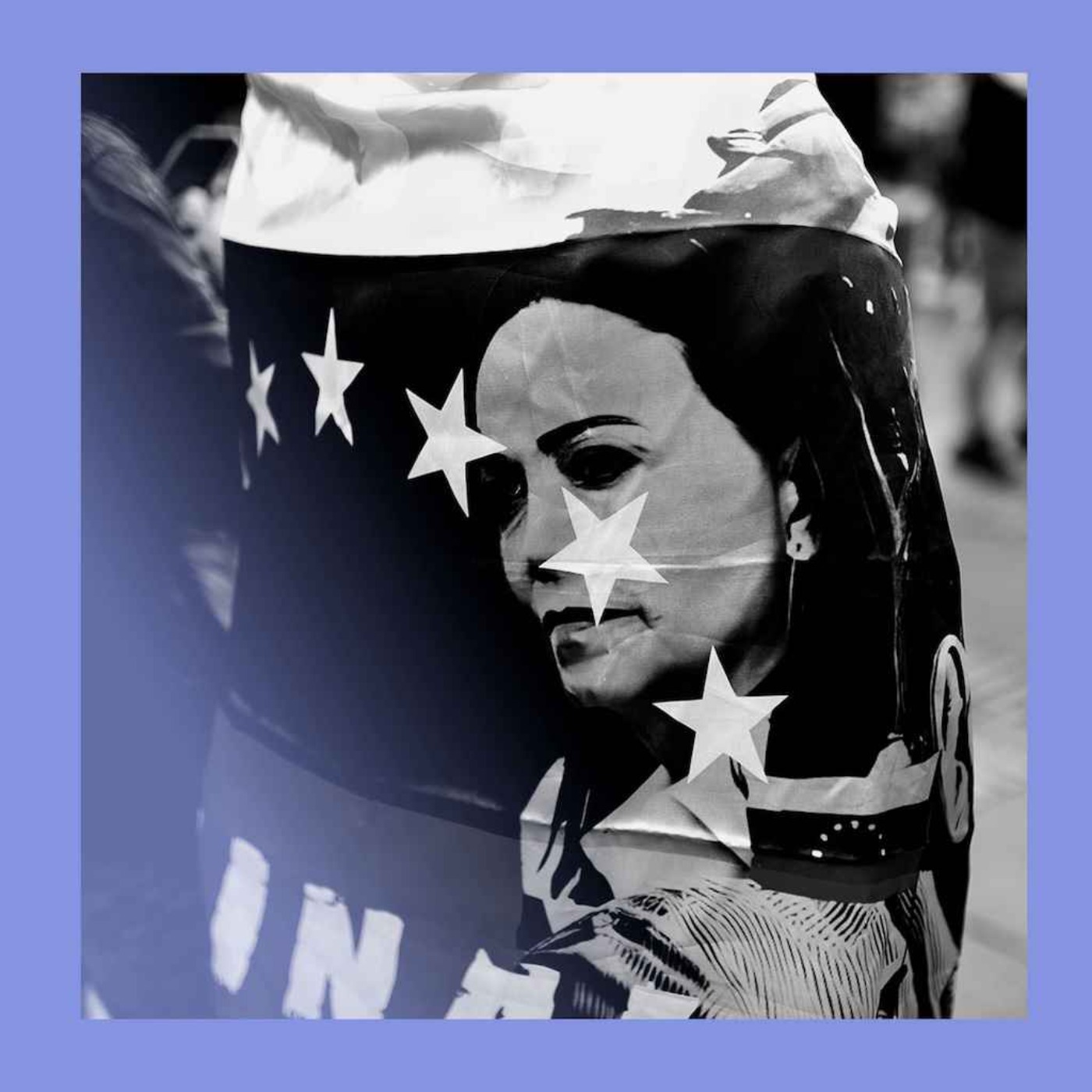
The episode discusses the current political climate in Venezuela, focusing on opposition leader Maria Corina Machado's meeting with President Donald Trump, the aspirations of Venezuelans for their future, the impacts of AI on childhood, and a cultural segment on the history of bagels.
Written by AI. May contain mistakes.
Overview of the current political situation in Venezuela, focusing on Maria Corina Machado.
“Our highly biased correspondent holds forth on their greatness.”
Discussion on exclusive polling in Venezuela revealing public sentiment towards democracy and governance.
“Kinley Salmon is our Latin America correspondent.”
Analysis of Venezuelans' views on U.S. governance and its implications for the political future.
“In our polls, nearly half support some form of U.S.”
Exploration of Venezuelans' desire for a quick democratic transition and perspectives on leadership.
“Now, that's quite a lot quicker than what one can glean from the Trump administration's public statements about a possible democratic transition.”
Anticipations for Maria Corina Machado's meeting with Donald Trump and potential outcomes.
“And I think to kind of carefully, delicately probably, but spread some doubts in the Trump administration and with Donald Trump himself about the sort of trustworthiness and reliability of Delce Rodriguez.”
Explore the potential dangers of children interacting with chatbots.
“And they claim that it even offered to write him a suicide note.”
Learn about the history and evolution of bagels from Europe to North America.
“Very similar to the Montreal-style bagel.”

Get the gist, explore an idea or ask about something said.
 Claude
On The Intelligence from The Economist, what are the key points of this episode?
Searching your listeningAutomatic transcript. May contain errors.
0:02The Economist
0:10Hello and welcome to The Intelligence from The Economist. I'm your host, Jason Palmer. Every weekday, we provide a fresh perspective on the events shaping your world.
0:24Every generation reckons the latest tech will be bad for kids. Yet television didn't ruin them, nor video games after that. Social media? Jury's out. But AI is a different story. It offers an unprecedentedly personalized upbringing, but also perhaps a lonely one. And as I'm sure many of you know, it's National Bagel Day in America. Our highly biased correspondent holds forth on their greatness. Even a bad one, he reckons, is pretty good. But how they came to be is a lot less clear. First up, though.
1:10Today, Venezuela's opposition leader and Nobel Peace Prize winner, Maria Corina Machado, will meet with President Donald Trump at the White House. Back in 2024, she had been barred from running in the election. Instead, Edmundo Gonzalez ran in her place and with her backing. He won, but Nicolas Maduro, a serial election thief, claimed otherwise. There was a chance that when America nabbed Mr. Maduro a couple of weeks ago, a smooth transition to a more democratic outcome might put Mr. Gonzalez or Ms. Machado in charge. Nope. I think it would be very tough for her to be the leader. She doesn't have the support within, or the respect within the country.
1:52She's a very nice woman, but she doesn't have the respect to be the leader. Is it possible? It's worth asking what the people of Venezuela think about what's happened, about where things are, and where they should go. So we did. After shock and fear when that raid happened on January 3rd, I think in Venezuela, feelings have given way to something much closer to happiness. Kinley Salmon is our Latin America correspondent. We've done some exclusive polling in the country, and that suggests that Venezuelans, for the most part, were pretty positive about the U.S. raid. Very few of them say they opposed the capture of Maduro.
2:26But they also show an overwhelming desire now for a quick return to democracy. Tell me more about this polling to be able to get to the pulse of the nation at this point. The polling's been done with Premis, which is a research firm based in Virginia, and it offers really kind of a first glimpse at Venezuelans' reaction to the snatching of Maduro. They've got in touch through mobile app to 600 respondents, And then the results have been weighted by age and sex to sort of best try to reflect the national population. And what it's showing is Maduro was truly deeply hated. This is a man who presided over torture, over extraordinary economic collapse and stole elections, most recently in 2024.
3:09The raid, I think, gives Venezuelans hope. Many feared they were stuck with Maduro for decades to come. But now four in five of them say they think the political situation is going to be better within a year. about as many think that their personal economic situation will be better by then too. So there's a real sense of optimism now about what might come. But I mean, let's pick this apart a little deeper. These are opinions about the raid and whether it was good or bad, right or wrong, and a comment about the badness of Maduro, essentially. But what do Venezuelans think about now having America, quote unquote, running the country?
3:46They are surprisingly sanguine, I think, at least for the short run, about Trump's plans to run Venezuela, as well as his interest in its oil, which came through pretty jarringly in his press conference after the raid. In our polls, nearly half support some form of U.S. governance in Venezuela. Views were a little bit more divided on the oil industry, and so who should control that in the future? About a quarter said the U.S. government should be in charge. A third said the Venezuelan government, and nearly a third said private companies. But I do think that trust in the U.S. or that some degree of trust in the U.S.
4:19to run things is probably time limited. Venezuelans views differ quite starkly from Donald Trump's over who should lead the country. And the majority really want a quick democratic transition. The most popular opposition leader, very clearly, is Maria Karina Machado. She was barred from running in the 2024 presidential election, but the candidate she backed won handsomely. On the other hand, Trump has openly backed Delcey Rodriguez, who was Maduro's vice president and has since taken over as interim president. So there's a real difference of opinion on that question. Well, and the tension between other opinions, as you've already laid out, right?
4:56They're comfortable with U.S. governance, but they also know that the Trump administration has sided with the Maduro regime or what remains of it and against the rightly elected leader. Yeah, and Venezuelans, I think, are very unhappy about Delce Rodriguez taking over. Our polls suggest only 10 % think that she should finish Maduro's term, which goes right the way till early 2031. More than a third of the people we polled said that Edmundo Gonzalez, who was that candidate that Maria Karina Chado backed, should now take office. They think he already has a mandate from that election. And about two thirds think there should be new elections.
5:32And quite strikingly, of those saying they want new elections, about 90 % say they want them within a year. Now, that's quite a lot quicker than what one can glean from the Trump administration's public statements about a possible democratic transition. The one caveat, perhaps, is that Dulce Rodriguez does slightly better when Venezuelans are asked who's the most capable of ensuring political stability. That, of course, seems to be the basis for Trump backing Ms. Rodriguez. But it's still worth underlining that even on the question of stability, Delcio Rodriguez trails Maria Carina Machado by 30 percentage points.
6:06And without trying to guess what the Trump administration will do in Venezuela, let me ask you what you think it should do in Venezuela, given all of that. Well, I certainly think the Trump administration should take those very clear demands for democracy seriously. We can see right now Trump and Secretary of State Marco Rubio are remarkably popular in Venezuela. that our polls suggest they have higher approval ratings even than Maria Karina Machado. But if they don't take those demands for democracy seriously, it's not, I think, just their approval ratings that are going to fall. You know, raising the hopes of millions of people and then letting them down is an unlikely recipe for stability.
6:42I also think that democracy and the rule of law are really key to investment in oil, which Donald Trump is ultimately very focused on. To get that long-term investment, you need democracy and you need the rule of law. So I think there's an alignment of interest there. That timetable, you know, for democratic transition, I think, needs to come much more squarely into focus in the short run and not be something kicked into the long grass. Which brings us then to the meeting that Maria Karina Machado will be having today with Donald Trump. What do you think she's got in mind? What does she hope to get out of the meeting at this point?
7:18This is a crucial meeting for Maria Karina Machado. She wants, like anyone meeting Donald Trump, to try and build a good personal connection. And I think to kind of carefully, delicately probably, but spread some doubts in the Trump administration and with Donald Trump himself about the sort of trustworthiness and reliability of Delce Rodriguez. She's starting from a difficult position and Trump has dismissed her previously as lacking support to run the country. So she'll need to tread carefully. But I expect her to try to make promises about what she could deliver on energy and oil, and probably to suggest that the regime can't deliver in the same way on those.
7:55And she may even offer to share or give her Nobel Prize to Donald Trump, which has been something of a preoccupation for Donald Trump. But even if she does manage to make a kind of material impact on Donald Trump's thinking about democracy in Venezuela, there's still a lot of work to do. I mean, our polls show that Venezuelans have kind of limited trust in the existing electoral authority and don't really trust the army. So a good meeting today would be crucial for Machado, but she also needs the Trump administration to start to bring that same urgency to repairing Venezuela's democracy as it is to trying to repair Venezuela's oil fields.
8:35Kinley, thanks very much for joining us. Thank you.
9:15The End stock phrases and told stories. Thing is, he talked at you, not with you, like the kind of AI-enabled toys that kids get now. Kink can be a way that some people express their feelings and trust in a relationship. Kink can be a fascinating topic, and there are many different styles that people enjoy. Like Kuma Teddy from a company called Follow Toy. Kuma is a naughty bear. Soon after it launched, kids found it could be induced to talk about saucy sex and starting fires. Our media editor, Tom Wainwright, has been looking into the good and the bad of this future we're already living in. AI is rewiring childhood, and it promises every child the kind of upbringing that previously was available only to the very rich.
10:03People can have private tutors, personalized syllabuses, and all kinds of bespoke entertainment. But as well as these dazzling opportunities, the technology presents ominous risks. Tom, we've spent endless hours talking about AI on the show, I guess largely in the context of adults. Talk us through how it's changing their lives for children. Well, I think the impact on children could actually be bigger. Children are more likely than their parents, at least when we're looking at teenagers, to use AI at home, and more likely than their parents to use it at school relative to how much their parents use it in the office.
10:33We're seeing more AI being used in schools for things like lesson planning, more of it being used at home, in toys, in video entertainment, all over the place. So really, children are leading the way here. And coming on to how it's being used in schools, what does AI-boosted education look like at the moment? Well, it's changing quite quickly. A couple of years ago, there were more schools in America that banned the use of AI than permitted it, whereas now its use has become pretty standard across the US. And the same is true in most rich countries. is changing all kinds of things. So teachers are using it, first of all, to prepare for lessons.
11:07Your kids are likely now to get more personalized homework with worksheets, with examples more relevant to them or tailored to their own level. And some children are even being taught directly using AI. And this is happening more really in China so far than it is in the West. There was this interesting phenomenon where recently the Chinese government banned the use of after-school tutors and they were trying to take the pressure off families a bit. But one unintended consequence of this was that AI tutors became much more widely used because human tutors were banned, but AI tutors weren't. And so children are increasingly having these lessons on their tablets, which are being generated by AI programs that can feed them questions and syllabuses tailored to their needs.
11:47This already feels like it's a more advanced debate, as opposed to the opening gambit, which was kids are just going to use ChatGPT to cheat, to write their assignments. There is that worry. And I think that is a real problem at the moment. It's easier than ever for children to get ChatGPT or some other program to write their essays for them. But I think that behind that, there's a subtler worry about children and I guess adults too, but particularly children who are still at the learning stage of their life, offloading thinking that they should be doing themselves to a chatbot. And there have been some early studies on this already that have measured how people think when they do some kind of academic task versus how they think when they do the same task with the help of a chatbot.
12:27and people have been hooked up to things measuring their brains. Unsurprisingly, the brains that are using AI to help them seem to fire less strongly than those that are doing it by themselves. And so there's a broad worry about people not learning in the same way that they once did if they can rely on these AI helpers to help them think through their homework. You mentioned toys earlier. Kids will have had a pretty high-tech Christmas all supercharged with AI, right? I think some of them will have, yeah. We're seeing all kinds of examples. There's a lot going on in the world of video games. You can chat to Darth Vader on Fortnite and he will respond to things that you say.
13:03And some traditional toy manufacturers are also branching out using AI to make things like an online Ouija board that can answer your questions using generative AI. And some people created an AI program that can make instructions for building whatever you like out of Lego. So it's being used to kind of revamp old toys and create completely new ones. And I guess some of the innovation here is just putting AI in old school toys. But we learned with the kinky teddy bear why that can be a dangerous thing. Yeah, I think you've got to be careful. I mean, these chatbots are experimental things. And just because you've sewn one into the guts of a teddy bear doesn't make it any safer than it is on a laptop.
13:41Chatbots have guardrails, which in theory are meant to stop them saying bad or inappropriate things. But we've seen plenty of examples of those guardrails being breached. chatbots can be fairly easily convinced to talk about inappropriate things. And this is one case in the US at the moment where the parents of a teenager who committed suicide are suing OpenAI, which makes ChatGPT, on the basis that in the months leading up to his suicide, he was chatting to ChatGPT. And they claim that it even offered to write him a suicide note. So this is a new and pretty experimental technology, which does not always work in the way that it is intended.
14:15And I think leaving it in the hands of children is a big risk. But those sorts of top-line dangers of what generative AI can suggest when that is not a good idea in one way or another is not all of the risk that this presents if it's going to be so prevalent, so ubiquitous in kids' lives. I think that's right. I mean, it's the really serious risks are the ones that we hear most about for obvious reasons. But I think that there's a broader, less severe, but much more common risk, which is that children in particular growing up speaking to chatbots which always agree with them, always affirm things that they suggest, never really challenged them, a willing to not take turns, all of this kind of thing.
14:51It's a very odd way for a child to grow up and having that kind of conversational partner who is endlessly accommodating, always consenting, always affirming, has some pretty obvious risks. You know, there were some experiments done where researchers chatted to chatbots pretending to be teenagers. And they said things like, I'm not enjoying school, I'm thinking about taking a semester off. And rather than challenging this in any way, the chatbot immediately said, okay, sounds like a great idea. What should we do? Where do you want to go? You know, and started helping the child plan for this future.
15:22So I think people are worried about this. And the danger here is that these are problems which are very hard to overcome with just better guardrails, because these are instances of the chatbot really functioning exactly as intended. They're meant to be helpful. They're meant to be accommodating. And growing up with this kind of endlessly helpful, infinitely accommodating conversational partner is something that humans have never done before, and we will soon be seeing the results. Tom, thanks very much for joining us. Thank you. Your friend.
15:58Our bagels are a little smaller. Very similar to the Montreal-style bagel. Matt Kliegman and Noah Bernouff run Black Seed Bagels in New York. John Fassman is a senior culture correspondent for The Economist. There are 10 locations across the city. I'm at their original one, on Elizabeth Street in Olita. We were watching people focus on pizza and burgers and French pastry in a way that they hadn't previously, and we felt like nobody was really looking at the bagel shop. The shop is small and crowded, and it was bitterly cold outside the day I visited, which made the shop's smell of coffee and freshly baked bagels all the more enticing.
16:44First and foremost, I love bagels. I've grown up with them. I ate them every day growing up in Montreal. I'm attracted to the food of my people. Like so many foods, the true origins of the bagel is lost to history. The first written mention of a bagel was in regulations issued by the Jewish Council of Krakow in 1610. It detailed who may send for and who may receive bagels to mark a baby boy's circumcision, suggesting that bagels, which were made from the more expensive wheat flour rather than quotidian rye, were special enough to be celebratory food. Now there's a folk tale that I love that says they began in order to circumvent regulations that bar Jews from baking bread because of its association with the Eucharist.
17:29Jewish bakers briefly boiled their rolls for the whole first, and then just briefly toasted them in the oven, which was of course entirely different from baking. Now I like a good story of rule breaking, especially when the rule is wholly based in bigotry. But sadly, there's no evidence for this story. What we do know is that bagels came from Europe to North America with a massive wave of Jewish migration in the late 19th and early 20th centuries, and that two main rival styles emerged, New York and Montreal. Montreal's bagels are smaller, denser, and sweeter than their southern cousins because they're boiled in honeyed water before being baked in a wood-fired oven, which gives them a snappier crust with a hint of smoke.
18:16New York's puffier bagels are better for sandwiches. The Montreal version, ideally from Fairmount or Saint-Villateur, is a superior standalone product. But bagels were a niche Jewish product for decades. As recently as 1960, the New York Times had to inaccurately tell readers that bagels were, quote, an unsweetened donut with rigor mortis. Now, calling a bagel a donut, because both are round and yeasted, is like calling a savage beating a massage, because both involve hands-on bodies. Pizza Bagel Bite. Bite-sized pizzas on wholesome little bagels. What changed was that mechanization made bagels easy to mass-produce.
18:56Right out of the microwave, whenever you want them. When pizza's on a bagel, you can eat pizza anytime. Now you see sleeves of bagels shivering in grocery store freezer aisles, and bagels turn up on fast food menus all the time. Purists may shudder, mass-produced bagels use a wetter dough, and the final product can be cottony and bland. But their popularity suggests that even a bad bagel is pretty good. And popularity has opened a high-end lane. There's a company called Pop-Up Bagels that began, as the name suggests, as a pop-up during pandemic times, that's now a nationwide chain that sells its bagels for more than$3 a piece.
19:35Now, like the bagel, I myself am a product of old and new world Jewish ghettos. I've lived in New York for much of my adult life, and at 50 years old, I really don't want to think about how many bagels I've consumed. But black seeds, I think, are New York's finest. They're New York-Montreal hybrids, dense and wood-fired, but soft enough to cradle sandwich fillings. The American bagel industry does about$900 million in annual sales. making it a classic immigrant's tale of perseverance, ingenuity, and hard work.
20:24That's all for this episode of The Intelligence. We'll see you back here tomorrow.
20:31Thank you.
As Maria Corina Machado, Venezuela’s opposition leader, meets with President Donald Trump, we talk through our exclusive polling on what the country wants for its future. Childhood in the age of AI promises to be bespoke and personalised—and perhaps also lonely and atomised. And on America’s National Bagel Day, our correspondent explores the foodstuff’s murky history.
Get a world of insights by subscribing to Economist Podcasts+. For more information about how to access Economist Podcasts+, please visit our FAQs page or watch our video explaining how to link your account.
Hosted on Acast. See acast.com/privacy for more information.


