
 Ask ChatGPT



Hosts: Jason Palmer and Rosie Blau
A daily podcast featuring global news analysis, focusing on significant stories shaping our world, with a detailed exploration of a single story on Saturdays.
Written by AI. May contain mistakes.

Get the gist, explore an idea or ask about something said.
 Claude
On The Intelligence from The Economist, what are the key points of this episode?
Searching your listeningAutomatic transcript. May contain errors.
0:10Hello and welcome to The Intelligence from The Economist. I'm your host, Rosie Bloor. Every weekday, we provide a fresh perspective on the events shaping your world.
0:25There's an area in Washington, D.C. that was once called Swampoodle. Doesn't sound too appealing, does it? But since developers built a metro station, New Housing, and renamed it Noma, it's become one of the fastest-growing neighborhoods in America. And ghost spirits and fortune-telling are part of daily life in Hong Kong. But who are the experts who guide people's views on them? And what happens when they start to have discernible effects on key industries?
1:01First up, though.
1:13So the sounds you hear are the hustle and bustle of the passport office in central Baghdad. Gareth Brown is a Middle East correspondent. I visited the passport office because it's a small institution, but it's also representative of a wider bureaucratic change that has been happening in Iraq in the last three or four years. Once this process would take many months, but due to the digitalisation of the process and a general streamlining of bureaucracy, you can now get a new passport in about 45 minutes here. The officials working here say they think it's the fastest passport renewal service in the world.
1:53I can use the timer if you want. I can. You're that confident? Yeah, I am. You put the stopwatch and you run it down? Yeah. The digitisation is something simple but it has an enormous impact but it has dramatically boosted revenues. Up until 2023, annual customs income never exceeded about 900 billion Iraqi dinars. And in 2024, it jumped to 2.1 trillion. This year, it's expected to top 3 trillion.
2:27So everything here now, you can, like the civilians, they can't just bring their national ID. That's it. And your old password, If you have an old expired passport, that's it. This is the scan. This is the passport. This is like fingerprints, eye prints. What's the price? How much is new? And I also had an opportunity to sit down with Prime Minister Mohammed Shia al-Sudani and interview him. After all of the years of chaos, war, disruption, you know, bear in mind that only 10 years ago, ISIS controlled a third of the country. Iraq feels like it might be on something of a different path. Gareth, that's an extraordinary turnaround and fast as well.
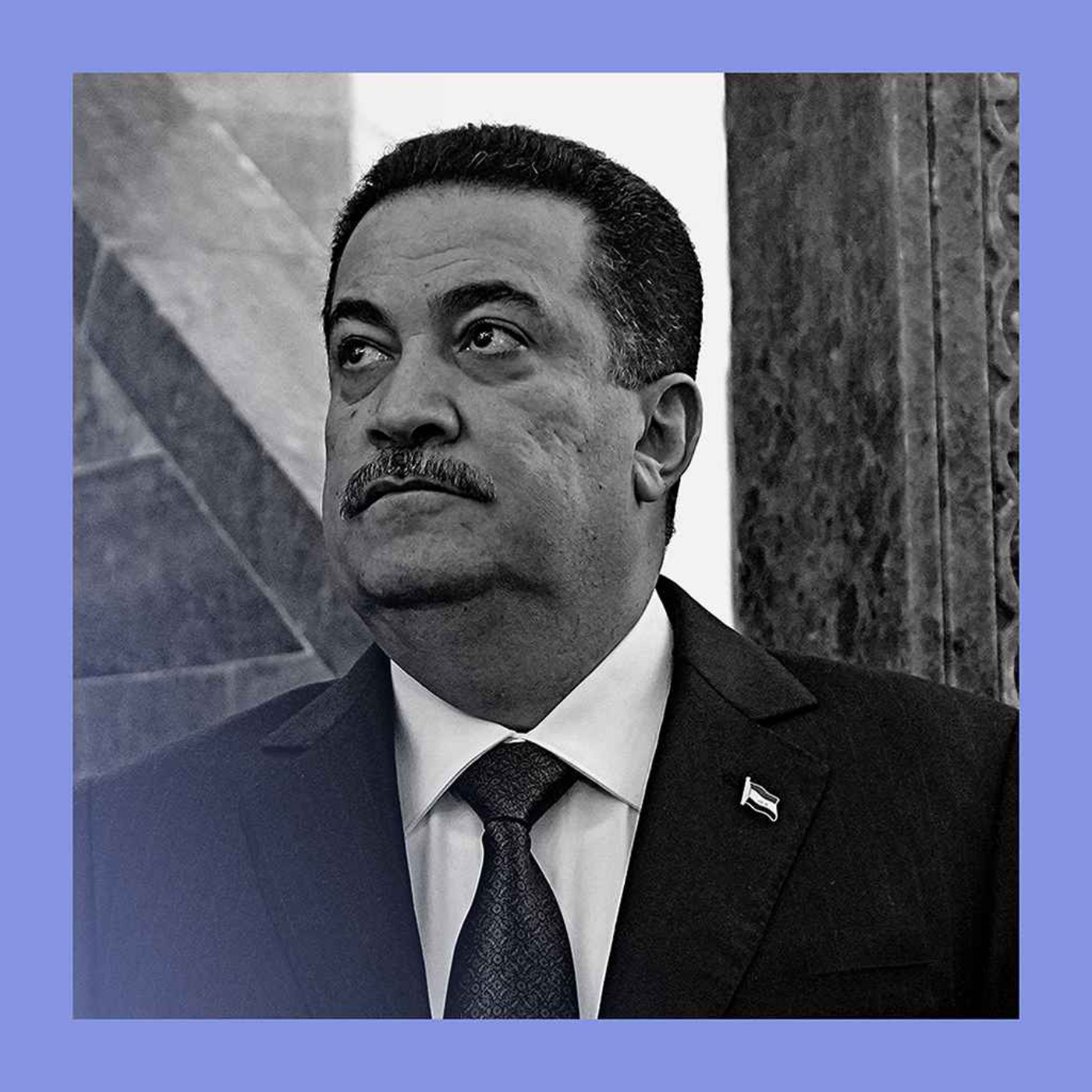
3:12You said that you met the prime minister. What did he have to say? So Prime Minister Sudani was obviously very keen to tout his achievements in his three years in office. You know, it was interesting. I went to meet him in the prime minister's office, which, like many government buildings in modern-day Iraq, was once a palace of Saddam Hussein's. And I think the first thing that struck me when I went in was he had this massive television in his office. And I sort of said, I think that's the biggest TV in the country. He said, well, this is the biggest office in the country. He was quite friendly.
3:47So he really described how, you know, Iraq is in this unprecedented security situation the last few years.
4:01terrorism has really subsided there hasn't been a major security incident since he's been prime minister you know the threat of isis is largely defeated then when i left i sort of had a moment to reflect i was in a corridor and i sort of imagined 20 years ago, American soldiers probably using this as some sort of base or administrative building, and they would have been walking these corridors. And that got me thinking about sort of veteran journalists who covered the US invasion in Iraq in 2003. And how many of them would recognize this city? I mean, I was there earlier this year. But before that, it'd been a few years since I've been in Baghdad.
4:41And there were really parts of the city I didn't recognize. And I think that's something you can extrapolate and take wider lessons from regarding the country writ large. You're saying that Baghdad is unrecognisable. Is Iraq experiencing a construction boom? Absolutely. There's buildings being thrown up at incredible rates, bridges over the river, flyovers, streets which were once rubble and now quite nicely lined. There's cafes and restaurants. I even drove past one quite cute looking fromagerie. And you just have to look out across the city and you see the amount of cranes, the roaring of saws and drills.
5:19You know, it's a city that's almost being rebuilt in some regards.
5:30So, Sudani said that, you know, some of this is public money, but also a lot of it is private money. He's bringing in foreign investors and they're carrying a lot of the weight in this construction boom. The private sector is doing a lot. So in Baghdad alone, at least four new hospitals have opened under Sudani, including Iraq's first dedicated cancer centre. And a Korean-designed ICU hospital, the director of that facility, said he hopes it will become the best in the Arab world. Over 1 ,700 schools across the country have been constructed or rebuilt. And about half a dozen luxury hotels are set to open in Baghdad.
6:09So how has Sudani's government done this and brought the private sector along with it? I think there's a few reasons for this construction boom. One is the security and stability in this real period of calm. So BP has recently resumed operations and talks are underway with Exxon Mobil and Chevron. Another is reforms he's made to the banking sector. And I think thirdly, is Sudani's role himself. He has quite often acted more as a project manager or a factory foreman than a political leader. And he's become directly involved in many projects, you know, ringing people up and saying, what's going on with this project?
6:54He's formed these new committees, which basically have the power to grant permits for major projects. One businessman said to me that these new The committees Sudani has created can clear permits in one day that would have taken years and different permissions from seven or eight ministries. So that has sort of been his strategy is to get hands-on involved in pushing projects through the Iraqi bureaucracy and following up to make sure that contractors and the private sector are delivering.
7:32Sudan wants to diversify the economy, which is obviously heavily reliant on oil. There's plenty of that. But he says sort of reviving other sectors is critical. He talks about things like tourism and even exporting Iraqi goods.
7:49That all sounds fantastic and impressive. The cynic in me says it can't all be sunshine. No, absolutely. I mean, his list of failures is quite long too. He hasn't really made any headway shrinking the public sector. Almost a quarter of Iraqis are on the public payroll in some form, if you include the salaries of civil servants and pensions and social welfare payments. It's one of the most swollen public sectors anywhere in the world. He made some efforts to reform the energy sectors, but they really went nowhere because he came up against the vested interests of certain groups. And he's also really avoided any sort of direct confrontation with the myriad of militias, some which are purely Iraqi, some which are very much loyal to Iran.
8:36He hasn't picked that fight. And I think that's disappointed some people, especially in America, where there's a lot of pressure for him to go harder on the militias. What he's done with them is essentially try to get them to take up business instead of violence. He's tried to get them to build or form companies, bid on contracts and get rich and invest. And that has brought some of these militias into the state.
9:08So Sudani described his strategy as positive neutrality, this idea of trying to keep Iraq out of regional conflicts. And I think that was most obvious. With the 11-day war in June between Israel and Iran, Many people expected the militias in Iraq to get involved on Iran's side, and they didn't. And I think Sudan played quite a big role in keeping Iraq out of that conflict, which seemed to pull in almost every other regional actor. But I think Ghalil's really worried that he's basically giving these militias government cover to get rich and to become more powerful. So it's a managed threat, at least for the time being.
9:48How does Iraq stay on this path of prosperity? Well, we're going to find out in November when national elections are scheduled and Sudan is running again. He says he wants a second term to finish what he started. He's assembling this sort of hodgepodge coalition of businessmen, some of the Kurdish parties, and some of the less Iran-inclined militias. And I think he's banking on the fact that Iraqis, especially in the cities, will be grateful for the infrastructure developments they've seen in the last two or three years. But it's not going to be easy. He really has sort of fallen out with this organisation known as the Coordination Framework, which is basically an umbrella group for the Shia political parties, some of which have militias.
10:30And I think they see Sudanese technocratic style of governance as a threat to their entrenched interests. And if they unite behind another candidate, it could be very difficult for Sudanese to get another term. But another thing that Sudani did is in 2023, he carried out a census which showed the country's population is ballooning. It grows by nearly a million people every year. It's 46 million now. There are 20 million more Iraqis alive now than there were before. The US invasion is a very young population. So there's massive sort of potential for the country there. And, you know, whether Sudani comes back in November after the elections or someone else, I think a lot of the international firms who are starting to invest, but also the people who are benefiting from these hospitals and bridges will hope that the country can maintain this trajectory of stability.
11:25Gareth, thank you very much. Thank you for having me.
11:44Housing is one of those really boring topics that many of us absolutely love to talk about, and the challenges are depressingly similar across much of the world. Too little of it, and gobsmackingly expensive, in the places people think they want to be. But on occasion, those clever marketing folk do a brilliant job of recreating a neighborhood, and sometimes, shockingly enough, new apartments even get built. Noma is a neighborhood in Washington, D.C. It's just next to the old main train station, Union Station. And until about 10, 15, 20 years ago, it was pretty thinly inhabited, post-industrial land, not very much going on.
12:28Archie Hall is the U.S. economics editor. And yet it's one of the fastest growing neighborhoods in the country. it's added more new apartments in the past eight years than any other area in the country and the surrounding zip code and is in many ways probably a template for what a lot of new development in America is going to have to look like as suburban sprawl reach its limits and cities start having to build up as well as out. So tell me Archie, what is Noma and what's it like? So originally this neighborhood was called Swampoodle but it was an area that was pretty heavily inhabited in the 19th century.
13:03And the original inhabitants, a lot of Irish immigrants, were turfed out to build that train station initially. And for a very long time after that, it was mostly industrial. About 20, 30 years ago, as Washington DC de-industrialized, as a lot of the kind of need for all that heavy-duty kind of industrial land near the train station fell away, there was a desire to find more housing and find more places to put people. And so a lot of money, some from the local government, some from the federal government, some from house builders, went into building a new metro station, a new underground station nearby, enabling it to be really well connected to the rest of the city and people of Lockheed In.
13:46Walking down the street and past a pretty quintessential Noma scene. So on one side over here, we have a newly built apartment building. There's still empty retail space underneath and huge signs saying retail opportunity in very big letters. Then on the left is a very large animal hospital with a big sign with quite cute dogs saying walk in welcome. Otherwise looking up it's kind of more apartment buildings all in this very sort of fairly modern glass heavy kind of blocky style. As I keep walking we get to a construction site most of the building looks like it's up there's sort of brick work and they're doing some of the cladding now and wandering around the streets are pretty full.
14:30And these people are often called yimbies, is that right? Yes, in my backyard. Explain that to me. So people may be more familiar with the term nimby, the no in my backyard, the yin to the yang of the yimby. The nimbies generally kind of stereotypically are people who own property in an area and are really vehemently opposed to developments in the area. That might be because they worry their property value might go down. It might just be because they like the neighborhood as it is and don't want new people coming in. But that's posed a real problem in lots of cities, not just America, but around the world, where you have growing populations, really, really productive city centers, and a real demand to kind of get people in there and a lack of supply of housing to keep up.
15:10And the result of that, as anyone who's tried to rent in a big city in America or elsewhere will be all too familiar with, is a huge surge in housing costs. So NOMA is a bit of an example of the kind of opposite theory of the case. What does it look like if you actually do really flood an area with new housing supply. The scale of new building is absolutely colossal. And what that's meant is there's been a real kind of arrival of lots and lots of new people. And a good chunk of those are people, given it's Washington DC and given it's people who do often work in policy, are themselves actually very ideologically committed to the idea that we should build lots and lots of new housing.
15:45So several of the main kind of quote unquote YIMBY think tanks, for instance, are actually based out of Noma. So what does the rise of these YIMBYs say about housing in the US more generally then? First of all, it says there's a big problem. Housing policy is not what you conventionally call a sexy policy area. It's often a little bit boring, a little bit procedural, a little bit kind of weird and hyperlocal and predictable. And so the fact that there's so much energy, frankly, at this stage, also so much money kind of being poured in to trying to change policy in this area in America and also in Britain and Europe and Australian countries around the world facing these problems is a real indication of just how bad housing costs have got, particularly in the centres of really big cities, which as every rich country's moved towards more of a services-based economy, where more and more of the kind of economic output of these places come from.
16:39And so you have this dual problem of housing constraints, both meaning housing's really, really unaffordable and therefore difficult for people to access and people get unhappy and people start looking at policy solutions, but also starting to become a real constraint on growth as well. In America, there's less of a growth problem there is in, say, Britain or much of Europe, but there's still a real anxiety that growth is being choked by lack of affordability of housing. And has this project actually worked? Has it made housing more affordable? It's very difficult to say. Washington's been one of the cities that's really been flooded with new housing.
17:09So Noma is one example of this. A neighborhood called Navy Yard, a little bit south of Noma, which is a kind of similar timeline and energy, but a bit more of a kind of Trumpy reputation. It's maybe more of a right-wing crowd and Noma's slightly more of a left-wing crowd. But there's been a real addition of lots and lots of new housing also in some of the suburbs around DC as well. And if you look at the kind of largest American cities, house price growth in Washington has been slower than pretty much any big city since about 2015 or so. So very, very loosely, you could totally see Washington as a success story.
17:40Now, trying to do kind of firm analyses and pitting that down is difficult. People often look also to cities like Austin in the south, where there have also been initially a big price run up as people really moved in, but also a bit of a decline as lots and lots of new housing has arrived to suggest that this kind of works. But the real kind of YIMBY demand of loosening zoning rules around the country and make it consistently easier to build is still really in very early stages. And Archie, the all-important question, I know you've moved to DC recently. Are you going to be a Noma inhabitant? This was a difficult one because I'm personally very firmly committed to the idea that house building is really important.
18:16We need lots, lots more neighbourhoods like Noma, not just in DC or America, but around the world. Slight guilty confession, though, I find the architectural style not quite to my tastes. And so I've decided to live elsewhere. Great to talk to you, Archie. Thank you so much. Thank you.
18:50In much of Asia, superstition and belief in the supernatural are a staple of daily life. But few places are as steeped in it as Hong Kong, where feng shui-shaped skyscrapers and properties thought to be inhabited by ghosts sell for a big discount. And sometimes superstition is so influential, it can affect whole industries. Superstition is such a big part of daily life here in Hong Kong. During the Hungry Ghost Festival that's going on at the moment, which is when the deceased are meant to visit the living world, Hong Kong has even avoided walking close to walls because that's where ghosts are meant to linger.
19:26Emma Irving is an Asia news editor. People will avoid having phone numbers or license plates with the number 4 in them because it's meant to sound similar to the Cantonese word for death. They'll often consult fortune tellers just as part of daily life. And people also really tend to consult Feng Shui masters, who are these experts in ancient Chinese geomancy, if they're buying a house or redesigning an office. And actually, even The Economist had a Feng Shui master come and visit a few years ago who left some coins for prosperity, a sort of hidden mirror to ward off evil spirits and a dragon that's supposedly going to bring us all good luck.
20:07Let's hope they work. Emma, you and I have talked before on the show about Hong Kong's supposedly haunted houses, but I'm interested in these experts that people are going to. Who are they? So there are lots of different types of experts that people consult on these sorts of matters. And actually, they often have really big social media followings. Sometimes they're not even based in Hong Kong. Someone who's making real waves recently is a Japanese manga artist called Tatsuki Ryo, who is considered this kind of modern day Nostradamus. In 1999, she published The Future I Saw, which was a collection of supposedly kind of prophetic visions she had.
20:48And in that book, she warned that Japan would suffer a great disaster in the year 2011 in March. And actually, that was exactly the time at which Japan did suffer from an earthquake, a tsunami, and the Fukushima nuclear meltdown. So she then also predicted that a mega tsunami would strike Japan again on July 5th this year. So it caused a real wave of alarm in Hong Kong. Concerns that Japan could soon be hit with a catastrophic megaquake have caused some tourists from Hong Kong to rethink their travel plan. A viral rumor about a disaster coming this Saturday is having a real effect on arrivals.
21:30Really? So it actually had an impact on tourism to Japan? Yeah, so Hong Kong visitors to Japan dropped by over a third in June compared to last year. And at the same time, the number of other visitors from all other places rose. And actually, some local airlines like Hong Kong Airlines suspended flight routes because there were just so few people who wanted to go and visit. and a financial consultant I spoke to here said that his boss had totally refused to take any business meetings at all in Tokyo for the whole summer. That has a really big impact on Japan because even though Hong Kong is only home to seven and a half million people, Hong Kong is actually the fifth largest source of tourism to Japan and Japan's economy isn't doing that well at the moment and tourism is really vital to it.
22:19So Emma, this diviner was actually wrong. Has that damaged her credibility? Well, not really. I mean, so July 5th came and went, which is when this mega tsunami was meant to happen. But there was an earthquake on the 31st of July, which was 8.8 magnitude and happened off Russia's east coast. And we did see lots of tsunami warnings in Japan. But actually, the waves weren't very big and there were no casualties. But that didn't really stop Tatsuki's fans from thinking that this was confirmation of her prophetic powers. and she's actually been wrong quite a few times before. She thought that Mount Fuji would erupt in August 2021 and it would be catastrophic and that didn't happen.
22:59But people still take her very seriously, particularly in Hong Kong and she even actually likes to say that her prophecies don't expire for 15 years after the initial date she suggests, which feels quite convenient. That is really hedging your bets, isn't it? Emma, it sounds like superstition in Hong Kong is really here to stay then. Oh yeah, it's so deeply ingrained in the city, I think. And actually normally that's fine. It just starts to take on a slightly more sinister aspect if people start to ignore scientific advice. We actually saw lots of seismologists and even the Hong Kong Observatory released numerous statements saying that there's no way to accurately predict an earthquake.
23:37But people didn't really take any notice of that because we saw this prophecy going viral on social media. And actually something similar happened during the SARS outbreak in 2003, where people started doing things like hanging herbs in their windows to try and ward off the virus. So I think that normally it doesn't really matter, but as soon as you start to supersede scientific advice, it starts to be a bit more of a cause for concern. Emma, thank you very much. Thanks so much for having me.
24:25That's it for this episode of The Intelligence. We'll see you back here tomorrow.
24:45Thank you.
Our correspondent meets Iraq’s prime minister Muhammad al-Sudani to discuss the country’s construction boom, its future aspirations and the obstacles that must still be overcome. Visit America’s YIMBYiest neighbourhood: the place where Americans actually want to increase the local population. And how superstition in Hong Kong can haunt the economy.
Listen to what matters most, from global politics and business to science and technology—Subscribe to Economist Podcasts+
For more information about how to access Economist Podcasts+, please visit our FAQs page or watch our video explaining how to link your account.
Hosted on Acast. See acast.com/privacy for more information.


