
 Ask ChatGPT



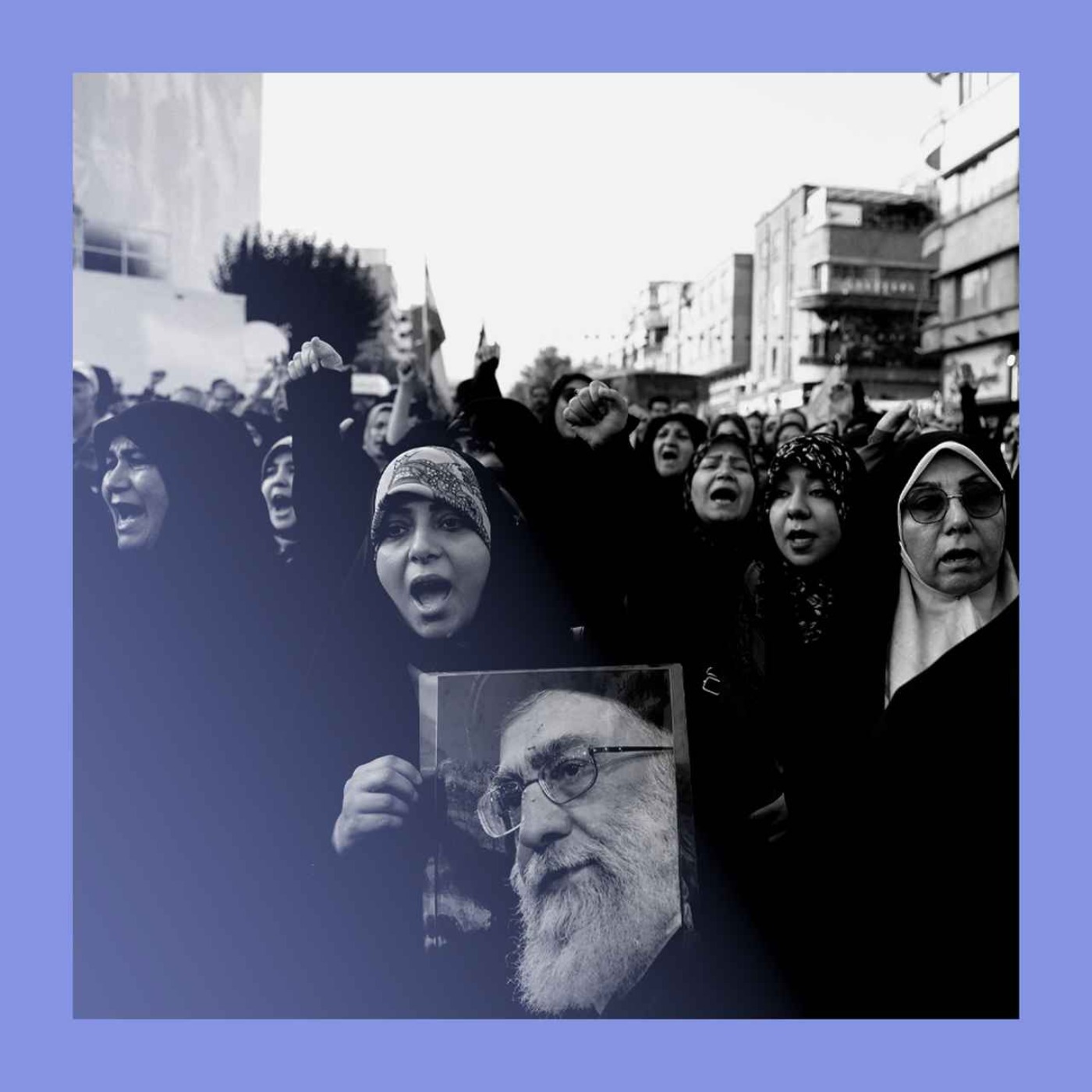
In this episode, hosts Jason Palmer and Rosie Blau explore the aftermath of America's military strikes on Iran, which targeted its nuclear facilities. They delve into Iran's potential responses and the implications of these actions, alongside discussions on secularism trends in the West and the diminishing use of inverted commas in literature.
Written by AI. May contain mistakes.

Get the gist, explore an idea or ask about something said.
 Claude
On The Intelligence from The Economist, what are the key points of this episode?
Searching your listeningAutomatic transcript. May contain errors.
0:09Hello and welcome to The Intelligence from The Economist. I'm Rosie Bloor. And I'm Jason Palmer. Every weekday, we provide a fresh perspective on the events shaping your world.
0:25For many decades, religion has been in decline in the West and society has become more secular. But in the past five years, both those trends have flatlined. So has secularism passed its peak? And an increasing number of best-selling and prize-winning books are doing away with inverted commas, quotation marks. Language purists are reeling. Our correspondent asks what all of the, quote, fuss is about.
1:01But first...
1:10The last we heard, America was going to pause for two weeks before making a decision as to whether to join Israel in its attacks on Iran. That was a feint. U.S. Central Command conducted a precision strike in the middle of the night against three nuclear facilities in Iran. Over the weekend, American stealth bombers and submarine-launched missiles took aim at Fordow, Natanz, and Isfahan. President Donald Trump immediately declared victory. Iran's key nuclear enrichment facilities have been completely and totally obliterated. That is unknowable and at risk of being completely and totally overstated.
1:53The most immediate response from Iran was delivered by Abbas Arachi, the foreign minister. The war-mongering and lawless administration in Washington is solely and fully responsible for the dangerous consequences and far-reaching implications of its act of aggression. A far more substantial response has been promised, and Iran has plenty of options in how it strikes back. None of them, though, brings the country obvious advantage. I think there are two big questions surrounding this American strike on Iran. Greg Karlstrom is a Middle East correspondent for The Economist. The first is how well it actually worked.
2:40How much damage did it do to Iran's nuclear program? And the second is what will Iran do next? It's threatened all sorts of retaliation if America took this step. America has taken it. What's Iran going to do? Well, let's take those in turn, insofar as we can know at this stage. How much damage has been done? Did the mission get accomplished? We really don't know yet, is the short answer. I mean, there are a lot of people pouring over satellite imagery over the past 24 hours, but it's very hard to know what happened to an underground facility from satellite pictures from above and what the Iranians are saying.
3:20We can't place much faith in it. They're saying none of these strikes did much damage, But of course, they have every incentive to lie about that. I think when trying to analyze the damage, I think it's very plausible that the strikes on Natanz and Fordow destroyed the centrifuges in those facilities. The centrifuges are the devices that you use to enrich uranium. They're very, very sensitive pieces of equipment. So even if the bombs themselves didn't destroy the centrifuges, just the shockwave from a large explosion might be enough to wreck them. And so it's possible that Iran no longer has large-scale capacity to enrich uranium.
4:00But there's an open question around, did Iran, before these strikes, move centrifuges somewhere else? Does it have a stash of them that we don't know about hidden away at some secret facility? We can't say for sure that it no longer has the ability to enrich uranium. And we also can't say, what has happened to the stockpile of enriched uranium that it already has? And to the other question you pose, what do you think Iran will do at this stage or what has it already done? Well, they have a menu of options that they can choose from. The problem is most of them are bad options from Iran's perspective.
4:36I think in the very short term, most likely will be to use proxies in the region to respond. The Houthis in Yemen might start attacks on commercial shipping in the Red Sea again. militias in Iraq might attack American military bases in Iraq and Syria, attack the American embassy in Baghdad, the sort of thing they did in 2020 after Donald Trump assassinated Qasem Soleimani, an Iranian general. Iran's response for that was a ballistic missile attack on an American base in Iraq. And something like that seems like the most immediate scenario for retaliation. Then you have a bunch of much bigger, more escalatory steps that Iran could take.
5:17It It could attack American bases in the Gulf states. There's a big naval base in Bahrain. There's an air base in Qatar, for example. It could attack the Gulf states themselves, fire missiles at oil facilities in Saudi Arabia. Or it could try to blockade the Strait of Hormuz, the very narrow waterway in the Gulf that handles about 20 % of global crude oil. Iran could try any of those things. But the risk is if it does those things, it might prompt an even bigger American response. The regime wants to retaliate, but it also wants to survive. So it doesn't want to do something that is going to convince America to escalate its strikes further.
5:55And Mr. Trump got elected to not get involved with a forever war that does seem to be possibly looming at this stage. As you say, Iran has few good choices. Is there any room there for some diplomacy, or is that now in the rearview mirror? I think there's always room for it, but the question is whether Iran is going to be amenable to it. We had these two months of talks before the war, from April until mid-June, where Steve Whitcoff, Donald Trump's Middle East envoy, was meeting with the Iranian foreign minister, trying to negotiate a nuclear deal. Iran, even back then, wasn't willing to make major concessions.
6:33And if they're not willing to do that, then I don't think you're going to get a new nuclear deal. So in that casting of it, everything depends on how and how much Iran does respond to this. It does. I think you can imagine three scenarios for what's going to happen in the days and weeks to come. One is Iran retaliates for this in a big way. They close the Strait of Hormuz or they carry out an attack that kills American troops or American embassy personnel. And that triggers a bigger American response. And then we're in this cycle of escalation where Trump's posts on social media about regime change start looking like American policy, that America isn't just striking Iran's nuclear facilities, that it actually wants to overthrow the regime.
7:16That's the worst case scenario. The best case outcome is that Iran settles for a very limited, very symbolic retaliation. And then they're willing to come back to the table and negotiate a serious nuclear deal. They're willing to make concessions. At that point, I think there's a path to both a ceasefire between Israel and Iran and a nuclear deal between America and Iran that reframes the relationship between those two countries. And then you have in the middle what I think is the most likely scenario where Iran's retaliation is more on the symbolic side. It doesn't convince Trump to go for regime change.
7:53But Iran also isn't willing to really make concessions and haggle over a deal. And so you end up with a situation where the war maybe fizzles to an end. Iran has every incentive to abandon the nonproliferation treaty, to start trying to rebuild their nuclear program in secret. And then at some point, months or years down the road, both America and Israel have to decide once again whether Iran has come to the nuclear threshold and they have to do this all over again. But there's a big distinction there between America's intent being crippling Iran's nuclear capability and America being amenable to or interested in regime change.
8:31We spoke on the show on Friday about Mr. Trump's theory of the world as leaders to be dealt with, not to be toppled. It seems like that is unexpectedly suddenly in question, that he might be open to that. What are we to make of his suggestion that that's one of the possibilities on the table? I think we never know with Trump, right? But it was striking that he posted that on Sunday night after everyone else in his administration, J.D. Vance, Marco Rubio, Pete Hegseff, they all insisted on national television on Sunday morning that the goal of this operation was not regime change. And then Trump turned around and contradicted them that night.
9:06You can read that just as trying to put pressure on the Iranians saying to them, listen, don't retaliate in a big way because we can do the same thing and you're not going to like where it ends up. You can read it as frustration. Trump, I think, wants leaders, big men that he can do deals with. But the supreme leader of Iran has demonstrated not just to Trump, but to most American presidents that he's not someone you can negotiate with. He is a very stubborn 86-year-old man who has a particular fixed worldview. It's possible that if he is not the supreme leader anymore, you have someone who is more amenable to negotiations.
9:44It's also possible the opposite happens and you get someone much more hardline and more determined to build a nuclear bomb. We really don't know. But I think there is a grain of truth there that Khamenei is not going to be the person that America makes a deal with. I'm not even sure that at this point he's capable of making a deal with America. Whatever it is Trump may or may not want to negotiate with the Iranians, it's very hard to imagine that he has a counterpart on the Iranian side right now. Greg, thanks as ever, and no doubt be speaking to you again soon about all this. Thank you, Jason.
10:29Right before I went to college, this was like the summer of 2023. I was like super depressed. I was like the most depressed I've ever been in my life. of... Eric Curry, a student at Pace University in New York, grew up in a religious household. Corbyn Duncan is The Economist's global correspondent. But it wasn't until his junior year of college, when he was struggling with his mental health, that he decided to deepen his relationship with God. I've got friends, community, and just, like, continuously building my relationship with the Lord. I recently got baptized like a month or two ago. And it was genuinely the best position I've ever made in my life.
11:16Eric notices friends at college feeling the same way he did, also finding religion to help them through hard times and give their life meaning. As college students at my university, it's a thing to say, I've tried the crystals. I've tried the drugs. I've tried alcohol. I've tried art, I've tried sex, I've tried the astronomy, I've tried life, all of these different things, and I still feel this way, right? I still feel... For the first time in half a century, the share of Americans who hold no religious belief has stopped growing. Similar trends can be seen in other parts of the world, in Canada, Britain and France.
11:59And whereas older Christians are holding on to their faith, lots of young people are finding it for the first time. Corbyn, as you say, secularization has been on the rise for decades. So what's changed? The rise of secularism in the West had seemed almost inevitable. And that was mostly driven by declines in the share of the Christian population. Christians tend to skew older, which means as they pass on, fewer of them are being replaced, but also Christians have been leaving the pews in a big way for decades. But in the past five years, since about 2020, those figures have hit an inflection point.
12:40Both generational churn and people leaving the church have slowed dramatically. So is this just about Christianity? So you might think that a stall in the secular share of the population could be related to growth in adherence for other religions, say Islam. Particularly in Europe, migrants tend to be more Muslim than the population at large, but that can't explain changes in the Christian share of the population. If it were true that the Muslim share of the population were growing very quickly, then you'd expect to see the Christian share falling quicker. So changes in the Christian share of the population are driving changes in the secular share, Whereas for decades, people were leaving the church and that share of atheists and agnostics was growing, people have stopped leaving the church and it's now flatlined.
13:27So we've got a situation where people are leaving the church in fewer numbers and there's been a flatlining of secularization. Why has that happened? It's a really tricky question to try to unpick, but what we do know is that these figures hit an inflection point around 2020. So there is one natural culprit and it's the COVID-19 pandemic. Across many rich Western countries to be looked at, the Christian share of the population decline either stopped or slowed dramatically around 2020 and has not budged since. Corbyn, maybe we shouldn't be surprised that a plague leads to a rise in religious devotion, but what really is the relationship there?
14:07It makes a lot of sense in many ways. Typically, we think that societies become less religious as they grow richer and become more comfortable. And of course, COVID-19 brought about lockdowns, economic dislocation, social isolation. And so there are many reasons that people might have been searching for something else in their lives. And we have a few figures to support this. Across 14 Western countries that were surveyed by Pew, a pollster, more people said that their faith was strengthened by the pandemic than weakened. Research from Copenhagen University showed internet searches for prayer and other religious practices spiked in 2020.
14:41And we have some data showing that religious attendance, for example, in Italy rose in places that were hardest hit by the virus. There does seem to be a relationship between these big catastrophic shocks and people hanging on to their religion. And you were saying at the top that young people specifically are turning to religion. Why is that? So their inflection point was also around 2020, but they do stand out in the figures. While other generations tend to be holding on to their Christianity, young people are becoming more Christian. In fact, more Christian than millennials, which is really surprising.
15:13Typically, each generation is less religious than the last. From the people that I spoke to, pastors and young people themselves, it seems as though because many young people these days don't grow up in Christian households and don't have that experience of leaving the church behind, they were coming to it anew. And that might be the thing that made the difference. So in a sense, they have a different cultural reference point with the church than earlier generations who were perhaps sitting there bored with their parents. That's absolutely true. A society has changed in big ways since the days of new atheism in the early 2000s, where there were best-selling books on the God delusion, why God poisons everything.
15:52There were mainstream TV shows debunking the Bible and the like. You don't really see that anymore. In fact, you see on major streaming platforms, shows that tell Bible stories, sales of the Bible, in fact, in America grew 22 % last year. Overall book sales grew by just 1%. So the cultural milieu that young people have grown up in today seems very different and a lot more receptive to religion. So Corbyn, we've mostly conquered the plague. Does that mean that this decline in secularization is over? So I think what we learned through COVID-19 was that people tend to hang on to religion in uncertain times.
16:30And we might be through the plague, as you say, but certainly there are other horsemen circling. If you look around us, we do live in increasingly uncertain times. There are culture wars, trade wars, real wars. And of course, we now face the onset of AI. And some people have spoken to me about human obsolescence being a reason for them turning to faith. So there are plenty of reasons why people might be searching for a higher power. Absolutely fascinating. Thank you so much, Corbyn. Thank you, Rosie.
17:18The big problem about talking about inverted commas is that they make no sound. Catherine Nixie is a culture correspondent for The Economist. So in this piece, whenever I use inverted commas, we're going to play the sound of some nice drums, so you know where you are. Like this. Got it? Good. Let's go. The inverted comma is no longer fashionable. Open Sally Rooney's new novel, Intermezzo, and on the first page a character says, Hello, Peter. Peter then asks, May I come in? When he should be asking, May I come in?
18:06Ms Rooney has discarded inverted commas for her last three best-selling books. This year's Booker Prize winner, Orbital, didn't use them either. In the 1970s, 94 % of Booker-nominated novels used them, compared with just 72 % in the past decade. And yes, our researcher did trawl through hundreds of Booker-nominated novels searching for inverted commas in all of them. They are cited less and they are slighted more. Novelists have called them weird and an obstruction.
18:47The inverted comma is gradually being removed. Quite why is not clear. Most blame James Joyce, a glum Irish writer. Joyce called the inverted commas perverted commas, and dropped them for his 1922 novel Ulysses. From then on, inverted commas started to be seen as a colonial, even patriarchal imposition on a piece of text. Instead, to indicate speech, freethinking writers like Joyce adopted the indentation and emdash of the French, who were evidently more artistically appealing imperialists. To this day, the commas' absence is still associated with edginess and with Irishness. That there should be flux isn't surprising.
19:28Language changes. Open any old book and it will be littered with an antique ink splatter of marks. The pilcrow, which looks like a backwards P, and the section sign, which looks like a sort of dissipated S, that are mostly meaningless to modern eyes. What is surprising is all the emotion that this engenders. Punctuation causes crossness. Oxford commas invite outrage, semicolons invoke scorn, and one 2003 grammar book suggested that a misplaced apostrophe should trigger emotions similar to the stages of bereavement. Naturally, it was a bestseller.
20:08Partly, this is pure snobbery. Puncturation is not merely a semantic marker, but a social one. Largely inaudible and completely invisible in everyday speech, Its correct usage can only be acquired through years of often expensive education. Punctuation thus marks not just prose, but people. Those who know, or think they know, whether a full stop should go inside or outside, inverted commas, join an elite intellectual aristocracy. Though it's best not to brag about it. The line between stupidity and pretension is fine. Or as the novelist Kingsley Amis put it, When it comes to grammar, the world is divided between burks and wankers.
20:49Do not use semicolons, warn Kurt Vonnegut. All they do is show that you've been to college. But partly, people just get cross because punctuation is genuinely helpful. Writers often forget that reading is hard, says Adam Mars Jones, a novelist. If a piece of writing has not had every single screw tightened, every word well chosen, every piece of punctuation in place, then the reader can struggle. Inverted commas help as they envelop a quotation in a crisp clasp of reassuring accuracy. Or they add obvious snark.
21:25By contrast, when inverted commas aren't there, this casts a postmodern pall of uncertainty over the words. Were these really the words spoken, you wonder? Which is partly the point. If a novel is written in the first person, Miss Rooney has said. Isn't it all a quotation? She does not see any need for them. Or as one should perhaps now say, she does not see any need for them.
22:05That's all for this episode of The Intelligence. We'll see you back here tomorrow.
22:20Thank you.
After America’s strikes intended to destroy Iran’s nuclear programme, one question is whether they succeeded. Another is how Iran will respond; all of its options are bad ones. In the West people have been shedding religion for decades, but that secularist shift now seems to be slowing. And what is driving the decline of inverted commas (aka “quotation marks”).
Get a world of insights by subscribing to Economist Podcasts+. For more information about how to access Economist Podcasts+, please visit our FAQs page or watch our video explaining how to link your account.
Runtime: 22 min
Hosted on Acast. See acast.com/privacy for more information.


