
 Ask ChatGPT



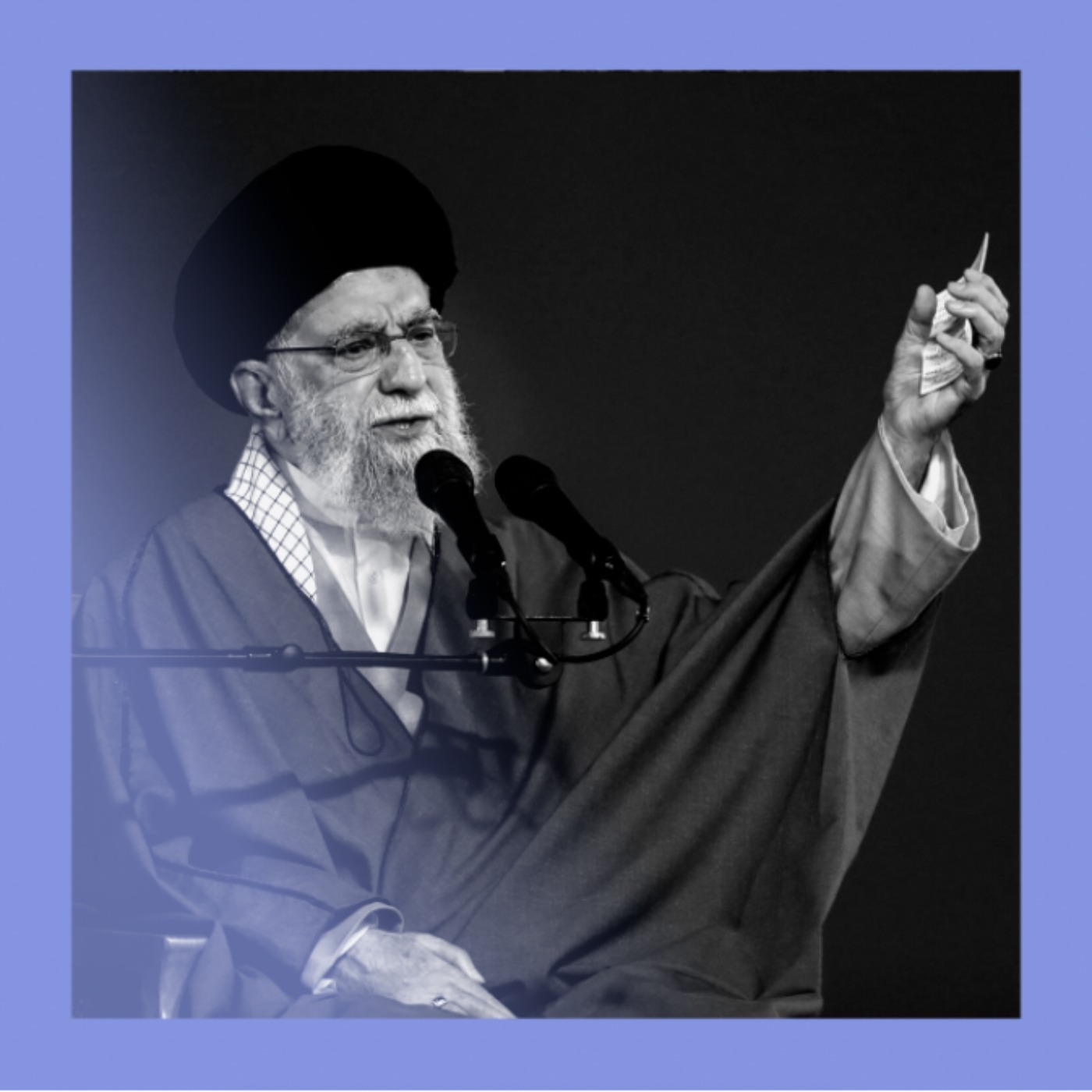
In this episode, the podcast delves into the life and political maneuvers of Ayatollah Ali Khamenei, Iran's Supreme Leader. It also examines perspectives on managing inheritances in today's economy and discusses the complexities of India's postal system.
Written by AI. May contain mistakes.

Get the gist, explore an idea or ask about something said.
 Claude
On The Intelligence from The Economist, what are the key points of this episode?
Searching your listeningAutomatic transcript. May contain errors.
0:28The Economist But for most people, that won't mean inheriting billions with a B. It'll be more like the value of a home. We discuss how heirs can make sure they don't blow it, whatever the number. And in India, people get lost a lot. And that's not just because the sprawling cities are changing fast and many streets have no names. It's also because the median postcode covers 90 square kilometers.
1:01First up, though.
1:11In order to understand what comes next in Iran, I think you have to understand the country's supreme leader, Ayatollah Ali Khamenei. Nicholas Pelham is a Middle East correspondent for The Economist.
1:28He was born in 1939. He was one of eight children, came from a poor family. His father was a simple religious scholar from the northeast of Iran. And if you were going to pick one child who was going to go on and become the supreme leader, it's really hard to imagine how you might have picked him. He was an underdog from the start. He started off in the city of Qom, which is the Vatican of Iran. But when he was studying there, it was really a backwater. The clerics had no real power. It was at the time of the Shah who was an absolute ruler and wanted no competition from anyone, least of all from clerics.
2:01I know one thing for sure, and that is throughout history. The military weakness of some countries has been always exploited. And so you start to see in the young Khamenei's mind this notion of how can the oppressed, how can those who are living under dictatorship rise up and find their own place in the world? And alongside the Quran, he began listening to music, recited poetry. In particular, he was reading such novels as Les Miserables and The Grapes of Wrath, which depict struggles against oppression, albeit secular struggles. But these seem to have had a deep impression on him because he, in later life, repeatedly talked about how they helped shape his outlook on the world.
2:46He also took an interest in the works of Said Qutb an Egyptian political theorist and revolutionary who took the ideas of the Muslim Brotherhood, which was the Sunni movement, and essentially what Khamenei did was to take some of these ideas in the Sunni world and translate them to the Shia world, and that ultimately ended up in the Islamic Revolution of 1979 in which he played a key role. For thousands of Iranians, most of them young, rampaged through the streets of Tehran, shouting down with the Shah, death to the Shah.
3:20He wasn't the only cleric who was thinking about an uprising against the Shah. Critically, there was an ayatollah by the name of Rahula Khomeini who had tried to organize demonstrations in the 1960s and was sent into exile. But Khomeini had been an acolyte of Khomeini's and that relationship survived that distance and essentially that led to the rise inside the corridors of power. But how did he get from first entering then the corridors of power to that position of supreme leadership? His first positions had little to do with God. He was initially deputy defense minister and then a commissar in the newly formed Islamic Revolutionary Guard Corps, the IRGC, which then was the Praetorian Guard and is now really the underpinning of the whole regime.
4:08In 1981, he won a tightly controlled election to become president of the republic. which really at that time was something of a sinecure. The real decision-making lay in the hands of Ayatollah Khomeini, the founder of the Islamic Republic and the supreme leader. And Khamenei essentially was obedient, uncharismatic. In fact, he gained power by being unremarkable. He held this largely ceremonial post for eight years, but all the time he was consolidating his own base to the point where I think Khamenei's opponents underestimated him. so that when Khomeini, the supreme leader, died in 1989, it was Khomeini who was shoehorned into position despite lacking the religious credentials and many just expected him to go on and become a servient leader to other power brokers.
4:58It wasn't just others who found Khomeini unremarkable, he seems to have found himself unremarkable. In fact, there's a video that surfaced a few years ago which was leaked to several news agencies and it shows him speaking to the country's other leaders in 1989, saying that he simply didn't deserve the job of supreme leader. But thereafter you see him consolidating power. He proved particularly adept at playing Iran's state institutions, one off against the other. And that, in a sense, turned him into being the final arbiter in the land. And it's that dynamic, or at least that politically canny way of doing things that sort of kept him in place all this time?
5:38Yes, so over time, the arbiter has gone on to become the absolute ruler. Others have to turn to him for a decision. At times, he will delegate authority. He remains very cautious. But over time, this institution, which relied on the moral authority of the leader, has become a bureaucratic octopus that just controls every element of state. It's got a representative in each department, in each province, in each military unit that's answerable to him, his own court, which is under the control of his son, Mujtaba, numbers thousands of people and is really involved in every aspect of decision making.
6:15And it's become this institution which has tentacles and fingers in every pie of the land. And so this rather unremarkable man has become this overpowering, almost tyrannical figure to the point where Iranians themselves now call him the dictator. And so how would you characterize then how someone in this consolidated position has responded, has reacted to the war spilling out over the past couple of weeks? Throughout his career, Khamenei has shied away from making big decisions. He's preferred to sit on the fence and let other factions fight it out until one of them comes out on top. And he particularly hates to make big decisions on war, even on a nuclear program.
6:57It's this ambiguity that is his comfort zone. And you're seeing that again now where he's retired into the background. He's issued two short video addresses.
7:15He came out and said that what he called idiotic invasion of Iran by this Zionist regime had occurred while government officials were engaged in indirect and mediating negotiations with the American side. So he was blaming Israel for the failure of that process of negotiations which he had endorsed.
7:38That's really all the public has seen of him, and they're being told that they haven't seen him because he's deep in a bunker. But he has handed power to a Shora council under the control of the Islamic Revolutionary Guard Corps, the IRGC. And I think the great question now is, will he come back when the fighting stops? or are you going to see these military commanders who having taken the reins of day-to-day decision-making and the decision whether to go to war, how to go to war and when to stop war, will they then hold on to that power and try and keep it, which is what many Iranians, I think, would prefer?
8:13Or will the cleric once again return to power and be this theocrat in charge of the country? Why do you suppose it is that someone who seems to be so good at consolidating power is so reluctant to use it at the crunch time? I think he's very focused on his legacy. I think he's acutely aware of the dangers of where this war could go. You've got two nuclear powers facing off against a would-be nuclear power. And the risk that not just his own regime might go down, but much of the region and that he's going to be the one who's held to account for that, I think does resonate with him. And he doesn't want to be the one that has to make that moral decision.
8:52fascinating but is there a question as to whether or not the public at large accept him they know that he's gone quiet that he has let essentially the military take over they've been under essentially martial law during this short time what's the response going to be from them if he comes back out the population by and large came out and supported their generals during the war they both faced a common enemy in that they both faced israeli attacks and so here's a woman saying we will never die we'll never accept humiliation we're going to stand our ground critically she sees this as an attack not just on the regime but on iran as a country vowing that if israel and america hit iran they will hit back
9:40and i think they're going to want something in return when the fighting subsides there is a strong desire now in Iran for a new social contract. They don't want to be subject to clerics. They want an end to economic isolation, but they also want an end to cultural isolation. And many look to the generals as a way out of Khamenei's rule. It's palpable in the streets, it's now palpable in the corridors of power. It may be that the generals feel that they want to ride that wave of public support and move beyond a tired and aging theocracy into something akin into a military dictatorship, which is actually much more familiar in the Middle East than the strange world of Ayatollah Ali Khamenei.
10:21Nicholas, thanks very much for your time. Thank you, Jason. Always a pleasure. Nicholas also had a chat with my colleagues over on Checks and Balance, our subscriber-only show on American politics. The discussion was around whether America's involvement in the war in Iran shifted the power dynamics in the wider region. Our Jerusalem correspondent Anshul Pfeffer thinks that is, in part, a question of leadership style. This diplomacy by soundbite diplomacy, by truth social posts, maybe Donald Trump is onto something that could work, who knows, but right now it seems very, very whimsical. Checks and Balance is out tomorrow and every Friday.
11:14Earlier this year, The Economist reported on the new inheritocracy. Joshua Roberts is our capital markets and European finance correspondent. In 2025,$6 trillion are going to be inherited across the rich world. And that means that inheritance is becoming almost as important as success at work in determining your life chances. And this isn't just among the super rich. In Britain, a quarter of 35 to 45-year-olds are going to inherit at least£280 ,000, which is a life-changing sum. So soon enough, a lot of people are going to be wondering what to do with an awful lot of money. Still, though, Josh, by the numbers, a lot of that money is going to accrue to the already pretty rich.
11:59Yeah, that's right. So according to UBS Investment Bank, there were 53 people who inherited a billion dollars or more in America last year. And loads more than that would have inherited hundreds of billions of dollars. What's happened is that in recent decades, asset prices have climbed so high and effective inheritance taxes have fallen so low that the amount that people have been inheriting has just been growing all the time. But we shouldn't take away from the fact that lots of people are going to inherit much smaller, but still very significant amounts of money. And as you say, people will be wondering what to do with it, how to splash that cash or whether to splash it.
12:37What do you suggest? So I think the first thing to do is to learn lessons from the fortunes that have been lost in the past. If you go back to the turn of the last century to the 20th century, then America's census recorded 4 ,000 millionaires. Now, if you make some fairly conservative assumptions that they had invested in the US stock market, that they had had an average number of children, that they had paid their taxes, and they had spent actually quite a lot of money, 2 % of their annual wealth each year, well, their descendants today would include 16 ,000 billionaires descended from the first Gilded Age from the turn of the 20th century.
13:13But actually, if you look at today's rich lists, it's difficult to find anyone who can trace their fortune back to the turn of the 20th century. So what you're suggesting there is that people did indeed splash the cash. They did not save it wisely, invest it wisely, look after it. Yeah, I mean, I'm sure a lot of people enjoyed spending that money an awful lot. But the interesting thing is the fact that those fortunes were lost. It's not down to the terrible things that took place into the 20th century. It's not down to inflation. It's not down to the massive wars in the 20th century. It's down to poor investment and spending decisions, because despite all those awful things, there was an enormous amount of wealth to be earned from stock markets.
13:55And you wouldn't have had to crimp your spending all that much to make sure you were earning that and sustaining your fortune. So I think the key question for today's heirs is how can you enjoy a nice life, make relatively conservative decisions and ensure your inheritance lasts? Okay, this is the part where I should probably give the disclaimer that the following is not investment advice. But what's your advice then, Josh? Well, there are two things to consider, how you invest and how you spend. And the nice piece of news is that what sounds like the hard how to invest is nowhere near as hard as it sounds.
14:30You don't need to invest perfectly in order to get very good results. In the example I just gave, our kind of putative 20th century millionaires just plomped everything in America's stock market. Now, very few wealth advisors would say that was the optimal thing to do. That would be taking an awful lot of risk. There will be lots of stock market crashes that might tempt you to take your money out again. But in the 20th century, if people had done that, they would have still generated excellent results. If you did more sensible things today, like split your portfolio between global stocks and government bonds to keep some of it safe, you would get even better risk-adjusted results.
15:06And there are also plenty of simple rules. There's one called the Merton share, which compare expected returns on stocks with expected returns on bonds and the amount of risk in the market and give you simple rules of thumb for allocating between them. The point here is you don't need to invest perfectly in order to do sensible things and get very good results over the long term. You said the how to invest was the easy part. That suggests that the how much you spend is hard in some way? Yeah, so how much to spend sounds easy, right? It's just picking a proportion of your wealth to spend each year.
15:40But this is where many people who come into a fortune have fallen down. There are common rules that are actually much more risky than they sound. So one is to spend a fixed proportion of your initial wealth each year. If, for example, you're saving for retirement, many financial advisors might advise you to spend four or five percent of your initial wealth each year. But in fact, if you do that, the risk of you running to zero in really not very long is too high. Why that is, is because if you're spending a fixed proportion of your initial wealth each year, and then the stock market crashes, you keep spending and you don't have time to recover from the losses that you've made.
16:19So the lesson from that is that the optimal amount that you should spend can't be a proportion of the initial value of you've inherited, it has to be a proportion of the current value of your portfolio. If you take losses one year, your spending that year has to fall. If your portfolio increases in value one year, your spending can rise. This is really key. If you want to optimize your spending decisions, you have to be willing to vary your maximum spending each year as your portfolio changes in value. Rich years and lean years. I mean, it happens in working life. It happens in non-air life. That's not so bad, is it?
16:56It's not so bad, but it's not something that people necessarily immediately think of. If you want to get the higher returns that often come from investing in the stock market, you have to be even more willing to vary your amount of spending year by year because stocks vary more in their value each year. And in deciding how much you can spend each year, another counterintuitive lesson is that it needs to be much less than the returns that you expect from your portfolio. The reason for that is you want the size of your portfolio to rack up year by year. So each year you need to be letting some of the returns it makes stay in the portfolio so they can accumulate and it can get bigger and bigger.
17:36This sounds like the lifelong work of keeping a calculator to hand. Yeah, maybe one of the lessons here is that some of your inheritance should be spent on employing an excellent financial advisor who can do these calculations for you and then you can put the calculator away yourself. The way to do this perfectly is to simulate all the possible path the market might take, simulate your spending, see how your portfolio changes in value, and then choose the best path amongst those. But as you might expect, that sort of procedure is difficult, it's sensitive to the inputs, and you probably want a professional to be doing it for you.
18:11Josh, thanks very much for your time. Jason, thank you for having me.
18:31When I lived in London, my address was a fairly straightforward one. It had a flat number, a street number, a street name and a postcode. And that was about the extent of it. Leo Morani is an Asia correspondent. In Bombay, where I live now, I have all of those things. But I also have a bunch of other things cluttering up my address, such as near so-and-so landmark and down the street from so-and-so other landmark. The result of all this is a tremendous amount of wasted time for me and for people trying to get to my place. What all of that adds up to is billions and billions of dollars to the Indian economy every year, adding up to somewhere around 0.5 % of GDP.
19:10be. Leo, that all sounds quite useful to me to give landmarks close to where you are. What's the problem? Well, there's a bunch of problems. One is, in my case, the landmarks are an addition to a street name, but very, very often there are no street names. So the landmarks just have to function on their own. And these landmarks are incredibly vague. So for example, if you said next to a bank. The phrase next to tends to have a median distance of 80 meters. You say maybe a postcode will help, but a third of postcodes in India are wrongly written. And remember that there are 750 million discrete places, businesses, homes, so on and so forth in India.
19:53So there's a lot of people wandering around having no idea what they're doing. And is that the same across India, the same problem? It's actually much worse in the rest of India than in its metropolitan centres. So the cities, at least most of them, tend to have street names. Estimates vary, but somewhere around 60 to 90 % of streets in this country do not have any names at all. Sometimes they do have names, but there's no signage. Sometimes they have names, but too many. For example, in the area where I am right now, there's a road called Hill Road. I call it Hill Road. The rickshaw driver calls it Hill Road.
20:25Even Google Maps calls it Hill Road. What does the signage say? Ramdas Nayak Road. Nobody has any idea where that is. So Leo, people get lost a lot, clearly. But you mentioned there's a financial impact to this as well. Explain that to me. There's a bunch of things that happen. So I, for example, in the course of a single week, will get e-commerce deliveries, food deliveries, I'll be calling taxis. And in India, we have quick commerce. So if I want to make a drink in the evening and I find I'm out of lemons and soda, I can tap my phone and in about 10 minutes I'll have some lemon and soda. So you know, there's tons of guys coming and going all day long every day.
21:06And each one of those guys is calling me once, twice, maybe three times asking me where I am. A delivery rider who could be making say 35 deliveries in a day is instead making 24. That adds up. Second, government itself suffers because Sometimes civic officials will turn up in the wrong place or not know where they're going. Moreover, emergency services take longer than they should to get to places. And then thirdly is when it comes to mortgaging property, especially rural property, where this stuff is a complete mess. Outside urban India, the country relies on a bunch of different pre-colonial and colonial mechanisms that involve a whole bunch of varying administrative officers.
21:46And the result is that it takes a long time to get a mortgage. and banks often have to send human beings to go verify that this place exists. All of this adds to the cost. So Leo, what's the solution? Private companies have their own solutions. I spoke to a guy who headed up technology at a big logistics firm and what they ended up with was saving a ton of money, saving a ton of time and getting their riders and drivers to places faster than they used to. But when private companies do this, it's proprietary information. It's a commercial advantage. They have no reason to send it out into the world.
22:22But there are public versions of these things. The problem with those is they don't really replace actual addresses and they depend on everybody having a smartphone, which in a country like India is not something you can take for granted. The government of India is also working on a solution. The Department of Post announced a new postcode type thing called a digipin, which is much more refined than the ones we have at the moment, which are six digits and can describe a pretty large area. The new one describes a very small area, so it should in theory be a lot more useful. And I hope it is, but we'll have to wait and see.
22:55I mean, it depends on adoption. One solution is you have one name for each street and then you have a sensible bunch of numbers that either go 1234 or they go 1357 on one side and 2468 on the other side. The rest of the world seems to have managed to pull this off. But for some reason, India has struggled with this basic concept. Leo, thank you so much. Always a pleasure, Rosie.
23:33That's all for this episode of The Intelligence. We'll see you back here tomorrow.
23:45Thank you.
We examine the path of Ayatollah Ali Khamenei, once a bookish cleric underrated by everyone—including himself. He has hung on to power perhaps in part by not making decisions at crucial points. Our finance correspondent looks at the shifting wisdom on how best to manage an inheritance. And why India’s addresses are so long, complex and ultimately costly.
Get a world of insights by subscribing to Economist Podcasts+. For more information about how to access Economist Podcasts+, please visit our FAQs page or watch our video explaining how to link your account.
Hosted on Acast. See acast.com/privacy for more information.


