
 Ask ChatGPT


 The Intelligence from The Economist
2 Nov 2026 · 24m · 9 chapters
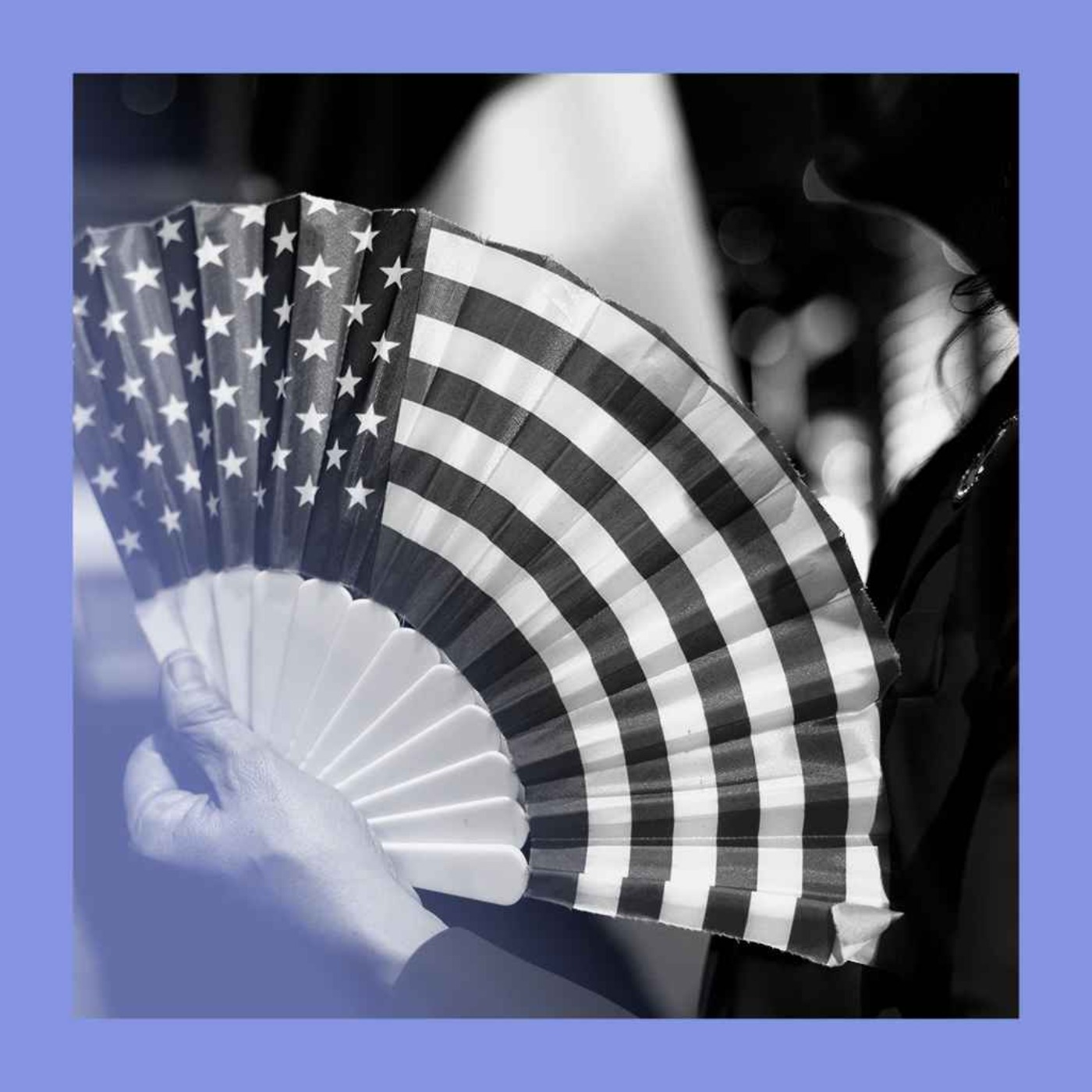
An American midterms preview focused on election integrity risks and the political stakes, plus brief segments on housing/investing and Houdini.
Charlotte Howard, The Economist U.S. editor (New York), discusses election dynamics. Kenneth Werner, The Economist Washington correspondent, reports on election officials’ preparations. Tina Barden, former Republican election official in Rochester Hills, Michigan, now works with Ready for Tuesday. Gabrielle Cazares-Kelly, election official in Pima County, Arizona.
Democrats may flip House and possibly Senate, but polls may underestimate Republicans in red states; Trump’s unpopularity and economic pressures matter. Election administrators are planning for interference (including DOJ monitors, potential intimidation, and even unlikely federal meddling). Presidents lack authority over elections, but can sow distrust.
Ready for Tuesday “ballot ship” tabletop exercises (fires, DOJ warrants, ICE concerns); Tina Barden’s 2020 error leading to death threats; DOJ plan for 1,000 monitors; Alaska’s late close/mail-in ballots could delay results.
Written by AI. May contain mistakes.
Hear about election official Tina Barden's experience with election integrity and threats in 2020.
“In the 2020 election cycle in November, we had a human error in our office, and it was quickly corrected within a matter of 24 hours.”
Explore how 'Ready for Tuesday' prepares election officials for threats and disruptions.
“Now she works with a group called Ready for Tuesday.”
Analyze Donald Trump's potential impact on the upcoming midterm elections.
“Officials I've been speaking to across the country are envisioning all sorts of scenarios and preparing contingency plans.”
Charlotte Howard discusses why the midterm elections are crucial in the current political climate.
“At last, tomorrow it is midterm elections day in America.”
Investigate the various factors that might influence election outcomes, including economic issues and polling accuracy.
“and how quickly Republicans try to move beyond the Trump era or whether they do so.”
Learn about the potential challenges and uncertainties on election day and how officials are preparing.
“election administrators are bracing for some potential trouble tomorrow.”
A brief wrap-up of the discussion with Charlotte and a preview of the next episode.
“For the moment, Charlotte, thank you very much for joining us.”
A discussion on the changing attitudes towards home ownership among young people.
“Flips, conversion, loving it, listing it.”
Exploring the cultural impact and legacy of illusionist Harry Houdini.
“After he died on Halloween in 1926, Harry Houdini's spirit supposedly returned.”

Get the gist, explore an idea or ask about something said.
 Claude
On The Intelligence from The Economist, what are the key points of this episode?
Searching your listeningAutomatic transcript. May contain errors.
0:00With no fees or minimums on checking accounts, it's no wonder the Capital One bank guy is so passionate about banking with Capital One. If he were here, he wouldn't just tell you about no fees or minimums. He'd also talk about how most Capital One cafes are open seven days a week to assist with your banking needs. Yep, even on weekends, it's pretty much all he talks about. In a good way. What's in your wallet? Terms apply. See CapitalOne.com slash bank. Capital One N.A. Member FDIC.
0:32This Economist podcast is sponsored by Apollo.io. In a fast-moving business environment, finding the right people to connect with takes time. For sales teams, prospecting, outreach, and follow-up can mean juggling multiple tools and workflows. Apollo.io brings these activities together in one platform, helping sales teams find the right buyers and spend less time on scattered, manual tasks and more time building relationships. Apollo.io. Sign up for free at Apollo.io.
1:28Mary Houdini.
1:34First up, though.
1:40In the 2020 election cycle in November, we had a human error in our office, and it was quickly corrected within a matter of 24 hours. And everything was relayed to the press. We did press releases. Back in 2020, Tina Barden was working as a Republican election official in Rochester Hills, a city in Michigan, when she noticed an error in the way the vote tally was submitted. She fixed it as quickly as she could. Kenneth Werner is our Washington correspondent. But that did not stop allies of Donald Trump, who was then a presidential candidate, from claiming that Tina had manipulated the vote. On the Friday after the election, Ronna McDaniel was the chair of the RNC at that time, held a press conference in the Republican headquarters and said just last night in Rochester Hills, we found 2 ,000 ballots that should have been given to Donald Trump that were given to Joe Biden.
2:33It was an absolute misrepresentation of what had happened. Soon, Tina was getting death threats. He used his phone across state lines to do that and leave that voicemail and say that when I least expected that he would kill me and that I should have a knife in my throat. That man went to prison, but the experience shook Tina. She wanted to do something about it. Now she works with a group called Ready for Tuesday. They conduct training sessions, otherwise known as tabletop exercises, to prepare election officials for any potential threats and disruptions that could happen as votes come in. Are there places where we're doing tabletops, where external interference is considered?
3:10Absolutely. We're walking through what does that look like for voter intimidation. When Tina says they're preparing for possible external interference, she's alluding to a new potential threat in these midterms. Intervention by the federal government itself. Polling shows Democrats look poised to flip control of the House in the midterm elections this week and maybe even the Senate. The nagging question is what schemes Donald Trump might attempt to subvert the election's legitimate results. His efforts to overturn his loss in the 2020 presidential election wisened up everyone to the many pressure points in America's decentralized election system and the lengths he might go to squeeze them.
3:49I want to see elections be honest. And if a state can't run an election, I think the people behind me should do something. Earlier this year, President Trump said he wished he had sent the National Guard to seize voting machines in the swing states he lost six years ago. This cycle, in Alaska, the Trump administration is preemptively contesting a possible win by the Democratic Senate candidate there, on the basis that Democrats tried to confuse voters by planting a spoiler candidate on the ballot who shares the same name as the Republican incumbent. Officials I've been speaking to across the country are envisioning all sorts of scenarios and preparing contingency plans.
4:25We are not playing battleship, we are playing ballot ship. And as my chief deputy reporter and my election... The other week, I sat in on a tabletop hosted by Ready for Tuesday at the election office in Pinal County, Arizona. Staff there were split into two teams for this simulated game of ballot ship. We're going to do this in dodgeball fashion.
4:50Each side had to imagine disruptions for the other team, which then had to develop responses. What happens if there's a fire at a polling place? What if the FBI shows up with a warrant to seize ballots. Or if monitors from the Department of Justice show up at the polls. And if they don't have the letter, then they have to leave, correct? Um, I believe so. Yeah, you can't hang around. The Department of Justice plans to deploy 1 ,000 monitors across the country on Election Day. Staff in Pinal County were talking through what to do if agents from the DOJ arrive there. Their conclusion was, if they don't have a letter, they need to leave.
5:27They can't interfere with voters. If the D.I.J. tries to do that, call county law enforcement. What if ICE comes to our voting location? It's very much like a concern. Gabrielle Cazares-Kelly is an election official in Pima County, Arizona, and she's a Democrat. My staff were asking about it, and voters were calling and asking about it. People kept asking her about whether ICE could show up on election day. That's very unlikely, and it would arguably be illegal. But she told me that lawyers in her county are prepared in any case. They have restraining orders drafted. Plug in a few things, get print, and physically run the document over to a waiting judge.
6:13Any attempt by a president to meddle with elections is going to run smack into the law, which is clear. Presidents have no authority over elections. Only states and Congress do. Still, the president is the biggest megaphone of all. He can sow distrust and confusion. And that matters, especially when elections are close. Control of the Senate could come down to one or two states. And a lengthy or contested count requires patience and restraint on the part of candidates. And those are not attributes associated with Donald Trump.
6:48At last, tomorrow it is midterm elections day in America. All of last week, we went on a bit of a road trip through America, looking at some key races, some key questions, some key constituencies. Today, we want to take a higher level look at the bigger themes. And to do that, we have on the show Charlotte Howard, our U.S. editor, who's based in New York. Hi, Charlotte. Hi, Jason. Charlotte, both of us have been reporting on American elections long enough to have heard this is the most important election of our lifetimes more than once before. In your mind, how true is that this time around? I think presidential elections are more important than midterm elections generally.
7:22but there are a few reasons why this election is so crucial. It's the last election that we'll have while Donald Trump is still president. I think it will have a big impact on the course of his next two years in the White House. I do think that Donald Trump is going to be a very unconventional lame duck. I do not think he's the sort of person who's happy to fade away into the background. No evidence suggests that's what will occur. So they're very important in that they are a referendum on this president. They will, I think, help determine the future of the Republican Party and how quickly Republicans try to move beyond the Trump era or whether they do so.
8:05And they'll have a big impact on the way that Congress can try to once again be an active third branch of government in a way that we really have not seen Congress behave in the past two years. Congress has not been an effective check on the executive branch whatsoever. And the question is how Democrats, if they win a majority in the House and if they are able to take the Senate, how effective they will be on both advancing their policy priorities and really substantively serving as a check on the White House. But the fundamental dynamic here is that Mr. Trump, in his unpopularity is having something of a negative effect for kind of the first time for Republican candidates.
8:47Yeah, I mean, our net approval rating that we keep track of at The Economist has a negative 27 for Donald Trump. That's a really dismal number. 61 % of Americans don't approve of him. And there are a few things going on here. The breadth of his unpopularity and the reasons that he is unpopular are very important. So sometimes there are elections where culture wars dominate. This is not that election. We have the war in Iran that have pushed up prices of fuel for all Americans, but particularly Americans in a few really crucial states, Iowa, Alaska, Texas, places where Americans really consume all kinds of fuel, in particular diesel.
9:30And then, of course, the tariff war, which has pushed up other costs. And so Americans see these policies, and sometimes it's hard to link a president to broader changes within a macroeconomic environment. These are policies that's very easy to link from policy A to result B. And you see voters doing that in real time. And all of that is what's led to so much speculation about a Democrat clean sweep, even in Michigan, where the sitting Democratic representative Haley Stevens just made this surprise endorsement of the Republican Senate candidate Mike Rogers. What do you think more generally to that blue wave possibility?
10:09So I think a blue wave is possible, but like actual waves, they're subject to changing conditions. And there are a few things that the Democratic senator summed up well recently in describing the party's mood of being nauseously optimistic. And I think there are a few reasons for that. One is, if you look at data in elections stretching back, you'll find that often it has been the case that there are polling errors, particularly for Democrats in red states. And that may cause your ears to pick up because right now the whole game is about Democrats in red states, whether it's Texas, Kansas, Iowa, Alaska.
10:51There are a lot of important states that Republicans have carried by a large margin that Democrats now hope to win in order to gain control of the Senate. Our analysis suggests that polls have systematically underestimated Republicans' strength in those states dating back. So that is a very important note of caution going into these midterms. And then other things that might change in terms of conditions are, let's say there's more news out of the Middle East, whether that is airstrikes in Iran or more problems in the street. Rent futures are already up more than$100 a barrel. And as we've heard from Kennett, there's this whole unfolding situation in Alaska, which is a nightmare for Democrats because it's very hard.
11:37It's not impossible, but it is very hard for them to take control of the Senate if they can't carry Alaska. So there are a lot of moving pieces now, even this close to the election, that could have an impact. And speaking of Alaska, as we heard from Kennett, election administrators are bracing for some potential trouble tomorrow. How much do you expect things might get ugly on that score? The truth is that I don't know. I don't think it's likely, but it's not impossible. So one of the promising things, I think, is that election administrators are taking steps in case there is an attempt at interference.
12:11We've already seen lawyers very active in court in rebuffing different attempts to change voting rules. It's not the case that at midnight we will have a result. There are all kinds of reasons why it may take some time to figure out who has control of the House and who has control of the Senate. There are a long list, but I'll give you a few. One is that Alaska doesn't close until very late and it has mail-in ballots. It could take a while. Maine has rate choice voting. There are all kinds of ways in which it may take some time for the result to be decided. And Trump has shown that he is able to use any uncertainty to pose additional questions about the integrity of an election.
12:55So you can imagine that in the comms war that happens on Wednesday, on Thursday, that there's quite a lot that could be said about how elections have proceeded, whether the results of a given race in a given state are legitimate. So I think that's the other really big thing to look out for. And so in those earliest stages, how are you going to be consuming the outcome? I will be in our office with many of our colleagues in New York, and we have correspondents who are fanned out across the country in various states that are going to be closely watched, feeding and reporting. There's a lively debate about what kind of takeout we're going to have at which time of the night.
13:37but we'll have live updates coming in from different states with lots of whizzy graphics explaining what has happened. We'll of course have more coverage as we know more about who actually won this thing and looking forward to it. It's going to be a busy week, caffeinated, ready, excited. Excellent. I look forward to being just a tiny part of the all-nighter that you're describing there. For the moment, Charlotte, thank you very much for joining us. Thank you. We'll be chatting to Charlotte once again on Wednesday morning at the end of that all-nighter for a full show dedicated to how things went and where they stand.
14:15Busy lady she is. On Friday, on Checks and Balance, our sister show on American politics, she joined in a far deeper dive on why these elections matter so much and which kinds of voters are likely to decide them. Have a listen.
14:59Thank you. doing the work I actually needed to get done. Then I found Superhuman Go from the makers of Grammarly. It works where you already work, reading a dense thread. Highlight it, ask Go for the key points, and you're already up to speed. Not sure what you owe after those meetings? Ask what was decided and get clear action items. Before you hit send, Go flags a number or name that doesn't add up. It's right there when you need it, on the side of your browser, without switching apps or losing your place, and you're always the one in control. Try Superhuman Go from the makers of Grammarly. Find out more at superhuman.com.
16:03people. So all the banks win, but so do all the francs. The lenders and the borrowers, the Lindas and the Olivers. When you build credit scores the right way, everybody wins. That's the power of VantageScore. Get started at VantageScore.com.
16:21There are endless television shows dedicated to getting on the property ladder. Flips, conversion, loving it, listing it. But many young people now question whether buying a house is really worth it. Maybe their money is better put elsewhere. So the allure of getting on the property ladder isn't what it once was, and a growing number of people are questioning whether it's still worth buying a home. Minjero Makandawiri is a news editor at The Economist. The moment the interest rates started climbing in 2022, the financial case for buying a home took a huge hit. And as a result, we're seeing a generation of happy renters who are putting their savings into stocks and seeing stronger returns.
17:11Why is that happening, Vindjara? What's changed? Well, there are two things happening. The first is that getting on the property ladder is still brutally expensive, especially for young people. So in Ireland, for instance, 60 % of 18 to 34-year-olds still live with their parents. And although housing markets in many countries have softened lately, they're still close to all-time highs after adjusting for inflation. But at the same time, property is looking less attractive as an investment. Now that higher interest rates are cooling house prices, households are generating more of their wealth from stocks.
17:47And that reverses a trend that we've seen play out for a quarter of a century, where households generated most of their wealth from real estate. So it seems less clear that property is the path to wealth, especially for young people. How do the returns compare then if you consider property versus investing in the stock market? Well, last year, of the$40 trillion added to global household wealth, 57 % came from stocks and just 15 % came from property. And that's partly because house prices are stalling. So American home prices grew by about 5 % in the past decade. But in the next 10 years, we're expecting that that will slow down to about 2%.
18:30By contrast, stocks are booming. If you look at the ratio of what companies are valued at compared to the value of their physical assets, so in other words, their buildings, their factories, that kind of thing, that now stands at roughly 50 % above the peaks of the dot-com bubble. And are we seeing that trend everywhere? Well, that realignment is most obvious, I'd say, in America. In fact, Goldman Sachs reported back in July that stocks officially surpassed real estate as a share of household wealth for the first time since the Second World War. And the surge in equity investing is particularly pronounced among young people.
19:10So JP Morgan found the share of 25-year-olds who put money into investment accounts jumped sixfold between 2015 and 2024. How's the housing market actually doing right now? Well, it's really telling that the speculative side of real estate is pulling back and not just because of higher interest rates. And when you say the speculative side of the property market, you mean? So people buying investment properties as landlords. In America, you've got a huge share of mom and pop landlords, people with maybe one or two properties and sometimes more. In Australia, something like one in seven taxpayers as a landlord.
19:50So property has been a huge investment for people across the Anglosphere. But also because governments are actively stripping away the tax breaks and the subsidies that inflated property prices for so long. So policy is shifting. In Canada, foreigners have been banned from buying property since 2023, and so sales of condos in Toronto have crashed. And in Britain, the government has introduced new protections for renters, shielding them from things like bidding wars and excessive rent rises and no-fault evictions. And as a result, British landlords are selling at record rates. And across America, home flipping has dropped sharply alongside shrinking profit margins.
20:30So market behavior has shifted fast. Isn't there a difference though, because when you're investing in property, you're buying not just a house, you're buying somewhere you can live forever. You're buying your home. Of course, homes are more than just financial assets to exploit. So the broader pivot away from property has benefits. Reining in that housing boom helps reduce the systemic risk of a 2008 style financial meltdown, for instance. Now, to be fair, stock markets can crash as well. and usually a whole lot faster when they do. But the debate around property mirrors a shift in mindset too.
21:10Younger generations are increasingly disillusioned with the idea that bricks and mortar guarantee financial security. And there's a feeling among young adults that homeownership has worked well for their parents and their grandparents. But that building that kind of wealth through property feels increasingly out of reach today. Minjeru, thank you very much. Thank you for having me.
21:52You could call it a reappearing act. After he died on Halloween in 1926, Harry Houdini's spirit supposedly returned. Caitlin Talbot is our digital culture correspondent. In Santa Monica, his spectre was seen making a dramatic escape from handcuffs. In Chicago, people saw the magician's spirit swagger into a seance. His widow, Bess, dismissed such claims. If Houdini wanted to reach out from beyond the grave, he would use their secret code. Bess waited to hear from Houdini for ten years before declaring that spirit communication in any form is impossible.
22:38This Halloween, to mark the centenary of his death, many gathered in dimly lit rooms to summon his spirit. In Europe and America, magic shows recreated his most daring tricks. There were new exhibitions too. Houdini's library at the Harry Ransom Center in Austin, for example, shows that he was a bibliophile as well as a showman. A new docuseries, Houdini Back from the Dead, uses AI to render the magician and have him narrate his life. And some of his biggest fans went to Budapest for Houdini 100, a four-day commemoration that included a lockpicking contest and a trip to meet Houdini, the local celebrity rabbit.
23:24The fanfare is for good reason. Houdini is probably the most celebrated illusionist of all time. His name haunts dictionaries. The noun Houdini is a personal animal that is very good at escaping. He's famous in part because he was the master of mystery, but also because he was a master promoter. Just as you can study Houdini's performances to understand magic, You can study his career to understand fame. Houdini offers several lessons for anyone looking to sell something. First, work hard to polish your product.
24:05The magician trains like an athlete to ensure he could get out of tight spaces and straight jackets and learn how to hold his breath for minutes on end for underwater escapes.
24:17It is a scholarly endeavor. I think a lot of magicians, when they learn the tricks, they're often learning it from someone else, and they learned it from someone else. So you're learning the genealogy as well as the trick. Eric Collery is the curator of the new exhibition Houdini's Library. So the history is kind of baked into the performance in a really exciting way. And Houdini understood that, but he was also one of the first ones to really take the scholarship of magic seriously. Houdini collected biographies of magicians and histories of sorcery. His research helped him refine his craft and invent new tricks, such as being buried alive or making an elephant disappear.
25:00There's a lot of bravado in magic and magic history. There's a lot of people who claim inventions or claim that they've done certain things as the first one to do it. He was really interested in digging in and seeing like, oh, actually, this trick is much older than people say it is.
25:19The golden age of magic in the 19th century was bolstered by mass media. Rather than buying an advert near the back of the newspaper, Houdini would pull off a stunt to get on the front page. As he once said, I'm not an advertiser, I'm news. He dared police in every city he visited to lock him up so that he could escape and freed himself from straitjackets while hanging upside down from cranes. He was also among the first magicians to use radio and movies to help promote his shows. Houdini understood the importance of protecting his brand. Houdini tried to trademark lots of his tricks. It didn't always work, in part because a patent spells out the secrets.
26:02So instead he launched attacks on his imitators, who called themselves things like Boudini, Hardini, Houdin and Udini. he challenged copycats to beat him on stage and threatened to expose the seekers of their tricks to the public. Even a hundred years later, Houdini is still working his magic.
26:39That's all for this episode of The Intelligence. We'll see you back here tomorrow.
27:02With no fees or minimums on checking accounts, it's no wonder the Capital One Bank guy is so passionate about banking with Capital One. If he were here, he wouldn't just tell you about no fees or minimums. He'd also talk about how most Capital One cafes are open seven days a week to assist with your banking needs. Yep, even on weekends, it's pretty much all he talks about. In a good way. What's in your wallet? Terms apply. See CapitalOne.com slash bank. Capital One N.A. member FDIC. With no fees or minimums on checking accounts, It's no wonder the Capital One bank guy is so passionate about banking with Capital One.
27:40If he were here, he wouldn't just tell you about no fees or minimums. He'd also talk about how most Capital One cafes are open seven days a week to assist with your banking needs. Yep, even on weekends, it's pretty much all he talks about. In a good way. What's in your wallet? Terms apply. See CapitalOne.com slash bank. Capital One N.A. Member FDIC.
Ahead of tomorrow’s legislative elections we consider the chances of a “blue wave”, the most influential demographics this time around and whether to expect election-administration trouble. Young people are deciding that bricks-and-mortar investment is not as dependable as the stocks-and-shares kind. And 100 years on from his death Harry Houdini still has lessons to teach about getting and staying famous.
Guests and host:
Topics covered:
Listen to what matters most, from global politics and business to science and technology—subscribe to The Economist.
Hosted on Acast. See acast.com/privacy for more information.


