
 Ask ChatGPT



In this episode, the discussion revolves around three main stories:
Written by AI. May contain mistakes.

Get the gist, explore an idea or ask about something said.
 Claude
On The Intelligence from The Economist, what are the key points of this episode?
Searching your listeningAutomatic transcript. May contain errors.
0:02The Economist
0:10Hello and welcome to The Intelligence from The Economist. I'm your host, Jason Palmer. Every weekday, we provide a fresh perspective on the events shaping your world.
0:24Europe is phenomenally good at, you might say ruthless with, its sin taxes. Booze, tobacco, petrol, the sky's the limit. The public health and public purse arguments for them are straightforward, but there is some inequality in their effects. And the electric vehicle revolution has come for Bangladesh's rickshaws. They might now be the world's biggest informal EV fleet. Good news for drivers' incomes and for riders' convenience. But everybody, look out. These things are dangerously fast.
1:01First up though.
1:12In 1997, a small team of software developers in the Scottish city of Dundee were about to release a title which would change the way the non-gaming public would view video games.
1:27Georgia Banjo is a Britain correspondent for The Economist. It would go on to launch one of the best-selling series in games. At the time, though, no one expected it would be a hit.
1:42The game was a radical departure in tone for the studio. DMA Design at the time was best known for its Lemming series, which asked players to safely guide cute green and blue blobs through a deadly obstacle course. The new game would follow a small-time criminal, stealing cars and terrorising Harry Krishnas, all in a warped parody of America.
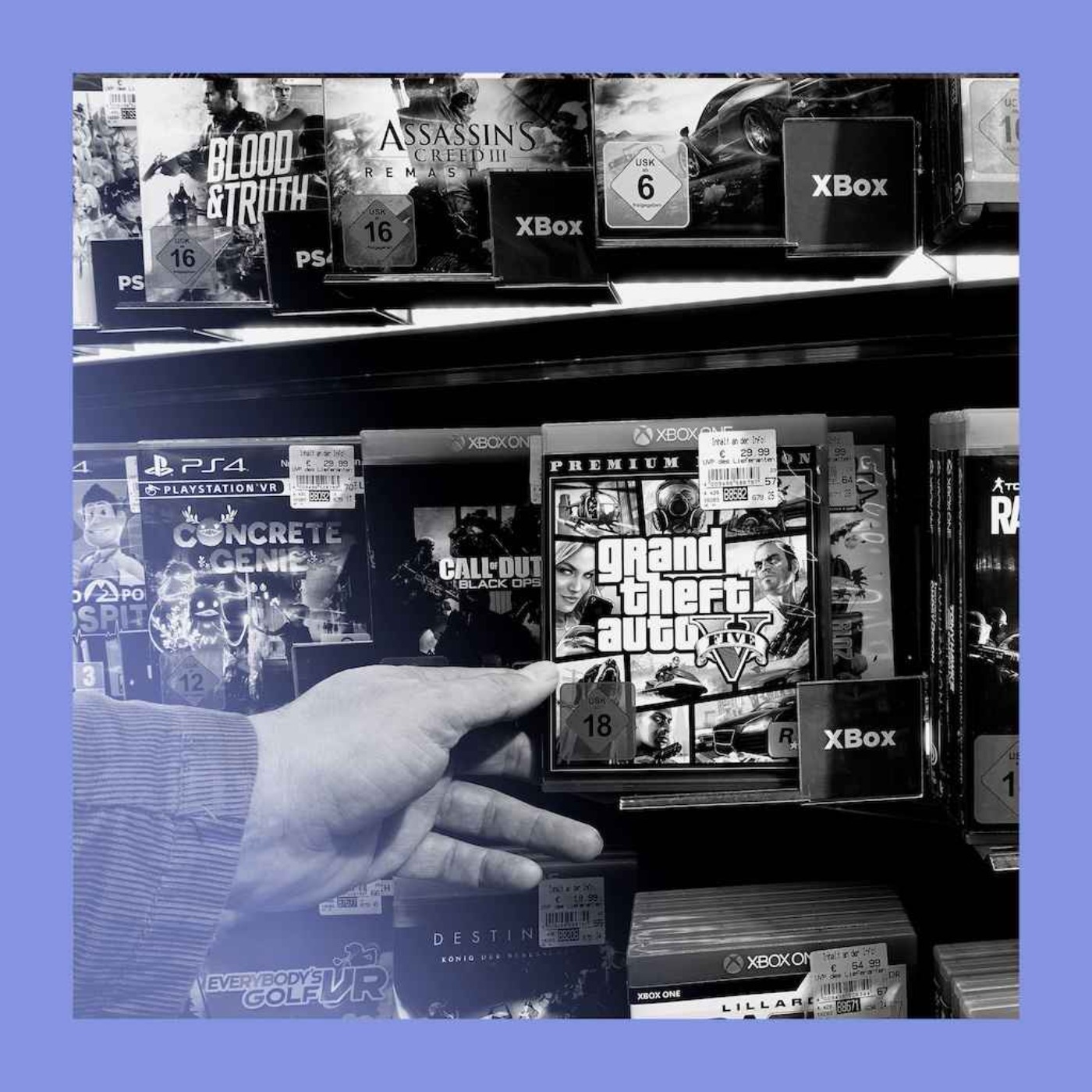
2:06When the sixth instalment of Grand Theft Auto arrives next year, it will be less a video game release than a cultural moment. The game has cost upwards of£2 billion to build, yet it's almost certain to turn a profit within its first week. Britain helped to shape the global video games industry. The question now, though, is, Can it stay in the game? So as an industry, how important is video gaming to Britain? I think it's fair to say that gaming has long been a bit of a secret superpower for Britain. So we know that worldwide, video games are a huge industry. They generate revenues of around 200 billion annually.
2:46We also know that Britain is the third biggest exporter of video games, behind only America and Japan. And the great thing about Britain is it produces these really quirky titles that are unique to Britain. Things like Lara Croft Tomb Raider, Fall Guys, Total War Warhammer. And Brits love them. So over half of Britons are gamers. That includes mobile games like Candy Crush. But despite that, people in Westminster don't always love it. They don't think it's the greatest industry. Well, first off, why is it that Britain is punching so far above its weight on the global gaming stage? I think a big part of it is that they got in first.
3:22So Britain was an early pioneer of video games. There were lots of bedroom coders. And very soon, they created lots of cult hits. Hits like Manic Miner.
3:38And later on, there were cult hits like Broken Sword, which is this mystery adventure starring an American puzzle solver. Hold it. I got there. Oh, don't shoot. I'm innocent. I'm an American. Can't make up your mind, huh? This different quirky mix of creativity and code, which was quite in contrast to places like America and Japan, where you had these more console-driven markets. So what about the people in Westminster, then? Why do they look down on the gaming industry? Yeah, it's a strange one. So if you actually look at the economic facts, gaming's really good for levelling up. So four-fifths of video game developers work outside London.
4:16And the industry employs about 30 ,000 people. That's developers, artists, composers. And it's really productive as well. So in terms of gross value added, video games work is almost twice as productive as the British average. There are lots of other wider benefits of gaming. So Demis Hassabis, who's now best known for DeepMind, that's Google's AI company. He started out as a gamer and he made a theme park game when he was a teenager. He had his own games business. The Royal Navy has an e-sports suite, which it says helps its sailors improve their leadership and their strategic thinking. And even one of their new warships has an e-sports suite along with a karaoke bar.
4:57And the National Health Service now prescribes games for anxiety and depression. So when you put all that together, it seems a bit outdated, right, that these old politicians have these outdated views. So at the beginning, you hinted that it was an open question whether Britain could stay in the game. What challenges does it face? Yeah, so there's some global challenges. Gaming's going through a difficult time at the moment. We've had lots of layoffs in the sector. And then there's some more domestic issues as well. So British gaming suffers from a shortage of venture capital funding. And that's, I think, in part because investors here tend to be a bit more risk averse than in America.
5:32You have problems where smaller studios can struggle to scale and to grow. And I spoke to one legend of the industry, City in Livingston, who told me that Britain's great at making games, we're not so good at holding on to them. So there's some issues there about the global slowdown, the pandemic boom, when everyone stayed at home and was playing games, that's now well and truly over. We're seeing people being laid off. And then that's before you get into the challenge of AI and how disruptive that could be. So in a sense, whether Britain can stay in the game is a question of whether or not it can embrace the change that surrounds it.
6:04We've seen throughout history, right the internal lies opportunity so when people get laid off sometimes they then go on to start new businesses in gaming that could mean starting your own studio we know as well in the uk that some of the biggest companies like games workshop which is a futsy 100 company it focuses more on mid-sized games not triple a games so that could be an opportunity and then there's also the benefits of ai obviously what will doom and gloom about ai taking our jobs but for those that can embrace it It can be used to tell better stories more quickly. And it can also be good for Brits who do have those quirkier ideas.
6:39So we've seen recent hits like Atom 4. Is anybody there? I need help. Who are you? Where players explore a post-apocalyptic lake district, complete with distinctive red telephone boxes. Very British.
7:01Oh, thank goodness you're here, which is this really surreal game where you follow a travelling salesman through a Yorkshire village. And he helps people free themselves from drain pipes and he doles out oversized meat pies. So these are really uniquely British quirky hits that show that Britain can, I think, keep its edge. Georgia, thanks very much for joining us. Thank you so much, Jason. And happy gaming. Thank you.
7:47You have to plan your drinking in Sweden. The System Belaget stores close early on Saturdays and they stay shut on Sundays and holidays.
7:58And it's not like there are shops on every street corner. There are just about 400 of them in a country of over 10 million people. Stanley Pignol is The Economist's Brussels bureau chief and writes Charlemagne, our column on European affairs. Having married a Swede, he's a regular visitor to the Sistembelaget when they're open.
8:18Most wine shops across the world try to make drinking attractive. You have pictures of lovely vineyards or people having cocktails on the beach. The point of Sistem Belagat is not to make drinking seem fun. It's on the contrary. The way I describe them, it's a mix of Albanian government office and a pharmacy. These are quite austere places. The wine isn't chilled because, God forbid, you might want to drink it soon. It doesn't offer any discounts. And perhaps the most unusual feature is that there's a regret basket as you're queuing up to pay. And the suggestion is that maybe you're buying a little bit too much alcohol and you might suggest leaving some of it behind.
8:53And all that is because the point of Sistempelaget is not to promote drinking. Its role instead is to control drinking, but also to fill the state's coffers. Sistempelaget is state-owned, so any profits it makes, but in particular any excise taxes that drinkers pay to buy alcohol, flow straight to the government budget. This does feel like a fairly extreme example of a thing we know about, sin taxes around the continent. Sin taxes or behavioral taxes, as economists call them, are something you find all over the world. But they have a special place in Europe because Europe is a place that taxes people a lot and where people do a lot of sinning, apparently.
9:31The big three sins that are tax are drinking, smoking, and driving. And if you visit Europe, it's really noticeable. In Ireland, a pack of cigarettes is now 18 euros, which is north of 20 US dollars. And about four-fifths of that goes straight to the state. drinking similarly. Most of what you pay when you buy a bottle of vodka in Sweden is excise. In part, the idea is to nudge people to drink less, but the other side of it is it's just another way of raising revenue by governments. And then finally, really the biggest syntax these days is petrol, driving. Petrol is incredibly expensive in Europe.
10:06Just to give you an idea, Dutch people, when they fill their tanks, they will pay more in taxes than Americans pay for the entirety of the gas, as they call it, that goes into their car. So which is the real motivation here to your mind? Is it raising money or is it nudging people to do less of the bad stuff? I think it's both, genuinely. On one hand, they do raise money and you have to tax something to make the government work. And taxing bad habits is perhaps better than taxing incomes, for example. But the second thing, the taxing of unwanted behaviors really does play a big part. So if you take driving, it's justified to make motorists pay for the cost of pollution they cause, right?
10:45Petrol causes global warming. We want to have less global warming. So it makes sense for them to pay. The nannying bit is the reason behavioral taxes are so high in Europe. If you take America, for example, if you drink and smoke, you will pay the cost or your insurance company will pay the cost of the health problems you might get in future. In Europe, the health system is public. So ultimately, it's the state that picks up the bill. And that provides the intellectual justification for taxing unhealthy behaviors. But the money doesn't hurt. Let's be fair. The money doesn't hurt. It brings in a lot of money.
11:18It's not as much as, you know, income taxes or corporate taxes. But if you look at a country like Bulgaria, for example, it's taxes on drinking, smoking and petrol bringing in about a tenth of the state budget. That is really extremely significant. So, I mean, the intellectual case for these things seems pretty zipped up. There are issues with sin taxes. One of them is the taxes fall disproportionately on poor people. As a share of income, poor people are more likely to spend on cigarettes and tobacco than the rich. They tend to drive older cars that consume more petrol, and they might find it hard to change their habits.
11:48If you take driving, for example, when France, when Emmanuel Macron's government in 2018 started pushing prices up further on petrol, you had the gilets jaunes, which was a protest against motoring taxes.
12:05Intellectually as well, behavioral taxes aren't exactly watertight. Some have tried to argue that bad health habits actually help the state. If someone dies early because of smoking or drinking, for example, yes, there will be a cost of taking care of their health at that point. But because of the smoking, they won't draw on their state pensions for so long. It's a complicated argument to make, but actually the Czech arm of Philip Morris tried to make it in 2001 as a bit of a PR disaster. But maybe the biggest problem with sin taxes is that you start running out of sinners. And that's something that we're seeing in Europe now.
12:37Young people are drinking and smoking less than their parents. Maybe that's because of the taxes, or maybe that's because they're more straight-laced than their parents were. And driving, which is the biggest behavioral tax, well, Europe is phasing out internal combustion engines. By 2035, it will be illegal to sell a petrol or diesel car in Europe. And by 2050, the continent is meant to be at net zero. So in theory, at least, that entire swathe of income is going to disappear. Well, that's just the most pointed case of what happens when the sin taxes work too well, right? If you actually nudge through taxes, people to drink less, stop drinking, smoke less, stop smoking, and so on, out goes the income.
13:15Right, but the good news is if you are a finance minister, you can always find new sins. The latest one that you've seen is sugary drinks. Starting about a decade ago, governments basically started treating sugary drinks like they do alcohol. Obviously, sugary drinks are bad for you. They cause all sorts of bad health outcomes. And so now in about a dozen countries, including France and Poland, they are taxed. Not as much as alcohol, but still a little bit. A lot of countries tax gambling, like state lotteries. And you are seeing the idea that meat might get taxed. That's the one that some are calling for.
13:48Meat is very bad for the environment. Beef causes all sorts of emissions. And so people are saying that should be treated a little bit like petrol. You could even say that tourism taxes, for example, that are charged to visitors to Venice and other places, that's a sort of sin tax. So what I would expect to see is that even as the traditional sins fall by the wayside, the government will find new sins to make us pay. Stanley, thanks very much for your time. Thank you.
14:29For more than a century, cycle rickshaws have been the most important mode of transportation for most people in Bangladesh. They are also an important part of Bangladeshi culture. Many rickshaws are colorful vehicles featuring local art or national symbols. In fact, the UN has recognized rickshaws and rickshaw art as cultural heritage. Vishnu Padmanabhan is an Asia correspondent and news editor for The Economist and is based in Singapore. However, there's been a disruption to the rickshaw industry in recent years. More and more of these vehicles are now battery-powered. They've become so prominent that they're jokingly called Bangla Teslas.
15:16Drivers love them. Batteries allow rickshaws to travel much faster. and more speed means they can complete more trips and earn more income. But not everyone is happy. Many Bangladeshis are worried about safety, both on the road and off it. There are millions of cycle rickshaws across the country and most of them are not registered, so we don't really have an exact number. But the e-rickshaw craze really started in 2007 when a few drivers retrofitted their cycle rickshaws with a battery and a motor. and since then the practice has grown increasingly common. But it really took off over the last decade.
15:55For instance, one estimate suggests that there were around 200 ,000 e-rikshaws in 2016 but today there are estimated to be more than 4 million.
16:07The craze for e-rikshaws is driven by economics. As one driver told us, he used to make around 200 taka a day which is around$1.60 when he had a cycle rikshaw. But since he switched to an e-rickshaw, he now earns 7 times more, or around$12.30, because he's able to complete many more trips. E-rickshaws can travel up to 40 km per hour, which is 4 times faster than the pedal ones.
16:36But the big issue with e-rickshaws is speed. The vehicles and its braking systems are designed to be driven by humans and not propelled by a motor. So as a result, accidents are becoming more common. a local NGO estimated that there were 870 fatal crashes involving e-rickshaws in 2024, and that figure is set to rise in 2025. There are also environmental costs. The batteries that power these e-rickshaws are filled with lead, and when they are no longer usable, they are melted down by unlicensed recyclers. The fumes that generates contributes to lead poisoning, which is another big problem in the country.
17:11According to UNICEF, around 35 million Bangladeshi children have dangerously high levels of lead in their blood. All of these problems are actually widely acknowledged, but fixing them will be difficult. One startup, for example, is encouraging drivers to replace their batteries with lithium ones. These are less toxic, but also more expensive. This would address the environmental issue, but it is a subscription service that still remains very nascent. Dealing with accidents will be even more difficult. The interim government in Dasan Power in Bangladesh right now has drafted some rules proposing lower speed limits and ensuring that e-rikshaws are registered.
17:49But attempts to ban or regulate e-rikshaws in the past have failed because of protests from drivers. But many Bangladeshis are hoping that these fresh efforts will provide better brakes.
18:17That's all for this episode of The Intelligence. We'll see you back here tomorrow.
As the world’s biggest gaming fair gets underway, our correspondent looks at the surprising success of Britain, the world’s third-largest exporter of video games. Europeans are giving up their vices, so the public takings from sin taxes are falling. And the rise of “Bangla Teslas”: battery-powered rickshaws in Bangladesh.
Listen to what matters most, from global politics and business to science and technology—Subscribe to Economist Podcasts+
For more information about how to access Economist Podcasts+, please visit our FAQs page or watch our video explaining how to link your account.
Hosted on Acast. See acast.com/privacy for more information.


