
 Ask ChatGPT



In this episode, Jason Palmer and Rosie Blau discuss significant global events, focusing on the release of Israeli hostages in Gaza, the thriving luxury travel industry, and a tribute to the late actress Claudia Cardinale.
Written by AI. May contain mistakes.

Get the gist, explore an idea or ask about something said.
 Claude
On The Intelligence from The Economist, what are the key points of this episode?
Searching your listeningAutomatic transcript. May contain errors.
0:28The Economist they're still willing to spend on fancy trips. We look at how the luxury travel industry can avoid the pitfalls that have hollowed out the luxury goods industry. And Claudia Cardinale wanted to become a teacher. The accidental film star ended up performing more than 100 roles, but she never lost her sense of her own power and independence. Our obituaries editor celebrates her life.
1:02But first...
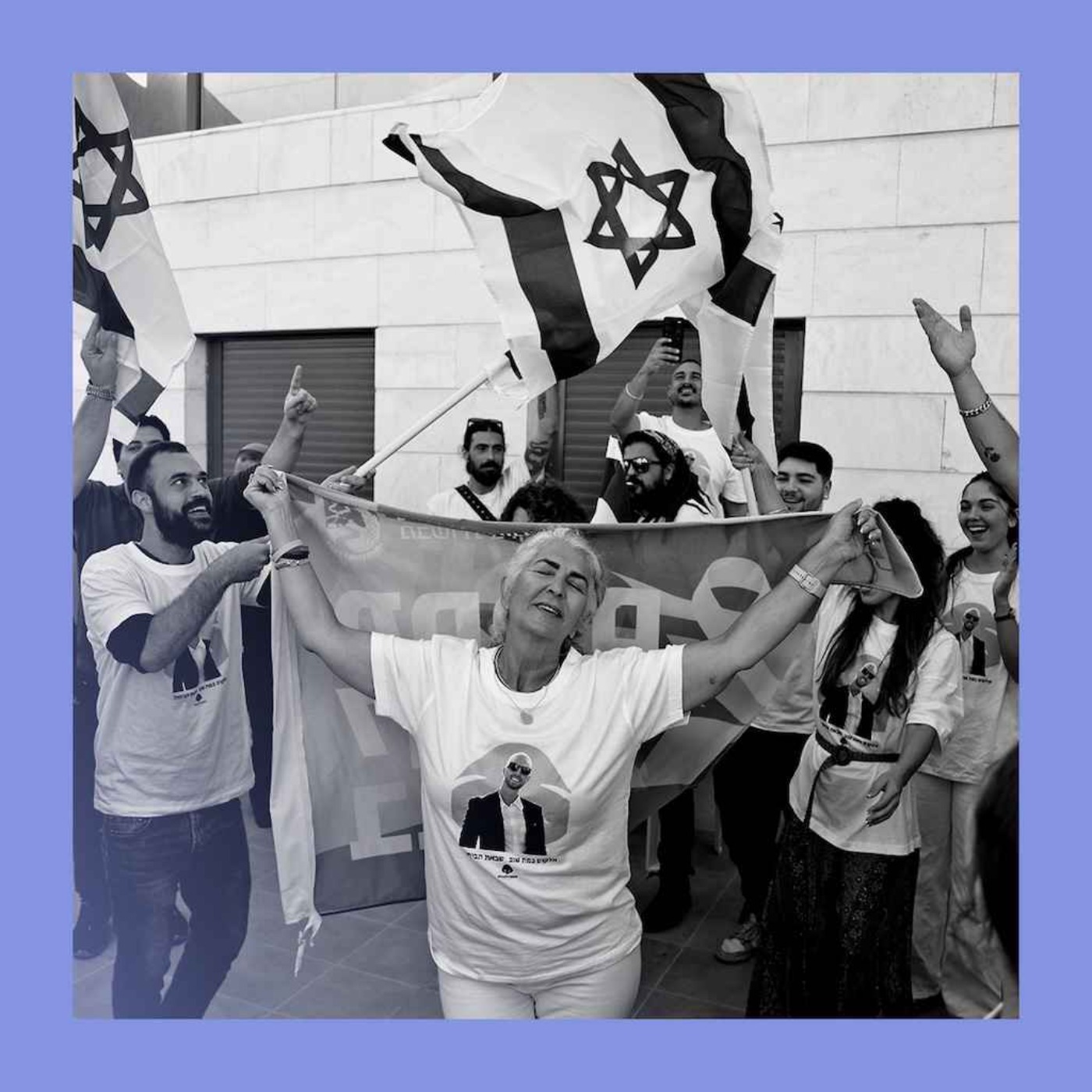
1:10A moment two years in the making. Thousands of people cheered in what's become known as Hostage Square in Tel Aviv as the Israeli captives in Gaza were released. Today, gathered with friends, I call upon all people. Jews, Christians, Muslims, and every faith, every tribe. In Jerusalem, President Donald Trump spoke at the Knesset, Israel's parliament, calling for unity between all people of the Middle East. We must build a coalition of partners who share the aim of stamping out extremists and violence. But a hopeful future for children in the Middle East requires the world to fully recognize the vital role of the state of Israel.
1:59He also reaffirmed the unshakable bond between the US and Israel. Next, the president will head to a peace summit in Egypt. A permanent end to the fighting remains a long way off, but these first steps are all important. It's a really momentous day today. Josie DeLapp is The Economist's Middle East editor. seeing these hostages who have been in gaza for two years whose captivity has been this festering sore throughout this war is a moment of hope that perhaps this peace deal might actually lead to some kind of peace on thursday when we spoke on the show the deal had finally been agreed there were questions even if we would get to this first stage of releasing prisoners.
2:53So how did we get here? There have been questions all the way through. I think partly because people are understandably reluctant to believe that there could be an end to this war that has been going on for so long. But we had these false starts with J.D. Vance, the American vice president, suggesting that the hostages were about to be released and that was premature. There were negotiations going on right till the last minute over the Palestinian prisoners that Israel holds and is going to release once the 20 living hostages have been released by Hamas. There were questions over exactly who they were going to be.
3:33And so there was this nail biting end to the negotiations. But today, this first stage of the 20 point peace plan set out by Donald Trump is underway. And Josie, what's the situation like in Gaza right now? So in Tel Aviv this morning, you had the exuberance, the extraordinary joy of these hostages being released. You had that earlier in Gaza because the bombs have stopped falling and Israeli troops have begun to withdraw from the urban population centres. And you have seen thousands of Gazans walking along the roads next to the devastation of the Strip to get back to Gaza City, to get back to the north of the territory, which has been one of the most heavily bombed areas, to return to what is almost certainly absolutely nothing left of their homes.
4:34But aid is beginning to come in. and so on that front, that is a dramatically different situation for them. So as you say, there are scenes of devastation but there are also questions already about what Hamas is going to be doing in Gaza and there have been some shows of violence. What's happened? You've had the Israeli troops withdrawing and that is creating space for Hamas, which is not yet disarmed. that is part of the next phase of this peace plan. And obviously a big part for Israel of the agreement is the idea that Hamas is not going to be able to control Gaza. But at the moment you don't have Israeli troops in parts of Gaza.
5:23You do not yet have this international stabilization force which is part of the peace agreement. And you have armed gangs, some of which have been armed through this war by Israel. You have Hamas, which still has its weapons. And so you're already seeing clashes between Hamas forces, between these longstanding powerful clans that you have in Gaza, as these different groups try to assert their control. Josie, we've talked on the show before about the credit that Donald Trump has earned for negotiating this peace. Trump will be leading a peace summit in Egypt later today. What can we expect? He's going to meet with a lot of different leaders from, I think it's about 20 powers.
6:08And this is to sign off on the plan as a whole, but importantly, things like the Board of Peace, which will be part of this transitional government running Gaza in the aftermath of the war before the Palestinians fully take control. It's already been controversial. One of the people suggested as its leader is Tony Blair, the former British Prime Minister, who was one of the leaders in the US-led war against Iraq, who is a controversial figure in the Middle East in particular. He was also a representative of the Quartet, which was another international effort to bring peace between the Israelis and the Palestinians, which failed.
6:55So there has been pushback at the idea of him specifically leading this board. And of course, there are concerns about the idea of outsiders, Western in particular, being put in charge of running Gaza. A number of European countries are lobbying to have representatives on the board. Despite the concerns about it, there does still seem to be momentum and a push towards this being at least a stepping stone to the next phase. So it's a stepping stone to the next phase. We've heard a lot of caveats, but where do you stand? You've been watching the war for two years. What comes next and will this peace last?
7:41Look, I think it is really easy to be cynical and pessimistic. When this war started, we said in our leader pages, perhaps the horror of the attacks of October 7th and of what Israel unleashed in response would be so appalling that we would see an opportunity for a change in the status quo. And of course, over the last two years, we have not seen that. We have only seen more bloodshed. And so it's very easy at this moment, I think, to assume that this is simply going to be another failed peace initiative, that it's just going to go back to some awful bloody stalemate. But I think there are reasons to remain hopeful.
8:35The world is still watching this very closely, having the plight of the Palestinians, the conflict between Israel and the Palestinians had sort of fallen away from people's attention for many years. It just ground on awful, but not really mattering to most of the world. And I think that has really changed. and in Donald Trump you do have a president who is clearly able and willing to squeeze Israel to squeeze Benjamin Netanyahu the prime minister and push him to do things that he does not want to do and I think that's a really significant shift compared to previous presidents so even though my natural instinct is to be pessimistic and to imagine that this is going to fall apart I think that we have to hold on to these reasons to be hopeful and imagine that there could be a different future.
9:34Josie, thank you so much. Thank you, Rosie.
9:52I'm Elena, welcome to Browns. Hello, hello. How are you? I'm good. Good to see you. So I went to Mayfair, which is a pretty fancy part of central London. I went to the Browns Hotel, and it was as luxurious as it gets. Avantika Chilkoti is our global business writer. who, in the service of journalism, occasionally spends time at insanely posh hotels. How are you? Is your company here as well? There was this doorman there dressed in a really smart coat and a top hat, and he was ushering lots of guests into shiny cars. Morning, madam. How are you? Morning. Can you just stay back? It's fine. Inside I looked it up, and their fanciest suite goes for over£6 ,000 a night.
10:32Two suitcases. The cocktail bar, which is also kind of buzzing, it sells cocktails for about£26 each, which is$35. It's a lot of money. But you looked around the lobby, you know, there were lots of people there. They were having a nice time. They were spending money. And it surprised me because I cover luxury. And one thing that is very clear in all the data is that luxury personal goods sales are in decline. You've got all this economic uncertainty. people aren't spending money on stuff like high heels and expensive handbags. But what my experience at Brown's did show me is that people are still splashing out on luxury travel.
11:10That's fancy hotels, but it's also first-class airfares and once-in-a-lifetime train experiences, stuff like that. So basically people's cash is shifting from objects to experiences and travel. That's good for the industry at least. Well, what's good for the industry specifically is the boom in this luxury travel market. So you go back to the beginning of the year and analysts were thinking 2025 is going to be bad for travel, right? You've got tighter immigration rules in the US, you've got trade wars, you've got wars all around the world, consumers are nervous. But you've really seen luxury travels propping up that market.
11:47So the metric that hotels use has an ugly name, it's RevPars, basically the revenues they make per available hotel room. And if you look at the luxury segment, that figure, those revenues per room have been going up year on year every single month this year. But when you look at cheaper rooms, economy rooms, mid-scale rooms, that's not true. Those revenues are not going up at such a high rate. And it's true through every other element of travel. People who are spending on high-end exclusive travel keep spending whilst the rest of us might be feeling hard up. So why do you think it is that people want to part with their cash more on doing things rather than having things?
12:26Analysts for Age has been talking about the experience economy. We've all been waiting for it to arrive. But I think when it comes to luxury and very rich people, I think it kind of has finally arrived. So if you look at designer clothes and handbags, things like that, since the turn of the millennium, they're becoming more and more ubiquitous. You now have designer stores in Asia and in Africa and in the Middle East. It's easy to get hold of. and it's still incredibly expensive, but you are seeing that aspirational middle-class consumer buying a designer handbag and so forth. At the same time, this once-in-a-lifetime travel, it's still incredibly exclusive.
13:05You know, it can cost thousands of pounds per day per person to have a trip like this. And if the point of having a luxury experience is in part to tell everyone how rich you are, social media makes it very possible for you to show off, sure, what you're wearing, but also where you're going, where you're staying, how you're traveling. But there's got to be some kind of ceiling on this, right? If you're just squeezing the super very rich more, just to prop up the sort of the middle of the market or the aspirational end of the market, like that's got to stop somewhere. The one risk to this is actually pointed out to me by a guy called Federico Marchetti.
13:38He's the guy who ran Uxnetta Porter, the big luxury e-commerce giant. He said he sees the luxury travel industry making a lot of the mistakes that the luxury goods industry made. So for the last 20 or so years, these fashion houses have been expanding their market. They've been trying to woo middle-class shoppers. They've been trying to become global. And that basically made them quite vulnerable in economic swings when people who aren't filthy rich do actually feel the pain. And you're seeing that now from the luxury travel segment. You know, I looked at some data from McKinsey and the share of luxury hospitality spending that comes from the ultra high net worth, you know, those were the net worth of more than$30 million.
14:20It's ticking down over time. And you're seeing more and more of these shoppers being people who are doing this as a one-off, they're saving up for it. And that's a very fragile segment. So if the analogy with what's happened with luxury goods holds, what lessons to draw from what happened to those luxury goods firms? So on one hand, I think one of the lessons just don't make that mistake. So if on one hand you have this glut in supply of luxury goods, I think luxury travel firms need to be careful about not doing the same. If you take just London, three of the biggest hotel groups, Rosewood, Six Senses, Au Berge, they're all opening sites in London this year.
14:56There's going to be a huge number of new luxury rooms opening in one city at once. So don't make those mistakes. But there's also some things that you can learn from the firms that continue to do well. One firm that really sticks out to me in luxury goods is Emes. They make£10 ,000 Birkin bags. But what they've tried to do is, one, raise prices just moderately and sensibly. Two, don't make loads and loads of your products. They have a waiting list for their products. And three, try to maintain that feeling of exclusivity. You know, when you go into an Emes store, it feels pretty fancy. You know, you still have an MS magazine that goes to top clients.
15:35And the travel firms that manage to do those things, I think, can continue to do well. I mean, Brown's was a great example for me. It's, you know, run by the Rocco Forte group. And that, like MS, is a family run group that thinks long term. Yes, their hotel prices are going up, but it's at least vaguely in line with costs going up. And they still make their customers feel special. The doorman at Brown's does try to remember guests' names. In that expensive cocktail bar, you do get these sort of fat olives and this amazing parmesan with your drinks. So everyone's wondering, what am I paying for with luxury?
16:12What is luxury? Well, that feeling of feeling special might just be it. My question is, how many of those cocktails and fat olives did you consume in pursuit of this story? I actually went and had a cup of tea. How sad is that? Oh, you're doing it wrong. Luxury reporters should definitely get some luxury along the way Still though, it's probably like a 17 pound cup of tea Thanks very much for joining us, Avantika Thanks for having me, Jason Sorry now? No Cheers Thank you
17:02The opening sequence of Sergio Leone's Once Upon a Time in the West is famous for almost nothing happening for quite a long time. Anne Rowe is The Economist's obituaries editor. Then a train pulls into the station in the middle of the desert. And stepping out of the train is this wonderful creature. Her name is Jill McBain and she was played by the Italian actress Claudia Cardinale. And at the moment that she arrived on the scene, the music, which had been extremely spare at the beginning, swelled to become something operatic, fuller. as Claudia got down from the train she too would have had that new music ringing in her ears because Sergio Leone insisted that it should be played before every scene so that the actors could get into the mood not that she really needed it because she was already extremely confident in her ability to play this part.
18:11She knew she would be pretty well the only woman in the film. But to be surrounded by men was fine with her. It didn't intimidate her in the least. And also she had a fierce spirit of independence. She was going to make this place work. And she was absolutely in character from the start. Yet she was also there by accident.
18:40She had only become an actress because at the age of 18, she had gone in for a beauty pageant in Tunis. In fact, she hadn't even gone in for it. She'd simply been in the crowd. And somebody pushed her forward and got her onto the stage. And she was the one who was given the sash and the crown of most beautiful Italian girl in Tunis. and this extraordinary thing drove the media quite mad. Her prize was to go to the Venice Film Festival and there she posed on the Lido in an emerald green bikini which drove the media even more mad and the question on everyone's lips was are you going to become an actress?
19:25But she kept saying no, she had no intention of being an actress. She wanted to be a teacher. On the other hand, As she went home after the Venice incident, she began to think that it might not be so bad going for cinema. She loved going to the cinema and watching films, and she also needed an income from somewhere. So she began to take small parts. And from then on, she made more than 100 films. It was extraordinary how she suddenly flowered into becoming an actress. She found that cinema was even better than she had imagined because it gave her a chance to live more than a hundred different lives.
20:13Her most miraculous year in cinema was 1963.
20:20And there she made three films, two of which became instant classics. One was for Lucchino Visconti, it's called The Leopard, it was the story of a Sicilian debutante who causes extraordinary emotional turmoil in an aristocratic Sicilian house. And she was startlingly beautiful in that film. And the other film was Federico Fellini's Eight and a Half, which was the story of how a mysterious woman suddenly became the only figure who could save a film director from a nervous breakdown. Fellini's observation that there was a mystery about her was true. She was not as straightforward as the other Italian starlet.
21:11She had a beautiful, voluptuous body, but there was obviously something that could never quite be captured about her. It began with her voice, which was throaty and husky, and for a long time had to be dubbed in her films because it was unpleasant to Italian ears. Where this voice came from was her upbringing because she had been brought up to Sicilian parents in Tunis, and her major language growing up was French. She was schooled in French. The other thing was her insistence on independence, which was rather hard won, because when she joined Christaldi's studio, she agreed to a contract for seven years.
21:57And Christaldi absolutely took her over and controlled everything she did, her weight, her hairstyle, her friends. She was very unhappy with this arrangement. She felt she was just an employee of his. but at the same time she couldn't seem to break away from him. In the end, in 1966, she married him. However, in 1975 she managed to break free and there she really made her firm bid for independence. She refused to get married again. She also decided that she would always allow herself to look as she was, that she wouldn't have a facelift. She would just let time do its work on her. She would be completely herself in every way she could be, and yet she would become completely someone else in her films.
22:51Perhaps the time in films that she became most herself and seemed to reveal herself most was in the very last scene of Once Upon a Time in the West, when she handed out water to the ragged, dusty men. who were building the railroad that was going to become her fortune and go through her property. And as she handed out that water, you were aware that she was someone who had come through quite a difficult career with all the strength and all the beauty that she had had at the beginning.
23:32Anne Rowe on Claudia Cardinale, who's died aged 87.
23:47That's it for this episode of The Intelligence. We'll see you back here tomorrow.
24:09Thank you.
Donald Trump arrived in the Middle East for a victory tour as Israeli captives were finally freed. But the path to peace does not run smooth: Gaza is devastated, Hamas remains armed and tricky negotiations continue. Why luxury travel is thriving, with a little help from social media. And celebrating Claudia Cardinale, the accidental film star.
Listen to what matters most, from global politics and business to science and technology—Subscribe to Economist Podcasts+
For more information about how to access Economist Podcasts+, please visit our FAQs page or watch our video explaining how to link your account.
Hosted on Acast. See acast.com/privacy for more information.


