
 Ask ChatGPT


 The Intelligence from The Economist
8 Apr 2026 · 21m · 10 chapters
The episode covers three things: (1) a sudden two-week ceasefire in the Iran-US conflict, (2) China’s push to boost fertility via IVF subsidies, and (3) debate over AI-written fiction after the withdrawn novel Shy Girl.
Greg Karlstrom (Economist Middle East correspondent; interviewed on Iran escalation/ceasefire) and Carla Suburana (Economist news editor; discusses China IVF policy).
the ceasefire is “bare-bones,” halts fighting for two weeks, starts negotiations in Pakistan, and allows limited reopening of the Strait of Hormuz; Iran claims US agreed to demands, but the US only agreed to discuss them. IVF: China subsidizes IVF through public insurance, but access is patchy and limited mainly to married heterosexual couples; demographers doubt IVF alone will reverse declining birth rates. Notable example: Shy Girl, allegedly AI-assisted, was withdrawn after readers detected machine involvement.
Written by AI. May contain mistakes.
A discussion on the Iran war, Trump's threats, and the unexpected ceasefire.
“The bots can write plausible prose, but naysayers, including us, reckon that much of it is crap.”
An overview of the ceasefire agreement's structure and implications.
“What is the structure of that ceasefire?”
Exploring the diplomatic efforts and challenges faced in finalizing the deal.
“They've done it just in exchange for this two-week agreement.”
Examining Trump's motivations and the potential legacy of a deal with Iran.
“He's already had to postpone that meeting once because of the war.”
Discussion on China's fertility crisis and the role of IVF in addressing it.
“China's fertility rate is among the lowest in the world.”
Exploring the accessibility of IVF in China and its limitations.
“So how does IVF fit into broader attempts by the Chinese government to get people to have babies?”
Exploring the challenges of increasing birth rates amid societal uncertainties.
“Like it can help people who want to have children but are struggling to conceive, but it doesn't deal with something deeper, like the fact that more people are simply unsure about having kids at all.”
Discussing the implications of AI-assisted writing in contemporary fiction.
“her voice is a blade cutting through the sweetness his resembles a blade slicing through the air his approval is like a blade wrapped in silk Andy Miller writes our backstory column.”
Analyzing the strengths and weaknesses of AI-generated texts compared to human authors.
“When large language models try to write creatively, the text often comes out sort of flat and lurid at once.”
Contemplating the future of the writing industry in the AI era and the need for human creativity.
“is not that AI writing is bad or should be banned.”

Get the gist, explore an idea or ask about something said.
 Claude
On The Intelligence from The Economist, what are the key points of this episode?
Searching your listeningAutomatic transcript. May contain errors.
0:03The Economist.
0:10Rosie Blau: Hello and welcome to The Intelligence from The Economist. I'm Rosie Blau. And I'm Jason Palmer. Every weekday we provide a fresh perspective on the events shaping your world.
0:25Rosie Blau: IVF is used the world over to help couples have babies. Now more people are turning to it in China, where fertility rates are falling. Question is, how far can medical intervention change a society-wide situation? And we look at the next group of humans worried about AI. Authors. The bots can write plausible prose, but naysayers, including us, reckon that much of it is crap. Thing is, so is plenty of the humankind.
1:03But first...
1:10One short day ago, we asked Greg Karlstrom, our Middle East correspondent, whether the most likely course of the Iran war was towards peace or towards a wider conflict. His answer? Escalation. By last night, the threatened scale of that possible escalation was as grave as any outlined by any American president ever. A whole civilization will die tonight, Donald Trump flippantly tapped out on his phone. But then, an entirely unexpected turn, a snapping of that tension.
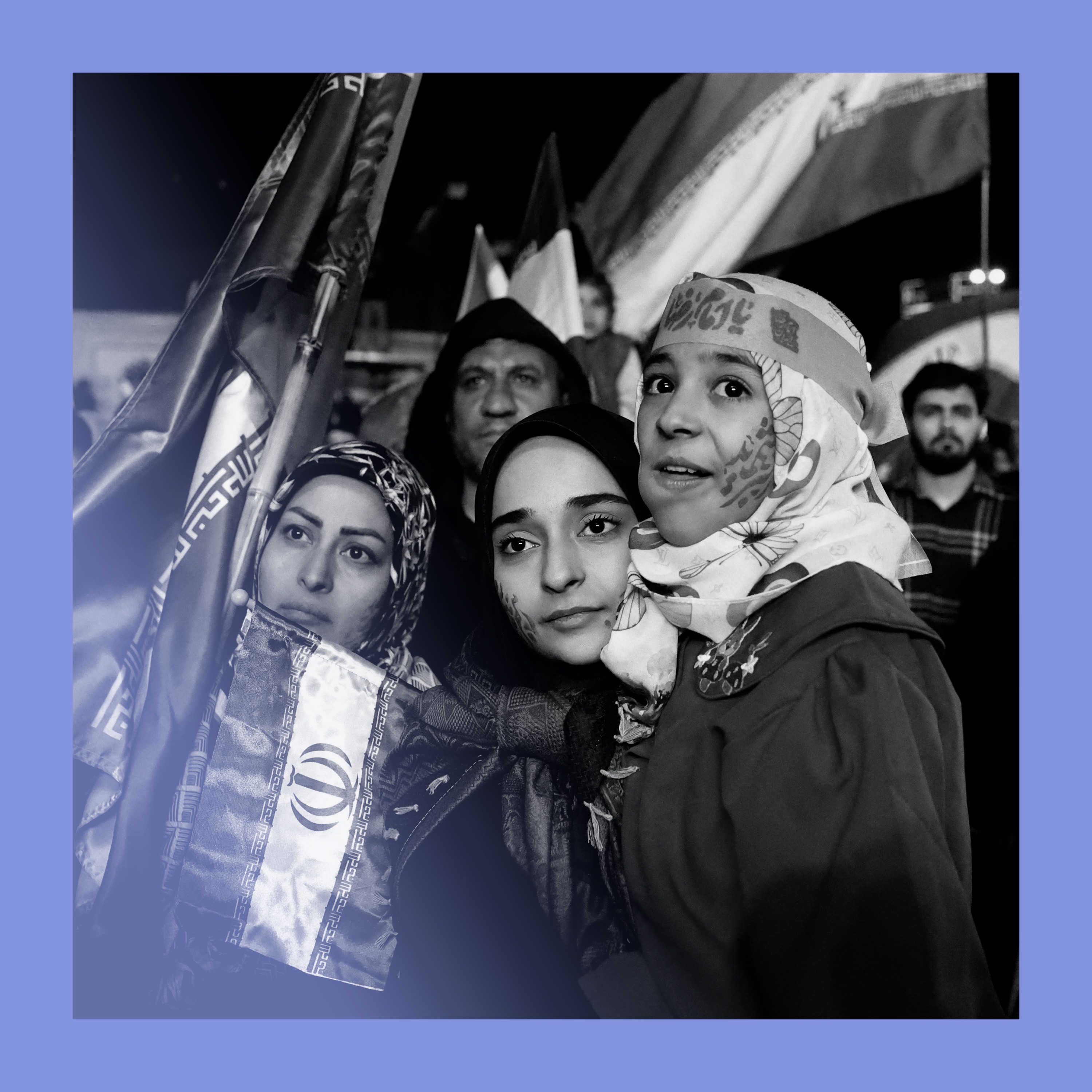
1:41Jason Palmer: This is one time when I'm very happy to have been wrong. I did not think there was going to be a diplomatic off-ramp here. And it looked that way until about 90 minutes before Donald Trump's deadline last night. It seemed as if he was going to go ahead with these chilling threats that he issued. But at the last minute, to everyone's relief in this region, they announced a ceasefire. And talk me through it. What is the structure of that ceasefire? This is a very bare-bones agreement. It halts the fighting. for two weeks. It calls for negotiations, which are meant to begin on Friday in Pakistan, where they will talk about a permanent end to the war.
2:21Jason Palmer: And then it calls for the limited reopening of the Strait of Hormuz. Donald Trump has said he wants it completely reopened. Iran has said that ships going through will be subject to limitations. So we still don't know how many vessels will actually be allowed to transit the strait. That's all that this deal actually stipulates. We've heard a lot of spin then from both sides where the Iranians are claiming that America has agreed to all of its 10 demands, which include recognizing its right to enrich uranium and removing American troops from military bases in the region, things like that. None of that is actually the case.
2:57Jason Palmer: The Americans have agreed to talk about these things, but they haven't actually agreed to them. And it gives you a sense of how wide the gaps are going to be when they meet for talks in Pakistan, because many of these demands that Iran has are things that America considers to be non-starters. So there are some echoes there of our discussion from yesterday that both sides want to leap to claim victory. They've done exactly that. The statement that Donald Trump put out announcing the ceasefire said that the Iranian proposal was what he called a workable basis for negotiations. And so the Iranians have seized on that to make it look as if America has capitulated.
3:34Jason Palmer: And then we're hearing similar claims of victory from Washington, where the Trump administration and the president's defenders are making it out to be as if his madman theory of foreign policy has paid off because the Iranians have agreed to reopen the strait, at least in part, without a permanent ceasefire. They've done it just in exchange for this two-week agreement. But if these talks are not successful, if they're not able to get to a permanent ceasefire, then we have two other bad options in front of us, one of which is renewed war and the other one is going back to a version of the pre-war status quo.
4:11Jason Palmer: And in both of those cases, I think it would quickly become clear that no one is victorious in this. As you say, this was a surprise, a welcome surprise outcome. Do we have a sense of how this deal was struck at the last minute? There was a lot of back and forth messaging between America and Iran facilitated by Pakistan, which has taken the lead as the interlocutor here, but also Egypt and Turkey. And there's some talk that China may have applied some pressure on the Iranian side as well. It's not clear if that's the case, but there's a lot of talk about that in the region. They were passing messages all weekend and right up until this deadline.
4:49Jason Palmer: And I think despite these chilling threats. Donald Trump was issuing, he was looking for a face-saving way to de-escalate. And then I think for the Iranians who have endured enormous damage already from more than 15 ,000 American and Israeli strikes to spare the country significant further destruction and to try and trade their control of the Strait of Hormuz for benefits at the negotiating table, I think this was the moment to do it. If Iran missed this moment to make a deal, then it might not have been able to negotiate a better deal at some point in the future. It's sort of a journalistic trope to call any pieces like this fragile pieces, but talk me through how robust you think things are, at least at this stage.
5:32Jason Palmer: This one really is fragile. It's a cliche that is accurate in this case. They will sit down in Islamabad and they have to try and reconcile these irreconcilable sets of demands that America and Iran have issued. So the Iranians insist that America recognize their right to enrich uranium. The Americans insist that Iran swear off enriching uranium. So it's going to be very difficult to get to an agreement. Now, if they can't do that, renewed war is possible. It's possible that Trump does what he did in February, which is say that these negotiations aren't working and we're going to strike Iran. There are some constraints, I think, on his ability to do that.
6:14Jason Palmer: This war is very, very unpopular in America, even amongst Republicans. We've found that support has dropped over the past few weeks. Trump wants to have this done by May because he is going to China to meet Xi Jinping on May 14th. He's already had to postpone that meeting once because of the war. He doesn't want the war hanging over it now. And if the war were to restart, the shock that we've seen to oil and gas markets, to the global economy, I think it would be much worse the second time around. That doesn't mean there's no possibility of a renewed war, but it will constrain his behavior. The other option is we go back to where we were in February, where there's no deal, there's no war, but Iran is still under American sanctions.
6:56Jason Palmer: There is still the threat of a future war hanging over Iran. The regime has been weakened, but remains in power. It is angry. It is hostile. It's sitting on a stockpile of 400 kilograms of highly enriched uranium and a real desire to turn it into a nuclear weapon. And it will probably also look for ways to extort money from neighboring countries in the Gulf, from ships that are passing through the Strait of Hormuz. So it's not a good outcome either. It's better, arguably, than a renewed war, but it's not a good outcome if we fail to reach a deal and we go back to this pre-war status quo. So as you say, it's going to be hard to strike a lasting deal for everybody to get most of what they want, at least.
7:40But at the same time, as we discussed at some length yesterday, both sides really want an end to this. The incentives are there to find a way.
7:48Jason Palmer: They should be. The rational thing for both America and Iran to do is to make a deal. I think for Trump, it's not just because of short-term politics. It's not just because this war is unpopular and he's worried about what it means for the Republican Party going into the midterms in November. It's also about Iran as a legacy issue for him about wanting to be the president who fundamentally reshapes America's relationship with Iran. If he makes a deal, if his vice president, say, goes to Pakistan and negotiates with the Iranians, the first time that's happened since the Islamic Revolution in 1979, that would be a legacy-defining development for Donald Trump.
8:25Jason Palmer: And then for Iran, a deal with America would unlock massive economic benefits. It would mean relief from sanctions, which would bring in sorts of investment that Iran needed even before the war. Its economy was a mess. And now, with billions and billions of dollars of damage to its infrastructure, to vital bits of the economy, it really needs investment from the outside world. And the only way to get that is to make a deal with America. So the incentives ought to be there on both sides. But can they actually overcome half a century of mistrust? Can they overcome two failed attempts at negotiations in the past year and then this war that Donald Trump initiated?
9:08Jason Palmer: Can they get past all of that and make the concessions that are necessary to unlock a deal? It's not clear yet that that's going to be the case. Thanks very much once again, Greg. Thank you, Jason.
9:35Rosie Blau: China's fertility rate is among the lowest in the world. The average Chinese woman has just one child over her lifetime. Alarmed that a shrinking population will leave the country with insufficient workers to support the growing raft of old folk, policymakers have rolled out a suite of measures. These include a nationwide annual childcare allowance paid to families for each child under the age of three. Less subtly, in January, a 13 % tax was introduced on condoms. And the Communist Party is helping out those struggling to conceive by subsidizing IVF.
10:12Carla Subirana: A decade ago, IVF was relatively niche in China. In 2013, there were fewer than 250 ,000 treatment cycles across the country. But by 2019, that number had jumped to over a million.
10:30Rosie Blau: Carla Suburana is a news editor at The Economist.
10:33Carla Subirana: As China's birth rate keeps falling, the government wants to seize on this. So IVF is being folded into the state's broader effort to deal with China's demographic decline.
10:48Rosie Blau: So how does IVF fit into broader attempts by the Chinese government to get people to have babies?
10:55Carla Subirana: Well, the surge in IVF, it reflects a broader societal shift because people in China are marrying later and trying for children later too, which means that fertility problems are becoming more common. The country has around 600 licensed clinics and assisted reproductive technologies now account for roughly 300 ,000 births a year, which is about 3 % of the total. And that may not sound huge, but in a country that's desperate for more babies, even that small share has caught the government's attention. And basically what the government has done is that it now requires public health insurance to cover IVF treatments.
11:40Rosie Blau: So the Chinese state is now funding people to get IVF?
11:46Carla Subirana: Yes, so China's healthcare system is largely funded at the local level. So this means that not all provinces are getting the same access. So in richer places like Beijing or Shanghai, the regional governments there can afford to be much more generous and in poorer provinces, they can afford to cover less of the treatment cycles. So in some parts of the country, people who hope to access IVF still need to pay huge sums. In some places, it can still cost more than what a person earns in an entire year. And that creates a knock-on effect because public hospitals are expected to generate their own revenue.
12:31Carla Subirana: So in places where patients can't afford the extra costs. There's less demand. So then there's very little incentive to expand fertility services at all, which basically means that access is very patchy across the country.
12:47Rosie Blau: And who is eligible for this kind of treatment?
12:51Carla Subirana: Well, there are very strict rules around who can actually access IVF. In China, it's limited mainly to married heterosexual couples, which means that single women or homosexual couples can't access it. And there are tight restrictions on egg freezing too. It's only allowed for medical reasons, things like cancer treatment and not for women who simply want to delay having children. And basically that limits the effectiveness of the policy because, as I mentioned, more and more women are now having children later in life, often in their mid-30s. And by that point, the chances of IVF working have already started to fall quite sharply.
13:37Rosie Blau: So if IVF is becoming more accessible for ordinary Chinese, will that actually fix the demographic problem?
13:45Carla Subirana: Most demographers I've spoken to are pretty sceptical. They'll often point to places like Japan and South Korea, which have backed IVF for years, and it hasn't really changed the bigger picture. And that's because IVF, it only solves one part of the problem. Like it can help people who want to have children but are struggling to conceive, but it doesn't deal with something deeper, like the fact that more people are simply unsure about having kids at all. So even if China goes further and opens access to single women or unmarried couples, it's really hard to see how subsidies and technology alone are going to reverse that broader decline.
14:31Carla Subirana: And I think that's not to say that IVF subsidies are a bad thing in itself, because if you're a family who can't have children, being able to afford treatment can be life-changing, but it's just not going to help move the needle that much.
14:47Rosie Blau: Carla, thank you very much. Thank you, Rosie.
15:08her voice is a blade cutting through the sweetness his resembles a blade slicing through the air his approval is like a blade wrapped in silk
15:20Rosie Blau: Andy Miller writes our backstory column. Those lines are from Shy Girl, a novel allegedly written with help from artificial intelligence. It would be easy for me to be snooty about it and about AI prose in general, and I plan to be. But human writers comforted by a sense of superiority should beware. For traditionalists, and I'm one of them, the tale of AI, fiction and the future of art may quickly become a horror story.
15:53Now Shy Girl is itself a horror yarn Its narrator is a woman who's forced by her kidnapper to impersonate a dog It was originally self-published but in an increasingly common move the novel was picked up by Hachette, a big publisher and was due out from them in America soon It was released in Britain in November Then, after vigilante readers, some equipped with block-busting software, detected signs of machine involvement, the book has been withdrawn. The author, Mia Ballard, denies using AI, maintaining instead that an early editor did so.
16:34When large language models try to write creatively, the text often comes out sort of flat and lurid at once. It strives clunkingly for subtlety. It's portentous about trivia. And, as in Shy Girl, it often features excessive, repetitious and downright weird metaphors, combining words that can in theory go together but really shouldn't. LLMs go in for verbless staccato sentences, and they're hooked on adjectives and clauses in threes, as in, from Shy Girl, I'm careless, disorganised, not worth the effort. For some readers, these stylistic glitches are symptoms of a deeper metaphysical problem. Because it has no tastes, feelings or experiences, a bot can never develop its own voice, they reason.
17:26For a person, even for an economist journalist, to write is to choose. Each word and sentence is a fraught exercise of freedom. Picturing the world anew while expressing something communal, great writing is a bridge between lives and minds. And AI can't match that. It has no soul, just algorithms.
17:53The trouble with romanticising human creation is that so much of it is terrible. If you pit an LLM style against, say, Vladimir Nabokov's, it comes off as wooden. But compare it with a boilerplate airport thriller and it seems much livelier. And as for AI output being derivative, well, a lack of originality is often a virtue in publishing, which is endlessly promoting debut authors as heirs to established ones, and new books as crosses between two previous hits. And actually, the example of Shy Girl cuts both ways. As online reviews attest, lots of readers really liked it, and in fairness, there are some good bits.
18:37Some readers feel hoodwinked by undeclared AI content, but others are unfazed. And actually, already some romance novelists openly enlist bots, inputting the genre's tropes, enemies to lovers, age gap, that sort of thing, and then dodging the grunt work. And remember, today's LLMs are merely novices, but they're improving fast. Before long, mainstream readers may be requesting quality fiction customised to their tastes, like naggy children demanding stories about the family cat.
19:15The big question is, are mortal authors going to survive? The startling yet perfect metaphor like Macbeth's dusty death or his last syllable of recorded time may always be beyond a bot's imagining. They may never ever produce a line as limpidly profound as never, never, never, never, never, King Lear's lament for his murdered daughter. But I suspect that, as it's going to be true of art forms from acting to music, along with all sorts of other activities, whether a star human can beat a machine will not be the only salient question, because even if they can, will readers fork out for this premium prose?
19:57And will that be enough to sustain an old-school book industry? The moral of the shy girl palaver, it seems to me, is not that AI writing is bad or should be banned. Rather, it's that human writers have to beat it.
20:30That's all for this episode of The Intelligence. We'll see you back here tomorrow.
20:52Healthcare can feel complicated. That's why Optum uses technology to connect the people and processes that make healthcare easier, more affordable, and more effective. We're making it clearer for you to know exactly what your benefits cover. And to help you better manage your health, we're coordinating care between your doctors and your technology. We believe better, simpler healthcare is always possible. That's healthy optimism. That's Optum. Visit Optum.com to learn more. Will, come back. You're going to get soaked. At least I won't get soaked by high furniture prices. This week at Darwin, save 45 to 65 % store-wide with special financing for 36 months.
21:35Plus, get a free golf umbrella with qualifying purchase. Spend just$34.99 and get$200 in marketplace or outlet lamps, rugs, and accessories absolutely free. It's like getting soaked with savings. Through Monday at Darwin Furniture. Restrictions apply. See store for details.
With little time to spare before a threatened civilisation-ending attack, America agreed a pause in fighting with Iran. We ask how the temporary deal was reached and how likely a permanent one is. China has an ever-expanding, state-led IVF programme: can that actually reverse a deepening demographic crisis? And the right way to think about AI’s entry into literature.
Guests and host:
Topics covered:
Get a world of insights by subscribing to Economist Podcasts+. For more information about how to access Economist Podcasts+, please visit our FAQs page or watch our video explaining how to link your account.
Hosted on Acast. See acast.com/privacy for more information.


