
 Ask ChatGPT


 The Intelligence from The Economist
26 Jan 2026 · 26m · 14 chapters
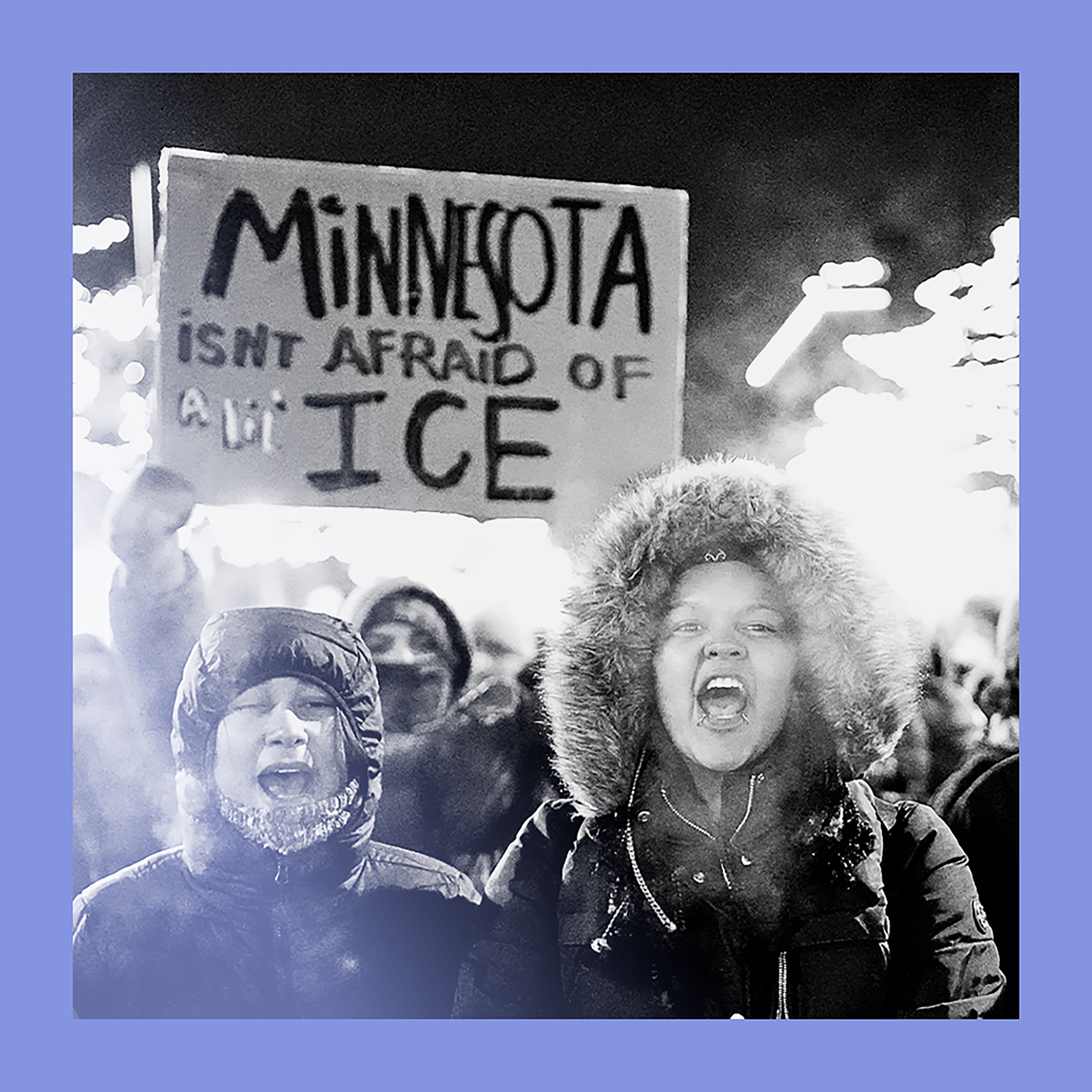
In this episode, Jason Palmer and Rosie Blau discuss three major topics:
Written by AI. May contain mistakes.
Discussing new efforts to protect Britain's red squirrel population.
“We look at a new conservation effort to bring their numbers back up.”
Exploring the shooting of Alex Pretty by federal agents in Minneapolis.
“On Saturday morning in Minneapolis, federal agents shot Alex Pretty, an intensive care nurse, ten times.”
Analyzing statements from officials regarding the shooting incident.
“Border Patrol agents with a 9mm semi-automatic handgun.”
Examining the public's response and media portrayal of the incidents.
“to stop a law enforcement operation of federal law enforcement officers committed an act of domestic terrorism.”
Discussing the political fallout and implications of the shootings in Minneapolis.
“when federal agents shot Renee Good point blank and then claimed she had been a threat.”
Critiquing how the administration is handling investigations related to the shootings.
“What is the administration's plan in Minneapolis?”
Exploring the reasons behind federal operations in cities like Minneapolis.
“and they're the ones who also will undertake the investigation as to what actually happened, I think that's very disturbing.”
Analyzing how the administration's actions are shaping perceptions of crime and immigration.
“What strikes me about this, I've been trying to think about what are the underlying purposes of this.”
Investigating shifts in public opinion regarding law enforcement following the shootings.
“ICE has a really difficult job of filling the quotas that we know is expected to fill.”
Contemplating the potential outcomes of protests in response to the shootings.
“Because when immigration is an abstract thing, I think people are all very much in favor of dealing with, and they're told it's criminals, people are in favor of that.”
Discussing the conflict between personal perception and government narratives on the shootings.
“But on the other hand, if demonstrations are big and peaceful, they can be mobilizers of the sense of the politics of this is changing.”
Explore the financial struggles of OpenAI and the competitive pressures from major players like Google.
“And then it expects to increase that by 30-fold or so over the next few years, which may cost at least a trillion dollars.”
A transition segment where the hosts move from discussing AI to exploring wildlife in St. James's Park.
Learn about the decline of red squirrels in Britain and the conservation efforts to protect them from grey squirrels.
“James's Park, just outside Buckingham Palace, and we're out squirrel spotting.”

Get the gist, explore an idea or ask about something said.
 Claude
On The Intelligence from The Economist, what are the key points of this episode?
Searching your listeningAutomatic transcript. May contain errors.
0:28The Economist AI remarkably powerful. But taking the lead has meant churning through a lot of money. This year could be make or break. And pity the poor red squirrel in most of Britain. They've been roundly outcompeted or given a nasty virus by their larger American grey cousins. We look at a new conservation effort to bring their numbers back up.
1:01First up, though...
1:08On Saturday morning in Minneapolis, federal agents shot Alex Pretty, an intensive care nurse, ten times.
1:22What the fuck did you just do? What the fuck did you just do? Multiple videos from the scene raced across the internet.
1:40Greg Bovino, a Border Patrol commander who's become the face of the federal immigration enforcement effort, delivered a statement about the killing. During this operation, an individual approached U.S. Border Patrol agents with a 9mm semi-automatic handgun. The agents attempted to disarm the individual, but he violently resisted. Fearing for his life and the lives and safety of fellow officers, a Border Patrol agent fired... Much of that language was repeated in a statement from Kristi Noem, the Secretary of Homeland Security. But the armed suspect reacted violently, fearing for his life and for the lives of his fellow officers around him, and agent-fired defensive shots.
2:28This individual who came with weapons and ammunition to stop a law enforcement operation of federal law enforcement officers committed an act of domestic terrorism. Like many, many other people who have watched the clips, Tim Waltz, Minnesota's Democratic governor, saw things differently. Thank God we have video, because according to DHS, these seven heroic guys took an onslaught of a battalion against them or something. It's nonsense, people. There are a lot of echoes here of another killing in the city two weeks before, when federal agents shot Renee Good point blank and then claimed she had been a threat.
3:08So now we've got two Minnesotans dead. We didn't have time to start telling Renee's story of a poet and a mother and a bright spirit. And now we're telling Alex's story. So my question is, what's the plan, Donald Trump? What is the plan? That is a thorny question. What is the administration's plan in Minneapolis? Its wider plan on immigration, on setting the narrative as more Americans are killed in the pursuit of that plan. To me, when I look at them, these videos don't tell the same story as the one that's being put forward by Greg Bovino and Kristi Noem. Edward Carr is a deputy editor of The Economist.
3:47It's very clear that he wasn't brandishing a gun. He doesn't look as if he's approaching officers with murderous intent. It looks like he's trying to stand between border patrol agents and a woman's been pushed to the ground and then he's pepper sprayed. But I think there's something even more important than that, which is that the process for establishing what happened needs to be undertaken independently. The way that the administration is rushing in to judgment, trying to define the story before that, and they're the ones who also will undertake the investigation as to what actually happened, I think that's very disturbing.
4:28First of all, let's wind back. There are some strong echoes here of the story of René Goode shot under equally disputed circumstances. Why is this happening in Minneapolis? Why is this the focus of what ICE is up to these days? Well, on the face of it, it's surprising, isn't it? If you wanted to go and find illegal immigrants, you really wouldn't go to Minneapolis. It's got a relatively small population of immigrants and relatively small population of illegal immigrants, I think. You'd go, in fact, to Texas or Florida, both Republican states. So you have to ask, was there another reason? And there could be lots of reasons.
5:04One thing that goes through my mind is whether this isn't part of a process to try and take on sanctuary cities, cities that say that they are standing up against the federal government in this policy in order to punish them. And it's the city of Tim Walsh who stood with Kamala Harris in the ticket. It's a city where George Floyd was murdered and had a history, therefore, of protests. It is a strongly democratic city. I think all of those things could be a factor. What strikes me about this, I've been trying to think about what are the underlying purposes of this. And one of them, I think, is an attempt to further polarise the United States and to get a sense across to the base voters of the Republicans that democratic run cities are dangerous places, badly run.
5:55The Democrats are soft on crime, soft on immigration and the enemies of law enforcement. And so there's a kind of political operation that goes alongside the superficial purpose of dealing with immigration. So ICE went looking for a fight and now it's got one in a place where it can't do the giant roundups that the government seems to be looking for. Well, I should first of all say that it's not just ICE, it's also the Border Patrol, and they were the force that was engaged with Alex Preti. Bigger than ICE, a militia too, and very violent, very paramilitary. But yes, broadly, that's exactly the right way to think about this.
6:32I'm speculating, obviously, about the political purpose of this. But if I'm right that the administration is targeting Democrat cities, but it's now targeting one where there aren't that many immigrants, ICE has a really difficult job of filling the quotas that we know is expected to fill. And so the struggle to fill quotas in a city that's perhaps not the best place to try and find illegal immigrants, I think, only leads to more aggressive action. And so what do you think about the optics of this operation in Minneapolis now, given that two people have been killed in these disputed circumstances?
7:05Is it the show that the administration wants to put on? I think it's important to stand back here. The Biden administration failed badly on dealing with illegal immigration. And Trump came in and I think his single biggest success has been closing the border. this action in minneapolis in particular which is on a much bigger scale than any of the actions in other cities like chicago or los angeles is undoing that work there was a yougov poll released in the early hours of this morning uk time which shows that about half of americans think that the shooting on saturday of alex prette wasn't justified and only 20 said it was justified and interestingly the proportion you think it was unjustified goes up to two-thirds if they've seen the video and altogether now more americans a little over 40 percent think that i should be abolished than think that i should be retained this is a policy that's taken donald trump's biggest success and is detonating it and is becoming increasingly unpopular and you can sort of understand why.
8:15Because when immigration is an abstract thing, I think people are all very much in favor of dealing with, and they're told it's criminals, people are in favor of that. But when it's someone you know being dragged from the street in front of you, and when you can see the evidence, and when you can see the consequences for small children and for American citizens of this action, then people start to question it. So given that the attitude towards what's going on here is changing. What do you think happens next? I'm watching a couple of things, Jason. One of the things I'm watching is the demonstrations.
8:47Of course, it is very cold in America. The temperature in Minnesota is anywhere from minus 26 to minus 11. That is not the weather for large demonstrations, although people have been demonstrating. But I'm watching to see whether those demonstrations are large and peaceful, in which case they become a powerful engine against the administration or whether they turn violent. It doesn't take much arson and looting for a protest movement to become entirely discredited. And if that does happen, the administration will feel that its political strategy is working. So I'm watching for that. But on the other hand, if demonstrations are big and peaceful, they can be mobilizers of the sense of the politics of this is changing.
9:30But the other thing I'm watching is in Washington, there's a vote at the end of the week on the budget, which includes a large increase in payment for the Department of Homeland Security, which oversees ICE and Border Patrol. And the question is, do Democrats vote this through, or do they not vote for it and lead to a shutdown in the government? And that's a difficult question Democrats will be asking themselves of how they should behave and what their conscience tells them. Well, this gets to the heart of what today's America looks like, how important the immigration question really is when the rubber hits the road, as you say.
10:07But it's also strange now that we have two cases where the video evidence seems to suggest one thing and the administration suggests another. There's a certain you have not seen what you believe you have seen kind of feeling here. Yeah, I think a number of things are going on. One is just how threatened ordinary Americans feel. The sense that you can be on a street, you can be exercising your rights and still be shot. Alex Prettick was exercising his First Amendment rights to protest, but he was also exercising his Second Amendment rights to carry a firearm. And in Minnesota, you can carry a concealed firearm.
10:45And yet the administration is saying he was brandishing his firearm, he was armed, he was dangerous. This looks like a situation where an individual wanted to do maximum damage and massacre law enforcement. He had an intent to massacre and that is stirring up something, a division on the right because the National Rifle Association, which strongly supports Second Amendment rights, is picking up on this sense that if you have a gun and you're near the police, you're in danger. And of course for them, that's anathema. I think a second thing is the relationship between the federal government and the states.
11:23What do you mean? How does that figure in? Minnesota and its governor and the mayor of Minneapolis, both of those people are now being investigated for speaking out against ICE. There's a strong sense in which the state has had border patrol and ICE imposed upon it. Its own police force and legal apparatus has not been allowed to investigate either of these shootings so far. So there's that old question about the federal gumption the state and then lastly something you are getting at i think jason which is it sounds abstract but the nature of truth itself people are being told not to believe the evidence of their own eyes and at some level the assertion of a government that no we define what truth is the harder it is to believe this in fact the more the evidence of your own eyes says something different it becomes an assertion of power in itself and we know that this administration thinks very deeply and seriously about power and how it's used.
12:25Edward, thank you very much for your time. Thank you, Jason.
12:47OpenAI continues to be the biggest AI hit out there. And its revenues are soaring. They've grown as much as 20-fold in the past three years. Henry Trix is our U.S. technology editor. But leaked figures also show that the company is burning through cash at an unprecedented rate. $17 billion in 2026, which is almost double what it burned through the year before. And this is expected to continue for years to come. If it makes money, it won't be at least until the end of the decade. So that's an astonishing amount of money. Where's it all going? Most of it is going into computing power. That is the data centres that rely on enormous amounts of energy in order to power the chips that train and run the AI models.
13:45This is measured in terms of megawatts or gigawatts, right? And the company has basically grown its AI infrastructure from 200 megawatts in 2023 to 1 ,900 megawatts in 2025. So that's huge in and of itself. And then it expects to increase that by 30-fold or so over the next few years, which may cost at least a trillion dollars. These costs keep mounting. OpenAI can't afford to fall behind its competitors when it comes to building the most state-of-the-art AI models. So it has to spend a fortune training them. And then there are inference costs, and that is the cost of actually running the AI as we put our queries into ChatGPT.
14:42And just these inference costs alone reportedly exceeded revenue for part of 2025. Now, Sam Altman, who is OpenAI's boss, he doesn't like discussing cash burn and he gets quite irritated when people ask him about it. But at the end of last year, he did say that the economics will improve as upfront training costs become a smaller share of total spending compared with inference costs. The trouble is that that's a long way from happening. So where is all that money coming from? Well, it's raised a lot of money from investors already. In fact, it's raised more money than any private company ever in a shockingly short amount of time.
15:27And it's on the hunt for money again. Sam Altman is cap in hand looking for as much as$100 billion this year, which is more than it's ever raised. and the valuation is expected to be anywhere from$750 billion to$830 billion, which is just kind of eye-watering for any kind of private company. Now, venture capitalists have experience of funding companies for years before they make money. So they do tend to turn the blind eye to this sort of cash burn at this stage in the cycle. However, I've spoken to some VCs and they told me that they expect that this year the losses will come into greater focus.
16:13They call this something of a make or break year for OpenAI. But OpenAI essentially has a first mover advantage, doesn't it? And so far that seems to have paid off. Yeah, you're right. But its primacy is slipping. And the big beast on the horizon is Google. Its latest Gemini model recently outperformed OpenAI's GPT 5.1 on various benchmarks. And Google is cleaning up in other ways as well. It just won a contract reportedly with Apple that will power Siri, Apple's virtual assistant. OpenAI has a relationship with Apple but didn't get that big contract. And there are also open source or open weight models that are coming from American and Chinese companies that are also closing the gap.
17:06Companies are using them more widely, which threatens OpenAI's ability to maintain a premium for its technology. So OpenAI is thinking about all sorts of diversification methods. The first thing it wants to do is to make sure that its models are as good as ever, but it's also trying to catch up on AI for business. So it's trying to catch up with rivals such as Anthropics Claude, which is doing very well on coding. So it's an increasingly competitive field. Could things unravel for OpenAI? Yes, there is a risk. I mean, let's just acknowledge that it's trying to meet the challenge. So in mid-January, it announced that it would launch a new subscription service in the US.
17:54And it's also aiming to pilot ads to give to people on zero-rate tiers or cheaper tiers of chat GPT. These are ways of potentially raising money. And then there's the promise that OpenAI continues to raise of building a new device sometime in the future that will rival the iPhone. So there are ways that it can fight back. But the risk is that these revenue models don't work, that ads prove disappointing, that OpenAI finds it stubbornly hard to monetize its users, and that its debt and spending commitments could become unsustainable because of the huge bets that it's made on expansion. So I spoke to one venture capitalist who noted that OpenAI's losses, which are projected to remain in the multiple tens of billions of dollars for several years to come, are comparable to the deficits of national governments.
19:00and others have invoked WeWork, which famously suffered spectacularly under the weight of huge debts and unrealistic growth predictions and paid the price. So that said, Sam Altman does enjoy a cult of personality and he still has plenty of believers. He's known as a genius fundraiser. The thing is, can he become known for being a genius at making profits as well? That's the big question that's sort of hanging over OpenAI this year. Henry, thank you very much. Great talking to you, Rosie.
19:51So we're here in St. James's Park, just outside Buckingham Palace, and we're out squirrel spotting. and we found one. We found our first squirrel. In most parts of Britain, if you take a walk in a park or nearby woods, you're pretty guaranteed to see a squirrel and it's almost certain to be a grey squirrel. Hamish Clayton writes about Britain for The Economist. Look at him jump. He's really quick. But this wasn't always the case. In the past, it would have been nearly impossible to see a grey squirrel. They didn't even exist in Britain. So the squirrels you would have seen were red squirrels. Now, red squirrels in the UK are facing a serious predicament.
20:35There's an estimated 39 ,000 red squirrels in England, compared with about 2.5 million greys. Grey squirrels are much bigger than red squirrels. The ones in London you'll see are really quite large. They've successfully worked out that tourists love feeding them nuts. Studies have even shown that they're slightly smarter, and so they are more successful in out-competing red squirrels for food and for habitat as well. Oh, one has literally just run down the tree in front of us. I think he thinks we've got a nut for him. But the Red Squirrel Recovery Network, which is a conservation project which involves a whole number of different charities, are confident that they can turn the tide.
21:19By doing what? A team from the government's Animal and Plant Health Agency funded by the UK Squirrel Accord have been developing a contraceptive bait which hopes to control populations of grey squirrels. It's a more humane and scalable way of keeping grey squirrel populations in check than the current methods of culling. The team have been trying a few different formulas of this contraceptive bait and they've been finding that the most successful is hazelnut butter. That's the most irresistible to the grey squirrels. The problem is red squirrels also love hazelnut butter. So how can they administer the contraceptive bait to just the grey squirrels?
22:01And what the team have done is created an ingenious feeder, which is based on the weight of the squirrel trying to access it. So it only allows access to squirrels of 450 grams or higher. So it means that only grey squirrels can access it and not a single red. But listen, why go to all the trouble? What is the problem with there being this disparity between the grey and red squirrel numbers? So the red squirrels were the native species and the grey squirrels are an invasive population and quite an important part is that the grey squirrels are resistant to the squirrel pox virus which unfortunately the red squirrels are not.
22:39So the squirrel pox virus is spread amongst the red populations and that leads to quite devastating consequences for the populations of red squirrels. Some estimates suggest that without conservation efforts, red squirrels could even disappear from almost all of England and Wales within 10 years. The RSRN is hoping to protect the red squirrel populations and not just protect them, but also help them rebound and gain the upper hand again against the grey squirrel populations. So it's not just about getting rid of the greys, but rather increasing the number of the reds? Yes, but the main way of doing that, unfortunately, is decreasing the number of greys, because grey squirrels outcompete the reds in terms of habitat, in terms of food.
23:20I guess the question is still though, why not let them? That's a great question. Why should we protect a native species that's slightly less successful than the invasive species? Subvert Darwinian competition, in fact. Another argument is that the grey squirrels are quite harmful. They strip the bark off beech, sycamore and oak trees. So that kills trees and it obviously harms the UK forests and it hampers a lot of reforestation projects. So young trees in their infancy have their bark stripped and they're unable to grow again. This seems like quite a dedicated effort by the Red Squirrel Recovery Network.
23:58I wonder if there are other devotees of other animals that have equal enthusiasm. Yeah, definitely. The RSRN is one of 26 conservation projects that was recently shortlisted for the Great British Wildlife Restoration Award. So those are projects specifically about British wildlife. And the schemes that I saw vary from protecting various species of dung beetle, that's named Project Dung, to saving the glutinous snail, which is currently now confined to just one lake in North Wales. So the British public then are on board with these kinds of efforts, both the conservation end of things and, of course, the patriotic one.
24:39They are on board. A recent survey showed that about 88 % of Britons are worried about the country's wildlife reduction. According to an index created by the Natural History Museum in London, Britain has the most depleted biodiversity of any G7 country. So schemes like this can really help restore Britain's biodiversity. And red squirrels are quite a cute poster boy for such schemes as this. It's worth noting that red squirrels aren't on the precipice of extinction. There are stable populations across Europe, but in the UK their plight is fairly serious. But hope lies in our hazelnut butter. Thanks very much for joining us, Amish.
25:22Thank you, Jason.
25:42That's all for this episode of The Intelligence. We'll see you back here tomorrow.
For the second time this month, federal agents in Minneapolis killed a citizen under disputed circumstances. We take a wider look at the immigration-enforcement effort and what, if anything, might limit it. OpenAI remains a generative-AI darling but it is burning through eye-watering amounts of money; 2026 may be its make-or-break year. And the effort to save Britain’s red squirrels.
Get a world of insights by subscribing to Economist Podcasts+. For more information about how to access Economist Podcasts+, please visit our FAQs page or watch our video explaining how to link your account.
Hosted on Acast. See acast.com/privacy for more information.


