
 Ask ChatGPT


 The Intelligence from The Economist
2 Sep 2026 · 23m · 7 chapters
The episode is about two main stories from The Intelligence (Economist): (1) whether Germany’s far-right Alternative for Germany (AfD) could win power in the East German state election in Saxony-Anhalt on Sept 6, and what that would mean locally; (2) why Palantir is controversial in Britain and whether the UK should replace it with domestic alternatives; plus a China segment on the rise of local chocolate brands.
Tom Nuttall (chief Germany correspondent, reporting on AfD rallies) and Georgia Banjo (Britain correspondent, covering Palantir). Don Wineland (China business and finance editor) joins for the chocolate segment.
AfD lead candidate Ulrich Siegmund could become the first right-wing nationalist state leader since WWII; AfD is “locked out” by a Brandmauer but may win a majority. AfD’s 258-page manifesto includes segregating classes and pushing Russian-language education. Critics cite Saxony-Anhalt’s €25B debt and lack of governing experience. Palantir’s NHS federated data platform is used for tools like cancer tracking; critics cite unreliable stats (e.g., “110,000 extra operations”), vendor lock-in, and “digital sovereignty.” Examples include London mayor Sadiq Khan blocking a Palantir police deal and a select committee urging an NHS break clause. China: Chokravive makes bean-to-bar chocolate in China, uses Chinese fruits, started with ~80 outlets in 2026 aiming for 300; it made ~160M yuan and targets quadrupling.
Written by AI. May contain mistakes.
Discussion about Ulrich Siegmund and the AfD's potential rise in the upcoming election.
“actually over the holidays Michael had a dental emergency and seemingly every office was closed but we hopped onto ZocDoc found an in-network dentist had great reviews saw real-time appointments available, which was key.”
Discussion about Ulrich Siegmund and the AfD's potential rise in the upcoming election.
“He's a tall, blonde, 35-year-old man with very nice hair, a persistent grin.”
Overview of the AfD's manifesto and its implications for Germany's future.
“of a German state since the Second World War.”
Exploration of the financial and administrative challenges the AfD may encounter if elected.
“serves as a sort of a blueprint for the transformation of Germany.”
Insight into how local voters feel about the possibility of an AfD government.
“What recourse do existing institutions have to push back?”
Explore how Palantir's technology addresses disjointed data in public services.
“Well, let's start with what exactly they're doing in all of these contracts.”
Learn about the emerging market for high-quality chocolate in China.
“I recently dropped by my local Chok Revive shop in Shanghai.”

Get the gist, explore an idea or ask about something said.
 Claude
On The Intelligence from The Economist, what are the key points of this episode?
Searching your listeningAutomatic transcript. May contain errors.
0:00Hey everyone, it's Chris Gillibeau here, host of the Side Hustle School podcast. This episode is powered by AT &T Business. In my early days, I did some of my best work in parked cars or coffee shops. But when I landed my first big contract, I realized I couldn't bet my future on a public connection that cuts out if someone turns on a blender. As a small business owner, you're already wearing at least 10 hats. You shouldn't have to be your own IT department as well. That's why I rely on AT &T Business. They keep your connectivity reliable so you have one less thing to worry about. Powered by AT &T Business, built to work.
0:35Get AT &T Business at business.att.com. this episode is sponsored by ZocDoc have you been putting off a doctor's appointment or need a dentist and you don't know where to start we've definitely been there and that's why we use ZocDoc actually over the holidays Michael had a dental emergency and seemingly every office was closed but we hopped onto ZocDoc found an in-network dentist had great reviews saw real-time appointments available, which was key. It was on New Year's Day and booked an appointment in just minutes. It took so much of the stress out of the already stressful situation. ZocDoc makes it easy to search and compare over 250 ,000 local in-network providers across more than 200 specialties.
1:23So you can find the right doctor or dentist and book instantly. Taking care of your health just got easier. Download the ZocDoc app today and book that appointment on your to-do list. That's Z-O-C-D-O-C. ZocDoc.
1:43The Economist.
1:50Rosie Blau: Hello and welcome to The Intelligence from The Economist. I'm Rosie Bloor. And I'm Jason Palmer.
1:59Rosie Blau: Today on the show, why people hate Palantir. And are the Chinese finally learning to cherish chocolate?
2:13Rosie Blau: First up, though.
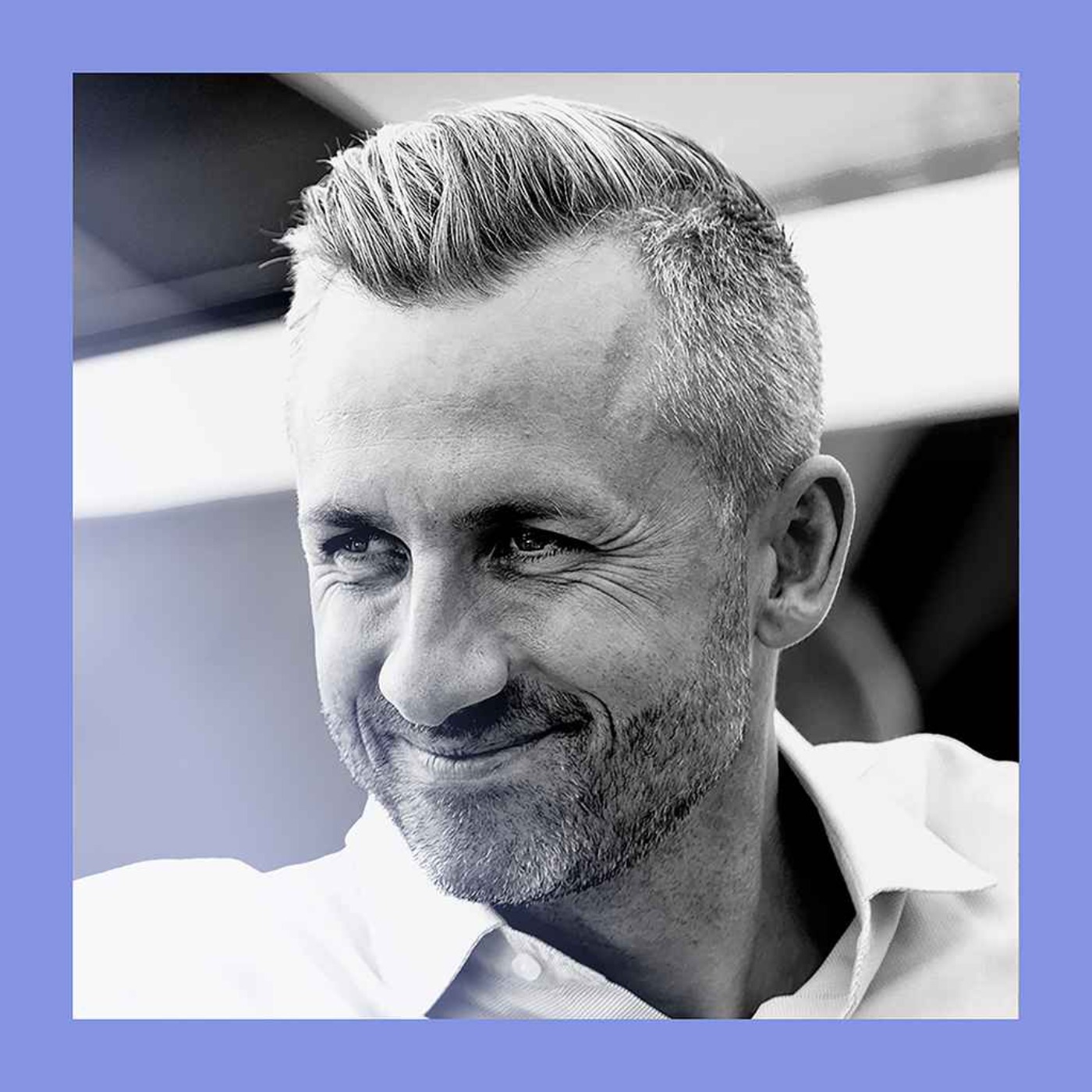
2:27This is Ulrich Siegmund. He's a tall, blonde, 35-year-old man with very nice hair, a persistent grin. He's been campaigning in the East German state of Saxony-Anhalt, which is holding a crucial election on Sunday, September the 6th. I attended one of his recent rallies on a blisteringly hot day in a town called Zerbst in Saxony-Anhalt.
2:57Rosie Blau: Tom Nuttall is our chief Germany correspondent. It was more like a celebrity meet and greet than a political rally. And the day before this event, Der Spiegel, which is one of the most prominent German weekly news magazines, had put his face on the cover and called him the most dangerous man in Germany. He was absolutely delighted by this. He bought up copies that morning, was signing them, giving them to fans. It was the talk of the event. It was one of the most extraordinary political events I've ever seen in Germany.
3:36A Rücksiemann's party is the alternative for Germany, the AFD. He is the lead candidate for the AFD in this election in Saxony and Halt. If the party finds its way to power after the election, then Siegmund would become the first right-wing nationalist leader of a German state since the Second World War.
3:59Rosie Blau: We've talked about the AFD a lot on the show and their rise. We know that Elon Musk is a fan. They have been kept out of power for a long time in a country haunted by its Nazi past. Is it actually possible that they could gain control now? Yes, it is possible. And this is the first time that they've had a genuine chance of attaining meaningful power in Germany. The AfD has basically been locked out of power at the state level, as well as at the federal level, by what the Germans call a Brandmauer. This basically means that no other mainstream party will work with it, will form coalitions with it.
4:37And the reason why it might be different after this weekend is that the AfD actually has a chance of winning a majority of seats in the Saxony Unhaugd parliament on its own.
4:47Rosie Blau: Europe has a lot of far-right parties. Just remind us exactly what the AfD stands for. More or less every country in the European Union has its own populist right nationalist party. But if you put these parties on a spectrum, then the AfD certainly sits on the more extreme end. Several other right-wing populist parties refuse to work with it, including the national rally in France. It's anti-immigration, of course, but it goes beyond that. It wants an end to the rights of asylum. It rallies behind this newish slogan, re-migration, which for some people is a kind of ethno-nationalist, white nationalist concept.
5:26It's pro-Russian. It wants to restore energy and diplomatic relationship with Russia and for Germany to stop its support for Ukraine. And maybe most of all, and this is what I really picked up at this rally in ZEAPS, it's got this really intense anti-elite streak. It regards all of the other parties as what it calls cartel parties. And now it's time to give this other lot, the alternative for Germany, a chance.
5:52Rosie Blau: This, of course, is a state election, not a national election. What could they actually do at a local level? A lot of the stuff that the AFD is best known for is not in the gift of a state government and certainly not a small one like Saxony-Anhalt. That doesn't mean that the party has not thought very clearly about what it wants to do if it does win power in Saxony-Anhalt. They've got a 258-page manifesto, which taken together is really an extraordinary document that in some respects, and party officials will confirm this, serves as a sort of a blueprint for the transformation of Germany. It gets into a lot of detail on education, both for schools and for universities.
6:32They want to segregate classes. They want the children of refugees and disabled children to be taken out of mainstream schools. They want to restore exchanges with schools in Russia. They want more Russian language teaching. They want to rewrite curricula. one of the more striking things is they want to focus on the 19th century achievements of Germany and less of what they regard as this obsession with the crimes of the Nazi regime. There's loads and loads and loads of stuff in there.
7:03Rosie Blau: You've laid out a very alarming agenda. Could they make that happen? So that's the really interesting question here, because I think there's very good reasons to think that they would really struggle. I think there's two main reasons for this. One is that Saxony-Anhalt does not have a lot of money. It owes about 25 billion euros. It relies on vast transfers from the rest of Germany to keep itself afloat. The AFD has made expensive promises on child care, on policing, on a whole bunch of other stuff. It's also vowed not to take on any new debt and independent analyses confirm that basically the sums don't add up.
7:46So that's one thing. The second thing is that precisely because the AFD has no governing experience at all, other than in a couple of rural municipalities, there's a real question of whether it has the competence to actually do this. And many people, crucially, inside the party, inside the AFD, don't think that they necessarily have the administrative chops to be able to get moving as quickly as some people would like them to do. So I think there's a lot of doubts over how much of this quite radical program they would be able to implement.
8:22Rosie Blau: What recourse do existing institutions have to push back? So I've been talking to individuals and organizations who might be affected by an AFD government and they have been planning for months for the prospect of the AFD in government. Earlier this year, the parliament in Saxony-Anhalt changed its rules for electing judges in the state parliament to ensure that the AFD would not be able to turn things upside down. And outside of Saxony-Anhalt, the interior ministers of the 15 other states of Germany have been thinking about, But if it comes to it, excluding their AFD colleague from Saxony Anhalt, because they would be worried about sensitive national security information shared between the states that would fall into the wrong hands.
9:08And here they're thinking particularly of Russia. So there's a lot of planning going on about how to respond to an AFD government.
9:14Rosie Blau: And how is the possibility of the AFD winning in Saxony Anhalt going down with local voters? There are plenty of people who are thrilled by the prospects of an AFD government. They're the people that I met in Zapps. There are obviously many, many people, and I've met them in different parts of the state, who are absolutely horrified by the prospect. We've been talking about what would happen if the AFD wins power in Sachsen-Jahn. The very first thing that would happen, I think more or less a guarantee, is that the day after the election, you would see widespread protests, probably not only in the state, but across Germany, because this would be such a shock to so many people.
9:51In the longer term, I've spoken to lots of people in the state who say that they or people that they know would consider leaving. And this is a state that cannot afford to have a whole bunch of skilled workers leave. And one of the sad ironies of this situation is that now that it looks like there's a genuine prospect of the AFT taking power, and because if they don't take power, the coalition needed to stop it would be so incoherent and complicated. There are a lot of people who quietly will tell you, well, maybe we should just let them do it and they're going to cock it up. They've got no money, they've got no competence and everything will be a disaster.
10:30And then they'll lose the sheet of invincibility and then we can come back and clean things up. But that line of argument is not really something that you hear from people in the state. they will tell you we do not want to be your testing ground we do not want to be your laboratory if the afd take power here we are the ones who are going to have to live with this every day
10:51Rosie Blau: tom thank you very much thank you rosie
11:07hey everyone it's chris guillebeau here host of the side hustle school podcast this episode is powered by AT &T Business. In my early days, I did some of my best work in parked cars or coffee shops. When I landed my first big contract, I realized I couldn't bet my future on a public connection that cuts out if someone turns on a blender. As a small business owner, you're already wearing at least 10 hats. You shouldn't have to be your own IT department as well. That's why I rely on AT &T Business. They keep your connectivity reliable so you have one less thing to worry about. Powered by AT &T Business, built to work.
11:42Get AT &T Business at business.att.com. This episode is sponsored by ZocDoc. Have you been putting off a doctor's appointment or need a dentist and you don't know where to start? We've definitely been there and that's why we use ZocDoc. Actually, over the holidays, Michael had a dental emergency and seemingly every office was closed, but we hopped onto ZocDoc, found an in-network dentist, had great reviews, saw real-time appointments available, which was key. It was on New Year's Day and booked an appointment in just minutes. It took so much of the stress out of the already stressful situation.
12:21ZocDoc makes it easy to search and compare over 250 ,000 local in-network providers across more than 200 specialties. So you can find the right doctor or dentist and book instantly. Taking care of your health just got easier. Download the ZocDoc app today and book that appointment on your to-do list. That's Z-O-C-D-O-C. ZocDoc.
12:54The American tech firm Palantir made a name for itself among defense types and spooks in the early 2000s. It's been controversial in its way since the start. Phrases like techno-militarism and surveillance state often thrown around. I mean, it's named after the all-seeing stones of J.R.R. Tolkien's fiction. By now, it's found its way into almost every arm of America's defense apparatus, and it's gone looking for other customers, in the private sector and abroad. In particular, in Britain. Palantir is a really American company. Two-fifths of its contracts come with the American government, but Britain is its biggest foreign market, and home to a sixth of its workforce.
13:40Georgia Banjo is a Britain correspondent for The Economist. In the past few years, Palantir has won a string of government contracts with the National Health Service, with the armed forces and the police, among others. Now, their software does a really good job of joining up disparate data, but the company itself is also attracting a lot of controversy. Well, let's start with what exactly they're doing in all of these contracts. What's the promise? So Palantir is essentially trying to solve a very big problem. If you look at public services, a big problem is that data is often really disjointed.
14:18So you have police that spend more time doing admin, logging into lots of different systems than actually solving crimes. You have nurses running around on wards, having to write stuff down on paper because their electronic patient records don't work. It's a problem. And Palantir offers to solve that. What they do essentially is there a software company that helps turn that data into actionable data flows so that's ways of presenting it that can help non-techie experts like you and me to understand it it's already been used in the armed forces to help a commander work out where a plane is and how close it is to a certain target it's also been used in the police to help solve crimes so because Palantir can analyse data very quickly.
15:04It helped them crack one case with the Romanian gang where they were able to sort through 100 ,000 messages, something that would usually take months. So there's lots of useful use cases, but the most controversial has been in the NHS. And why is that? Why is that any different? So in 2023, Palantir won a contract with the National Health Service to build a federated data platform. Essentially, this is a platform that does what it says. It's federated. So it helps parts of the NHS join and link up their data. But it can also be used by trust for basic back office functions, but also to run tools on top of.
15:43So one example is there's a cancer tool which can help a trust to track patients through their cancer treatments, flagging when they're behind on their appointments, letting staff update records. So why is any of that controversial? Palantir is definitely a lightning rod. And I think that's for several reasons. They've always had a reputation for being outsiders. So their CEO, Alex Karp, even joked about it on a recent earnings call. He said that he's struggling to come to terms with Palantir's recent popularity. And we should disclose here that Karp used to sit on the board of The Economist's parent company.
16:20But Palantir often create their own vibes. So its chairman, Peter Thiel, is known for lecturing on the Antichrist. Christ. Palantir's technology has been used to help ICE to track and deport migrants in America and Israel to target Gazans. And in Britain, it should be said as well, they're also known for their really aggressive lobbying. So a lot of what they do is controversial. But mostly this is about Palantir's politics or the politics of the people who work there. So I think the politics get a lot of attention. One problem with the NHS contract is Palantir has used statistics which aren't exactly reliable.
17:00So there's one claim they like to make that because of Palantir's software, the NHS has performed 110 ,000 extra operations. Now that's just not true because for technical reasons, the data isn't reliable, but Palantir have continued to use those statistics. Another genuine concern is the risk of vendor lock-in. So that's the issue that with any technology, a government or a client can get too dependent on a company's services, and then And that company can basically charge what they like for them. That is a concern, but that's a feature of any tech contract, really. With any tech contract, civil servants certainly need to be savvy.
17:40They need to make sure that they're using software, which is useful. And they need to try to be open to using other options. But the last concern that comes up a lot with Palantir is this concern about digital sovereignty. particularly when America seems perhaps a less reliable partner than it used to be, and Trump is known for making brash statements about what he'll do to other countries. And so because of that, countries, including Britain, are now thinking twice about importing American tech. So the suggestion here, if there are all of these worries around Palantir, that Britain should have some sort of homegrown alternative?
18:18Exactly. And that would be a great suggestion if there were British alternatives. So a slight issue with this debate is as much as many would want to, for example, use a British partner with the NHS, there simply isn't that capability at the moment. In which case the detractors would say just cut ties with Palantir anyway. Exactly. So what we're hearing a lot at the moment is lots of people suggesting exactly that. So there was a recent select committee which came out with a report urging the government to exercise a break clause with the NHS contract. So that means from next February, the NHS could stop using Palantir without breaching the terms of their contract.
19:03Recently, we've also had London's mayor, Sadiq Khan, block a deal with Palantir to stop the Metropolitan Police from using their software. He's saying that there wasn't an open competition process. That's now in court. And lots of people are suggesting that Britain should start to look towards domestic alternatives. Now, the one issue with that is that there aren't necessarily those alternatives already in place, which creates a problem when you're trying to stop or pause contracts. This starts to sound like a rock-in-a-hard-place situation. I mean, what's your take on what should happen here?
19:41Yeah, it's very difficult. It's now a very live issue. So responding to Mercedee Khan's decision to block the contract, the Metropolitan Police's Commissioner, Sir Mark Rowley, said that the lost productivity would mean the force had to cut hundreds of frontline staff. There's clearly an impact there. If you're worried about dependence in the NHS, just look at Oracle, which supplies a lot of the NHS's patient records. Look at Microsoft. You know, staff can't log into their systems without Microsoft. they use it for their communications, they use it for AI, they even use it for the cloud, right?
20:17And then obviously, if you look at defence, if you look at our nuclear deterrent, essentially, if you're going to worry about sovereignty, there are far bigger things to worry about than Palantir. And so I think as much as the politics is changing, we do have to think rationally and seriously about the position Britain is in. Public services, frankly, are in a mess. and it's clear that although Palantir has exaggerated at times the effects and the impacts of its software, the problem that it's solving is real and the technology seems to be useful. On balance, while I understand some of the concerns about Palantir, I think a lot of the controversy about it is overblown.
20:57Thanks very much for joining us, Georgia. Thanks, Jason.
21:18I recently dropped by my local Chok Revive shop in Shanghai. This is a Chinese chocolate brand.
21:30Don Wineland is our China business and finance editor.
21:37When I stepped in, the shop assistant laid out all these different varieties of chocolate that they had. I sampled some. There was a strawberry-flavored one, passion fruit, hazelnut. The assistant told me that Chalk Revive makes all of its chocolate here in China. And I was really surprised by both the variety and the quality of it all. because China's really not known for its chocolatiers or for its chocolate. But that is changing. There's a new generation of Chinese chocolatiers that are starting to crop up in this country. So first off, why isn't chocolate already a big thing in China? Well, it's not a local product, right?
22:26Chinese desserts tend to not be very sweet. One thing that's popular here is red bean paste. This is a typical filling for local pastries, but chocolate really doesn't feature very prominently in any of these local desserts. It's also more expensive than your average Chinese sweet. The chocolates that I ate were around 58 yuan for 100 grams. That's pretty pricey. That's around$10. You can buy a meal for two in a lot of places in China for that amount. So that is to say you just don't see chocolate around when you go to the grocery store? You can find it in the grocery store, but it's not a super popular thing.
23:06And you can really see that in the consumption figures. China consumes around 2 % of worldwide chocolate. That's a very, very small amount given how big this country is. The average Chinese person eats around 100 grams a year. That's a hundredth of what a French person consumes. And when you do see chocolate here, it's usually a mass-produced foreign brand. So companies like Mars, Ferrero, Nestle, Hershey, these are the types of companies that are producing around four-fifths of the chocolate that is consumed in China. Given that the appetite is clearly so low in China for chocolate, what do you make of this push to make the sort of fancy version of it?
23:50So you wouldn't think that this is a great time to launch a new expensive product in China. Consumer confidence is really weak. Shoppers are cutting back on non-essentials. So if you look at imported products like wine, this has been shrinking in recent years. But the founder of Chalk Revive, who I spoke with recently, said it is possible to find a local market. You just have to make your product more Chinese. So he's incorporating Chinese fruits into his chocolate. He's investing heavily in the supply chain here. He's one of the first people to really ever do what's called bean to bar, which means sourcing your beans from Africa and then doing all of the actual processing here in China.
24:35That will eventually bring down the cost. He has a research and development facility in China. It's one of the first of its kind. That's going to lead to more expertise in this industry developing around chocolate making. So I think when you start adding in those elements, you might eventually get a bigger market. But is this sort of a one-man push to create a market? Is Chalk Revive the only company at the moment doing this? So the reason why I decided to write about Chinese chocolate is because I've never seen a local chocolate brand develop at this level. Chalk Revive started with around 80 outlets the beginning of 2026.
25:14It's aiming to have 300 by the end of the year. Its sales are growing incredibly rapidly. So it made about 160 million yuan last year. That's roughly$24 million. It's hoping to quadruple that by the end of the year. This one company really stands out. I should say, though, there are a number of other companies that are trying to do the same. There's a brand called Nibo, which has been winning international chocolate awards. There's another company called Saturn Bird, which is planting cacao trees in southern China, trying to really develop a local cacao industry. So will Chokravive succeed in the end?
25:58Will it be the top winner? Who knows? But it does seem like within a couple of years, we will see a real serious chocolatier in China. Don, thanks very much for joining us. Thank you.
26:25Rosie Blau: That's it for this episode of The Intelligence. See you back here tomorrow.
26:48Hey everyone, it's Chris Gillibow here, host of the Side Hustle School podcast. This episode is powered by AT &T Business. In my early days, I did some of my best work in parked cars or coffee shops. But when I landed my first big contract, I realized I couldn't bet my future on a public connection that cuts out if someone turns on a blender. As a small business owner, you're already wearing at least 10 hats. You shouldn't have to be your own IT department as well. That's why I rely on AT &T Business. They keep your connectivity reliable so you have one less thing to worry about. Powered by AT &T Business, built to work.
27:24Get AT &T Business at business.att.com.
On Sunday, Alternative for Germany could become the first far-right nationalist party to win a state election since the end of the second world war. Is Britain right to worry about Palantir handling government contracts? And could the Chinese learn to love chocolate?
Guests and host:
Topics covered:
Listen to what matters most, from global politics and business to science and technology—subscribe to The Economist.
Hosted on Acast. See acast.com/privacy for more information.


