
 Ask ChatGPT


 The Intelligence from The Economist
17 Sep 2026 · 22m · 7 chapters
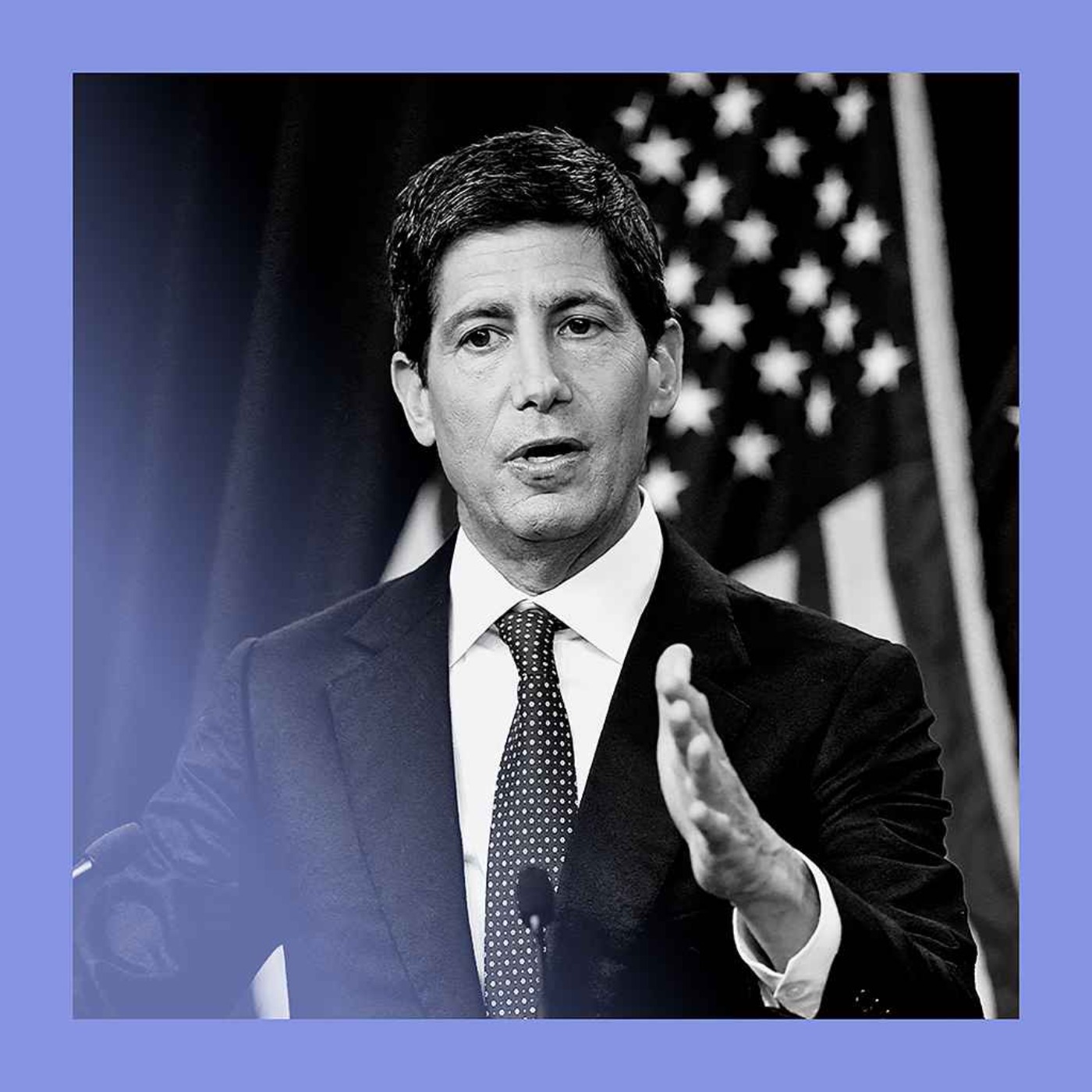
The US Federal Reserve’s decision to raise rates, and what it signals for Fed independence and politics; plus Japan’s Okinawa election and how climate change may reshape “summer.”
Archie Hall, The Economist economics editor (commentary on the Fed decision). Moeka Iida, The Economist East Asia reporter (reports on Okinawa’s governor election).
The Fed under new chair Kevin Walsh raised the federal funds target by 0.25 points to 3.75–4.0%, the first hike since July 2023, citing strong growth and resilient spending more than inflation alone. Markets “boxed in” Walsh, expecting a hike and pushing rates up mainly on the front end. Trump avoided direct confrontation, emphasizing the decision was unanimous. In Okinawa, Koji Gentah won a landslide, shifting toward a pro-military stance (supporting the Henoko base relocation) while pivoting to “bread and butter” issues like doubling incomes.
Iran-war oil-price pressure; Jackson Hole speech; Henoko/Futenma base relocation; Okinawa’s high child poverty and low incomes; climate projections that Northern Hemisphere summer could last six months by 2100.
Written by AI. May contain mistakes.
Discussion on the Federal Reserve's recent interest rate hike and its implications.
“Hotels.com makes booking work trips easy and rewarding.”
Discussion on the Federal Reserve's recent interest rate hike and its implications.
“For months, Donald Trump has been calling for a cut in interest rates.”
Exploration of how markets are reacting to the interest rate changes and what it signifies.
“What reasons did he give for his decision?”
Analysis of the political pressures surrounding the Fed's decisions and its independence.
“As you say, Donald Trump did not want a rate hike.”
Insight into Okinawa's recent election and its significance in Japanese politics.
“Last weekend, I visited Okinawa, an island in Japan's south famous for tourism and beautiful beaches.”
Explore the changing political landscape in Okinawa and the implications of Koja's governance.
“Okinawan soil feeds into that sense of being treated as if you're expendable.”
Discuss the effects of climate change on the perception and experience of summer.
“In the Northern Hemisphere, summer is ending and, it increasingly seems, perhaps not just this year's summer.”

Get the gist, explore an idea or ask about something said.
 Claude
On The Intelligence from The Economist, what are the key points of this episode?
Searching your listeningAutomatic transcript. May contain errors.
0:00This intelligence podcast is sponsored by Perk, the intelligent platform for travel and spend. Every person on your team loses up to seven hours a week doing the work behind the work, submitting expenses, matching receipts and booking travel. Using AI and automation, Perk can do that work, bringing travel and spend together in one place. Enjoy three months without platform fees when you sign up at Perk.com forward slash the intelligence. That's Perk.com forward slash the intelligence. New U.S.-based corporate customers only. Terms apply. This intelligence podcast is sponsored by business travel on hotels.com.
0:35Does booking business travel feel like another job? Hotels.com makes booking work trips easy and rewarding. It's easy because you can set your preferences once and get results tailored to your business travel needs every time. It's rewarding because with hotels.com's free rewards program, you can save instantly on your next work trip and earn rewards for future travel. Book faster with confidence at Hotels.com. Loyalty members 18+.
1:10Hello and welcome to The Intelligence from The Economist. I'm Rosie Bloor.
1:19Today on the show, a boost for Japan's defense buildup. And is it the end of summer forever?
1:34First up, though.
1:42For months, Donald Trump has been calling for a cut in interest rates. By contrast, markets and analysts have been expecting a rise. That's because inflation in America remains high, with the Iran war adding to the pressure on the price of oil and other items. All of which made yesterday's rate decision by America's Federal Reserve a critical moment for its new chairman, Kevin Walsh. A test not just of monetary policy, but politics. Kevin Walsh, the newish Fed chairman, announced a quarter percentage point increase in the Fed funds rate at a press conference yesterday afternoon. In the meeting just concluded, the FOMC decided to raise the target range for the federal funds rate by a quarter of a percentage point to three and three quarters to four percent in support of the Federal Reserve's dual mandate.
2:35That move is the first increase since July of 2023. The Fed had been on hold for a while. Archie Hall is our economics editor. And so while this decision had been expected and had been teed up by Chairman Walsh at a previous speech in Jackson Hole, Wyoming, it was still a fairly dramatic move for early on in his tenure. This is someone who's come in only a few months ago and his first few meetings were keeping the Fed funds rate on hold. And in a context where the Fed had been in a cutting cycle and then a holding cycle for a while, turn that around and start raising rates. What reasons did he give for his decision?
3:11Conventionally, when you're a Fed share, you're raising interest rates, the whole story is almost always inflation. You say inflation is a problem. This is the tough medicine the American economy needs. Here we go, interest rates are going up. We'll all feel squeezed, but that's what's necessary. Washed a little bit of that, but he focused much more on economic growth. Domestic spending has been resilient. Productivity growth, strong. And capital investment is robust. He was saying the American economy is doing very, very well. Productivity growth is very high. The labor market is in a very solid position.
3:42Basically, everything's going so well that we have to raise interest rates, which one can imagine was maybe said with half an eye over to the reaction of the White House. Several journalists tried to squeeze an answer out of Walsh about President Trump and didn't get terribly far. I have to ask, what is your message here to President Trump, who has repeatedly called to cut interest rates, not raise them? I've got nothing for you on a discussion with the president. Before we get to the White House reaction, how have markets responded to this? So this was a move that was in large part caused by Chairman Walsh being boxed in by markets.
4:20There was a bit of a backlash to his first few press conferences, particularly the second one, where he was thought to be a little bit muddled and self-contradictory, and it wasn't entirely sure where he was going. and that prompted a fairly sharp response in markets. And so this is a bit of an attempt to correct that. So we saw him at his big speech at the Jackson Hole conference in Wyoming a couple weeks ago indicate pretty heavily that he was likely to go for a hike pretty soon. And that was received very well by markets in the sense that basically got the reaction he wanted, which was a big move up in short-term interest rates.
4:54Pricing in, the Fed was likely to raise rates, but actually not a very big move. And at the very, very far end for a while, maybe even decline in long-term interest rates, suggesting that this was effectively not something where the market was worried about uncertainty or volatility or policy consequences, meaning that the very, very long run rates might need to be higher or borrowing costs going up in general. So that was the combination that Walsh was after. And we saw a similar risk shape this time around, more just moving up across the curve, but moving up more on the front end. And markets now expect another hike before the end of the year.
5:26As you say, Donald Trump did not want a rate hike. Has he reacted? Yes, so he's fairly diplomatically, at least in Trumpian standards, not come out for Walsh personally. This is not Jerome Too Late Powell, as we have with the previous Fed chair. But he's rather focused on the fact this was a unanimous decision across all 12 voting members of the Fed committee. Trump's maintained that he wants lower interest rates. He thinks the Fed committee members are political, he says. But this is not an incendiary backlash from the sort one I was worried about. Kevin Walsh has only been in posts since May.
5:59What does this tell us about the type of Fed chair he's going to be? Yes, that's the question everyone's been asking over the past few months. The good news is this is not the sort of thing you do if you are a total Donald Trump stooge. Clearly, if you were coming in and your view was, my job is to lower registrates, that's what the president wants, that's what's going to happen, which is totally out of keeping with the tradition of Fed independence that has existed in the States, at least since the 50s. So it's not that, that's good. What we don't yet have as clear a sign on is where his long-term vision really lies.
6:35This was, as I was saying before, a move that he was slightly boxed into by the markets. He's set up all these task forces of various eminent names to ponder deep questions about monetary policy. So those are still digging away and will report back. And so we're not really getting a long-term vision until that comes. In the short term, this was clearly a hike he was slightly pressured into doing, both by markets and actually by the other people on Fair Committee as well. And so we're still sort of getting a sense. The other thing that's worth adding there was that he did continue his pattern of really not wanting to say very much communicatively.
7:08So this was a press conference much shorter than the usual one. They're usually something around 45 minutes, call it this one was under half an hour. Every journalist only got one question, which for those of us in the audience can be frustrating, but we're still getting the sense that he's figuring his way out. Archie, we've talked about what happened. I'm interested in your view on whether it was the right decision to raise rates. Conveniently, the economist published a leader the week before that I wrote, saying Kevin Wall should raise rates. I should say, in fairness, it is actually not a totally straightforward call.
7:40The reason that I felt comfortable with us raising a fairly firm leader, saying you should, a firm leader than we usually would for your average Fed meeting, was more for the institutional case, really, than the economic one. So in economic terms, there's a perfectly good argument for an interest rate hike, which is all the things Kevin Walsh was saying about growth being very, very strong. Also, the fact that the Iran war has raised oil prices in the context of high inflation, you might worry about that flowing through to the rest of the economy. And also the fact that just in general, inflation has been high for quite a long time, five years now, and hasn't really ever quite made it back to the Fed's 2 % target.
8:16That's all a good case. You could say on the other side that the oil price thing is a one-time shock, tariffs are still fading, inflation does seem to be drifting down very, very slowly. that labor market isn't sourced from inflationary pressure. So you could totally tell the other case too. The Fed doesn't usually move ahead of midterms. So it's sort of interesting that they did. And to me, that sort of suggests that really what was front of mind, maybe even more than the inflation thing, was the question about the Fed's standing institutional position. And Kevin Walsh, as I mentioned, had a slightly rocky first few months, righted the ship with a Jackson Hole speech that effectively was him saying, no, no, no, I promise I'm going to do regular central banking things, like communicate a bit more than I was doing before, how do you think there looks like there's inflationary pressure and generally sound a bit more orthodox and traditional.
9:05And that did seem to steady the ship with markets and also with political observers who are still trying to work out how independent he was. And so this was in some ways just following through on that cycle. I think for that reason, it was important for his own credibility as a head share. And will it have any bearing on the midterms, which are coming up very shortly? Gosh, I mean, quarter percentage point of moves in short-term interest rates tends not to be the thing that really sways household finances one way or the other. And that's doubly true when you have oil prices gyrating and widespread angst about affordability and AI doing to the economy, whatever it is, and all manner of other things that are affecting the midterm outlook.
9:44So mostly, I think this is an interesting story for the Fed and this is an interesting story for the state of the US economy. I'd be quite surprised it would move the needle any serious way on the outcome of the terms. Archie, thank you very much. Thank you.
10:09This Economist podcast is sponsored by Scribd, the knowledge platform with more than 350 million documents shared by real people. Whatever you're working on, Scribd is where you go to find information, build understanding, and get it done. And if you're a student or educator in the U.S., a valid school email address gets you a discounted subscription plan. Head to Scribd.com to claim yours. That's S-C-R-I-B-D dot com. Must be 18 or over. Who says Halloween only lasts one day? With Wayfair, one night of Halloween becomes a whole season at home. From larger-than-life yard decor and moody lighting to festive accents for every room in the house, Wayfair has what you need to make Halloween feel like magic all in one place.
10:57Because the best Halloween memories aren't made in just one night. They're made all season long. Shop Halloween decor now at Wayfair.com. That's W-A-Y-F-A-I-R dot com. Wayfair, every style, every home.
11:18Last weekend, I visited Okinawa, an island in Japan's south famous for tourism and beautiful beaches. But I wasn't there for the beaches. Moeka Iida is our East Asia reporter. I watched Koja Gentah deliver a speech at a rally, surrounded by an enthusiastic crowd.
11:41Koja was running in the prefecture's governor election that was held on September 13th. He repeated his campaign slogan, Move Okinawa forward. Although Koja had been leading in the polls, many people were surprised when the results came out. He won in a landslide, gaining more than 400 ,000 votes, more than any candidate in the prefecture's history. He beat Tamaki Deni, a popular incumbent who was seeking a third term. It was a historic election for Okinawans, but the results matter far beyond the islands.
12:18Maoka, explain to me why Okinawa is so significant. I think most outsiders know Okinawa for its beaches, but also its heavy US military presence. But those bases are there because of Okinawa's strategic location. It sits in the so-called first island chain, which is Pentagon jargon to describe the archipelago that hems in mainland China. It also sits very close to Taiwan, which means it plays a key role for America and Japan's plans to deter China. But on the other hand, Okinawan politics has been defined by resistance to that heavy military presence. What is it about the military bases that's so controversial?
12:59A lot of this stems from a very unbalanced legal agreement between America and Japan that limits oversight over the bases. For instance, they don't have to comply with local noise regulations, and residents often suffer from very loud noise coming from the bases. There's also been incidents of pollution and terrible accidents like helicopters crashing into places like schools and injuring locals. And there's also been a history of crime involving servicemen, including sexual assault against women. So anti-base sentiment has run deep in Okinawa, and that echoes a longer history of Okinawans facing discrimination from the mainland.
13:39Okinawa used to be a separate kingdom called Ryukyu. It was then annexed by Japan in the 19th century. It then suffered the deadly Battle of Okinawa during World War II. And then after the war, it endured two decades of American occupation, which was often brutal and rife with human rights abuses. So going back to the base issue, that disproportionate burden of hosting most of Japan's military facilities in Okinawan soil feeds into that sense of being treated as if you're expendable. And that resentment has often led to a conflictual relationship between the government in Okinawa and Tokyo. So where does this new candidate fit in?
14:19Koja stepped in with a pitch for renewal. At 42 years old, he's very young by Japanese political standards. And in fact, he will be Okinawa's youngest ever governor. And he's the first governor to be born after America returned Okinawa to Japan five decades ago. Older generations remember the war and the occupation very vividly, but he comes from a generation that doesn't share that cultural memory. And he talked about overcoming division and conflict in Okinawa. And what he meant by that was getting along better with the central government in Tokyo. He had a very strong backing from the ruling LDP and other conservative parties.
14:57It was very clear that the conservative coalition wanted Tamaki Deni to be ousted. So in terms of getting along with the central government, Koja takes a more pro-military-based stance. A symbolic project that characterises this is the Henoko Project, which involves relocating the Futenma Air Base from a crowded city to another side on reclaimed land along the east coast of Okinawa's mainland. Tamaki and the administration before him fiercely oppose that project. But Koja, on the other hand, he was in favour of the Hinoko project, so that marks a real shift. It seems surprising that Okinawans would now elect a governor who is keen on these military bases, having opposed them for so long.
15:42What's changed? Well, just to be clear, Tamaki was not opposed to all bases. He's in favour of the US-Japan alliance. So for him, it's a matter of protecting Okinawan's dignity. And the base issue had a lot of momentum when he came into office. But over the eight years that Tamaki was in office, he wasn't able to stop the Henoko project. And also Tamaki tried to fight against the central government by filing lawsuits, but he repeatedly lost. As the sense of resignation set in, people started thinking, instead of fighting over something that we clearly cannot stop, why not focus on other issues like the economy?
16:19And in fact, Okinawa is one of the most economically marginalized prefectures in Japan. It has low income levels and one of the highest child poverty rates across the country. Koja tapped into that frustration. He said he's going to double people's income. And he also talked about having five children himself and wanting to support families raising children. So basically, people who got tired of hearing about the base issue rallied around Koja, who is focused more on bread and butter issues. So what will happen when Koja comes into power? what will change? Well, first of all, in terms of the significance of the election, it's going to be a major boost for the Takahichi government or the LDP.
16:57I think the election mirrored broader trends in Japanese politics. So it signals this dominance of the conservative or right wing. And in terms of what might change when he comes into power, well, first of all, the LDP is trying to beef up its defences, especially in the so-called Southwest Shift, which is aimed at countering China. So it's not just the Henoko project that will see less resistance, but we will see less resistance going forward around things like deploying new weapons in the area, or also using civilian infrastructure for military purposes. But I would say, even though Okinawa appears to be becoming more pro-base, it doesn't mean locals don't have mixed feelings about the bases anymore.
17:38Let's say there's a terrible accident and tensions flare up again, then people are going to pay attention to how Koja responds to these issues. As one academic I spoke to put it, will Koja stand with Okinawans when that means confronting Tokyo? Morka, thank you very much. Thank you so much for having me, Rosie.
18:10you tip out the sand from the suitcases and stash them in the attic the days are shortening the children have trudged unwillingly back to school andy miller writes our backstory column gloaty out of office emails no longer dominate your inbox. In the Northern Hemisphere, summer is ending and, it increasingly seems, perhaps not just this year's summer. For the idea of summer cherished in the West and immortalised in films and in songs like Summer Holiday by Cliff Richard
18:47may, alas, be moribund too.
18:53The crackle of possibility on the season's first really warm day, the hazy sense, in lush midsummer, of getting away with something, the storing up of memories to revisit in bleaker times like power in a solar battery. As the past few broiling months have shown, this version of summer, precious, fleeting and electric, is gravely imperiled by climate change. As the planet warms, summer is lengthening. By the year 2100, it will last six months in the Northern Hemisphere, reckons one projection. Summer's lease hath all too short a date, Shakespeare lamented. Soon, some lyricists may yearn for it to end, like Russians desperate for the thaw.
19:43It's been a long, hot, stifling summer. A band of the future may trill. Here comes the snow. Yet, even as it stretches interminably, summer may get shorter, at least for some schoolchildren. Extreme temperatures are scrambling the academic calendar, forcing administrators to rejig start and finish dates. Some pupils may wind up with longer breaks in the spring and autumn, when the weather is mild enough to enjoy, and a briefer one in between. There may be less mooching around in summer, eating parents out of house and home and seeming to grow by the hour. Fewer weeks to spend getting into harmless scrapes or, as in to kill a mockingbird, trying to make Boo Radley come out.
20:30Holidays will have to evolve.
20:35For decades, British hordes have occupied stretches of southern Europe in July and August. They party in Magaluf or Mykonos, or ogle the art in Italy and Greece, discovering antiquity or, like the daring heroine of Shirley Valentine, the locals and themselves. Increasingly, though, it's becoming too hot to bake on Balearic beaches in high summer, or to drag your offspring around the Acropolis or Colosseum. These jaunts will drift to April or October, according to research for the European Commission. Summertime dramas will instead unfold in Scandinavia or Wales. And it isn't only the Mediterranean that will be affected.
21:18Droughts, wildfires and flash floods, not to mention ticks and toxic algae, will redraw the tourist map elsewhere too. Island idylls faced coastal erosion and fiercer hurricanes. What happens in Vegas may still stay in Vegas, but it won't happen outside in July. The cooler resorts of New England will be thronged. If Jaws were set in, say, 2050, Amity Island would be succulently overrun.
21:53Summer is set to move indoors. This will have an upside. Scalding streets will deter loitering, leaving less chance of tempers flaring and tensions boiling over. But much will be lost too. Fire risks will restrict campfires and thus flamelit sing-alongs, spooky tales and heart-to-hearts. Romance, I'm afraid, is sure to suffer. Summer loving has always happened fast, as Danny and Sandy attest in Summer Nights in Greece.
22:28But it'll have to hurry even more if the heat traps you inside till nightfall. More flesh will be covered up as people worry about skin damage. It may be too stifling under the boardwalk for canoodling.
22:46If you stop to think about it, technology has already warped the shape of summer and undermined the sanctity of getaways, bleeding work and leisure together. The kids can still push Daddy into the pool just after he finishes his Zoom call. But the coming overhaul, I fear, will be even more drastic. Hallowed summer habits, like music festivals and garden parties, stairway camps and fireside s'mores, may one day seem like relics of a bygone age, like bathing machines and penny slots. Farewell, summer. It was nice while it lasted.
23:34That's all for this episode of The Intelligence. We'll see you back here tomorrow.
24:02Who says Halloween only lasts one day? With Wayfair, one night of Halloween becomes a whole season at home. From larger-than-life yard decor and moody lighting to festive accents for every room in the house, Wayfair has what you need to make Halloween feel like magic all in one place. Because the best Halloween memories aren't made in just one night. They're made all season long. Shop Halloween decor now at Wayfair.com. That's W-A-Y-F-A-I-R dot com. Every style, every home. This message comes from Betterment. Dan Egan, VP of Behavioral Finance and Investing, explains the benefits of automated dividend reinvestment.
24:42If you've ever invested, you probably have noticed that occasionally you get dividends. Your stock pays it out. You get that as cash in your account and it usually sits there until you remember that you're supposed to buy something else with it to reinvest it back. Automated dividend reinvestment makes that effortless and seamless. When dividends come into your account, we automatically reinvest available dividends, not necessarily into where they came from, but into whatever would serve your portfolio best. So automated dividend reinvestment keeps you invested and keeps your portfolio in balance.
25:12Learn more about Betterment's dividend reinvestment methodology and other helpful investment tools at Betterment.com. Investing involves risk, performance not guaranteed.
The Federal Reserve has raised interest rates for the first time since July 2023. For the central bank’s new chair Kevin Warsh, that decision was a test both of monetary policy and politics. A governor’s election in Okinawa is a boon to Japan’s military ambitions. And why summer is a casualty of climate change.
Guests and host:
Topics covered:
Listen to what matters most, from global politics and business to science and technology—subscribe to The Economist.
Hosted on Acast. See acast.com/privacy for more information.


