
 Ask ChatGPT



In this episode, hosts Jason Palmer and Rosie Blau discuss the evolving political landscape in Syria following the overthrow of dictator Bashar al-Assad and explore the growing dissent toward the new regime under President Ahmad al-Shara. The episode also highlights the role of elderly protesters in the UK and pays tribute to the life of actor Terence Stamp.
Written by AI. May contain mistakes.

Get the gist, explore an idea or ask about something said.
 Claude
On The Intelligence from The Economist, what are the key points of this episode?
Searching your listeningAutomatic transcript. May contain errors.
0:28The Economist their demands for change. Well, you'd be right about the shouts and billboards. But in Britain, increasingly, it's not the young who demonstrate, it's pensioners. And you might remember him as General Zod in Superman, Bernadette in Priscilla, Queen of the Desert, or maybe the Supreme Chancellor Finis Valorum in Star Wars. Many characters, and he was brilliant in them all. Our obituaries editor celebrates the life of Terence Stamp.
1:01But first...
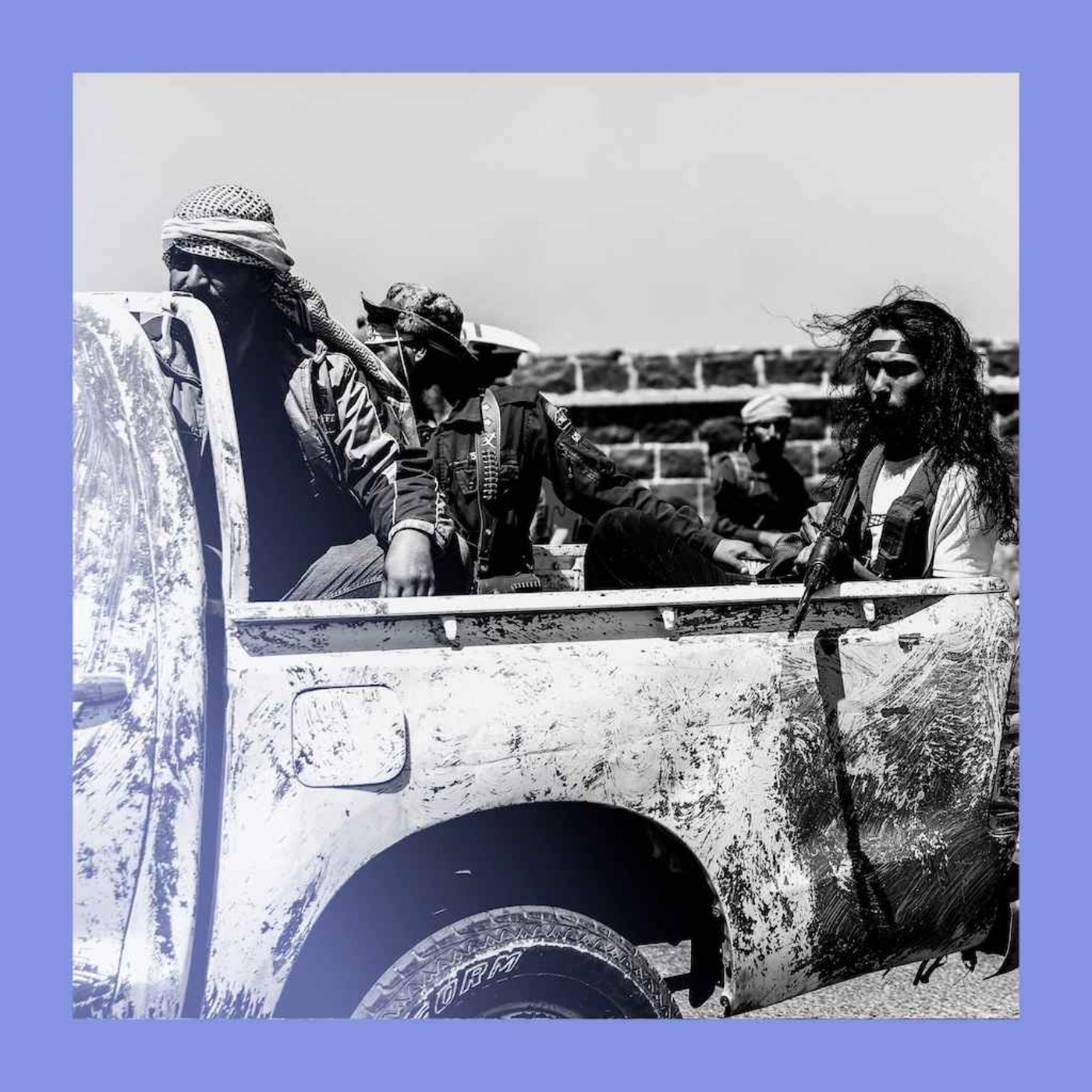
1:10In July, repeated armed clashes in the southern Syrian city of Saweda killed hundreds of people. Government-backed Sunni militias went on the rampage in a province where the majority of the population are Druze. Local men responded by massing in the streets, chanting, arms in tone.
1:31And that violence wasn't an isolated case. In March, in coastal areas, members of the Alawite minority were targeted by unidentified Sunni militias. More than 1 ,400 people were massacred. In the early months after the fall of former dictator Bashar al-Assad, Syria was euphoric. Back then, a poll commissioned by The Economist found the country's new president, Ahmad al-Shara, had an 81 % approval rating. That moment has now passed. Less than nine months in, Al-Shara's regime is coming under increasing scrutiny. There have been several instances of sectarian violence which have really shaken the country, shaken the relations between Damascus and minorities.
2:18Gareth Brown is a Middle East correspondent. And I think what you've started to see over the summer months is the first sort of emergence of opposition to Ahmed Ashara's new government in Damascus. And how did the government respond to the violence earlier this year? I think the word, to sum it up, would be lacklustre. I think in both instances, the government was very slow to get control of the situation. And in the coastal violence, we saw Ashara's government announce this investigation, this committee, which would form a report. And the results of that report have been published. And what we see is essentially the government abdicating responsibility for the violence.
3:04Now, he has said that there'll be another investigation into the violence in Saoeda. But a lot of people are quite pessimistic that that's going to lead to any real accountability. And Syria has come through a very traumatic 50 years of dictatorship, 13 years of civil war. We can't expect the sectarianism to sort of disappear overnight. But I think the real disappointment and frustration is Shara's government's really quite poor response to both of these incidents, and people are starting to air these frustrations. Is there any sense then that the minorities in Syria are going to find representation of any kind?
3:38I think this is the key question plaguing Syria at the minute. Back in February, March, when I was part of an economist team that interviewed Ahmed Shara, I think we really came away with the feeling that Shara was understanding of the role that minorities play in Syria. And he wanted them to be part of this new country, this new state, and he wanted to bring them in under his umbrella. But I think in the last few months, his actions, his government's actions really haven't aligned with the words, with the rhetoric. And in the case of the Druze in the South, you now have Druze talking openly about succession, some Druze militias flying Israeli flags.
4:18You have Alawites who really, in many cases, don't feel they have a place in the new Syria. And I think that, as well as other factors, is now starting to manifest itself in something resembling an organised opposition. So whilst the violence in Suweda was erupting, we saw the launch of the Syrian Centenary Initiative, which was, to be honest, little more than a published statement. But it had some very clear goals and it was signed by some very credible opposition figures from across the Syrian spectrum. And they were basically demanding that Shahraha revisit many of his key decisions over the last few months, in particular the constitutional declaration, which was signed in March.
4:58They want to see a greater role for civil society and political parties, both of which have really been sort of largely locked out of the decision-making process in Shahraha's Syria. And really this is a key moment where you have Syrians going, hold on, this is not the new Syria we wanted to build. We didn't struggle for more than a decade of civil war against Bashar al-Assad, only to recreate a new system that doesn't listen to us and excludes us. So Gareth, does this brewing opposition have a point? How would you rate al-Shara's performance to date? I think there have been positives and negatives.
5:32I think undoubtedly his big victories have been on the international stage. He got the sanctions lifted. He's really succeeded in bringing Syria in out of the cold, opening embassies, relations with other countries, bringing business into the country. But decision making has been heavily centralized and real power lies in the hands of maybe half a dozen or less than a dozen officials from Heya Tahrir Hasham. That was the rebel group he was the head of in Idlib. A lot of positions in the Syrian government are being awarded on the basis of loyalty or tribal or family links. civil society has been shut out and I think the Syrian diaspora which is phenomenally educated and buzzing with ideas and diversity also he really hasn't taken advantage of them I think the violence in Sueda in the summer has all but wrecked the chances of incorporating the Druze into his security forces and it also invited Israel into stir up further instability and he also hasn't managed to strike a deal with the Kurds in the northeast yet which would bring them sort of under the state umbrella.
6:36And I think that's a key thing that he hasn't managed to do yet. At the moment, it seems as though Al-Shadar is more interested in satisfying a Sunni revanchism among his space than forming a genuinely inclusive government and sharing power. And how does all of this play out for the ordinary person trying to live their life? I mean, I think for the ordinary Syrian, so far, materialistically, life hasn't got much better. 90 % of Syrians still live below the poverty line. I mean, there was this windfall of political freedom, which was very noticeable in the early months. But now you have people focusing on questions like, how can I get enough money to feed my family?
7:20I think when the US administration, Donald Trump, lifted sanctions on Syria a few months back, and we've had this wave of foreign companies from the Gulf and from Turkey coming to Syria and signing these big deals, Syrians haven't felt that yet. They haven't felt the windfall. They haven't felt an improvement in their quality of life. And they're starting to grumble about that. You talked about the shoots of a new opposition to al-Shara, which is not violent. How much of a chance do you think this has of establishing itself? I think this is going to be the key test for al-Shara over the next six months to a year.
7:56I think the emergence of a civil opposition is actually a fantastic opportunity for him. is something that could strengthen his government, strengthen the political process, strengthen the institutions in Syria that he's trying to rebuild. But that all depends on how he reacts. And I have sort of noticed anecdotally, both online and in person, the people around Shara don't really react that well to criticism. And in some instances, we've seen writers, Syrian activists, who were very strongly associated with the revolution over the years, criticising Shara and being accused of treachery. And, you know, you speak to some of them and they say that there's really no dialogue unless you're considered part of the formerly Hayatahri Risham clique.
8:39I don't think it's impossible that some sort of protest movement emerges, particularly if the material aspects of life don't improve. So does Shara interact with this criticism or does he try to suppress it? Shah Rukh was quite autocratic when he ran Idlib and he was willing to clamp down on dissent and opposition when he needed to. And it worked for him. Running Syria is very different to running Idlib. Idlib was an ethically homogenous governor with massive economic growth because the population had swelled. And Syria as a state is obviously much bigger, but it's also a patchwork of minorities and communities with sometimes competing, sometimes overlapping interests.
9:22and a lot more international considerations to take into place. So it's whether he can graduate his mindset from being the governor of Idlib province to being the president of one of the most diverse and complex countries and societies in the region. Gareth, thank you very much. Thanks for having me.
9:56Tomorrow's episode of the Weekend Intelligence, our subscriber-only show, is by me. And it's about a story I first heard the bare bones of when I was five or six years old. My father was on the last boatload of child refugees from Poland before war broke out in 1939. That much I've long known. but like so many others of his generation my dad never really talked about what or who he left behind. That silence became its own inheritance and everyone who could have told me the story is dead now. But recently I decided I needed to try and find out what happened. I went on a journey to Berlin, a northern Polish port and a forest clearing close to the border with Ukraine.
10:44Please do join me tomorrow to listen. You'll need to be a subscriber to do so.
11:13Duncan Robinson is The Economist's Britain political editor and Badgett columnist. It was a protest in favour of a group called Palestine Action. So you had hundreds of people waving placards saying, I oppose genocide and I support Palestine Action, which is a sort of pro-Gaza campaign group which also recently vandalised some military planes and were therefore prescribed by the UK government, which basically put them on the same footing as al-Qaeda or any other terrorist group and made showing any sign of support for them completely illegal. But the two things that were strange about it were, one, everyone was really rather old, and two, the police started arresting people for holding up what ostensibly seems like a relatively innocuous sign.
12:00Arrest the people that are selling arms, they're bombing, killing. And so police would pick up often very old people and carry them extremely gingerly away from the protest, be arrested and then subsequently charged with terror offences. We must fight for our protest rights. And these protesters were often pretty giddy about it. You could see that some photographers caught images of pensioners sort of smiling while they were being carried away. Everyone was having fun almost.
12:35so what was really going on why were there so many old people there well there were lots of old people there because lots of people believe that there's been sort of overreach by the uk government in prescribing this organization is labeling them as a terrorist organization and the reason there were so many old people there is because they have the means to be arrested they've got the time to do it they're relatively insulated from the consequences and so they're prepared to pick up a terror charge for what they believe in. So of the people who were arrested, half of them were over 60, and then one in five of them were over 70, and you even had 15 80 somethings who were being arrested.
13:10And by contrast, there were only six people in their teens who were arrested. You don't normally think of pensioners at protests. Is that usual for Britain or usual elsewhere? So Britain's a bit of an outlier in that our pensioners tend to be a bit more radical and a bit less conservative than they are, say, on the continent. So if you turn up to a protest or political meeting in the UK, you will see a lot of grey hairs. You will see a lot of people who are well into their 70s and 80s often taking quite radical positions. And so this has been sort of most apparent on the right of British politics in the past few years.
13:44So when Britain voted to leave the EU, it was mainly older voters who chose that quite radical option. And at the moment, we're going through the sort of political flux where vast amounts of people, I say they support Nigel Farage's Reform UK party, which is a very populous party. But the sort of base of that, again, is retired people. And that's very different to how voters behave in, say, France or Germany or Spain, where voters in those countries go for the small C conservative option because they're a bit scared of change. Whereas pensioners in the UK sort of go, change, sign me up. And do these radical pensioners actually have any influence in politics?
14:19Oh, they certainly do, because they do turn out and vote. and also particularly on the other side of the spectrum, they do turn up to places and are prepared to get themselves arrested. So we've got the presence of radical old people. Were young people absent? No, there were still plenty of young people there, but it's sort of what you expect. The image of protest is sort of still so wrapped up with students. You expect to see people with blue hair and dreadlocks and just sort of being young and wild and you expect it to be the sort of thing that people grow out of when it's almost becoming something that people go into.
14:52And you've already mentioned that there were a lot of arrests at this protest. Are these radical pensioners actually more reckless or dangerous than other protesters? Well, they basically have the means to do this. So being arrested is stressful and time consuming. And being convicted of a terror offence, which is literally what these people have been charged with, is a huge problem to have on your CV. So if you are young and you want to travel to America at some point in your life, you have to tick that little box saying, yes, I have been convicted of terrorism. And funnily enough, the Americans say, whoa, you can't come in.
15:28And so that's a big sacrifice to make if you're in your 20s. That's a big curtailment of what you can do. Whereas if you're in your 70s or your 80s, you're probably not going to go to Disneyland and Orlando anytime soon. So why not give it a go? And what are politicians doing about the rise of radical pensioners? It's sort of a bit of a dirty secret in politics because every single party likes to paint themselves as sort of like young and vital. But at the same time, every single party secretly knows that it is older voters who decide elections. And so there's a little bit of denial there. So although there were hundreds of arrests that won't have sort of nipped this in the bud, the people who organized the protests said that they're going to come back in a few weeks' time.
16:07And there will almost certainly be another army of OAPs who are willing to stand up to the government and be arrested for what they believe in. Retirements never sounded so fun. Duncan, thank you so much. Thank you.
16:31When Terence Stamp was asked which was his favourite film, he always said Billy Budd. Anne Rowe is The Economist's obituaries editor. And his favourite moment also came in that, what he thought of as a moment of transcendence. He was standing on the deck of the HMS Avenger, the waves were playing round him, the sunlight was on his hair, and a noose was gently touching his face, because as Billy Budd, an unjustly accused crewman on a 19th century British ship, he was about to be hanged. And he didn't really quite know how to play the scene, because the script said that Billy was at peace. He had no idea how he could play someone facing his death and being at peace.
17:18A sort of strange otherness seemed to take over him. And he heard in his head a little ditty, little dolly daydream, pride of Idaho. And he heard his grandmother singing it as she used to sing when she made him marmalade sandwiches after school, as he lay on the rug in her house doing his homework. And he realised that he could nail this scene just by being in that space.
17:52Not thinking, being beyond thought. And in fact, when he went to the premiere with his parents, there was not a dry eye in the cinema because at that moment he really had taken the audience somewhere beyond themselves. That film, which was made in 1962, also propelled him to fame.
18:21He won an Oscar nomination and a BAFTA nomination. And after that, he was making a film every year. Films like The Collector, Modesty Blaze. They were films in which he played all kinds of different people, from bank clerks to psychopathic butterfly collectors to, in Far From the Madding Crowd, a caddish sergeant. But it was all a little bit of a surprise to him, this tremendous fame, and the fact that he was going out with the most beautiful women of the age, that he became an icon in London. He was going around with Mick Jagger and David Bailey was photographing him. He was one of the great 60s icons.
19:05and yet he thought he was just an East End Spiv. He was very proud of being an East Ender but all the same he'd never thought of himself as terribly attractive.
19:19If he was going to be called the most beautiful man in the world, was this true? He thought in fact it was all to the credit of the lighting man on Billy Budd and this image of him had suddenly magically transformed him and he therefore came to realise what he'd intuited very young as a child when he went to the cinema with his mum, that actually cinema itself was magic. And that sense of magic also came through to his fans. They always thought there was something rather strange and mysterious about him, an intensity, even something mesmerising.
20:06So in 1970, there came a rather difficult time in his career when the role seemed to be drying up. And agents were saying quite blatantly that as the 60s ended, Terence Stamp's ascendancy also ended. People wanted the new Terence Stamp. They wanted a different face. So he dug himself off, feeling rather miserable, to India. and there he spent seven years in an ashram which was connected to Krishnamurti. And there he wore orange robes, grew a long beard, long hair, learned about yoga and meditation, and also learned breathing techniques from Sufis. And it didn't seem perhaps at the time to be taking in an awful lot, but he realized when he got a cable in 1977 telling him that he was up for a part in the new Superman films, he suddenly felt that he could absolutely do this.
21:07And when he went for the job still in his robes and his long beard and his hair and was picked to play General Zod, the arch villain. He went on the Superman set and thought, I'm more awake than any of these other people. They seem to be half asleep. And he thought that the very best way to play Zod was not as evil caricature, but as someone who was absolutely present in the moment, just pure terrifying presence. He wrote books too on macrobiotic cookery because he had come to believe in India that people who ate a macrobiotic diet with no wheat and no dairy could stay beautiful forever.
22:05and certainly in the minds of his fans he did stay beautiful forever and he himself looking back over his career could still think that it had all stemmed from and gone back to that moment on the deck of the HMS Avenger when he was about to be hanged and instead found himself listening to a little tune in his grandmother's living room in Barking Road, East 13.
22:36Anne Rowe on Terence Stamp, who has died aged 87. This little lady This little lady
22:52That's it for this episode of The Intelligence The show's editors are Chris Impey and Jack Gill Our deputy editor is John Joe Devlin And our sound designer is Will Rowe Our audio correspondent is Sarah Larniuk And our senior creative producer is William Warren Our producers are Henrietta McFarlane and Benji Guy, and our assistant producer is Anne Hanna, with extra production help this week from Tamara Gilkes-Boer, Emily Elias, Maria Clara Montoya, and Eleanor Sly. And please do listen to The Weekend Intelligence tomorrow.
Less than nine months after Syria’s dictator Bashar al-Assad was toppled, the honeymoon is over. How is the new regime responding to rising dissent? Introducing Britain’s revolutionary retirees: why pensioners increasingly dominate political protest. And celebrating the life of on-screen villain, Terence Stamp.
Listen to what matters most, from global politics and business to science and technology—Subscribe to Economist Podcasts+
For more information about how to access Economist Podcasts+, please visit our FAQs page or watch our video explaining how to link your account.
Hosted on Acast. See acast.com/privacy for more information.


