
 Ask ChatGPT


 The Intelligence from The Economist
30 Oct 2026 · 28m · 8 chapters
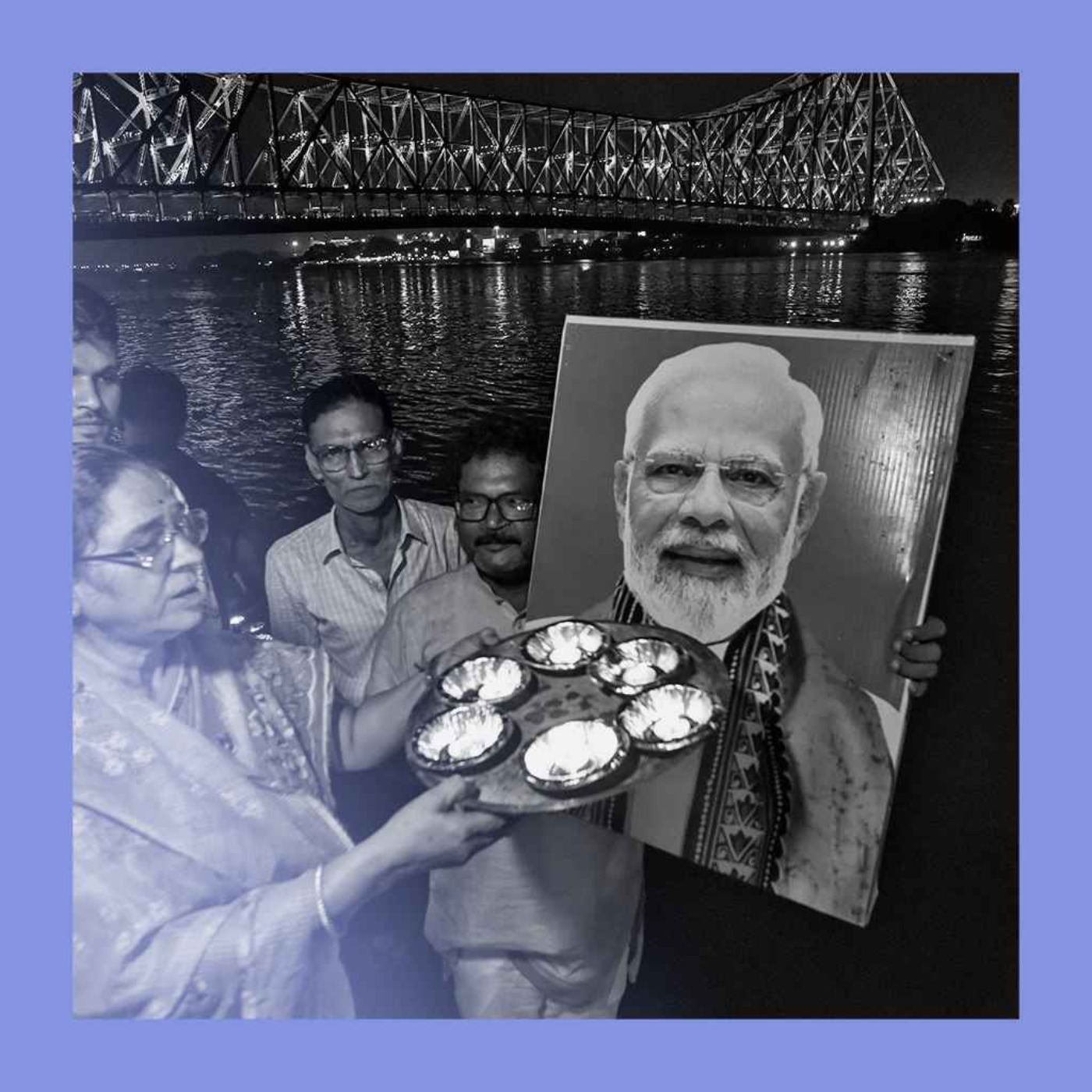
The episode is a “whistle-stop tour” of political developments and elections. It leads with Narendra Modi’s 25-year rise and “silver jubilee,” focusing on his dominant leadership style, Hindu nationalist agenda, economic record (digitisation and tax reforms vs weak manufacturing/job creation), and current democratic stress points, especially youth-led protests over opaque, centralized voter-roll verification (SIR) and alleged authoritarian tactics. It then pivots to U.S. midterms: lesser-watched races and ballot measures that may reveal broader political trends.
Tom Sasse, Economist South Asia bureau chief, covering Modi and protests; Daniela Raz, Economist U.S. correspondent, covering down-ballot races and ballot measures; Ore Ogumbi and Jason Palmer host; Ari (mentioned as co-host).
Modi’s power comes from tight control of institutions and a personality cult; his majoritarian Hindu agenda includes Ram Temple consecration and permissiveness toward anti-Muslim rhetoric; democracy is strained by electoral-institution handling; U.S. races buck national expectations due to local candidate familiarity and specific scandals/issues.
Gujarat earthquake-era rise (2001); alliance with industrialists including Gautam Adani; SIR voter-roll removals; protests and arrests of protest leaders; U.S. examples include New Hampshire Senate (Chris Pappas vs John Sununu), Minnesota Senate (Peggy Flanagan vs Republican), Virginia 2nd rematch (Elaine Luria vs Jen Kiggans), Idaho abortion Proposition 1, and California Insurance Commissioner race (Jane Kim vs Ben Allen).
Written by AI. May contain mistakes.
An overview of Modi's 25-year political journey and current protests.
“Today on the show, a whistle-stop tour through some of the most surprising midterms races.”
Discussion on the youth-led protests and the implications for India's democracy.
“You'll find it in the podcast section of The Economist app.”
Explore the political landscape in New Hampshire and Minnesota, highlighting key races and candidates.
“They've brought in a lot of big names to campaign alongside him.”
Dive into the intricacies of the Virginia 2nd Congressional District and Idaho's abortion measure.
“You've got Virginia's 2nd Congressional District.”
A detailed look at the California insurance commissioner's race and its importance amid climate challenges.
“Insurers have pulled back from really big parts of the state, especially places that are exposed to wildfires.”
Discuss the various down-ballot initiatives and their unexpected significance in American elections.
“Our midterms fever is far from breaking.”
A recounting of Chips' experiences while working as Winston Churchill's personal secretary.
“Still, she liked it, and she kept it for the rest of her life.”
Learn about a personal story involving Winston Churchill and his secretary.
“and she really didn't think she could cope with all that responsibility.”

Get the gist, explore an idea or ask about something said.
 Claude
On The Intelligence from The Economist, what are the key points of this episode?
Searching your listeningAutomatic transcript. May contain errors.
0:00This message comes from Betterment. Dan Egan, VP of Behavioral Finance and Investing, explains the benefits of automated dividend reinvestment. If you've ever invested, you probably have noticed that occasionally you get dividends. Your stock pays it out. You get that as cash in your account and it usually sits there until you remember that you're supposed to buy something else with it to reinvest it back. Automated dividend reinvestment makes that effortless and seamless. When dividends come into your account, we automatically reinvest available dividends, not necessarily into where they came from, but into whatever would serve your portfolio best.
0:34So automated dividend reinvestment keeps you invested and keeps your portfolio in balance. Learn more about Betterment's dividend reinvestment methodology and other helpful investment tools at Betterment.com. Investing involves risk, performance not guaranteed.
0:52This Economist podcast is sponsored by Apollo.io. In a fast-moving business environment, finding the right people to connect with takes time. For sales teams, prospecting, outreach, and follow-up can mean juggling multiple tools and workflows. Apollo.io brings these activities together in one platform, helping sales teams find the right buyers and spend less time on scattered, manual tasks and more time building relationships. Apollo.io. Sign up for free at Apollo.io.
1:23The Economist.
1:30Ọrẹ Ogunbiyi: Hello, and welcome to The Intelligence from The Economist. I'm Ore Ogumbi. And I'm Jason Palmer.
1:40Ọrẹ Ogunbiyi: Today on the show, a whistle-stop tour through some of the most surprising midterms races. And who was Churchill's last personal secretary?
1:55But first...
2:03Ọrẹ Ogunbiyi: Earlier this month, Narendra Modi celebrated his Silver Jubilee, marking 25 years since he arrived on the political stage, first as Chief Minister of Gujarat State and then as India's Prime Minister. The anniversary was meant to be a moment of celebration with exhibitions and tree planting events across the country. But things didn't quite go to plan. The month has also brought him much less auspicious gatherings. Narendra Modi finds himself facing his most difficult crisis yet. Tom Sasse is our South Asia bureau chief. We've seen these huge protests led by the youth, and it's really challenging Modi in two ways.
2:50One is to challenge his governing model, and lots of people are saying that he's no longer meeting their aspirations. And then secondly, it's also challenging his strong-arm tactics. So these protesters are saying he's not fairly supervising the electoral commission and taking away the rights of people to vote.
3:10Ọrẹ Ogunbiyi: Tom, before we get into what's happening today, let's go back to the beginning. How did Modi become such a dominant leader? So to understand Modi, you do really need to go back to Gujarat in 2001.
3:29So in 2001, just after Gujarat has experienced this terrible earthquake, Modi is installed as the chief minister to try and respond to this earthquake and to try and get the BJP back on track. So in Gujarat, he really seized control of the state. He wielded a tight grip over the police, the judiciary, over party cadre. He forged this very tight alliance with big industrialists, most of all Gautam Adani. and he projected this image of himself both as a Hindu hardliner, and that was partly in response to these really awful religious riots that happened early on his watch, but he also projected himself as a development man who could help and lift up the ordinary Indian.
4:15And that was the model that he then would go on to apply as prime minister.
4:19Ọrẹ Ogunbiyi: Now, Modi isn't the first strong dominant leader that India's seen. What makes his style of leadership different? Yes, I think we've seen two other leaders before India's history who you could compare in the level of dominance they had. The first was Jawaharlal Nehru, India's first prime minister. He led the country for 17 years. He established it as this secular democracy with a socialist economic vision, but he had a very clear sort of liberal agenda. The second was his daughter, Indira Gandhi, who led the country between the 60s and the 1980s. She was more of a populist figure and was a little bit of an authoritarian, notably in the 70s when she cancelled democracy.
5:03Now, Modi is more in the Indira Gandhi mold in the sense that he's had a very tight grip on his party over institutions, and he's built this very powerful personality cult. But actually, fundamentally, he's taken India in a very different direction to these two figures. He's taken it away from this sort of liberal, secular idea and towards a much more majoritarian, much more Hindu kind of country.
5:31Ọrẹ Ogunbiyi: Tell me a bit more about that, the ways in which Modi has impacted Indian society. So I think this will be one of his most profound legacies, really. So he's fused his version of religious nationalism with politics. He wants to make India a more avowedly Hindu country. and bluntly he's made it a worse country to be a Muslim and India has 200 million Muslims. They make up almost a seventh of the population. So he's pushed through some really big important reforms that Hindu nationalist ideologues have wanted for many decades, most notably consecrating the new Ram Temple on the site where a mosque was torn down.
6:15But under Modi, the other change is that you have this sort of permissiveness around anti-Muslim rhetoric, attacks by vigilante groups, which are often met with impunity. The thing is, this part of his agenda is really still pretty popular. Opposition parties haven't succeeded in pushing back against it. In fact, they've tried to adopt the sort of soft version of parts of it. But it's not clear, while it's been electorally powerful, it's not clear that if voters still don't feel as good about the economy, whether it will continue to have the same results for him.
6:51Ọrẹ Ogunbiyi: And on the economy, what has Modi done to transform India? So on some things, he's been pretty successful. I think you could call him a moderniser more than a reformer. I think his biggest success is pushing through a massive digitisation. So India has huge use of a digital payment system. It's become a much more online country under Modi. He's pushed through the big tax reforms that have knitted the country together into a single market. He's also led a pretty stable government. So they've kept inflation under control. He's been pretty fiscally prudent. And that's not always been the case in India.
7:30And with all of that, he's managed to achieve a growth rate of around 6 % a year, if you average it out over his tenure. So that's solid. Where he's been less successful is bringing about a kind of economic transformation in India. So he wanted to push it to be much more of a manufacturing place, to have much more high-skilled and formal jobs. That's not really happened. The share of workers who are in agriculture has stayed pretty much the same. Wage growth has stalled. And there's a real lack of good jobs that are available to graduates. And that's why so many of them are frustrated and out on the streets.
8:07Ọrẹ Ogunbiyi: And you mentioned these widespread youth-led protests. We've covered this uprising of the so-called cockroach Janta party movement before. How healthy is India's democracy under Modi? So this is really where the current battle is. And the controversy is all over this voter verification process called the Special Intensive Revision or SIR. are. It's a fairly normal and routine process to clean up the voter rolls to deal with duplications or where people have died or they've moved to a different state. The problem is the way the Modi government has approached it. It's been opaque. It's been highly centralized.
8:46And all of that has meant you've had lots of people who have been removed and they haven't had a proper chance to appeal. And this has led to a lot of mistrust, actually, among the opposition parties and the young people. I don't think it's right to say, as some of the protests do, that Modi has sort of stolen elections. But what I think this is a good example of, it's actually a very extreme example of Modi's sort of authoritarian streak. So we've seen it with the media, with the judiciary, with a bunch of other independent institutions. And now we've seen it with the Electoral Commission. And he's been able to do all of that partly because he is this popular strongman.
9:24He can bend these institutions to his will. What's really interesting about this moment in India is if his popularity is starting to fade a bit, maybe those institutions are going to be able to push back.
9:36Ọrẹ Ogunbiyi: And Tom, after these protests, what is Modi likely to do next? In the short run, I would expect more of the same. He will continue to try and wield his power in a very top-down way, divide and weaken the opposition. He's been arresting some of the protest leaders. He'll try and stall the momentum of this movement. But all of these underlying grievances, education, jobs, wages, the ways handling electoral institutions, all of those are going to remain. So what I think we're going to see is next spring, there will be a big set of elections, most importantly in Uttar Pradesh, which is the biggest state of India.
10:15That will be a good indicator of how powerful Modi is and how popular he is. And then I think we'll see this battle really playing out between this quite disparate but unified opposition movement and Modi over the next few years, right up until a national election in 2029.
10:33Ọrẹ Ogunbiyi: Thanks, Tom. Thanks, Ari.
10:38Ọrẹ Ogunbiyi: To hear the full story of how Narendra Modi rose through the ranks of the BJP and came to remake India, listen to our series, The Modi Raj. You'll find it in the podcast section of The Economist app.
11:18copying, pasting, and trying to write the perfect prompt, and too little time doing the work I actually needed to get done. Then I found Superhuman Go from the makers of Grammarly. It works where you already work, reading a dense thread, highlight it, ask Go for the key points, and you're already up to speed. Not sure what you owe after those meetings? Ask what was decided and get clear action items. Before you hit send, Go flags a number or name that doesn't add up. It's right there when you need it, on the side of your browser, without switching apps or losing your place. And you're always the one in control.
11:51Try Superhuman Go from the makers of Grammarly. Find out more at superhuman.com.
12:14Over a million people already trust Betterment to build their wealth, so I know I'm in good company. Start building yours at Betterment.com or download the app. Investing involves risk. Performance not guaranteed. Paid client ad. Views may not be representative. See App Store and Google Play reviews. Learn more at Betterment.com slash ambassadors.
12:37All week long, we've been taking you around America, looking at some of the most interesting and telling campaigns for the upcoming midterm elections. Texas, Alaska, Georgia, Kansas. It's been an epic road trip of political tensions. Seriously, if you haven't heard them yet, wind back in the feed and treat yourself. Today, we want to focus on a few of the races and ballot measures getting a bit less attention. Some contests and questions that our U.S. correspondent Daniela Raz reckons are revealing about America after these elections.
13:18Fall is in full swing here. It is decorative gourd season. There are pumpkins piled high on every single porch. I recently drove to Exeter, New Hampshire to attend a rally for Chris Pappas, who is the Democratic candidate for Senate in the state. New Hampshire is a state that Kamala Harris won in 2024 by a little under three points. And Pappas is ahead of his Republican opponent, John Sununu, by about six to seven points. So that is a much closer race than Democrats might have hoped for, given how favorable the national climate has been for Democrats. Instead, Democrats are still treating this race as one they have to compete and work hard to win.
14:04They've brought in a lot of big names to campaign alongside him. Kamala Harris was in New Hampshire. And then when I visited, so was Gavin Newsom, who is California's famously combative governor. Thank you. By the way, we should have just ended the whole thing right there with Chris. That was a hell of a speech, Chris. New Hampshire is not the only place where Democrats are having to work harder than expected. There's a similar story that's unfolding in Minnesota. So in a year when the political winds are in the Democrats' favor in general, these are two races that kind of buck that trend. Well, why is that?
14:46What's going on in those two states? So in both states, you basically have a Republican candidate who is kind of a familiar face to local voters. So you've got John Sununu, who is part of this political dynasty. His dad was governor. His brother was governor, too. And he himself has already won this Senate race previously. He served one term. So where does the—so they live one town over, the Sununu's?
15:14Ann Wroe: Yeah. Well, wait a minute. Daddy Sununu lives there. I can show you his house if you want to see it. And then Chris Sununu, who was the governor, lives in Newfield, which is the next town over. And I can show you his house if you want to get into a kayak because he lives on the river. Minnesota, I would say, is an even more surprising case than New Hampshire. And that is because the race is also much closer than you'd expect. But that state was at the center of some of the biggest, loudest protests against ICE during Donald Trump's second term. The Democratic candidate is Peggy Flanagan, who's the state's lieutenant governor.
15:58And the thing she's confronting is that she's having to deal with a pretty big fraud scandal that unfolded while she was part of the state's governing Democratic administration. There are instances where prosecutors allege that people stole hundreds of millions of dollars from a program that was meant to feed children during the pandemic. That doesn't mean that Flanagan personally ran the program or was responsible for the fraud, but Republicans are really using it to argue that the state's Democratic government failed to catch that scheme and it's becoming a major issue in the campaign. Okay, understood.
16:37We've come to you to get some insight into the races that we have not yet been watching but probably should be, so give me some more. Yeah, so these are not headline Senate races, but they are ones that me and my colleagues are watching closely. You've got Virginia's 2nd Congressional District. There's an abortion ballot measure in Idaho. And then you also have the California Insurance Commissioner's race. Okay, let's start with the Virginia 2nd Congressional District. What's going on there? So Virginia's 2nd District is a swing seat. It has a lot of military families, a lot of veterans. And by virtue of being in Virginia, it also has a lot of federal workers.
17:17It is an interesting race, I think, because the voters there have felt personally and directly two big parts of the story of Trump's second term. The first year of his second term was really defined by doge cuts and disruptions to the federal workforce. And the second year was really defined by the war in Iran. Then a district that has a lot of federal workers and military families can give you a pretty strong read on how those parts of the Trump agenda might be playing out. Another reason that this race is really interesting is because it's essentially an exact rematch of 2024. The Republican incumbent, Jen Kiggins, beat the Democrat Elaine Luria in 2024.
18:01And now Luria is vying for that seat again, but with this very, very different political backdrop. And you mentioned an abortion measure, something we haven't heard a whole lot about this cycle. But why have you chosen Idaho to focus on that? Basically because abortion is actually on the ballot there, even if it hasn't been getting much attention across the country. So Idaho has one of the strictest abortion bans in the country. The law is so strict that doctors have needed to facilitate patients getting airlifted to neighboring states for what is routine medical care during pregnancy emergencies.
18:36And voters are basically going to decide whether to change the law through Proposition 1, which is a ballot measure that aims to establish a right to reproductive freedom, including abortion access up to fetal viability and in certain medical emergencies. So it's a question of do people in a deeply conservative state think that things have gone too far on abortion? And more broadly, does abortion still move voters at all in a way that it did four years ago? And lastly, and I got to say this sounds like quite a narrow focus here, but what's up with the California insurance commissioner? So this is a perfect example of an under-the-radar race that actually has very, very big consequences for a whole lot of people.
19:28California is a massive state, and its home insurance market is in a lot of trouble. Insurers have pulled back from really big parts of the state, especially places that are exposed to wildfires. They have an insurance commissioner who is elected, and the two candidates that we have have very, very different ideas about what to do next and how to move forward. So you've got Jane Kim, who's proposing a state-run single-payer disaster insurance program. The idea here being that you could pool the risk across the state, use the program to cover people who can't get insurance elsewhere. Obviously, there's some very big unanswered questions from this plan, like how much would it cost?
20:12How would it be funded? And would the state even be able to pay out when a major disaster hits it? The other candidate is Ben Allen, a state senator who represents the area around the Pacific Palisades. And you'll recall that was a neighborhood that was really devastated by the fires in 2025. five. His approach is more to try to get private insurers writing policies again while improving fire prevention and all sorts of details in claims handling. What we can say for sure is that there's no easy option here. Insuring in a fire-prone area is probably going to need to cost more. And if you are interested in reading more about this big conundrum, my colleague Aaron Braun, who's our West Coast correspondent, has written some really interesting articles about it.
20:58Okay, and before we let you go, as someone who's clearly looked at a lot of these down-ballot questions, initiatives, votes, tell me a couple that maybe surprised you along the way. Yeah, so I think that is one of the entertaining things about American elections. People are not obviously just voting for Congress, governor. Depending on where you live, you could also be voting for school boards, all sorts of ballot measures, sometimes even the coroner. We vote for that in many counties across the country. and then in Idaho voters will be giving their view on what the state gun should be. State gun.
21:32I gotta say never heard of that one before. For now, Daniela, thank you very much for your time. We'll come back perhaps and talk about the outcomes of all of these guns included. Yeah, definitely. Thank you for having me. Our midterms fever is far from breaking. When the vote happens next Tuesday, The Economist will be bringing you the latest online, in the app, and of course, right here, as the picture becomes clear. It's not just Americans who will feel it when, in one way or another, the balance of power shifts. These elections have implications for the wider world, something that my most seniorist colleagues over on Economist Insider talked about in this week's episode.
22:12If you're a subscriber, find Insider on our website or in the app. If you're not yet a subscriber, you naughty thing. You can find extended clips via the link we'll put in the show notes.
22:41Ann Wroe: Cicely Gemmel, usually known as Chips, wondered why on earth Winston Churchill had painted her portrait.
22:50Ọrẹ Ogunbiyi: Anne Rowe is The Economist's obituaries editor.
22:53Ann Wroe: It was quite a strange portrait. She was sitting looking quite melancholy and with her hands sort of smudgy in her lap. And she wondered whether it was a present. One of the tasks he gave her to do as his personal secretary was to clean his paintbrushes which were covered in oil paint. This was a dreadful task, and her hands would end up so rough and red that it was no wonder she was looking rather melancholy in the portrait. Still, she liked it, and she kept it for the rest of her life.
23:35Ann Wroe: She must have been sitting round rather idly when Churchill decided to paint her, she thought, but it was very difficult to be idle when you were working for him. There was always a huge amount to do. She joined his household at Chartwell in 1947, and she stayed there for four years until, in 1951, he won the election and became prime minister again. In 1947, he was leader of the opposition. But nonetheless, she found herself plunged at once into a very big job, which was to try to sort out his archive and for months, most of the time alone she worked and worked.
24:26Ann Wroe: He did do some extraordinary things. For a start he often thought that he would get an idea and have to get his secretary to take it down when he was in the bath. So she would be buzzed again and up she would go to the bathroom and of course stay outside the door. She would just knock to say she was there and she would hear all these bathroom noises going on the other side and sometimes when she'd waited quite a long time he would come out and not need her after all because he'd forgotten what he'd meant to say. He was all in all a great procrastinator. He would take his time. She often thought back that she had never had such a time of laughter as when she'd worked at Chartwell.
25:17Ann Wroe: She and the other secretaries used to get quite a laugh out of Churchill himself and all his mannerisms and his strange little ways. For example, he liked to wear a striped siren suit, which they called his rumpers.
25:35Ann Wroe: she often thought she was the toughest of all the secretaries who might have applied for this job she'd been born in Bangalore where her father was a surveyor for the Indian army she'd gone to school at something called the New School which was also known as Harrow on the Hooghly because it was in Calcutta. When she came to London, when she was a teenager, she enrolled at Mrs. Hoster's Secretarial School, which was in Chelsea, and was there for the education of already well-educated young women. And they were taught shorthand and typing and all kinds of general good manners. her nickname chips came from an uncle who'd been killed in the great war and she thought all this background of hers would probably amuse Churchill and impress him so that when she came for her first interview she was actually quite emboldened to take his hand but she was quickly told by her superior there that this really wasn't the right thing to do and she must leave Mr Churchill in peace
26:54Ann Wroe: so she was very careful after that but she did wonder quite often what he made of her whether he really knew her he didn't call any of the secretaries by their names everyone was miss so he chatted out miss if he wanted someone to come and help him and she was also reduced often to doing rather menial jobs. One was the washing of the paintbrushes. Another was taking Churchill's poodle Rufus out for his last little piddle late at night because he slept in his master's bedroom and couldn't disturb him. So she would find herself walking the dog and having to stay out there until he really did do it she felt she ought to.
27:40Ann Wroe: On other occasions Churchill would get into bed that he would lie there with his feet sticking out and she realised that he wanted her to take his socks off. And she thought she would be very glad to do that. She left his employ in 1951 because he had again become Prime Minister and she really didn't think she could cope with all that responsibility. But she went to Downing Street and there she became personal secretary to Clementine, Churchill's wife. that was a job that consisted mostly of going shopping for her and chasing people up about lunch dates so fairly soon in 1953 she decamped to new york and found she absolutely adored it so she never bothered to come back for any length of time to england instead she stayed in new york having a wonderful partying time at the jazz clubs, where she eventually met her partner, who became her husband.
28:44Ann Wroe: She did secretarial work still for Life magazine and for Time Inc. And on one return to England, she had lunch at Chartwell again with Churchill, and that was his last meeting with her. He was by then really quite ancient and immersed in his own thoughts, but she sat beside him at the lunch, and after ignoring her for quite some time, he turned and looked at her very intently and said after a bit, Do I know you? Yes, she said, I used to work for you. How long for? Four years. Oh, he said, what a long time.
30:19Ọrẹ Ogunbiyi: We'll see you back here tomorrow for the Weekend Intelligence. This week, we hear the story of the last hospital in the besieged Sudanese city of El Fasha and the medics who refused to abandon it.
30:48You've worked hard since you arrived in the city, gained loads of experience, developed your skills. Everywhere you look, you see something you helped build. But now, you're looking to the future. And maybe you're thinking about where you come from. In Ireland, we need planners, carpenters, plumbers, roofers, engineers, architects, site managers and more. We need you, with all your skills and knowledge, to help us build thousands of homes. You've built the world. Now come back and build the home that built you. For more information, visit gov.ie forward slash building Ireland. Brought to you by the Government of Ireland.
31:27This message comes from Betterment. Dan Egan, VP of Behavioral Finance and Investing, explains the benefits of automated dividend reinvestment. If you've ever invested, you probably have noticed that occasionally you get dividends. Your stock pays it out. You get that as cash in your account and it usually sits there until you remember that you're supposed to buy something else with it to reinvest it back. automated dividend reinvestment makes that effortless and seamless when dividends come into your account we automatically reinvest available dividends not necessarily into where they came from but into whatever would serve your portfolio best so automated dividend reinvestment keeps you invested and keeps your portfolio in balance learn more about betterment's dividend reinvestment methodology and other helpful investment tools at betterment.com investing involves risk performance not guaranteed
We examine the record of the man at the helm of India’s government. As protests pose a fresh threat, where will he take the country next? From New Hampshire to Virginia, our American-midterms series takes you to the races you might be missing. And the life of Winston Churchill’s last personal secretary.
Guests and host:
Topics covered:
Listen to what matters most, from global politics and business to science and technology—subscribe to The Economist.
Hosted on Acast. See acast.com/privacy for more information.


