
 Ask ChatGPT



The episode of The Economist’s “The Intelligence” covers three main topics: UK politics, Colombia’s election, and a culture review of Toy Story 5. In the UK segment, Prime Minister Keir Starmer resigns as Labour leader after losing support; the key claim is that Labour MPs decided on a leadership change to beat right-wing populists like Reform UK. Notable examples include Starmer scrapping the winter fuel allowance, taking free hospitality, and appointing Peter Mandelson as ambassador despite Jeffrey Epstein links; Burnham’s by-election win is cited as the trigger.
Hugo Jai (Britain political correspondent) and Hal Hodgson (America’s editor). Colombia segment: Abelardo de la Esprea wins the runoff; security is the fault line, with “Paz Total” failing.
he’ll use a hard “mano dura” crackdown, likely improving security but risking authoritarian drift; his pro-Trump alignment may help. Culture segment: Alexandra Sewitch-Bass (culture editor) discusses Toy Story 5’s themes about tech hijacking childhood.
Written by AI. May contain mistakes.
Discussion on Keir Starmer's resignation and implications for Labour.
“Today on the show, Colombia's new right-wing president and Toy Story 5 tackles tech.”
Examination of the challenges and missteps faced by Starmer.
“Starmer has lost the support of the country and his party.”
Insights on Andy Burnham as a possible successor and his prospects.
“Nominations to succeed Starmer as Labour leader and therefore as Prime Minister will open in a couple of weeks' time.”
Discussion on the future direction and challenges for the Labour Party.
“political fortunes and made the question of what happens with the leadership a lot easier to answer.”
Analysis of the current political climate and governance in Britain.
“As you say, we don't yet know if it will be a coronation for Burnham or a contest.”
Overview of Colombia's new president and key political issues.
“speaking to crowds in a yellow football shirt behind bulletproof glass.”
Explore the political landscape and security strategies of Colombia's new leadership.
“He is not interested in negotiating, at least not in the first instance.”
Discuss the themes and societal implications of Toy Story 5 in modern childhood.
“It's no exaggeration to say that the premiere of Toy Story in 1995 was a watershed moment in the history of animation.”

Get the gist, explore an idea or ask about something said.
 Claude
On The Intelligence from The Economist, what are the key points of this episode?
Searching your listeningAutomatic transcript. May contain errors.
0:00Running a business means juggling a lot of moving parts. And when your communication tools can't keep up, things start to slip. Missed calls, slow replies, scattered conversations. They're not just frustrating, they're lost opportunities and revenue left on the table. That's where Quo comes in, spelled Q-U-O. Quo is the number one rated business phone system on G2, trusted by over 90 ,000 businesses. One shared business number for calls and texts, so every conversation stays visible, organized, and accountable. It works from an app or computer. You can keep your existing number, add teammates, and sync your CRM, letting you scale without adding complexity.
0:43And with built-in AI, Quo logs calls, summarizes conversations, and flags next steps, even after hours. Stop missing customers. Stop leaving revenue on the table. Try Quo free and get 20 % off your first six months at quo.com slash tech. That's Q-U-O dot com slash tech. Quo. No missed calls. No missed customers.
1:15The Economist.
1:21Rosie Blau: Hello and welcome to The Intelligence from The Economist. I'm Rosie Bloor.
1:31Rosie Blau: Today on the show, Colombia's new right-wing president and Toy Story 5 tackles tech.
1:46But first...
1:57I have spoken to His Majesty the King this morning to inform him of my decision.
2:03Rosie Blau: This morning, Britain's Prime Minister, Sir Keir Starmer, said his time was up. I will resign as leader of the Labour Party. Only two years after Labour won a resounding victory at the general election, Starmer has lost the support of the country and his party. The question my party is asking now is whether I am best placed to lead us into the next general election. I have heard the answer of my parliamentary party to that question. And I accept that answer with good grace. Even as he continued to trumpet Labour's successes, Starmer gave an emotional farewell. I shall spend more time on the most important job.
2:53Being the best husband I can to my fantastic wife, Fig, who has been a rock by my side through good times and bad.
3:02Rosie Blau: Meanwhile, Andy Burnham, who won a crucial by-election on Friday and who is largely assumed to be Starmer's successor, is heading to Westminster to be sworn in as an MP. Whether Britain now has a leadership contest or a coronation is not yet clear. What is certain is that the country will soon have its seventh prime minister in 10 years. When we spoke on Friday, Keir Starmer was pledging to carry on as Prime Minister and to fight against any challenge from Andy Burnham or from anyone else for the Labour leadership. Hugo Jai is our Britain political correspondent. He has admitted this morning he's not going to be able to do that.
3:44he said essentially the Labour Party had decided that they needed a new leader to take them into the next election to see off the threat from the right-wing populists of Reform UK and that he was not going to be able to do that. So that's why this morning he has announced that he's leaving and set out a timetable for his departure.
4:06Rosie Blau: So what happens next? What is that timetable? What happens next? It's in the hands of the committee that runs the Labour Party. Nominations to succeed Starmer as Labour leader and therefore as Prime Minister will open in a couple of weeks' time. And then if there is more than one candidate, a leadership election will run over July and August with a new leader in place by September. Where did it all go wrong for Starmer? Well, it went wrong for Starmer almost from the very start. He came to office without much of a strong political strategy and immediately started making mistakes. He scrapped a winter fuel benefit for older people that was hugely popular.
4:51He kept taking free gifts and free hospitality. The public really didn't understand why that was happening. He made the controversial New Labour veteran Peter Mandelson Britain's ambassador to Washington, despite Mandelson's long and well-documented links to Jeffrey Epstein. That's not to say that Starmer hasn't had successes. He's dealt with Donald Trump surprisingly well. He's brought in some economic reforms that have begun to make a difference. He's actually delivered on some of the ambitions of the left in ways that they like. For example, workers' rights, strengthening those through some big legislation.
5:28But overall, he's never managed to shake this impression that He's always been behind the curve and despite those successes, never sort of been on top of things in the way that a leader really has to be.
5:40Rosie Blau: Why the big shift? On Friday, he wasn't just saying he was going to stay. He was saying he'd stand in any leadership contest. Yeah, that's right. The scale of Andy Burnham's victory last week in the Makerfield by-election, I think, has really made up the minds of a lot of Labour MPs that Burnham can make a big difference in Labour's political fortunes and made the question of what happens with the leadership a lot easier to answer. Most Labour MPs think essentially there should be a straight handover from Starmer to Burnham. And what happened over the weekend was that even the senior Labour politicians who are very close to Keir Starmer, who've been hugely supportive of him in the past, started to withdraw their support and tell him privately that he had to start setting out a timetable for a transition.
6:29It became clear that any leadership election would be not just a defeat for Starmer, but a genuine humiliation.
6:36Rosie Blau: And will Burnham be able to unite the Labour Party, do you think? Are people in Westminster united behind him now? So the first question is, is Burnham going to become leader unopposed? I think he will be able to unite the Labour Party in the short term, because like any political party, Labour's priority is winning and Burnham has shown that he is a winner. The question is, what happens in six months a year if Burnham goes the way of Keir Starmer and the way of pretty much every leader in the Western world and becomes rapidly more unpopular once they're in power? Will Labour still continue to row in behind him if that happens?
7:16I'm not so sure.
7:18Rosie Blau: As you say, we don't yet know if it will be a coronation for Burnham or a contest. But if Burnham does win, what do we know about his plans? What does he stand for? What we know is that he has left-wing vibes without it being clear that he actually has a policy platform that would differ very much from Starmer's at all. He said he thinks it's important that Labour keeps to the manifesto it was elected on in 2024, a manifesto that obviously was drawn up by Keir Starmer. And that manifesto has some pretty strict limits on what a new Prime Minister can do. For example, that manifesto says that Labour won't raise any of the four biggest taxes that the government levies on the public.
8:05It also says that a Labour government will strictly balance the books. Well, if you're not going to borrow more and you're not going to tax more, there's not going to be much more money for public spending in the short run. So Andy Burnham gives off this impression of being more of a sort of socialist than Keir Starmer, more of a progressive champion. But it's not actually very clear there's much he can do at all that's all that different. As I say, it's mainly a matter of probably vibes rather than substantial policy shift.
8:37Rosie Blau: And Hugo, Britain will soon have its seventh prime minister in 10 years. What does that mean for British politics more broadly. Is Britain just ungovernable now? So this is a question that The Economist looked at a few weeks ago, and we came to the conclusion that no, Britain is not ungovernable. It's just badly governed. I think there are some structural issues, particularly in the wake of Brexit, and we have a governing class that has lost the ability to compromise, but a sufficiently strong leader really could change that. if Andy Burnham can use his popularity and use his status as a new broom to impress on Labour and impress on the political class as a whole that Britain can only be governed with some hard choices, some hard compromises.
9:27For example, a genuine planning reform that would have losers as well as winners or an energy policy that actually accepts that a full-throated 100 % drive towards eliminating carbon emissions at the expense of all else is not the right one and that we need a compromise that brings down the cost of energy, big issues like that, but hard decisions, then Britain could be very well governed. It's just we've had a succession of leaders who, partly through their own fault, partly because of external factors, haven't been able to make those breakthroughs. It's not to say those breakthroughs are impossible to make.
10:03Rosie Blau: Hugo, thank you so much for talking to me. Thank you.
10:16This Economist podcast is sponsored by Bill, the intelligent finance platform that helps businesses and accounting firms scale with proven results. With AI-powered automation, Bill isn't just moving money. They're simplifying financial operations for nearly half a million customers. Bill has securely processed over a trillion dollars in transactions. That's proven infrastructure. Ready to talk with an expert? Visit bill.com slash proven and get a$150 gift card as a thank you. That's bill.com slash proven. Terms and conditions apply. See offer page for details. Summer can throw off even the best routines, but AG1 makes it easy to keep one healthy habit consistent.
10:56AG1 is a daily health drink that combines a multivitamin, pre - and probiotics, superfoods, and antioxidants in one scoop mixed with eight ounces of water. From late nights to long weekends and everything in between, AG1 offers a simple way to add consistent nutritional support to your day, wherever the morning begins. Visit drinkag1.com slash theintelligence to get a free morning person hat and a free AG1 sampler in your welcome kit with your first AG1 subscription, an$82 value. That's drinkag1.com slash theintelligence.
11:39Rosie Blau: This is the new president of Colombia, Abelardo de la Esprea, speaking to crowds in a yellow football shirt behind bulletproof glass. He's saying that the Colombian people have entrusted him with the supreme honour of being president. Donald Trump endorsed his candidacy and has already congratulated him on his victory. According to the initial count, the right winger won yesterday's runoff by less than a percentage point, the tightest results on the highest turnout since 1958. It looks to be definitive. The preliminary count is followed almost immediately by the official count, where there's a judge or a notary observing the count.
12:24And that's almost finished as we speak right now as well. And it actually gives de la Spra a slightly higher lead, almost a full percentage point lead.
12:34Rosie Blau: Hal Hodgson is our America's editor. There will no doubt be challenges from the left, in particular from the incumbent president, Gustavo Petro, but in terms of the count, it is looking pretty secure. Not everyone follows the details of Colombian politics every day. So remind us what the key issues are. What are the fault lines in Colombia? Well, far and away the biggest issue for voters was security. Colombia is a country with a long history of violence and political violence. And the problem is that ever since the deal that the government made with the FARC, which is the main rebel group that was fighting the Colombian government for years, a deal they made in 2016, at first that deal was going pretty well and violence was declining.
13:26But over the last four years, Mr. Petro has been in power and he's been taking a different tact dealing with gangs and rebel groups. He has been trying to negotiate with all of them at once using a policy called Paz Total, Total Peace. And basically this hasn't been working. And Colombians have turned out en masse to vote against that.
13:49Rosie Blau: So who is this new president and where does he stand on these issues? de la sprayer is a suave social media savvy former criminal defense lawyer he's very rich he has houses all over the world he's a u.s citizen and an italian one as well as colombian and he is in the mold of the el salvadorian president bukele what this means is that he espouses an approach to security known as manaduro and what that means is that he basically wants to take the fight to the gangs and to the armed groups. He is not interested in negotiating, at least not in the first instance. He wants to use the army and all resources at his disposal to go after gangs, lock up gangsters and clean up the country.
14:36And in a place where security has been getting worse and worse under softer policies, this sounds very good to a large number of people.
14:43Rosie Blau: Where does he stand on the economy? Economically, his line is a little bit murkier. He says that he's going to save lots of money by cutting bureaucracy and closing embassies. But the amount of money that he could save by doing that is really trivial. He also says that he's going to save a vast sum by eliminating corruption. But again, there isn't that much money to be saved by doing that. The problem for de la Sprea, as the problem for really any Colombian leader is that almost 90 % of government spending is protected by law. And so if you want to cut that spending, you need to pass laws and maybe even change the constitution.
15:23And to pass laws and definitely to change the constitution, you need strong majorities in Congress. And right now, De la Sprea's party has eight of, I think, 108 seats in the Senate, in the upper house, which is just an indication of how weak they are there.
15:41Rosie Blau: And what about these grand claims on crime? Are they credible? I think it's totally credible that de la Sprea could open a bunch of new prisons and take a very aggressive approach towards gangs. The question is whether it will work. And I think it's quite likely that it will improve things for Colombians. there is not much doubt that a very soft approach where you just try and talk to armed groups that really have no incentive to tell you the truth or to cooperate, just talking to them, just negotiating with them all at the same time, all it does is give them space. And we've seen that in Colombia over the past four years, the amount of territory that they control has increased, the amount of cocaine they produce has increased, the amount of extortions and robberies and gang-related violence has all increased.
16:34And so there is no question in my mind that more aggression is warranted. The open question is what comes after that. Do you try and just throw these bad guys in jail and that's the end of it? Maybe you have some mass trials, which is what has been done in El Salvador, but deeply questioned by human rights lawyers. The problem is if you just do the authoritarian aggressive crackdown and you don't keep up rule of law, then you end up in a very authoritarian place where people's rights kind of rely on whether or not the president likes them. And that's what's kind of happened in El Salvador. And that is the risk.
17:16I won't say it's looking like a very huge risk. There's no reason to think that Abelardo won't follow due process and won't combine aggression with rule of law. But that is the risk.
17:28Rosie Blau: And Hal, you've mentioned a number of other presidents in Latin America. Why have we seen this rise of right-wing populists across the continent? Well, security is a huge reason. It's the first time in 20 years now that right-wing governments have been in control of what's known as the cocaine belt, the group of countries Bolivia, Peru, Colombia. and Ecuador too, if you wanted to count that, where almost all of the cocaine in the world is produced. Those countries have not been politically aligned for 20 years. And so this is a huge opportunity for Donald Trump's anti-gang agenda. He now has cooperative, friendly governments in all of the places that matter.
18:11I think really it's that softer approaches to crime have not been working.
18:17Rosie Blau: That's sounding like it might actually be a good thing for Colombia that we've got this guy in charge now. Yeah, much as we, the economists, don't necessarily like his political style, he's brash, he's loud, he talks about women in ways that I don't like. I do think that Abelardo is quite likely to be a good thing relative to the alternative Ivan Cepeda for Colombia. And that's just because the current approach has so clearly failed. and even his alignment with Donald Trump, I think, might be a good thing because Donald Trump's the most powerful man in the world. If you need to stop drug gangs from destroying countries, you kind of need the help of the most powerful man in the world.
19:02And now Colombia, probably the most important country in that question of dealing with drug gangs, is aligned with Trump and whether or not we like all of their politics, I think that that's probably net helpful for Colombia and net helpful for the region.
19:17Rosie Blau: Hal, thank you very much. Thanks, Rosie.
19:32You saved the day again, Woody. You're my favorite deputy. You've got a friend in me. It's no exaggeration to say that the premiere of Toy Story in 1995 was a watershed moment in the history of animation.
19:50Rosie Blau: Alexandra Sewitch-Bass is The Economist's culture editor. The film was the first full-length feature made with computer-generated imagery. It was groundbreaking and timely. Now, nearly three decades on, the fifth installment in the franchise may be the best yet. We're going to need backup. No way. She's getting away, boss! Though it only just hit American and British cinemas on Friday, some predict it could become the highest grossing film of the year worldwide.
20:31Unlike many mindless blockbusters currently on offer, this film is soulful and splendid. It deals with urgent themes, such as how technology has hijacked childhood. Bonnie, screen time's over now. Hoping to help their shy daughter, Bonnie, make friends, her parents buy her a tablet. Hi there, I'm Lilypad. Let's play! The discarded toys are only the most vocal victims. The biggest loser is Bonnie, who misses out on the thrill of imaginative play and feels even greater social alienation online. Previous Toy Story flicks have also reflected their era's crazes and concerns. The second film from 1999, for example, came out during the dot-com boom.
21:19In it, Woody, upholstering cowboy, has become a collectible. There's a snake in my boat! Original hand-painted face. Natural dyed blanket, stitched vest. Little rip, fixable. Oh, if only you had your hand. Toy Story 5 reprises and updates the first film's premise, displacement by something new and snazzy. In the original, it was Buzz Lightyear. To infinity and beyond! Unexpectedly, the film's biggest villain is not Lilypad, but Bonnie's unwitting parents. Passive and mindlessly gentle, they are tech-addicted themselves, fail to enforce the screen time rules they set out for their child, and are too distracted to notice her descent into greater unhappiness.
22:08Young audiences will walk out of this film perceiving old-fashioned toys and screens a little bit differently. Meanwhile, parents will leave wondering whether they are really as blind as the film makes them out to be.
22:21Rosie Blau: I'm losing Bonnie to this device. If you are sick of franchises and interpret a number after a film's title as a warning sign, do not be put off. Our mission on this planet is to make a child happy. You just remember what your old past is. Barney still needs us. Come on, Bullseye! Buzz, you stay here.
22:55Rosie Blau: That's all for this episode of The Intelligence. We'll see you back here tomorrow.
23:18Hey, Yetis, this is Nick and Jack from the Best One Yet podcast. Now, the last company we worked at, they used Paylocity and everything just worked. It wasn't until launching our own media business, this show, that we realized how rare that is. Because Paylocity is one delicious burrito of operational needs. They roll up HR, finance, and IT seamlessly into one delicious bite. When everything wraps together like that all at once, your workforce, your tech stack, your business, you don't need more tools. You don't even need cilantro. You need one solution. And that is why Paylocity built a single platform to connect HR, finance, and IT with AI-driven insights and automated workflows that simplify the complex and power what's next.
23:55Or as we call it, a delicious operational burrito. Yes, we do. Experience a one place for all your HCM needs, besties. So start now at paylocity.com slash one. Paylocity.com slash O-N-E.
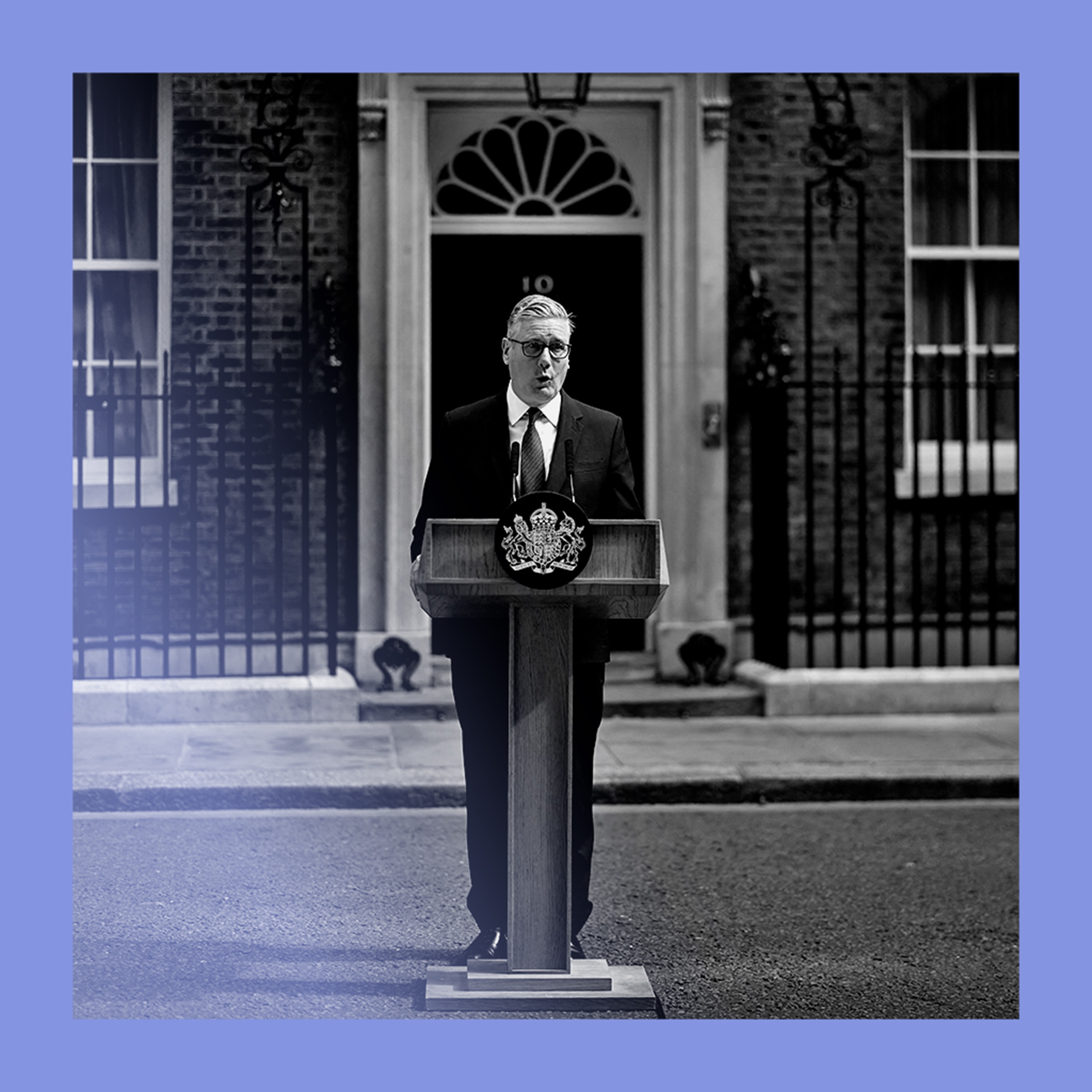
After winning a resounding victory for Britain’s Labour party two years ago, Sir Keir Starmer has announced his departure. As the country gets ready for its 7th prime minister in ten years, our correspondent asks if it has become ungovernable. A Trump-loving right winger wins Colombia’s presidency. And “Toy Story 5” sets the toys against technology.
Guests and host:
Topics covered:
Listen to what matters most, from global politics and business to science and technology—Subscribe to Economist Podcasts+
For more information about how to access Economist Podcasts+, please visit our FAQs page or watch our video explaining how to link your account.
Hosted on Acast. See acast.com/privacy for more information.


