
 Ask ChatGPT


 The Intelligence from The Economist
31 Aug 2026 · 20m · 7 chapters
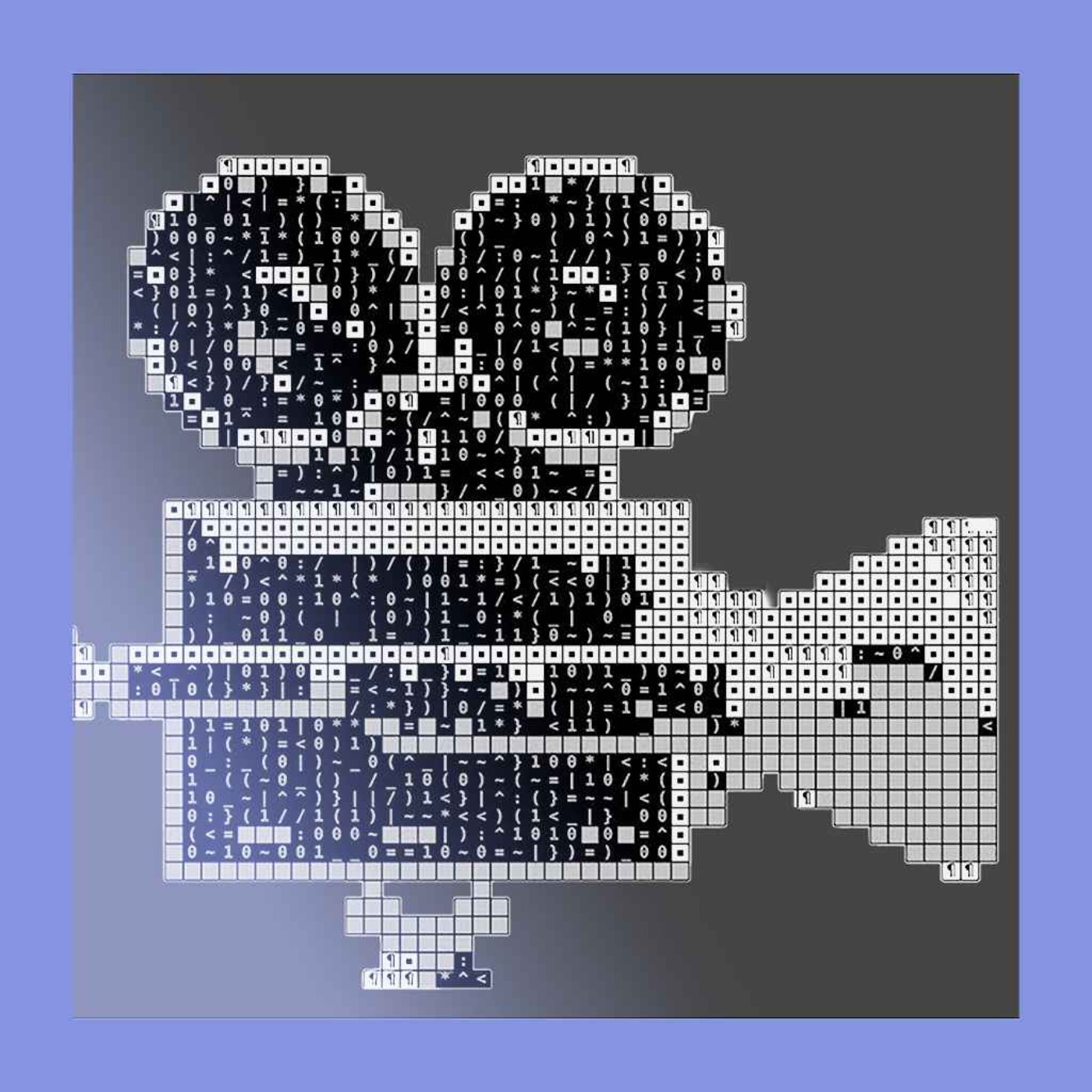
The episode is a wide-ranging Economist “Intelligence” discussion plus ads. Main topic: how generative AI is changing Hollywood, with a “headache” split between cost-saving adoption and backlash over job losses and “AI slop.”
Henry Trix, US technology editor (background: leads US tech coverage for The Economist).
AI is already used quietly across script development, planning, shot generation, and editing; it’s not yet replacing human actors for major roles.
AI performer Tilly Norwood created a London street scene in four minutes; director John Irwin used AI to create a raging torrent for Young Washington, avoiding a dangerous stunt; Netflix used AI in about 300 titles; Disney turned High School Musical into 52 TikTok micro-episodes. Other segments: Obamacare “life support” (guest Stevie Hertz, US policy correspondent) and France’s line-dancing craze (guest Sophie Better, Paris bureau chief).
Written by AI. May contain mistakes.
Exploration of how AI technology is transforming the film industry.
“Today on the show is Obamacare on life support and how France has fallen for American line dancing.”
Discussion on the benefits and challenges of integrating AI in film.
“are coming to Hollywood and causing it a headache.”
Examining contrasting views on AI's role and its perceived threats.
“who's the co-chief executive of Netflix, continues to insist that it takes great artists to make something great in film and that AI won't change that.”
Speculations on the ongoing influence of AI in Hollywood and its evolution.
“In June, Google DeepMind invested about$75 million in A24.”
Analysis of the challenges faced by Obamacare and its implications.
“government shut down for 43 days, the longest closure of non-essential government services in the country's history.”
Learn how the Affordable Care Act transformed health insurance enrollment in the U.S.
“They thought it was too much government intervention in the health insurance market.”
Explore the cultural significance and growing popularity of line dancing in France.
“It's August, and in rural France, it's the time for the street fets in villages across the country.”

Get the gist, explore an idea or ask about something said.
 Claude
On The Intelligence from The Economist, what are the key points of this episode?
Searching your listeningAutomatic transcript. May contain errors.
0:00This is Will Friedle from Podmeets World. Let's be honest, the 90s gave us some great things. The music? Totally rad. The fashion? So fly. Home decor? Eh, it's a different story. In HGTV's new competitive series Totally 90s House, two teams of iconic TV stars take on two homes frozen in time. Paired with HGTV experts, they'll turn dated spaces into fresh modern homes and compete for the ultimate bragging rights. Goodbye, honey oak cabinets. Hello, 21st century. Totally 90s House, special series premiere starts August 26th at 9, 8 central on HGTV. If you're looking for something predictable and low friction over the long term, public markets may be a suitable option.
0:41But the moment you want different investment characteristics, it may be time to consider the private markets. See how your wealth can work smarter at creativeplanning.com slash access.
0:56The Economist.
1:02Hello and welcome to The Intelligence from The Economist. I'm Rosie Bloor. And I'm Jason Palmer.
1:12Today on the show is Obamacare on life support and how France has fallen for American line dancing.
1:27But first...
1:36A woman stands on a typical London pavement. A look of shock crosses her face as a police car screeches to a halt next to her. The camera lingers on her panicked expression as she's handcuffed. You can't be serious, I didn't do this. But there is no woman, no camera, no lighting, no sound engineer, no director yelling, cut. Henry Trix is our US technology editor. Yep, she's AI. She is the infamous AI-generated performer, Tilly Norwood. And AI tools, whether they're used to create scripts or stunts or special effects, are coming to Hollywood and causing it a headache.
2:35So tell me about the nature of the headache. How welcoming is Hollywood to this AI revolution? Some people are publicly embracing AI. They see its potential both for enhancing creativity and slashing costs. But others are up in arms for a variety of reasons. Those include the threat to jobs in the film industry and the risk of a torrent of AI slop. AI is definitely changing Hollywood. and how to navigate that change is proving to be quite a controversial issue at the moment. And into that, Maelstrom, you step and you have your directorial debut. You created that scene you described earlier with Tilly Norwood.
3:20Talk me through that. How was that? So Tilly Norwood is an AI-generated actor, and she garnered a lot of publicity last year when she arrived on the scene and was reportedly looking for talent agents. I spoke to Aline van der Velden, who is her creator. Over the phone call, she took me through how to create a clip from scratch. And creating this Tilly on a London Street scene took us all of four minutes. It looks okay. It's not perfect. Aline van der Velden reckons it would need more takes for it to be of a kind of film-like quality. But the point remains that the same length of scene filmed on location on a London street would have taken about half a day and cost upwards of£5 ,000.
4:22Yeah, it cuts costs. So it doesn't seem that there is a whole lot of this kind of AI use in Hollywood so far. That is making something completely from nothing, but clearly some is being used in some ways. That's exactly right. There is no evidence at the moment that AI is good enough or creative enough to replace human actors on the red carpet. Filmmaking is an incredibly human craft, and even Hollywood bigwigs like Ted Sarandos, who's the co-chief executive of Netflix, continues to insist that it takes great artists to make something great in film and that AI won't change that. That said, what you see is a bit of a don't ask, don't tell approach to AI in the movie business.
5:12Many are using it, but not exactly shouting about it. I did speak to one director, John Irwin, who is part of a small group of evangelists, and he used AI in his latest film, Young Washington, to create a scene with a raging torrent on a 50-foot trench. This, he said, enabled him to film completely on location, but sparing his actors a potentially dangerous stunt. He is incredibly excited by the creative potential of AI. I went to his sound studio and he says he couldn't leave it at night because he found AI so creatively addictive. And you are beginning to see its use crop up in more and more films.
6:03Netflix, for example, said it used it in about 300 titles this year alone. Well, what about the other side of the ledger? You said some people see it as a threat. Some people see it as a threat to jobs. Some people worry about the onslaught of slop. What's the other side look like? Yeah, as you'll remember, the strikes in 2023 were very much motivated by fears that AI was going to be used to produce scripts and create digital replicas of actors. And, you know, there is still very much a kind of aesthetic opposition to AI. You've heard it recently from a couple of the biggest hotshots of the year.
6:48So Kane Parsons, who directed the film Backrooms, he said that if he could, he would snap his fingers and make AI disappear. So emotions run very high on the topic. And in May, there was an event at Amazon MGM, a studio. And there they announced at some fanfare that AI was being used in some animated series that Amazon was commissioning. One of those was called Punky Duck. And two days later, the director of Punky Duck publicly abandoned the project, saying that he and his family have received death threats. But for those who see the opportunity, the tech is certainly there. The tech is keeping up with this application.
7:32Yeah, the tech is getting better. Big tech firms like Google and China's ByteDance are making AI models that are very good at video generation and are being quite widely used around the industry. And there's also deal-making. In March, Netflix acquired Interpositive, which is a company led by Ben Affleck, which will be used for AI production. In June, Google DeepMind invested about$75 million in A24. That's the trendy studio behind Backrooms. despite the fact that, you know, the backgrounds director can't stand AI. And then you see Amazon operating in the background, both through its cloud computing arm, which is ubiquitous in Hollywood, and also through its Amazon MGM Studios and Prime Video.
8:31So big tech is definitely shepherding this move along. So where does this settle out, do you think, with such starkly differing views that it's an existential danger for the industry or the best thing that ever happened to it. It's definitely gaining momentum. Behind the scenes, you see AI quietly playing a role in every aspect of filmmaking. That's from script development and production planning to generating shots to editing. The main reason for this is that this is an industry that desperately needs to cut costs. AI will help it do that, but it also may create new ways to make money. Studios are experimenting with things like using generative AI to turn content in their libraries into vertical video.
9:25That's the buzzword which is suitable for smartphones. And an example of that is High School Musical, the movie, which Disney turned into 52 micro episodes to be broadcast on TikTok. And eventually, I guess, the sense is that there are always new technologies coming into Hollywood. They're always controversial. Bringing in digital footage in the 1990s really offended the purists who thought that films should only be made on 35mm. and it takes, I guess, those who've been longest on the block, like George Lucas, father of the Star Wars franchise, to kind of be realistic. He has actually likened opponents of generative AI in the film industry to people who once railed against cars because they were more dangerous than horses and cars.
10:20So he's taking a very anti-Luddite perspective. In a recent interview, he said, there's nothing you can do about it. It's the future. And I guess that's true. Henry, thanks very much for joining us. Great, Jason. Lovely to talk to you too.
10:47This is Rick Burgess from The Rick Burgess Show. I want to talk to you for a second about something most of us put on autopilot, car insurance. If you're just letting your policy auto renew year after year without shopping around, I'm telling you, you are probably throwing money away. Rates change all the time, and staying loyal to one company can end up costing you big time. That's why you need to go check out Insurify. I went to Insurify.com to test it out myself, and I was blown away by how easy it is. In about two minutes, totally free, you can compare actual real-time quotes from over 100 top insurance companies all side-by-side in one place.
11:21No endless phone calls, no pushy sales pitches. Here's what I really love. Insurify doesn't just help you once and walk away. They actually keep monitoring your rates in the background and alert you whenever prices drop so you never miss out on a better deal down the road. Millions of drivers have already used Insurify to stop overpaying, and there's no reason you shouldn't too. Do yourself and your wallet a favor. Go see what you could save right now at Insurify.com. That's Insurify.com. That sound could mean a lot of things. and when something's going wrong at home the hardest part can be figuring out what the problem actually is at Thumbtack you can upload a voice message or a photo and our AI powered search will help diagnose your project plus the pros we know have over 14 million 5 star reviews so you can hire with confidence Thumbtack, we know homes hire the right pro today
12:23Last year, the U.S. government shut down for 43 days, the longest closure of non-essential government services in the country's history. The biggest battle was over Obamacare, a program introduced by Barack Obama to make health care more affordable and accessible. Democrats wanted to extend existing subsidies, but Republicans reckoned that cost too much. A temporary solution was eventually found to end the impasse. But is Obamacare now on life support? A decade and a half after Obamacare was passed, key aspects of it are becoming ever more frail. Stevie Hertz is The Economist's U.S. policy correspondent.
13:07This signature healthcare law that has defined American healthcare for the past 15 years is really faltering. Stevie, remind us of the context here. What problem was Obamacare supposed to solve? The Affordable Care Act passed in 2010 tried to keep healthcare intact. America has this patchwork quilt, right, where if you are poor or older or disabled, you can get health insurance and health coverage from the government. The majority of working age people get it through their employer or their spouse's employer. But for those people who can't get coverage through their job because they aren't working or they work for themselves or they don't do enough hours or their company just doesn't offer it.
13:50They're left to fend for themselves trying to buy their own insurance. And so one of the key aspects of Obamacare was to try and help those people get insured. Republicans hated it. They thought it was too much government intervention in the health insurance market. Meanwhile, some on the left hated it because they thought it didn't go far enough. Quite a lot of time has passed since the Affordable Care Act. How has Obamacare changed since then? One of the main objectives of Obamacare was to expand the number of people with health insurance. And they did that through a bunch of different ways.
14:20One of the ways it did that is that it made government insurance available for more people. You had to be marginally less poor to get it. For people who are too wealthy, they created the exchanges. And this is where you can shop and buy health insurance, almost like compare the market for home insurance or car insurance, but this is for health insurance. There was a mandate that you would have to do this, but that was functionally scrapped by Republicans in 2019. That meant the uptake was really quite limited until 2021, when in the midst of the COVID pandemic, Congress massively increased the subsidies available for health insurance bought through these marketplaces.
14:55It made them more generous and it made them available for more people. And thanks to that, enrollment then nearly doubled by 2025. America reached a state where for the first time in generations, they were approaching near universal health coverage. Almost everyone was getting some form of insurance. But these subsidies were incredibly expensive and were set to expire at the end of last year. Democrats wanted to continue them, pointing them to the success of the enrollment numbers on the exchanges. Republicans said they were too expensive. This is what caused the government shutdown. Back in the autumn of last year, it was the longest in history.
15:28Eventually, government reopened, but the subsidies did in fact expire. So how many people are covered now? At the end of last year in December, 22 million people were buying health insurance through the exchanges. That's already fallen to around 19 million. And it's likely to drop again by a further 2 million by the end of this year. This creates lots of changes in the market. As would make sense, if you are healthier, if you're going to the doctor less often, you're less likely to be willing to pay for health insurance. And so that means that the people who are still buying insurance are generally sicker and more costly to insure.
16:02Insurers were expecting this to happen. So the average payment for this year went up nearly 60%, around$180 per month for your premium. And for those who are staying in the market, to avoid these high costs, they're buying skimpier insurance. The average amount that an American has to pay out of pocket before their insurance kicks in, this year jumped nearly 40 % to almost$4 ,000. That's their deductible now. So what are we really seeing here, Stevie? Is this a slow motion collapse or just a shrinking? You can see how this selection loop could continue through the next few years, right? It gets more expensive to buy insurance.
16:38So anyone who can possibly avoid it does, in fact, avoid buying insurance. Only sick people are left at buying insurance. It gets more and more and more expensive. Economists call this quite vividly, they call it a death spiral, where a insurance market just can't afford to continue. By 2028, experts predict there to be 10 million fewer Americans buying insurance through these marketplaces compared with 2025. Is there going to be a death spiral? Although the supercharged subsidies expired at the end of 2025, the original subsidies do still remain. Those should be enough to convince enough people to stay enrolled that the insurance market just about works.
17:18Essentially, we're reverting to how we were in 2019, when not that many people were insured, but the marketplaces stayed alive. And presumably that means there are a lot more people who don't have insurance. Yes. So hospitals are seeing that those people who are going without insurance bought through the exchanges are going uninsured. They're not getting it another way. They're not finding jobs so far that are giving them insurance. That's really bad for their health. Evidence from the last decade and a half of studying Obamacare shows that when you don't have insurance, you're more likely to put off needed treatment, even important things like prescription medicine surgeries.
17:52Thankfully, hospitals do still have to provide emergency care for people regardless of their ability to pay. But eventually someone does have to pay for it. In May, unpaid care was up by 16 % compared to this time last year in hospitals. One for-profit hospital group reckoned that the new uninsured population will cost their chain of hospitals about a billion dollars this year, and that's equivalent to 15 % of what was their predicted net income. So this is having ramifications throughout America's healthcare system. We're seeing, thanks to the past five years of experience, that people do want health insurance.
18:25It's just that right now, many can't afford it. Stevie, thank you very much. Thank you.
18:44It's August, and in rural France, it's the time for the street fets in villages across the country. Sophie Better is our Paris bureau chief. And to get locals on their feet, a DJ just has to utter the words, Le Madison, and villagers will step into line formation and perform a line dance that featured in Jean-Luc Godard's 1964 film, Bonne à part.
19:17Line dancing is a choreographed dance. A group of people stand in one or more lines or rows and execute exactly the same steps in sync. there's no physical contact with a partner. Line dancing gained popularity in America in the 1970s at the time of the disco craze and then there was a resurgence in the 90s after the smash hit Achy Breaky Heart by Billy Ray Cyrus. It's gained popularity again in the US in recent times and so it has in France. There's been a growing subculture with a dedicated following.
19:58Trois, coupiers, un autre, d 'accord? The Francophone Federation of Country Dance and Line Dance lists more than 500 clubs across the country. In a poll, nearly one in 10 adults said that they'd taken part in line dancing. It's not just a hobby to do on a Tuesday night. For some people, this is a competitive sport. In May, the southern town of Salon de Provence hosted the French Line Dance Open.
20:32So why is line dancing so popular in France? It's a country that likes to think of itself as a place of hybraculture and artistic sophistication. Think of the ballet, opera or classical music. But in reality, if you leave Paris and the big cities, France has always held a secret fascination for American culture.
20:56of the top 10 box office hits in france last year nine were american disneyland paris is europe's only outpost of the theme park and you can even do line dancing classes there more recently it's the success of modern country pop that has helped draw new recruits to the dance floors
21:18french line dancing tutorials on youtube are set to taylor swift songs and other country hits.
21:30I went to a couple of these village fets in France this summer and it's been a difficult time with the forest fires, with the drought and the heat wave. So it was particularly lovely to be able to see that people can still have a good time across the generations, line dance in the streets and enjoy their summer evening.
22:09That's all for this episode of The Intelligence. See you back here tomorrow.
22:52We believe better, simpler health care is always possible. That's healthy optimism. That's Optum. Visit Optum.com to learn more.
Behind the scenes, Artificial Intelligence is playing a growing role in every aspect of film-making, from script-writing and production-planning to shot-generation and editing. As the number of people covered by Obamacare falls, our correspondent ponders the future of the healthcare programme. And the secret thrill of American country dancing in France.
Guests and host:
Topics covered:
Listen to what matters most, from global politics and business to science and technology—subscribe to The Economist.
Hosted on Acast. See acast.com/privacy for more information.


