
 Ask ChatGPT


 The Intelligence from The Economist
11 Oct 2025 · 44m
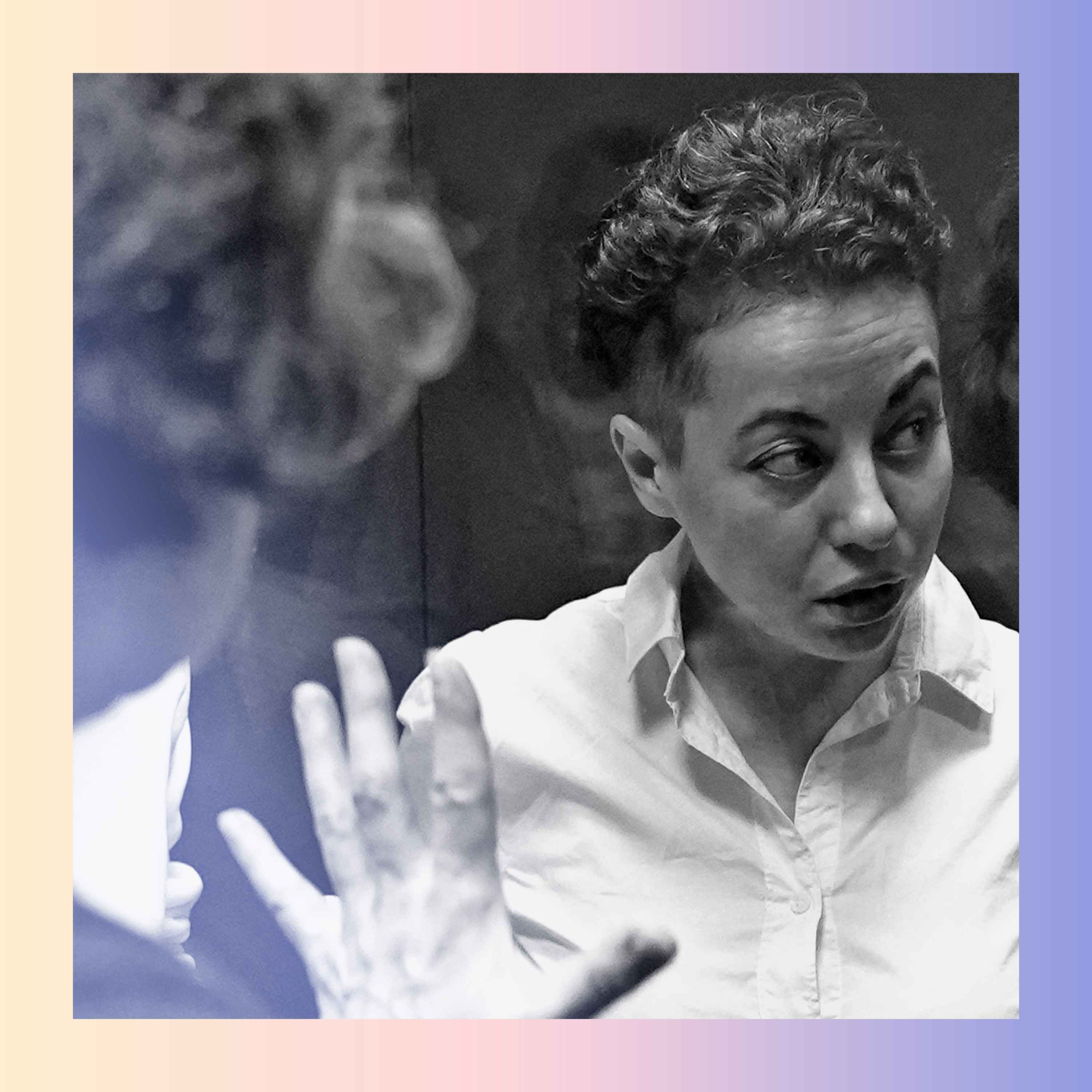
Hosts: Jason Palmer and Rosie Blau
Arkady Ostrovsky, Russia Editor at The Economist
In this episode, the story of Yevgenia Berkovich and Svetlana Petrichuk, the director and writer of the play Finis the Bright Falcon, is explored. These two Russian artists became the first in decades to face trial for the content of their artistic work. The episode dramatizes the show trial that ensued following their arrest, shedding light on the radical ideologies permeating the Russian state.
Written by AI. May contain mistakes.

Get the gist, explore an idea or ask about something said.
 Claude
On The Intelligence from The Economist, what are the key points of this episode?
Searching your listeningAutomatic transcript. May contain errors.
0:11In 2023, we released a podcast series called Next Year in Moscow. It told the story of how Russia changed almost overnight when the war in Ukraine began, and what that meant for the lives and hopes of the free-thinking Russians who were against the war and opposed Vladimir Putin. Ever since reporting that series, Arkady Ostrovsky, the Economist's Russia editor, has been thinking about a story he heard just as the first episode was going out. I'm Rosie Bloor, and today on The Weekend Intelligence, in a bonus episode of Next Year in Moscow, Arkady is ready to tell Evgenia's story. Zeit� post License Version Number one.
1:11How to do a wedding wedding? Moscow, December 2020. Theatres are alive again after lockdown. In a loft space with exposed brick walls and arches, a new play is being performed to a small audience. There is no elevated stage. Young actresses in stylized Russian folk dresses move freely around the floor, sharing their stories.
1:41The play is called Finis the Bright Falcon. The name comes from a Russian fairy tale, a story about a young woman, Mariuszka, who follows her heart and goes in search of the enchanted prince, Finis. The script is based on the real-life stories of thousands of Russian women who were seduced and manipulated online and went to marry jihadists in Syria. They were lured by a promise of love and family. Instead, they were enslaved and abused. And when they managed to escape and return to Russia, they were tried and convicted as terrorists.
2:21The player unfolds in court, but also in the realm of a fairy tale. The director mixes documentary material with elements of folklore. Speech turns into song, testimony into fable. There is humor and compassion. and the result is a poetic and powerful warning against the lure of a violent totalitarian cult.
2:51Finist, The Bright Falcon, gained official approval from the Ministry of Culture and won Russia's top theatre awards. It was performed across the country. But it was still a fringe production. Few people outside theatre circles would have heard of the director, Evgenia Berkovich. And certainly nobody in that audience in the winter of 2020 had any inkling that less than two years later their country would be at war, their state in the grip of a death cult, and that this play would be caught up in its own drama.
3:35In the small hours of May 4th, 2023, Berkovic and the play's author Svetlana Petrichuk were arrested and put in jail. They were accused of justifying and promoting terrorism.
3:56I was in London when I heard about the arrests. We had just finished the first season of the Next Year in Moscow podcast and were heading out for a meal to mark the occasion. One of our producers called me. I stopped in my tracks. I didn't know Berkovich personally, though I knew of her work. She'd written anti-war poetry after the invasion of Ukraine, and some of it had gone viral. We'd been in touch with her about appearing in the podcast, but we hadn't managed to make it happen. To be honest, we were not really sure how she would fit into our story. She was not an exile, a political activist, or a heroic opposition leader like Alexei Navalny.
4:42But since her arrest, I've come to realize that Berkovich's voice was, in fact, one of the most important. Not because it was the loudest or the strongest, and not because it was heroic or moralizing, but because it was none of those things. And yet, it was still singled out by the state.
5:11Evgenia Berkovich and Svetlana Petrichuk were the first Russian artists since Soviet times to be sent to prison for the content of their work, or, to be more precise, for the words of their characters.
5:39Theirs was a show trial, a performance that laid out new ideological boundaries, and its outcome was preordained. But this one had a twist in the plot. Professional actors and theatre critics were put in the stand, and they turned it into a different kind of show. One that put the spotlight on the radicalization of the Russian state.
6:16What you're about to hear is a documentary drama made from words that were spoken at the trial. The roles are read by friends and colleagues of Evgenia Iberkovich, some of whom were present in court.
6:44Act 1 May 20th, 2024, 10am Interior, Moscow District Military Court No. 2 On the left, the defendants, Berkovich and Petrichuk, sit inside a bulletproof glass box. Against the back wall, a large desk, the domain of Judge Yuri Masin. Early 40s, black gown, perfect teeth. The audience sits opposite him on soft green benches. Berkovich cheekily sticks out her tongue as the photographers leave. Judge Masin turns to her. He appears considerate. How is your health? Satisfactory. Are you ready for the proceedings? Well, it depends on what will happen. Our gaze turns to state prosecutor Yekaterina Denisova, early 30s, a marathon runner.
7:41Her manicured nails are as sharp as her pointed shoes. She reads the indictment, addressing no one in particular. Berkovich and Petrichuk are accused of publicly justifying terrorism and propagating terrorism using telecommunications networks, including the internet, at a time not precisely established by the investigation, no later than 5th of August 2019, while at a location not established by the investigation. Prosecutor Denisova pauses only to breathe and never looks up. Evgeny Berkovich had a criminal intent to make public statements recognizing the ideology of Islamic terrorism as correct, deserving of support and emulation, as well as disseminating materials and information aimed at shaping the image of the...
8:26The courtroom has become stuffy. The bailiff has fallen asleep with his mouth open. Eventually, the prosecutor gets to her key evidence. 130 pages, signed and sealed with a round blue stamp. It's a report, written by an expert in something called districtology. A comprehensive districtology forensic examination answers the question that, yes, the performance contains signs of terrorism and propaganda of ISIS. signs of destructivism, justification and romanticisation of male terrorists, radical feminism towards boys and men. There is a pause. Someone in the audience matters. This is hardcore. Nobody has ever heard of districtology.
9:17The judge turns to Evgenia Berkovich in the glass box. Late thirties, curly hair, big eyes. She is tiny, less than five foot tall, but it's already clear that Birkovich will be the protagonist. The play's author, Svetlana Petrichuk, has been cast in a supporting role. Do you understand the church? I do not understand the question about whether I understand the church. The meaning of the words is clear, I know Russian perfectly well, but I don't understand how this set of words relates directly to me. According to the investigator from at least 2019 to 2020, I was not just a Muslim, I was a radical one.
10:05I've never worn a hijab. I'm in a secular marriage with a non-religious man. I eat pork, I take photos on the beach. I've never shared any form of Islam, whether radical or otherwise. I consider this indictment illegal. Do you admit your guilt? I do not.
10:29The prosecutor has accused Berkovich of using this play to carry out a conspiracy to promote terrorism, and of doing so without the knowledge of her actors. To Berkovich, the idea that this could be even possible is absurd. Theatre is a public activity even before the play takes to the stage. A performance is done with the participation of dozens of people over the course of at least a week, more often months, sometimes years. It is not a novel that a person can write alone at a desk without telling anyone anything. But there is another reason why this is offensive. Transparency is central to Berkovich's life and work.
11:20She was born in 1985, the start of Gorbachev's glasnost era. For her and her peers, living openly and speaking freely is a virtue. When I moved to Moscow in 2008 and enrolled in the Theatre Institute, I led a completely transparent life. I was in the public eye, surrounded by dozens, even hundreds of people, including some who were not particularly friendly. It is impossible to do anything in secret in the theatre at all. Moscow was booming. Galleries and restaurants were popping up across the city. But Berkovich and her friends wanted Russia to be not just glitzy, but also more humane. Her theatre was a way to engage with the people who had been left out in the cold and to reveal them in all their humanity.
12:12flawed, funny, fragile. This is not sociological research, nor is it a report of the Federal Security Service. It is a play. This was the whole point of Finis the Bright Falcon. You cannot stage a production about women manipulated by terrorists without actually showing the women who were manipulated by terrorists. You have to show that these women are not some aliens. They are recognizable characters with recognizable problems. And you have to show the very moment of their delusion, the moment when they genuinely believe the nonsense being poured into their minds. Otherwise, nobody would see it.
13:01I staged the play with the aim of preventing terrorism. All of this was obvious to people who had actually read or seen the play, but not to the court. The defence points out that not a single word of the play has been cited since the trial began. The prosecutor doesn't even seem to have read the play. Denisova demurs. The prosecution doesn't find it necessary to examine the material evidence. The judge sides with the prosecutor, and for the rest of the trial, he refuses to hear or watch the recording of the play that is the subject of this case. And so it falls to the defence to bring the play to the court.
13:58Act 2 Defence lawyer Ksenia Karpinska is in her early 50s. Her shoulder-length brown hair is tied back today. Karpinska has been involved in high-profile cases, but this is her first time in a military court. Her challenge is to introduce into evidence a play that the court has decided not to read or watch. So she turns to one of the actors, who played a woman lured to Syria. Their characters were all given the same name, taken from folklore. Mariuszka. Can you read your Mariuszka monologue, please? May I read it out? Actor Yulia Vitkovska is on the stand. The judge agrees she may read from the play.
14:47How long will it take? Thirty seconds. I bring to the attention of the participants of the trial. The text is displayed on the screen of a mobile device. In Finist, the play, Vyedkovskaya's character is herself in court, in front of a judge. She describes her ideal in Syria. I never imagined war, those hardships, fear, all the bloodshed, all the bombings, all the videos ISIS publish about the perfect life, mutual help and sharia law. it's all aimed at people in Russia or in cities outside Syria. If you think you'll make millions when you get there, you can forget it. It's nothing like that. Children there just sit at home and do nothing.
15:37They don't have proper toys, no proper food, no proper education, no proper medical care. Евгения Биркович gets to her feet. Defendants are allowed to cross-examine witnesses. But Berkovich is also a theatre director. Even in the bulletproof glass box. When you are reading your monologue, do you address the audience? No. Who are you addressing then? My character cannot lift her eyes. Sometimes she stares into space. Generally she stands with her head down. Sometimes she looks at the audience and then drops her head. Who are you talking to at that moment? Is there a particular person listening to you?
16:30Yes, I am talking to the judge. Is your character remorseful? Yes. Is she condemned or acquitted at the end of the play? She is condemned. By this point, people in the courtroom can sense that something strange is happening. It was the prosecution who called the actors as witnesses in the first place. But the witnesses don't play the parts assigned to them. They're testifying to Zhenei Berkovich's virtue and humanity. Zhenei helps so many charitable foundations that I don't even know how I'm going to list them all. It would take a very long time. Marietta Cegall-Polishuk is another of the actors.
17:17She is also one of Berkovich's closest friends. I met Zhenya thanks to the theatre festival called I Am Not Alone, which we organised in 2015. The project involved Zhenya and other directors living with children from orphanages for three weeks, staging a play with them, and then performing the play at the Pushkin Theatre. As a result of the project, several children gained foster parents. Berkovich didn't plan to be one of those. But when two girls she got close to risked being returned to the shelter after their foster mother became ill, she stepped in to help. She ended up adopting the two teenagers.
18:02In life, in work, and generally in the modern creative world, everything is quite closely connected. In my work, I have always been interested in the possibility of exploring various social issues through art, helping both specific individuals and society as a whole. For Berkovich, empathy is the tissue that connects her work and her life. The defence calls Lev Zaks to the stand, to explain the meaning of art. He is a professor of philosophy and a scholar of theatre. Art, unlike law or court procedures, is concerned with people's fates. The roots of their happiness or unhappiness, their rises and falls, their guilt, their responsibility, and who else is to blame in all of this, if art is true?
19:03This military courtroom has become a theatre class. The psychology of art is based on transferring a person into an imaginary life. There are two effects here. Creating this imaginary life and then transferring or jumping into it. As a result, there is a third effect, known since ancient Greece as catharsis.
19:30Professor Zaks' testimony has a strange effect. It broadens the meaning of the show unfolding in this court. Theatre in Russia has always been imbued with a sense of mission, playing the role of parliament, university and half-strangled church. Now it's performing the role of the court. The judge appears intrigued. You said art, unlike law, is concerned with the fates of people. What does law have to do with it? Is it possible to evaluate the content of the play and the performance from a legal point of view? Professor Zaks says what everyone is thinking. That's exactly what is happening in our court.
20:22Act 3 Vladimir Yuryevich, thank you very much for coming to the court hearing today. It's the turn of the sharp-nailed prosecutor to bring her key witness to the stand. She turns on the charm. We apologize for the delay in starting. First, tell us a little about yourself. I'm an actor and director. I have my own theater in Nizhny Novgorod, where I put on various patriotic plays in support of the special military operation in Ukraine. Vladimir Yurievich Karpuk is in his early 30s. He is wearing white jeans and an electric blue jacket. Tell us about the play. What's your feeling? What's the play about?
21:09Who is Finist the Bright Falcon? He is a hero, a Soviet hero who we all know from childhood. And they say that Finist the Bright Falcon is some kind of jihadi. In October 2022, Finist was due to be performed in Karpuk's hometown. On the eve of the performance, Karpuk posted on social media denouncing the play. He cited the attack on the Kerch bridge connecting Russia to Crimea that was carried out by Ukrainian forces on Putin's birthday a few days earlier. The Crimean bridge was blown up and a play about terrorists is being shown. Well, it is unacceptable to show such a performance. Karpuk also posted highly personal photos of Berkovich that had been stolen from her phone and leaked to a sleazy Telegram channel.
22:06He said they illustrated a rabid propaganda of militant feminism, unconventional relationships, unconcealed sympathy for Ukraine and hatred for the current government. He urged the authorities to cancel the performance. Well, my articles are read by people, someone apparently, I don't know, from above. And where the play was supposed to take place, it was cancelled.
22:36The day Berkovich was arrested, Karpuk rejoiced on social media. So, the lovers of the West, latent enemies of our state, which of us turned out to be right, he wrote. As soon as the special military operation ends, an in-depth cultural special operation will begin, which will wipe out all liberal filth to hell. The language was straight from the late 1940s, a period that was also marked by an attack on theatre. It's an anti-Russian play. That's what it seems to me. Because what is it saying? That Russian guys are bad, right? Stalin targeted rootless cosmopolitans, a code word for being Jewish, accusing them of being susceptible to corrupting foreign influence and hostile to Soviet society.
23:35We still have a state, thank God, of traditional values. Yes, of traditional orientation. We have a patriarchy. What they say about our men, well, about us, is destructive.
23:53Karpuk's first big break came when he attended a Kremlin-run festival and posted a selfie with Vladimir Putin. His second comes now, with this lead role in a show trial. But his performance is unconvincing. He throws his arms around and flubs his lines. It becomes clear he never even saw the play. His main issue with it seems to be that the female protagonists don't value Slavic men like him.
24:37Even Judge Massin cringes at his performance. So at the last minute, the prosecutor introduces a new element into this production. A secret witness. The witness is to appear by video link Judge Massin leaves the room to verify his identity When he returns, his mood is changed Darker He issues a warning If anyone present starts to protest I will remove them Judge Massin declares the new witness will be known by the name Nikita His testimony does not start well. His voice is disguised, robotic and mostly inaudible. The defence objects. I can't conduct a defence in this case because I don't hear what the witness is saying.
25:34This is your subjective perception of what is happening. Евгения Berkovich joins in. Your Honour, we have a similar subjective perception. One of the actors makes a joke about every trendy theatre production inserting a video. But in truth, the introduction of this new witness brings a sense of foreboding. Nikita went to see a performance of Finist and recorded it on his phone. He says to show a friend. But four months later, he reported it to police headquarters in Moscow. I felt emotional feelings. One could even say civic responsibility. My conscience tormented me that there is such a work which in a way advertises the idea of radical Islam that says it is bad in Russia, that men are bad here, but we have inhumane and unfair courts here.
26:31I gathered these thoughts inside me and set off. The defense begins to suspect he is an operative for the security agency, the FSB. I thought that the main characters, the girls, were represented as victims and they are not guilty of anything at all. But then who is to blame? All this happened in Russia and it follows from the context that it's not the girls who are to blame in this situation but the Russian institutions of the state and society. So, the star witness, whose identity has been kept secret, is saying that the unspoken subtext within a work of art is anti-Russian, and that this unspoken criticism makes the artist guilty of a terrible crime.
27:27It's like saying that the dark clouds in a painting are accusing the king of bringing a bad harvest to the kingdom.
27:37Director Berkovich rises to take up the questioning. You say that, in your opinion, the main problem in the play is that the girls are shown as victims. And in fact, the Russian state, society and certain institutions made them victims. What did these girls become victims of? Well, it's my subjective opinion, my evaluation. That's how I feel about this. A victim can't just be a victim. She is a victim of something. Victim of what? Each biography gives various examples, whether it's abuse, violence or other facts in the biography that may have been distorted in some way to attract attention. So you're saying that the main problem with the play is that the girls, the heroines, are shown as victims of abusive and violent behavior?
28:43Among other things... Well, I don't think that's a criminal offence yet. No, no, listen to me. It's not a criminal offence. But when you use it to justify participation in a terrorist organisation, aiding and abetting, that's a problem. Birković has been unwell today, but the testimony from this witness appears to be restoring her strength. She's sometimes mocking, sometimes barely suppressing her anger. Tell me please, is there a story of happy, established, prosperous family, of love in Syria, with a fighter from a banned terrorist organization? I don't remember a happy relationship, but the character of the heroine of the play, she stayed in love.
29:38And so, in principle, we can consider it a positive example of a happy relationship. Is everyone allowed to just speculate? Witness Nikita, tell me, do you recall in the play a woman in Syria being sexually assaulted? Is that told in the play? I don't remember, to be honest. We've been here for how long? Two hours? My head is spinning. I'm having trouble remembering right now. And with that, the curtain comes down. The testimony of Nikita is the last that will be heard in open court. Judge Massin declares the rest of the trial will be held behind closed doors. Not because there is anything to conceal, but because there is nothing to show.
30:37Next time the audience is led back in, it's to hear his verdict.
30:48Act 4. July 8th, 2024. District Military Court No. 2. Seven weeks after the trial began, Judge Massin is ready to deliver his ruling. Despite the defendants Berkovich and Petri Chuk's denial of their guilt in the alleged crime, the guilt of each of them is confirmed by the totality of the evidence examined by the court. The testimony of Vladimir Karpuk, the actor and blogger, doesn't make it into the verdict. The statement from Nikita doesn't delay the judge long either. In fact, the verdict is based almost entirely on a document submitted on the eve of Berkovich's arrest. It's titled The Conclusion of the Comprehensive Destructology Forensic Examination.
31:42The play Fenas the Bright Falcon reveals signs of the destructive ideology of the international terrorist organization Islamic State. Not having watched the play himself, the judge accepts the report's conclusion that it contains a justification of terrorism. Through the dissemination of ideologies that deny the Russian state system and the Russian social order, which, in conjunction with the ideology of radical feminism, may lead to the destabilization of the activities of the state authorities of the Russian Federation. There are tears in the audience as the judge delivers his ruling. The defendants remain calm.
32:28On the basis of the foregoing, the court sentences Evgenia Berkovich and Svetlana Petrichuk to imprisonment for a term of six years.
32:45Nobody had ever heard of destructology before this trial. The report's author didn't even make an appearance in court. The defense team is outraged it was even admitted as evidence. There is no such science as destructology and there is no such type of expertise as destructological expertise. They cite an official response from Russia's Ministry of Justice, which supports their claim. According to the Ministry of Justice, destructology is not a science, an art, a field of technology or a craft, and therefore does not fall under the concepts of special knowledge defined by the legislation of the Russian Federation.
33:27The ministry said that districtology doesn't draw on scientific or practical data and therefore contradicts the very principle of forensic examination. Consequently, the document presented to the court as the opinion of an expert districtologist does not meet the requirements for evidence. The author of the report is a man named Roman Silantiev. He describes himself as a therapist in the field of spiritual security, who advises the FSB. The day of Berkovich's arrest, he boasted that his report was requested by the prosecution. He also said that Jews, like Berkovich, were supporting Wahhabis, just to spite Russians.
34:18The fact that his expertise could not be verified was the whole point of it.
34:27The prosecution case was not just against Berkovich. It was against objective reality itself. And while districtology doesn't reflect reality, it represents something that overrides it. Power. In November 2022, nine months into the war, Vladimir Putin signed Executive Order No. 809. It's called The Fundamentals of State Policy for the Preservation and Strengthening of Traditional Russian Spiritual and Moral Values. It was Putin's first ruling based purely on ideology. It was the starting point for the report presented at the trial. The order targets, quote, Ideas and values alien to the Russian people and destructive for Russian society.
35:20It labels this destructive ideology. and it identifies its source as not just the West, but also organizations and individuals in the territory of the Russian Federation. Evgenia Berkovich was picked out as one of those individuals. They needed to make an example of somebody. But why her?
35:53Act 5
35:58Don't turn me into Joan of Arc. I'm just a girl. I want to go home. I want a prosecle and a big, thick stake. I don't want my name on a banner. Those were the first words Evgenia Berkovich wrote to her friends after being arrested. She didn't want to be a martyr. She just wanted to live in her own country and to carry on working. and writing. And for that, to be a normal thing.
36:32When the war started, free thinkers in Russia faced a choice. Leave and speak openly, or stay and keep quiet. Many of Berkovich's friends left. Berkovich stayed. Not to be a hero. And certainly not to make peace with the regime. but because she rejected that choice. I appear so brave and cheerful on the outside, but in reality, I'm grey-haired and stutter a little. Literally grey-haired and literally stutter. She was scared. These are the words of a text she sent to our producer when we asked her about appearing on the podcast. Let's be honest after every post with poems or interviews I wake up in the middle of the night because I think the police are breaking in and I need to quickly get the children dressed and gather the cats and I've had my back packed for prison for a long time now She carried on working judging that she didn't pass the threshold of danger If she had stuck to directing plays, that might have been true.
37:53But she also wrote poetry. She posted it online. Some of it went viral. It provided air for people gasping for words in the early days of the war.
38:09There was one poem in particular that struck a nerve.
38:22It was published in May 2022, two days after a huge military parade in Moscow celebrating Soviet victory in the Second World War. Putin had built a cult around that victory. The war in Ukraine was presented as its glorious sequel. In the poem, the ghost of a grandfather who fought in the Great Patriotic War, as World War II is known in Russia, visits his grandson.
39:14Can you please my dearest grandson, whom I adore, not post anything about me on Facebook? Just don't do it, says Grandpa. Don't claim any victory in my name. No victory. Yes, I know you're a smart, driven, liberal, you're all of those. This life is not what you chose. But it's also not what I chose. we've lived our one and only life it was hard now I implore can we please stop serving you as poster boys for war we're done here kids we've gone down into the ground can you start from scratch without us this time around
40:11Berkovich's poem encroached on the very foundation myth of Putin's war. In fact, what she undermined was not just the tenets of Putin's ideology, but ideology itself.
40:29In shutting her down, Putin was not fighting a political opponent. He was fighting ordinary life, removing people's right not to be heroes and not to conform, but to live a dignified and independent life, free from ideology and sacrifice. When the state becomes extremist, a display of normal life becomes a criminal offense.
41:01This is how Berkovich put it in one of her speeches to the court. Have I personally felt compassion for the characters of the play? Mostly yes. Compassion for those who have fallen. And mercy towards people with broken lives. Even those partially or fully responsible. This is one of our main traditional values. At least, that's how Tolstoy, Dostoevsky and Pushkin understood it. Our cultural and moral code consists of men who fought fascists at Stalingrad and women who carried bread to prisoners on the road. It's impossible to judge or imprison someone for showing compassion. Firstly, it contradicts the law.
41:55Secondly, it destroys not only individual lives, but society itself.
42:12Evgenia Berkovich is held in Penal Colony No. 3 in Kostroma. She's assigned to Brigade No. 5 sewing clothes. She's denied the right to engage in any theatre work. She continues to write poetry.
42:34And you're in your house, and you're in your house. And you're in your house, and you're in your house.
42:50This episode of Next Year in Moscow was produced by Becky Lipscomb with help from Pete Norton, Ksenia Barakovskaya, Lika Kramer, and LibaLiba Studios.
43:26with special thanks to Ksenia Karpinskaya. Женя Berkovich's poem was translated from Russian by Anna Krušilnitskaya. Sound design is by Wei Dong Leng with original music by Darren Ng. Our executive producer is John Shields. I'm Arkady Ostrovsky. This is The Economist.
In May 2024, Yevgenia Berkovich and Svetlana Petrichuk, the director and writer of an experimental play, became the first Russian artists since Soviet times to be put on trial for the content of their work. It was a show trial. Like all show trials its outcome was preordained. But when professional actors took the stand, it turned it into a different kind of show—one that put the spotlight on a radical ideology that has gripped the Russian state.
In a bonus episode of our Next Year in Moscow series, The Economist’s Russia editor Arkady Ostrovsky presents a dramatisation of that trial to find out why the Russian state needed to make an example of a fringe production and, more importantly, its director.
Listen to what matters most, from global politics and business to science and technology—Subscribe to Economist Podcasts+
For more information about how to access Economist Podcasts+, please visit our FAQs page or watch our video explaining how to link your account.
Hosted on Acast. See acast.com/privacy for more information.


