
 Ask ChatGPT


 The Intelligence from The Economist
13 Apr 2026 · 21m · 9 chapters
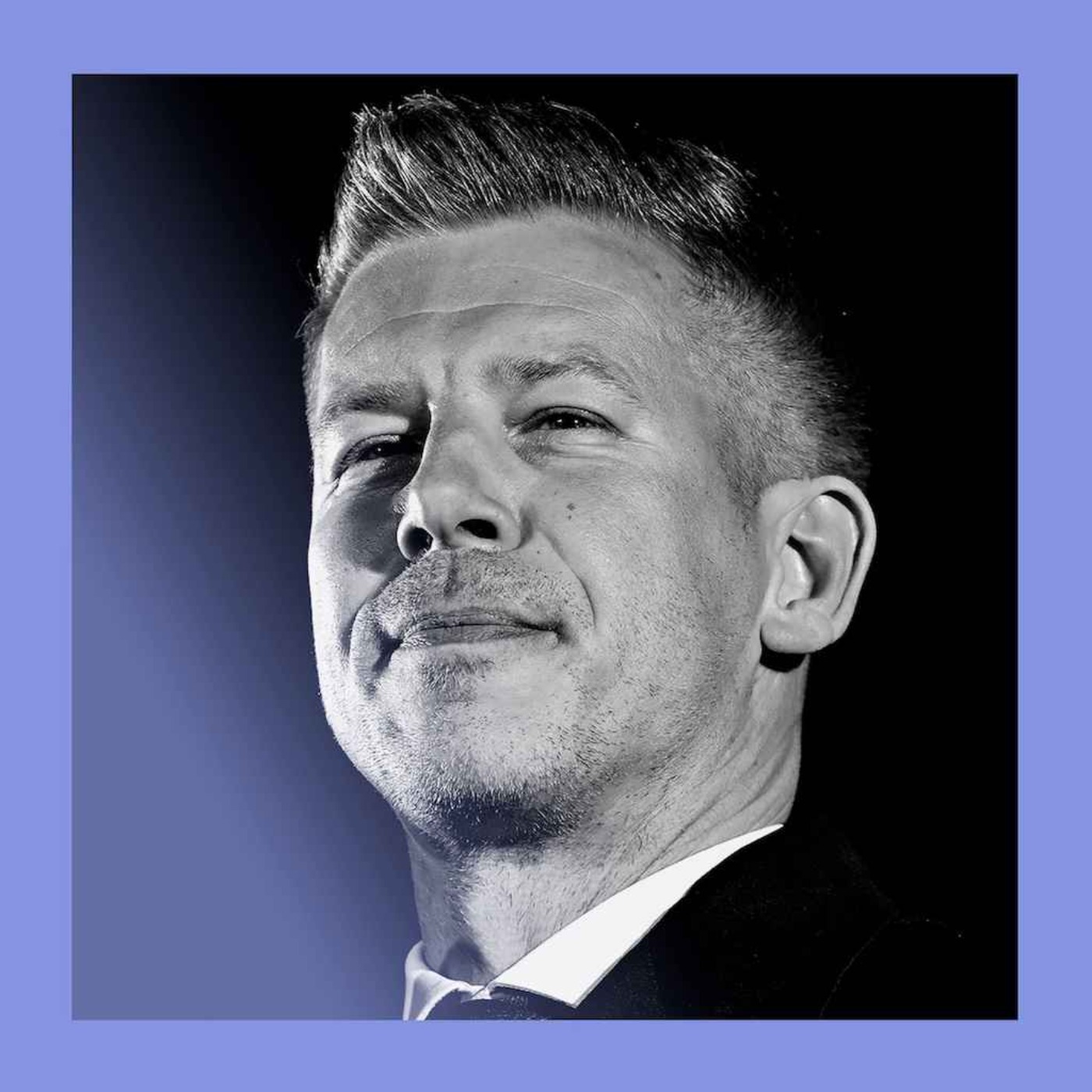
Hungary’s election after 16 years of Viktor Orbán, plus two other global stories: Britain’s dairy surplus and Cambodia’s landmine-clearing “hero rats.”
Matt Steinglass (Economist Europe editor) in Budapest; Harry Taunton (Economist writer on Britain’s dairy); dairy farmers Johnny Crickmore (Fen Farm Dairy, UK) and Kelly Seaton (Shropshire-Cheshire border); Vishnu Bab Manaban (Asia correspondent on Cambodia).
Hungary’s opposition (Tisza, led by Petr Magyar) won a “thumping” majority; turnout was 77%. A two-thirds parliamentary majority could let Magyar roll back Orbán’s “poison pills” (constitutional and court changes). The vote reflected rejection of corruption/autocracy and concern about shifting toward Russia and away from the EU. EU aid could be unfrozen (up to ~20bn euros blocked) if commitments are accepted by Ursula von der Leyen.
Budapest celebrations; chants of “two-thirds.” Britain: farmers pouring milk away due to surplus (~13bn litres) and falling prices (~17% since September). Cambodia: Apopo’s African giant pouched rats; Magawa’s statue in Siem Reap; rats cleared 40 sq km and destroyed 8,000+ mines since 2015.
Written by AI. May contain mistakes.
Explore the struggles faced by Britain's dairy farmers amid oversupply.
“Britain's dairy farmers are suffering from too much of a good thing.”
Discuss the significance of the recent election in Hungary and its implications.
“Viktor Orbán, whose corrupt and increasingly autocratic Fidesz party has ruled Hungary for 16 years, lost yesterday's election.”
Analyze the potential changes following the opposition party's victory.
“and people in Hungary who backed the opposition are elated.”
Investigate the issues of corruption and economic performance in Hungary.
“after 16 years of the same party and the same man running the show.”
Examine Hungary's role within the EU and the implications of Orbán's loss.
“At the beginning of this campaign, we thought that the big issues were going to be poor economic performance, and deterioration of social services.”
Consider the steps the new government needs to take moving forward.
“Orban is a hero to them, and his loss is both a blow to that movement and, to some extent, a blueprint for how you can beat those kinds of politicians.”
Capture the atmosphere of joy and optimism following the election results.
“Some of the people celebrating in Budapest were celebrating the end of corruption.”
Explore the reasons behind the milk surplus in Britain and its implications for farmers.
“Some are pouring the milk away because there's simply nowhere to take it, and some are having to quit their business altogether.”
Learn about the remarkable use of trained rats in detecting landmines in Cambodia.
“For decades, Cambodia's countryside has carried the scars of war.”

Get the gist, explore an idea or ask about something said.
 Claude
On The Intelligence from The Economist, what are the key points of this episode?
Searching your listeningAutomatic transcript. May contain errors.
0:00Business is booming, but you know what really helped? Zero. The accounting platform for small businesses. I used to think spreadsheets were just part of it. Ugh. But real-time cash flow? Wow. Invoices that chase themselves? Even better. Books that automate? That's a big one. And I can keep track from my phone while I get the job done. No spreadsheet in sight. What a life. Do right by yourself and your business and search XERO for your free trial. Conditions apply. With no fees or minimums on checking accounts, it's no wonder the Capital One bank guy is so passionate about banking with Capital One.
0:37If he were here, he wouldn't just tell you about no fees or minimums. He'd also talk about how most Capital One cafes are open seven days a week to assist with your banking needs. Yep, even on weekends, it's pretty much all he talks about. In a good way. What's in your wallet? Terms apply. See CapitalOne.com slash bank. Capital One N.A. Member FDIC.
1:05The Economist
1:12Hello and welcome to The Intelligence from The Economist. I'm Jason Palmer.
1:17Rosie Blau: And I'm Rosie Bloor. Every weekday we provide a fresh perspective on the events shaping your world.
1:27Britain's dairy farmers are suffering from too much of a good thing. Milk production is through the roof, even as demand is declining. We ask why, instead of turning it into cheese or yogurt or milk powder, many farmers are simply pouring it down the drain.
1:43Rosie Blau: And decades on, Cambodia is still strewn with landmines and unexploded bombs from the Vietnam War and Khmer Rouge era. Destroying them is dangerous and time-consuming. Now it's found a novel method.
2:04Rosie Blau: First up, though.
2:16Rosie Blau: Last night, jubilation on the streets of Budapest. Viktor Orbán, whose corrupt and increasingly autocratic Fidesz party has ruled Hungary for 16 years, lost yesterday's election. The result is painful for us, but clear, Orbán said in his concession speech. The opposition Tisha party, under charismatic leader Petr Mazjar, won a thumping majority. TISA and Hungary have won this election. This is an election with consequences far beyond the country's borders, and Hungarians have overwhelmingly voted for change. This is an extraordinarily significant election, and people in Hungary who backed the opposition are elated.
3:16Rosie Blau: Matt Steinglass is the Economist Europe editor. Viktor Orban has been running this country for 16 years, and there was no certainty as of yesterday as to whether he would actually lose the election. He did. They have a new government led by a young upstart, and people are extremely excited. Matt, you're in Budapest. Give us a rundown of the election results and how it feels to be there. Turnout in this election was 77%, which is the highest it's ever been since the end of communism. The city of Budapest feels like a weight has been lifted off of it after 16 years. Viktor Orban won four consecutive elections.
3:56The city has always leaned towards the opposition. It's a liberal city. Orban is famously a liberal. It pronounces himself so. In the countryside, it wasn't certain until the last minute how the vote was going to go. What we've seen is that people in rural areas seem also to have been fed up after 16 years of Orban's rule, particularly with corruption, the shift towards Russia. I think what people all over Hungary can agree on is that this election means the possibility of change after 16 years of the same party and the same man running the show.
4:25Rosie Blau: Madja has won a thumping majority. Just explain the significance of that and what it means he can do, what he stands for. Hungary's electoral system is very complicated, and it's complicated in part because Viktor Orban made it that way in order to give his own party advantages. And that means that you can't tell necessarily what the size of the majority is just by looking at the percentage of the vote. Magyar is won by, it looks like, 54 % to 38%. In parliament, it looks like that will give them a two-thirds majority. And it's crucial to have a two-thirds majority because it means you can change the constitution.
4:58That may sound worrying to people who don't like the idea of a country who can change the constitution too easily. But Viktor Orban has been changing the constitution for the last 16 years to give power to his own party. And in order to govern effectively, you need to be able to override some of those constitutional changes that he's made. One of the analysts I talked to said, the constitution is full of poison pills. Their officials will have the ability to veto your program. Fidesz has control over the courts. All of this kind of stuff needs to be rolled back in order to enact your agenda. And everybody was conscious of this in Hungary.
5:31When I was going around after the win last night in Budapest, one of the chants that people had was two-thirds, two-thirds. because that was the target they had set themselves to change the country.
5:46Rosie Blau: When we spoke last week, you talked about the fact that Hungary's economy was in trouble, and that was one of the things potentially shifting people's views. So was it the economy that ousted Orbán, or was it an actual rejection of his corruption and autocracy? At the beginning of this campaign, we thought that the big issues were going to be poor economic performance, and deterioration of social services. Those were the issues that Peter Maggiar was concentrating on because he wanted to avoid seeming like a cosmopolitan foreign liberal who was all concerned about things that don't really matter so much to ordinary voters.
6:21But over the course of the campaign, things really started to shift. Corruption has been a major issue from the start. That's the reason why Peter Maggiar is a huge personality. He went viral with videos denouncing the corruption of the regime. He used to be a member of Fidesz, and he turned against the party and told the inside story about how corruption works. What we found talking to people around the country over the last couple of weeks is that people were much more concerned than we had thought about the country's shift towards Russia. They were concerned about a turn away from the European Union.
6:50And that really resonated, but it resonated more than I'd expected. I was hearing from people who you wouldn't expect to hear it from that what they cared about was that the country was trying to be part of Europe and not turns towards Russia. Mr. Obama told before that who is not with us is our enemy. What we are talking about, and I mean, in the same country, in a country that we're struggling and waiting for decades to have the opportunity to join the Western part of Europe. I think that it wasn't as much of a pocketbook election as anybody had expected. I think it really has a significance for the country's place in the world.
7:28Rosie Blau: And what is the significance of Hungary's place in the world? What will the ousting of Orbán actually mean beyond Hungary? Hungary has become a thwart inside of the EU. Orban has used his veto in the European Council to try to block European Union sanctions on Russia and stop aid to Ukraine. Things like that have become an enormous hassle. And if Orban had retained power, people in major EU countries were saying they were going to have to change the EU system to figure out how to get around him. So from that perspective, just at a pragmatic level, this is very important in international relations.
8:00But I think there's also a tremendous significance for the symbolism of Orban as the most important international figure in international, national conservative, populist, far-right, MAGA-esque types of movements that we've seen coming up over the last decade. Orban is a hero to them, and his loss is both a blow to that movement and, to some extent, a blueprint for how you can beat those kinds of politicians.
8:24Rosie Blau: So what will this mean for Hungary going forward? Can they overthrow all the changes that Orban has made? Everyone in TISA is going to spend the next few weeks absolutely obsessed with trying to answer that question. We have our first round of meetings with the TISA inner core today, and they're going to outline how they think they can unwind 16 years of basically autocratic governance. Petra Magyar has promised that he will unfreeze EU aid. The EU has blocked possibly up to 20 billion euros worth of aid over the last few years because Hungary keeps on violating the rule of law, and they're not sure that that money isn't being spent corruptly.
9:00A lot of it is being spent corruptly. So the first thing for the economy and for the country is to get that aid moving again. But that depends on the relationship between the new government and Brussels. And the new government has some people in it who have plenty of experience in Brussels. What they need to do is try to make commitments that Ursula von der Leyen accepts quickly so that the money can start moving again. That will be very big news for the Hungarian economy. Some of the people celebrating in Budapest were celebrating the end of corruption. There was a woman at Tisa's election rally who was holding a zebra balloon with a picture of Viktor Orban on the front of it.
9:34And that's a reference to the fact that Viktor Orban's father now owns this enormous Habsburg castle. One of his neighbors has a collection of zebras and other exotic animals that have been photographed running around. Everybody was laughing when they saw the zebra balloon. Everybody knew what it meant.
9:49Rosie Blau: And I want to let this zebra go when we have the result, to say goodbye for these years and for the struggle we had.
10:07Young people celebrating in the streets formed these kind of spontaneous cordons where cars would pull up, slow down as they went through, roll their windows down, stick their hands out, and slap everybody's hands. It was just this extraordinary scene of celebration. And I think the country is in an incredibly optimistic mood.
10:27Rosie Blau: Matt, thank you very much. Thank you, Rosie.
10:38With no fees or minimums on checking accounts, it's no wonder the Capital One bank guy is so passionate about banking with Capital One. If he were here, he wouldn't just tell you about no fees or minimums. He'd also talk about how most Capital One cafes are open seven days a week to assist with your banking needs. Yep, even on weekends, it's pretty much all he talks about. In a good way. What's in your wallet? Terms apply. See CapitalOne.com slash bank. Capital One N.A. member FDIC. Have you ever been stuck on a weight loss plateau? trying everything and anything you can to lose that extra weight and reach peak health?
11:15We've all been there, but Noom's unlocked the secret to reaching the mountaintop. Go in micro. The Noom GLP-1 microdose program starts at$99 and is delivered to your door in 7 days. Start your microdose GLP-1 journey today at Noom.com. That's N-O-O-M dot com. Noom. Microchanges. Big results. Noom GLP-1-Rx program involves healthy diet, exercise, and support. Individual results may vary. Meds and personalization based on clinical need. Not reviewed by FDA for safety, efficacy, or quality. No affiliation with Novo Nordisk, Inc., the only U.S. source of FDA-approved semaglutide. Not available in all 50 U.S.
11:52states.
12:04I'm Johnny Crickmore, dairy farmer and cheesemaker at Fen Farm Dairy. in Bungie and Suffolk. Third generation dairy farm of which we have around 300 milking cows. All are Montbelliard breed, a French breed, most known for our cheese, barren by God.
12:27We've had many good farming friends over the years who've got out of cows, out of dairy in our part of the UK. Farming is not easy. As farmers, we work seven days a week. We're affected by weather, which is completely out of our control. And you only need the commodity price of something to go up or your price of milk goes down. And it's sometimes the final straw and people just get fed up with it. Dairy farming has always been challenging. It always probably will be challenging. My name is Kelly Seaton. I'm a dairy farmer from the Shropshire-Cheshire border. Technically new to the industry, so I married my husband nearly 14 years ago and fell in love with dairy farming.
13:08Some of the biggest challenges are that we are always going to be price takers within the dairy sector. We get an email every month, that's the same whoever you supply your milk to, telling you what you're going to be paid for your milk for the next month. So yeah, we are selling milk at a loss at the moment, at about 30.5 pence per litre. Back in September we were at 40.5 pence per litre. The challenge is always going to be that these difficult times seem to last longer than the good times. Britain is producing too much milk. About 13 billion litres in the year to the end of March, and that's about 5 % more than in 2024-25.
13:48Harry Taunton writes about Britain for The Economist. The problem with that surplus is that average prices for farmers have dropped by about 17 % since September. And that really hurts dairy farmers. Some are pouring the milk away because there's simply nowhere to take it, and some are having to quit their business altogether. So why is there just so much milk around in Britain? It's a supply and a demand issue. So last summer, prices for farmers were healthy, but there was a drought last summer, and when that drought forced farmers to replace the grass that they normally feed cows with, with the nutrient-rich feed that they usually reserve for winter, their better-fed cows produced more milk.
14:28Cows are also much more efficient nowadays, believe it or not, than they used to be. So a cow today in Britain produces about twice as much milk as a cow from the 1970s. And there's a few reasons for that, mostly technological. So robotic milkers are much more common nowadays, and they're much more efficient than doing it by hand. So that means that the cows can visit the shed more often. It also means that between milking, they can relax more and more blood flows to the udders. And that means that, again, they can produce more milk. AI and wearable tech comes into it as well. So farmers increasingly using these AI systems that allow them to track the herd and to work out which cows are ready for breeding, which are the most efficient milkers.
15:04It also comes into kind of genetics and breeding the best cows possible. And what's the demand side of the equation? Dairy consumption is dipping in Britain as more Britons choose plant-based alternatives. Things like sugary cereals at breakfast, those have long been a vehicle for milk. Those have become less common too. So even in a nation of tea and coffee drinkers where milk is the mixer of choice, there is a dip in our dairy consumption that affects the surplus because if there's no one to drink it, that milk's not going to go anywhere. And there really is nowhere else for it to go, no other way for it to be used?
15:38Well, of course, milk can be turned into butter and cheese and all sorts of dairy products, but with a surplus, you need the spare capacity to do that. And Britain lacks that spare capacity. Its cheese and butter makers are working at capacity. And unfortunately, that lack of demand and that surplus forces dairy farmers to kill Daisy. Beef prices are high and farmers need to make money. So there are ways, I guess, for the supply and demand to balance themselves out. But while that's being worked out on a farmer by farmer basis, where do you see the price going? Speaking to dairy farms, they're not optimistic going into the spring as cows head back outside and they're back on nutrient rich grass.
16:13They expect the price to fall further as more milk is produced. So that's bad news for dairy farmers. The dairy market is volatile by nature and surpluses abroad don't help. So this isn't a problem unique to Britain. There is a surplus globally, and dairy farmers have a hard enough job already. Since 2019, the number of British dairy farmers has fallen by 20 % to about 7 ,000. Well, you can see why that might be the case. It doesn't make dairy farming sound like such a great gig. The good news for the industry is that British dairy does have fans abroad. So last year, Britain exported a record 2.2 billion pounds, mostly to Europe, of dairy, 17 % more than the year before.
16:50And some farmers like Johnny, who we heard from before have found clever ways of insulating themselves from market fluctuations? So I think it was going back now like nearly 18 years ago, I think I got so frustrated with the dairy industry and how it's sort of so tied to commodity prices. And I think from that point onwards, we've constantly been looking at ways of removing ourselves as best possible from the world of commodity. So electricity, we've been busy working at putting solar panels on our cow shed roofs over the years. So electricity, we've got down very low now. Then we look at things like fertiliser, we don't buy it.
17:30Instead, we've worked at getting more species of planting like clover and some herbs into the paddocks where the cows graze. And that has all helped towards allowing the grass to grow without having to feed it chemical fertiliser. If Britain could find more ways to turn its milk into higher value products, such as butter, cheese and yogurt, Britain would have even more to take to the market. The world will pay for British super cows. Harry, thanks very much for joining us. Thank you, Jason.
18:14For decades, Cambodia's countryside has carried the scars of war.
18:19Rosie Blau: Vishnu Bab Manaban is an Asia correspondent. From relentless American bombing campaigns to the terror of the Khmer Rouge regime, millions of landmines and unexploded bombs have been left buried beneath the ground. Since the fall of the Khmer Rouge in 1979, landmines have killed and injured thousands of people. But finding these mines is slow and dangerous work. To locate a landmine, a D-miner must sweep the ground inch by inch with a metal detector. It can take them up to four days to clear an area the size of a tennis court, and any misstep can be fatal. Just last year, two D-miners working with the Cambodian government were killed while attempting to remove an explosive device near the Thai-Cambodia border.
19:09Apopo, a Belgian NGO, has come up with a unique solution to make this work safer. It trains African giant pouched rats to sniff out explosives. These large rodents are fitted with a harness, attached to a line and guided across the ground. When they locate explosive compounds, they scratch the surface to alert the handlers.
19:37The mine is then safely destroyed
19:48For rats, the job is both easier and far less dangerous than for humans They only weigh around 1 to 1.5 kg Which allows them to scamper across mined ground without triggering an explosion Apopo began deploying what it calls its hero rats in Cambodia in 2015. Since then, they have cleared 40 square kilometers of land and helped destroy more than 8 ,000 landmines. But in all that time, one hero rat became a legend. His name was Magawa. He was born in Tanzania, but spent his best years in Cambodia. During his six years in the field, he detected more than 100 landmines, clearing the equivalent of 20 football pitches.
20:31He died peacefully in 2022 as the only rat to have ever been awarded the PDSA Gold Medal, an international prize for animal bravery. And now, his legacy is being honoured in a more permanent way.
20:49Earlier this month, in Siam Reap, in Western Cambodia, a 2.2-metre statue of Magawa was unveiled.
21:03Proud officials gave speeches. Each detection meant a space return to life. Each cleared area meant children walking safely, farmers working freely. The crowd was packed with excited schoolchildren, NGO workers, Cambodian social media influencers and even tourists. Many were thrilled to be photographed holding racks in front of Magawa's statue. Hi, beauty.
21:35It tickles.
21:38Rosie Blau: Hello, you want to come down?
21:43This tribute is also a call to action. For all the progress hero rats have made, between 4 and 6 million Mayans remained buried in Cambodia, concentrated in some of the country's poorest regions. Their presence stifles farming, deters investment and exacts a human toll. Apopo warns that funding for this vital work is dwindling. Last year, Cambodia requested its third extension to meet a UN deadline to become mind-free. Its new target is 2030. To get there, it will need more money. And quite possibly, a lot more rats.
22:33Rosie Blau: That's all for this episode of The Intelligence. See you back here tomorrow.
22:56With no fees or minimums on checking accounts, it's no wonder the Capital One bank guy is so passionate about banking with Capital One. If he were here, he wouldn't just tell you about no fees or minimums. He'd also talk about how most Capital One cafes are open seven days a week to assist with your banking needs. Yep, even on weekends, it's pretty much all he talks about. In a good way. What's in your wallet? Terms apply. See CapitalOne.com slash bank. Capital One N.A. Member FDIC. at Brookfield. We invest in the thing behind the thing behind the next big thing. Our focus across infrastructure, energy, real estate, private equity, and credit is helping to build the backbone of the global economy.
23:39We combine deep operational expertise with disciplined long-term investing, uncovering value, and partnering alongside clients to shape tomorrow's economy today. Brookfield. Own what's next. Learn more at brookfield.com. This is not an offer to sell or investment advice. Investing involves risks, including loss of capital.
In a momentous election, Viktor Orban has lost power in Hungary after 16 years of increasingly autocratic rule. Our correspondent explains how the country’s opposition led by Peter Magyar ousted a corrupt regime. Why cows in Britain are producing too much milk. And celebrating the giant rat that helped sniff out landmines in Cambodia.
Guests and host:
Topics covered:
Listen to what matters most, from global politics and business to science and technology—Subscribe to Economist Podcasts+
For more information about how to access Economist Podcasts+, please visit our FAQs page or watch our video explaining how to link your account.
Hosted on Acast. See acast.com/privacy for more information.


