
 Ask ChatGPT


 The Intelligence from The Economist
1 Oct 2026 · 22m · 9 chapters
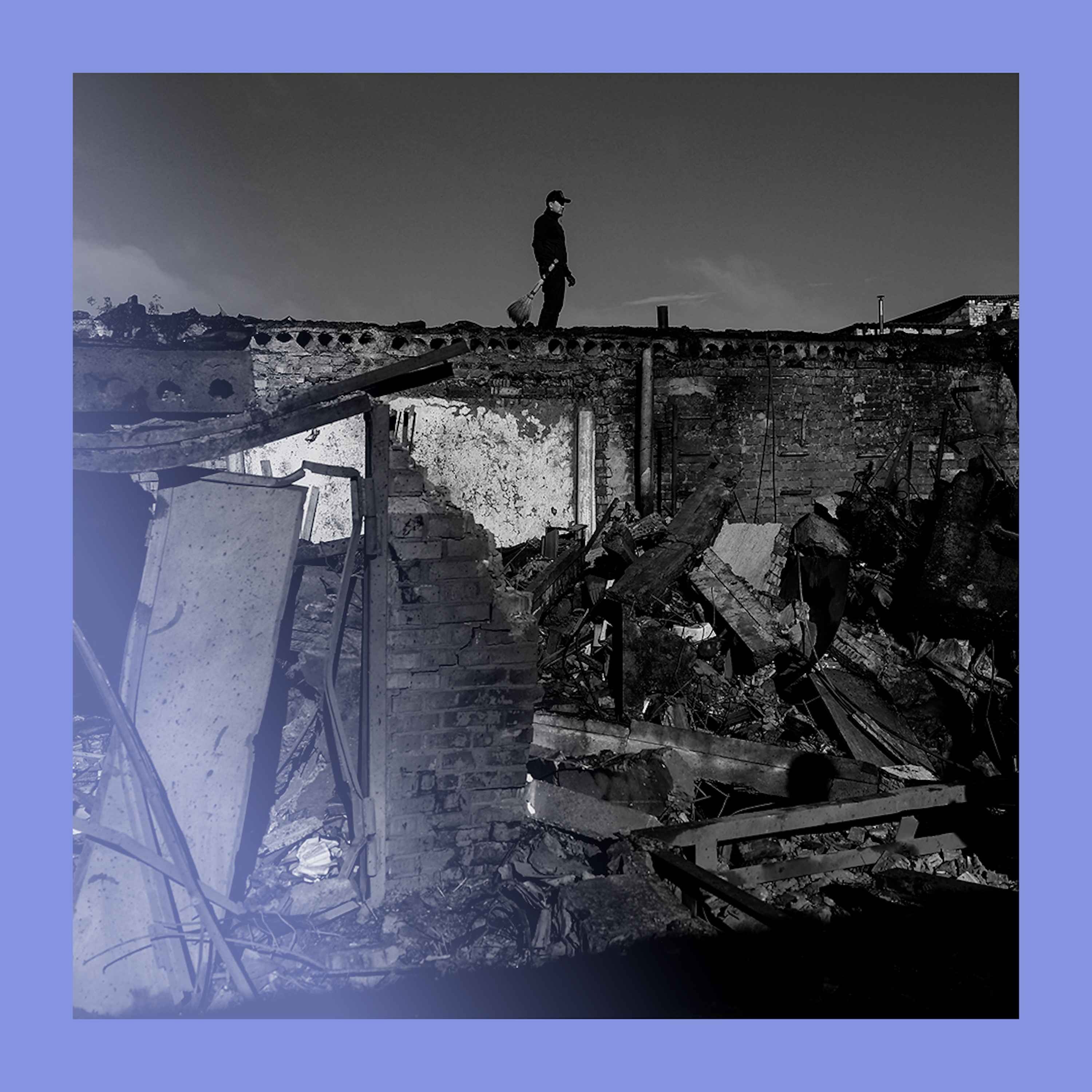
This episode of The Intelligence from The Economist covers three stories. First, Ukraine: Oliver Carroll reports Russia’s intensified “Kyiv campaign,” targeting civilians via bombs, drones, and missiles hitting supermarkets, data centres, playgrounds, and a hospital/Ukraine National Academy of Sciences (two killed). He says officials saw a planned strategy with kinetic attacks, sabotage/assassinations, and stepped-up disinformation, aiming to make people afraid to go to the supermarket before winter. He notes a mismatch in offence/defence (limited interceptors; new jet drones) and winter-style attacks on electricity/water/sewage pumping. Second, tech: Henry Trix discusses the backlash against Meta smart glasses (“pervert glasses”), citing reports of covert recording/harassment and surveillance concerns; he covers Meta’s new eyewear, Snap’s AR Specs, and expected Google/Samsung glasses. Third, history: Catherine Nixey profiles Simon Garfield’s book The Pen, arguing pens shaped history; examples include quills for Magna Carta and Hamlet, and goose-quill scale.
Oliver Carroll (Ukraine correspondent), Henry Trix (US tech editor), Catherine Nixey (Britain correspondent).
Written by AI. May contain mistakes.
Discussion on Russia's recent attacks on Ukraine's infrastructure.
“Dan Egan, VP of Behavioral Finance and Investing, explains how Betterment takes the time-consuming work out of smart investing.”
Discussion on Russia's recent attacks on Ukraine's infrastructure.
“Ukraine is heading towards its fifth winter of the war.”
Analysis of the new Russian strategy targeting civilians in Kyiv.
“Since at least late July, in fact, there's been an escalation of civilian attacks on warehouses, on the Black Sea trade routes, hunting trains.”
Exploration of the psychological toll on Ukrainian civilians amid the war.
“and the bad news is they think it's going to get worse with an aim of getting their goals even before the winter freeze sets in in late November.”
Discussion on Ukraine's military readiness against Russian attacks.
“they'll say they are preparing for worst-case scenarios, a mass exodus from Kiev.”
Examining how technology plays a role in current conflicts.
“Every time I open up my inbox, I've got this vision of the day I'm going to have.”
Conversation about the implications of Meta glasses in public spaces.
“Availability and coverage vary by state and insurance plan.”
Explore the societal implications and controversies surrounding smart glasses.
“when a parent of a member of the young cast turned around and suddenly accused me of covertly filming the event.”
Learn about the historical significance and evolution of writing instruments.
“German soldiers were blocking the entranceways to the charming medieval town of Metz in northern France.”

Get the gist, explore an idea or ask about something said.
 Claude
On The Intelligence from The Economist, what are the key points of this episode?
Searching your listeningAutomatic transcript. May contain errors.
0:00Therapy's biggest impact doesn't show up in some dramatic breakthrough. It shows up in the smallest moments. You bite your tongue instead of escalating. You put your phone down instead of firing off that text. You say what you actually mean instead of what would hurt someone else the most. Nobody applauds those moments, but they quietly change your life. That's what growing feels like, and that's exactly what Grow Therapy is here for. Grow is therapy that works, covered by insurance. Sessions average$21 with insurance, and some pay as little as$0, depending on their plan. There are no subscriptions, no long-term commitments.
0:37You just pay per session. Grow connects you with thousands of high-quality, licensed therapists across the U.S., offering both virtual and in-person sessions, nights and weekends. You can search by what matters, like insurance, specialty, identity, or availability. And you can book a therapy session in minutes and begin in as little as two days, not the national 48-day average. See if you could pay as little as$0 for therapy in seconds at growtherapy.com slash ACAST. That's growtherapy.com slash ACAST. growtherapy.com slash ACAST. Availability and coverage vary by state and insurance plan. This message comes from Betterment.
1:20Dan Egan, VP of Behavioral Finance and Investing, explains how Betterment takes the time-consuming work out of smart investing. I grew up learning about finance and investing myself and realizing that I needed to reinvest dividends and rebalance my portfolio. And if there was an opportunity to tax loss over time. And then I realized that I was doing all of these things that were pretty straightforward to implement. I just needed to spend my time doing them. Betterment automates the same good practices so that I know I'm doing portfolio management and goal-based planning in a way that makes sense and is responsible without me having to spend hours of my life doing it.
1:59Learn more at Betterment.com. Investing involves risk, performance not guaranteed. Betterment does not offer tax advice. TLH may not be suitable for all customers. Learn more at Betterment.com slash TLH dash terms.
2:18The Economist
2:24Hello and welcome to The Intelligence from The Economist. I'm Rosie Bloor.
2:34Today on the show, a backlash against pervert glasses isn't stopping tech firms. and a short history of the humble pen.
2:50But first...
2:58Ukraine is heading towards its fifth winter of the war. This week, Russia launched its biggest attack on the country's energy infrastructure since the spring. But for those living in Kyiv, life is getting harder in other ways too. Vladimir Putin has embarked on a new strategy. Escalating terror against civilians. In the past week, Russian bombs, drones and missiles have hit supermarkets, data centres and playgrounds. Oliver Carroll is our Ukraine correspondent. On Monday, they struck a hospital and Ukraine's National Academy of Sciences in central Kiev, killing two. I knew one of them. I was 200 metres away from the site when it happened.
3:46There's a sense all around that the net is getting closer, that the danger is becoming closer too. And above all, there's a sense that nothing is off limits anymore. Oli, this is an escalation in attacks on Kyiv and elsewhere. What's behind this strategy? If we put the Academy of Science attack to one side, because it stands a little bit alone, there might have been a military logic to that. Since at least late July, in fact, there's been an escalation of civilian attacks on warehouses, on the Black Sea trade routes, hunting trains. Part of the reason we're seeing this is a new generation of jet drones, which are able in real time to hunt moving objects.
4:30But there's something new, and it's much more recent, literally the last week. I spoke to two Ukrainian officials just days before this latest wave, and they knew something was coming. And what they said was they had seen evidence of a pretty advanced campaign designed to massively destabilize life and livability in the capital. And they explained to me it had three elements, kinetic attacks, which we've been seeing for a while, but a new escalation in those, sabotage, especially assassinations of political and civilian figures, and a new step up in disinformation efforts. and why I think those assertions are worth taking seriously is that one of the people I spoke to specifically identified the data centres, the internet providers and supermarkets as the most immediate targets and what they said was that Putin essentially gave this order to escalate on civilian life earlier this month he wants to make people scared of going to the supermarket is what he said and the bad news is they think it's going to get worse with an aim of getting their goals even before the winter freeze sets in in late November.
5:45Oli, we've discussed before on the show the toll that winters take in Ukraine. Is this escalation before winter a new strategy? In truth, the Kremlin has done whatever it can, whenever it can. The key difference now, this is the new bit, is this mismatch in offence and defence. We've talked before on this podcast about the lack of interceptors for ballistic missiles. That's a global issue, but it's particularly felt in Ukraine. And the new jet drones, which we've just talked about. But at the same time, the Kremlin hasn't abandoned its usual winter playbook. We're already seeing them target the nodes of electricity, water, and especially the pumping systems around sewage.
6:32And in fact, last night we saw the Russian orchestra return to the classics, missiles and drones against the grid and water network, which kept me up very late this morning. The fear right now is that this traditional winter attack is going to be supplemented by something before it. October is the new January. Oli, you talk about disinformation. What does that mean on the ground? What does that mean in practical terms? Anybody who can tell you they know what the Ukrainian population is thinking is lying, because there are essentially at least 30 million different moods. And there are various strands of thinking.
7:10And Russians work with them through social media, through other campaigns. Overall, Ukrainian counterintelligence has done pretty well. And certainly with regards to the traditional terror plots, they fool those, as I was told, seven or eight plots each week. But I think coming into winter, especially if life gets really hard in Kyiv, which looks to be the case right now, they're going to find it quite hard to blunt other disinformation efforts. Now, if you add in the ingredients of corruption scandals, nepotism in government, a sense of general chaos and drift, these Russian social media channels have plenty to work with.
7:47And if you do speak to any psychologist here, they'll tell you that the mood is changing. The ideological mobilisation at the start of the war is giving way more and more to exhaustion and collective depression five years into war. And if you speak to these officials in private, they'll say they are preparing for worst-case scenarios, a mass exodus from Kiev. And as one described to me, the sense of real tragedy could occur. Olly, it sounds like the Russian strategy is quite effective. We've always got to counter this by the fact that Russia has often believed it was more capable than it's turned out to be.
8:24I don't think that means they won't cause a lot of damage, even a catastrophic level of damage. Right now, especially, we have two months in which the capital will be essentially naked to Russian missiles and drones. It will be at least two months before we see an effective interceptor coming into play. Kiev and other cities like it, Odessa, for example, rely a lot on internal generation and lines of the grid coming in that mean there isn't an awful lot of redundancy this stage of the war. That makes them pretty vulnerable. But it's also true that the capital and the country is better prepared than it's ever been.
9:03Ukraine did an awful lot of homework following the last winter. And even before the war, when you look at something like the internet systems and the mobile systems and its data systems, they're all admirably decentralized. a lot more decentralised than, for example, European countries are. So it will be quite difficult to turn them off completely. But that said, years and years have eroded into that reserve capacity. What you just talked about was mainly the technical capacity. What about the psychological toll? Right now, there is a sense that, yes, there is this new danger lurking in every corner.
9:37But civilian life is taking a while to adapt. Concerts are continuing, even while drones are being shot down. The cafes still see people drinking on the terraces, looking up from their lattes in the middle of these massive alerts and explosions. But the cafes are emptier. You do sense already that the city is emptier. People usually leave the city around now for safer and more reliable parts. Officially, the population isn't down too much. It's down from 3.7 perhaps to 3.3 million. But that may change. and already you're seeing, for example, country houses around the capital and in Ukraine's western cities when they're practically impossible to rent this winter.
10:19The wealthy have already reserved them as boltholes should life in Kiev become unbearable. All of this is coming at a time of relatively good news on the front line. We're seeing this Operation Vivaldi by the Third Corps breaking through near Lehman, capturing more territory than Russia's managed in the last year. But if you speak to any soldier, they're massively worried about what's happening in the rear. And Russian military doctrine is focused on the capital. So I think for now, Ukrainians and the world would be wise to pay close attention to the situation now unfolding in Kyiv. Oli, thank you very much.
10:54Always a pleasure, Rosie.
11:04Okay, real talk. Every time I open up my inbox, I've got this vision of the day I'm going to have. Deep work. Big ideas. The project I keep meaning to start. Three hours vanish into replying to threads and hunting down a file someone sent last week. I've tried AI tools that promised to fix this. They didn't. They were just another tab I had to open, explain myself to, and abandon by Thursday. Superhuman is different. It's at your service, not after your job. It's already where you work, so I'm never starting from a blank tab. It's from the makers of Grammarly, living right inside of the tools I already use, like Gmail and Slack.
11:42When I'm drafting a message or making sense of a messy thread, it just helps. Like a thought partner that's already caught up, so we get to the hard part together. The problem was never too little time. It's that busy work crowds out the work that actually matters. Start streamlining your workflows with Superhuman. Try today at superhuman.com.
12:20out of what would hurt someone else the most. Nobody applauds those moments, but they quietly change your life. That's what growing feels like, and that's exactly what Grow Therapy is here for. Grow is therapy that works, covered by insurance. Sessions average$21 with insurance, and some pay as little as$0, depending on their plan. There are no subscriptions, no long-term commitments. You just pay per session. Grow connects you with thousands of high-quality, licensed therapists across the U.S., offering both virtual and in-person sessions, nights and weekends. You can search by what matters, like insurance, specialty, identity, or availability.
12:59And you can book a therapy session in minutes and begin in as little as two days, not the national 48-day average. See if you could pay as little as$0 for therapy in seconds at growtherapy.com slash That's growtherapy.com slash ACAST. growtherapy.com slash ACAST. Availability and coverage vary by state and insurance plan.
13:29I had a bit of a misadventure with my Meta glasses when I wore them to a performance in a park of a Midsummer Night's Dream. Henry Trix is our US technology editor. Recently, I lost the charging case, so I haven't been able to use the camera or the audio features or the AI features. I just wear them as shades. Now, I was sitting under a tree watching this performance when a parent of a member of the young cast turned around and suddenly accused me of covertly filming the event. He did so in quite an accusatory fashion. So since then, I felt creepy using them, even in the dumb mode that I use them in.
14:21Henry, now you're just showing off that you live somewhere sunny enough to merit wearing sunglasses all the time. Of course, you were totally innocent. But tell me what's creepy about these sunglasses? Well, there has been several reports over the summer about men in particular using these glasses to harass women by secretly recording them. And then they post some of these videos on social media and they leave a very bad taste in your mouth when you watch them. They do look as though they are literally harassment videos. And that is why in some news reports such as the LA Times in Los Angeles, where I live, there has been the moniker pervert glasses attached to these meta Ray-Bans.
15:17I mean, it is quite dodgy, isn't it, to have glasses that are filming? Yeah, although, you know, you could say that we all film with our smartphones all the time and we don't ask people's permission necessarily to use those. But I think that it fits into the broader concerns about both AI and surveillance. There is a sense that AI is becoming ever more intrusive into our lives and that cameras could make it even more so, which is why already some pretty canny developers have developed apps such as one that's called Zuck Off that use Bluetooth signals to help people detect whether there are devices around that may covertly be filming them.
16:05There have always been lights on the cameras that light up when people are using them. However, some of the people who are misusing them have found ways to turn off those lights. There's a lot that's rather dodgy about it, but it hasn't stopped Meta from doubling down on its eyewear And Meta's not alone. There's a bunch of other companies that are producing smart glasses as well. So what sorts of innovations are the big tech companies working on now? In recent weeks, Meta has produced a whole range of new glasses, including some very swanky, lightweight virtual reality glasses that it says are part of 100 new styles that it will have by the end of this year.
16:55So it's really keeping its foot to the floor here. And then more or less at the same time, Snap, which is the social media and video company, launched an augmented reality pair of smart glasses, which it calls Specs. We're expecting this autumn for Google and Samsung to unveil some intelligent glasses, which will be powered by Google's Android operating system. And even more broadly, there is a white label market for glasses that is proliferating with models coming from China and elsewhere. And we're going to start to see them in supermarkets and elsewhere. And Qualcomm, which is a chip company that supplies many of the chips for these kind of glasses, is actually developing miniature modules that you can kind of snap into the rims of many different types of eyewear.
17:56So it looks as though smart glasses, for all the bad publicity that they've received, continue to grow. And Omdia, which is a data gatherer, said that in the six months to June of this year, global shipments of AI glasses more than doubled to about 4.2 million units. So sales are still growing. Obviously, it was Meta's glasses that attracted this opprobium. But other companies must also be concerned about that, surely? Yes, definitely. I spoke to Evan Spiegel, who's the boss of Snap, and he actually criticised Meta for, as he put it, trying to create spy glasses. You know, snaps, specs, which have geeky iridescent lenses.
18:48These would never be confused for covert surveillance devices. They kind of stick out on your face very prominently. They're also actually hugely expensive. They cost about$2 ,200, which is more than seven times what Meta's cheapest pair cost. So people are probably more likely to use them for serious means. So the other companies are well aware of the backlash, but they're also, I think, believing that it will blow over and that people will see the benefits of their glasses more than their flaws. So smart glasses are here to stay? Yeah, they are, I think, almost an inevitable part of what could be a panoply of AI devices that emerge to interact with our AI agents or whatever is coming down the pipe.
19:43So there is likely to be other sorts of other form factors, as these are called. There are, you know, pins and pendants. Of course, we'll continue to probably pair them with smartphones, at least for the time being, because you need the smartphones to be able to provide the power and the connectivity that the glasses need. But there will be innovations there, too. and pretty soon we might have glasses that communicate all by themselves with the outside world. So yeah, I think glasses are here to stay, but not exclusively glasses. And you're going to stick with your supposedly smart but actually dumb meta glasses, Henry?
20:27I am eventually going to buy myself a non-meta pair of Ray-Bans, I think. It will make me feel a lot more comfortable. But I'm also curious to see the new glasses that Meta and others have brought out. When I tried the Snap specs, I found them absolutely fascinating to use. And I could see all sorts of use cases for them. So I won't turn my gaze away from smart glasses altogether. This is, after all, still the age of surveillance capitalism just through a new lens.
21:07Henry, great to talk to you. Thank you. Good to talk to you too, Rosie.
21:21It was November 1944. German soldiers were blocking the entranceways to the charming medieval town of Metz in northern France. Catherine Nixey is a Britain correspondent for The Economist. Meanwhile, just outside Metz, and less charmingly, a piece of German mortar shell was blocking the airway of an American soldier who was, his companion recalled, thrashing around and gasping for breath. He took the soldier's fountain pen and said, I don't like to do this. Then he slit the man's throat open with a knife, popped the fountain pen in, and the soldier started to breathe. And a pen legend began. A new book is out called The Pen by Simon Garfield.
22:06It argues that pens have changed the course of history. They compete with the wheel, the steam engine and the microchip as our most important tool of progress. Yet the pen has left surprisingly little mark on the page about itself. The earliest image of a quill does not appear until 547 AD in an Italian mosaic in a church in Ravenna that depicts St. Matthew at his writing desk. Most artists and authors ignore their pens entirely, except to grouse about them. Virginia Woolf hated her disgusting, slippery, false fountain pen. King Charles harumphed his bloody pen. The pen is the handmaid of history.
22:46It writes history, then it is written out of it.
22:52This history, think of it as a penance, more than makes up for that, as it follows the story of the pen from prehistory onwards as the pen becomes first a necessity, then later a multi-billion dollar industry. Though the arrival of the pen proper, in the sense of a hollow thing with a pointy metal bit at the end, came surprisingly late. People slightly preciously describe writers as penning their works, but for most of history they didn't. Tang dynasty poets used brushes. Cicero wrote his letters with a reed pen. Julius Caesar used a stylus. that was long and pointed as a nail to write his histories, and, ever the pragmatist, then used it to stab an assassin in the arm.
23:41The pen proper only really began with the quill, from which the modern pen got its name. Shakespeare wrote the words, words, words of Hamlet with quills. The Magna Carta was signed with quills, that... of Beethoven's Fifth was drafted with one. And almost everyone was annoyed by them. The ink leaked, the nib split, and had to be reshaped with a penknife, and a busy writer could get through five quills in a day. This was annoying for writers and not much fun for geese. In 1832, England imported 33 ,668 ,000 goose quills.
24:27It all changed in France in 1827 when someone had the idea, the inkling, of manufacturing something a bit more sturdy with a well of ink inside and a metal nib. Or, given that this is the ironically ill-recorded history of the pen, that may have happened in Iowa in 1867, or in Egypt in 970 AD, or possibly with Leonardo da Vinci in Italy in the 15th century. Whatever. Eventually, everyone had one. Those who manufactured the most popular pens became, like Messrs. Waterman, Parker and later, with a different nib, Biro, household names. By 2024, around 150 billion BICs had been manufactured. Pens today have become a status symbol.
25:14Rorschach would claim that you could tell a personality from an ink splat. Far more telling were the pens that the ink came from. James Bond had an exploding pen. Freud, allegedly, had a huge pen. for pens were a status symbol. Once omnipresent, the pen is now becoming obsolescent. To pen will perhaps soon join words like scribe and manuscript as yet another linguistic literary relic.
25:53That's all for this episode of The Intelligence. We'll see you back here tomorrow.
26:26explains how Betterment takes the time-consuming work out of smart investing. I grew up learning about finance and investing myself and realizing that I needed to reinvest dividends and rebalance my portfolio and if there was an opportunity to tax loss over time. And then I realized that I was doing all of these things that were pretty straightforward to implement. I just needed to spend my time doing them. Betterment automates the same good practices so that I know I'm doing portfolio management and goal-based planning in a way that makes sense and is responsible without me having to spend hours of my life doing it.
27:02Learn more at Betterment.com. Investing involves risk, performance not guaranteed. Betterment does not offer tax advice. TLH may not be suitable for all customers. Learn more at Betterment.com slash TLH dash terms. Your daily supplement routine doesn't need to be managing a handful of different bottles. Onnit's Total Human brings key research-based vitamins, minerals, herbs, and amino acids together in convenient day and night packs. One all-in-one product designed to make supplementation easier. The day pack supports cognition, focus, and cellular energy production. At night, the night pack helps you wind down and supports a calm, relaxed state.
27:42Less time managing your supplements, more support for your day and night. Shop Total Human now at onnit.com.
Russia has embarked on a new campaign to quell Ukraine, focused on supermarkets, playgrounds and other civilian targets. Our correspondent reports on the toll on daily life in Kyiv. Despite the backlash against “pervert glasses”, companies continue to develop AI-enabled smart specs. And how the pen changed history.
Guests and host:
Topics covered:
Listen to what matters most, from global politics and business to science and technology—subscribe to The Economist.
Hosted on Acast. See acast.com/privacy for more information.


