
 Ask ChatGPT


 The Intelligence from The Economist
24 Jun 2025 · 25m
In this episode, hosts Jason Palmer and Rosie Blau discuss the fragile ceasefire in Iran amidst ongoing military tensions, the implications for regional stability, NATO's commitments to defense spending, and Germany's consideration of cancelling public holidays to boost productivity.
Written by AI. May contain mistakes.

Get the gist, explore an idea or ask about something said.
 Claude
On The Intelligence from The Economist, what are the key points of this episode?
Searching your listeningAutomatic transcript. May contain errors.
0:28The Economist increase their defense spending? Well, most of them. We take a deeper look at the commitments and ask whether they will appease the alliance's most fickle member. And public holidays are a blissful invention. Only problem is, they're a drag on productivity and the economy. So Germany's government is considering removing one of those precious days from the national calendar.
1:02But first...
1:11On the show yesterday morning, the big question in the aftermath of America's strikes on Iran was what response it would provoke. By yesterday evening, we had an answer. Iran fired 14 missiles at an American air base in Qatar, one for each of the American bombs that fell on its nuclear facilities. But it gave both the Qataris and the Americans advance notice, and it seems no one was injured. A couple of hours later, Donald Trump declared a ceasefire had been negotiated. This morning, Israel's defense minister, Israel Katz, said that Iran had violated the deal in its opening hours by firing missiles into northern Israel.
1:53He, in turn, ordered strikes on Tehran. At this very moment, it doesn't look good. But there are incentives on both sides to wind down this war. So there are concerns that the ceasefire is under threat, that we are still seeing strikes. Iran has denied that it was responsible for that last one, the one in northern Israel, which might suggest that it is eager to ensure that the ceasefire stays in place. Josie DeLapp is our Middle East editor. And after you've had this kind of deal announced, you do often see a last kind of spate of attacks of one side or the other wanting to have the final word, as it were.
2:42It's obviously worrying that attacks are still continuing. But at the moment, I would say it does look like these are the final spasms of this round of fighting. And for now, the ceasefire is still largely intact. And so obviously, it's a tense time at the moment, a lot of questions as to what might come next. But for you, what are you looking for? So the most obvious question is, particularly amid these strikes, is this ceasefire going to hold in the immediate future? But beyond that, the question is whether out of America's strikes on Iran's nuclear program, we see diplomatic progress towards a more lasting deal that constrains Iran's nuclear development.
3:33And then beyond that, what any kind of deal or arguably lack of deal means for the stability of the Middle East. So to the questions you pose then, the deal as it stands now, will this ceasefire hold, do you think? Well, arguably both Iran and Israel have good reason to stop fighting. The Iranian regime has had a very antagonistic relationship with America since its revolution. The chance of death to America are familiar. But it's really avoided any kind of direct confrontation with the superpower throughout that period. It is in a somewhat precarious position at home. It has long been very unpopular.
4:19Israeli forces have had startling success against Iran's military institutions and commanders in their attacks. And its allies, in particular its proxies like Hezbollah, Hamas, the Assad regime in Syria, have either been weakened or toppled. So with America entering into the war, Iran may prefer to take this opportunity to lick its wounds in the knowledge that it was certainly on the back foot in this war. And on the Israeli side, it doesn't seem likely that Benjamin Netanyahu, the prime minister, will openly defy Mr. Trump in this ceasefire, given that he hailed America's intervention as a historic move.
5:06And Israel was already talking about the fact that it had struck most of the targets that it wanted to hit in Iran. So Israel can kind of take the win on this as well. And as to your second question about Iran's nuclear program, the ostensible focus of all of this, has it been delayed? Has it been destroyed? What do we think will happen in the longer term? It has certainly been set back. It is very hard to know the extent of the damage to the plants at Fordow, at Isfahan, at Natanz, but it has certainly been extensive. The centrifuges, which are central to these plants, are very sensitive. And no matter what else happened, they have almost certainly been badly damaged.
5:50However, Iran has been working on its nuclear program for many years now. The knowledge that it has is deep and it's widely dispersed. We're not talking about a small group of people that can be taken out. There is a question about Iran's stock of 400 kilograms of highly enriched uranium. It is unclear where that stockpile is. Israel says it knows where it is, but that remains something of a mystery. And we have to ask what incentives this war has left Iran with when it comes to its nuclear program. Is it going to use what it has left to continue to develop its nuclear program, to try to dash for a bomb but do it even more secretively?
6:39It's already threatened to withdraw from the Nuclear Non-Proliferation Treaty. If there is a sense that the regime is humiliated and has had its deterrence severely weakened, there's an argument that it might think that a nuclear bomb is the only thing that could save it. And that leaves us in a very dangerous position. And so presumably Mr. Trump and others will be looking for a more lasting deal, some international oversight, something maybe not so different from the JCPOA that Mr. Trump walked away from. Exactly. I mean, bombing does damage to Iran's nuclear program. But if you actually want to have a lasting sense that it is not going to pursue a nuclear weapon, then you need diplomacy to achieve that.
7:25You need a deal. Right now, it's unclear exactly what kind of deal is on the table, whether Iran or Israel will be satisfied with it. But if some kind of lasting positive change is going to come out of this war, it has to be through diplomacy. And to the last question that you pose, whether all of this will lead to greater or lesser stability in the region more generally? That partly depends on what Iran does in terms of its nuclear program. If Israel has evidence of a clandestine nuclear program, it seems plausible that it will continue to launch attacks on Iran periodically. with or without American help.
8:09There has been a lot of talk, both in Israel and in America, about regime change and the question of whether there can ever be stability in the Middle East with the current regime in Iran, which is seen as a sponsor of terror, which has supported proxies such as Hamas and Hezbollah that have attacked Israel. There haven't been big protests against the Iranian regime during this war. It's very hard to know exactly what Iranians' response has been. For now, it does seem like there has been a certain rallying around the flag. And certainly, you haven't seen any sense that people are rising up against their rulers.
8:49But there is a question of what happens after this. In Iran, where Israel has taken out a significant number of high-ranking commanders. New people have come in to take their place and they are not more moderate. These are hardliners. And so what Iran looks like with military men arguably taking a more powerful role compared to the clerics is quite uncertain and how Iranians respond to that is also uncertain. So I think the stability of Iran is something that's going to be very important when we think about how Israel and America and the Gulf states view the future of the region. But from America's perspective, for the moment, the hope that a sort of precision strike on Iran's nuclear facilities would put a stop to this or at least change the dynamics seems to have been actually a successful bet.
9:50That is certainly how Donald Trump and the administration would like to present this as an extraordinary military and diplomatic success for Donald Trump, particularly in contrast to the efforts of the presidents that have gone before him. Quite what that translates into next, I'm not sure. Mr. Trump has leverage over the Israeli government now in a way that few have had before. He executed the strikes that Netanyahu has been calling on American presidents for years to launch against Iran. Trump has done this. So it puts him in a very powerful position to, for example, to insist on a ceasefire in Gaza.
10:39It's easy to argue at the moment that the strikes were a military success. The question is whether this American administration has a strategic vision and the patience to translate that into a long-lasting diplomatic success. Josie, thanks as ever for your time. Jason, thank you.
11:17In quieter times, the NATO summit happening today would have been the leading story of international diplomacy. The fractured peace in Iran may have taken its place, but what will be discussed in the Netherlands is actually huge news. A major spending bump being pushed by Secretary General Mark Rutte. I will propose an overall investment plan that will total 5 % of GDP and defense investment. It's a big number, but perhaps a misleading one. And not everyone is on board. Spain, for example, has wriggled out of the commitment. The question on everyone's mind relates to the man who's been trying to nudge members into opening their checkbooks for years.
12:00The summit in The Hague is going to be a lot shorter, sharper, more choreographed than previous NATO summits. Shishang Joshi is our defense editor. The big concern is keeping everything as simple as possible, so there are as few opportunities as possible for Donald Trump to wreck anything. I think the discussion is going to be dominated by defense spending. Allies are going to agree a new spending target of three and a half percent of GDP on defense, plus one and a half percent extra. But the real debate is going to be over the timeline for reaching it and what else may be needed to keep the Americans locked tightly into the alliance.
12:45Well, on that, is this discussion around three and a half and five percent sort of directly tied to the Trump administration's insistence that they do exactly that? It's tied to two things. It's tied, first of all, to placating Donald Trump, to showing that there is real burden sharing going on between Europeans and Americans in a world in which America may be pulled in other directions, shall we say. But I think it's also simpler than that. NATO in recent years has drawn up defense plans for the continent, the first comprehensive defense plan since the Cold War. We've talked about them on this show before, Jason.
13:19And everyone agrees to make those plans realistic, countries really have to be spending well above 3 % of GDP on defense, some of them probably closer to 4%. And when you hear the figure 5%, your BS detector should go off a little bit because what actually that means is the target for core military spending will go from 2 % of GDP, which it has been for more than 10 years, to 3.5 % of GDP, which is a lot. That's more than America spends, by the way. And then there is this little extra pot of cash, which is supposed to be defense-related spending, cybersecurity spending, infrastructure spending to make sure that your bridges can take tanks, all of that kind of stuff.
13:59That'll be 1.5 % of GDP. The 5 % as a whole is meaningless because the 1.5 % contains so much fluff. But look, it's a nice figure for Donald Trump to crow about. And of course, that, as we all know, is the important thing. Obviously, the major escalation with Iran is going to affect all of this. But you mentioned the bait here is not just the how much, but the when, the timeline. That's right, because 2 % was agreed at the Whale Summit in 2014. And most of NATO proceeded to pretty much ignore it for a long time, despite the fact that Russia had just invaded and annexed Crimea that year. So I think that now the sense is, even if you agree on three and a half percent, which we will do, Spain is the only country that is holding out, there is still this question of how long will it take?
14:44The states that are most concerned about Russia want an early deadline, something like 2032. So in other words, seven years from now, states should be meeting that target. The states that are less concerned about the threat, so that's many southern European states, states that are more pro-Russian like Slovakia, they say actually no, let's have until 2035. The problem is 2035 is 10 years away. Russia's defense industry is going gangbusters, as we've talked about often. And so that's a very, very long time to be languidly building up your defense industry and your defense capabilities. And you hinted a bit as to what the extra one and a half percent might be spent on the sort of defense plus stuff.
15:26How will the rest of it be spent, do you think? And maybe how should it be? So the rest of it, the three and a half percent, that's supposed to be core defense spending. And by the way, NATO has an extra target, which is that allies have to also spend 20 percent of their budget on equipment. So in other words, make sure you're not simply funneling the cash into pensions and stuff and wages. You're actually building pointy things that go bang. There is something called the NATO defense planning process, which says here are the plans. Here's what we need to make them real. And here's what you, each individual country, must provide for these plans.
15:55That's done on a four-year cycle, and it basically has exposed some pretty serious gaps in NATO capability. It's something that Mark Rutter, the Secretary General of NATO, has been talking about at Chatham House earlier in the month. But we need a 400 % increase in air and missile defense. We see in Ukraine how Russia delivers terror from above. So we will strengthen the shield that protects our skies. I was told that when that air and missile defense requirement was announced internally among military planners, it produced an audible gasp because air defense is expensive and building that much of it is something that takes years and years.
16:38Having said all of this, I think there's also a recognition Ukraine and other recent wars have highlighted new ways of fighting, new technologies like drones and other things. And so there are also initiatives in NATO underway to make sure that you're not just building up yesterday's army, you are also investing in capabilities that are innovative, novel, and could defeat a much bigger Russian force that is a crude army based around size rather than quality. But the overall spending package is shifting in part in response to the Trump administration's insistence. What does that look like on the American side?
17:15This is in part everybody paying as much as America does, but it's also in part providing a bit more of an exit for American forces in Europe. Well, we can see what's happening around us, can't we, right? American jets are hurrying to the Middle East, in the Pacific. There's a strong effort by America to beef up its forces. There is still the risk that U.S. forces, which are essential to the defense of the continent, particularly when it comes to things like intelligence, refueling aircraft, logistics, that they could be pulled away. Europeans will need to do more. And Europeans get it. Europeans really recognize it.
17:48We've gone from shock, trauma, anger back in February at the Munich conference when J.D. Vance harangued Europeans to a sense of acceptance, pragmatism today. But I've been talking to some American officials recently and they say, look, concerns about America just pulling out of Europe are overblown. You've got some 80 ,000 American troops in Europe. Ultimately, you cannot just pull them out in huge numbers because you have to build barracks for them back in America. That takes a lot of money, billions of dollars. Congress would have to appropriate that. And so I think the feeling is we're not going to see a dramatic change in American posture in Europe.
18:25But those big questions will not be settled until well after the summit. And what about the high level picture of NATO itself? We've talked about the degree to which it's ready for, staffed up for, paid for in the modern world. Is this a sign of things coming to the new order for NATO? Well, it's interesting that we haven't discussed one of the things that will be the most powerful influence on the future of the alliance. And that is the future of Ukraine, which is still struggling on the battlefield. And whether Ukraine survives, whether it resists, whether it falls back, that has huge implications.
19:00Volodymyr Zelensky is expected to be at the summit. So is Donald Trump. So Ukraine is going to be something I'll watch for very closely in how it's addressed. But also in a normal summit, when you were not walking on eggshells around the US president, you'd be discussing a range of other critical issues for the future of the alliance. How does China affect it? Nuclear weapons and arms control, which is collapsing around us. The question of space security, with Russia planning to put nuclear weapons in orbit. All of that is basically being shoved off the main agenda because there is such a focus on defense spending, on handling and managing Donald Trump, on keeping Europe together at this vital moment.
19:36And people say that's the price to pay for placating Donald Trump. So be it. Shishan, thanks as ever for your time. Great to talk to you, Jason.
20:05Song Bruttosozialprodukt by Geier Stoßflug was iconic in the 1980s. I grew up humming this very bouncy tune. Wendelin von Bredow is The Economist's senior Germany correspondent. And it was all about how Germans work incredibly hard. You can't get them away from work. They even sneak in on holidays into the factory because they're so keen to work. That was then and is now they are not working enough, at least according to the government, public policymakers and leading economists such as Clemens Fust of the EFOL Institute. He proposed and some others also proposed to cancel a public holiday because there are very many of them and it would get Germans to work more to increase tax revenue.
20:56so Wendelin just how many public holidays does Germany have nationwide there are nine public holidays which is not more than other European countries actually it's average or even sort of below average but the 16 states add many more for instance Thuring and Thuringia decided to be the only state to have a Weltkinder tag, a World Children's Day. Saxony is off on the Day of Prayer and Remembrance, Busenbetag, in November. Of all the 16 states, Bavaria has the highest number of public holidays with 13. Then there's Baden-Württemberg, that's also in the south, a very prosperous state, with 12. And then Saxony and Thuringia with 11 each.
21:43They're both in the former Eastern Germany. And Berlin actually in normal years has 10, but this year they had 11 because they decided to add one on the 8th of May, which was the end of the Second World War. So they made this a public holiday too. So you said that the government actually wants to remove at least one of these holidays because it would make more money. Put some numbers on that for me. So according to economic researchers, it would add about 8 billion euros to GDP. So that's quite a high figure. And this, of course, at a time when Germany needs to fit its coffers because it is going to spend much more on defense because of the war in Ukraine and the threat from Russia.
22:28And it also just launched a 12-year investment program in infrastructure that will cost something like 500 billion euros. and it looked at Denmark, a neighboring country, where they have the same problem because they also have to spend much more on defense and they decided in 2023 to abolish a public holiday and of course the unions hated it and many workers hated it too and there were tens of thousands took to the seat of government, Christian Borg in Copenhagen, but the prime minister stood firm and she went ahead and abolished the public holiday last year and of course this year too and next year.
23:07The same sort of resolve is needed here in Germany with the new chancellor, Friedrich Merz. I think there'd be riots in the streets in Britain if anyone threatened to cancel a public holiday. How's all this going down now? Well, to give you an example, in Berlin, we had three public holidays in May and they were all on a Thursday, which meant that many then also took Friday for a bridge day, a so-called bridge day, So we had three, four-day weekends. And for people like myself who work and who have children at school, who are then off school, it's a real problem. So I think some, including myself, feel, well, actually, it's quite a good idea.
23:46You know, just I can't get any work done. But of course, most people love their public holidays and many don't want to touch them. So it's not a particularly popular measure generally with the German public. Benderlin, great to talk to you. Thank you so much. Enjoy all your holidays while you've got them. Thank you very much.
24:23That's all for this episode of The Intelligence. We'll see you back here tomorrow.
24:33Thank you.
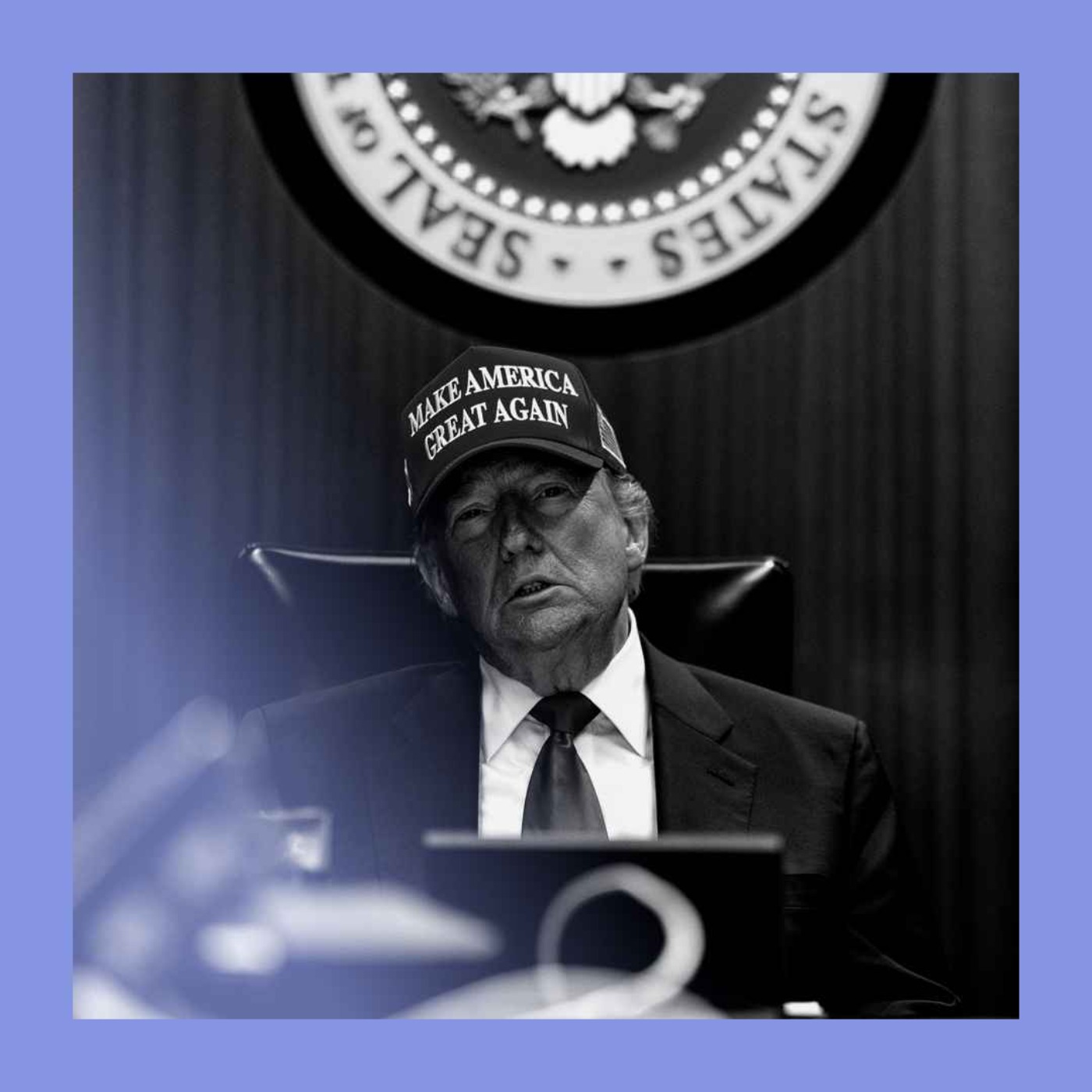
Iran’s strikes both before and apparently after a ceasefire began seem to threaten peace. If it holds, what will that mean for Iran’s ambitions, and for the wider region? A meeting of NATO-country leaders seems precision-engineered to appease the alliance’s most fickle member. And why Germany is considering cancelling one of its many public holidays.
Additional audio courtesy of Chatham House's “Independent Thinking” podcast.
Get a world of insights by subscribing to Economist Podcasts+. For more information about how to access Economist Podcasts+, please visit our FAQs page or watch our video explaining how to link your account.
Hosted on Acast. See acast.com/privacy for more information.


