
 Ask ChatGPT


 The Intelligence from The Economist
30 Jun 2025 · 25m
In this episode, hosted by Jason Palmer and Rosie Blau, the discussion centers around three primary topics:
Written by AI. May contain mistakes.

Get the gist, explore an idea or ask about something said.
 Claude
On The Intelligence from The Economist, what are the key points of this episode?
Searching your listeningAutomatic transcript. May contain errors.
0:27The Economist even renaming the parent company Meta. Now he's similarly enthusiastic about AI, and he seems to be ready to spend really eye-popping sums getting the talent in. And our culture correspondent takes a tour of the Manosphere via a new book that's called Masculinist Websites, Blogs and Online Forums to ask whether the Manosphere is truly dangerous, or whether in fact it's a moral panic.
1:02But first...
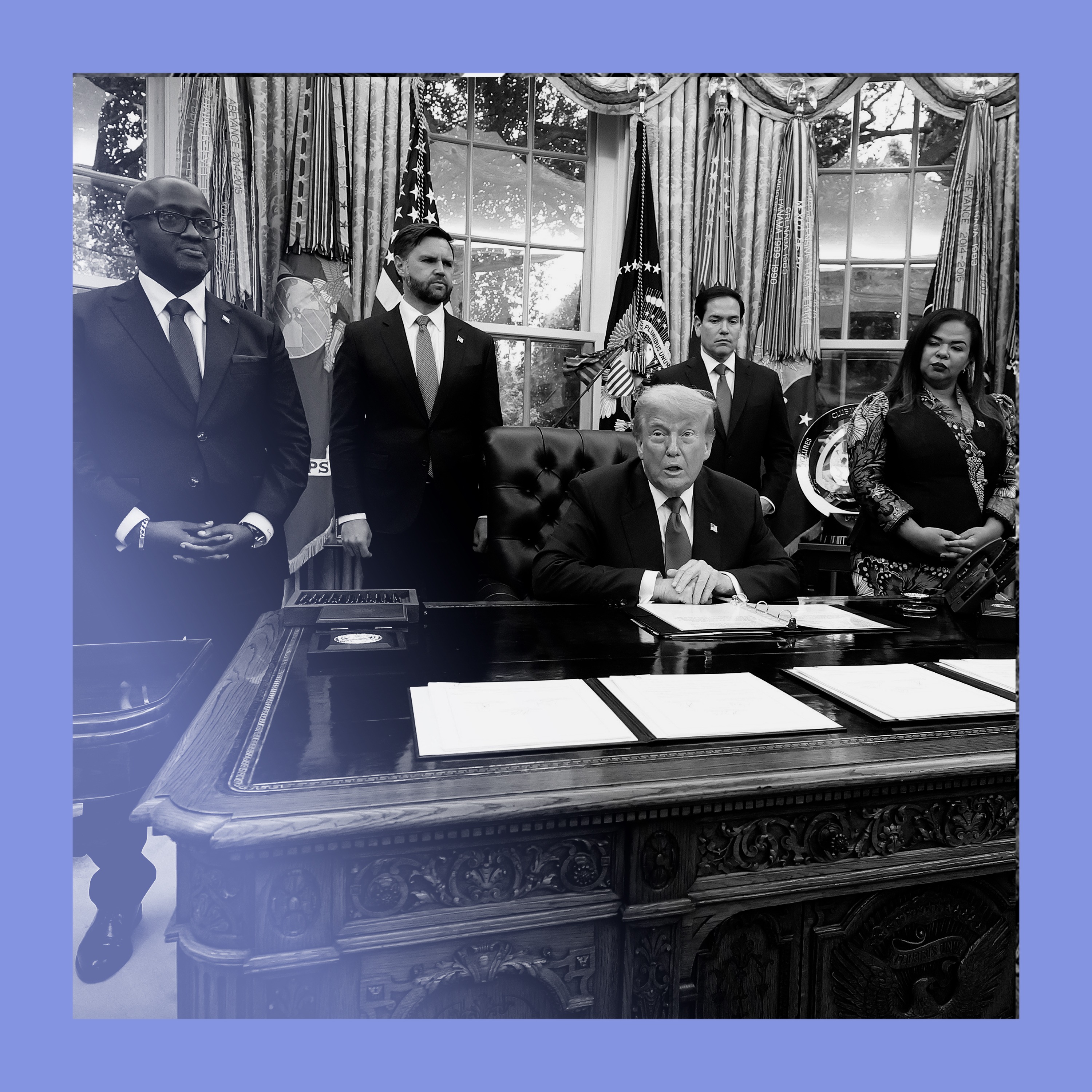
1:10So we're here today to celebrate a glorious triumph, and that's what it is, for the cause of peace. And this is a long time waiting. Donald Trump has promised to be the president who brings an end to a number of long-running conflicts. He's still working on Gaza and Ukraine. But in recent days, he's overseen a peace deal between two neighboring sides in Africa, Rwanda and the Democratic Republic of Congo. Today, the violence and destruction comes to an end, and the entire region begins a new chapter of hope and opportunity, harmony, prosperity, and peace. It's a brave aspiration, but the enmity between the two countries is bitter and decades old.
1:56So the real question is not whether both sides can come to the table. It's whether peace can really hold. Donald Trump promised to end 30 years of war in eastern Congo. And I think that's almost certainly an overstatement. Emmett Livingstone writes about the Congo for The Economist and is based in Kinshasa. The conflict between Congo and Rwanda is but one part of the long-running conflict. There are several different overlapping conflicts. On top of that, the agreement in question leaves many questions unanswered. So you mentioned overlapping, long-running conflicts. Just remind us, Emmett, why Rwanda and Congo were fighting in the first place?
2:43So the history of tensions between Congo and Rwanda go back decades. And there are many different triggers. but perhaps the most important one is the genocide of the Tutsi in Rwanda in 1994, after which about a million Hutu civilians and some armed Hutu extremists took refuge in Congo. This massively upended already very tense ethnic or communal relations in eastern Congo, and it contributed to the outbreak of the First Congo War when Rwanda invaded eastern Congo to try and oust Hutu militias. And then there was a second Congo war, which continued until the early 2000s. But it was never definitively resolved.
3:25And communal tensions in Congo, specifically surrounding the place of the Hongolese Tutsis and also of Hutus and the descendants of the million Rwandan Hutus that went into Congo, have never gone away. Emmett, you and I spoke at the beginning of the year when there was a flare-up in fighting again, and you were in the border city of Goma in eastern Congo. Just remind us exactly what had happened there. So in January, Goma had been surrounded for about two years by M23 rebels, which is a Congolese Tutsi rebel group backed by Rwanda. Rwandan forces were also directly engaged by this point in Congo.
4:08It was a de facto invasion. and then in mid to late January they decided to go in and take Goma and it was a phenomenally violent campaign. It featured artillery, it featured drone strikes and they all but destroyed the Congolese army and its many allied African states who had sent in troops and then they very quickly moved on and took the second largest city in eastern Congo which is Bukavu so it was a huge escalation. So at the time none of us thought that we would then come to see the scene in the Oval office with Trump promising peace and everyone brought to the table. What happened? Why did they come?
4:44Absolutely not. It was completely unexpected. Very soon after the fall of Goma, Rwandan troops and M23 rebels were advancing on Kisangani, which is another large Congolese city in the north. And the fear was that the Congolese government would fall. It was a feverish time to say the least, but the Trump administration, as well as other outside actors such as Qatar, for example, started applying massive pressure on both sides, but particularly on Rwanda, to stop. The American interest in doing so is relatively clear. After Goma fell, Congolese President Fidesz Fisiketi was in communication with people in Washington, essentially offering minerals from Congo in exchange for diplomatic protection.
5:26And this caught the eye of the Trump administration. So as the M23 was advancing, they were advancing through areas that are extremely mineral rich. but because of long-standing conflict in eastern Congo, haven't been exploited industrially. And it's hard to say with any great certainty what the Americans want, because this deal is still relatively secretive and the published details are vague. But the thinking seems to be that if you bring peace to eastern Congo, you can facilitate massive American investment in these mineral-rich areas and by doing so compete with Chinese firms which are already very heavily implanted in other mineral-rich areas of Congo.
6:08Bringing peace to eastern Congo will involve getting the M23 militia backed by Rwanda, presumably to back down. What happens to them? Do they just go home? Look, this is the core of the criticism of this deal. It seems extremely unlikely that the M23, after having waged a war for three and a half years, with its leaders now sentenced to death in Congo under international sanctions and so on, it's just unrealistic that they are going to lay down arms and disappear. So what the deal essentially provides is for Rwanda to withdraw its thousands of troops from Congolese territory. And on the other side, the Congolese government is expected to stop supporting the FDLR, which is a extremist Hutu militia.
6:56There's no real mention of the M23 in there and it doesn't involve the M23. There are concurrent negotiations happening between Kinshasa and M23 leaders in Doha and the deal will not work unless the M23 and the Congolese government come to some kind of agreement. Now the Congolese government as well as the US and other actors are expecting the M23 to simply lay down arms and disappear. But this is highly improbable. And indeed, M23 leaders, the day after the deal was signed, made very clear that they have no intention of going anywhere.
7:35However, I did speak to Congo's foreign minister, Therese Wagner, and she presented, I thought, a very strong argument in favour of the deal. The way she put it was that the problem at the moment is Rwandan occupation in eastern Congo. And if that can be solved, it will contribute to a positive dynamic, she said. That will potentially lead to the rest of the problems being solved. So there is going to be a high level of scrutiny, but I think we have a good agreement. I think we have also good instruments to make sure that this agreement is accompanied and has what it needs to materialise. And I think the Congolese government is adopting a very pragmatic approach to the numerous problems that face it.
8:15And to me, it seems like wise policy. I mean, they have to engage with this and they have to do what they can. So you're very clear, Emmett, that the prospects for peace are improbable. But what about Trump's involvement? Shouldn't that change things? That's certainly the optimistic way of looking at the current deal. So the fact that you have the most powerful man in the world who has promised very severe penalties for anyone who breaks the terms of this deal. I think his exact words were financial or otherwise. So it's not quite clear what he's planning. But the fact that he's paying very close attention to this just raises the chances that there will be some kind of agreement.
8:53A huge amount of political capital has been invested. Donald Trump, J.D. Vance, Marco Rubio, they all spoke about this in the Oval Office. They all promised to end the conflict. And equally, the Congolese government needs a deal. And the Rwandan government will be looking to avoid huge diplomatic blowback. So ultimately, this all comes down to Rwanda and it comes down to Rwanda's highly autocratic president, Paul Kagame. The thing to bear in mind is that Rwanda has already won the war against Congo militarily. On the ground, it holds all the cards. So the question is, are they going to withdraw their troops?
9:31Are they going to stop backing the M23? It seems highly unlikely that they would do so without getting something very significant in return. What that is at the moment is not clear. The US administration has been talking about regional economic schemes, but the Rwandans will be looking for something much juicier than that. And the only other scenario that analysts can imagine the Rwandans withdrawing under is if they fall under very heavy sanctions. So at the moment, the attitude is wait and see. Emmett, thank you very much for talking to me. Thank you very much, Rosie, for having me on.
10:22All right. Hey, everyone. We built a new thing for you. There's almost a billion people who are using Meta AI across our apps now. So we made a new standalone Meta AI app for you to check out. In Silicon Valley, Mark Zuckerberg, the boss of Meta, is getting ready for a fight As other companies' AI offerings, like OpenAI's ChatGPT, have been stealing the limelight, his company's efforts, like the Meta app and Chatbot, have fallen flat. But Mr. Zuckerberg is one of those billionaire types who just loves to double down. So, in a bid to put Meta back on top, he's throwing money at the problem. Like, a lot of money.
11:03Mark Zuckerberg is spending megabucks on an AI hiring spree. Henry Trix is our U.S. technology editor. He recently did what could be the world's most expensive hire by acquisition. That is, he's offered$14.3 billion to buy 49 % of scale AI, which is a data labeling firm whose main asset, it's fair to say, is its founder, Alexander Wang, who's a bit of an AI hotshot. But the money isn't stopping there. Mr. Zuckerberg is also planning to offer another huge sum, maybe a billion dollars or more, for two of Silicon Valley's hottest AI venture capitalists. That's Nat Friedman and Daniel Gross. So tell me more about these high-dollar hotshots.
11:54Well, I spoke to one of their friends, and he calls this trio of Wang, Friedman and Gross, the Avengers. Alexander Wang, he is 28 years old. He's the founder of Scale AI, and he's one of America's youngest self-made billionaires. Nat Friedman and Daniel Gross are two entrepreneurs and venture capitalists who created a firm called NFDG, and they've made some incredibly savvy investments during the AI boom. In fact, some describe their VC firm as the AI equivalent of Andreessen Horowitz. which is a Silicon Valley juggernaut that was born out of the dot-com boom. And they're incredibly well plugged in.
12:39I've seen Friedman at a summit that he co-hosted with Alexander Wang last year. They're close friends. He invested in scale AI. And he's also good friends with Mark Zuckerberg. They share a passion for ancient Rome, among other things. So what is it that Mr. Zuckerberg wants them to do for him for Meta? Yeah, this is the big question. I mean, supposedly they're joining a super intelligence team, but no one really knows what that means. They're not the sort of state-of-the-art AI researchers who are capable of creating super intelligent AI or AI that goes beyond human intelligence. Their experience is not just as investors, but more as product developers.
13:30And, you know, Meta has every reason to want to create great AI products. But in order to do that, it needs researchers because its family of large language models called LLAMA has kind of hit a wall lately. So the idea, I think, is that Zuckerberg is hoping to use the star power of these people to try and attract some of the best research talent that's out there. But that's research talent that's pretty hard to find. So spending a bunch of money to hire some great people to hire some great people, I mean, what do you make of this plan? Is it going to put Meta where it wants to be in the AI landscape?
14:11I mean, this hiring spree suggests that he is in quite a deep hole and that Meta's AI efforts are not doing as well as they should be. Recently, there's been quite a lot of churn among Meta's top AI specialists. And even with these new hires, there's grumbling in the ranks among Meta employees that this doesn't solve the problem. What Meta really needs is researchers because Lama is now so far behind the reasoning models of competitors like OpenAI and Google that it has a lot of catching up to do. And what's more, the competitive dynamics are changing. Open AI, whose usage is growing very fast, is also talking about muscling into social media, where Facebook, Instagram and WhatsApp dominate.
15:10So a lot's at stake. Meta is valued at$1.7 trillion in the market, and a lot is riding on its success in AI. So look, this is a community where kind of everybody knows everybody and everybody seems to be trying to steal a march on everybody else, at least in AI. What's been the reaction to this, all this cash splashing? The reactions were pretty quick. OpenAI's boss, Sam Altman, told the Uncapped podcast, which is hosted by his brother, Jack, that Meta was offering signing bonuses of about$100 million to poach his senior staff. Actually, it is crazy. I'm really happy that at least so far, none of our best people have decided to take them up on that.
15:56But I think the strategy of a ton of upfront guaranteed comp and that being the reason you tell someone to join, like really the degree to which they're focusing on that and not the work and not the mission. I don't think that's going to set up a great culture. But it must be said that Meta countered quite quickly that OpenAI was also trying to match its bonuses. So it's clear that there is a lot of money being splashed around here. And that's a reflection of the incredible demand for research talent that there is in the world of AI at the moment. We're in the wrong business, Henry. What does this whole approach tell you about the way Mr.
16:44Zuckerberg is leading Meta, especially in light of the fact that not so long ago we were talking about how much he was going all in on the metaverse? It shows that Zuckerberg is still very much invested in Meta being a top dog in AI. And some say that it's a sign of humility, that he's realized that actually he can't do AI innovation on his own. so he needs a crack team around him to do it for him. I mean, you may snort at the idea of a humble Mark Zuckerberg, and some people counter that this looks like a sign of desperation. What he really needs is researchers, not kind of investors and entrepreneurs.
17:27He's in a unique position. No one has the power and the money and straddles a tech company with such authority as Mark Zuckerberg does. He can do pretty much whatever he wants. And this must be why this group of talented people, none of whom, it has to be said, are short of cash, risk their reputations to join him. it's clear that zuckerberg plays to win and they must feel that he still has a chance henry thanks very much for your time jason great to talk to you
18:15i've noticed you around
18:20i find you very attractive it's not every day that a psychology experiment makes it into a pop song. Um, would you go to bed with me? Catherine Mixey is a culture correspondent for The Economist. Touch and Go's late 90s one-hit wonder, Would You, took its suggestive lyrics directly from a 1978 psychology paper designed to see whether men or women are more sexually picky. Eight of the woman's peers, male and female, were also trotting out exactly the same phrases to other people on an American university campus. 75 % of the men surveyed said that they would like to have sex with a total stranger on that day.
19:04Or they would decline apologetically if for some reason they couldn't, if they were busy or attached or married. Not one single woman said she would like to. Most were actively affronted. You've got to be kidding, was a typical response, as was, what is wrong with you?
19:24This same disparity is seen in Lost Boys, a new non-fiction book by the journalist James Bloodworth. In it, he goes on a personal journey through another place where men feel sexually rebuffed, the manosphere. Mr Bloodworth peers into its literature. Why Women Deserve Less is a typical title. He listens to its credos, chiefly that women are bitches corrupted by feminism. He helps out on a pickup course costing$10 ,000, which warns that high-status men will soon be fucking all the women. And he observes the manosphere's anger when, for some mysterious reason, the bitches fail to fall for these men.
20:08Rage, he writes, is simmering away below the surface. Quite what the manosphere is, is less clear. The term is vague but ominous. It sits somewhere between the comically trivial, that man prefix hinting like with manbag or mansplaining, and a manifestly mockable maleness. But it also sounds somehow cosmically big. That sphere bit implies that like the troposphere, the manosphere surrounds us all as inescapable as air. Certainly, it seems to be in the air. The use of the term manosphere has risen 170-fold since 2010. Mr. Bloodworth explains it through a bit of history. He sees its origins in The Game, a dating manual by Neil Strass, a journalist.
20:55Bound in pleather, decorated with silhouettes of girls with Bond-style breasts and bottoms, The Game was less a dating manual than a predating one. It had titles like Step 1, Select a Target. Step 5, Isolate the Target. And the ineffably romantic, Step 10, Blast Last-Minute Resistance. This book set the tone for much of what followed, as it encouraged men to hunt out SHB's superhot babes, ideally with LSE, low self-esteem, so that they could practice SS, speed seduction on them. It was not a feminist classic. It was an instant bestseller.
21:36Mr. Bloodworth began his book when his editor suggested he should write about angry men on the internet. Though quite how many such men there are, or how angry they are, isn't clear. There is no data about the number of the inhabitants of the manosphere, their age, or really much else at all about them. Any definition of it is sprawling. A loosely affiliated network of masculinist websites, blogs, and online forums is the author's attempt here. You can get some hint of its eyes through looking at views and online followers. So at one point, Mr. Tate had about 4.6 million followers on Instagram.
22:14But then it's worth remembering that a pet fluencer cat called Nala has 4.4 million. This doesn't stop people being worried. There is a widespread fear that the manosphere is seeping into the atmosphere of the real world and toxifying it. And certainly there are ominous signs. Several recent studies in Britain have noted high levels of misogyny among schoolchildren. And there are more dramatic signs too. Alec Manassian, who murdered 10 people in Toronto in 2018, did so after posting on Facebook that the incel rebellion has already begun.
22:47It is not clear at all whether the manosphere is truly dangerous or whether it's in fact a moral panic. The author of a recent paper by Ofcon said that society has overestimated the risk of it. Almost two-thirds of young men in America, Australia and Britain are engaging with masculinity influences online. And while some of these will spout vile misogyny, Others tend to talk about recipes for protein shakes or how best to do your pull-ups. Perhaps one of the most striking features of all about the manosphere is an almost homoerotic fascination with oiled manly muscles. The manosphere is now a term that's become too broad for its own good.
23:25It's used, as Mr. Bloodworth has said, to refer to anyone who can do a bench press. Arguably, the manosphere is both a panic and a problem. It's probably better to think of it as an ecosystem. Like an ecosystem, its inhabitants range from harmless species to much more unpleasant predators. And like an ecosystem, it also favours certain species which thrive in it. Resentful men multiply, young women are repelled. There is a certain tragicomedy to the manosphere. Those who dwell in it are often obsessed with women, and they feel that they, like the hero in The Matrix, have taken the red pill, and that they see the truth about those women and about the world.
24:05and so they sit, squandering their energy on machines online, talking about women, instead of going out and actually meeting someone, talking to them, maybe even listening to them. The irony is almost, but not quite, amusing. Mr. Bloodworth's book opens with a quotation from C.S. Lewis, a British novelist. Only by being terrible do they avoid being comic. Would you go to bed with me? Would you go to bed with me? Would you go to bed with me? Would you go to bed with me? Would you go to bed with me? Would you go to bed with me? Would you go to bed with me?
24:54That's all for this episode of The Intelligence. We'll see you back here tomorrow.
25:05Thank you.
After decades of conflict between Rwanda and the Democratic Republic of Congo, last week Donald Trump brokered a truce in the Oval Office. Our correspondent analyses the prospects for a lasting reconciliation. Why Mark Zuckerberg wants to spend $14bn on an AI hiring spree at Meta. And is the manosphere dangerous or a moral panic?
Listen to what matters most, from global politics and business to science and technology—Subscribe to Economist Podcasts+
For more information about how to access Economist Podcasts+, please visit our FAQs page or watch our video explaining how to link your account.
Hosted on Acast. See acast.com/privacy for more information.


