
 Ask ChatGPT



The episode is about two stories. First, Gaza: Nicholas Pelham reports that the Trump-appointed “Board of Peace” for Gaza is not delivering security or reconstruction. He claims ceasefire violations continue, Israel controls about two-thirds of Gaza, and Palestinians remain under Hamas control in the rest. He says technocrats meant to run Gaza (National Committee for the Administration of Gaza) are stuck in Egypt, Hamas leaders and police are under attack, and life is marked by hunger, displacement, debris, and restrictions on “dual-use” materials. He cites rising deaths (about 1,400 since the ceasefire) and reports of child marriage driven by desperation. He argues Gaza policy aligns with Netanyahu’s right-wing coalition aims, including talk of “voluntary migration,” and that elections may be canceled again. Second, AI music: Henry Trix explains record-label lawsuits and licensing battles over AI generators like Suno, including claims Suno ingested 60,000+ copyrighted recordings; Suno argues fair use. He notes Warner Music settled and says AI revenue could start flowing this year, plus Suno V6 trained on licensed music. Third, Japan matcha: Moeke Iida visits a Kagoshima tea farm and says the matcha boom boosts exports and prices, but many farmers struggle due to aging, labor shortages, long maturation (5+ years), high pivot costs, and China’s cheaper, scaled production; Japan should compete via high-end quality and terroir varieties.
Nicholas Pelham (Middle East correspondent), Henry Trix (US technology and media editor), Moeke Iida (Japan writer for The Economist).
Written by AI. May contain mistakes.
Learn about the importance of having distinct public and private investment portfolios.
“For investors at the highest level of sophistication, those with strong advisory support, the natural outcome is two distinct portfolios, one public, one private.”
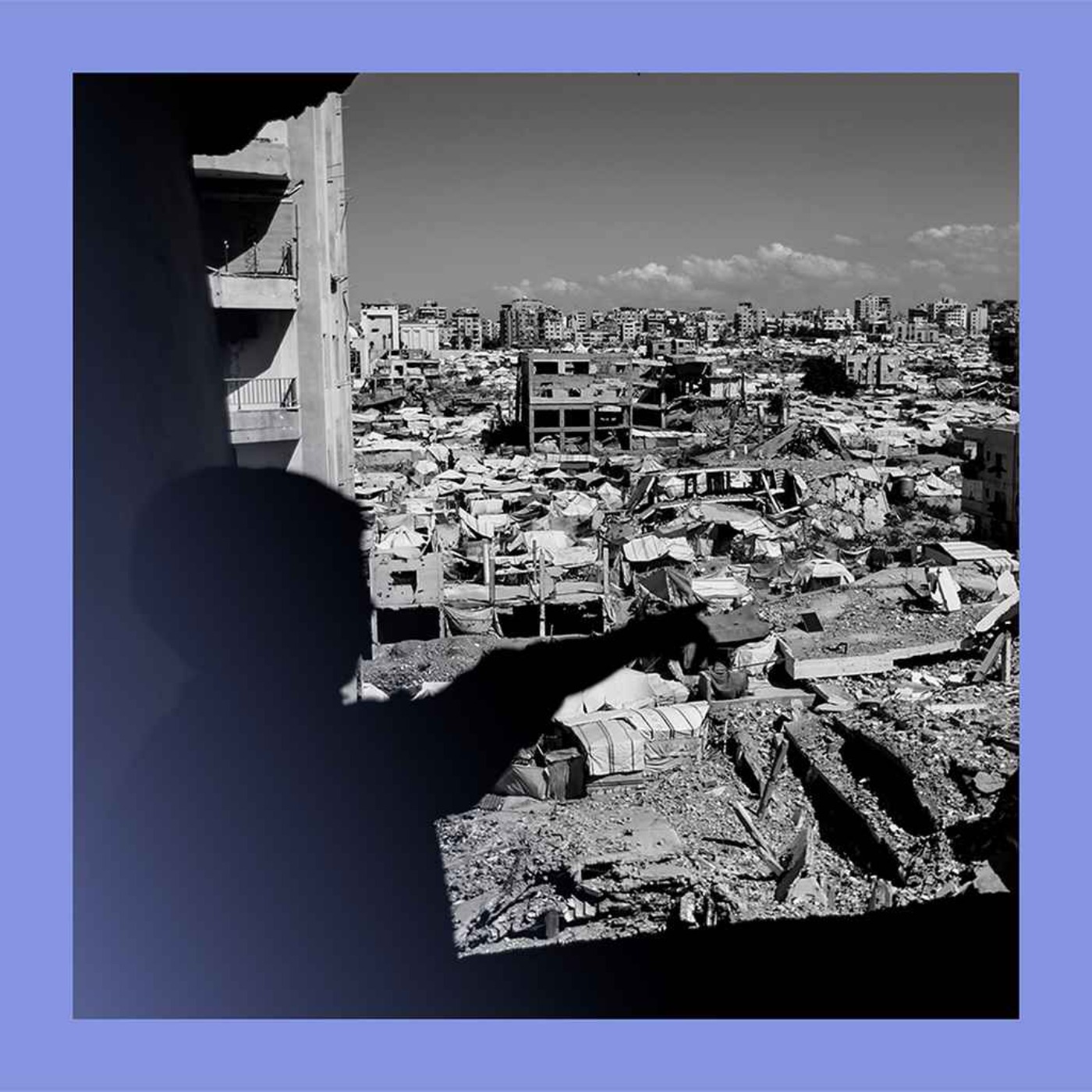
Discussion on the composition and actions of Trump's Board overseeing Gaza.
“Guess who is the veto-wielding chairman?”
Insight into the worsening conditions in Gaza and the lack of progress.
“Last month, at the UN General Assembly, Jared Kushner, Mr.”
Hear personal stories reflecting the daily struggles faced by Gazans.
“And what is it like for you reporting on Gaza now?”
Analysis of who controls Gaza amidst ongoing conflict and governance challenges.
“and until Israel and Egypt allow us to cross that border and get back into Gaza, what we're providing is deeply inadequate.”
Exploration of the social decline in Gaza, including disturbing trends.
“Despite these two years of war and a year of continued siege, on the ground, the powers that control Palestinian life haven't changed.”
Discussion on the political landscape and potential changes after elections.
“It used to be the case that Gaza had a very strong social code.”
Understanding how VantageScore enhances credit access for millions.
“data than legacy models, bringing more people into the credit economy, like 5 million more mortgage-eligible people.”
Examination of the impact of AI on the music industry and copyright issues.
“From vinyl to cassettes to CDs to streaming, the recording and selling of music has been in a state of constant revolution.”
Explore how AI is reshaping the music industry amidst lawsuits and settlements.
“Some have settled, hoping to make more money from licensing with the labs than from lawsuits against them.”
Discover the contrasting realities of Japan's thriving matcha market and struggling tea industry.
“I'm at a big tea farm in Kagoshima on Japan's southern island of Kyushu.”
A personal take on the matcha phenomenon and its cultural significance.
“So I feel like even though people have become familiar with matcha because of the global craze, there's still room for them to learn more about matcha.”
A personal take on the matcha phenomenon and its cultural significance.
“that's all for this episode of the intelligence we'll see you back here tomorrow This message comes from Betterment.”

Get the gist, explore an idea or ask about something said.
 Claude
On The Intelligence from The Economist, what are the key points of this episode?
Searching your listeningAutomatic transcript. May contain errors.
0:00For investors at the highest level of sophistication, those with strong advisory support, the natural outcome is two distinct portfolios, one public, one private. Each plays a different role in the overall strategy. Uncover new investment opportunities for you at creativeplanning.com slash new.
0:20The Economist
0:26Hello and welcome to The Intelligence from The Economist. I'm Rosie Bloor. And I'm Jason Palmer.
0:36Today on the show, what should record labels do about AI music? And why Japanese farmers are struggling to cope with the matcha boom?
0:51First up, though.
1:16Guess who is the veto-wielding chairman? The executive board that Mr. Trump appointed to oversee Gaza negotiations is mostly people who are better at scouting for business than ending humanitarian crises. It does not include a single Palestinian. Last month, at the UN General Assembly, Jared Kushner, Mr. Trump's son-in-law and Uber envoy, announced a$2.5 billion recovery plan, with a slide deck promising a connected, prosperous Gaza delivering security, dignity and opportunity. Our Middle East correspondent, Nicholas Pelham, has been looking into how the board's good work is playing out.
1:59I'm not sure people in Gaza really see any sign of the Board of Peace. It's an institution that's been there for a year. They say they're still in a state of preparation and will move to implementation. But if you ask people on the ground, there's really nothing to show for all their press conferences. They haven't delivered security. The ceasefire is constantly being violated. Israel has been expanding its presence on the ground. Nearly two-thirds of Gaza is now under Israeli occupation. Things are pretty much as they were a year ago, just more degraded and more hopeless. And what is it like for you reporting on Gaza now?
2:41It's deeply frustrating. Gaza was a place that I used to know very well. There are times where I'd be going in there several times a month and staying for days on end. And each time I went in, those automatic metal doors would open up. You'd go through a chicken wire alleyway and walk for a quarter of a mile, thinking you knew exactly what you're going to find on the other side, because it's a small place with a fairly small population, and it's not difficult to get to know quite well. And yet each time Gaza surprised me. And now for three years, Gaza has been up there in the bulletins. We've been reporting about it a lot, but I'm still really aware that if I was to go through those metal-plated doors again and go into Gaza, what lies beyond is still a mystery.
3:31I'm relying on what I read. I'm relying on UN agencies that are still managing to get in. I'm speaking to friends and to acquaintances, and they're sending me voice notes. Hello, this is Ishan Matar from Gaza, talking about the current situation in Gaza after almost the third anniversary of this war. But I'm acutely aware that this is really half-baked, and until Israel and Egypt allow us to cross that border and get back into Gaza, what we're providing is deeply inadequate. And for what you can get, for what you have gotten, what can you tell us about what life is like in Gaza right now? It's broken.
4:17People are really focused on the manushai of just basic survival. I have to wake up at least two hours before sunrise and I take one of my sons to stay in line so we can get a couple of loaf of bread. for our daily consumption because you cannot get more than one person. I lost my house about a year ago, before the ceasefire, maybe two weeks before the ceasefire. Maybe I could say that I am one of the few fortunate ones who has a little place to stay in, an open area. My wife, my two daughters and my four sons are living in a small open area. No privacy at all. When you listen to the press conferences given by the Board of Peace, they're talking in numbers of billions and of resurrected housing estates.
5:19And really, there's not an inkling of that in Gaza today. The bombing hasn't stopped in Gaza. So about 1 ,400 people have been killed in the past year since the ceasefire was announced. And just forget new shelters ahead of winter or heavy machinery to clear millions upon millions of tons of debris and to repair schools and hospitals and the electricity and the sanitation. So much is banned on grounds of dual use, which is materials that could be used for civilian purposes or could be used for military purposes. and under that designation, even temples are forbidden. And who is actually in control of the Strip at the moment?
6:01Who's running things? Israel is in control of two-thirds of the Strip, but that's depopulated of Palestinians. The Palestinians are living in the rest of the Strip and they're under Hamas control. Despite these two years of war and a year of continued siege, on the ground, the powers that control Palestinian life haven't changed. According to the blueprint of the Board of Peace, a Palestinian group of technocrats that they'd appointed who should be running Gaza, they are called the National Committee for the Administration of Gaza. But they're stuck in Egypt. Hamas, the Islamist group that Israel went to war against, said that they would hand over control if they arrived in Gaza.
6:42But until now, Israel hasn't let them in. Hamas is still running municipalities and ministries. It's still subject to attack. Last month, at least four of its top commanders were killed. The police on the ground are also subject to Israeli attacks, so they've resorted to wearing plain clothes. And there is a lot of concern that if Hamas can't keep control of the situation, that old Felitan Alamni, the security chaos that existed before Hamas took over in 2005, is going to return. And just as that chaos resulted in the end of the Palestinian Authority, it could be that Hamas is going to struggle to keep control if the tribes and the clans and other armed groups are the ones who are on the street brandishing their weapons.
7:34And meanwhile, life for civilian Palestinians is ever more miserable. It used to be the case that Gaza had a very strong social code. It had a strong etiquette. And when you speak to people in Gaza today, they describe that as unravelling. You know, people are fighting all over the place, everywhere for anything. You know, people are living in tents, have no jobs, no money. They cannot buy basic necessities. That's why their, you know, psychological state of mind is, you know, on the edge of everything, you know. And of course, there are just so many young kids whose parents have been killed. And you're hearing stories of uncles and distant relatives who can't afford to keep their own children, let alone those of other families.
8:25And so there are reports that child marriage is very prevalent. I've heard stories of relatives selling off children for marriage, in some cases, as young as 12. There was one man who's supposed to have married off his young daughter for two sacks of flour. It's hard not to view what's happening now in Gaza as something of a project for Benjamin Netanyahu's government right-wing coalition. Do you think it's likely to change after this month's election in Israel? I've just come back from Jerusalem, and it has to be said that I don't see a huge difference between the frontrunners on the question of Gaza.
8:57There seems to be a consensus that Hamas has to be destroyed, that Israel can never tolerate self-determination or a Palestinian state. In Gaza, there's a lot of talk about voluntary migration, which translates to conditions being so bad that the people of Gaza should eventually leave. At the moment, the Palestinians are really not part of the Israeli election cycle. Such is the appetite for revenge in Israel, particularly in an election cycle, that many Israelis just want Gaza gone altogether with its population. And what about the Palestinian body politic itself, the notion of a Palestinian election?
9:43I think there are many Palestinians who feel that the chance of choosing their own leadership could break their own internal deadlock. They're fed up with this division between the leaders in the West Bank and leaders in Gaza. They really say to hell with both your houses, whether it's Fatah. Fatah is the ruling faction in the West Bank or Hamas. but they're also aware that they don't have the means or the power to get rid of these leaders in any other way but elections. And if there is a way forward, it might be that there are those in Hamas who have now accepted that they would be ready to hand over their arms.
10:22They're broken as a movement. They have signed up to the Board of Peace's initiative that they should hand over both government and weapons to an incoming technocratic authority. In return, they would want to take part politically in the future of Gaza. The problem is that there's an overwhelming feeling that the leadership in the Palestinian Authority, President Mahmoud Abbas, is too fond of his own seat to surrender it. And the elections are going to be cancelled as they were previously cancelled in 2021. And indeed, to many Palestinians, this is going to open the door to yet another bout of violence.
11:02Nicholas, thanks very much for joining us. Thank you, Jason.
11:30data than legacy models, bringing more people into the credit economy, like 5 million more mortgage-eligible people. So all the banks win, but so do all the francs, the lenders and the borrowers, the Lindas and the Olivers. When you build credit scores the right way, everybody wins. That's the power of VantageScore. Get started at VantageScore.com.
11:55Moeka Iida: The music industry is no stranger to technological upheaval. From vinyl to cassettes to CDs to streaming, the recording and selling of music has been in a state of constant revolution. The shift to streaming shook the industry after the rise of illicit file sharing in the Napster era, it took more than 20 years for revenue to return, even in nominal terms, to the level of the 1990s. And generative artificial intelligence brings a new age of disruption. Henry Trix is our US technology and media editor. It threatens to transform the whole process of making music. Music made by AI is already making its presence felt in the zeitgeist as slop, as well as in the charts.
12:59Moeka Iida: There is more dross than ever. about 90 000 entirely machine generated tunes are uploaded to music streaming service deezer every day that's half the total spotify which is the biggest streamer says it has taken down 75 million spammy tracks in the past year. Much of the slop is uploaded illegally by bot farms, hoping to harvest fraudulent royalties. But many human artists also use AI quite legitimately to enhance their own creativity.
13:48Moeka Iida: A bigger question is the legality of AI-made music itself. Some record labels accuse AI music labs of piracy and they've sued them. Some have settled, hoping to make more money from licensing with the labs than from lawsuits against them. And confusingly, some record labels both litigate and license. All are grappling with the problem of how to stay in control of the industry when the ability to create music with AI lowers the barriers to entry. Many top music executives cut their teeth, and indeed their first record contracts, in the Napster era, and they don't want to get caught napping again.
14:40Moeka Iida: The stock market suggests investors are worried. The share prices of the two biggest listed record labels, that's Universal Music Group and Warner Music Group, have both lagged behind the overall market over the past few years. The relationship to watch now is between these big labels and Suno, a controversial four-year-old American AI music company that was last valued at$5.4 billion. That is, more than a third of Warner Music's$14.7 billion market capitalization. And it presents an extraordinary natural experiment. UMG and another big record label, Sony Music, have both sued Suno, doubling down with a case that they filed in September.
15:35Moeka Iida: Warner Music, for its part, which was once part of the original suit, has decided to settle instead. In their new case, UMG, Sony Music and others accuse Suno of ripping off more than 60 ,000 copyrighted recordings and ingesting them into its models. Under American copyright law, damages can reach about$150 ,000 per work, which may suggest that the plaintiffs are pushing for a big payout. Suno admits that the tens of millions of recordings it used to train its models do include copyrighted material, but it argues that it is fair use in law to learn musical styles and generate new original music.
16:31Moeka Iida: This matter is unsettled. Within the creative industries, there are more than 100 lawsuits in America against AI labs, including Anthropic OpenAI, Suno and many others, most of which turn on the question of whether fair use applies. But while the Suno cases go through the courts, Warner Music's settlement with Suno is also attracting attention. The label has told investors that revenue from its AI partnerships, such as that with Suno, will start flowing this financial year. And that would be among the first of the AI deals in the entertainment industry to bring in real money. Warner Music's settlement itself may also herald big changes.
17:26Moeka Iida: Suno V6 is here, and we're really excited to introduce our most powerful generation of models yet. In September, Suno introduced V6, which it says is its first family of models to be trained exclusively on licensed music from WMG and others. The artists and the songwriters who opt in will share revenue with Suno when their work is used, based on a share of Suno's subscriptions. This could yield new revenue streams for artists. As superfans create and post AI music that is derived from remixes or mashups of their repertoires, You could hear Fleetwood Mac's dreams overlaid with Aretha Franklin's voice, for example.
18:20Moeka Iida: But the idea that superfans will want to become co-creators of music with the superstars rather than just listeners is untested. music executives point to other parts of the creative industries where fans do alter material that they enjoy for fun think of fan fiction for example or the modding of video games and the hope is that ai will spur similar audience engagement in the music industry A lot of this depends on how many leading performers opt in to having their music modified. So far, no big stars have signed up, suggesting that there are still qualms related to artistic integrity. and until the top names agree to take part, it's hard to know how enthusiastic their superfans will be.
19:39I'm at a big tea farm in Kagoshima on Japan's southern island of Kyushu. The farm belongs to Nishi Toshimi, who inherited the place from his family two decades ago. Moeke Iida writes about Japan for The Economist. Nishi says back then, the tea industry was struggling, prices were falling and sales were shrinking. But then, the world went crazy for matcha. Today we're going to make a matcha because it's morning and it's my favorite thing of the day. I've tried over 100 matcha powders in the past year. Let's make a crème brûlée matcha together. Hey guys, and welcome back. Nishi says the matcha boom has felt almost like a miracle.
20:27Because of the surging global demand, Japan's green tea exports have tripled in the past decade, and prices have shot up as well. This all looks great, at least on the surface.
20:40Well, tell me what the matcha boom, the matcha miracle looks like on the ground these days. So Nishi is very enthusiastic about this and so are a lot of other farmers. Kagoshima has done a great job capitalizing on the matcha boom, which is quite interesting because when people think of tea here, a lot of people think of places like Kyoto, which is famous for uji matcha, and then Shizuoka, which is a traditional hub for sencha or brood green tea. But Kagoshima has an advantage that other places don't. So it has lots of large flat land, which makes it ideal for large scale farming and automation.
21:14And there's a lot of people here like Nishi who are really business savvy and they've made huge investments into producing matcha at large quantities. So Kagoshima is a success story here. But if you look at other parts of Japan or if you zoom out and look at the industry as a whole, it's actually in pretty poor shape. Wait, why would that be, though, if demand has been high? Everything seems booming. Why is the tea industry in poor shape? I know it sounds contradictory, but long before this global matcha boom came, the industry was already pretty much hollowed out. So a big reason is because of falling demand at home, because of changing diets and habits.
21:52And also green tea is competing with other kinds of drinks like coffee or black tea. So because of that, a lot of people in the tea industry had already left the business and fields were abandoned and went to ruin. So if you look at the cultivation area for tea leaves across Japan, that's ranked by a third over the past two decades. And also there's problems like aging and labor shortages, which is the case in a lot of industries in Japan. And a lot of people who retire do so without having any successor to take over the business. And then you might think, well, if the matcha boom is such a boon for the industry, like why don't people just go back into it?
22:25But it's really not that straightforward. Growers of Sencha or brewed green tea are trying to pivot towards matcha. But actually matcha often requires different cultivation methods and also equipment for processing. So it takes a lot of investment to do that. And it's also not like you plant the tea and then you can harvest right away. The plants need to mature for at least five years and it takes even longer for it to become good quality. So it's a long term bet. And also Japan isn't the only place growing matcha. And competition from abroad is getting fierce. So where is the competition coming from?
22:58The main competition comes from China. China is scaling up production aggressively, and it recently overtook Japan as the top matcha exporter. It claims to make around 70 % of the world's matcha today. So it's producing in much bigger quantities, and they sell at much cheaper prices. So Japanese farmers and producers I've been speaking to feel very threatened by this. And even in Kagoshima, which I said has large-scale production, well, that pales in comparison when it comes to China. And I think there is an element of pride as well. Tea does come from China, but it came to Japan and Japan made it its own thing.
23:32It built traditions around it like tea ceremony and matcha is very much part of that. So people see matcha as a very Japanese thing and Nishi, the farmer I mentioned, said it's like champagne. Japan is actually the champagne region of matcha and the fact that they're losing to China in this field is something that could sting their pride. But people also say that there's no way to compete with China in terms of volume. So Japanese producers should go for the high-end market. They argue that Japanese matcha is still superior in terms of taste and quality. So going for the high-end market is a survival strategy for Japan.
24:06And so what's your take on that? Is there enough room at the top of the market for Japan to flourish? I do think in terms of the mass market, in terms of the matcha latte that people might buy at Starbucks and so on, maybe Japan is in a tighter competition with China. But I do think Japan still has more to offer. People have become familiar with what matcha is, generally speaking. But the more I talk to farmers, the more I realise that there's different kinds of matcha with different flavours. So for instance, I came across this variety called Yame, which is produced in Fukuoka. And it's known for having this nutty flavour, which goes well in lattes.
24:40I also met a young person who runs this startup, and he's very keen to promote a terroir culture around matcha. So the way we talk about wine or whiskey or something like that, he thinks we can do something similar with matcha. So I feel like even though people have become familiar with matcha because of the global craze, there's still room for them to learn more about matcha. Now, to my discredit, Moika, I have never once tried a matcha latte. Maybe if you could put some of the good stuff in the post to me, I'll have a go. Yeah, I think you're missing out on life. You have to try it. Thanks very much for joining us, Moika.
25:10Thank you so much for having me.
25:25that's all for this episode of the intelligence we'll see you back here tomorrow
25:51This message comes from Betterment. Dan Egan, VP of Behavioral Finance and Investing, explains how Betterment takes the time-consuming work out of smart investing. I grew up learning about finance and investing myself and realizing that I needed to reinvest dividends and rebalance my portfolio and if there was an opportunity to tax loss over time. And then I realized that I was doing all of these things that were pretty straightforward to implement. I just needed to spend my time doing them. Betterment automates the same good practices so that I know I'm doing portfolio management and goal-based planning in a way that makes sense and is responsible without me having to spend hours of my life doing it.
26:32Learn more at Betterment.com. Investing involves risk, performance not guaranteed. Betterment does not offer tax advice. TLH may not be suitable for all customers. Learn more at Betterment.com slash TLH dash terms. You
A year ago Donald Trump created the Board of Peace to rebuild Gaza. Yet for many Palestinians, life is even harder, as the ceasefire is repeatedly violated, crime is rising and poverty rife. Why record labels are in a spin over AI music. And Japan is struggling to benefit from the global matcha boom.
Guests and host:
Topics covered:
Listen to what matters most, from global politics and business to science and technology—subscribe to The Economist.
Hosted on Acast. See acast.com/privacy for more information.


