
 Ask ChatGPT


 The Intelligence from The Economist
8 Oct 2026 · 22m · 9 chapters
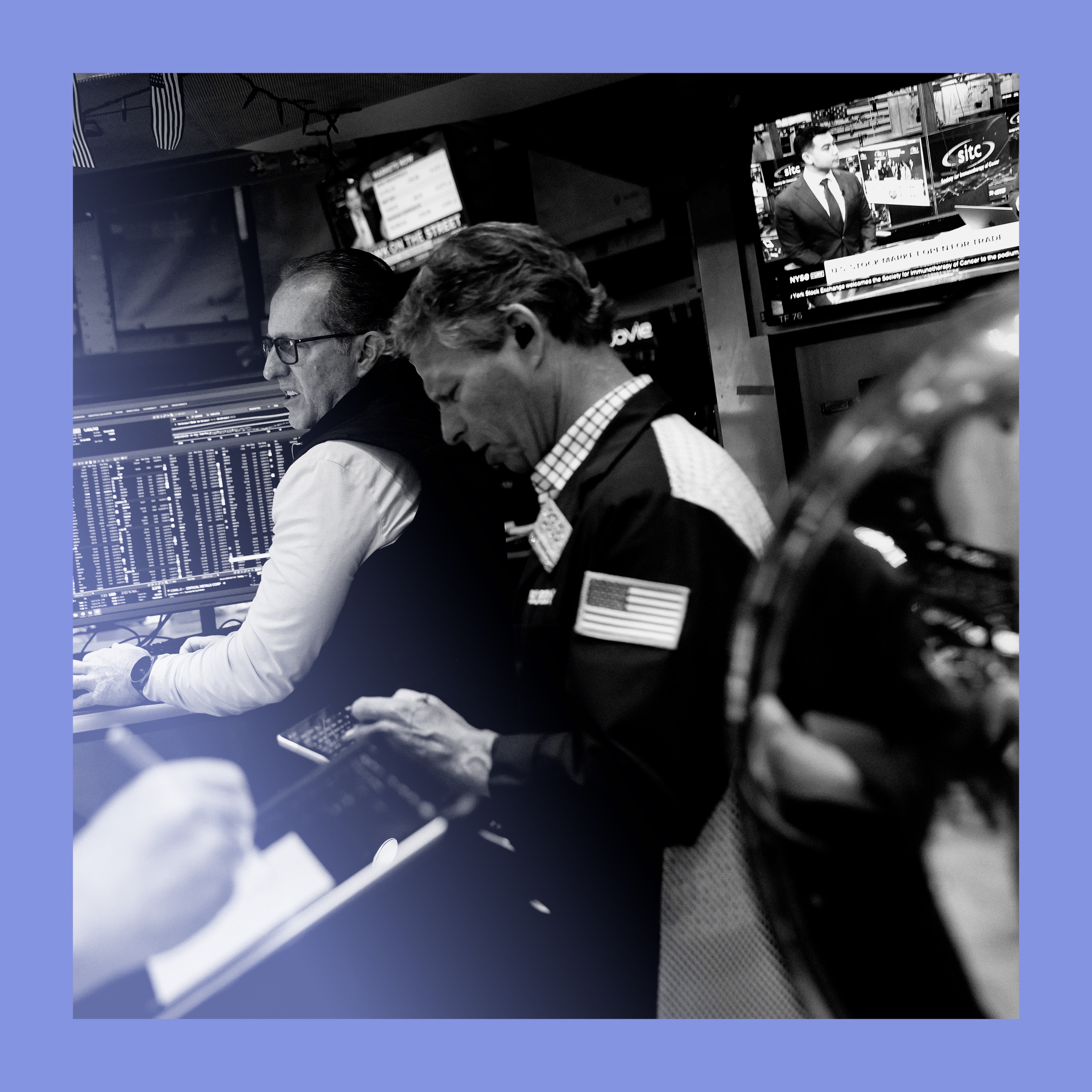
Global bond-market jitters driven by three shocks: AI/data-center investment competing for capital, persistent inflation from an energy shock tied to the war in Iran (delaying rate cuts), and fiscal/political risk—especially France’s debt and election uncertainty—pushing yields higher.
Government bond yields are near multi-decade highs; in the rich world average yields are ~4%, and short-term yields are up over 1 percentage point since early year. A full debt crisis is unlikely because the ECB can intervene, but interest costs will keep squeezing budgets.
30-year US Treasury near a 24-year high; France–Germany yield spread >1.5 points (highest since 2011); France deficits >5% for four years; Japan’s spending plan raises debt concerns.
Alex Domash (Economics correspondent, The Economist). Tim Cross (senior science writer, The Economist) on “night-to-day” satellite mirrors (Reflect Orbital). Tom Wainwright (culture correspondent, The Economist) on The Social Reckoning film and Facebook/Meta controversies.
Written by AI. May contain mistakes.
Explore the current state of bond yields and its implications.
“Hotels.com makes booking work trips easy and rewarding.”
Explore the current state of bond yields and its implications.
“Watching bond yields this year is about like watching global temperatures, well, kind of every year now.”
Understand the three major shocks influencing the global bond market.
“Tell me in a more general sense what's behind all of this when you look globally.”
Examine France's financial situation and the potential for a debt crisis.
“So this is really driving up yields across the world.”
Discuss the implications of rising yields on government finances and future strategies.
“You said at the start that a debt crisis, debt crises weren't likely, but with numbers like those, it's hard to see why they wouldn't be.”
Discuss the implications of rising yields on government finances and future strategies.
“They offer plans starting at just$4.99 a month.”
Investigate the concept of using satellites to illuminate nighttime.
“But for the past couple of hundred years, that hasn't really been true.”
Explore the concept of satellites designed to enhance solar energy production.
“then that patch on the ground will have a bit of sunlight reflected down onto it.”
A deep dive into the sequel film examining Facebook's evolution and societal impact.
“In the epilogue of The Social Network, which came out in 2010, it noted that Facebook had 500 million members and Mark Zuckerberg at that point was the world's youngest billionaire.”

Get the gist, explore an idea or ask about something said.
 Claude
On The Intelligence from The Economist, what are the key points of this episode?
Searching your listeningAutomatic transcript. May contain errors.
0:00This episode is brought to you by Capital One. Capital One's tech team isn't just talking about multi-agentic AI. They already deployed one. It's called Chat Concierge and it's simplifying car shopping. Using self-reflection and layered reasoning with live API checks, it doesn't just help buyers find a car they love. It helps schedule a test drive, get pre-approved for financing, and estimate trade-in value. Advanced, intuitive, and deployed. That's how they stack. That's technology at Capital One.
0:32This intelligence podcast is sponsored by business travel on hotels.com. Does booking business travel feel like another job? Hotels.com makes booking work trips easy and rewarding. It's easy because you can set your preferences once and get results tailored to your business travel needs every time. It's rewarding because with hotels.com's free rewards program, you can save instantly on your next work trip and earn rewards for future travel. Book faster with confidence at hotels.com. Loyalty Members 18+.
1:11Hello and welcome to The Intelligence from The Economist. I'm Jason Paulman. And I'm Rosie Bloor.
1:21Today on the show, the ever more serious plan to turn night into day using satellites and our take on the social reckoning.
1:36First up, though.
1:44Watching bond yields this year is about like watching global temperatures, well, kind of every year now. Numbers that haven't been posted in decades, left, right, and center. Yesterday, it was the 30-year treasury, touching a level last seen 24 years ago. In France, 10-year yields are hovering just below a record of the same vintage. Politicians and policymakers have been all a quiver for some time about whether this all gets out from under them. A panic, a sell-off, a rending of the financial fabric like the Eurozone crisis that kicked off in 2009. So how a quiver should they be? Across the rich world, government bond yields have been surging in recent months.
2:26This has been seen in the United States, in Japan, in Europe. And if you look across all advanced economies, government bond yields have increased to around 4 % on average. Alex Domash is an economics correspondent for The Economist. This is the highest that they have been in more than 15 years, in 2.5 percentage points above where they were just before the COVID-19 pandemic. So what this means is that governments that are carrying a lot of debt soon are going to need to pay a lot more for their borrowing costs. This will cause some countries a lot of pain. We've talked about these rising bond yields recently on the show, in particular the American case.
3:05Tell me in a more general sense what's behind all of this when you look globally. So really there are three big shocks that are causing the global sell-off in bonds. The first is the AI investment boom, which is very evident in America, but is also seen across the world. The second is persistent inflation driven by the war in Iran. And the third is more broad fiscal and political concerns, which are also driving up bond yields in some countries. The first shock is the AI boom, which has been driving huge amounts of investment across the world. In the United States, business investment over the last quarter was about 9 % on an annualized basis, which is incredibly strong, especially given how high interest rates are.
3:55Five big hyperscalers are expected to invest about$800 billion in data centers this year. And this is really a worldwide phenomenon. There are estimates that by 2030, worldwide investment in data centers will exceed$5 trillion. Companies are also increasingly investing in AI. The European Central Bank recently came out with an estimate that more than 10 % of investment by firms in the euro area are related to artificial intelligence. At the beginning of the AI boom, a lot of the big tech companies were spending mostly out of their own cash flows, but increasingly they're issuing debt to fund all of this spend.
4:38And what that means is that a big pool of savings, which used to be allocated to government bond yields increasingly have more competition and need to compete with all of the AI tech companies that demand the same pool of capital. So this is really driving up yields across the world. And you mentioned also inflation and war. Yes. So the energy shock from the war in Iran has been adding to inflation pressure. Back in February, the expectation was that central banks were going to start cutting interest rates. And what we have seen largely because of the energy shock is that they've had to increase interest rates instead.
5:17Usually with a one-off energy shock, central banks can look through and not increase interest rates. However, this time around, that's not possible because inflation has been elevated for the last five years. And this one-off shock has extended now for almost eight months, and there is still no end in sight. What this means is that as central banks increase interest rates around the world, short-term bond yields, which closely track expectations for monetary policy, have been rising. Since the beginning of the year, on average, across the rich world, short-term bond yields have increased by over one percentage point.
5:56And this is then feeding into what you're seeing on the long end as well and causing 10 and 30-year bond yields to rise too. And then coming back to the fiscal and political worries you were talking about? Yeah, so there's been a lot of chatter about how much the recent sell-off in bonds has been driven by concern over government finances. And if you look in the United States, obviously the situation is very concerning. The U.S. is going to run a deficit this year above 6%. However, analysts that try to track how much the rise in long-term bond yields is being driven by this extra fiscal risk premium have usually come to the conclusion that it's very, very little in the United States.
6:37Economic growth is very strong. That makes the situation in the U.S. a little bit less precarious. Across the world, government finances are more concerning, though. The Japanese prime minister has unveiled a huge spending and investment plan, which is expected to contribute to government debt, which is already incredibly high, combined with lower growth rates in Japan has caused concern among investors. And then in particular Europe, there are some countries where government finances have been giving investors a lot of reason for concern. The most notable one is France. And what's going on in the French case?
7:13So France is a country that has a high debt load to begin with and has been spending like crazy for the last four years. They've been running government deficits above 5 % for the last four years and are expected to run a deficit this year of 5.4%. Add in that a situation where there's a lot of political dysfunction and an inability to rein in this deficit, and investors are starting to get worried. So if you compare what is happening with the French bond yields to German bond yields, the spread is over 1.5 percentage points, which is the highest that it's been since 2011 during the euro crisis.
7:52Investors are demanding a premium to hold French debt, and the reason is they really do not trust the current government or the next government that comes in during the elections next year to have the political backing to actually do anything about the deficit. The current frontrunner in the French elections is Marine Le Pen. She yesterday announced a proposal for what she would do about the budget, but most commentators think that court plan to reduce the deficit are not credible and continue to worry that France is going to run into issues with its finances. The reason this is so concerning in France is because economic growth is also quite slow.
8:34So if you compare the expected growth rate of the French economy to the expected interest rates and how much the government will need to pay to continue to fund their deficit, it is the biggest gap across the rich world. And this means that the debt could become unsustainable, which is leaving a lot of investors quite concerned. You said at the start that a debt crisis, debt crises weren't likely, but with numbers like those, it's hard to see why they wouldn't be. A full-on debt crisis is unlikely. In the situation in Europe with France and also with Italy, the European Central Bank does have the capacity to intervene and to ensure that panics do not become self-fulfilling.
9:13So this is very different than the situation in 2011 and 2012 when there was a crisis in the euro area. For most countries, what this means is that the interest payments that they need to pay on their debt are going to continue to increase. That's going to continue to squeeze government finances and constrain government's abilities to spend elsewhere. If investors continue to be nervous about government finances and about a political situation, they might continue to demand ever higher yields on government bonds, which will just make the problem all the more concerning. Eventually, governments are going to need to adjust either by increasing taxes or decreasing spending.
9:55And the longer the wait to make these adjustments, the more the adjustments will be needed. Thanks very much for joining us, Alex. Thank you, Jason.
10:27That's where HomeServe comes in. They offer plans starting at just$4.99 a month. So if a covered issue comes up, you can just call their 24-7 hotline to start the repair process. It's a simple way to feel more prepared when an expensive surprise hits. Join the millions of customers who trust HomeServe. For 50 % less your first year, go to homeserve.com slash intelligence. That's homeserve.com slash intelligence for 50 % less. Savings compared to renewal price, Void in Florida. Being a serious business owner takes hard work, patience, and a drive to keep moving forward. So it's important to find a serious business card that goes the extra mile.
11:05With the VentureX Business Card from Capital One, you earn unlimited double miles on every purchase. And with big purchasing power, you can spend more and earn more. This is your sign to take your business to the next level. The Capital One VentureX Business Card. What's in your wallet? Terms apply. See CapitalOne.com for details.
11:35In the normal course of things, night follows on from day.
11:43But for the past couple of hundred years, that hasn't really been true. Tim Cross is a senior science writer at The Economist. We had gas lighting and then electric lighting, which was a kind of technological way of prolonging daytime. And ever since people started thinking seriously about space and what you might do in it, there's been another kind of much grander idea. In the 1920s, a rocketry pioneer called Hermann Oberth proposed the idea of flying what are essentially gigantic mirrors into orbit and positioning them such that they can see the sun even while the Earth beneath them is in darkness.
12:19and then if you angle them correctly you can use them to reflect that sunlight back onto the ground and turn night back into day over a very very wide area. This idea was studied academically by NASA in the 1970s and it has in fact been tested by the Russians in the early 1990s. They flew a small mirror into space and it reflected a spotlight about five kilometres across onto Earth, quite a dim spotlight because there was only one satellite. Now there's a Californian startup called Reflect Orbital that thinks the moment has finally come to really try this thing at scale.
12:55And why exactly would you want to do that? Well, so there are lots of reasons. The company talks about, for instance, helping with disaster relief. So if you're digging through rubble looking for survivors or something, often work either has to stop at night or it's harder. If you could light up the area with sunlight, then teams could kind of keep working later into the night. You could allow nighttime work on things like farms or nighttime play at things like ski resorts. You could maybe use it to replace street lighting in cities. But I think the main use case they're looking at at the moment is to extend the hours for which a big solar power plant can operate by beaming sunlight down onto it even after the sun has set.
13:34Tell me a bit more about the specifics of how that would work. So their plan is to fly a test satellite later this year. Essentially, it is going to flat pack a bit like one of SpaceX's Starlink satellites does. When it gets into an orbit around about 600 kilometres up, these booms will sort of unfurl from it, and this big, very reflective, aluminium-coated mirror will deploy. That mirror is about the size of a volleyball court, and if you angle it just right so that it can see the sun and also a patch on the ground, then that patch on the ground will have a bit of sunlight reflected down onto it.
14:09And when you crunch the numbers, the patch of light will be about five and a half kilometres across. And the idea is one satellite doesn't provide necessarily that much light. But if you fly lots and lots of them, you can focus all the light in the same place and you can get it to any intensity you want. And how intense would that be then? How intense does it need to be? So the first satellite, which they're calling Eerendil-1, which is a good one for all you Lord of the Rings nerds out there, that is going to provide like roughly equivalent to a full moon, maybe on a kind of clear night, which isn't a great deal and definitely isn't enough to get a solar panel to switch on.
14:45but it's a test flight and the idea is to launch hundreds or thousands of these things or even tens of thousands into kind of specific orbits so that they always appear in the night sky above a solar farm the same time of day so they always turn up at dusk or when it's getting dark and then you can merge several beams onto the solar farm and there's enough sunlight to kind of wake the panels up and get them generating electricity again. Tim, space is clearly having a moment. And isn't there a more earthly solution, though? We talked about batteries a lot on the show. Yeah, so this is one of the things I asked them directly.
15:21I said, well, hang on a second. What this basically lets you do is shift the time at which solar power produces electricity. But we can already do that with batteries. And the cost of them is falling really dramatically. People are deploying grid-scale batteries all over the world. And what they said to me was the idea is not necessarily to replace batteries or not replace all of them. The idea is to replace the most expensive ones. So if you have a grid that uses lots and lots of solar power, the grid can't just deal with the average case. It has to be able to deal with the worst case when you've had maybe weeks and weeks of kind of dull weather.
15:55And in order to do that, you need quite a lot of batteries that are charged up, but almost never discharged. So they only discharge when things are really bad. And sort of by definition, those are expensive. And the company reckons, it's crunched some numbers, it reckons or it hopes, I suppose, that if it can get its constellation into orbit and working properly, they might be able to displace some of those kind of particularly expensive batteries. So the idea is not to replace all batteries on the ground. The idea is to build a kind of hybrid system that uses both to extend the time for which solar panels are useful.
16:26Perhaps this is a naive question, but is this effectively turning on the night sky, making it like day? If you have enough of these things, then yes, potentially it would be. And I think it's fair to say not everyone is happy with this idea. So astronomers aren't very keen on it. They're already contending with light pollution from giant constellations like Starlink, SpaceX's satellite broadband constellation. And Starlink satellites aren't designed to reflect light. They just do it by accident. These satellites are explicitly designed to do that. So, you know, it could be really, really bad news for astronomy.
16:59The company has said that it opens to things like exclusion zones around big telescopes where it won't provide service to try and mitigate those worries. And then there are other people who worry about what this does to wildlife. We've had artificial light now for a couple of hundred years, and it does have effects on wildlife. It affects insects who use the moon to navigate and now struggle to do that when there are streetlights. It affects the circadian rhythms of birds and animals and so on. And if this became more widespread, then I assume it would affect those things even more. Tim, thank you very much.
17:31Thanks, Rosie.
17:45In the epilogue of The Social Network, which came out in 2010, it noted that Facebook had 500 million members and Mark Zuckerberg at that point was the world's youngest billionaire. Tom Wainwright is a culture correspondent for The Economist. Now tomorrow, as the sequel is released, The Social Reckoning, Facebook has got more than 3 billion users and Mark Zuckerberg, who's now 42 years old, is worth a quarter of a trillion dollars. The trouble is that even though its subject matter, Facebook, is bigger than ever, The Social Reckoning doesn't quite land as many punches as its predecessor did. The fire hose of bad information you are injecting into the air supply is becoming jet powered.
18:22I'm a free speech absolutist. I'm not the one who's lying. The Social Reckoning is written and directed by Aaron Sorkin, and he won an Oscar for writing the screenplay of The Social Network 15 years ago. This film follows a Wall Street Journal reporter called Jeff Horwitz, who's played by Jeremy Allen White. and it follows him as he coaxes insider information from Frances Haugen, who was a disillusioned member of Facebook's civic integrity team in the film she's played by Mikey Madison. I have a hunch you're not a fan of Facebook, but I am. I am here to help Facebook, not hurt it, okay? This character, Frances Haugen, is worried that Facebook is showing harmful information to teenagers on Facebook and Instagram and failing to do anything about it.
19:06The story's based on real people and real events. And on the press tour, Aaron Sorkin styles it as a kind of expose. Facebook is knowingly sending you content that is going to make you angry because you're more likely to reshare it. They want you to reshare things. That's what keeps you on the platform, that's what keeps you scrolling. But it has this very earnest tone, which means it often feels more like a sermon. My previous job at The Economist was media correspondent, So I've been following Facebook and Instagram on and off over the years. And it may be hard to remember now, but back in 2010, Facebook was still cool.
19:42There was a famous line from the social network where Justin Timberlake, who was playing Sean Parker, the founder of Napster, says, A million dollars isn't cool. You know what's cool? You? A billion dollars. And the social network was devastating because it just gutted what was then the world's hottest company. and who was then a very cool, admired founder, Mark Zuckerberg, who in that year had been named Times Person of the Year. Today, Facebook is an even bigger and more powerful company, but the social reckoning doesn't have quite the same impact as its predecessor did. Facebook's problems now are widely known.
20:19It's become a kind of punchback for politicians. Would I be able to run advertisements on Facebook targeting Republicans in primary, saying that they voted for the Green New Deal? I mean, if you're not fact-checking political advertisements, I'm just trying to understand the bounds here. What's fair game? I don't know the answer to that off the top of my head. You don't know if I'll be able to do that. I think probably. And these days, almost no one in the world is less cool than poor old Mark Zuckerberg. His approval rating in America at the moment is minus 43%, which puts him just ahead of Vladimir Putin.
20:51Facebook and its parent company, which is now called Meta, and social networks in general are pretty much reviled by legislators, litigators and parents. I'm not surprised they settled. In August, Meta agreed to an$18 billion settlement to resolve claims that Facebook and Instagram had harmed children. Mark Zuckerberg does not want to go up against and see all the information that they have, so I'm very pleased. And its efforts to silence criticism, like for example last year gagging a former executive who wrote a book called Careless People, have, for the most part, backfired spectacularly. Another problem is that the film's central question, which is really should Facebook suppress bad content, is not quite as simple as the social reckoning would like to suggest.
21:35The script seems to imply that Facebook should just take down lies. But should Mark Zuckerberg therefore be elevated to a kind of global arbiter of truth? That doesn't seem ideal, and some of the film's dialogue seems unintentionally persuasive to the contrary. In one scene, Jeremy Strong, who plays Mark Zuckerberg in this movie, says the voters aren't children and Facebook isn't the ref, we're the public square. The trouble is, he's basically right. People around here understand that when I say no, that's the end of the debate. I'm not two years out of a dorm room anymore, Charlie. Look around.
22:10This isn't the first film about Facebook, and it's far from the first film about Silicon Valley generally. Film and TV schedules have lately been absolutely clogged with dramatizations of the tech world. Artificial intelligence is a very touchy topic in Hollywood, where actors and directors worry that they're about to be made redundant by robots. Even more dramatizations are on the way. Today, Paramount Plus is launching Cupertino, a series about a fictional law firm which fights big tech. Apple, Google, OpenAI. If you sue, you won't get a job anywhere. There's a new documentary about Theranos and Elizabeth Holmes, which will come out this month.
22:47And then in December, there's a new movie called Artificial, which will see Andrew Garfield play Sam Altman in what will be the first film to tell the story of OpenAI. We're going to call it ChatGPT. We open Pandora's box together. The future's inevitable. The social network remains the model for how to do this kind of thing really well. Unfortunately, its follow-up, The Social Reckoning, serves as a reminder of what a hard act the original is to follow.
23:27That's all for this episode of The Intelligence. We'll see you back here tomorrow.
23:40Thank you.
24:10Even on weekends, it's pretty much all he talks about, in a good way. What's in your wallet? Terms apply. See CapitalOne.com slash bank. Capital One N.A. member FDIC. Are we doing enough with AI, or are we already behind? The Intelligent Enterprise, hosted by me, Tom Stoneman, is the podcast for leaders who want to be able to answer those questions. on our latest episode, the generation growing up with AI and how they're using it at work. Like I wasn't just asking questions, but I was actually collaborating with it. Follow the Intelligent Enterprise wherever you get your podcasts.
Bond yields across the rich world keep ticking up. We take a global look at where the risks are mounting most, and just how much worry is warranted. What might have once seemed fanciful is becoming real: delivering daylight to dark parts of the world using mirrors in space. And the fatal earnestness of “The Social Reckoning”.
Guests and host:
Topics covered:
Listen to what matters most, from global politics and business to science and technology—subscribe to The Economist.
Hosted on Acast. See acast.com/privacy for more information.


