 The Interview
17 Oct 2026 · 1h 5m

 Add vo to ChatGPT or Claude to ask about everything you hear
vo listened to this episode to put together the overview and transcript, so there may be the odd mistake.
U2’s 50th anniversary and the purpose of the band now, anchored in defiant joy, spiritual inquiry, and activism; also discusses their new album Carnival de Luz, creative process, touring, and how to reach new listeners. The episode contrasts “surrendering to melancholy” with choosing joy, and argues that rock shows restore agency amid social-media negativity and algorithmic echo chambers.
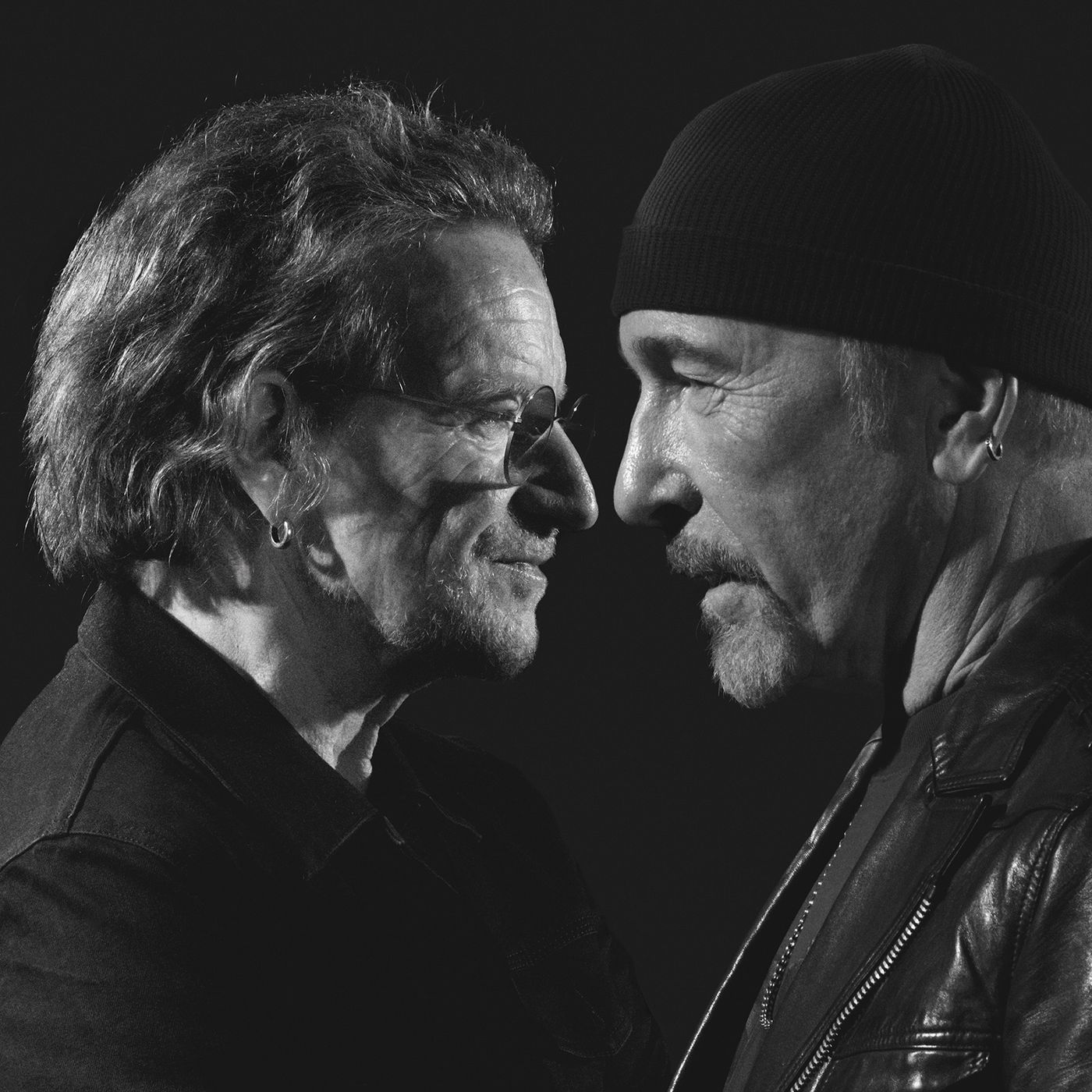
Bono (Paul Hewson), U2’s outspoken frontman and longtime activist; describes faith/doubt as evolving, and frames “evil” as a real-world problem to confront without dogma. The Edge (David Howell Evans), U2’s guitarist and musical mastermind; emphasizes engagement/inclusion, iterative songwriting, and guitar reinvention after punk’s “reorder” moment.
U2’s goal is to keep writing the best song and staging the best show; their faith is expressed naturally (not as salesmanship); success is standing behind the work regardless of charts; “catastrophizing” can glamorize pain, so Carnival de Luz avoids naming targets.
“40” as a psalm-based singalong; “Glorify” as a gospel-like dance-floor track; “Days of Ash” naming victims (e.g., Renee Gadd/ICE killing referenced); “People of the Lie” (M. Scott Peck) informing lyrics; Instagram teen safety tools; Dan Savage quote about protesting and dancing.
0:00The Edge: If you're a parent of a teen or have teens in your life, it can be hard to figure out the right way to approach social media and technology. Ultimately, if you feel like your teens are ready, there are tools to help. Instagram teen accounts have automatic protections for what your teens see and who can contact them, plus time management tools like daily time limits and sleep mode. And Instagram will continue adding built-in safety features to help create age-appropriate experiences. Learn more about teen accounts and Instagram's ongoing work to protect teens online at Instagram.com slash teenaccounts.
0:32The Edge: That's Instagram.com slash teenaccounts. People have said of you two that we're the band that people who don't know that they believe in God like. So I think there's an element of it.
0:45Bono: I would say that personally is true.
0:51Bono: I'm David Marchese from the New York Times here in the streets of Dublin for a U2 performance. And tomorrow I'll be talking with Bono and The Edge from the band. I traveled to Ireland to watch U2 take the city by storm. They performed at the school where they all first met.
1:10The Edge: Thank you. Grimmy and the Margaret.
1:15Bono: Then they gave a surprise free concert on the streets of the city, drawing a massive crowd. It's all to celebrate not just U2's 50th anniversary, but the release of their first album in eight years, called Carnival de Luz. Bono and The Edge are the band's creative engine, and they've always been an intriguing pair to me. Bono, the out-there, outspoken frontman. Edge, the low-key guitarist and musical mastermind. Here's my conversation with Bono and The Edge. But first, a quick message. If you're not a subscriber, we have some news for you. You can now explore The Times for free without paywalls during your first month in The New York Times app.
1:55Bono: Just download the app, and we hope you enjoy it. Okay, on to the interview. One, two, one, two, check, one, two. You guys know we're taking the whole ride in this conversation, right? Yeah, yes. Okay, good. We're going the whole ride, okay? But thank you very much. You snowflakes, yeah. Come and get me if you're hard enough. So I want to ask you guys about sort of what U2 is now, 50 years after you started. And so I think of the band has at various times, you know, wanting to be the best band in the world and wanting to be, you know, the biggest band in the world. And sometimes those two are the same things.
2:40Bono: Maybe sometimes those two aren't. But, you know, it probably shouldn't be the case that the best and biggest rock and roll band in the world is a band that's been around for 50 years comprised of guys in their 60s. You know, I was thinking about like if it would be like if in 1976 Al Jolson was like stomping around. That's very, very hurtful. But fair. hurtful but fair is what I go for. But what do you guys think the purpose of U2 is right now? Like what should U2 be trying to be?
3:26The Edge: We genuinely think that we might just write the best song we've ever written next week or do the best show we've ever done next tour. And when we talk about the best. We're not thinking about rock and roll in its kind of just the song. We're thinking about our favorite bands. And I always think when I'm in the audience at a show, what would I want to see and hear? So it's like where rock and roll collides with activism, where rock and roll collides with ideas from fine arts. And I suppose a transcendent aspect as well. we've never thought it was necessary to hold back our own kind of spiritual quests and questionings from our work.
4:20The Edge: They are all expressed. And when we hit a song that I think has a transcendent quality, that's the peak for me. And I can relate to it in other work, in other music from other bands. So I recognize it. And it's not always the obvious person. It might be a Van Morrison or, you know, gospel songs, whatever. So I really think we're in with a shout of the best songs we've ever written, the best tours we've ever done still. So that's why I'm still in this band.
4:57Bono: And therefore, the shout of the best songs anyone's ever written. And that's where you two get really annoyed. because that grandiosity is, by the way, it's in every artist. Well, not in every artist, but in all the artists that want to go there, the Beatles or Nirvana or... I'm jealous when suddenly we're left out of the pop charts. That's a personality flaw because 66 wants and wants to storm the pop charts. Somebody should throw some cold water over this. But actually deep down it's because I don't want those ideas to be left out of the mainstream because my favorite artists stormed the mainstream.
5:55So I think even of David Bowie, you know, I think of his best work as being both experimental and innovative. So the stuff he did, you know, but also he was, he wanted to make sense.
6:13Bono: And, and even into his forties, fifties, he could just throw out a perfect pop song. and maybe that goes back to the beatles does it that thing of the white album he could do dear prudence and helter skelter on the same and number nine but the beatles existed for eight years that's that's a big difference that's a big difference somebody broke up the beatles but when you say there are there are ideas that you want to be in the mainstream ideas that you have that you want to interact with people. What are some of those ideas now? Well, how about just our collective approach? That'd be interesting.
6:58Bono: And that there's nowhere we won't go as artists in terms of our intellectual curiosity. And, you know, the sort of
7:12Bono: the metaphysical thing, you know, the gospel side of you two, that was only allowed if you were black in rock and roll. You can't be like white people talking about God, because generally white people who talk about God make our audience very nervous, you know. But not in the, you know, black church, say, in America. Couldn't you imagine coming to the United States and we'd just seen those tele-evangelists. So we're like, wow, these people are really in deep trouble. And then you walk into a black church and you hear that, first of all, the sort of abandonment of the singing and that feeling, you know, and it's fervor, but it's not freaky fervor.
7:57So that was a real joy.
8:00Bono: So being able to sing songs of faith and devotion and sing songs of doubt, you know, to put the gospel with the blues, which is rock and roll, you know, the old cliche gospel. The blues had a baby named rock and roll. So the blues is the shouting at God part of this, you know, and goes back to the Psalms of David, goes back to those books of wisdom. and then you just want to write a song about a girl and it took us a while by the way just to get to the girl bit we started with God and then ended up at Girls but I would just say yeah there's nowhere you can't go including the pop charts my constant argument this is okay I don't know if you feel the same way it's just don't seed them to just those those pop mechanics don't
8:57The Edge: But it's like, get those, get those, like hip hop did it and got kind of revolutionary ideas on the radio. But a lot of indie stuff just gave up.
9:09Bono: They weren't even bothering. So it was just, yeah, you know, we'll give that. That's over that chance of that argument. Yeah, exactly. You said that maybe, you know, sort of religiousness or God in the music can be a little uncomfortable for your audience sometimes. And I, maybe some segment of your audience, but I would actually argue that the religious impulse behind your music is hugely important to your audience. And it's a big part of why you're as popular as you are and why people feel so closely connected to the band. And you guys famously for years would close your concerts with 40, which is an adaptation of a psalm, and the crowd would sing along with it.
10:01Bono: You must have known that that was rooted in religious feeling, right? Or no?
10:08The Edge: I mean, yes, we were aware of that, but we weren't seeing it as a selling point. We were seeing it as just the thing we have to speak about because it's where we're coming from as people. So it would have been hugely dishonest to try and sort of not have that be presented in our work. But people have said of U2 that we're the band that people who don't know that they believe in God like. So I think there's an element of it.
10:44Bono: I would say that personally is true. Right.
10:47The Edge: So it's like in the work in such a natural way, there's no polemic there. It's just it is our search, our inquiry. And what people don't understand, well, certainly I can speak personally about this, because we're not part of any religious movement, doctrine, sect. It's the same journey. is the same quest. And it involves so much doubt. And it has to, I think. Because if it's not dogma, then it's constantly in flux, up for grabs. So I would say I'm sort of agnostic about half of the week and then the rest of the week. I've got an incredible strong faith. But it's always changing. is always ready to be upgraded.
11:43Bono: I want to ask about failure and success. So obviously U2 has had enormous successes. You know, probably, you know, war is an early high point and then, you know, Joshua Tree and Ak-Jung Baby and the Zeropa Tour and all you can't leave behind. And also there have been, I don't know, probably not just as many ambitious failures, but there have been failures too, which I don't have to, you know what they are.
12:14The Edge: There's a lot you wouldn't even have seen or heard of.
12:17Bono: But in terms of, if we're talking about success and failure, what does success or failure for the new album look like?
12:29The Edge: I feel it's already a success myself. Because? I think because of the degree of time and effort and dedication to the work. And I can stand over it in a way that I don't really care that much what happens now. Because I know it's really great. I could say that, but I wouldn't.
12:57Bono: You wouldn't mean it. He actually does, believe me. Yeah. It's a bit like, you know, you're a comedian and you tell her you've got a routine, you get to the joke, you know, and your punchline arrives. And if no one laughs, it's just not quite the same. Right. And it's still funny on the page, except if no one laughs, it's kind of a shame. and some of the songs, I just would love to see even another artist take them somewhere, you know, because I know it'll be tricky. So there's a song, we were just talking about gospel music a minute ago, there's a song called Glorify on the album and we really ended up putting what's like a demo on the album.
13:49It's a really minimal expression of the song. that's a screaming dance floor hit and if it owes to anyone it's probably Norman Cook, Fatboy Slim
14:04Bono: praise you that's how I always just imagine that and it's a nice twist on a gospel song sung from the divine point of view it's like you're nothing but bad news the kind I can't refuse it's you I choose to glorify. So you can sing it to your mate on the dance floor, your lover, whatever. And I must admit, there's a part of me that goes, fuck, I just wish I wanted to do that version. I'm not sure he can, or somebody else should do that. I think it's almost exactly 50 years ago today, maybe give or take a day, that you guys, I believe practiced for the first time in drummer Larry Mullen Jr.'s kitchen.
14:50Bono: And you guys have talked about that moment before, you know, he posted a note and asking for musicians to play with. And then you went into his kitchen. I think he sprayed some people who were watching with a hose. But I want to know some girls who were watching. Hedge, I don't know if you know this, But in Bono's memoir, Surrender, he writes about when you guys were teenagers that you and your brother, Dick, had a reputation as, the way he put it was, you know, weirdos. Pleasant weirdos, but weirdos nonetheless. I think this is maybe in reference to you and your brother blowing up your family's garden shed.
15:26Bono: Quite likely. But what was, do you remember having any sort of sense of Bono's reputation? What did you think of him before you all started playing together?
15:35The Edge: Well, yeah, first of all, I think that was absolutely valid comment from Bono. Myself and my brother, definitely, there is some neurodivergence there of some sort. ADHD, I don't know, autism, whatever. So socially speaking, we were always a little bit on the fringe. But yeah, fascinated with explosives. So we did experiments a lot, and I know way too much about how to blow things up than I ought to. But Bono, his reputation preceded him in my life because one of my best friends growing up, Shane Fogarty, went to Mount Temple a year ahead of me. So I kind of quizzed him about school, like, what's it like?
16:25The Edge: And he says, it's all right, it's okay, you don't have to wear uniforms, people are very nice. And there's some fun heads there, you know? I said, like, who? He says, ah, this mad fucking head called Paul Hewson. He's mental, but he's good fun. So I was like, even before I went, I'd heard about this character. And I guess Bono's always been that extrovert, exhibitionist performer. And he certainly had that age, 13, already.
16:58Bono: You guys have, you know, you've documented your career together in a bunch of different ways, in documentary films, in the U2 by U2 book, you know, obviously in countless interviews. Are there ways in which sort of your memories and understanding of, you know, the story of how you came together has been superseded by like the legend and the lore? He's suggesting we are not superheroes. Is that what you were suggesting, Aydas? I always saw us in some sort of mythological sense, if I'm honest. The names, think about it. It's just we wish to escape suburbia and discover this, you know, these other selves, really.
17:54Bono: And we gave those other selves names. And, you know, that's, you know, the Ramones were the sort of key for us. And they are indeed just really well-drawn characters, the Ramones. Wait, but what you just said about coming up with the fictional names, this always killed me about the band. Is that, you know, Bono, Edge, and then Adam and Larry. Was there any discussion that they should have names too?
18:24The Edge: Well, first of all, we need to explain the whole name thing. I mean, what was true of us at that age was that we laughed a lot, and we would laugh at each other and ourselves. And that was the deal. You could laugh at others if you were prepared to allow them to laugh at you. So the names were not necessarily designed for their sort of heroic aspect. So Bonner's very first name was, in fact, Steinrich van Heysen Bang Bang Bang. and then i was in shakur for a while before i became the edge adam for a while was known as mrs burns and larry for some reason was known as the jam jar for a while and so this is all like because we just loved to laugh we were borrowing a lot from like monty python and various yeah
19:23Bono: It's about inventing who you want to be rather than who you were given when you were born at a certain point, place and time. When you and I spoke last in a setting similar to this around the time of your book. It was a real pub. It was Jimmy's Corner Pub, the boxing bar. You've been there. Yeah, yeah. And he's had this great jukebox. This can be a real pub, but the New York Times won't bless us. Have a drink, right? When we spoke at that time, you had told me that, you know, you had been working on Songs of Ascent, but then thought, well, you know, we need an album of sort of rude guitar music.
20:11Bono: Unreasonable guitar music. That's right. Then I saw somewhere, maybe it was you, Ed, who said, that you guys had then been working on an album of, I think it was called Sci-Fi Irish Folk with Brian Eno. And of course, we've arrived at Carnival du Luz. So in just a practical way, can you describe when the concept changes? Does Bono just show up one day and say, guys, we're scrapping Sci-Fi Irish Folk, we're doing Carnival? How does it actually work?
20:44The Edge: I think it's really music tells you. And as we were working on those projects, it was pure creative experimentation and exploration. There was no deadline. There was nothing booked or committed to. It was like we were exploring in a really fun way with some of the people that we love to work with, Brian Eno. we did some stuff with Johnny McDade Ed Sheeran we did some stuff with Martin Garrix I had also spent the whole pandemic lockdown just working on music so we had this beautiful opportunity to just create with no agenda and then just kind of see where it took us if you look at the Carnival de Luz 12 track record But then you look at the two EPs, and they naturally seemed to coincide with some of these other moments in the ecclesiastical sort of calendar.
21:49The Edge: The Days of Ash is sort of a time of crisis, of reflection. And so the political songs seem to make perfect sense there. And then Easter Lily, these reflective attempts at dealing with the bigger questions, these other songs, felt like they were part of that. But what we had decided is that the album should be a countervailing mood to the times, which the times are an anxious, I would say, despondent time. Like people are really a bit lost. And we were like, what is that we can help here with? And we thought, well, an album that's a party, a celebration, a sort of bringing people together, a gathering around our common aspirations would be the thing to do.
22:44The Edge: And that seemed to us, Carnival de Luz was the perfect way to describe that.
22:49Bono: There's a defiance to this too. There's a quote. I hope I put it in the liner notes. meant to. Is it the Dan Savage quote that you're... Dan Savage, yeah, which is, you know, he was an AIDS activist in San Francisco, right, you know, in the middle of that crisis. And he said, you know, in the morning, you know, we would bury our friends. In the afternoon, we would go out to protest, you know, so we'd have less people to bury. Then in the night, in the evenings, we would go out to dance because the dance was what we were fighting for. I loved that so much. That is not surrendering to the melancholy.
23:33Bono: That's the defiance. And if you go, again, sorry to do this as an Irish person, but go to the black church during civil rights, they're up, sly in the family stone, no minor chords. It's like, you know, wow, dance to the music. That's carnival. And it's defiant joy, the thing we were looking for. Where's the line between defiance of the kind that you're describing and, you know, fiddling while Rome burns? What do you think, Nero?
24:06The Edge: Well, I think one is actually to be in denial. And one is to be aware, fully aware, to stare darkness in the face and to still choose joy. That's the difference. The other is to pretend everything's fine and hide in your cave. I think technology is a big problem right now. social media people are in their heads too much they're in their part of the the echo chamber of their own algorithm too much um i think what's really important is the reset and it could be i think rock and roll concerts are a great example of that festivals but i think you know we've we are so much more capable than we are led to believe.
24:59The Edge: And I think by being isolated and by allowing the wave of negativity to go on unchallenged, people are feeling disempowered and dejected. They don't understand that they can be part of something great. And I think that's what's really positive about rock and roll shows and festivals is it gives people that sense of agency again.
25:25Bono: Rage, can I just say, rage is part of this. Rage is part of the right response. You know, rage, anger is okay. I was actually, the parade on which I'm trying to rain is the melancholy, the sort of, the surrendering to melancholy. We do, in our bands, have those songs, the keening, as they call it in Ireland, the wailing. You know, we do. And there's a place for them. But it's so much better. The punk rock of it was turning rage into a beautiful 45 rock and roll single. Wow. But to surrender to the melancholy is what we're trying to avoid.
26:15The Edge: If you're a parent of a teen or have teens in your life, it can be hard to figure out the right way to approach social media and technology. Ultimately, if you feel like your teens are ready, there are tools to help. Instagram teen accounts have automatic protections for what your teens see and who can contact them, plus time management tools like daily time limits and sleep mode. And Instagram will continue adding built-in safety features to help create age-appropriate experiences. Learn more about teen accounts and Instagram's ongoing work to protect teens online at instagram.com slash teenaccounts.
26:48The Edge: That's instagram.com slash teenaccounts. Ever invest in something that seemed incredible at first but didn't live up to the hype? Marketers know that feeling. We optimize for the numbers that look great. Impressions, reach, and reacts. But when they don't show revenue, well, that's a not-so-great conversation with the CFO. LinkedIn has a word for that. Bullspend. Invest in what looks good to your CFO. LinkedIn Ads generates the highest ROAS of all major ad networks. Spend$250 on your first campaign on LinkedIn Ads and get a$250 credit for the next one. Just go to linkedin.com slash interview. Terms and conditions apply.
27:26The Edge: Sometimes that one thing you've been putting off becomes the thing that can change your life. Whether it's earning a master's degree, building leadership skills, or preparing to take your career in a new direction, Southern New Hampshire University can help.
27:40Bono: With flexible online graduate programs designed for working professionals, SNHU makes it possible to earn your degree while balancing your busy life.
27:49The Edge: So stop putting off your education. Start today at snhu.edu slash NYT.
27:56Bono: You talk about the album as sort of being rooted in a kind of defiance in a way. And I think in that sense, one could almost think of it as like a protest album. But it's a protest album where, you know, there are like no proper nouns. You know, you're not saying who you're protesting against or naming anyone explicitly. And I'm thinking of this in the context of just some of your peers at the top of the rock and roll pyramid where, you know, Bruce Springsteen, for example, this year was out on the road where he would literally give speeches. railing against, you know, Trump and his administration and its policies.
28:49Bono: And on the other side, I spoke to Mick Jagger earlier this year, and I asked him a question about the function of rock stars. And he wasn't talking about Springsteen in particular, but he basically said, hey, I'm here to help you have a good time. Nobody wants to be lectured. And I kind of wondered if making an album of defiant joy, protest music, sort of, which is politically galvanizing without actually mentioning politics ever is, was your way of trying to walk a middle path there? No. Um, it's picking the fight with the author of all of this mess that we, which is who's the author. I mean, it's the big guy.
29:34Bono: So I, you know, I, I found believing in God or that God is love or love is God. I found that quite unusually easy in, in, in my, my life, but the concept of evil, I've, that's, that was, that was very tricky for me. I just, it wasn't, that wasn't as easy to digest. And so in, I think it's in, it is in, if the world is at war, we better not be. Which is one of the songs from the new album. Yeah. Yeah, I think the line goes, I want to speak to the spirit. You can feel it, but you can't fear it. Be kings or queens or emperors of despair. we're not arguing the toss we got some words for your boss we're speaking to who speaks through you to the prince of the power of the air all these shimmers and these glimmers mirrors that must crack all the neon fizzing flickers we're grateful for some of that the fiction of a nation the stories we don't tell we need the light of illumination so you can go right back to hell if the world is at war we better not be so i just felt that's what this album's about evil is we should be grateful it's out in the open and um on days of ash we we name names and um i think i I don't know if we've spoken about this publicly, but I spoke to Renee Good.
31:28Bono: Her family. You spoke to her family? Yeah, I spoke to her family. Killed by ice in Minnesota. Yeah. And we wrote a song about her a week later, Bruce, the same week before us. And in it, we said, we had this line, America will rise up against the people of the lie. A Miracle Rise Against the People of the Lie. And Edge had given me this book 30 years ago by M. Scott Peck called The People of the Lie. And it's about the nature of evil, a study of malignant narcissism. Anyway, I was explaining to the family, before we used the lyric about their daughter who'd been murdered by ICE agents, you know, before asking them for permission, they're on Zoom.
32:23And the father says,
32:26Bono: when I get to the bit about America will rise against the people of the lie. He said, I have the book, people of the lie here. I said, the book that age gave me 30 years ago, He says, yeah, it's right here. Just a month ago, I took it out to explain some of what's going on to my son. So with those songs, in Days of Ash, we did go to names in Iran. But for the Carnival de Luz, we didn't want to go down them. We didn't want to, there's a line in Midnight Sunshine, which goes, catastrophizing is the glamorizing of the world's pain. If you don't want to make a devil bigger, stop repeating his name.
33:22Bono: So we, you know, we just didn't want to talk about certain stuff. And, you know, can I go on here for just a second? You've never stopped before. I know. I'm so sorry about that. But, you know, if you can separate a discussion about this administration from a discussion about the left and the right and conservatives and liberals, then I'm fine to go ahead with it. because I think this is the most extraordinary moment. I mean, I think this is the greatest heist in the history of the world, stealing America. And it's not a caper movie. It's real and it's happening. And I just don't want to put off good people who vote conservative, who vote Republican.
34:29Bono: Their party's been hijacked. It's an aggressive takeover of the GOP. I want to invite them back. I want them to return. I want to make, you know, because people vote conservative for all kinds of reasons that are okay. So if we can talk about it without getting to the usual logheads, we can say, but this is a serious problem. And I have serious personal dealings with this because 25 years of work in development. If you're talking about evil in the world, right, let's put that in the context of what you were just about to bring up with the aid work that you and your organization has done over the years.
35:14Bono: Just a whole movement across the world. But this work has been decimated by the work of Doge and by proxy Elon Musk, by the Trump administration. Do you see evil in that? Well, general clues on evil look at the abuse of children, I would say. And that's always a clue, wherever you see that. I don't know how many fatalities will eventually be attributed to the doge cuts. There are many different estimates. There's modeling. If you go to, say, The Lancet, British... The most respected medical journal, one of the most. They suggest, I think, up to 2030, maybe 5 million children, under 5. And let's say they're half wrong.
36:13Let's say it's 20 % wrong.
36:17Bono: Let's say it's only 20 % of them. what Christian household, what Catholic household, what Jewish religious, what is anyone, anyone of faith, in fact, anyone of conscience would allow the hemorrhaging of human life that is going to happen as a result of these doge cuts. I mean, it's just, it is unconscionable. Well, here's the test of faith question, and then I'll move on. I was listening just this morning again to this, to Glorify from the new album. There's a line in the song, you spit in my eye, you're a bare-faced lie, and there's nothing you can do to keep me from loving you. You know, it's the idea of having love for the ones who are your enemies or your opposites.
37:12Bono: Do you have love for the people who are doing the things that you're calling unconscionable? Yeah. I love these people because I believe God loves them. And Christianity calls us not only to love our neighbor, but to love our enemies. But what's going on with the man whose name shall not be mentioned is something way bigger than the man. It's going on all over the world. It's a crisis in the left. And it's not, by the way, the heist, this raised heist in the history of the world. It's the crown jewels. It's freedom. It's democracy. It's like the fucking enlightenment. You know, it's science. You know?
38:10Bono: Anyway, that's it. I'm just sitting there looking at me. So you have obviously had the experience many times of being in situations like this and having Bono field questions like the kind that I'm asking. What is it like for you to be in that situation? Are you sitting there thinking, you know, I'd really rather he ask about the guitar tones. I mean, look, we don't mind getting deep and serious, but, you know, you want to keep some balance as well.
38:43The Edge: I mean, that is why you two pivoted so heavily after Joshua Tree and Rattle and Humble to Act of the Baby. Yeah. It's because we realized we were being robbed of aspects of who we were. You know, it just wasn't reflected in the work and therefore in people's understanding and perception of us. So the thing to remember about us is, yes, we can go there. We can get very heavy and very deep. But actually, we have a lot of fun. And when we're together working, we laugh a lot. And we laugh a lot at each other and ourselves. and we fail a lot and we're happy with the fact that we're comfortable with failing.
39:31The Edge: Because to us, it's like you don't get to somewhere great unless you're prepared to fail. So, yeah, look, I share a lot of Anno's views on these things. and we feel a little bit of a responsibility, I suppose, to address what we see going wrong with the world. But you can't do it incessantly. So on our album, we touch on it lightly. And then, as you say, we're not mentioning names because we don't want to get into finger wagging. What we want to do is actually draw attention to something that's a kind of antidote, something that's better. And I think that's the way people operate. You tell somebody they shouldn't do something, it's going to be a struggle.
40:20Bono: You should have said that to him about 35 years ago. Are you laughing at us? So when you're in the studio with Adam and Larry, and you guys have known each other 50 years, you've been creative partners, business partners, you know, in each other's lives for decades. for decades. There's got to be things that the rhythm section just looks at the frontline guys and goes, they do the stuff that drives me nuts. What are the things that you do that drive Adam and Larry nuts, both of you?
40:55The Edge: Well, you know, bands are weird things, let's be honest. Very weird. They're kind of like we are brothers in arms, for sure. But we don't agree on everything by any means. And there's no—we end up making decisions by consensus because we've learned over the years that if we're arguing about something, there's a problem. When everybody just goes, that's it, we know we're onto it. So we do argue, but generally speaking, it's when something's not quite right. And then it's just a difference of opinion, like what road we take. So I would say, yeah, I'm sure I'm very annoying at times, but maybe you should.
41:50The Edge: I don't think it is. And that's annoying, by the way.
41:57Bono: No, because he's a person of great reason. And, you know, clearly this extraordinary, influential guitar player who, you know, is the only person in the world who's not talking about that. I would have the annoying gene, I think, probably the most. I'm guilty, Your Honor, take me away. I've got it. But it's a thing about performers. You know, the same portal that you open up to fit a whole stadium inside it, you know, is not maybe a portal you can close enough in time to protect yourself from what's in the outside world. And, you know, you think about stadium-sized egos like myself, and you think about them, you think about self-aggrandizement and much worse.
43:05Bono: But what happens is the opposite. Actually, it's the collapse of the ego. Singing itself is a vulnerability, if you're any good. So in order to protect yourself, sometimes you put up the fist. So my voice is where I'm most vulnerable. Edge, can I ask? So, you know, when I do like the reductive analysis of what drives your bandmate here, you know, it's probably too simplistic, but there's probably some truth in it to say, like, you know, you lost your mother young, your father, you and he were at loggerheads. and then you have, you know, you've found the attention of the rest of the world that you did not have from your parents.
43:52Bono: Thank you, Doc. I'm going to lie down. I just put my head on you. You know, it's a 50-minute hour. Yes. If you're willing to get similarly psychologically simplistic with me, I mean, you don't fall into what you've become by accident. What are the things that you think in your deepest core drive you? Me? Have driven you to achieve what you've achieved? Where does it come from?
44:25The Edge: I think if Bono's drug of choice might be recognition, I think my drug of choice is probably engagement and inclusion. so so i always loved being part of this you know and so that in a way was was enough in some ways and also the other thing i i absolutely have to an annoying degree is a kind of problem solver gene so i i'm i want to do stuff myself i'm not a good delegator i'm not somebody who naturally looks for others to weigh in. And that's to my detriment. You want to get under the hood yourself. I want to do it. And I see songwriting in some ways as, you know, you've got the clue. Now what's the next clue?
45:20The Edge: And it's iterative in that sense for us, I think, more than most songwriters. We will start with a version of a song. We'll tear it apart. We'll rebuild it. most of the time it's iterative. It's a tough process, but I kind of love it and being part of the band. Those two things really are things I'm not sure I could imagine a more rewarding place to be personally than as a member of this band.
45:58Bono: Bono, you have to stay inside man mode for a second because I have another. Just in terms of your guitar playing, I really think of you as someone who for a long time, this is as a fan and as a guitar player, like part of the fun of hearing you play was hearing you come up with ways to make the guitar sound not like a guitar or sound like, make the guitar sound in new ways than we'd heard it before. And I think my sense is that you were very consciously wanting to resist the cliches of rock and roll music and rock and roll guitar playing. But now at a moment where, you know, I wouldn't say the guitar and rock and roll cliches are, you know, at the forefront of any music listener's attention in any serious way.
46:49Bono: Do you still think about your guitar playing as sort of being in opposition to expected sounds?
46:59The Edge: You're absolutely right that I've always made it a point to try and find a way to make the guitar sound different and to play the guitar in a different way. I think that was born of the fact that we emerged as a band in that moment after punk rock. Punk rock kind of pulled everything down and started from ground zero again. So we were like, we took advantage of that opportunity to start something new. If you want, the cycle is order, disorder, reorder. And we arrived just at the beginning of that reorder phase. But that demanded that you did abandon the past. We were looking for what's next in the story of contemporary music.
47:53The Edge: Where does this story go now? So from a guitarist's point of view, I was always trying to do something fresh and still do. I think that we're almost back in that moment again. I don't mean necessarily just in music culture, but in terms of global geopolitics, all of the things that were affecting culture in the mid to late 70s, post-Vietnam, it's like we're there again. So I think music has to do a similar thing of reinvention. And I think that's an exciting moment, I think, for music to find a new narrative to follow. Are there artists now who you think are pushing that reinvention forward?
48:47Bono: Yeah, I think there are.
48:48The Edge: I mean, Geese, for instance, I think that's a very compelling new thing. Fontaine's DC, another great group that are really taking things in a different direction. And there's more, you know, when it starts to feel too comfortable and too predictable, I start to twitch. I'm looking for a shocking new thing, always.
49:15Bono: I saw, you know, I was reading the trades, as I do. And I saw an item not that long, or probably, I don't know, earlier this year, something like that, where you guys had hired a woman named Sulina Ong as part of your management team. She had previously been at Spotify doing, I think, global curation. And I think Jeff Azoff is one of your managers now. He manages Harry Styles. When U2 starts working with new managers, presumably those people pitch something to you or say to you, make an argument to you guys, presumably, for what their value to you is, what their worth is. So what did they tell you that you didn't know about how you two can find new listeners or move forward at this point in the band's career and in this particular musical world we live in?
50:17Bono: We've just had this just in the last couple of weeks. We've been sitting around listening to people tell us to do things, suggest that we do things that we hadn't thought of. Like what? What are they telling you? And one of the things that was explained to us, and Selena was great at this, she said it is almost impossible the way people live now and listen now in their separate communities to do something that everyone will be aware of. the amount of advertising you would have to spend, the amount of concerts you would have to play in every college town or around the world. People still might know that you've put out a new album.
51:04Bono: So you should turn up in unexpected places. And they were suggesting some of them, and some of them were just not things that we would have considered. and I just, we were laughing, the four of us, and going, what is, you know, are we still going to have to break into the charts? Nothing's changed since we were kids. And it's hard. And we were sitting around with Larry, who doesn't like normally to do this kind of thing, and we were saying, you know, are we ready to go out and meet people that, you know, may not know who we are? I'm used to it as an activist, but are we as a band? And I was surprised that all four of us were like, okay, give me another suggestion.
51:59Bono: Give me another suggestion. Including Larry, who was like, yeah, I'm listening. I'm suspicious, but I'm listening. And I thought that was good. that we still, for us, it's still, you know, something we have to prove. But maybe it feels gauche to get into the specifics or something. But, like, are they suggesting licensing a song in a show you hadn't thought of? Are they suggesting, you know, you play a pop-up at Raising Cane's? Yeah, yeah. At a viral chicken restaurant? Like, what are they saying? No, no. That's a great idea. How long have you been with us, Smithers? You're going to get on very well at the corporation.
52:43Bono: You had some very good ideas during the interview. There was some of that, putting them in places that we hadn't expected.
52:53The Edge: I think this album, where we're going to take the tour, lends itself to some almost Dada-like opportunities to play around with the absurd. Like why you two do some crazy stuff no one is expecting. I think that's fun. I'm looking forward to that. So it's not necessarily playing the game as it is played, but it's like taking a new angle on the opportunities that are there and finding a different way to approach things. Because it is hard to surprise yourselves as much as your audience, having done it so many times before.
53:34Bono: I have always been deeply curious about what Paul McGinnis said to you guys after the whole iTunes mess where you put the then new album on people's, it was in their iTunes without asking for it and turned into kind of a debacle that people were pretty mad about. Paul must have had something to say about that after, right? Yeah. What did he say? Pretty much the same thing that Tim Cook said when we pitched him the idea. I pitched him the idea, which is you spent your whole life getting people to pay for music. Why would you want to give something away free? And I mean, we were experimenting. We wanted to see if we could get Apple or another company to pay for our music and then they distribute it.
54:25Bono: It was just like the way you use a record label. And look, it's going to take some experimentation to fix the music. It's astonishing how little other musicians are paid. And it's frightening. I see it in my son's band and Inhaler, and they're a really successful outfit.
54:52The Edge: I agree. It's fine for us, but for young artists coming up, it's very very hard to imagine how a band like you too would have been able to survive
55:06Bono: but yeah that was all on me and Apple were really good about it by the way they took all the punches for them it's just a rounding error at some point well it was a reputational error for them but do you think it was a reputational error for you guys do you think it hurt the band's standing That's another one where I went a little too far. The experiment escaped the lab again.
55:33The Edge: We do. And we have to. So you fail. You fall on your face at times. That's part of a gig. If you were never going to take any major risks, then it wouldn't be what it is. So we just take that as one of the things that we have to acknowledge. We're not always going to get it right.
55:53Bono: And you had mentioned a second ago, or just briefly alluded to, taking the music to new people and playing live. So there are plans to go on tour next year? There are. And do you have a – can you share that – I mean, the tours are always conceptual in some way. What is the concept for how they bring this new music to people? Well, the album title is a clue, but I think we can't go too much into it because actually the plans are still forming.
56:25The Edge: But we are interested in, as usual, this intersection between shamanism and show business.
56:36Bono: I was wondering, would he go there? I thought I would, and then I thought, no, they won't like it if I do it. He's gone there himself.
56:43The Edge: It's a fascinating place. All of the great showmen, you know, have to, to some extent, pull off a magic trick, which gets into, you know, a mysterious place. And it works both ways. Here's the thing. The great politicians of this moment, who unfortunately, in a lot of cases, I think are supremely dangerous, are very shamanistic. When you say shamanistic, what do you mean? I mean that they are dazzling people, dazzling people with a kind of an act of some sort. It's the snake oil salesman aspect. and we're living in a post-truth era because unfortunately there is so many opportunities to put out narratives there that are fake narratives and I think that is being taken advantage of and our buttons can easily be pushed particularly when fear is the weapon that you're taking advantage of.
58:05The Edge: So for us it's like we're both exploring these things in a good way and a bad way. And it's, you know, silencio, the lyric of silencio encapsulates those two extremes right there, the two types of silence. One, contemplative, meditative, reflective silence is a beautiful thing when you're appreciating the beauty and joy of the world. But the other kind of silence is when you're cowed and you're afraid to speak because if you say the wrong thing, you will be punished. You might go to jail. You'll be ostracized. And that's super dangerous.
58:48Bono: That is very, thank you for saying that. Can I just say, there's a poem by Michael Lunick. There are only two feelings, love and fear. There are only two languages, love and fear. There are only two activities, love and fear. There are only two motives, two procedures, two frameworks, two results, love and fear, love and fear. We will be at our shows and you've been to them. There's a lot of love and that's not a up with people type love. Let's all give each other a hug and all the rest of it. it's at a, I think, a level of depth at a U2 show where people genuinely who don't normally agree with each other's politics feel safe at our shows.
59:39Bono: And I am very proud of that. And, you know, you had Mick Jagger on and the Rolling Stones, just untouchable, extraordinary act. And he's just one of the great front men whoever was and or will be and bob hilburn is another great writer about the la times yep and los angeles times he said something along the lines of if you you go to a rolling stone show no matter what you've been through in your life or your day your month or your week you feel good about yourself and that's no mean feat if you go to go to a u2 show he says an odd thing happens you feel really good about the person you're standing next to.
1:00:23Bono: There's something in that. Both are really important. And we just, that's what we want. We want these shows to, if they're in America, we want people to feel really good about the choice to pay a ticket and probably pay too much for it to see us. But we are going to challenge them, but not on the obvious. Yeah. Presumably you have some say, the ticket prices, right? Well, the whole problem with live business is very little. What we do in our band is we take the best seats in the house. We've done this all our life and make sure that they're often the most affordable. The ones up front, the ones within the heart or within the circle.
1:01:12Bono: We've done this. We always find a way to do this. And we also have no problem separating rich people from their money. You know, as we say, rich people have feelings too, the edge. And let us, if they want to pay very high prices, we've no problem. So let me just try and wrap up with sort of a holistic question. You know, you, even just in the course of this conversation, it's deeply obvious that, you know, you two thinks about the story that we're all living in, you know, and what the band can offer to that story. But, like, you know, you're middle-aged, you've been around for 50 years, you know.
1:02:06Bono: Did he say middle-aged? We're not middle of the road. You can call us middle-aged, just don't ever call us middle-of-the-road. But where is, you know, it doesn't go on forever. Where is U2 in the story of the band right now? And do you have some sense of how you will want that story to end?
1:02:28The Edge: We're still creatively, extremely inspired and active. And there are lots of songs that have yet to be released. and yet to be finished yeah or written um so i can't see um that ending anytime soon
1:02:47Bono: i think they might be interested in your speech to the band the other day about if you had to
1:02:54The Edge: find another band um i thought that was funny well that's that's that's the other thing about you know why i'm still in u2 is you know occasionally early on i would you know i'd this is too difficult you know i i should really get out of this band and i would i would sort of start the inner dialogues well so what do you want to do with your life and i will i'm i'm just a creative person and music is kind of my my main thing so i'd stay in music so okay you're gonna stay in music great um do you want to sing and i'm like ah beautiful thing you want to be the singer i'm really happy being a guitar player so who's who's the singer you most like to work with and i'd be like well clearly bono so okay i'm i'll be doing a solo thing but bono will be the singer so then okay we need a rhythm section obviously um what's the best rhythm section for you guys that you know of i'd be like well that's kind of adam and larry isn't it really okay it's gonna be solo band.
1:04:02The Edge: It's going to be Bono and vocals. I'll be guitar player and the rhythm section. They basically redesign you too. So yeah, that's, uh, there's no doubt about it. This is where I belong.
1:04:13Bono: More likely, I think that people tire of you and, and that we tire of going the distance to meet them, resulting in them tiring of you. I think if we kept playing live, there's always till we drop, there'll be people. But we have one problem in this regard, which is we pledged to each other when we were 18, 17, 16, whatever, that we would never, ever walk onto a stage without it being, you know, without it being everything. And we haven't betrayed that yet. we've had physical you know fist fights on stage we've had them backstage we've had madness but we've never betrayed that
1:05:11The Edge: it never was entertainment to us ever, it was always something with a lot more importance and meaning some of the early shows we saw were like The Clash on their first tour The Buzzcocks I saw them the jam and then Talking Heads went on the road with Talking Heads so when you're around that kind of sense of urgency and political you know I suppose the ideological aspect it's like you can't take this stuff lightly, it's like it's way more than just entertainment
1:05:53Bono: It's the thing that they said about, you know, football. They can say it about music, which it's not a matter of life and death. It's something much more serious than that. But it has been truly such a pleasure for me to come to Dublin and to see you guys play and go to your high school and talk to you here today. So thank you very, very much. Thanks, David. I really appreciate it. Thank you for making me a trip. Next time, make it a real pub. I mean, a pub where we can actually drink. That's Bono and the Edge of U2. The band's new album, Carnival de Luz, will be released on November 13th. To watch this interview and many others, you can subscribe to our YouTube channel at youtube.com slash at symbol the interview podcast.
1:06:40Bono: This conversation was produced by Wyatt Orm. It was edited by John Woo. Mixing by Sophia Landman. Original music by Dan Powell, Rowan Nemisto, and Marion Lozano. Photography by Phyllis Montgomery. The rest of the team is Priya Matthew, Seth Kelly, Paola Neudorf, Maya Tepler, Eddie Costas, Jeremy Rocklin, Gavi Contreras, Catalina O 'Brien, and Brooke Minters. Our executive producer is Allison Benedict. I'm David Marchese, and this is the interview from The New York Times.
1:07:12The Edge: Sometimes that one thing you've been putting off becomes the thing that can change your life. Whether it's earning a master's degree, building leadership skills, or preparing to take your career in a new direction, Southern New Hampshire University can help.
1:07:26Bono: With flexible online graduate programs designed for working professionals, SNHU makes it possible to earn your degree while balancing your busy life. So stop putting off your education.
1:07:37The Edge: Start today at snhu.edu slash NYT.
The longtime friends and creative partners on what U2 still means — and what would make them call it quits.
Hosted by Simplecast, an AdsWizz company. See pcm.adswizz.com for information about our collection and use of personal data for advertising.
Scan the code with your iPhone camera
Listen in the app.