Ask ChatGPT
 The Interview
31 Oct 2026 · 50m · 18 chapters
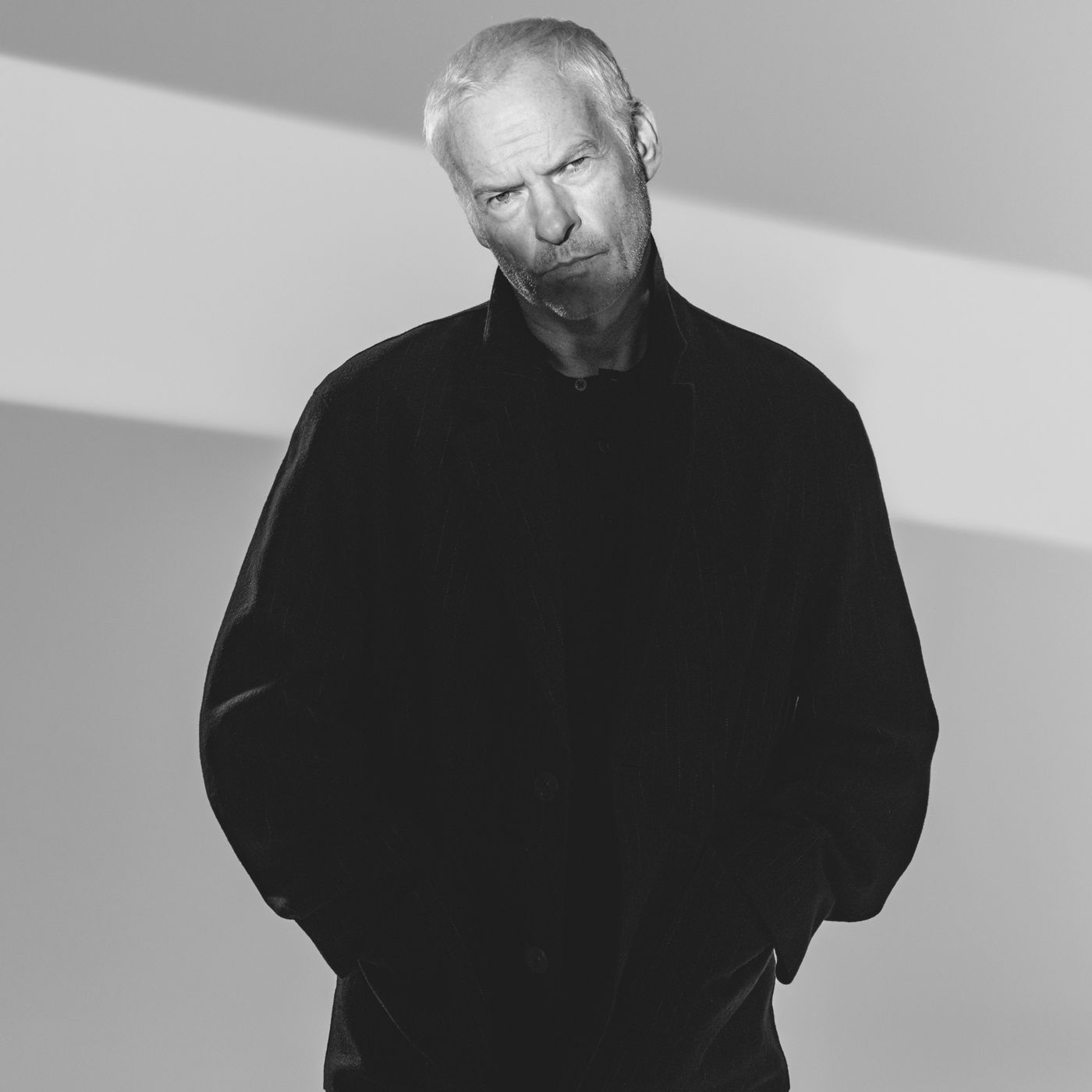
Interview with Academy Award-winning filmmaker Martin McDonagh about his latest film Wild Horse Nine and his views on politics, provocation, language/offense, violence, hope, and artistic legacy.
Martin McDonagh is a writer-director known for darkly funny, profane, violent-yet-stylish films and plays, including The Banshees of Inishirin and Three Billboards Outside Ebbing, Missouri. He grew up in working-class London, left school at 16, and began writing plays while unemployed.
He says his characters aren’t “mouthpieces” for his politics, though he may share their questioning. He argues art is inherently hopeful even when “dark,” and that provocation differs from offensiveness (provocation delights; offensiveness aims to hurt). He criticizes attempts to sanitize older plays’ language. He frames his work as morally “naughty” but not offensive.
Wild Horse Nine depicts CIA agents sent to destabilize Chile after Allende’s election, tied to real U.S. misadventures. He discusses controversy over racist language in A Behanding in Spokane and Three Billboards, and compares his approach to violence with earlier films (e.g., Banshees’ minimal violence). He cites Victor Jara as proof art outlasts regimes.
Written by AI. May contain mistakes.
Exploration of McDonagh's background and the themes in his films.
“I'm David Marchese, and today I'm interviewing Academy Award-winning filmmaker Martin McDonough.”
Discussion on how McDonagh views America's historical and current role globally.
“Martin, thank you for taking the time to be here.”
McDonagh shares insights on character creation and political themes in his work.
“Did Malkovich's politics play into his performance at all?”
Engagement on the balance between darkness in art and its hopeful elements.
“And I thought, well, how could it be the case that that doesn't represent something about your innermost feelings about what life is?”
Exploration of the differences between provocation and offense in creative works.
“if that feeling is, you know, sort of a recoil sometimes.”
Learn about Martin McDonagh's views on political correctness and its impact on art.
“we were having 30 years ago about political correctness, basically?”
Discover McDonagh's thoughts on the legacy of his work and the pursuit of meaningful art.
“mostly about portraying the stupidity of a main guy who was racist in it.”
Discuss the portrayal of male friendships in McDonagh's films and their emotional depth.
“But it's not a bad thing, though, is it?”
Learn how punk rock influenced McDonagh's questioning of authority and faith.
“in your work are exploring ethical dilemmas.”
Martin McDonagh discusses his views on religion, hope, and societal issues.
“You didn't have to have a life that was, you know, dictated to you.”
McDonagh reflects on his early life, struggles, and career beginnings.
“And, you know, when I did go back and read sort of early profiles of you, you were very, you know, sort of positioned as like a, you know, anti-establishment punk rock theater person.”
Discussion on how McDonagh's teenage self would view his current success.
“I did have jobs here and there, but always pretty mundane ones and would always write through those.”
McDonagh discusses the responsibilities and impacts of filmmaking.
“called Washington Bullets on Sandinista.”
McDonagh talks about the significance of film titles and his unique dialogue style.
“So, you know, making someone squirm is not my favorite part of the job, but there is, I just really need a straight answer about this.”
Explore how Martin McDonagh's work has evolved beyond early influences.
“But I also, you know what, I don't mean that pejoratively.”
Discuss the impact of Fleabag on McDonagh's understanding of storytelling and love.
“You're both private about your relationship.”
Martin reflects on his feelings about award recognitions and what they mean for his art.
“I want to return a little bit to the sort of punk rock informed portion of the interview.”
A deep dive into the impact of art on society and its ability to inspire change.
“I would actually really like to see Martin McDonough's version of an Oscar-bait movie.”

Get the gist, explore an idea or ask about something said.
 Claude
On The Interview, what are the key points of this episode?
Searching your listeningAutomatic transcript. May contain errors.
0:00Ever invest in something that seemed incredible at first but didn't live up to the hype? Marketers know that feeling. We optimize for the numbers that look great. Impressions, reach, and reacts. But when they don't show revenue, well, that's a not-so-great conversation with the CFO. LinkedIn has a word for that. Bullspend. Invest in what looks good to your CFO. LinkedIn Ads generates the highest ROAS of all major ad networks.
0:35I was brought up having to watch English plays, which is like people drinking cups of tea for two and a half hours. And I always wanted to shoot them.
0:49I'm David Marchese, and today I'm interviewing Academy Award-winning filmmaker Martin McDonough. McDonough writes and directs darkly funny, profane... This is just a fucking start. Why don't you put that on your good morning Missouri fucking wake-up broadcast? ...violent... ...and stylish movies. Films that seem to want to make you laugh as much as provoke you, like The Banshees of Inishirin or Three Billboards Outside Ebbing, Missouri. And his latest, Wild Horse Nine, about two CIA agents played by Sam Rockwell and John Malkovich. And who the fuck are you? The CIA? We are the CIA, actually. We're totally the CIA.
1:31We're not the CIA. His work is full of ideas I wanted to ask him about. How he sees politics, provocation, and his own legacy. Here's my conversation with Martin McDonough. But first, a quick message. If you're not a subscriber, we have some news for you. You can now explore The Times for free without paywalls during your first month in the New York Times app. Just download the app and we hope you enjoy it. Okay, on to the interview. Martin, thank you for taking the time to be here. I appreciate it. Thanks, David. Good to be here. So the two main characters in Wild Horse Nine, played by Sam Rockwell and John Malkovich, are not giving anything away.
2:11They're CIA agents who have been sent to destabilize Chile's democracy after President Allende was elected. And this, of course, is based on, you know, real world American misadventures in Chile. And this movie is coming out in the middle of a broader conversation and a broader argument over how America's place in the world is understood, you know, and often that comes down to a sort of binary as America, a force for good or a force for bad. How do you see America's place in the world? Oh, gosh.
2:53Like right now, I'm not sure. I guess we're all a little bewildered about that, like what it stands for, what it doesn't. But I guess in a way, the film explores a time when seemingly America's place in the world was as the good guy, I guess, which is kind of what I think most kids in the West, you know, not just in the US. but in the UK and Ireland, Western Europe, I was sort of brought up to feel that, you know, that the CIA are the good guys and the KGB are the bad guys, that America is the good guy and Russia is the bad. But the more I sort of read up about what the CIA were up to throughout the end of the last century, and particularly with this film in Chile, you know, to destabilize and help overthrow a democratically elected government, which ended up in fascist horrors for 15 years, makes you think that you're not being told quite the truth about the West and its moral outlook, I guess.
4:02Did Malkovich's politics play into his performance at all? Because my, I mean, I think he sort of rejected politics wholesale. I think he said he hasn't voted since 1971 or something like that. We didn't really have political conversations. But I think we share the same questioning, disbelieving point of view. Yeah, so I think that's probably what kept us on the straight and narrow in terms of who this guy was. Weirdly, the guy is sort of the opposite to total opposite of what we believe in. You know, he's been a proper government operative for many years, doing pretty terrible things over the years.
4:45But none of my characters are ever mouthpieces for my politics or the opposite. You just have to find them and let them become themselves and let them talk. And when they start getting dangerous, it just becomes more exciting. But I just want to press on something just a little bit. You said your characters are never mouthpieces for your politics. And maybe the operative word there is mouthpiece, which, yeah, no writer wants one of their characters to be a mouthpiece. That sounds like something simplistic. But surely your characters at certain points have espoused things that you believe about the world, right?
5:31Is it really fair to say that there's like a severe divide between what Martin McDonough thinks and believes and what the characters in his work think and believe? No, you're absolutely right. But I think the job is to treat that as fairly as a character who has the opposite feelings. feelings, probably in the Pillar Man play of mine from like 20, 25 years ago, because it's all about a writer who's being investigated. I think a lot of the stuff he came out with, I sort of my beliefs, but even in that, you kind of try and obfuscate, not a word I usually use, exactly, you know, what your feelings are.
6:14There's a line in Wild Horse 9, and it's just that life is sad, everything is sad. And it struck me as sort of a melancholy iteration of a line from The Pillow Man, which is, the world's a pile of shit. I know there are moments of grace in your work, but is that how you see it? That's not me. I mean, I wrote them, But no, I think in both instances, it's sort of set up to a joke in a way. So no, I definitely don't feel that way about the world. Those characters do, I guess. But those characters are still, you know, thriving. And I think both of those are quite nasty, tough cop type characters as well.
7:10so I don't know if that's the way I feel about cops I don't think so but it's definitely not the way I'm the happiest it's weird because I guess my stuff comes out kind of dark and sad in a lot of places but I'm so the opposite I never thought I'd be in a position to make a film for instance I thought it's nothing that was ever open to me growing up as a sort of working class kid in London I think of your work as generally, on an existential level, pretty dark. Really? Yeah. And I thought, well, how could it be the case that that doesn't represent something about your innermost feelings about what life is?
7:56It's like if Samuel Beckett turned out to be a happy-go-lucky guy. Yeah, I can see where you're going with that. But I think questioning and disbelieving what you're told, for instance, isn't dark. And making art at all is always hopeful, I think, even if it's dark art. I always think of like Leonard Cohen and people saying that his stuff is depressing. But I find it the total opposite. You know, the tunes are beautiful. It's poetic. I mean I'm not disagreeing with like a lot of people said my stuff is on the dark side but um in the writing of it I'm like joyful you know because there's lots of jokes and even the darker bits the performances are so wonderful and the visual uh cinematic parts of it are so wonderful that darkness honestly doesn't come into it from my perspective.
8:56You said that making art is sort of a hopeful act in a way. Do you think the art that you make has the ability to change the perspective or the behaviors of the people who see it? I mean, that's a hard one. But if an audience has come out having laughed a lot and learned some stuff, particularly in this one about Chile or Patrice Lumumba in the Congo or whatever else, then all of that is what I'm after. And all of that is hopeful. I think I used to agree with you. But now I don't. And I often think of – there's a quote, I believe it's by Peter Cook, the British comedian. And he said – I'm just paraphrasing.
9:52I can't remember exactly. But he said something like, well, you know, the greatest satire in the world was in Weimar, Germany. And that stops Hitler right in his tracks. It's a very good line. It's a very funny line. Yeah. Is hopeful work going to stop stuff? I don't know. But is anything? So why not just make hopeful work? Might as well. I think of your work as dark and bleak, dark and bleak, but also as the product of someone who on some level likes to provoke a reaction, even if that feeling is, you know, sort of a recoil sometimes. Am I wrong about that too? no no okay recoil recoil i might question i i often think think about this uh but yeah it's it's all quite provocative it's never intentionally offensive and i think and it's often outrageous uh and for instance malkovich's character in this is outrageous but i i don't think he or even the film is uh or any of my stuff is is offensive and i think that's a a lovely balance to keep walking, you know, because I always feel like my heart is in the right place morally about all of these stories I've told so far.
11:22And, you know, I have a predilection for being naughty in them all. In this, there's, you know, a scene about cheeses, for instance, that is quite naughty. but never does it ever occur to me to be offensive, for instance. So provocative, sure. What's the difference between being outrageous and being offensive?
11:52Is one just a nicer word for the other? No, I think one is deliberately trying to hurt or attack an audience, whereas the other is to almost delight in something you haven't heard before or you might not have thought of. Do you want to say what the cheeses thing is or should I? Some things maybe should be fun for an audience to do it, but you can go. Okay. So the Malkovich character has a little disquisition at one point about that what the character calls gay countries make the best cheeses. Yeah. Yeah. And not... Holland, France, the UK and Switzerland make great cheeses. And they are some of the gay countries.
12:43Russia, definitely not a gay country. I'm going to get in so much trouble. I wish it was. It's in the movie. That's true. And Russia doesn't have a good cheese. And there's a connection between the two, which is then connected to democracy. and democracy leads to gay, leads to good cheeses. Something I've thought about often and I think is true. I'm sure there are people who, you know, will find that scene problematic or offensive. But when you're watching it, and I've watched it with a whole lot of audiences, mostly pretty liberal audiences, is like the biggest laughs in the whole film is in that scene.
13:28And I think it's because it's outrageous, but there's some kind of weird something to it. But my first question about that is, you know, I would say for going back 30 years, you know, there have been people who have said your work is offensive. But in that time, do you feel like that, the conversation about what causes offense, what's not offensive, who can say what, using what language. Has that conversation evolved or changed? Or do you feel like we're still having the same conversation we were having 30 years ago about political correctness, basically? I think it's gotten worse, especially in the last 10 years.
14:10Like, only in the last 10 years have I been asked to change words in plays from 25, 30 years ago because of offense taken by certain words that weren't there 25 years ago. And my approach to it is that those words were there to be either outrageous or to be truthful. You know, if you're writing, for instance, a racist character, they're going to use racist language. To try and cut those out 25 years later, for what reason? I'm never quite sure. it feels not just problematic but it feels like things are getting troublingly worse about that because I was never asked to do that back in the day. And I think if you don't like that in a play you should just not do the play.
15:01You shouldn't try and change the play 25 years later. Is it the N-word that people ask you to change? No, no. But actually much softer but words that could be seen as equally racist or offensive. You know, when I was preparing for this interview, I, you know, read a lot of reviews of your work or essays about your work. And, you know, there were two in particular that stood out to me just on the topic of race where I'm sure you're familiar with these pieces. There was a piece by Hilton Als about your play, A Behanding in Spokane, where he equated a black character in that play to sort of a step and fetch it type.
15:45And then also my colleague here at the Times, Wesley Morris, wrote a piece about Three Billboards where he, you know, he said he thought the character's use of the N-word was glib, basically. And I'm not asking you to rebut those or, you know, take those apart, but those are two serious, you know, both Pulitzer Prize winning critics, both black men who saw something that to them was troubling in the work. Does that then make you think, well, maybe there is something I need to look at that I'm doing maybe unknowingly, or do you think, no, they just don't get it or they're missing a point? I think after the play, the one that Hilton had the issue with it, I did have a look back on it and wondered about the amount of offensive words in it and tried to, but did think seriously about it.
16:43I felt my heart was in the right place when I wrote it, mostly about portraying the stupidity of a main guy who was racist in it. But you definitely take it on board. If you grew up completely anti-racist and that's part of what your attempt at art is about, when that doesn't go across to certain critics, you definitely have a think about it. What do you think about it? When you say you would have a think about it, what were the... Just to, I think, question the language a little bit in the next one and or maybe just take a little more care about that subject, for instance, in regard to the play.
17:40Less so about the film. I feel like the film was taken as a redemption to a character that I didn't feel was true. And so, yeah, yeah, I don't agree as much with that one. I think your work often generates, you know, questions about, you know, political correctness or, you know, the use of language. But no one ever, and I'm not suggesting they should, this is just an observation, no one ever writes about violence or they write comparatively less about the violence. But why do you think one gets people agitated and the other, violence seems to have raised no moral ethical questions for people? It's weird, right?
18:31Well, I'd have to sort of disagree because I've probably read a lot more. Oh, you get it for violence too? Yeah, yeah, yeah. And the criticism would be what? That it's gratuitous or something? Yeah, gratuitous and always there and doesn't need to be. So what do you make of that? I don't think it's always there, and I never make it gratuitous, never intentionally. But I think especially with the stage work, you know, I was brought up having to watch English plays, which is like people drinking cups of tea for two and a half hours. And I always wanted to shoot them on stage. So I think that naturally evolved into the plays I made.
19:28I'm being in a bit clear about that, but sort of. But I did think plays should be as exciting as the best films. And that meant you should be able to do anything on stage that you can do in a film, which led to a little violence now and then. But always, I think, with a moral dimension to it, you know, I would never again want to be offensive with it. But I think I've been getting less and less violent. You know, if you discount all the fingers in Banshees, there's hardly any violence at all. Yeah. I guess the donkey gets it. but by accident, off screen. But I think they have been going that way.
20:13Like even with guns, you know, I think my early, like Bruges was kind of happy-go-lucky with the gun stuff, but I kind of tried to go against that a little bit and question it. You know, Wild Horse Nine is also a film like Banshees of Inishiran, which is about a character, in the case of Wild Wars 9, John Malikovic's character, in the case of Banshee's, Brendan Gleeson's character, who is thinking about legacy, about what they're leaving behind and what their life has or will amount to. Is that a question that you think about? Oh, I knew you were going to go there. I think so. I think every piece of work is,
21:02you're sort of hoping to add to your canon of good stuff, I guess. And I think if you do enough of them or leave behind enough of them,
21:16that there's a route to happiness there, you know. But why would that be a route to happiness, leaving behind good work? Well, you've got to have something, I guess, you know. You've got to... and it gets comes back to like the hope of putting a good piece of work out there uh is is sort of what i'm striving for i think the more i've done it and the more and maybe it's kind of having moved into films after like 10 or 15 years of doing plays when you get a play right it's it's gone forever you know it's it's it's it's beautiful in the moment but you know i can't show you the beauty queen of lanan from 96 or the pillar man from london or here in 2001 or whatever so that's weirdly you put all your energy into those pieces of hopeful art and they're gone but and i think that's probably why i've stuck with films lately and why i'm probably more happier artistically is that they're there and i can see them and i know the people are going to be able to see them in answer to the legacy bit of the question.
22:30But it's not a bad thing, though, is it? I mean, it's a pretty good thing if that's what your role has been in the artistic world, is just leaving some good films behind. And what they take from a good one, I don't mind, but I want them to be full of good acting and funny moments. It's in this one, you know, a bit of truth about history that maybe isn't spoken about enough. And in the previous one, Banshees, you know, a take on, you know, breakups or male friendships that's not talked about or not explored too much, you know. Well, I want to ask a question about that. So the new film is also about a central male friendship.
23:17What ideas were you interested in exploring this time around? Weirdly, because the last one was, Banshees was sort of the end of a loving male relationship. This is like right still in the middle of a love affair almost. You know, sometimes I think of these two guys, Sam Rockwell and John Malkovich, as, you know, this old married couple in a way, you know, who bicker and who drive each other nuts. nuts but there's a love that's fundamentally there in every scene um again as as as horrible as their jobs have been to get that right was the most important part of this film because my male friendships are you know quite deep and sad and open and and everything that you know a female friendship can be, but is acknowledged to be, and is seen as being in the culture.
24:16I like the gentleness of my male friendships. And I guess to show a bit more of that, you know, not just to have like a buddy movie where that's sort of empty or surface is what I was trying to get at with this film. A lot of your male friends are, in your work are exploring ethical dilemmas. Have you and a friend had to, like, work through an ethical problem in your life?
24:44I don't think so. I couldn't put my finger on any. Have you? Well, yeah, of course. Yeah. I think the sort of great ethical dilemma of my life is, if it makes sense to say, sort of a post-mortem ethical dilemma where I really can't believe I'm wasting your time talking about this right now. I'm loving it. But where, you know, my best friend from growing up died from suicide, and I had no idea that it was—that was a possibility that he was hurting that much. And then trying to think through after the—I mean, this was a few years ago now, but after the fact, sort of, what were my ethical responsibilities there?
25:26How did I fail? You know, what was I culpable for, if anything? And then also how I understand sort of how much blame or not to apportion to him for what he did. It feels like an ethical dilemma that I still think about. And do you talk about that with your friends? Yeah. Your male friends? Yeah, yeah. And do you have a similar feeling? No, we have pretty different feelings. One of my good friends says, you know, this was an instance of mental illness. And my friend sort of had fallen through the care cracks, as it were. And, you know, how can you really blame someone for that? And then, you know, probably too harshly or ungenerously, I can think, I don't think he was mentally ill or if he was like really what is mental illness.
26:24And so I think there is – my friend who died does have some responsibility for what he ultimately did. And that's – you know, I don't think either one of us are incontrovertibly right. But like even that right there is a fascinating discussion you've had with your close male friends. And that's not necessarily something you ever really see in a Hollywood movie necessarily. And that's sort of in a very different way is sort of what I've tried to explore from Bruges to now. You know, I read a couple, but there was one particular collection of academic essays that I read about your work. And at the back, there's like a biographical critical timeline.
27:09So in this book, it says 1982. And then in a way that's so plain spoken, it's funny. It says, at 12, loses Catholic faith, begins listening to punk rock. Oh, that's probably pretty accurate. But what was going on when you were 12, and were those things related to each other? I think they were a very good question. I think they totally were. I think I got into the clash particularly around that age, 12 or 13. And they were such a great band to help a kid question everything, I think. Like, you know, like I was a working class kid who had no, as Johnny Rotten would say, had no future apart from a dead end job or a boss or, you know, and I left school very young.
27:57I left school at 16. But I think fans like The Clash showed you that there was another way. You didn't have to have a life that was, you know, dictated to you. You didn't have to work in a factory or an office that you didn't want to do. There was hope, you know. So, yeah, I grabbed onto that with both hands at the age of 12. And the Catholic thing, I think if you're starting to question governments and people who force you to do things against your will, which is sort of the punk rock ethic, naturally the Catholic Church are going to be right in the firing line. Have you ever regained your faith?
28:39No, I mean, there are parts of it that never fully go. You know, I'm sure my sort of moral sense is sort of informed by the good stuff I took from the stories of Jesus or whatever. But no, I think I'm getting more and more sort of entrenched in some kind of anti-religious feeling in general. I think it is one of the worst things that's happening in the world. But then it seems to be getting worse. Everywhere seems to be getting more and more fundamental and less and less analytical. Yeah. Like we'd want them to. Women's rights seem to be going down in this country, most of Middle East, and that's all, I think, because of religious issues.
29:33And, you know, when I did go back and read sort of early profiles of you, you were very, you know, sort of positioned as like a, you know, anti-establishment punk rock theater person. Like someone's coming to, you know, rip it up and start again. Yeah. Anti-theater person. Anti-theater person. And then there were, you know, stories of you that, you know, people probably made too much hay of. but like, you know, you were drinking at an awards show and Sean Connery said, be quiet, and you told him to F off. But did you feel as if you were trying to cultivate an image or there was something useful about being perceived a certain way?
30:13Or maybe you were insecure and that's how the insecurities showed up? All of the above, I think, yeah, yeah. But I did, I mean, I used to read, you know, interviews with playwrights at the time and I'd read them and feel like, I don't want to go see your play. you're so you know you've got nothing nothing interesting to say and the way you're saying it is is really dull too so i was even at that time quite a shy person um but i thought you don't want to be that in an interview so you go out you would go out and say you know i think this best play anyone's going to see for the next 10 years, deal with it.
30:54That kind of thing is funny, probably born out of some kind of insecurity. But if I was reading that, I'd think I want to go see that play. So I always had my tongue firmly in my cheek with most of that stuff. And sort of the last 20 years, I've sort of been doing less of it. When you alluded earlier to, you know, you left school at 16, maybe didn't have a lot of prospects. You know, my understanding is that you were on, what do they call it in UK, the Dole? On the Dole, yes. Unemployment insurance, we call it here. But when I've read you sort of, in old interviews, talk about that time, it doesn't, you kind of make it sound like you were getting along okay.
31:41Yeah. Did you feel like you would have been okay staying in that life? or were there things about it that you liked or did you feel like you were someone who was like desperately trying to make a new life for himself? Oh, totally, yeah. Those are pretty bleak, sad times, you know, sort of no friends, no money, no prospects. And that's when I started writing at 16. And it was through that process that I kind of found the voice and an ambition to get that voice out there, I suppose. I did have jobs here and there, but always pretty mundane ones and would always write through those. And at 2024, my first play, I think, went on and that started everything.
32:33That went to the West End and it came off Broadway and then went to Broadway for a year. So I went from completely unemployed, unemployable and poor to having a play on Broadway for a year within the space of a year. Yeah. Which probably added to the arrogance. But, you know, it's pretty wild what you just described. A young man, sort of underemployed, no friends, not a lot of prospects. I got to change my life. I'm going to do it by writing plays. Stupid, I know, but it worked. What are aspects of your current self that the Clash-loving teenage Martin McDonough would feel most proud of? And what are the aspects that would make him think, like, oh, that's who I turned out to be?
33:23Oh, God. If any. I don't want to assume you've betrayed any youthful ideals. Weirdly, the first time I learned about Chile and Allende and Victor Hara and all the things that this film talks about was from his Clash song. called Washington Bullets on Sandinista. And again, I was like 12 or 13 when I first heard it. Didn't know any of these people or any of those situations and started reading up about it. You know, that's the first time I learned about what the CIA did in Chile. You know, Joe Stromer was sort of a god to me and his passion and his morality was always an inspiration. And I always sort of wanted to do something like that, I think.
34:11And I might have done it in one or two plays, but never in the films have I kind of had a place of anger or wanting to help, I guess. So, and I feel like for the first time, Joe might be proud of this one, you know, in terms of that anger and political viewpoint, you know. And then, you know, the flip side of that, what would make the teenage you roll your eyes at who you've become? I probably don't do enough to help in real life that I, you know, have made too much money from it. I don't have too much guilt about that because it's not like I'm killing anyone. I'm just making a film. But that is probably what I, if the complacency in general in real life is what a proper punk rocker should be.
35:10You can change that now. I can change that this afternoon. You can do it. I don't know what I'm going to do. What should I do? Figure out what matters to you and find out how to help. But I think that would be making another film. Yeah. You can get a viewpoint across to millions of people by making a film. If that's going to help or not, we don't know. But I would always come back to that, I think. On the interview, we talked to our guest twice. So the next day, I spoke with Martin McDonough again about Quentin Tarantino's influence, his partner Phoebe Waller-Bridge, and what it's like to be part of the Hollywood Awards circus.
35:48Just a heads up, this part of the conversation is audio only. Ever invest in something that seemed incredible at first but didn't live up to the hype? Marketers know that feeling. We optimize for the numbers that look great. Impressions, reach, and reacts. But when they don't show revenue, well, that's a not-so-great conversation with the CFO. LinkedIn has a word for that, bull spend. Invest in what looks good to your CFO. LinkedIn Ads generates the highest ROAS of all major ad networks. Spend$250 on your first campaign on LinkedIn Ads and get a$250 credit for the next one. Just go to linkedin.com slash interview.
36:26Terms and conditions apply. This message comes from Betterment. Betterment's Dan Egan talks about tax loss harvesting. Tax loss harvesting is a tax management strategy. When you have a position that's gone down over time, we intentionally sell out of it to realize a loss, which we then say to the IRS, hey, we lost money. You get to use that to offset your ordinary income every year, decreasing your tax burden. Investing involves risk. Performance not guaranteed. Betterment does not offer tax advice. TLH may not be suitable for all customers. Learn more at betterment.com slash TLH dash terms. This podcast is supported by Satva.
37:00Have a big day coming up. Remember, tomorrow starts tonight with the restorative sleep you need to perform at your best. The kind every Satva mattress is designed for. So whether it's a new job, a marathon, or an important presentation, Satva helps you be the best version of you. Visit Satva.com. That's S-A-A-T-V-A dot com. Martin, it's nice to talk to you again. Thank you. You too, David. All right. So, you know, making someone squirm is not my favorite part of the job, but there is, I just really need a straight answer about this. I've seen the new movie twice now. I don't understand why it's called Wild Horse Nine.
37:46I get the wild horses. Yeah. Where does the nine come from? I honestly, my pat answer is I kind of want to leave it mysterious for an audience to decide on their third viewing. So that could be because I don't know what the hell it means, or it could be true. Wait, are you actually suggesting that on the third time, I'll pick up something that I missed the first few times? Why not? Oh, good. But can I ask, I want to ask about your titles generally. Yeah. Because, you know, obviously the name of the movie is a main part of the marketing. I assume in Hollywood, these things are often the subject of discussion or focus grouped.
38:30And I was thinking about your titles. That I didn't get the memo from Hollywood. You didn't get the memo. The Banshees of Inishirin and In Bruges. Yeah. So foreign words. The only words that you can definitely count on everyone knowing are, you know, the, in, and of. Yeah. Three Billboards Outside Ebbing, Missouri. It's obviously a mouthful. Yeah. You know, Seven Psychopaths. It's relatively straightforward. Kind of sounds like a horror movie, though. But sellable. It's sellable, even though we didn't manage to sell it. But how do you think about naming your films? Weirdly, Three Billboards was the most successful, and that's the most long-winded.
39:07And I had a joke, I think, in The Pillar Man that you can't have a comma in a title. And then I put a comma in a title. it's always me these titles it's always and it's always something vaguely poetic or not not too hollywood i guess is is is kind of what i'm always going for um and there's usually a number or a place in it um yeah i guess it's born out of some kind of laziness do do the studios or or anyone um do they ever push back no the very original title of this was uh wild horse nine easter island and there was just the discussion about i couldn't quite work out what was preferable and uh ended on wild horse nine uh wild horse nine is definitely better than wild horse nine easter island thanks thanks hollywood no i i think they knew it was deliberately long-winded and peculiar yeah and that was that was okay you know and so titles aside uh wasn't that a skillful segue?
40:16I think of, um, I really think of your dialogue as, as being stylistically identifiable. Like Martin McDonough dialogues to me, you know, sounds only like Martin McDonough dialogue. Um, and do you feel like you, you, like there are elements that you understand that constitute your style when it comes to dialogue? Are there things that you know you you like to do well i couldn't put my finger on exactly what it is or what they are but i know it's always in the ballpark of something just slightly overly theatrical maybe uh heightened in some kind of some kind of way um i know i use repetitions quite a bit um and some lines that almost feel like they could be quotes but that could be like because some of them are setups of a joke or the punchline to a joke but i i always hope that at the kernel of of what they're about is is how people really speak in a weird way even though it's heightened and and flowery um it because it's not the most easily palatable way of speaking but i think the way we speak isn't simplistic.
41:34It's kind of a little peculiar. I think it was like Pinter and Mamet particularly who made me think that there was like a poetic heightening of how people really speak that they had that I thought is the way to go. You mentioned Mamet and Pinter, and I can hear those references or those influences in your work. There's kind of a, I think, the attention to rhythm, the use of vulgarity, the interplay between sort of a sophisticated wit and also kind of like a low comedy. But I also, you know what, I don't mean that pejoratively. Yeah, no, no, absolutely. I agree completely. But I really also see your work as coming out of Tarantino, just the sort of the explosions of violence sometimes, shocking explosions of violence.
42:25Was he not an influence early on? I think early on, I guess Pulp Fiction was sort of 94 and Reservoir Dogs was maybe 92. Yeah, so I think that was around the time I was starting to write the plays. So maybe hints of it, but over time, I don't really see it anymore. I remember the early reviews and early interviews I did, I kind of name-checked him a bit. But I think my stuff has sort of changed since then. That was the only reason why I sort of bristled at that, because I don't quite see it anymore. And I don't think our approach to violence is quite the same, even though it might appear to be the same.
43:10Oh, how do you see them as different? I think it's that thing I was probably saying yesterday about the coolness of cinematic violence. And I'm sort of trying to walk away from that a little bit, perhaps. And I don't know if... And I think Quentin might be in the same place with that. But yeah, yeah, I... And we talked yesterday about gratuitousness and all that stuff. And it's definitely something I'm trying to stay clear of these days. So you and Phoebe Waller-Bridge have been together for a decade. You're both private about your relationship. But I read a quote that she gave about your work, about being inspired by The Pillow Man.
44:00And the quote was, it was the first play I saw that made me think theater can be really exciting. Sometimes you need to see something like that, a piece of work that wakes you up, that makes you go, yes, of course, that can be done, and gives your imagination permission to go 17 million other places. What of her work has inspired you? Well, Fleabag was, like, game-changing and eye-opening and just so insightful and funny, and I just learned so much about that woman and women and feminism and storytelling. And then Fleabag 2 took it to an even more beautiful place. And I think I learned a lot about love through Fleabag 2.
44:51What did you learn about love? Just about how important it is and how lovely it is when you get there. Yeah. He squirms. I want to return a little bit to the sort of punk rock informed portion of the interview. You know, people people are talking about Wild Horse Nine as, you know, an award season contender. And, you know, you've been fortunate enough to be in that position a couple of times in your career, having made movies that people thought were award worthy. Like, what's the punk rock, you know, Sean Connery telling off part of Martin McDonough's soul that that like, what about award season makes you blanch?
45:38I cannot believe I'm like in here doing this. There must be moments, right? I knew you were going to go that way with the question. I knew it. What's a punk rock boy like you doing at the Oscars? No, I'm just trying to. No, no, no. It's not what's a punk rock boy like you doing. I'm good for you. You're at the Oscars. I do ask myself that same question. But I'm trying to locate that part of you that's still alive and trying to understand like where it manifests out in the world. Outside of the work. I can see it in the work. But that's the thing, I think. No, it's a very good question. I'm not taking the piss or anything.
46:17You can take the piss. That's okay. I've done it to you. You can do it back to me. That's true. um but i i think the young me would never give a damn about any kind of awardsy things it's all kind of irrelevant and all that um but once you once you start getting nominated i find it fascinating i just find like the odds changing as the season goes on like i'm always googling you know is john malkovich still the leading contender who's who's coming up shit andrew scott's coming up what could we do to destroy his race not really but um but because it's again even making films is like so far away from anything i'd ever thought i'd be involved in if you double that and think that the oscars and the oscar race is something you never thought you'd be involved in i just kind of find it fun and enjoy it because the work is the work i would never change what the work is to get one or make something Oscar-baity or any of that.
47:21So as long as that is integral, what happens afterwards is I enjoy it. I find it fun. I would actually really like to see Martin McDonough's version of an Oscar-bait movie. Jesus Christ. What would that be? It would be called The Orphan of Inner Sheeran. Who's going to play it? Timothee Chalamet. There you go. Look at that. But hang on, he doesn't win though. So hang on, I know I've got to get, anyway. No, but by the time he does your movie, he'll be due one. It's all about the long game. Yeah, true. But when we were talking about how your younger self would view your older self, or what the younger you might question about the contemporary you, you said, maybe you should be doing more to help the things that you care about.
48:09But then you kind of landed on probably making art is what you can do to help. And it actually made me think a little bit about a scene in Wild Horse Nine where John Malkovich's character is, maybe there's two scenes where this occurs, is talking to a young left-wing student about going on a march. And he's, you know, so sort of cynically sarcastic about, you know, what do you expect to accomplish going on a march? You know, It's like the thing that accomplishes your goals is violence, basically guns, power. And I could imagine that the Malkovich character is even more cynical about the possibility of art changing anything or changing the world.
48:50Oh, God. Yeah. But who in your heart, who do you think is closer to the truth? You or him? Oh.
49:03Oh. I think art has changed things, but I think murder has probably changed a lot more things. That's a terribly bleak thing. Terribly bleak answer. Yeah. But I ain't going to murder anyone, so I've got to keep playing on. You know, I was also thinking about why I was feeling so pessimistic about, you know, the possibilities of art. I think, is that actually how I feel about it and thinking about that? And then I realized that I think a powerful counter-argument is actually already in your film, and that's Victor Jara, who, you know, a Chilean activist folk singer who was targeted and killed by the Pinochet regime.
50:00And I thought, well, you know, So if the Pinochet regime didn't think it mattered, they probably would have left that guy alone. Totally. Totally. And the Pinochet regime is gone and we still have his songs. So that's something. In terms of like changing the world, can art change it? All of the art we've seen, all the films we've loved, all the paintings, you know, they have changed the world because they're in it, you know, they mightn't have changed things politically, but this world is better because of the poems we love and the books we love and the films we adore. So that is, it's not some wishy-washy, it's going to change, it's going to affect Trump or society necessarily, but it is a new piece of beautiful art or beautiful whatever that's out there.
50:52And I think that is always hopeful. Martin, I really very much appreciated talking with you. So thank you for the time. This really has felt like a proper therapy session, David. I feel changed. Good. No, I'm not sure if I like it. Because I liked myself before I came in. Now I'm like, oh, man, I'm not doing enough to help. And blah, blah, blah. Anyway, no, I've loved it. That's Martin McDonough. His new movie, Wild Horse 9, is in theaters November 6th. To watch this interview and many others, you can subscribe to our YouTube channel at youtube.com slash at symbol the interview podcast. This conversation was produced by Seth Kelly.
51:35It was edited by John Wu. Mixing by Sophia Landman. Original music by Dan Powell and Marion Lozano. Photography by Philip Montgomery. The rest of the team is Priya Matthew, Wyatt Orm, Paola Neudorf, Maya Tepler, Rachel Whitaker, Gabby Contreras, and Kathleen O 'Brien. Our executive producer is Alison Benedict. I'm David Marchese, and this is The Interview from The New York Times.
The writer-director, known for his dark and bleak work, believes in film’s power to change our lives.
Hosted by Simplecast, an AdsWizz company. See pcm.adswizz.com for information about our collection and use of personal data for advertising.