Ask ChatGPT

 The Interview
10 Oct 2026 · 42m · 14 chapters
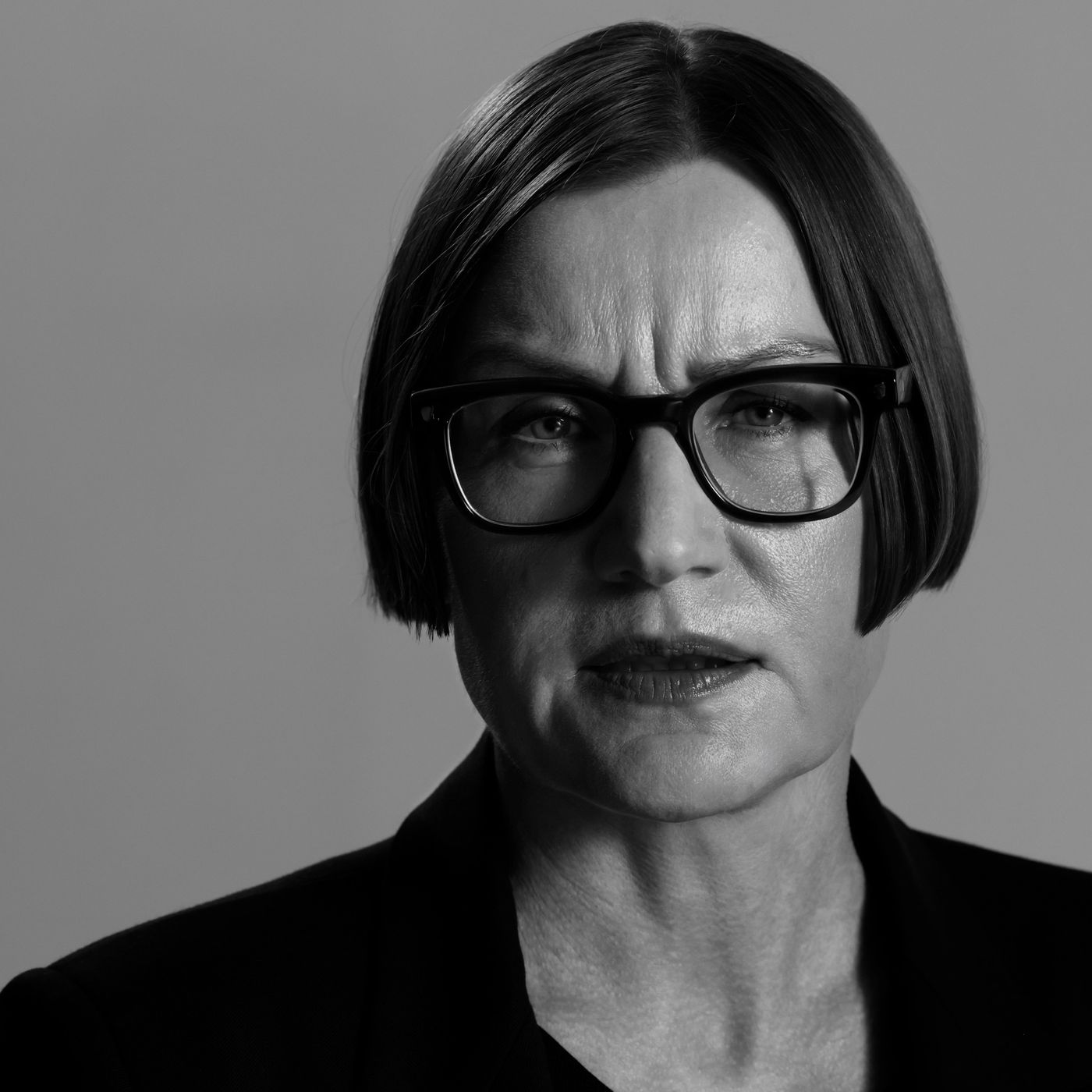
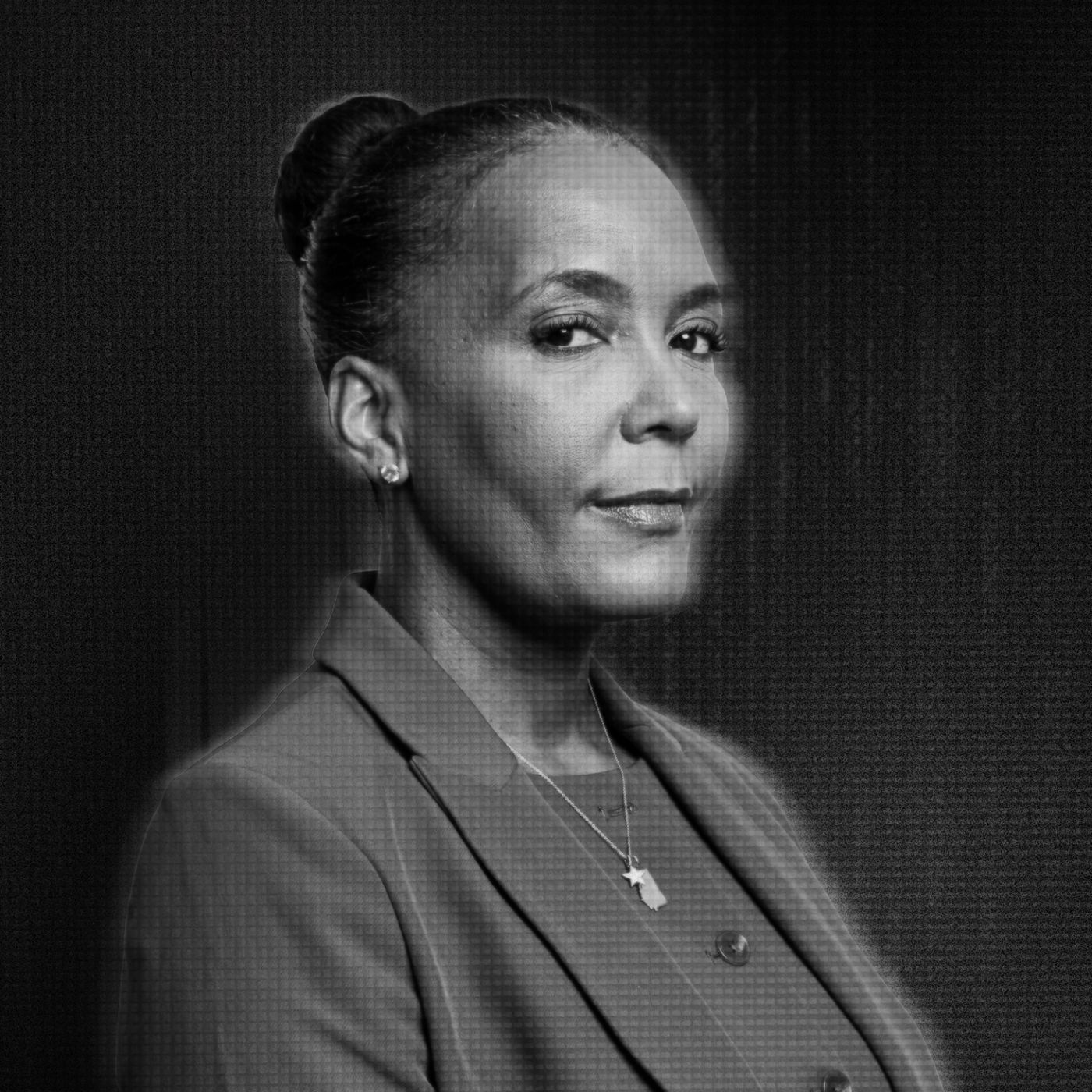
Mirjana Spoljaric, president of the International Committee of the Red Cross (ICRC), warns that the world is entering a “decade of war” with more conflicts than since WWII, where leaders increasingly ignore the rules of war. She argues that “total victory” is impossible, war is becoming self-perpetuating, negotiations are harder to sustain, and double standards in humanitarian treatment will backfire.
Mirjana Spoljaric is Swiss-Croatian, studied philosophy, and previously worked in international development and peacemaking (including Swiss Foreign Service and UN). She became ICRC president in 2022 and is the first woman to lead the organization.
Neutrality is essential to access and hostage releases; torture is never allowed under the Geneva Conventions; information for detainees is a core need; harsh “no red lines” rhetoric and dehumanizing language increase war risk.
Gaza (ICRC access during military operations; hostages and detainees release/return; Gaza described as worse than hell on earth); meetings with Hamas leadership in Qatar and with Netanyahu; ICRC access to Israeli detainees before Oct. 7; recent detention facility visit in Iraq emphasizing “information” needs; discussions with Iranians about nuclear negotiations and broader regional conflict networks.
Written by AI. May contain mistakes.
Brief transition before diving into the interview with Mirjana Spujaric.
“If you're not a subscriber, we have some news for you.”
Mirjana discusses the role and history of the International Committee of the Red Cross.
“We are meeting just at the end of the UN General Assembly.”
Mirjana shares insights on the increasing number of conflicts around the world.
“recent headline asking if World War III had already begun.”
Discussion on Mirjana's travels to conflict areas and witnessing the impact of war.
“History books will tell us whether today we already were in the beginning or maybe already in the middle of such a situation.”
Descriptive accounts from Gaza and the humanitarian crisis faced by its residents.
“I want to start with Gaza, Your organization is one of the few organizations that has been allowed inside and continues to work in Gaza.”
Mirjana discusses the implications of double standards in humanitarian responses.
“You know, there's so many people complicit in what happened there and continues to happen.”
Exploration of the complexities surrounding hostages and ICRC's involvement.
“You never know when you find yourself all of a sudden on the other side of the line.”
Explore the profound impact of detention on identity and humanity.
“It's a sovereign decision by the state to prevent us.”
Hear personal narratives that illustrate the deep scars left by war.
“I'm curious why you wanted to take on a job about war.”
Understand the importance and challenges of maintaining neutrality in conflict zones.
“I said to my parents, I want to become a veterinarian.”
Learn about the complexities involved in negotiating peace and trust between conflicting parties.
“because you noted that you have also spoken with the Iranians about the negotiations and about the situation there.”
Explore the interconnectedness of today's global conflicts and the challenges they present.
“always keep that possibility in mind and always keep a high readiness and preparedness to return to conflict.”
Discuss the diminishing capacity for effective negotiations in international relations.
“But these negotiations have to happen yesterday.”
Highlight the urgency of fostering a global peace narrative in today's tumultuous times.
“If you don't negotiate over 10 years, you lose the practice.”

Get the gist, explore an idea or ask about something said.
 Claude
On The Interview, what are the key points of this episode?
Searching your listeningAutomatic transcript. May contain errors.
0:00Ever invest in something that seemed incredible at first but didn't live up to the hype? Marketers know that feeling. We optimize for the numbers that look great. Impressions, reach, and reacts. But when they don't show revenue, well, that's a not-so-great conversation with the CFO. LinkedIn has a word for that. Bullspend. Invest in what looks good to your CFO. LinkedIn Ads generates the highest ROAS of all major ad networks.
0:34I refuse to believe that the core human essence is bad. Our motivation is not to live in rubble, never. How could it be?
0:48I'm Lulu Garcia-Navarro, and today I'm interviewing Mirjana Spujaric, the president of the International Committee of the Red Cross. The ICRC works all around the globe and often in secret, remaining neutral to operate in the world's most dangerous environments. But with wars getting more complex due to new technology and world leaders increasingly ignoring the rules of war, Spojadic felt compelled to sit down with me to issue a warning about where we all could be headed. We have to understand the significance and importance of the roles of war and why they need to be respected. But first, a quick message.
1:29If you're not a subscriber, we have some news for you. You can now explore The Times for free without paywalls during your first month in The New York Times app. Just download the app and we hope you enjoy it. OK, on to the interview. Thank you so much for coming in today. I really appreciate it. This, I know, has been very hectic. We are meeting just at the end of the UN General Assembly. I want to start, if you could just briefly tell me, what is the ICRC and what does it do? We are a global organization founded 163 years ago in Geneva, today working in roughly 90 different places across the world mainly in conflict because this is what we were created for to bring help and protection in situations of armed conflict but then also promote respect for the rules of war because with the creation of the ICRC came the founding of the Geneva Convention and then that led to the four Geneva Conventions adopted after the Second World War in 1949 and still today this agreement has been ratified by all states because all states agreed that there are red lines in war.
2:52There are simply certain things that should never be allowed to happen. You know I covered wars for a big part of my career as a journalist and the world feels more dangerous and more volatile than I can ever remember. How do you see things? I see it the same way because the statistics prove it. We now count twice as many conflicts as 15 years ago. We are at 130 international and non-international armed conflicts that we classify in our system. That's the highest number since the Second World War. So I think it's time we stop admiring the problem and start acting against this? In my own newspaper, there was a recent headline asking if World War III had already begun.
3:44And I want to speak more deeply about why those fears about a global conflict are taking root. But first, you rarely give interviews. The ICRC is quite a secretive organization because it has to be because of the sensitivity of what you do. Why are you sitting down now? Because I want more and more people to understand that we live in a decade of war. And because we live in a decade of war, we have to understand the significance and importance of the rules of war and why they need to be respected. These treaties were created precisely for times like the ones we live in. I need to reach out to people.
4:28They need to understand the importance of this. Why do you think they don't? We hear more and more leaders say that the rules of war don't apply anymore because of the pursuit for total victory. But that is not possible. In history, there has never been total victory. There has only been death and destruction over and above what was necessary. because at the end of the day, whether there is peace always remains a political decision, not a military one. Is there such a thing as a necessary war? As far as I'm concerned, no. But, you know, philosophers and politicians have argued for thousands of years that war is necessary.
5:12But the point is, war has always been considered as something in the pursuit of a political objective. You know, it's a means to an end. today you get the feeling that you know the wars become the means to an end itself and they continue because people want to stay in power because they have created an environment where you know the war becomes the condition under which they can continue ruling and that's that's very dangerous and you asked me whether we are approaching a third world war honestly Obviously history will judge that. History books will tell us whether today we already were in the beginning or maybe already in the middle of such a situation.
6:01We didn't know as the ICRC that we were in the Second World War when that was happening. The awareness of this being one of the most brutal wars in human history, that awareness wasn't there at that time. You are one of the few people in the world who regularly travels to both sides of armed conflicts. Can you tell me where you've been since you took over as the head of the ICRC in 2022? I've been to Gaza more than once during military operations. My organization facilitated the release and the return of the hostages from Gaza and the Palestinians, the Palestinian detainees back to Gaza. I was in Ukraine.
6:49I was in Myanmar. I was recently in Iran, in Iraq. I travel to the Middle East often, but I also travel to Africa. I was in Sudan. I was in Mali. I have to go and see for myself what it looks like. I need to understand what civilians endure in conflict because I'm speaking to the holders of power. I wouldn't be credible if I didn't know what it is, what it means to be subject to this level of violence. I want to start with Gaza, Your organization is one of the few organizations that has been allowed inside and continues to work in Gaza. You know, international journalists, most other international organizations haven't been given access by the Israeli government.
7:45Can you describe what you have seen? I never go to any place of conflict without people telling me that they want to stop. Without people telling me that they don't understand why this is happening. I see children without parents. I see children without arms and legs. I mean, how senseless does the world feel to you when you're confronting these things? and when you then go to the power holders and they tell you that there's nothing that they can do you you just don't understand how is it that I see these children without parents without limbs and people who have power and influence still tell me there's nothing we can do I don't understand it I often don't understand what I see in connection to what I hear Millions of Palestinians who live in Gaza are now forced to live on only around 30 % of the territory.
8:49Over 80 % of the buildings in Gaza have been destroyed or damaged. And in a 2025 interview with the BBC during the active conflict, you called Gaza worse than hell on earth. And you described a people stripped of their human dignity. Have the rules of war been followed there? What I said about Gaza is still valid today. What happened to Gaza and in Gaza to Palestinians and Israelis supersedes every legal, moral and humane standards. You know, there's so many people complicit in what happened there and continues to happen. the worst now is the fact that people are deprived of human dignity the perception created that if there's enough food that's that's good enough for some people it's good enough to just barely survive in rubble and for other people it's only good enough if they can return to normalcy and bring their children back to a normal school it's applying two standards and this will backfire We cannot assume that for certain people, certain things are sufficient for a situation when it doesn't apply to everybody else.
10:14You can see that by how we measure humanitarian needs in Europe in comparison to South Sudan or Somalia. Intuitively, and because we can't prevent it, we continue applying to standards. That some human lives are more valuable than others. Yeah, and I always fear that if you allow double standards, it can happen to you. You never know when you find yourself all of a sudden on the other side of the line. And it happened in the Second World War to the Jewish people, but it happened to a lot more people than we nowadays keep in mind. I want to stay with Gaza for one more moment before we broaden out.
11:05Did the ICRC have access to the hostages while they were in captivity? Because there were horrific stories of their conditions in captivity. And obviously, that is one of your main roles is to make sure that, you know, detainees, prisoners are treated well. visiting hostages is much more complicated than bringing them back and in my opinion they should have come back unconditionally as of day one but that's not the reality in which we operate and so we have to work with the tools that we have you know there's nothing more complicated more complex and to a certain extent also more brutal than hostage taking.
11:53We know that also because our own colleagues find themselves more often than they should in such situations. And we know how important it is to negotiate them out as quickly as possible. So the objective always has to be to bring the hostages back. And the longer it takes, the more complicated it becomes. I personally think that pressure should have come earlier on the negotiations. We could have saved more lives, many more lives. And this was the subject of our conversations. I traveled twice to Qatar to meet with the leadership of Hamas, to sit with Ismail Haniyeh at the time. I sat with Prime Minister Netanyahu myself.
12:44These were tough discussions and trust me, we are very frank in these meetings and this is why these meetings have to always remain confidential. You know, I'm also thinking of Israel and how it has not allowed you access to the detainees inside of Israel. I mean, how have they explained that to you? And how do you then have to respond? It's true that prior to October 7, the ICIC has had access for decades to detainees held by Israel. And we, you know, organized tens of thousands, if no more, family visits. And that's important. Access to prisons in situations of war is extremely challenging and complicated to achieve.
13:45and at a certain point in the conflict parties decide that for security reasons they don't want to give us access. It's the most common argument. There may be others but that's the most common one. But it doesn't matter what the reason is. It's a sovereign decision by the state to prevent us. However, according to the Geneva Conventions with all these states have ratified They have a legal obligation to give us access, and in my opinion, also a moral obligation. Because we need to inform the families about the whereabouts or the fate of their relatives. You know, you capture a soldier, this person is detained, but a soldier is not per se a criminal.
14:32And no matter how you classify these situations, torture is never allowed. Never. for any party to the Geneva Conventions. That is clear, and this is what we discuss with those who don't give us access. But, you know, detention has a different reason for me to be able to go, irrespective of my legal mandate. Right. Detention is the place where you lose your identity. Detention is when there's no possibility to notify the families and to receive information about them. Detention becomes the place of utmost deprivation of yourself. And we've seen more often than not that people detained under horrible conditions over extended periods of time forget who they are.
15:41And when I visited recently a detention facility in Iraq, the detainees told me our biggest challenge is information. you know they're very content if the food situation improves and if they have more access to sanitary facilities all these things are important to them but what is most important for everyone always is to have information about what month it is what day it is, where the family are, families are where the children are whether the children are safe you're talking to human beings this is a bit of a basic question why does it matter how you treat your enemy of course it matters because you're dehumanizing yourself if you torture if you tell your soldiers go and kill women and children go rape them looting is allowed it's our strategy in warfare these people dehumanize themselves they will never be able to return to a normal life.
16:49I listen to so many interviews of former soldiers because I need to understand them as well. All of them always say that what haunts them is this child that was left in the street because they weren't allowed to turn around and collect it, that they saw bleeding to death. It remains with you. You debase yourself. This is why soldiers normally when they return also have all these problems. I refuse to believe that the core human essence is bad. We are good people. We want to live with people we love. We want to have children that thrive. We want to be able to build a house and know that our, you know, grandchildren will be better off than us.
17:39This is a very normal human motivation to continue living. Our motivation is not to live in rubble, never. How could it be? I want to just take a pause here because I want to learn a little bit more about you. You are Swiss-Croatian. You studied philosophy. You worked primarily in international development and peacemaking for most of your career, including for the Swiss Foreign Service, the United Nations. I'm curious why you wanted to take on a job about war. I mean, do you have memories of the war in Croatia? My first memory of war was my great-grandmother, her brothers, my father. Everybody told me at the time about the Second World War and how they endured it.
18:32You know, my father was born in the middle. And my father said he had to, when he was five years old, he had to work in the field for 12 hours in the sun for a glass of milk at the time. is that this whole childhood was marked by the memory of being hungry. And my mother, she was equally traumatized to the point where she said every time a child died of a disease in her neighborhood, she thought that the parents were lucky and happy probably because there was one less child to feed. And so they felt relieved. Can you imagine thinking as a little girl that somebody is happy about losing a child because you don't have enough food for everyone?
19:23These are the stories that marked me probably more profoundly than anything else. And then came the Yugoslavia War, you know, my direct exposure to the impact of conflict. But I cannot imagine how anybody could say we need this war because you always forget that there are people in this war that suffer. And if you keep the people in mind, you will always favor a political solution. I'm not naive. I'm surrounded by harsh interlocutors in a harsh environment. But still, I think if you keep the people in mind, if you at all times remember that it could happen to you, it could happen to your children, you will think twice before you start the war.
20:20You are the first woman to be president of the ICRC. I mean, do you think gender matters in how you're dealing with conflict? You know, I often say this, when I came into office, everybody was asking about how is it being the first woman president of the ICIC after 160 years of male dominance. And it's not only at the top, I mean, it's across the institution because it's an organization that was created in war for wars. and then I went to Mali, to northern Mali and I sat with the women and for the first time an ICIC president could sit with the women in a tent because social norms prevented my predecessors from doing the same and I felt so shaken throughout the night when I realized what is happening to women in conflict and how brutal it is, you know, because you have an overlap of many things affecting women and, you know, just depriving them of even the minimum protection that any human being should have at all times.
21:45And that night I realized it is a difference when it's a woman, you know, Because if there would never be a woman at the head of these organizations, we wouldn't be as conscious of what it means for 50 % of the world's population. You've seen many horrible things as part of your job. You deal, as you said, in a very harsh environment, probably the harshest. How do you protect yourself from the relentlessness, awfulness? I mean, I've seen you get, if I may say, a little emotional thinking about it. Look, in Germany we say I was built close to water. Can you say that? I'm very emotional. I try to be hard, but it doesn't work.
22:37Maybe it's good that I'm emotional. Maybe it's good that I get angry when I see bad things or unjust things because it keeps me going. It keeps that feeling alive that you have to do something. You can't just admire the problem. There's something that you have to be able to do. And I've always had that feeling. I remember when I was a child, I wanted to save all the sea turtles because I watched this documentary about how they're being tortured, you know, when they're being caught and how they are being killed, you know, getting to the meat and how much suffering that entails. I said to my parents, I want to become a veterinarian.
23:21I need to save the turtles. And I think I would have. I probably would have started a global movement for the sea turtles, but then so many other things happened in between. And I now do it, I try it at least, to save human lives. You know, as I was thinking about the ICRC and the difficulty in this era of staying neutral, right, This idea of neutrality and this idea of coming in and having to speak to both sides and not taking sides. It really made me wonder about the challenges of that in this environment. There have been many accusations that the ICRC hides behind its neutrality, you know, to mask inaction.
24:11You know, the Holocaust is a moment where the ICRC failed catastrophically to prevent or at least to even acknowledge the extermination of the Jews. I know your background is in philosophy, and I know you feel all this very deeply. And I'm wondering, what does it mean to be neutral in the face of extreme suffering? I mean, is there an inherent tension in that?
24:50When I, you know, started my studies, I had my thoughts and I, you know, I could also get impatient with the stubborn insistence on neutrality and confidentiality. I very, very quickly changed my mind when I became president myself. Having accepted this unique opportunity, I had to learn quickly and then also had to acknowledge that we wouldn't be able to do what we do without this strict insistence on neutrality. not in the context of prisoners of war in Russia and in Ukraine, but definitely, definitely, we wouldn't have been able to bring back the hostages from Gaza. I mean, you see the pictures, you see our colleagues unarmed amongst thousands, if not tens of thousands of armed men and in a situation surrounded by rubble from which there was no escape, we had to negotiate the terms with everyone.
26:07Nobody would have trusted us to be able to do this. Highly complex operation. If we hadn't defended our neutrality over 160 years, because we are predictable in it. You tweak it once, you become political, and that's it. I know it makes so many people angry, but that's the essence of our mission. In that context, I want to also ask you about Iran, because you noted that you have also spoken with the Iranians about the negotiations and about the situation there. I understand your role as a neutral party. I understand that you cannot divulge the nature of those discussions. But I am wondering how much you can say about what you've seen there and how this conflict may or may not be resolved.
27:11It became very clear to me, and I followed at the time, the nuclear talks between 2013 and 2015. Between former President Obama and the Iranian regime. Under President Obama. It became clear to me at the time how complex these negotiations were. It's much more complicated today in comparison. The first challenge to establish is the trust. we have in the meantime created a world where war is not a means of last resort it happens at any moment in a process which leads to a situation where parties always keep that possibility in mind and always keep a high readiness and preparedness to return to conflict.
28:09That in itself is not helpful because you know that these negotiations will take a long time, will require a lot of compromise. But on top of this, we have created a situation that is much, much more complex because of the overlapping of conflicts and challenges. today's conflicts are not limited to a given situation they are turning into systems you know explain what you mean exactly look you have countries aligning over continents as states you have shifts in military cooperation you have shifts in interests and economic goals so speaking of iran so iran's relationship with russia russia's relationship with china the conflict spreading to Saudi Arabia and Yemen with the Houthis.
29:05And then you have the non-state armed groups that are connected with other non-state armed groups in the Horn of Africa. And you can follow these streams through the Sahel as far as Western African countries. You know, certain groups, ideological groups or radicalized groups, however you want to name them, they share ideologies, they share common objectives, they align, they realign, they trade their arms, they ensure the availability of technology and cheap weapons across many, many countries and thousands of kilometers. So you're never limited to one situation. And if now the situation escalates in Yemen, you can be sure that it won't remain contained to that territory for a long time.
30:03You already have two very important sea straits affected. It means that the number of actors that will need to get involved and exercise political pressure is increasing. So you have a lack of trust. You have asymmetric warfare that allows these conflicts to continue for an extended period of time. and on top of this and I haven't mentioned this yet there's a total absence of economic growth
30:37and you know a fast loss of development gains that have been essential for the welfare of the people in many countries of the world take Iraq to begin with you know over the last 10 years the country has been recovering from very large conflicts that have had a heavy impact on society and the economies. These gains are being undone. Countries don't have the fiscal space anymore to cope with the fallout created by continued warfare. And at the same time, there's no prospect of economic growth that would allow us to feel capable of repaying the debts that are being created today. So the combination of these or the convergence of these trends is extremely dangerous.
31:33I still insist we will not be able to get out of it without negotiations. But these negotiations have to happen yesterday. They will last as long as it takes. They will require a lot of consensus and a lot of people involved. This has to be understood. And now what do we need? We need political will. There's not much we can do if this continues to escalate. We need negotiations. We need powerful politicians. I personally, I want politicians to have power to negotiate. President Trump, in his recent speech at the U.N. General Assembly, was threatening the annihilation of Iran by U.S. forces, speaking of this idea of trust and using war as a method of negotiation.
32:25Will a deal be made with Iran that lets them rebuild and create a far greater country than it ever was before? Maybe one of the greatest in the Middle East or even the world. Or do I annihilate the Islamic Republic? And he's used language like that quite a bit. But, you know, it was notable to me in that particular speech because he made that statement at a body explicitly created to stop wars, which is the United Nations.
33:05And I'm just wondering what you think that kind of language says about America's understanding and commitment right now to these very complex in-depth negotiations that you say are needed. You know, I started my career as a diplomat about 25 years ago in New York. And since I've been observing eroding language, you know, certain things said back then would have triggered points of order. You know, people would have left the room. There would have been outraged. I remember when, at the time, Hugo Chavez spoke at the General Assembly and what reactions this triggered. Yes, when he talked about President Bush and the smell of sulfur, implying that he was the devil.
34:04Exactly. This is a gradual erosion that all of a sudden makes you realize. But there are things being said that, you know, in certain situations could even lead to war crimes. Because depending on who you are and what the situation looks like could entice people to do things that would actually amount to war crimes. This is why I hate speech and this brutal language is so dangerous. But, you know, I'm not accusing a specific person today because this erosion has been happening for far too long. And I've been alert for many years now why nobody is standing up and saying this cannot happen because this in itself is preparing for war.
34:54But most importantly, every politician that uses the term, any term that points that there are no rules and there are no red lines, sends this signal to any person in the world that bears a weapon, that holds a weapon. You have to be conscious that as a holder of power, you have a far bigger reach. So far many more people hear, oh, there are no red lines. I have weapons. I can use them. One of the things that struck me about why we're in such a period of global conflict is that it's relatively easy to get into wars, as you've said, but increasingly hard to get out of them. So they drag on and accumulate.
35:45So a war that started 15 years ago doesn't get resolved, and then new wars are added to that. And so what we're seeing is just conflict upon conflict upon conflict. Are we losing our capacity to resolve conflicts? Definitely. I mean, that's a fact. If you don't negotiate over 10 years, you lose the practice. You know, you cannot. It's like being a heart surgeon. You don't stop operating and then come back and they give you the instruments and you resume. You know, negotiation is something that you need to master. I spoke once with a senior representative of the ANC in South Africa who told me our adversaries never had to negotiate anything they didn't know how to do it so we had to train them first before we could sit at the negotiation table you know negotiations require so many things and they require especially political weight, courage and compromise But you need to know what your red lines in the negotiation are, how far you're prepared to go and how you get the other party to agree.
37:03When you look at Ukraine and Russia, Iran and the U.S., there have only been sort of sporadic attempts to negotiate those conflicts. Because there's no, you know, this is not yet the expression of courage and will to come to an agreement. I mean, sending the vice president, for example, to Iran for a day, that's not a negotiation strategy, I think. When you think about the context of the Iran nuclear deal, hundreds of people, years, you know. You know when it's serious and you know when it's happening. You know, undergirding this whole discussion and your call for leaders to pick up the phone is the breakdown of many democracies and the institutions that hold them together.
37:52You know, the weakness that we're seeing in upholding liberal democracy means that international organizations are also weak. you know look at germany a country you know well the far right the far left surged in recent elections citizens are angry they're looking for solutions they have a lack of faith in politics to solve their problems in a way that feels beneficial to them and governments seem to be increasingly afraid of their own populations are you worried about the complete breakdown of the post-World War II order? Of course I am. Because that order made it possible for Europe to stay out of a third world war, to stay out of the levels of destructions that we have seen coming from these wars.
38:53Europe is in a certain way also the leader of bad wars. I feel very bad saying that. But we have to acknowledge that the European or the Western history is not one of peace and security. But coming out of that trouble, there were a few people who had the foresight and the courage to establish an international system that is in no way perfect, but for a long time prevented the worst. And that system is there, including the Geneva Conventions. I mean, everything that is written in the Geneva Conventions today is still less valid because if you had to rewrite them, you would come back with the same principles.
39:36Trust me, because they're so intuitive and logical. In any society, religion, culture, nobody will tell you it's correct to torture a child. I mean, how unimaginable would that be for any society? To come back to this idea of where we are in the world right now, that perhaps we might already be in this third global war without us knowing.
40:12What can we do? What should we be doing? you know let's go back to that time when when we believed in peace why is it so wrong to start the global movement around the notion of peace and world peace it's possible i think when i talk to my children for them peace is is not something completely away and absent this is how they imagine their future. I think we have to listen to them and we have to start, you know, retreating from an over-focus on weapons, weapon systems, defense, technologies. We also have to recreate a positive narrative about humanity, about peace, about coming together and working together and living together because there is a minimum ground that nobody has left yet and that is the ratification of the Geneva Conventions.
41:21The commitment to a set of rules that, you know, prevent the worst, that prevent the destruction of humanity. We have to come back to recognizing that humanity is what holds us together and that this is something we need to protect as a priority today because we're debasing almost everything. Mirjana Spolaric, thank you so much. I have really found our conversation very sobering. I thank you.
41:57That's Mirjana Spolaric. To watch this interview and many others, you can subscribe to our YouTube channel at youtube.com slash at symbol, the interview podcast. This conversation was produced by Seth Kelly. It was edited by John Woo, mixing by Sophia Landman, original music by Dan Powell and Marian Lozano, photography by Philip Montgomery. The rest of the team is Priya Matthew, Wyatt Orm, Paola Neudorf, Maya Tepler, Eddie Costas, Leland James, Gabby Contreras, Kathleen O 'Brien, and Brooke Minters. Our executive producer is Alison Benedict. Next week, David talks with Bono and The Edge about U2's 50th birthday and the band's forthcoming album.
42:37I'm Lulu Garcia Navarro, and this is the interview from The New York Times.
42:46AWSAI is how the world's leading organizations are transforming their industries, not in theory, but in production, at scale, right now. Like turning race day data into real-time insights for Formula One fans, reinventing the journey for every United traveler, and personalizing every trip with Booking.com. However big the question for your business or industry, AWS AI is how.
As the head of the International Committee of the Red Cross, Mirjana Spoljaric goes to both sides of conflicts. She’s worried that our warring world is spiraling out of control.
Hosted by Simplecast, an AdsWizz company. See pcm.adswizz.com for information about our collection and use of personal data for advertising.