In short
Podcast Episode Notes: Bill Gates: The Importance of Aid and Philanthropy
Overview In this episode of *The Interview*, presenter Waihiga Mwaura engages in a conversation with Bill Gates, co-founder of Microsoft and a prominent global philanthropist, recorded at the African Union headquarters in Addis Ababa, Ethiopia. Gates discusses his commitment to giving away 99% of his wealth through the Gates Foundation, addressing critical global health issues, and the implications of recent cuts to international aid.
Key Themes and Discussions
Philanthropy and Wealth Redistribution
- Gates's Philanthropic Vision:
- Gates announced plans to donate 99% of his fortune over the next 20 years, primarily through the Gates Foundation.
- The foundation has already contributed over $100 billion since its inception 25 years ago, focusing on health initiatives in lower-income countries.
- Aid vs. Investment:
- While acknowledging the need for aid, Gates emphasizes that investment-led growth is crucial for Africa's development.
- He argues that aid plays a unique role in addressing health crises and supporting vulnerable populations.
Concerns Over Aid Cuts
- Impact of USAID Cuts:
- Gates expresses concern over funding cuts from wealthier nations, particularly the U.S. under the Trump administration, which he fears could reverse progress in global health.
- He notes a potential increase in child mortality rates due to reduced aid, reflecting on historical data to support his claims.
- Philanthropy's Limitations:
- Gates highlights that philanthropy cannot fill the gaps left by governmental aid cuts, as the scale of need is too large.
Focus on African Health Initiatives
- Targeted Funding:
- The majority of Gates's planned spending will focus on Africa, targeting health challenges such as HIV and tuberculosis.
- Gates discusses the need for comprehensive health systems to prevent pandemics and improve overall health outcomes.
- Long-Term Goals:
- He envisions that within the next 20 years, many African countries will graduate to self-sufficiency in health care, reducing dependence on aid.
Economic Development and Unemployment
- Addressing Unemployment:
- Mwaura raises concerns about rising unemployment rates in African nations, citing statistics from Kenya, Nigeria, and South Africa.
- Gates suggests that improving health and education will create a demand for jobs and entrepreneurship.
- Investment in Agriculture:
- Gates emphasizes the importance of agricultural productivity and innovation to stimulate job creation.
Philanthropy and Billionaires
- Role of Billionaires:
- Gates defends the presence of billionaires and their potential contributions to society through philanthropy.
- He acknowledges the debate over wealth caps, advocating for estate taxes to ensure wealth redistribution after death.
Responding to Misinformation
- Conspiracy Theories:
- Gates addresses the prevalence of misinformation regarding vaccines and his role, acknowledging the challenges posed by the internet.
- He stresses the importance of trusted leaders in dispelling vaccine skepticism.
Political Engagement
- Interfacing with Political Leaders:
- Gates calls for political leaders to prioritize health and education metrics, advocating for competitive governance focused on citizen welfare.
- He expresses hope for future discussions with President Trump regarding aid policies.
Conclusion Bill Gates's insights during this episode underscore the delicate balance between philanthropy, governmental aid, and investment-led growth in achieving sustainable development, particularly in Africa. As he prepares to give away a significant portion of his wealth, Gates emphasizes the critical role of international cooperation and effective health systems in tackling global challenges.
Key Takeaways
- Bill Gates is committed to donating 99% of his fortune through the Gates Foundation, focusing primarily on health initiatives in Africa.
- Cuts to international aid pose significant threats to global health progress, potentially reversing decades of improvement.
- Investment-led growth is essential for Africa’s future, but aid still plays a critical role in addressing immediate health needs.
- Gates advocates for a comprehensive approach to tackling unemployment and fostering entrepreneurship through improved health and education.
- Philanthropy by billionaires can contribute positively to society, but systemic issues require collaborative solutions with governments.
Contact For feedback or further engagement, listeners are encouraged to reach out via email at TheInterview@bbc.co.uk or use the hashtag #TheInterviewBBC on social media.
Written by AI. May contain mistakes. Listen to the episode to check what was said.
Transcript
Automatic transcript. May contain errors.0:00This BBC podcast is supported by ads outside the UK. If journalism is the first draft of history, what happens if that draft is flawed? In 1999, four Russian apartment buildings were bombed, hundreds killed. But even now, we still don't know for sure who did it. It's a mystery that sparked chilling theories. I'm Helena Merriman, and in a new BBC series, I'm talking to the reporters who first covered this story? What did they miss the first time? The History Bureau, Putin and the apartment bombs. Listen on bbc.com or wherever you get your podcasts.
0:59Monday to Friday. For interviews with sports stars, big talking points and the stories behind the headlines. More Than The Score from the BBC World Service. Listen now, search for More Than The Score wherever you get your BBC podcasts.
1:19Hello, I'm Wahiga Mwaura, presenter of the BBC's Focus on Africa programme. And this is the interview from the BBC World Service. The best conversations coming out of the BBC. People shaping our world from all over the world. There have been so many disagreements between me and my family. Putting on a show, that is what it means to be Lady Gaga. There's no place in the world where women are equal. Every generation, every generation has to fight to maintain democracy. For this interview, I met Bill Gates, co-founder of Microsoft and Global Philanthropist at the headquarters of the African Union in Ethiopia's capital, Addis Ababa.
2:05You're going to hear about his plans to give away more than half of his$200 billion fortune to causes and initiatives in Africa, his views on redistributing wealth through taxation, and the impact of cuts to USAID. Mr. Gates, who is 69 years old, first announced plans last month to give away 99 % of his vast fortune over the next 20 years, predominantly through his Gates Foundation. The foundation has already given away over$100 billion since being established 25 years ago. He built his vast personal wealth through the software giant Microsoft, which he co-founded back in 1975. Mr. Gates has gradually stepped back from the company in recent decades, first resigning as its chief executive in the year 2000 and then later as its chairman in 2014.
2:57This has allowed him to turn his attention to global philanthropy, with a particular focus on health initiatives in lower-income countries. For example, his foundation was a founding partner of Gavi, which works to improve access to vaccinations for millions of the most vulnerable children around the world. But Mr. Gates fears this work could be at risk, as wealthier countries cut back on their own international aid commitments. In particular, President Trump's decision to cut USAID caused great alarm around the world, although his Secretary of State, Marco Rubio, said the cuts were to programs that did not serve and in some cases even harmed the core national interests of the United States.
3:41Well, we started the turn of the century with about 10 million children dying every year. And we've gotten that under 5 million. Ideally, in the next four years, we'd get it down to 4 million. But because of these aid cuts, I'll be going back up probably closer to 6 million. So in no way is it taking us back to where we were in the year 2000. But the caring about people, wanting health systems that prevent pandemics that could go global or be much worse than COVID was. You know, I think there's a lot of reasons that all certainly make the case that aid, which is less than one percent of the government spending, that it makes a lot of sense.
4:29Welcome to the interview from the BBC World Service with Bill Gates. Well, you recently announced that you're virtually giving away all your wealth, and you've given some more context to that here at the African Union, and effectively winding down the Gates Foundation by 2045. Now, of your planned spend over the next 20 years, 200 billion U.S. dollars, how much of that, if you're able to approximate, is coming to African projects, and why? Yeah, if you take the challenge of Africa, the majority of that money would be to work on that. So that will include, you know, funding scientists all over the world to come up with, say, HIV vaccine, TB vaccine.
5:10But a lot of it will be helping with the delivery here, you know, pilot programs to learn what works. You know, we've been giving to Gobi that the majority of that money comes to Africa. We've been giving to Global Fund. Now we do more direct work with our offices here. So Africa will be the majority of where we hope to improve things during our 20-year period. Would you give, what, 80 percent, 90 percent? Is that, do you have any, you're a data-driven organization, any numbers you could put to that word majority, just for better context? You know, there's still some low-income countries in Asia, you know, including Pakistan, Bangladesh, or parts of India, you know, reasonably significant populations.
5:57So it won't be gigantically more than 50 percent. We continue to do some work in the United States. About 15 percent will go to education and other things, partly because that's where the fortune was created. But Africa will be the biggest. Drilling directly into some of the sectors you support on the African continent, healthcare, climate change, education. There's one, however, that has become a big talking point in more recent years, and that's unemployment on the African continent. The numbers are worrying. The World Bank data as of 2023 putting Kenya, Nigeria at over 6 % unemployment rate, South Africa a whopping 32%.
6:40Is this something that concerns you as a philanthropist, and have you been thinking through potential solutions to address this? Yeah, well, there's some things that are suitable for the private sector, some things for government. And then, you know, only the things that you can't solve with government and private sector is where you bring philanthropy in. So things like creating an HIV vaccine, and there's not a market for that. Even some of the things we do in agriculture, you know, you saw the productivity we're bringing with new seeds or better genetics for chicken or livestock. And so, you know, there will be demand for jobs if people get the right health and the right education.
7:26Then you'll have, you know, the capacity that serves the market. So you'll also need lots of entrepreneurs. But, you know, with the average age being so young, I think that'll be there. It's making sure those kids through health and education are ready for the jobs would be our contribution. To quote the outgoing Africa Development Bank president, he said, and I paraphrase that, Africa's development will not come from aid. It will come from investment-led growth. It's not an isolated thought. We've had many people question the necessity of aid in this day and age and whether aid breeds over-reliance on aid money to build your company and does it shield African governments from accountability.
8:10What are your thoughts on that, that it's time for the African continent to shift more towards what investment-led growth would do for it? Well, aid as a percentage of the economy won't be gigantic. But if you believe that babies shouldn't be infected with HIV, and aid is helping you with that, if you want all the world's science to help cure sickle cell disease, and that's not going to get organized except by aid that brings those scientific resources. If you want the best seed work in the world so that you go from a quarter of the agricultural productivity to world levels there, aid plays a unique role.
8:48And anybody who says aid versus something else, you know, that's a silly discussion. When you project moving forward, and the number 2045 has been asked you numerous times, why 2045? What does the data show you about what the African continent will look like in 2045? how much reliance on philanthropy and aid will be projected at that time vis-a-vis how much more growth will come from local solutions and investments? Well, the way that aid works is that you accelerate the country's economic development, and that's what you get to self-sufficiency. And so, for example, for our vaccine fund, India, Vietnam, Indonesia, the benefit of the health improvements helped accelerate the economies.
9:34Now they're graduated. They no longer get the vaccines funded by Gabi. They are able to fund that themselves. Within the next 20 years, most African countries will graduate to self-sufficiency for these very basic things. And so what we should care about is how does aid fit in to accelerate that? And when you stop that baby from getting HIV, when you buy that bed net, when you figure out what is malnutrition, and so the baby's brain fully develops, achieves its full potential, you're accelerating that path for Africa to be largely middle-income countries. So here at the African Union, as you give your speech, you reference the crisis that the whole world and the continent finds itself in with the cuts.
10:24There have been global aid cuts, but more specifically from the United States by the Trump administration, shutting down of USAID, pulling out of WHO, amongst others. Do you think philanthropists like yourself can fill that gap? Well, the numbers are way too large for philanthropy to fill that gap. We're going to see a dramatic increase in children's deaths because we're not going to have those capacities. It was cut off. The people were fired very quickly. The aid was cut off very quickly. There wasn't like any transition plan. Even medical trials were interrupted. You know, you have drugs sitting in warehouses expiring.
11:06So it was an unexpected set of steps. I'll certainly encourage the U.S. to restore some of that spending, but there'll be a need to prioritize. Philanthropy can help, but it's in no way going to come close to the large numbers. For example, the PEPFAR, which was buying HIV medicines, that saved tens of millions of lives. How bad do you think it will get if there aren't urgent interventions, if the aid isn't put back even to a certain percentage? Well, we started the turn of the century with about 10 million children dying every year. And we've gotten that under 5 million. Ideally, in the next four years, we'd get it down to 4 million.
11:48But because of these aid cuts, it'll be going back up probably closer to 6 million. So in no way is it taking us back to where we were in the year 2000. But, you know, caring about people, wanting health systems that prevent pandemics that could go global or be much worse than COVID was. You know, I think there's a lot of reasons that all certainly make the case that aid, which is less than one percent of the government spending, that it it makes a lot of sense. And, you know, even as you reflect on that, you understand the real world impact of these aid cuts from the work you've done over the last 25 years.
12:27Are you willing to use your considerable influence to possibly seek audience with President Trump again? Maybe ask him to consider a more gradual pullout from some of these programs, Gavi with vaccinations, for example. No, I'll make a strong case that the U.S. should stay involved in Gavi, that it should be a leader on helping with polio eradication, that these HIV programs, some efficiencies can be gained. And so, you know, if we were more in the range of 20 or 30 percent reduction, you know, I think we could minimize the damage and we won't see a dramatic increase. In fact, with the new innovations, then we could continue the trend we've seen.
13:07So I'll be as loud as I can be. Do you think it will be easier now with the exit of Elon Musk from Doge? Doge had recommended quite some cuts, which did affect aid to some extent, one would say, or at least there have been numerous reports on that. Do you feel it's easier now to get the voice of the president? And what impact do you think Doge's work has had on aid around the world? Well, they took USAID and got most of the workers fired. And so some of that is very tough. Those were great people doing amazing work. And we have to think how you can restore it. It's a lot easier to get rid of people than it is to build back that capacity.
13:44But, you know, I think the challenge is always that it's far away. If it was kids dying of malaria in their neighborhood or people needing HIV medicines in their neighborhood, I have no doubt that these people, including President Trump, would be quite generous. And so we need to bring it to them and say, you know, we're all in this together. It's part of our values to care. Let's come up with a reasonable plan, which in the long run leads to self-sufficiency. You're listening to the interview from the BBC World Service, people shaping our world from all over the world. If journalism is the first draft of history, what happens if that draft is flawed?
14:33In 1999, four Russian apartment buildings were bombed, hundreds killed. But even now, we still don't know for sure who did it. It's a mystery that sparked chilling theories. I'm Helena Merriman, and in a new BBC series, I'm talking to the reporters who first covered this story. What did they miss the first time? The History Bureau, Putin and the apartment bombs. Listen on BBC.com or wherever you get your podcasts. From the Winter Olympic and Paralympic Games to the European Athletics Championships. The 2026 sporting calendar is packed full of big events. Keep up with all the action with more than the score.
15:15the podcast that goes beyond the score sheet. Join expert BBC sports journalists every Monday to Friday for interviews with sports stars, big talking points and the stories behind the headlines. More Than The Score from the BBC World Service. Listen now, search for More Than The Score wherever you get your BBC podcasts.
15:42For this episode of The Interview, I'm speaking to Microsoft co-founder and global philanthropist Bill Gates. It was interesting to see Bill Gates wearing a full suit minus a tie, as most of his previous media interviews have seen him dressed more casually in a sweater that I feel has become part of his image. It was perhaps understandable on this occasion, though, as he had just come from addressing delegates at the African Union at its headquarters in Addis Ababa, Ethiopia. What I also noticed was that for someone who had once held the title of the world's richest man, he came across as very approachable.
16:19His entourage on the day was very low key. He drank just a regular bottle of water and he was gracious enough to carry on chatting even when our allotted time had run out. OK, let's now return to my conversation with Bill Gates. I want us to pivot for a little bit and ask you about a company that you have interest in, Cobol Metals. It's an investment company that's got backing from you and Jeff Bezos. And there have been some announcements recently about their work in the DRC, specifically to do with lithium mining. Are you able to tell us a little bit about your interests in this company? Yeah, so Kobold was created to use artificial intelligence to take all the data about what's buried underground and to find valuable mining deposits.
17:03And it's very good news for Africa that they found many major deposits, you know, and that'll generate a lot of jobs, a lot of royalties. I don't know the specifics of the DRC lithium mine. I'm glad to hear they're doing work there. I know about some of the work in other countries they're doing with copper and how they're working with government to make sure that it helps grow the economy. But those rich deposits are great for Africa and great for the world. The DRC, this I'm sure you're aware of, has been in the midst of a conflict in the eastern DRC, and its effects are being felt across the country and across the region as well.
17:41Deaths, displacements, you name it. There are those who would be unhappy with philanthropists like yourself having investments in a company that, to some extent, is part of the mining sector, and human rights groups have raised challenges about the mining sector. Would you see why some would be concerned about what they describe as profiting from others' pain? Well, I don't think telling all investors to stay away from Africa is necessarily the best thing. You know, I bet there's a way to have mines that create jobs and royalties for the government, allows them to buy vaccines, save lives. But I'm not an expert on the particulars there.
18:21I want to bring your attention to another group of Africans. Let's talk about Africa's billionaires. The numbers say that there are about 22 of them last year. And more broadly, are billionaires good for society? Well, you can have a debate about what taxes should be. And my personal view is that if somebody creates great business and pays all their taxes, there shouldn't be an upper bound on the success that they can have. I do think that society should expect anybody even well below a billion dollars, even say millions of dollars, that you become very philanthropic. If you're in that top 10%, you should have a clear plan about how you give back to society.
19:08And so I do a lot of work to encourage philanthropy. Some of the African billionaires... You work with some of them, I believe. I work with, you know, Aliko Dangoti has been a fantastic help. He's got a foundation he's very committed to. And so, yeah, there are some good examples, and I hope that spreads to all the billionaires. For those who feel that there should be a cap on how rich a person can become, can you see the thinking behind that in the unequal world that we live in today? Well, you know, setting a cap, if one country does that, you're going to drive some of that activity out outside of your country.
19:46And, you know, I'm a big believer in the estate tax. The United States actually has one of the most largest estate taxes. And I've been lobbying for that because I think that kind of forces society to renew itself instead of all the wealth being more dynastic in nature. So I hope African countries have estate taxes. The United States does. You know, you play an interesting role because you attract a lot of media attention. And even just a regular Internet checkup shows, a lot of websites that fact check misinformation, disinformation, myths, and, you know, put proper information out there, sometimes have to do that regarding articles that speak about you or that link you.
20:32I actually have a few here. I don't know if you've seen many of these to do with, you know, the COVID-19 vaccine, you know, links with microchips and links with companies like the, I think there was one here, Center for Global Human Population Reduction. There's no such thing as what another article said and so forth. Do you get to see some of these articles? Do you get to read them? And why do you think you attract so many conspiracy theories, Bill? Well, I don't think there'd be enough time to follow every crazy thing. You know, the Internet allows 8 billion people to say whatever they want.
21:05It is tragic if the misunderstandings like the importance of vaccinating children, if it leads people to not seek vaccines. And in every country we get some vaccine skepticism. And, you know, we have to have the leaders who are trusted in that countries be the one who speak out about that. So do you have a team that checks some of these articles in case you feel you need to respond or do you sort of ignore them? How do you make sure it doesn't hinder the work that you're doing? Well, we're always doing surveys about how people think about health care, how they think about vaccines. If something was very widespread, you know, I think the way we monitor things, we'd see, you know, there was stuff about vaccines being used to track people's location, which, you know, you have to laugh about that.
21:53Why, you know, how would that work? And B, why would anybody care to know people's locations? So it's, you know, it's a crazy world in terms of all the things that get written. And, you know, I mostly think about that in terms of people seeking good health care. You will be spending time in two countries here on the African continent in your time and you probably speak with other African leaders on phone. Have any of them expressed concerns to you about the latest tariffs from the United States? 20 African countries, hard hit by them. Big discussion around the world. In fact, I think this week the U.S.
22:28is supposed to sit down with China and discuss them further. How much damage, in the few weeks that they've been on, do you think African economies may have felt, or the U.S. itself, as a result of these tariffs? Well, the U.S. traditionally had the African Growth and Opportunity Act, which sat very low, often zero tariff rates for things coming in from Africa. And, you know, the numbers, unfortunately, are small enough that that's no big threat to some, you know, domestic group. And so I'll certainly be a voice that says that we should maintain very low or zero tariffs for countries in Africa.
23:08You know, there was an expectation that we'd continue to be generous there. And helping these economies grow is a fantastic contribution because then they'll collect more taxes and they can fund their health care and education in a more generous way. So, yeah, they there were a set of proposed tariffs that would have been very tough on Africa. and although most people are focusing on other trade relationships, I'll be one of the voices that says, hey, wait a minute, let's not raise tariffs on Africa. Any anticipated meetings with President Trump in the near horizon? Anything you're hoping for?
23:48I've had a couple of meetings with him and everybody wants to spend time with him, but I'm sure in the next three or four months I'll get a chance to share my thoughts with him. You mentioned in your speech that politics is an integral part of the world. We live in the U.S. or in Africa. But what do you wish political leaders around the world would focus more on as they promise development to their people? Well, because governments aren't subject to competition, their ability to learn from each other just requires great leadership. And so, you know, when I meet a leader, I'm like, OK, do you know your vaccine coverage rate?
24:26And do you know, for countries that are similar, you know, is there anyone who's doing better? You know, when I meet a leader who's already on top of that, I'm like, wow, I don't need to meet with you. You are, you know, taking this stuff forward. And so, you know, running a government is a very technical thing. How do you raise taxes? How do you set the priorities? The health care area is the area I know the best. And, you know, we know how to gather data. and so partnering with the Minister of Health will be a big part of how we get our work done, but even the Minister of Finance and the leaders has to play a key role.
25:05So you almost wish the competition was less about who has more followers and who's actually hitting certain health milestones or education milestones, etc. Exactly. That would be it for you. Yeah, no, are you improving the welfare of your people? That's what this is all about.
25:23Thank you for listening to the interview from the BBC World Service. If you enjoyed today's programme, you can listen to the interview wherever you get your BBC podcasts. Until next time, it's bye for now.
25:50still don't know for sure who did it. It's a mystery that sparked chilling theories. I'm Helena Merriman, and in a new BBC series, I'm talking to the reporters who first covered this story. What did they miss the first time? The History Bureau, Putin and the apartment bombs. Listen on BBC.com or wherever you get your podcasts. From the Winter Olympic and Paralympic Games to the European Athletics Championships, The 2026 sporting calendar is packed full of big events. Keep up with all the action with More Than The Score, the podcast that goes beyond the score sheet. Join expert BBC sports journalists every Monday to Friday.
26:32For interviews with sports stars, big talking points and the stories behind the headlines. More Than The Score from the BBC World Service. Listen now, search for More Than The Score wherever you get your BBC podcasts.
From the publisher
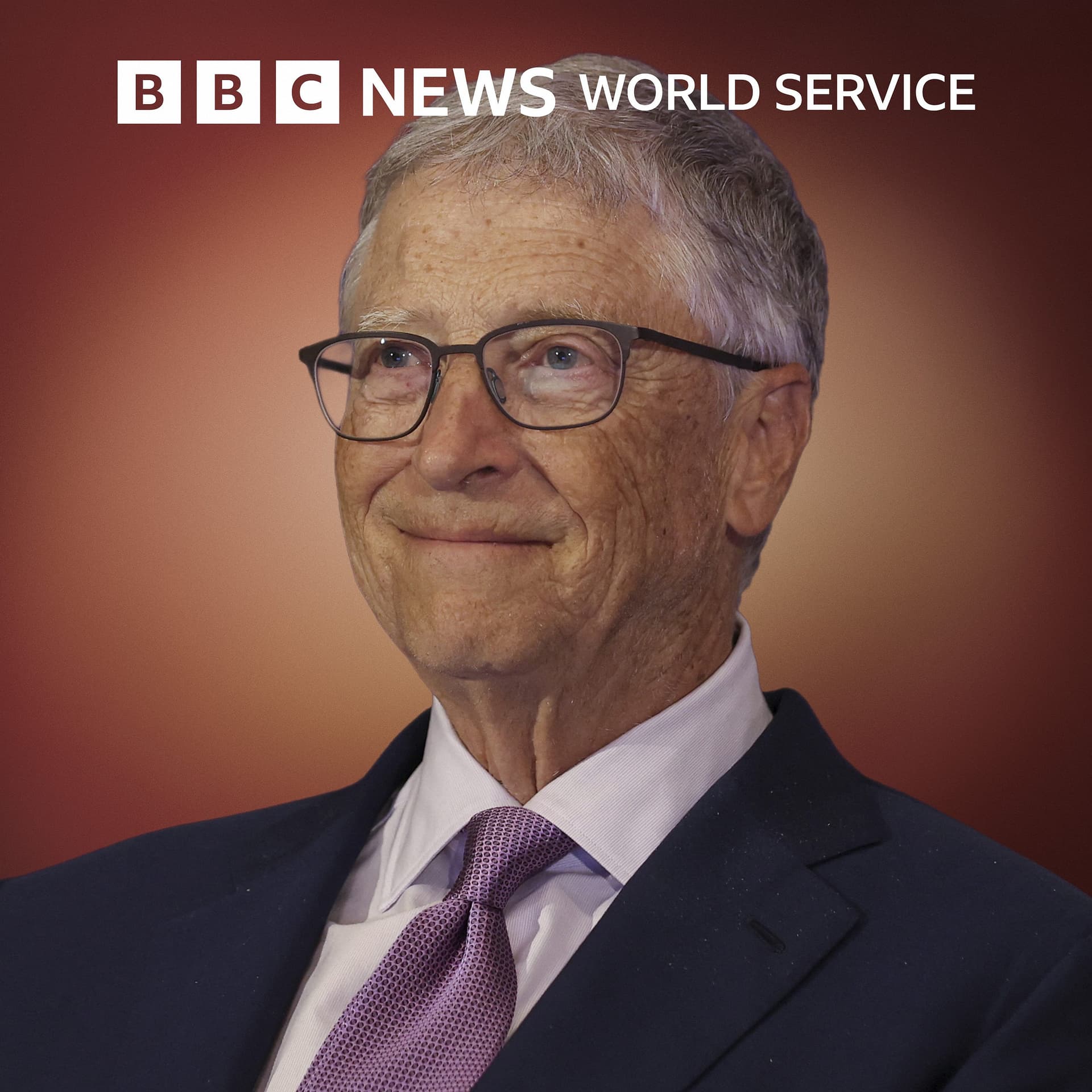
Waihiga Mwaura, presenter of the BBC’s Focus on Africa programme, speaks to Microsoft co-founder and global philanthropist, Bill Gates.
Mr. Gates, who is 69 years old, announced last month that he plans to give away 99% of his vast fortune over the next 20 years, predominately through his Gates Foundation. The foundation has already given over 100 billion dollars since being established 25 years ago.
He built his vast personal wealth through the software giant Microsoft, which he co-founded back in 1975. Mr. Gates has gradually stepped back from the company in recent decades, first resigning as its chief executive in 2000 and then later as its chairman in 2014.
This has allowed him to turn his attention to global philanthropy, with a particular focus on health initiatives in lower-income countries.
But Mr. Gates fears this work could be at risk as wealthier countries cut back on their own international aid commitments. The Interview brings you conversations with people shaping our world, from all over the world. The best interviews from the BBC. You can listen on the BBC World Service, Mondays and Wednesdays at 0700 GMT. Or you can listen to The Interview as a podcast, out twice a week on BBC Sounds, or wherever you get your podcasts.
Presenter: Waihiga Mwaura Producer: Ben Cooper Editor: Nick Holland
Get in touch with us on email TheInterview@bbc.co.uk and use the hashtag #TheInterviewBBC on social media.
(Image: Bill Gates. Credit: Reuters)