In short
Podcast Episode Notes: The Interview - Bishop Guli Francis-Dehqani: We Were Outsiders
Podcast Overview Title: The Interview Description: Conversations with influential figures shaping our world, covering topics in business, politics, finance, culture, and more. Each episode features insightful discussions and analysis.
Episode Details Episode Title: Bishop Guli Francis-Dehqani: We Were Outsiders Host: Edward Stourton Producers: Ben Cooper, Katy Davis, and Lucy Sheppard Editor: Damon Rose Release Schedule: Mondays and Wednesdays, 0700 GMT on BBC World Service; available on BBC Sounds and other podcast platforms.
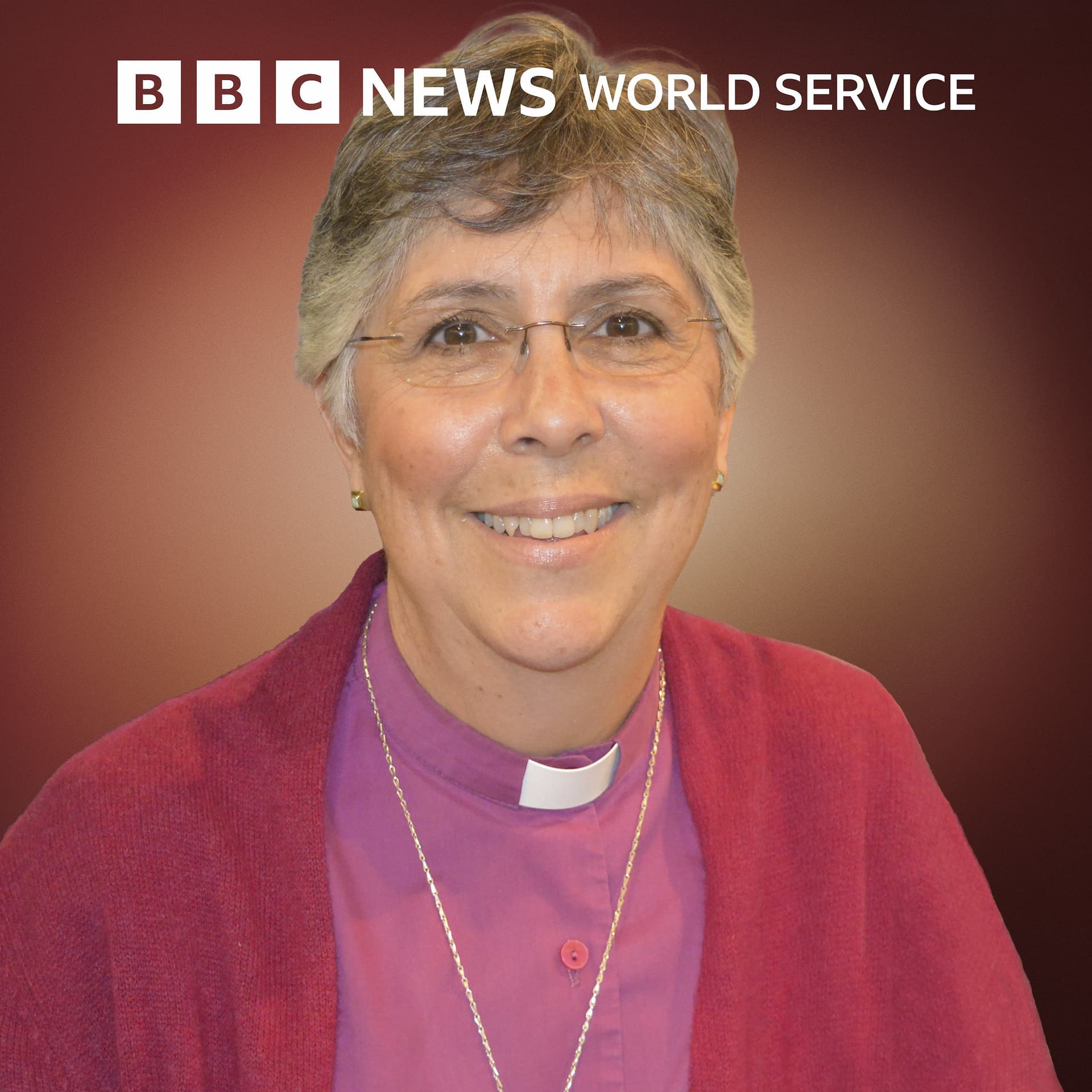
Episode Summary In this episode, Edward Stourton interviews Bishop Guli Francis-Dehqani, the Bishop of Chelmsford, who is a leading candidate for the Archbishop of Canterbury. This selection would mark a historic moment, as she would be the first woman and the first person of Middle Eastern heritage to hold the position. Their conversation explores Bishop Guli's background as a refugee from Iran, her Persian identity, her faith, and the challenges facing the Church of England today.
Key Themes and Discussions
Bishop Guli's Background
- Early Life: Born in Iran, her family fled to the UK after her brother was murdered following the Iranian Revolution.
- Mixed Emotions: Bishop Guli discusses her feelings about her homeland, expressing a desire to see a peaceful Iran while acknowledging the complexities of her emotions regarding current events.
- Cultural Identity: She reflects on her Persian roots and the duality of being both an insider and outsider in both Iran and England.
The Church of England
- Historic Context: Bishop Guli notes that the Anglican Church's tradition aims to be broad and inclusive, dealing with differing views and practices.
- Current Challenges: She addresses the church's internal controversies regarding issues such as women priests, LGBTQ+ relationships, and how these might lead to schisms within the Anglican Communion.
- Leadership Debate: The need for a discussion on the appropriateness of a single leader for a global church is emphasized, as the Archbishop of Canterbury does not hold authority over other jurisdictions.
Reflections on Refugee Experiences
- Welcoming Environment: Bishop Guli contrasts her family's arrival in the UK with the current socio-political climate towards refugees, expressing concern over the hostility faced by newcomers today.
- Human Stories: She emphasizes the need to recognize the humanity behind refugee statistics, advocating for dignity and opportunities for asylum seekers.
Personal Journey
- Unexpected Path to Leadership: Bishop Guli shares how her journey to becoming a bishop was unplanned, viewing her position as a way to represent marginalized voices within the Church.
- Community Focus: Her role is framed as serving those without a voice, aligning with the Church's mission of sharing the good news and aiding those in need.
Key Takeaways
- Bishop Guli's potential election as Archbishop of Canterbury represents a significant step for diversity within the Church of England.
- The discussion highlights the complexities of identity, belonging, and the challenges of reconciling personal history with public roles.
- The episode underscores the evolving nature of the Anglican Communion amid contemporary social issues and globalization.
Conclusion The interview provides a profound insight into Bishop Guli Francis-Dehqani's experiences and perspectives on faith, identity, and the future of the Church of England, while also emphasizing the need for broader conversations about inclusivity and leadership in religious contexts.
Written by AI. May contain mistakes. Listen to the episode to check what was said.
Transcript
Automatic transcript. May contain errors.0:00This BBC podcast is supported by ads outside the UK. If journalism is the first draft of history, what happens if that draft is flawed? In 1999, four Russian apartment buildings were bombed, hundreds killed. But even now, we still don't know for sure who did it. It's a mystery that sparked chilling theories. I'm Helena Merriman, and in a new BBC series, I'm talking to the reporters who first covered this story. What did they miss the first time? The History Bureau, Putin and the apartment bombs. Listen on bbc.com or wherever you get your podcasts. Hello, I'm Edward Sturton, presenter of Sunday on BBC Radio 4, and this is the interview for the BBC World Service.
0:49The best conversations coming out of the BBC, people shaping our world from all over the world. There have been so many disagreements between me and my family. Putting on a show, that is what it means to be Lady Gaga. Only the things that you can't solve with government and private sector is where you bring philanthropy in. There's no place in the world where women are equal. Every generation, every generation has to fight to maintain democracy. For this episode, I'm speaking to Bishop Gully Frances Tarkani. She's Bishop of Chelmsford, a city in England. but it's been reported she's one of the leading candidates to become the next Archbishop of Canterbury, the most senior bishop in the Church of England.
1:36Two bookmakers in the UK have even named her as the favourite. 85 million members of the Worldwide Anglican Communion are waiting to find out who will take on the top role. Bishop Gurley is keen not to add to any media speculation, but if she's selected, it would be a remarkable choice. Not only would she be the first woman to hold the position in the Church's long history, but she'd also become the first person of Middle Eastern heritage to hold the position too. Born in Iran, her family came to the United Kingdom as refugees after her brother was murdered in the wake of the Iranian Revolution.
2:16I talked to her about her Persian identity, as well as her views on the challenges and controversies the Church faces today. The Anglican tradition has always been one of trying to be as broad as possible to include differences of theology and differences of view and differences of practice and so on within very, very broad parameters. So the instinct is to try and remain united, but united in our diversities. Welcome to the interview from the BBC World Service with Bishop Gulley, Frances Dukani, in a conversation I recorded last month.
2:57So I've lived in this country now for over 45 years, but I still feel hugely invested in what goes on in Iran. and my kind of sense of who I am and my identity are complex, but include everything that formed me as I grew up in Iran. I've also not been able to go back. I'm in exile. So obviously when these events are kind of very present in the news and so on, it evokes a whole series of complex hopes and emotions and so on. And I retain a connection with particularly the very small Anglican community there. And obviously have, you know, their kind of well-being and so on very much in my mind as well.
3:53So, yeah, it feels on one hand quite distant, but on the other hand, deeply personal and something of considerable concern. Can you explain what that complex mixture of emotions is briefly? Well, I think, you know, I'm still of an age to hope to be able to return one day to Iran, not necessarily to go and live there. I think, you know, too much water has gone under the bridge and I'm very settled and have a base and a home and a life here. But as I've become older, that kind of geographical distance has felt kind of deeper and bigger and more significant. There is a very strong desire for me to see Iran, not just to see it for myself and to go back and touch and smell and so on, but to see it reformed into society that is at peace with itself, that offers the people of Iran something that they deserve and to see better days there.
5:03You know, our roots are profound and I feel mine very strongly. But at the same time, I'm now shaped very much by my life here. So, yeah, it's not straightforward, but it's very real. I suppose part of the reason I'm exploring this with you is that a lot of the reporting from Iran suggests that even among people who do not like the regime, there has been a real sense of patriotism, I suppose, since the bomb started falling. and it's made Iranians more proud of their country. Have you picked that up at all in your conversations? I don't know how often you talk to people, friends and family back there, but have you picked up a sense of that?
5:44Yes, again, I think these emotions are not necessarily binary opposites. I think some of these emotions can be held together. So on the one hand, I think that the current government, the current regime in Iran has lost any sense of moral authority over the vast majority of people. Many, many would like to see it change. At the same time, I don't think that people appreciate foreign intervention in the way that they've experienced it recently. And so inevitably, I guess it can create, for some at least, a kind of stronger sense of patriotism. So again, I think a lot of these emotions and responses are intertwined and and complex and can't be defined as straightforward binary opposites.
6:35There's been a huge procession, funeral procession, for those senior military figures who were killed, the scientists also, and indeed members of their family. What sort of thoughts does that prompt in you, that event? Well, I mean, on a human level, you know, people have experienced huge loss in Iran. So my understanding is, for example, that one scientist, something like 14 members of his family were killed in the attacks. So there's a huge amount of just human loss and grief going on, as well as everything that's wrapped up with the bigger picture and the kind of global events and the region and the kind of country as a whole.
7:23So I think, you know, on one hand, you look and you see human grief. And as a result, at the end of the day, whatever we think of it, of preemptive attacks that have caused devastation for some. Now, on a global scale, we might say that particularly the American president's actions have brought some stability for now at least. But of course, it's difficult to know what the unintended consequences might be in the longer term. Iran, I think, sometimes is thought of as a place that is kind of governed by, you know, zealots, mullahs in turbans who haven't got a clue what they're doing. They don't see the world as we do, but actually they do think through their strategies in a kind of rational way and they often take their time in doing that.
8:17So I don't know what the consequences are going to be. I hope that all parties concerned will return to the table for talks, for reconciliation talks, for peace talks. But, you know, Iran, the government has been badly damaged and humiliated. And one of my concerns is that they will want to, there are already signs of this, I think, to reinstate their kind of authority, at least within the country. And they are clamping down and there have been many, many arrests on kind of trumped up charges and so on. So that's really, really worrying. So, again, there are so many different angles and implications to this, and depending on which way you're looking at it, emotions might be different.
9:04Can we, in that case, take a step back to your Iranian story, if you like? As I understand it, your father converted from Islam, which I imagine in today's Iran would be regarded as incredibly serious apostasy. Was it easier in the days before the revolution, or did you encounter prejudice and so forth because of that as a child? It was easier in the sense that it wasn't illegal. It wasn't a crime as it is now. But we were, by virtue of being Christians in Iran, we were kind of considered as outsiders of a sort, as people who'd kind of betrayed something of our national and social identity as well as our religious identity.
9:52because those things are all very closely bound up in Eastern cultures. So, yes, we experienced some prejudice. I remember as a child some of that. But it was kind of central government, which was strong at the time, kept it under control, if you like. So it was a revolution that gave the opportunity to those who'd always been uncomfortable by the presence of a church made up primarily of converts to kind of come to the fore. Well, after the revolution in 1979, you as a family experienced two great traumas. One was an attempt on your father's life and one was the murder of your brother. Can you just tell me, it's a very sort of painful subject, but briefly what happened and whether you're convinced that that was, that the regime, if you like, was behind those events?
10:44Well, the events that we experienced back then, this is kind of 1979 to 1980, you know, took place over a period of probably around 18 months. And it was at the height of the revolution. So it was very chaotic, the country, and it's difficult to say precisely who was behind any of these actions. Nobody was ever brought to justice for any of it. But we are pretty sure that the actions were driven by those who had an agenda against the church. And again, accusations were made about being a nest of spies for the Western government and so on. But somehow this tiny community engendered fear. It's difficult quite to understand why, but it did.
11:35And so the events that impacted my family in particular were part of a wider series of events which impacted the church community from kind of institutions like schools and hospitals being confiscated or closed down, through to raids on offices and to our home, through to the murder of one of our clergy in his study. And then for us, as you've said, culminated particularly in the brief arrest of my father, then the assassination attempt in which my mother was injured, and then eventually my brother's assassination. And really, we have always understood that he became a target simply because of his association with the church.
12:20And because he was his father's son. So, you know, those are all part of the events that have shaped me and who I am. But I retain a very deep love for the country, for the people who are also my people and a real desire to see better days there for everybody. because the former government under the Shah had become very, very corrupt. Many people wanted and needed to see change and they were hopeful that the Islamic Republic would bring greater freedom and democracy. And actually the reverse has been true. And now we have added on that economic problems with inflation and sanctions and so on and a very repressive regime that crushes dissent brutally.
13:15You're listening to the interview from the BBC World Service, people shaping our world from all over the world. If journalism is the first draft of history, what happens if that draft is flawed? In 1999, four Russian apartment buildings were bombed, hundreds killed. But even now, we still don't know for sure who did it. It's a mystery that sparked chilling theories. I'm Helena Merriman, and in a new BBC series, I'm talking to the reporters who first covered this story. What did they miss the first time? The History Bureau, Putin and the apartment bombs. Listen on BBC.com or wherever you get your podcasts.
14:01For this episode of The Interview, I'm speaking to Bishop Gully Francis De Carney. She's been very frank about her mixed emotions as she watched war unfold in the country of her birth. The only area she's reluctant to address at the moment is that of the choice of a new Archbishop of Canterbury because she's widely tipped as a front runner for the job. Let's return to my conversation with Bishop Gully Francis De Carney. We're obviously at a very delicate moment and one of the questions that seems to have come up, partly because of the strains that the Church has seen within itself and both within Church of England and within the wider Anglican Communion, is the question of whether the Church has the right kind of relationship between the Archbishop of Canterbury living in England, having very sort of English duties in many ways, but also being the leader of this growing and enormous worldwide community and communion.
15:02Do you think that's something that the church should reflect on? So, I mean, yes and no, I think is my answer. You know, the Archbishop of Canterbury isn't a leader in the sense that, for example, the Pope is. The Archbishop of Canterbury has no authority in any other jurisdiction, for want of a better word. There has simply been this historic relationship between Canterbury and the rest of the Anglican Communion. And the Archbishop is kind of the convener, if you like, of the communion. And when the primates gather, he's acted as host and convener. So he doesn't have any power or authority as such.
15:43But obviously, he's kind of been a figurehead in the past. I think it is time for the conversation to happen about whether this is still appropriate for the 21st century or not. I don't think the answer is straightforward. I think many parts of the communion do still feel a sense of connection and want that to continue. There will be other parts who disagree, but that's a conversation somehow that needs to happen across the communion. I don't think we can make the decision here in England without absolutely including the voices of those across the communion. Now that will take some time. It won't happen overnight, but I am of the view that we do need to open up the conversation and at least kind of explore whether it's still appropriate or not.
16:35Well, the reason it comes up is because there are these very sensitive issues, and you know the list about women priests and bishops, about gay relationships and so forth, on which there are clearly very different opinions within both the Church of England and certainly between the Church of England and the rest of the Anglican Communion. And inevitably, people talk about schisms because of that. And that, again, must raise the question whether it still makes sense to have a single leader. I know you point out that he's not an executive leader, if you like, but he is still the leader. And whether it still makes sense to talk about an Anglican Communion, I suppose.
17:15Well, I think there's no doubt that there is huge strain in that. I personally hope we do find a way. You know, the Anglican tradition has always been one of trying to be as broad as possible to include differences of theology and differences of view and differences of practice and so on within very, very broad parameters. So the instinct is to try and remain united, but united in our diversities and to kind of live well together. And I think that's our gift. If we could live it well, that would be our gift to the world, to demonstrate how it's possible to live well with deep differences. But we are struggling to do that at the minute.
18:04I don't think there's any doubt about that. And so precisely what happens in the future remains to be seen. If I could, reverting to the earlier part of our conversation about Iran, you've told us about the very traumatic events that your family went through after the revolution. You came to this country. Do you think that today you would have the welcome that you had here, that you had back then? That's a really good question. It's a completely different landscape now, isn't it? There is much more kind of inherent hostility towards those who arrive here as refugees, kind of in our discourse, in the language we use and so on.
18:51I often refer to my experiences as having been one of a relatively soft landing because of the welcome that we received, because of the opportunities we were given to start again, and indeed to be able to contribute back to society here and have a sense of purpose. So the answer is, I don't know. I mean, you know, my father was a bishop of the Anglican Communion, so that might have provided a certain welcome within church circles. But in terms of the kind of processes around asylum claims and so on, we would have had to go through the same as others do in many respects. So I don't know is the answer, but it is why I have such a strong sense of speaking out on these issues, because whilst I understand that the context is different and numbers are greater and so on, behind each of those figures is still a human being with a story and with hopes and fears and longings and all of those things that come with being human.
20:03So the least we owe people is a sense of dignity as they go through the process and an opportunity for those who are given the right to remain to build a life here and contribute to society and to give back, which is what the majority of those who arrive as asylum seekers and refugees want to do themselves. Can you just tell me how difficult it was to decide to leave Iran and what it was like arriving here? Well, I think when we left, we weren't leaving with a sense that we would never be returning. My father was already out of the country for meetings and he had been advised, while he was out, things became much, much more complicated and chaotic in Iran.
20:53So he was advised not to come back just for now. and whilst we were waiting for him to come back my brother was then assassinated so it was immediately apparent that he couldn't come back just yet but also that we needed to be together as a family so we had my brother's funeral service and two weeks to the day from his death my mother my eldest sister and I were leaving the country my other sister had was in this country to train as a nurse. So we left very quickly just with a suitcase each. I was, you know, I was 13 at the time. I was aware of the significance of this. It felt very heavy and very significant.
21:42But I don't think we honestly, I don't think it occurred to us that we wouldn't be going back. And we assumed that within a few months or a year at the most, the situation would have changed and we would go back. So it's been a kind of gradual coming to terms with and realisation of the reality of the situation, I think. And those early months, early years for me as a young person had many, many challenges adjusting kind of culturally to different education, education in a different language and all of those things. But at the same time, I suddenly found I had a whole host of opportunities that I'd never had before.
22:24And I guess I tried to take those. I've tried to build on those. And I've received enormous blessings along the way from people who've created opportunities for me, believed in me and supported me. And you have quite a story from that beginning to become a part of the Church of England as a priest and now as a bishop and be possibly tipped to the Archbishopric. That is an extraordinary story. And it feels very much for me. I mean, I never looked for a role as a bishop. The trajectory I followed through my ministry in the church would not have naturally brought me to being Bishop of Chelmsford.
23:04It very much feels like it is tied up with my story. I feel like I represent a tiny part of the communion, which is so small as to be almost significant, having a place in the centre, if I can put it like that. So I recognise the privileged position I have, but I absolutely feel I'm here to provide space for and to speak for those who don't have a voice of their own, who feel on the margins. and there are many of those in our communities and that at heart is what the church is about sharing the good news of Jesus Christ and serving our communities and the people who are most in need and don't have a voice of their own.
23:57Thank you for listening to The Interview from the BBC World Service. You can find more episodes of The Interview wherever you get your BBC podcasts including conversations with Joe Biden, Martina Navratilova and Bill Gates. Until the next time, goodbye.
24:36It's a mystery that sparked chilling theories. I'm Helena Merriman, and in a new BBC series, I'm talking to the reporters who first covered this story. What did they miss the first time? The History Bureau, Putin and the apartment bombs. Listen on bbc.com or wherever you get your podcasts.
From the publisher
Bishop Guli is currently the Bishop of Chelmsford, a city in England, but it is also being reported that she’s one of the leading candidates to become the next Archbishop of Canterbury - the most senior bishop in the Church of England.
Although she is keen not to add to any media speculation, if selected, Bishop Guli would be a remarkable choice. Not only would she be the first woman to hold the position in the Church’s long history, but she would also become the first person of Middle Eastern heritage to hold the position too.
Born in Iran, her family came to the UK as refugees after her brother was murdered in the wake of the Iranian Revolution. Edward Stourton, presenter of BBC Radio 4’s Sunday programme, speaks to Bishop Guli Francis-Dehqani about her Persian identity and her faith. The Interview brings you conversations with people shaping our world, from all over the world. The best interviews from the BBC. You can listen on the BBC World Service, Mondays and Wednesdays at 0700 GMT. Or you can listen to The Interview as a podcast, out twice a week on BBC Sounds, or wherever you get your podcasts.
Presenter: Edward Stourton Producers: Ben Cooper, Katy Davis and Lucy Sheppard Editor: Damon Rose
Get in touch with us on email TheInterview@bbc.co.uk and use the hashtag #TheInterviewBBC on social media.
(Image: Bishop Guli Francis-Dehqani. Credit: BBC Radio 4/PA)