In short
The Interview: Bobi Wine, the Ugandan Opposition Politician
Podcast Overview Podcast Title: The Interview Podcast Description: This podcast features conversations with influential figures from various sectors shaping our world. The interviews, approximately 20 minutes long, provide insights on significant global issues. Hosted by BBC journalists, "The Interview" is a collection of the best conversations shared by the network.
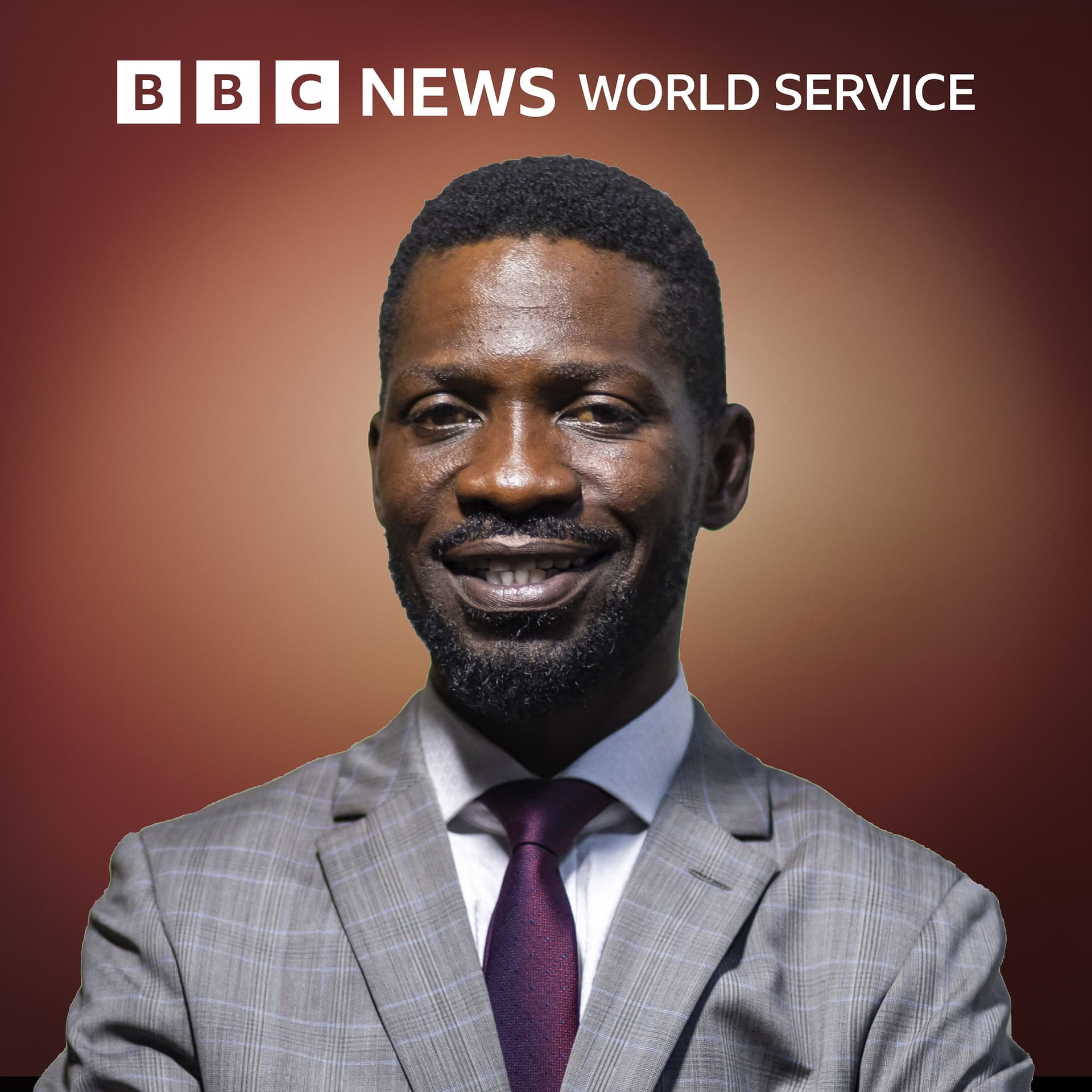
Episode Summary Episode Title: Bobi Wine, the Ugandan Opposition Politician: From the Streets to State? Episode Description: Victoria Uwonkunda, a BBC reporter and presenter, interviews Bobi Wine (Robert Kyagulanyi), a prominent Ugandan opposition politician. The discussion revolves around the political and personal challenges Wine has faced, his aspirations for the future, and his determination to run for President in the upcoming 2026 election.
Key Themes and Discussions
Background of Bobi Wine
- Early Life: Born in the slums of Kampala, Bobi Wine gained fame as a musician before entering politics.
- Political Career: Elected to parliament in 2017, he earned the title "ghetto president" due to his strong popularity among the youth.
Political Landscape in Uganda
- Opposition Challenges: Bobi Wine outlines the difficulties of being in opposition under President Yoweri Museveni's nearly 40-year rule:
- Labeled as a terrorist for opposing the regime.
- Experiences of violence, repeated arrests, and threats to personal safety.
Goals for a Better Uganda
- Vision for Change:
- Advocates for accountable leadership, human rights, reduced corruption, and improved governance.
- Emphasizes the need for institutional stability rather than reliance on individual leaders.
The 2021 Election Experience
- Election Rigging: Wine alleges that the 2021 election was rigged despite popular support.
- Commitment to Non-Violence: He expresses a preference for peaceful protests and democratic methods rather than violent uprisings.
Youth Engagement and Relevance
- Connection with Youth: Wine believes his ideas resonate with the youth of Uganda, representing their aspirations for change.
- Potential for Transformation: He draws parallels with historical leaders who have successfully transformed their nations.
International Relations and Aid
- Critique of Foreign Aid: Wine argues that foreign aid can perpetuate corruption and should come with conditions that promote human rights and democracy.
- Call for International Attention: He stresses the importance of global awareness in achieving free and fair elections in Uganda.
Collaborations in Opposition
- Unity Among Opposition Leaders: Wine discusses the need for collaboration among various opposition groups, including a healthy relationship with Dr. Kiza Besigye, another prominent opposition figure.
Personal Reflection and Future Aspirations
- Facing Adversity: Wine reflects on the personal toll of his activism, yet expresses unwavering commitment to his cause.
- Vision for the Future: He aims to build a movement that empowers Ugandans to pursue genuine democracy and governance.
Conclusion Bobi Wine's interview highlights his determination to challenge the status quo in Uganda, advocating for a future where the voices of the youth and marginalized populations are heard. His commitment to non-violence amidst oppression and his vision for institutional change portray a hopeful yet challenging path for Uganda.
Listen You can listen to "The Interview" on the BBC World Service or as a podcast on various platforms. For more information, contact TheInterview@bbc.co.uk or follow #TheInterviewBBC on social media.
---
This markdown file summarizes the podcast episode and highlights Bobi Wine's perspectives on political engagement, youth empowerment, and the challenges faced by opposition parties in Uganda.
Written by AI. May contain mistakes. Listen to the episode to check what was said.
Transcript
Automatic transcript. May contain errors.0:00This BBC podcast is supported by ads outside the UK. This advertisement feature is paid and presented by Poland's Ministry of Foreign Affairs. Looking for the perfect place to grow your business? For over 30 years, Poland has been a launchpad for innovation at the heart of Europe, powered by world-class research and ambitious young talent. From bold startups to established powerhouses, Poland offers the momentum, resources and reliability you need to take your business further. Poland, where businesses don't just grow, they're built to last. Find out more at polandyourplacetogrow.com. Because PwC understands your business, we provide you with AI solutions that deliver real impact.
0:42Tailor AI for your business at pwc.ie. PwC. So you can. Hello, I'm Victoria Uonhunda, BBC reporter and presenter, and this is the interview from the BBC World Service. The best conversations coming out of the BBC. People shaping our world from all over the world. I will come back to Russia. I will participate in the elections. There's an increase in violence according to the coca crop. There is no place in the world where women are equal. I will give away the vast majority of my money. It's my full-time focus for the rest of my life. For this interview, I met with Bobby Wine, birth name Robert Changulani, the Ugandan opposition leader during his recent trip to London.
1:36Through music, Bobby Wine has been an outspoken critic of Uganda's long-serving president, Yoweri Museveni, using his platform to champion the rights of those he says are oppressed and marginalized Ugandans. His strong connection with the country's youth has made him a symbol of resistance, even as he has faced arrest, violence and threats to his safety. This is a desire for change, a desire for freedom, a desire for better, which especially people like myself have seen, have travelled the world and have noticed that we can achieve what other countries have achieved in our lifetime. Ugandans under the age of 35, and that is more than three quarters of the population, have only known one president.
2:24In our conversation, Bobby Wine reflects on the personal and political challenges he has faced, as well as his determination to run again in the next election. Welcome to the interview from the BBC World Service with Bobby Wine, the Ugandan opposition leader.
2:46Welcome, Mr. Changulani. Mr. Wine, which one do you prefer? Any. Any goes. Yeah, usually I'm called Bobby Wine because it's easier for so many people. Yeah, welcome back to the BBC. Thank you very much for having me. Yeah, what brings you to London this time? This time I come to have various engagements. I was at British Parliament and held a few meetings with some officials there. Then met some of our leaders. the London chapter of the National Interplatform, the party which I lead. When our leaders have become misleaders and mentors have become tormentors, when freedom of expression becomes the target of oppression, they come from the lyrics of one of your songs, Situka, which is Rise Up in your native Luganda language.
3:38What drives you this fire, this desire to be into politics? Where did it come from? I wouldn't really call it a desire to be in politics because I grew up hating politics and being encouraged to stay away from politics because of what it had done in the past Uganda where my parents were. But this is a desire for change, a desire for freedom, a desire for better, which especially people like myself have seen. I've traveled the world and I've noticed that we can achieve what other countries have achieved in our lifetime. And what is that change that you're seeking, that you're looking for for Uganda and Ugandans?
4:18I'm seeking for better leadership, accountable leadership, more human rights, more freedoms, but most importantly, an end to corruption so that we can use our resources for the betterment of our lives and the lives of our people. What is it like being in opposition in Uganda? Tough, I would say, and gets tougher by the years. Being in the opposition in Uganda means being labeled a terrorist. You see, Uganda happens to be a country ruled by General Museveni, who has ruled it for almost 40 years, challenging his authority in Uganda. He's challenging the national military, the Uganda People's Defense Force, being against Museveni, being against the Uganda police, being against the Bank of Uganda, being against every institution of state because he has captured all state institutions.
5:11So it is tough. He will count, as he's done many times in the past, saying that his being in power has kept the country, which is in a region that is rife with conflict. Wouldn't that be something that you might look at and say, well, we've managed to actually be peaceful since he's been in power? Well, that's the argument that every dictator that has overstayed in power advances all this peace, all this stability. But we must understand that peace is not just the absence of war, but presence of freedoms and rights and comfort and development. So that's what we want back in Uganda. In a progressive society, stability should not rely on an individual.
5:56What about when he dies? Stability should rely on institutions that are set to last beyond human beings, beyond individuals. So many things have changed in your country in terms of how long a president can stay in terms of time limits. Age limits have been scrapped. First of all, I want to know, are you running again for president in the next year's election? These are two questions in one. And so many things have been changed in our constitution, but all these have not been changed for the better governance of Uganda, but for the sustainance of the Museveni regime. Still, he has plans to change the constitution, to remove adult suffrage, to ensure that Ugandans don't cast vote for their president, but is elected by parliament, because parliament is controllable.
6:49He keeps changing the constitution to his convenience. and that's why we insist on saying that we must move beyond individuals. Do I intend to run against him? Definitely. I've said this time and again that I've offered myself to my team. If my team still believes that I can lead them to challenge Genome 7 again, I'm available. This, however, should remind us that we don't live in a complete democracy. We went to the polls in 2021. We won. It was rigged. All signs show that he's intending to rig again. But because we are Democrats, we choose democracy and nonviolence over violence. We choose not to pick guns.
7:35We want to challenge him at the polls. and we take time to reach out to international media so that we seek for the attention of the world. We only want the world to help us have a free and fair election because democracy dies in the dark. But if the world gives us the attention, then we will be able to change our country without shedding blood. You have been a name, a presence in the political landscape of Uganda for a while now. How relevant do you think you still are to the Ugandan youth? Like I said, it is not just me. The question should be how relevant are the ideas that are represented to the Ugandan youth.
8:17And they are very relevant because I speak about the reality. I'm presenting in black and white the option to the situation that we are living under right now. I don't present myself as the most knowledgeable or the most qualified, but as the most committed to this reality that we see. The reality that the corruption has sunk our country and has stalled our development and we can unlock, for example, the National Revenue Institution that collects revenue, Uganda Revenue Authority, collects$30 trillion. That's about$8.1 billion. But a third of that is stolen,$10 trillion. That is$2.7 billion shillings.
9:01Imagine a poor country like Uganda, but the political elite stealing$2.7 billion from it every year. That can revolutionize everything. You don't need to be a university professor to see that. Ibrahim Tuaori is doing that in Burkina Faso and other leaders. We can do that if Ugandans... Traor in Burkina Faso came to power via a coup. Exactly. I don't want us to come to power via call because that could cause a vicious circle of violence. But what I'm trying to say is that with power, which I know that the people of Uganda, especially young people, can deliver to themselves through me or another young person with a similar mind, we can be able to transform our country.
9:46So I'm showing the young people of Uganda what we can do with power. We can achieve what Ibrahim Tawori is achieving. We can achieve what Sankara achieved for his people. We can achieve what Lee Kuan Yew achieved for his people. These things are not rocket science. So that's the whole idea why we are presenting ourselves, to change this. Not just to change the leader, but to change the system. You're listening to the interview from the BBC World Service. people shaping our world from all over the world.
10:46Find out more at polandyourplacetogrow.com. Because PwC understands your business, we provide you with AI solutions that deliver real impact. Tailor AI for your business at pwc.ie. PwC. So you can.
11:08For this episode of The Interview, I'm speaking to Bobby Wine, the Ugandan opposition leader. He has some harsh words for Ugandan leaders, so we put some of them to the government spokesperson Ofono Opondo. Firstly, Mr Opondo denied that there have been any changes to the constitution in favour of the president or that there is corruption on the extent that Mr Changulani alleges. Mr Opondo also dismissed the claims that the Museveni family have been given favoured positions in the government. We'll hear more from Mr. Opondo at the end of this episode. But back to Bobby Wine, who was his usual defiant self when he came to our studios.
11:52Many young people in Uganda who support you, not just, you know, not 18-year-olds or 20-years, but people who are as young as you are, I believe you're 43 now, they've called you their voice. They see something in you that inspires them. how true is the saying heavy is the head that wears the crown while i appreciate the compliment because that sounds like a compliment i hesitate to call this a crown i want to call it a burden of responsibility this is not a one-man thing i don't believe in the savior business i don't believe in this business oh i'm doing this for you. I'm doing that for you. We have been there before.
12:39General Museveni keeps telling us that he liberated us because he presented himself as an unknowing man, as the big daddy of a generation. That's not what I want to be. I want us to do this together. While I just speak, down on the ground, the young people that are actually put their boots on ground to see that these things I'm talking about are actualized. They're playing an equally important role. The role of the international community is to give attention to what's happening in Uganda. I know that so much is happening in the world, but let us also get some attention because there's been a lot of investment in sub-Saharan Africa.
13:21The U.S. alone last year sent 12 billion U.S. dollars in sub-Saharan Africa. Uganda took more than half a billion of that in health, education and others. We appreciate that. But that aid should be coming with precondition, because if there are no preconditions of democracy, respect for human rights and the rule of law, then that money is only sponsoring the oppression of the people of Uganda. At what point do we move away from aid and expecting USAID, expecting the EU, expecting everybody else coming to our aid? We can only say enough to the aid if we have an alternative. And in my view, the alternative is first and foremost to end corruption.
14:06This aid in many ways does not help the people of Uganda. It is stolen. In the case of Uganda, the global fund money was stolen. The Gavi funds were stolen. That is what happens. If we end the corruption and the political elite is not stealing all the money that would have dealt with health care, education and otherwise, then we can, say, reduce that aid because our own resources are helping us. And as we move forward, we can finally put an end to the aid. But now aid, in my view, is only enslaving us further. You did mention that you're not the only one. You're not alone. It's a movement of people wanting betterment of the country, better leadership.
14:49And you did mention Dr. Kiza Besije, who for the longest was one of the main opposition leaders in Uganda. What is your relationship with Dr. Besije? We enjoy a very healthy relationship. Unfortunately, right now he's in prison. I visited him less than a week ago. We had a conversation. He is strong and he sends his love to all his supporters all over the world. He says, hang in there. It is not just about him. It's about all of us. If we all get involved, then the arrest and detention of Dr. Bessie J, the arrest and detention of Bobby Wine or any other person will not stop this movement, this mission to freedom.
15:31Is there a moment where you and Bessie J and others in the opposition will want to come together? Because at times it seemed that there was divisive movement within the opposition. But if you were to come together, wouldn't that be stronger together than all of you in each unit? We have had a good conversation about the same. And we've agreed that the best way forward is working together. We are in advanced stages of seeing how best we can work together. Not only my team and Dr. Besige's team, but all honest change-seeking forces in Uganda. Of course, we know that the regime in Uganda would not at all want to see us working together, but we are moving steadfastly towards the goal of working together and even collaborating in electoral politics.
16:26You've been through so much, or some of which you've mentioned. the arrests, the beatings, being shot at, tear gassed. At what point do you sit down and think, this is too much, maybe time to bow out? Or does that never cross your mind? I am no superman. I'm a human being who feels pain, who gets scared, who gets anxious, who gets worried. You're asking, at what time do I say enough is enough? at all times. Every time I'm under attack, every time another brother is abducted, another person is killed, every time I visit my friends in prison, I'm like, enough is enough. But again, there's no alternative to this.
17:16This is a one-way mission. Either getting our freedom or we die trying because it is even worse living like a slave. We are living in a country where General Museveni's president, his wife is minister of education, and his son is chief of defense forces. He's the army commander. He does anything that he wants at will. So that we have to put an end to it. He proudly comes out and says, we are slaves. He tweets and says, oh, tomorrow I'm going to behead Bobby White all the other day. I mean, that does not represent us. We cannot continue being a laughingstock of the world. Obviously, General Mohosi Kane-Rugaba is not here to speak to the claims or to what you're saying about what he's done.
18:06He speaks all the time on Twitter. That's what I wanted to bring to your attention because you also engage with him, maybe not directly responding to him. But some of the things that he's brought up, for example, the latest one is about you and him in a boxing match. If he were to run, would he be a force of nature as his father has been, in your opinion? Well, it's important that we first understand that General Museveni's son, Mwazika Neregaba, is a serving military officer. And at the helm of our defense forces is the army commander. And according to our constitution, serving military commanders are not supposed to engage in partisan politics.
18:52It is for that reason just mere statements. Many serving military generals have been court-martialed. But he does all this with impunity. What does that show you? That shows you that he is above the law. So that is the state where we are. How would you want me to engage politically with such a person? You are a father. You're a family man. What kind of conversations do you have with your children? How much do they know of the life that you lead? Initially, my wife and I had decided to keep our children out of this and to keep them ignorant. But you can only do that for so long. Our eldest son is 19.
19:36Our youngest daughter is nine. Children of this generation know everything. So we decided to be honest. They know exactly everything that's coming back, that is happening. So every time I leave home, they know if their dad does not come back, they know what is happening. We try to teach our children what it's about so that if anything happens to us, they and their generations know that the fight in which their parents were involved is a worthwhile fight that is worth inheriting. How do you keep sane? Am I sane? You tell me. I keep my sanity by accepting the reality, by living my every day as if it's the last day and trying to make the best out of it, by learning from history and knowing that what makes these struggles worthwhile is by saying the struggle is my life.
20:47We have taught ourselves to celebrate the fact that we are not giving up. President Museveni came to power aged 42, a year younger than you are now. And you've often been compared to him in the sense of what he was at the time. Words like energetic, charismatic and inspiring with a vision. is there a danger that you yourself could end up being looked at the same way as you are looking at President Museveni of 2025? Yes. Yes, it worries me. Because clearly Museveni was an amazing person. Myself, I was named after Robert Mugabe, who was a great revolutionary of the time. Our leader of opposition was named after Museveni because he was a great revolutionary.
21:44These guys meant good, or at least it looked like that. But we also know that power corrupts. Therefore, first we want to build a team of like-minded people that can hold each other accountable. But most importantly, once we get there, we want to build strong institutions that can outlive human weakness and human greed. We want to empower a nation, for that nation to be able to hold leaders accountable, so that at the end of it all, we have leaders that are actually servants to the people, that actually fear to offend people, to mess up things. But as of today, the people fear the leaders. What is your message to the current Ugandan leadership then?
22:32To General Museveni. General Museveni, the institutions that you say are corrupt, everything, the apparatus around? Well, I'll ask him to read his own book, Sowing the Mustard Seed, where he says the problem with Africa, in general, and Uganda in particular, are the leaders that overstay in power. General Museveni still has an opportunity to retire as a decent man. We still have an opportunity to write a new history of transferring power from one leader to another peacefully. What do you do for fun? Do you still do music? Do you jam around with your friends? And what does Robert Changulani Bobby Wine do for fun?
23:15It's interesting. I'm a musician and I used to sing for fun. But now I fight the Museveni regime as an occupation and I mock the Museveni regime for fun. Yeah. Mr. Changulani, Mr. Wine, thank you. Thank you so much for your time. Thank you very much for having me. Thank you for listening to the interview from the BBC World Service with Ugandan opposition leader Bobby Wine. You heard him talk earlier about his life being threatened on social media by General Muhosi Kaneerugaba, the son of Uganda's president. So I put this to the Ugandan government spokesperson Ofono Opondo. He told me that the claims are just social media banter and that Bobby Wine should go to the police with his complaints instead of speaking to the BBC.
24:13I hope you enjoyed today's program and there is plenty more similar conversations with people helping change and shape their worlds. Listen to the interview wherever you get your BBC podcast. Until the next time, bye for now.
24:40This advertisement feature is paid and presented by Poland's Ministry of Foreign Affairs. Looking for the perfect place to grow your business? For over 30 years, Poland has been a launchpad for innovation at the heart of Europe, powered by world-class research and ambitious young talent. From bold startups to established powerhouses, Poland offers the momentum, resources and reliability you need to take your business further. Poland, where businesses don't just grow, they're built to last. Find out more at polandyourplacetogrow.com.
25:34What did they miss the first time? The History Bureau, Putin and the apartment bombs. Listen on BBC.com or wherever you get your podcasts.
From the publisher
Victoria Uwonkunda, reporter and presenter for BBC News, speaks to Bobi Wine, the Ugandan opposition politician, as he reflects on the personal and political challenges he has faced as well as his determination to run again as President in the next election.
Born in the slums of Kampala, Bobi Wine -birth name Robert Kyagulanyi - first entered the political arena in 2017 when he was elected to parliament with huge popular support, so much so that he became known as the ghetto president.
He went on to run against President Yoweri Museveni in the 2021 election - taking on a leader in power for nearly 40 years.
But the campaign was rocked by violence and for Bobi, countless times in jail.
Now Bobi Wine is preparing to run again in the 2026 presidential election. The Interview brings you conversations with people shaping our world, from all over the world. The best interviews from the BBC. You can listen on the BBC World Service, Mondays and Wednesdays at 0700 GMT. Or you can listen to The Interview as a podcast, out twice a week on BBC Sounds, or wherever you get your podcasts.
Presenter: Victoria Uwonkunda Producers: Clare Williamson, Gabriel May Editor: Sam Bonham
Get in touch with us on email TheInterview@bbc.co.uk and use the hashtag #TheInterviewBBC on social media.