
In short
Podcast Episode Notes: The Interview with Catherine Corless
Podcast Overview
- Title: The Interview
- Description: Conversations with influential global figures, covering pivotal issues in business, politics, finance, sports, and culture.
- Frequency: Episodes are released three times a week (Mondays, Wednesdays, and Fridays).
Episode Details
- Episode Title: Catherine Corless, Irish historian: I’m going to be a voice for these children
- Host: Chris Page, BBC’s Ireland correspondent
- Key Subject: Catherine Corless's investigation into a historical mother and baby home in Tuam, Ireland.
Key Themes and Discussions Background of Catherine Corless
- Catherine Corless is an Irish historian known for her relentless pursuit of truth regarding the mother and baby institutions in Ireland.
- Her journey began with local history research, ultimately leading her to uncover the tragic fate of many children in a closed institution.
Discovery of Mass Graves
- Corless discovered that hundreds of babies and young children were buried in mass, unmarked graves within a disused sewage tank at the Tuam home.
- The home was run by the Bon Secours Sisters and served unmarried mothers and their children during a time of societal ostracism.
Resistance and Opposition
- Corless faced significant local resistance and denial from various authorities, including the Catholic Church and local government.
- Many locals were hesitant to discuss the home, indicative of the stigma surrounding the women and children who were placed there.
Inquiry and Apologies
- Following Corless's revelations, the Irish government initiated an inquiry into historical mother and baby homes, concluding that approximately 9,000 children died across multiple institutions.
- The Catholic Church, local government, and the Bon Secours Sisters issued apologies and contributed to a compensation scheme for survivors and the excavation of the Tuam site.
Personal Journey and Emotional Impact
- Corless describes her initial shock upon learning the number of children who died and the absence of memorials.
- Her motivation stemmed from anger and a sense of injustice, compelling her to become a voice for the voiceless children.
Key Takeaways
- Historical Context: The episode provides insight into the dark history of Ireland's institutions for unmarried mothers, highlighting societal attitudes towards illegitimate children.
- Corless's Methodology: The episode details Corless's investigative journey, including the use of local records, cemetery visits, and interviews with elderly residents to gather evidence.
- Significance of Excavation: The current excavation at Tuam is not only about recovering remains but also about acknowledging the lost lives and providing closure to families.
Conclusion Catherine Corless's work exemplifies the importance of historical inquiry and social justice. Her story is a powerful reminder of the need to confront uncomfortable truths to honor the dignity of those who have been forgotten.
For further insights and related discussions, listeners can access other episodes of The Interview on BBC Sounds or various podcast platforms.
Written by AI. May contain mistakes. Listen to the episode to check what was said.
Transcript
Automatic transcript. May contain errors.0:00This BBC podcast is supported by ads outside the UK. If journalism is the first draft of history, what happens if that draft is flawed? In 1999, four Russian apartment buildings were bombed, hundreds killed. But even now, we still don't know for sure who did it. It's a mystery that sparked chilling theories. I'm Helena Merriman, and in a new BBC series, I'm talking to the reporters who first covered this story. What did they miss the first time? The History Bureau Putin and the apartment bombs Listen on bbc.com or wherever you get your podcasts From the Winter Olympic and Paralympic Games To the European Athletics Championships The 2026 sporting calendar is packed full of big events Keep up with all the action with More Than The Score The podcast that goes beyond the score sheet Join expert BBC sports journalists every Monday to Friday For interviews with sports stars, big talking points and the stories behind the headlines.
1:07More Than The Score from the BBC World Service. Listen now, search for More Than The Score wherever you get your BBC podcasts.
1:19Hello, I'm Chris Page, the BBC's Ireland correspondent. And this is the interview from the BBC World Service. The best conversations coming out of the BBC. People shaping our world from all over the world. There have been so many disagreements between me and my family. Putting on a show, that is what it means to be Lady Gaga. Only the things that you can't solve with government and private sector is where you bring philanthropy in. There's no place in the world where women are equal. Every generation, every generation has to fight to maintain democracy. For this interview, I meet the historian Catherine Corliss at her home in County Galway in Ireland.
2:05You're going to learn how her investigation led to the discovery that hundreds of babies and young children were buried in a mass unmarked grave in Tum in Ireland. The remains were found in chambers inside a disused sewage tank at the site of a mother and baby institution run by a Catholic religious order, the Bon Secours Sisters. Now, nine years on, a full excavation of the site is finally underway. Tum was one of many such homes in Ireland which housed unmarried mothers and their children at a time when such women were ostracised by Irish society and often by their own families too. Following the discovery of the remains, the Irish government launched an inquiry into the network of historical mother and baby institutions in the country.
2:53It concluded about 9 ,000 children died in the 18 homes investigated. The revelation led to apologies from both the Catholic Church in Ireland and the Irish government. The Sisters of Bon Secure offered their profound apologies to all the women and children who lived at the Chum home, admitting their nuns didn't live up to their Christianity and were deeply sorry that those who died were buried in a disrespectful and unacceptable way. They're contributing$18 million to a compensation scheme for survivors and to the costs of the excavation. Galway County Council, which owns the Tewham home, has also apologised.
3:33In this conversation, you'll hear why Catherine Corliss never gave up on her campaign to uncover the truth about this difficult period of Irish social history. First of all, I was just numb, I think, when I was told how many died there. And the fact that there was nothing to remember them by. What happened then is I just got angry. I just said, God almighty, this can't be happening. Why aren't people coming out? Why aren't people angry as well? I couldn't understand it, you see, that I was the only one that was pushing this and pushing it. Welcome to the interview from the BBC World Service with Catherine Corliss.
4:13I was very interested always in family history and in local history. So when a local history course came along, I said, this is great. You know, maybe I can find out how to research, how to know where to find things. And that's really started me off. After that, then, the local historical journal, in June, they bring out a journal every year on local history. They asked me, would I do an essay for them? and I decided, I always probably at the back of my mind wondered about the home in Tewham because I remember it being knocked and I remember the houses being built in 1970s where the grounds were because I lived out that way and I was passing there every day.
4:57And it just struck me, I must have taken the research, the home and the Bonscore sisters who rent it. Now I had no idea when I started out what I was going to find out because I thought it was a simple kind of a run-of-the-mill kind of a thing, you know, that the nuns took in women and children and looked after them. And, you know, it's just vague, just a kind of a history on them. But when I started, the first thing that struck me is that nobody was inclined to talk about it. I thought I would get a flood of information from the local library, but there's nothing there. And I started talking to local people then and elderly people in the area.
5:36And I knew by their tone that, you know, there was something amiss, that why are you doing this? What do you want to come back into that for? And all that kind of thing. And no, we don't really remember now. Remember the nuns, kind of, that they had an opinion, you know, and they looked after these babies. That's kind of the general information I was getting. But it wasn't enough for me. And it was the kind of a hush, hush tones in people that I knew something wasn't right. So you came up against those initial obstacles. So how then did you go about finding out more about what happened in that institution, in particular the number of children who died there?
6:17Yeah, well, I was suspicious. And so I said, what on earth am I going to do or where am I going to go to find out? Because nobody was helping and nobody seemed to have any record. So what I did was then, my next step was to speak to the elderly people an adjoining estate that I went talking to. And I got bits and scraps of information there. But the breakthrough was I went to the caretaker of the local cemetery. And I had hoped that he would know something because it's quite near the home. And he brought me across the road to the site itself. And when I went in, there was a lovely little grotto.
7:06And it was walled off. And there was just a big, huge playground. I'd never been in there before. And he said, he just, he was showing me around. And I said, who put up that lovely grotto? What's it for? Oh, he said, there's home children buried here. And I said, well, where? There's no little headstones. There are no graves. He said, ah, there's a good few around the place now. That's all I can tell you. And I said, well, what's the grotto there for? So he told me then the remarkable story of two little boys who were playing in the area. And it was just during that time in 1975 when they began building the houses, the Galdon County Council houses, that two boys came across a kind of a broken slab in a kind of a bushy area.
7:59There was a lot of shrubs and trees in one corner. and they were playing in there and they came across what they said at the time, they were only about 10 and 11, they said there was a slab and it was broken, it was kind of down under the grass in the scrub and when they pulled it open and they prized it open and what they saw was there was a lot of skulls baby skulls and all that and they got the price of their lives and they went home and told their parents The Bonscours were informed because there's a private Bonscour hospital just in the town itself. So they were called and they said they knew nothing about it.
8:44They'd never heard that there must be famine bones because they all said this was a workhouse before the nuns moved in 1925. So their word was taken. The priest came up and just kind of blessed a few bones at the saw and they said, let them rest in peace there. And then the Galway County Council came in and they put a lot of rubble and soil over that area so it wouldn't be touched again. And that was, no one said a word about it after that again. And it was this graveyard, the caretaker, that told me, showed me where the boys found the slab at the time, the area and he said, we don't know how many are down there.
9:33I was looking at maps the whole time, old maps, 1800 maps and lucky enough I came across one map that said, it was an 1892 map but it was revised in 1929 and on the 1892 map it said workhouse, but the 18 no sorry the 1929 map it showed that area where the boys found the bones and the children's home was written on the on the map this time and I was looking at it and I also from the newspaper archives I had read that I knew there was a big tank there because it shows it it's actually very important in that map, as well as saying Children's Home, it had sewage tank written on the map on top of the area where the boys had found the bones.
10:34And I studied that and I put one map on top of the other and the exact spot where the boys found the bones in 1975 that's exactly where the sewage tank was. And I had also read that the Chome home, that tank became defunct in 1937. The home joined up with the main Chome sewage system. Yep. And I just wondered then how many more, how many, who are these children that are down in this hole where the boys found? So then you went to find out how many children had died. You went looking for and found death certificates. Can you tell me about that process? I did. The looking of public records, births, deaths and marriages.
11:38And I had been in the Galway registration office before. They used to have a room where you could go in and look at, I was doing family history at the time, before I started that. And you could look up who died, who got married, who they got married to. And I used to spend a fair bit of time coming and going. and then I just thought of them and I just rang them up and I told them what I wanted. I said, I need all the names and dates of deaths of all the children who died in the home. I said, it has to be in the home. They died in the home. And she said, give me a while. I'll look it up for you.
12:20And she came back to me about two weeks later and she said, do you want all these? she said there's an awful lot of them and i expected maybe 20 30 and she said we're talking hundreds here she said she said there's at least up to 800 who and i said are you sure that died in the home between 1925 and 1961 and she said yes and i said i want to get them and she said well she said you'll have to buy them she said and they're five euro each and i said is there any other way maybe I could get a few and what she said was if you like she said instead of buying the whole lot I can make a printout sheet for an excel sheet you won't get the actual record but you get the information of it and she gave me that and I counted 796 that's where the big number comes from everyone talks about there was 796 children babies toddlers who died in the chum home and of course then I was shocked at that and I had to sit down and think about it and then I had to I said my god where are those buried and I went back again to the graveyard keeper who was very helpful and he has the register for all who were buried in the cemetery and luckily enough he has an index you see now I had the 796 names this time at this stage and I went to him and the boat was set in his van it was raining I remember quite well and we sat in his van and he had the register.
13:56I called out the names and he... There was none of the 796 in the register. So there is an ancient plot in the cemetery but none of the June babies were in it. None of the names. They had all the names at this stage. What date they died and what they died of. And not one appeared. and then I knew the home covered all County Gaul, we say, and some of County Mayo. And I had to go through as many cemeteries as I could and know the names weren't coming up anywhere. So, I mean, the consensus was these children are missing. And I said to myself, is it possible that all those children could be buried in that area?
14:49You're listening to The Interview from the BBC World Service. People shaping our world from all over the world. If journalism is the first draft of history, what happens if that draft is flawed? In 1999, four Russian apartment buildings were bombed, hundreds killed. But even now, we still don't know for sure who did it. It's a mystery that sparked chilling theories. I'm Helena Merriman, and in a new BBC series, I'm talking to the reporters who first covered this story. What did they miss the first time? The History Bureau, Putin and the apartment bombs. Listen on bbc.com or wherever you get your podcasts.
15:33From the Winter Olympic and Paralympic Games to the European Athletics Championships. The 2026 sporting calendar is packed full of big events. Keep up with all the action with More Than The Score, the podcast that goes beyond the score sheet. Join expert BBC sports journalists every Monday to Friday for interviews with sports stars, big talking points and the stories behind the headlines. More Than The Score from the BBC World Service. Listen now, search for More Than The Score wherever you get your BBC podcasts.
16:13For this episode of The Interview, I'm speaking to the Irish historian Catherine Corliss. I sat with Catherine in the kitchen of her farmhouse, with her notes, maps and archive documents spread out on the table. She comes across as steely, exacting and determined, and with a strong sense of right and wrong, with everything underpinned by compassion. All the characteristics you'd expect in a historian who has herself changed history in her country. OK, let's return to my conversation with Catherine Corliss. What sort of opposition were you getting whenever you were saying, look... Well, first of all, the nuns, Bondscore sisters denied everything.
16:52They said they had no records. They knew nothing about a burial ground. And they kept saying, you realise that was 50 years ago. We're long gone out of it. Galway County Council had claimed that they had nothing, nothing about the place at all. They knew nothing. Even though the Galway County Council owned that ground, they owned it seven acres. They own the houses that are built in it in the 1970s. The tenants pay rent to Galway County Council. And I went to our local archbishop at the time, and he said that it had nothing to do with the running of the home. And even though, I mean, mass was said every day there at the home, and now Venus, the children were all baptised in the home itself.
17:38and so there's a constant flow of one or two priests coming and going every day and surely to goodness they'd have known something about all the deaths and he said they had absolutely no records there was nothing, that was a lot of the obstacles and a lot from business people as well in Choam Town and they were saying I was just looking for a bit of glory and other people were saying if this baby's there leave them there and we'll put up a monument and nobody wanted to know. As you said, it was 2014, really, that this became a big international news story. It did, yeah. The Irish government at the time set up an inquiry called the Commission of Investigation.
18:22Yes. There were some excavations carried out at the site and then a few years after that, in 2017, the investigators confirmed they'd found significant quantities of human remains in that underground chamber. What was that like for you to hear that? You'd been experiencing these opposition, not everybody believed it, so whenever that confirmation came, what did it mean for you? That was an absolute wonderful day for me, because up to that I couldn't exactly prove that they were the home babies. All I had was evidence pointing to it, and that there couldn't possibly be any other answer. But to get the validation of that, to know, I always remember that morning when Catherine de Pogne said they were making an announcement.
19:14That's the Irish government minister at the time. Yes, Catherine de Pogne, she's the minister for children. Which she was quite helpful, actually, I must say, along the way. And she made that announcement that these are not historical burials. These were, in fact, the home children. and the fact that the archaeologists had stated that some of them were in situ, some of them were trashed around in bits, all mingled, because water got into that tank and into the chambers. And what shocked me as well was that there was 23 chambers onto that tank. And it wasn't until a final report came out that they actually said that these chambers were not for burial purposes, that they belonged to a sewage system.
20:07Because even after it was claimed that these are the home children, I was up against a bit of a battle. People were saying, well, the nuns must have arranged that. They were talking about catacombs, that these are the Bounsacore sisters. And in France, that's the way they bury their dead. they laid them in kind of open areas without coffins that that was a system but this was different the catacombs the steps down to them their remains are placed with dignity they're like underground caves those catacombs and they were trying to say that the nuns made these special catacombs for the babies but that was nonsense the archaeologists said that there was shuttering at the end of some of those chambers, shuttering is to divide the water and the solid in a sewage tank.
21:01And that's what the babies were down in. So you and others pressed on then, campaigned for the site to be excavated for as many of the remains as possible to be identified, returned to their families. What then is this moment like for you now where we're looking at that excavation finally about to get underway? Well, that was 2017, and we're now 2025. In 2023, the director, Daniel McSweeney, the government chose him, handed it over to him to see what he could do, because he has vast experience in exhumations of mass graves. But he was very good at his job. he got the top expert people that he could find, top archaeologists, forensics experts and it's going to be a tough job, the little remains, to put them back together because they're co-mingled, a lot of them, and they literally have to take each little bone and label it and eventually when they have all the little bones labelled and taken out they literally have to put them back together, see who belongs to who and that's going to be an extremely hard job, I would imagine.
22:29For me, it's just beyond my wildest dreams, really, that they're going to put them back together if they can. I would doubt only for the media that none of this would come to fruition because there's so much opposition and so many people didn't want to talk about it and leave it in the past. but they probably thought I would just give up and just get fed up with it. But in my mind it was so horrific that these vulnerable little children and babies, nobody cared and they were trying to dismiss everything I was saying and I mean I was giving them a voice, I had to. I'm sure looking back on more than a decade now, you could never have imagined when you started writing for your local history journal that it could have led to all this.
23:19What's it been like for you personally? Obviously, some very difficult times, some very emotionally taxing aspects to all this, of course, as well. Well, first of all, I was just numb, I think, when I was told him he died there, and the fact that there was nothing to remember them by. And what happened then is I just got angry. I just said, God almighty, this can't be happening. Why aren't people coming out? Why aren't people angry as well? Why aren't people doing something? And that's what drove me all those years. Because I couldn't understand it, you see. That I was the only one that was pushing this and pushing it.
24:04Along with the survivors, they were doing what they could. And it was a long time. It was the anger that drove me. I said, they're not getting away with it. I was saying to myself, and I was looking at very good support from me and my husband and the family, who encouraged me to keep going. But it was pure fury at the idea of the church and the estate, and people didn't care. And I kept saying to myself, if four or five babies were lost or kidnapped and buried there or something, they'd be absolute uproar because if they had families you see if they had parents it was the fact and it really spelled it out in words these are illegitimate children they were let die quite a lot of them and there was no care and then they were discarded thrown away, forgotten about not even memorial over them to say that they were buried there I couldn't get that and I said I'm going to be a voice for these children, they're not getting away with it and that drove me.
25:13Thank you for listening to The Interview from the BBC World Service. You'll find more in-depth conversations on The Interview wherever you get your BBC podcasts including episodes with Joe Biden, Martina Navratilova and Bill Gates. Until the next time, bye for now.
25:37If journalism is the first draft of history, what happens if that draft is flawed? In 1999, four Russian apartment buildings were bombed, hundreds killed. But even now, we still don't know for sure who did it. It's a mystery that sparked chilling theories. I'm Helena Merriman, and in a new BBC series, I'm talking to the reporters who first covered this story. What did they miss the first time? The History Bureau, Putin and the apartment bombs. Listen on BBC.com or wherever you get your podcasts. From the Winter Olympic and Paralympic Games to the European Athletics Championships. The 2026 sporting calendar is packed full of big events.
26:21Keep up with all the action with more than the score. the podcast that goes beyond the score sheet. Join expert BBC sports journalists every Monday to Friday for interviews with sports stars, big talking points and the stories behind the headlines. More Than The Score from the BBC World Service. Listen now, search for More Than The Score wherever you get your BBC podcasts.
From the publisher
I’m going to be a voice for these children
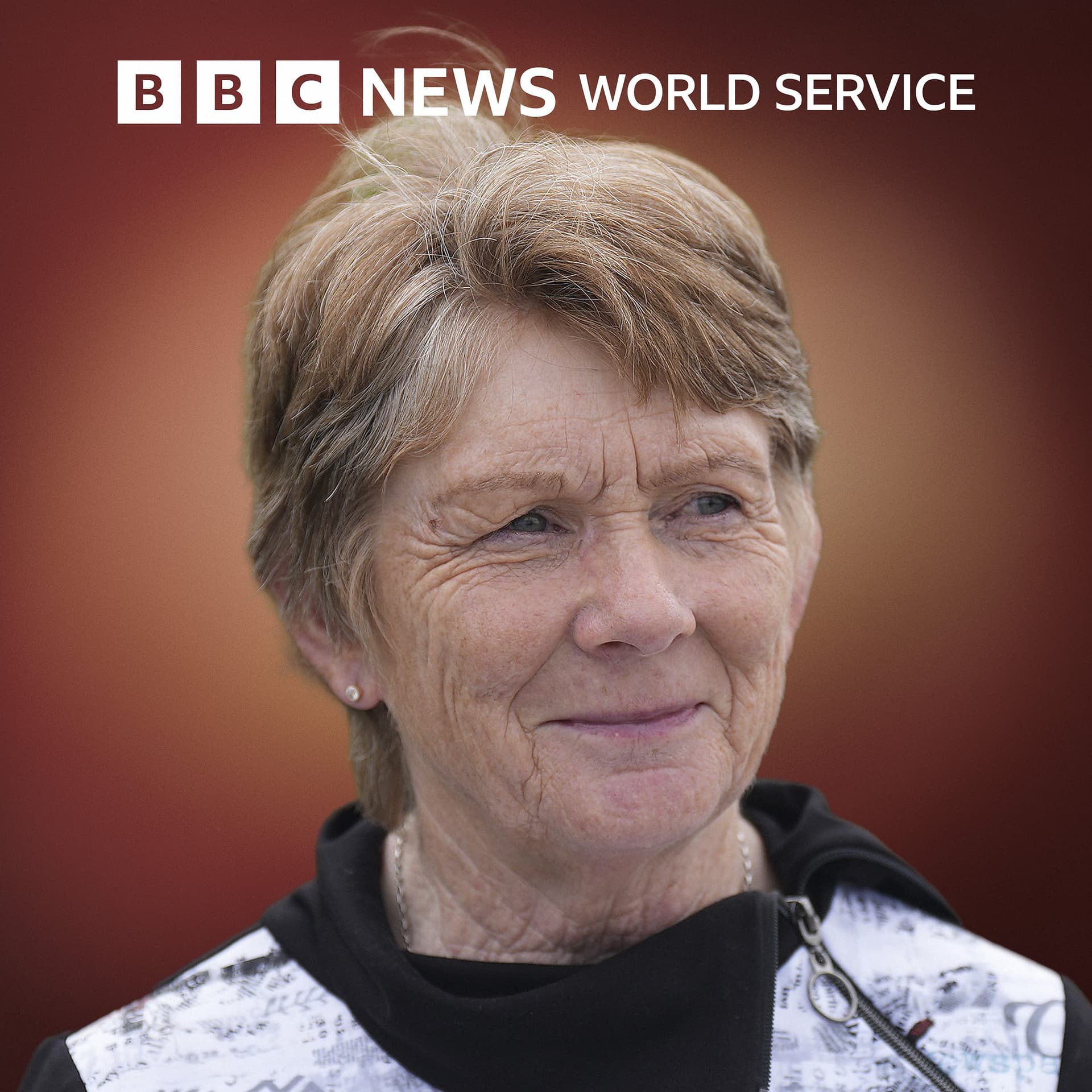
Chris Page, the BBC’s Ireland correspondent speaks to the Irish historian Catherine Corless, who has changed history in her own country.
When she began to research a long-closed mother and baby home near where she lived, she encountered local resistance. But her dogged investigation led to the discovery that hundreds of babies and young children were buried in mass, unmarked graves inside a disused sewage tank at the site in Tuam, Ireland.
Her work led to the discovery of the scandal of Ireland’s historical mother and baby institutions, which housed unmarried mothers and their babies at a time when they were ostracized by Irish society and often their families too. An inquiry launched by the Irish government into the network of homes concluded about nine thousand children died in the eighteen homes investigated.
The revelation led to apologies from the Catholic Church in Ireland, the Irish Government, the council which owned the home in Tuam and the religious order which ran the home. The order has also contributed millions of dollars to a compensation scheme, and to the excavation now underway in Tuam.
Thank you to Chris Page and Chrissie McGlinchey from the BBC’s Ireland bureau for their help in making this programme. The Interview brings you conversations with people shaping our world, from all over the world. The best interviews from the BBC. You can listen on the BBC World Service on Mondays, Wednesdays and Fridays at 0800 GMT. Or you can listen to The Interview as a podcast, out three times a week on BBC Sounds or wherever you get your podcasts.
Presenter: Chris Page Producers: Lucy Sheppard and Chrissie McGlinchey Editor: Nick Holland
Get in touch with us on email TheInterview@bbc.co.uk and use the hashtag #TheInterviewBBC on social media.
(Image: Catherine Corless. Credit: PA)