In short
Podcast Episode Summary: The Interview with David van Weel
Podcast Overview
- Title: The Interview
- Description: A BBC podcast featuring conversations with influential figures from various sectors, including business, politics, finance, sport, and culture. Each episode provides insights into the biggest issues of our time through interviews conducted by BBC journalists.
Episode Details
- Episode Title: David van Weel, Dutch Minister of Justice: Preparing for Disaster
- Host: Anna Holligan
- Producer: Clare Williamson
- Editor: Sam Bonham
- Air Date: (Not specified, but episodes are released twice a week)
Episode Description In this episode, Anna Holligan interviews David van Weel, the Dutch Minister of Justice. Van Weel discusses the importance of citizens preparing a 72-hour emergency kit in light of growing geopolitical uncertainties and potential disasters. This initiative is part of a broader European strategy aimed at enhancing national resilience against various threats, including war and climate change.
---
Key Themes and Discussions
- Emergency Preparedness
- Citizens are urged to prepare a 72-hour emergency kit containing:
- Food and water
- Basic supplies (batteries, power banks, candles, etc.)
- Medications and documentation
- The shift from a 48-hour to a 72-hour preparedness guideline reflects increased awareness of potential risks.
- Geopolitical Context
- The podcast highlights the geopolitical shifts since 2014 (e.g., the annexation of Crimea by Russia).
- Van Weel emphasizes that while the risk of full-scale military invasion in the Netherlands is low, the country faces hybrid threats, including cyber attacks and sabotage.
- The importance of NATO as a significant military alliance is discussed, though concerns about over-reliance on transatlantic support are raised.
- Communication and Awareness
- Van Weel acknowledges the challenge of convincing citizens of the need for preparedness without inciting fear.
- The episode addresses the necessity of balancing urgency with reassurance, highlighting existing hybrid threats that require increased resilience.
- Community and Self-Reliance
- The Minister encourages community-level discussions about preparedness and resilience.
- The idea of self-sufficiency is presented as a way to foster community bonds and awareness of shared vulnerabilities.
- Infrastructure and Local Government Role
- The episode discusses the need for local governments to ensure infrastructure resilience and readiness for various potential disasters.
- Various sectors (e.g., health, agriculture) are urged to develop contingency plans for emergencies.
- Disinformation and Hybrid Warfare
- Van Weel points out the historical context of disinformation in warfare and its modern implications via social media.
- The need for educational initiatives to combat misinformation and raise public awareness about the risks associated with it is emphasized.
- Climate Change and Natural Disasters
- The Netherlands' unique geographical risks (two-thirds of the country lies below sea level) are acknowledged.
- The episode touches on the country’s strategies to combat climate change effects and prepare for natural disasters.
---
Key Takeaways
- The 72-hour emergency kit initiative is part of a proactive approach to national security in the face of growing global uncertainties.
- The conversation highlights the delicate balance between promoting preparedness and avoiding panic among the citizenry.
- There is an increased focus on community resilience and self-sufficiency as tools for coping with potential crises.
---
Conclusion This episode of The Interview provides deep insights into the challenges faced by European nations regarding disaster preparedness, emphasizing the role of individual citizens, local governments, and international alliances. David van Weel's perspective as the Dutch Minister of Justice sheds light on practical measures being taken to bolster national resilience amidst a complex geopolitical landscape.
---
You can listen to this episode and more on BBC Sounds or wherever you get your podcasts.
Written by AI. May contain mistakes. Listen to the episode to check what was said.
Transcript
Automatic transcript. May contain errors.0:00This BBC podcast is supported by ads outside the UK. If journalism is the first draft of history, what happens if that draft is flawed? In 1999, four Russian apartment buildings were bombed, hundreds killed. But even now, we still don't know for sure who did it. It's a mystery that sparked chilling theories. I'm Helena Merriman, and in a new BBC series, I'm talking to the reporters who first covered this story. What did they miss the first time? The History Bureau, Putin and the apartment bombs. Listen on bbc.com or wherever you get your podcasts. Hello, I'm Anna Holligan, the BBC's correspondent in The Hague, and this is the interview from the BBC World Service.
0:48The best conversations coming out of the BBC. People shaping our world from all over the world. I will come back to Russia. I will participate in the elections. There's an increase in violence according to the coca crop. There's no place in the world where women are equal. I will give away the vast majority of my money. It's my full-time focus for the rest of my life. For this interview, I'm in The Hague to meet David van Weel, the Dutch Minister of Justice. Across Europe, people are being urged to stockpile enough food, water and other essential items that will allow them to survive on their own for 72 hours.
1:29This is part of a broader strategy to prepare for potential disasters. Large areas of the Netherlands lie below sea level. The countries witnessed natural disasters, extreme weather exacerbated by climate change, and even in recent weeks, power cuts. The current national alert level is four, which means the risk of a terror attack is substantial. But the renewed focus on readiness also reflects a growing uncertainty. Increasing resilience takes time. It's not only about saving yourselves for 72 hours. It's also about, on a local government level, how do you prepare yourself? Is our infrastructure fit enough?
2:07Is our energy supply resilient enough? And those are big questions that take time to answer. So I think we need to hurry. At the same time, what I say, it's not acute. We are not at risk of being invaded tomorrow. This isn't just about engineering fear for political purposes to justify a push to increase military defence spending. There has been a strategic shift similar to the Cold War era towards peace through strength. There is growing unease about Europe's reliance on transatlantic alliances and the unpredictability of US support under the new administration, which has made many in Europe feel it might be in a situation where it's left to stand alone.
2:53Dutch citizens can no longer take peace and stability for granted. Welcome to the interview on the BBC World Service with David van Weel. After the end of the Cold War in 89 through to 91, we believed that it was the end of war, it was the end of conflict, and that all we would be doing is to help other countries come to the same realisation and democracy would spread. And I think slowly since 2014, we've been waking up to the fact that we need to defend ourselves, that our territorial integrity, that our democracy should not be taken for granted. And we've slowly started to increase our defence spending.
3:34But what we haven't done is go back to the mentality of being more resilient as a population as we used to be in the Cold War. So that's why I believe that the comparison to the Cold War stands. We need to be as aware, as vigilant as we were back then. And just so we're clear, 2014, that's a reference to when Russia occupied and annexed Crimea before Vladimir Putin's full-scale invasion of Ukraine. It was. And of course, for Netherlands, it was also the year that MH17 was downed. And I also see that as an awakening of the Dutch public to the fact that geopolitics play a role also in that case.
4:13Flight MH17, that was the Malaysia Airlines plane shot down by a Russian-made surface-to-air missile. Until now, the government's advice has been for people living in the Netherlands to have enough food and water in-house to survive 48 hours. Since this month, it's been 72 hours. So what's changed? Well, we came from zero. So the 48 was a first initial step to make people more aware. Since then, a lot has happened. We also had the report of former President Nisto, who advised the EU on what he thinks should be done in the field of preparedness. And his advice was also to increase to 72 hours. So we followed that immediately.
4:58How would you characterize the current risks, first of all in the Netherlands and then across Europe? Yeah, so we live in challenging times. And we all know that there's a full-scale war going on in Ukraine, just 1 ,500 kilometers to the east of here. That's not far away, but it's still further away than some countries that are closer to the eastern flank, for example, Poland or the Baltic countries. So, of course, the risk of an imminent invasion into the Netherlands is low. But then again, full-scale military invasions are not the only threats that we're facing. Since the full-scale invasion, We've had over 150 determined Russian sabotage acts all across the territory, also in the Netherlands.
5:43We've seen millions of cyber attacks happening. We see cables being cut. So there's the need to prepare for things, even though a full-scale war might not happen on our territory, as soon as it might in some Eastern European countries. Given the geopolitical shifts that we're seeing, especially since Donald Trump returned to the White House, is Europe right to still feel protected by NATO? So I think NATO is a formidable alliance and it's the strongest military alliance that has served us for over longer than any other military alliance in history and it's our best insurance for peace. So yes, I do believe that Article 5 still holds and I do believe that that provides us with a good deterrent.
6:29But then again, also that counts mostly in the military domain. So it's a deterrent against invasions or military incursions. But what we see happening already now is that hybrid attacks, such as the cable cutting I mentioned, or the cyber hacking into our critical infrastructure, those attacks are already happening. So there, NATO is not so much a deterrent. And what we need to do is prepare ourselves and make ourselves more resilient. So that becomes a deterrent against these kind of attacks. Is Donald Trump a threat to NATO? Not necessarily. I think the US is still vital to European security and Donald Trump still adheres to NATO and the alliance.
7:11But he does have a different tone. He does believe that Europe needs to step up for its own security. And I think we need to do that. But they can go hand in hand. We can be a part of NATO. We can have a joint security umbrella. At the same time, step up as Europeans. And we need to do that. From the perspective of a relatively stable democracy, the prospect of disaster feels incongruous to many people here. How do you convince them that they need to prepare without being accused of scaremongering or alarmism? Yeah, that is a very difficult balance to find because at the one hand, I believe we really need to hurry up because increasing resilience takes time.
7:53It's not only about saving yourselves for 72 hours. It's also about, on a local government level, how do you prepare yourself? Is our infrastructure fit enough? Is our energy supply resilient enough? And those are big questions that take time to answer. So I think we need to hurry. At the same time, what I say, it's not acute. We are not at risk of being invaded tomorrow. But at the same time, as I said, we do have these hybrid attacks going on. So resilience already plays a part in our life now. So it is a balance between not alarming people, but enabling people to actually take care of themselves, their companies, their local communities, and do it at a fast pace.
8:41Across the border in Germany, they're talking about the need for all new-built homes to include a safe room. what's the Dutch government doing to ensure people especially the most vulnerable are protected if there is a disaster? Absolutely and that's where I do believe that the 72-hour self-reliance triggers all kinds of questions because people start up with their own cellar and what they need to have for their own family but then they start to think about grandmother who's in an apartment building and can't get down if the elevator doesn't work and then they start to think do I have fuel in my car and how do I make sure that it never runs out?
9:20And then they think, well, how am I going to pay for fuel if I need fuel? So the whole aspect of creating self-reliance automatically leads to questions about broader communities, families, and caring more about each other. And I think that that's the greatest benefit and the greatest resilience of a society. So what we're trying to do is to map out the scenarios and create tables where we can discuss with different sectors, with companies, with local governments, what would such a scenario mean for you? If you're a mattress company, what would you do in case a conflict breaks out? Are you still producing mattresses?
10:02Or do you have another plan for contributing to keeping our society going? What happens if you're a farmer with livestock animals, but the most of the feed for the animals comes from abroad. What if the Port of Rotterdam is blocked for a few weeks? And how would you then feed your animals? Those are the kind of questions that we want companies, farmers, civilians, local governments to think about in order to increase the resilience.
10:32You're listening to the interview from the BBC World Service. People shaping our world from all over the world. If journalism is the first draft of history, what happens if that draft is flawed? In 1999, four Russian apartment buildings were bombed, hundreds killed. But even now, we still don't know for sure who did it. It's a mystery that sparked chilling theories. I'm Helena Merriman, and in a new BBC series, I'm talking to the reporters who first covered this story. What did they miss the first time? The History Bureau, Putin and the Apartment Bombs. Listen on BBC.com or wherever you get your podcasts.
11:17For this episode, I'm speaking to David van Weel, the Netherlands Minister of Justice, in his office overlooking the international city of peace and justice that earned its name on account of attracting organisations like the International Criminal Court in Europol. In fact, David van Weel is well-placed to talk not just about domestic, but global security. Before this job, he spent four years working as NATO's Assistant Secretary General for Innovation, Hybrid and Cyber, advising the NATO boss on maintaining NATO's innovative edge. David spoke about Russian sabotage attacks on the Netherlands, which are really difficult to prove.
11:56But the feeling of insecurity is clearly growing, and that's why citizens are being told about preparing for all eventualities. So what's in these kits? Well, if you've ever been in the guides or scouts, you'll have a good idea. Enough bottled water to last yourself for three days. Tins of beans, dried lentils, power bank, maybe a camping gas stove, water filter tablets, candles, matches and medication, identity documents. And don't forget the pet food. OK, let's return to my conversation with the Dutch Justice Minister, David van Weel. It's kind of surreal, actually, hearing you say these things.
12:35The Netherlands, though, is on threat level four at the moment in terms of terrorism. Do you think these are seriously things that everyone in the Netherlands should think about, that they need to have their 72-hour kit stockpiled? I do believe so, because if you don't have it stockpiled, then you would need it at some point in time. And that doesn't have to be a full-blown military conflict. We had a power outage here in The Hague just last week. Well, fortunately, that only lasted for a number of hours. But if that would happen for more than 24 hours, how are you going to cook? What are you going to eat?
13:10The shopping mall will probably be closed because there's no electricity, so they can't produce the sales that they need to make. So it's not that wild to be kind of self-resilient in some shape or form, especially knowing that an actor like Russia is already committing sabotage on our territory. One survey by a primetime news programme found 57 % of people living in the Netherlands have an emergency kit at home or plan to get one soon. Are you one of them? I think I can last a little bit longer than 72 hours. But the neighbours are welcome if they need it. So it consists of water, of course, enough fluids to last the family.
13:55I have three children, so we need a lot of that. Then we have foods that stay good for a long time, like kidney beans, things that you can easily warm up, don't require your precious water. And then there's all kinds like muesli bars and things that you don't need to do anything with but can just eat. So we'll be fine for, I would say, at least a week. Then we have a barbecue that works on gas. So if there's no cooking, then that would be our cooking form. We have an open fireplace, so if there's no central heating, no electricity, we can keep ourselves warm. That's the way we thought about comprising this package.
14:40I've actually been down inside the World War II Nazi bunkers on the coast, the Atlantic Wall. Are there any plans to refurbish these or the Cold War infrastructure? So this is something we need to think about. but it will probably look different than it did during the Cold War. So maybe we don't have to build dedicated shelters. They didn't do that in Ukraine. They're using the underground system there as a main focus or big buildings which nowadays have a lot of layers of parking lots underneath built to withstand a lot of pressure. So I think there are safe areas in most municipalities where you could go to shelter in case that's needed.
15:33But it's up to municipalities to look at that more broadly. One Cold War atomic bunker here in The Hague is being transformed into an underground cultural centre, complete with a recording studio. What did the Dutch Cold War shelters actually look like? Well, very basic, actually. So there were basic underground shelters with some blankets, some mattresses. But other than that, people had to really take care of themselves as well. So it's not like you enter a five-star hotel. It's for a short shelter in case of an air raid. And even now, probably if you're in a big city, and let's be honest, that's probably where air raids would happen.
16:19they would not happen in small country towns in the region so if that happens well look at a big building like the one that I'm sitting in now the Ministry of Justice and Security which is a high rise which has an underground parking under it it's probably one of the safer places to be There will be a lot of entrepreneurs and start-ups listening to you and thinking there's a lot to explore here what kind of opportunities exist do you see in terms of self-preservation and resilience opportunities and risks i have to say because already we've seen that with the call of the government to be more self-reliant there's also fraudsters that come into play that will offer you emergency packages at a very low bargain price and then you end up with no package at all So there's always criminals that try to jump on the bandwagon.
17:15So let me use this opportunity to warn people to make sure that you have a reliable salesperson here. But I do think that new technology is going to make us think about resilience in a different way than we did during the Cold War. For example, now, as opposed to in 1989, where you had fixed landlines, we all have a mobile phone. So how do you keep your mobile phone charged? and what if your extra batteries run out after 72 hours because this is our main form of communication. So local communities need to think about that. Do we have emergency aggregates to make sure that people can come, charge their phone, have communications and then leave for doing their normal business again?
18:03How are we going to warn the population? We still have the alarm system here that sounds every first Monday of the month at 12 o 'clock, but it only makes a sound. It doesn't tell you what's going on or what you should do. So maybe we can think of new technologies playing a role in alerting people in a smarter way and then also using them in order to provide information on the situation on the ground. I think there's a lot of these things that are happening in Ukraine. At the moment, under huge pressure, this society is learning all the resilience lessons that we could hope to learn for the future, also in the field of innovation.
18:42And how about self-sufficiency in terms of growing food? Is that something you'd like to see Dutch people doing more, of growing their own fruit and veg? Yeah, but maybe do it with your whole street. And then you get the skill favour, and it might also be a nice community project. I mean, it's also the fabric of society which creates resilience. and from working together on these kinds of projects on a local level, on a community level, on a city level and on a national level, I think also benefits our society where it's become a bit more individualistic and that's something we shouldn't have when a crisis arises.
19:24In the European Commission Preparedness Strategy, they talk about education for children and the risk of disinformation. What will the Netherlands be doing in that area? Because I remember during COVID, there was such a strong COVID denial lobby pumping out disinformation. Also, during MH17, when Malaysian Airlines jet was shot down by a missile that came from Russian-occupied Ukraine, the Russian troll factories pumped out misinformation. Is society in the Netherlands prepared with systems to educate society to be aware of these kinds of rogue players? No, I think we need to be aware that disinformation, let's be honest, disinformation has been a part of hybrid warfare for thousands of years.
20:12I mean, breaking the morale of an enemy army was also done in the Roman times by faking losses in other areas. and thereby depriving them of morale. So this information is not new. What is new is the media that is being used, which is social media, which reaches a lot of people very, very quickly. And then the algorithms that those social media companies have, which tend to reinforce the kind of messages that people have already read. Well, I think we're seeing a risk of that in polarization in society. We see a risk of that in radicalization, which can happen really, really quickly. and online.
20:52We can see it in the field of youth and depression or youth and eating disorders, where these social media play not only a constructive role, let's put it euphemistically. So I think that's something we need to tackle, the phenomena of social media in itself. How do we make sure that it keeps benefiting society instead of also being misused by our adversaries? We have a program now where we want to see that people get redirected if they land on illegal sites or if they tend to go down a rabbit hole. So at least you give them an alternative. We also have an authority now in place that is able to ask from these companies to take down any images or content that violates the law when it comes down to terrorism or child pornography.
21:43and that's an avenue I think we need to look at broader but also in a European perspective. If we have everything arranged for the Netherlands then in Belgium, which is right next door, the same things will happen. So it's something we need to do at a European level. Obviously in a country like the Netherlands, two-thirds below sea level, climate change and rising sea and river levels are a big threat. But then when you look outside, on a beautiful spring day like today, tulips, canals, people cycling everywhere. It's hard to get your head around this. It's almost incongruous that there could be a disaster tomorrow.
22:25We've talked about some of the potential risks, but what are the biggest threats faced by the Netherlands today? So what we're working on now is to prepare ourselves against hybrid and military threats. And the reason we're doing that is because that requires That's the most preparation. It's the highest level of disaster that you could actually, that could overcome yourself as a nation. So that's what we're preparing for. Because if we're prepared for that, then most likely we also have an adequate resilience structure in place for lesser disasters or more local disasters or regional disasters.
23:05And you mentioned, rightly so, flooding, which comes from two ways. By the way, in the Netherlands, it comes from the sea, but it also comes through the rivers, which is what we've seen more recently in the Netherlands, but also in Belgium and Germany. Definitely a risk. We also had a large bushfire last week in the east of the Netherlands as a result of a military exercise. And that created a lot of nuisance for people in the surrounding area. So you never know what will happen. We talked about the power outage that we had here in The Hague. You never know when such a disaster will happen. Hopefully we will have some kind of warning when it comes down to military threats, but hybrid threats are already around us.
23:52Sabotage actions are taking place already now, so we need to be prepared anyway. Thank you for listening to the interview from the BBC World Service. If you enjoyed today's programme, remember you can listen to the interview wherever you get your BBC podcasts. Until the next time, goodbye for now.
24:39I'm Helena Merriman, and in a new BBC series, I'm talking to the reporters who first covered this story. What did they miss the first time? The History Bureau, Putin and the apartment bombs. Listen on bbc.com or wherever you get your podcasts.
From the publisher
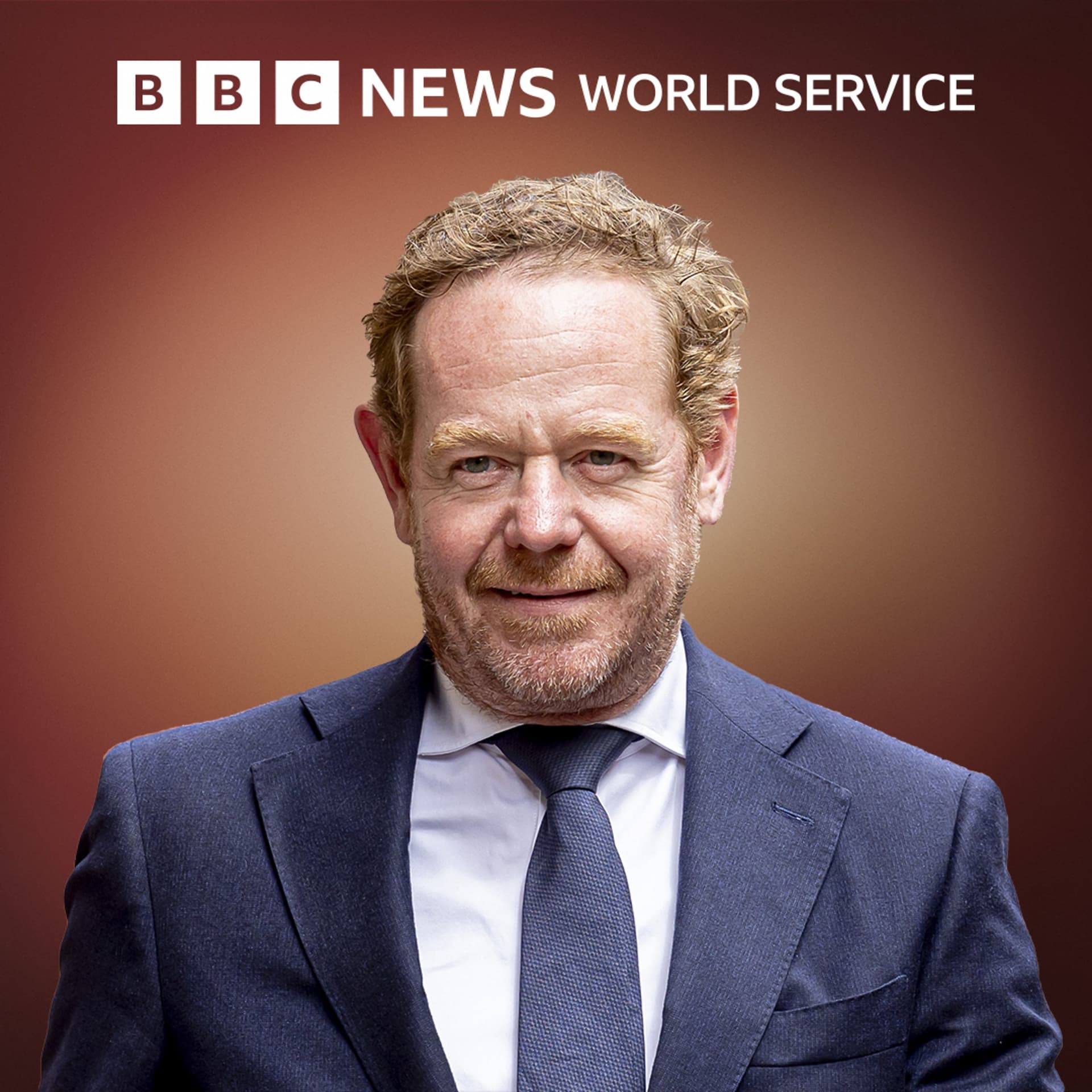
BBC foreign correspondent in the Netherlands, Anna Holligan, speaks to David Van Weel, the Dutch justice minister as he calls on citizens to prepare a 72-hour emergency kit - to enable people to be self-sufficient for three days in case of a disaster.
The kits should include enough food and water to survive for 72 hours - in case of war and other catastrophes. It's part of a European-wide strategy as geopolitical uncertainty spreads globally.
He tells us the nature of the risks and where they’re coming from and whether Europe should still feel reassured about NATO defence. The Interview brings you conversations with people shaping our world, from all over the world. The best interviews from the BBC. You can listen on the BBC World Service, Mondays and Wednesdays at 0700 GMT. Or you can listen to The Interview as a podcast, out twice a week on BBC Sounds, or wherever you get your podcasts.
Presenter: Anna Holligan Producer: Clare Williamson Editor: Sam Bonham Get in touch with us on email TheInterview@bbc.co.uk and use the hashtag #TheInterviewBBC on social media.
Image: David van Weel (Credit: Patrick van Katwijk/Getty Images)