In short
Podcast Notes: The Interview - Emi Mahmoud, Poet: Has the World Abandoned Sudan?
Episode Overview
- Title: Emi Mahmoud, poet: Has the world abandoned Sudan?
- Presenter: James Copnall
- Producers: Clare Williamson, Lucy Sheppard, Madeleine Drury
- Editor: Max Deveson
- Release Date: [Insert Release Date Here]
- Duration: Approximately 20 Minutes
- Theme: Discussion on the ongoing humanitarian crisis in Sudan, focusing on the war in Darfur and its impact on civilians, particularly women and children.
Key Themes and Concepts
- Humanitarian Crisis in Sudan
- Duration of Conflict: The war has been ongoing for two years, resulting in over 150,000 deaths and the displacement of about 12 million people.
- Genocide in Darfur: Emi Mahmoud describes the conflict in Darfur as genocide, emphasizing the systematic targeting of civilians.
- Personal Impact and Trauma
- Loss of Family: Emi shares her personal experiences of losing family members, highlighting the emotional toll of repeated displacements and violence.
- Destruction of Zamzam Camp: The Zamzam camp, once a sanctuary for displaced people, was recently destroyed, resulting in further displacement and suffering.
- Gender-Based Violence
- Trafficking of Women and Girls: Emi discusses the alarming increase in trafficking and sexual violence against women and girls during the conflict.
- Cultural Significance: The traditional clothing (tobs) worn by Sudanese women is used against them during abductions.
- Community Resilience
- IDP Networks: Despite the destruction, community efforts have created networks that provide food, medical care, and education to those affected by the war.
- Role of Poetry: As an award-winning poet, Emi uses her art to advocate for her people and raise awareness about the crisis.
- Call to Action
- International Response: Emi urges the world to take notice of the crisis and to support efforts to end the conflict, emphasizing that this is not just a regional issue but a global concern.
- Civilians' Role in Peace Talks: She stresses the need for civilian voices to be included in peace negotiations and decisions affecting their lives.
Key Quotes
- "The worst thing about genocide isn't the hunger, the murder, the politics... It's the silence."
- "For us, it's every single day."
- "We need the world to wake up and to see us."
Conclusion
- Ongoing Struggle: The episode highlights the dire situation in Sudan while showcasing Emi Mahmoud's resilience and commitment to advocating for her community.
- Urgent Appeal: There is a pressing need for international attention and action to address the humanitarian crisis in Sudan.
Listening Information
- Where to Listen: Available on the BBC World Service, BBC Sounds, and various podcast platforms.
- Engagement: Listeners are encouraged to reach out via email at TheInterview@bbc.co.uk and use the hashtag #TheInterviewBBC on social media.
---
These notes encapsulate the pressing issues discussed in the podcast episode featuring Emi Mahmoud while also providing an overview of her personal narrative and the broader implications of the ongoing crisis in Sudan.
Written by AI. May contain mistakes. Listen to the episode to check what was said.
Transcript
Automatic transcript. May contain errors.0:00This BBC podcast is supported by ads outside the UK. If journalism is the first draft of history, what happens if that draft is flawed? In 1999, four Russian apartment buildings were bombed, hundreds killed. But even now, we still don't know for sure who did it. It's a mystery that sparked chilling theories. I'm Helena Merriman, and in a new BBC series, I'm talking to the reporters who first covered this story. What did they miss the first time? The History Bureau Putin and the apartment bombs Listen on bbc.com or wherever you get your podcasts From the Winter Olympic and Paralympic Games To the European Athletics Championships The 2026 sporting calendar is packed full of big events Keep up with all the action with More Than The Score The podcast that goes beyond the score sheet Join expert BBC sports journalists every Monday to Friday For interviews with sports stars, big talking points and the stories behind the headlines.
1:07More Than The Score from the BBC World Service. Listen now, search for More Than The Score wherever you get your BBC podcasts.
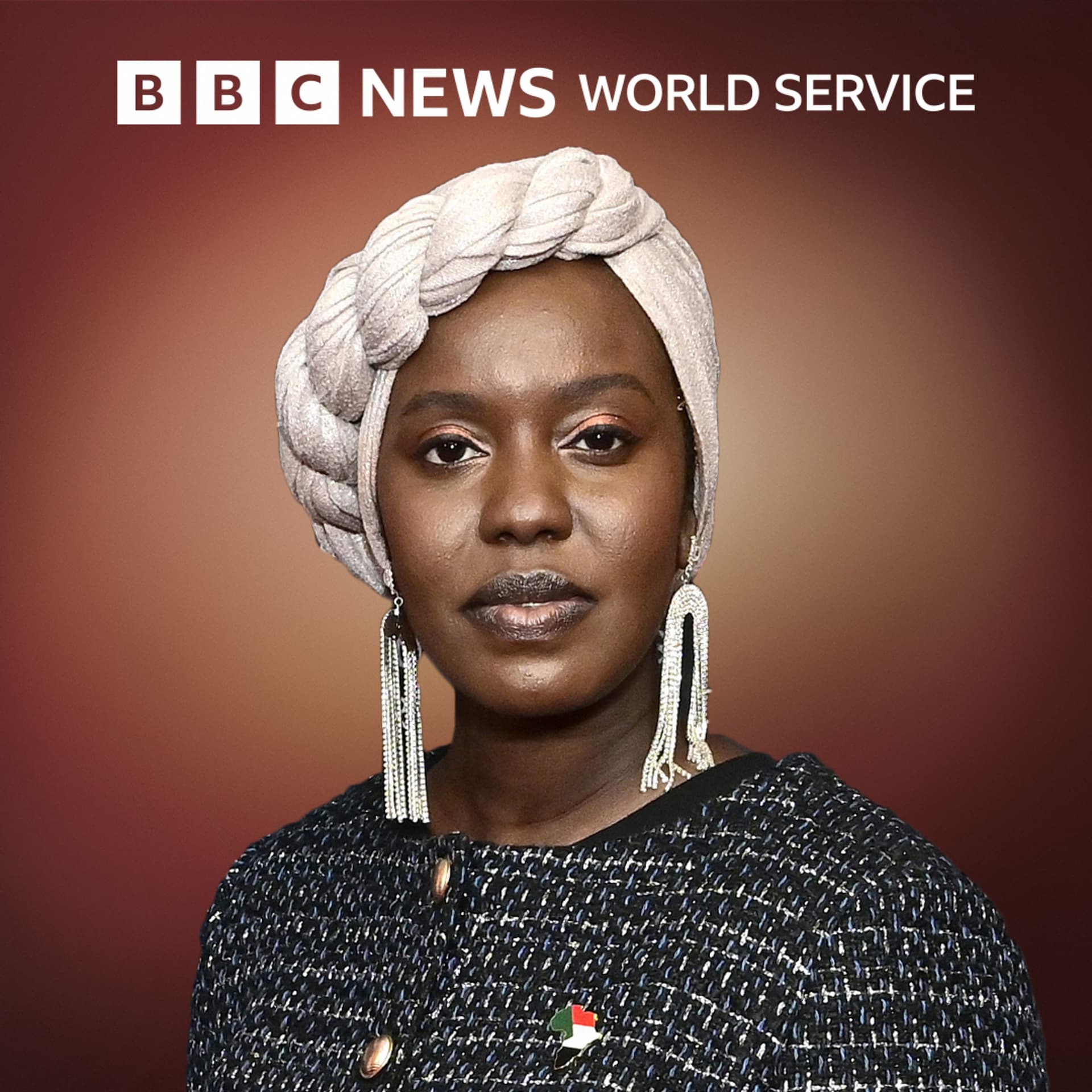
1:19Hello, I'm James Cocknell, presenter of Newsday, and this is the interview from the BBC World Service. The best conversations coming out of the BBC. People shaping our world from all over the world. I will come back to Russia. I will participate in the elections. There's an increase in violence according to the coca crop. There's no place in the world where women are equal. I will give away the vast majority of my money. It's my full-time focus for the rest of my life. For this interview, I meet Emi Mahmoud, activist and poet from the Darfur region in the west of Sudan, who spoke to me from her home in the USA.
2:02Emmy describes life in Darfur's recently destroyed Zamzam camp for displaced people in powerful detail. She talks about the loss of life so frequent it feels like there is not enough time to mourn and the brutality of the fighting taking place there that she believes to be genocide. You're going to hear what it's like to be displaced over and over again and about the trafficking of women and girls in Darfur. Her interview contains descriptions of violence you may find distressing. The war in Sudan began two years ago between the army and a paramilitary group with its roots in the notorious Janjaweed militia and has claimed around 150 ,000 lives.
2:44Emmy is calling on the international community to do more, to look, to listen and to act. She's an award-winning poet, and she uses her writing to tell the stories of Sudan. Our parents came home with broken collarbones and a taste of fear carved into their skin, and it was impossible to believe in anything. Fear is the coldest thing in the desert, and it burns you, bows you down to half your height, and owns you, and no one hears you. Welcome to The Interview from the BBC World Service with Emi Mahmoud.
3:20Zum Zum was the largest IDP camp in Sudan until it was completely destroyed and fell to the RSF just recently. Before that, there were many heavy days of shelling and artillery and RPGs and all of this terrible, terrible attack that was happening in a place that's supposed to be a place of refuge. So this place where a lot of my family have lived for almost 20 years, the place where I used to teach and celebrate and mourn and eat with my family and just spend time on my visits, Zamzam, and also at Abshok IDP camp, as well as the birthing hospital in El Fashir. So Zum Zum just completely was destroyed.
4:07And hundreds of thousands, by our estimates, maybe millions, were forced to flee. And in that way, a lot of our family became almost some four times displaced or more. And what's so terrible about all of this is so many died and it was all preventable. You say four times displaced or more for some of your family members. Can you just explain that a bit, unpack that a bit? Because I suppose it goes to the history, the continuing legacy and continuing history of the conflicts in Darfur over at least a couple of decades. Yes. In 2003, the world recognized the Darfur genocide. And that was when a lot of our family were killed.
4:54400 ,000 people were killed in the Darfur genocide and millions displaced. And 2 million were internally displaced and stayed internally displaced for more than 20 years, including my family members. And during that time, there were no social protections or programs from the government. During that time, we all stepped in together and just built this network that kept everyone going. When I say four times displaced, I mean, for example, my family were already displaced at the start of the war. Then they were displaced again. And when I say the start of the war, I'm in the start of the genocide in 2003.
5:32So they were displaced from one area of Darfur to another area. and then the attacks continued and so they had to move again and again until they finally landed in Zamzam. And as you say you have many family members who at least until very very recently were in Zamzam camp. What sort of news have you had from them in the last couple of weeks? We've been warning the world for over a year that this would happen, that Zamzam would be attacked because El Fashad was under siege. And it still is under siege. It's completely surrounded by the RSF. And there's no aid that's allowed in. And there's so much more that's happening.
6:12So this man-made famine hit Zamzam really hard before the attacks. So MSF reported that a child was dying every two hours in Zamzam. And this was a year ago that they reported this. So the famine conditions and the conditions in the camp were awful. And it continued to grow worse. when our families' villages were burned. So a lot of indigenous people's villages were burned in Bir Mazda, which was starting in October. So more than 100 villages were burned by the RSF. All of those peoples who were displaced, all the people who were displaced in North Darfur, then would move to Zamzam, which became the safest place.
6:51Because over time, before the war, we had built Zamzam up to be this sanctuary and this place that actually really benefited not only the people who lived there, but the host community as well. But yeah, the things that we've been hearing were absolutely devastating. So one of the most harrowing things we heard was that our sisters, so several of my extended family members, women and girls, so several women and girls from my extended family members, about 58 of them, were kidnapped by the RSF. They were seen by eyewitnesses who were fleeing Zamzam being tied up by the tobs that they wear. So tobs are these colourful, sari-like pieces that we wear in Sudan.
7:31And, you know, they took them from them and they tied them with it. And we're still trying to track them and figure out what happened to them. 58 of the girls, women and girls in my family, the youngest were high school age, about 14 years old. And there have been accounts already in this war of the RSF using women as sexual slaves. So I imagine some of the fears going through your head right now must be, well, extreme. Trafficking is huge in this war and in other wars. But in the Sudan war and in the times of Darfur and in general, trafficking of women and girls and just the sexual violence, gender-based violence is the weapon of war has been terrifying.
8:15And a lot of times I think that people underestimate how brutal this war is and they don't really hear about what's happening. But for us, it's every single day. And if you're racing against time to find them, you know, the worst could happen if we don't find them soon. You say trying to find them, but in those sorts of conditions with displaced people displaced once again, fleeing in all sorts of directions, the RSF fighting against the Sudanese military and some of its allies, what is it possible for civilians to do? What we've been doing for decades, in Darfur for decades, disenfranchisement, political isolation, economic isolation, lack of any sort of government protection or social protections or government structures that actually support IDPs and survivors of the genocide.
9:14In those really harrowing conditions, everybody steps up. And this is from our indigenous culture in Sudan, especially in Darfur. I say this as an indigenous African woman. In our culture, communal living and teaching and our food practices and all of these different things are what help us survive. And so this is what became the IDP network over time, the IDP humanitarian network. We built all of the IDP camps. We built the schools, the clinics, including Zimzim Clinic, which we started in 2008. What civilians can do is just incredible. It's more than just surviving. We move mountains. We keep an entire nation going and we keep hope alive.
10:02And we raise the alarm. This isn't something that's happening isolated, far away, and will never affect you. Sudan's crisis is the largest humanitarian crisis of our time. And by some count, 15 million people got displaced in about two years externally. Now, imagine that many people spilling out into neighboring countries that are also dealing with crisis and also dealing with a lot of pressure. It's something that affects the entire world. And the kids that are trafficked and the women and the girls who are trafficked, they don't just end up in another part of Sudan. They end up in other parts of the world.
10:42What's so beautiful about what has happened when people started to pay attention, just a little bit of attention, is that we've been able to ramp up civilian efforts. There's so many civilian networks and organizations that are using our knowledge of Sudanese people to try and push and create some sort of change. When you were talking about the impacts on your family in Zamzam, you said just very briefly relatives killed. Yeah. That seems so devastating. And I wondered if you almost skipped over it because it's too painful, or if simply it's something that has happened so often that it almost passes without comment.
11:25It's really hard to talk about because it's not just painful, but it's ongoing. And we had lost family members, three of my cousins. But even after that, we lost more family members. And it's ongoing. My cousin that passed away, he was killed by RPG. Rocket propelled grenade. Yes, he was killed by the rocket propelled grenade from the RSF. He was walking home after having just escaped ZemZem. And he was with three other women about his age. He was 22 years old. And before he could get there, the RPG, the rocket propelled grenade came down and that was it. We lost him and we lost three community members along with him.
12:19And there's no accountability for it. There's no, you know, there's no justice and there's nothing that we were able to do. Another particularly painful story was another uncle of mine, my great uncle. And although the stories of exactly what happened that led to his final moments are almost impossible to comprehend, you know, they said that his brother, who's my other great uncle, had a cell phone case. And the RSF saw that case and they said, you know, is that a phone? And he said, no. And they said, so where's the phone? And he said, I don't have it. He just had the case. And so they decided to shoot him in that moment for essentially defying them in their eyes.
13:09And they missed and they hit my great uncle who was in his 80s. So children are not spared. Elderly are not spared. Young people are not spared. No one is spared. Women are not spared. Girls are not spared. Nobody is spared. And I have several other family members who were killed. And I have cousins and friends and family whose children died of thirst on the 58-kilometer walk to Tawila. There's just so much pain. But like you said, because it happens and it's ongoing, it's like we don't even have time to stop and mourn. We have to keep fighting to end this war. And all we need is just the world to pay attention and support in ending this war.
13:58I'm really sorry for your many losses. I think people would perhaps want to know why the RSF would target a camp for displaced people. In Darfur, there is nowhere safe to go. And it's the same thing as to why the RSF would attack a sanctuary, a safe place for people to go. So the biggest casualty of this war between the RSF and the SAF is the people, innocent civilians who just want to live life and just want to be home and watch their children grow up. And why would the RSF attack a civilian camp? It's the same reason why they use starvation as weapon of war, why they use gender-based violence as a weapon of war, why they are still continuing the siege of al-Fashir despite, you know, statements by the UN and whoever else.
15:06It's because they want our people to understand that there is no place that is safe, that we are to be annihilated. You know, it's like if you don't submit, if you don't follow, you'll be annihilated. And even if you do acquiesce or act peacefully by living, literally leaving your home and being in an IDP camp, if you are Indigenous, there's no place for you. So for me, I feel very hollow in this moment, but I also feel a tinge of hope because of what I'm seeing our people being able to do.
15:49You're listening to The Interview from the BBC World Service. People shaping our world from all over. If journalism is the first draft of history, what happens if that draft is flawed? In 1999, four Russian apartment buildings were bombed, hundreds killed. But even now, we still don't know for sure who did it. It's a mystery that sparked chilling theories. I'm Helena Merriman, and in a new BBC series, I'm talking to the reporters who first covered this story. What did they miss the first time? The History Bureau, Putin and the apartment bombs. Listen on BBC.com or wherever you get your podcasts.
16:30From the Winter Olympic and Paralympic Games to the European Athletics Championships. The 2026 sporting calendar is packed full of big events. Keep up with all the action with More Than The Score, the podcast that goes beyond the score sheet. Join expert BBC sports journalists every Monday to Friday for interviews with sports stars, big talking points and the stories behind the headlines. More Than The Score from the BBC World Service. Listen now. Search for More Than The Score wherever you get your BBC podcasts.
17:11The World. For this episode of The Interview, I'm speaking to Emi Mahmoud, following an attack on a camp for displaced people in her homeland of Darfur in Sudan, which destroyed the homes of several hundred thousand people. I've interviewed Emi a few times, and one thing that always strikes me is how powerful a speaker she is. She knows not just the right words to choose, but also the most meaningful way to deliver them. She puts those skills to great use in this interview. She understandably cares a huge amount about what is happening in Darfur and in Sudan as a whole, and wanted to use every tool she had to make the world know too, and to make the world care.
17:51Okay, let's return to my conversation with Emi Mahmoud. A very common complaint I've heard from Sudanese over the last couple of years is that simply, not that the world doesn't know what is happening, but the world is choosing to ignore Sudan. And at the height of the genocide 20 years ago in Darfur, there was, in America, for example, huge public interest in it. Celebrities, George Clooney and others were campaigning about Darfur. compared to that it seems there's an awful lot of silence indifference maybe around the world right now is that how it feels to you yeah absolutely um it feels that you know it's funny because you mention um all the celebrities and everybody who used to pay attention to Darfur and I remember meeting a lot of them I remember meeting President Obama when he was a senator back uh in back stage of the National Mall.
18:48I remember Don Cheadle. I remember George Clooney. I remember all of these people who seemed to care about Darfur a lot in that moment. And I remember that vacuum that was left when they and the rest of the world turned away from Darfur. You know, we were left to pick up the pieces. And that's how we kept everyone alive for those 20-something years. I became a public speaker when I was 10 years old and I spoke up about Darfur. And even though at first nobody saw us, when the world did see us, there was this hope that something would change. But I think what's scary about the international community is that every now and then they'll put their finger on the scale and then just leave, right?
19:33That's not what we're asking right now. When we say we need the world to wake up and to see us and to recognize us, we mean we need the world to partner with us and end this war against the people. A lot of headlines say that this is a civil war, but on the ground, we reject that because in our family groups, in every call, in every crisis response that we create and we lead, we're talking about how we want this war to end. We're talking about how, you know, we don't consent to this war. And what I think the world needs to do is put pressure on not just the warring parties, but all of their funders.
20:17It's one thing to help us through funding, which we do need, especially considering the cuts to USAID and so many other initiatives. And funding helps us keep people alive through our community kitchens in the Darfur IDP network, for example. We're keeping people from famine through our community kitchens where we also have our mobile clinics and we're setting up schools again because we had set them up before but yeah that that's something that people can help with yeah so I think what's strange but also perhaps something that can be used in this moment about the the world stage and how the world works currently is that countries can speak to each other, but sometimes the people are not heard.
21:05So we want the countries to come and meet us as equals. Civilians should be an equal party to the peace talks and our voices should be heard and our approval should be sought for whatever happens next because we have to live with the consequences. The last thing that I'll say about all of this and about the world paying attention is that, you know, we young people pushed so hard for there to be democracy in Sudan. And the RSF and SAF cooperated in 2021 to create a coup that ended up erasing that possibility that was won by a woman-led revolution. I walked across Sudan in 2018 ahead of the revolution, and I was there in December when it started.
21:52And we were able to essentially change the status quo of 30 years in that moment all of us young people especially those on the ground who pushed and some who gave their lives for this one of the ways that you make your voice heard is through your poetry raising awareness perhaps also I suspect a way of coping with some of the things you have to endure is it possible you could share perhaps one of your your latest pieces with us Yeah, I would love to.
22:54The first time I saw bomb smoke, it didn't wind and billow like the heat from the kitchen hearth, but it forced itself on the Darfur sky, smothering the sun with tears that it stole from our bodies. The worst thing about genocide isn't the hunger, the murder, the politics, the government-paid soldiers that chase you across borders and into camps. It's the silence. For three months, they closed the schools down because people like us are an eyesore. So the first month, we took it. The second, we waited. The third month, we met underneath the date palm trees, drinking up every second our teachers gave us, turning fruit pits into fractions.
23:32On the last day, they came with a message, put them in their place. We didn't stand a chance. Flesh was never meant to dance with silver bullets, so we prayed for the sun to come and melt daggers from our backs, lifted our voices up to God till the clouds were spent for weeping in the sand. Beneath our toes echoed with the song of every soul that ever walked before us. I hid underneath the bed that day with four other people Twelve years later and I can't help but wonder where my cousins hid When the soldiers torched the houses through the bodies in the wells So if the weapons didn't get you, the poison would And sometimes they didn't want to use bullets because it would cost them more than we did But what does it matter?
24:11I've seen sixteen ways to stop a heart when you build nations on someone's bones What sense does it make to break them? In one day, my mother choked on rifle smoke My father watched the blood from his face. My uncles carried half the bodies to the hospital and the rest to the grave. And we watched. For every funeral we planned, there were 60. We couldn't have the sand in the Sahara. Tastes a lot like powdered bone. And when the soldiers came, our blood on their ankles. I remember their laces. Scarlet footprints on the floor. I remember waking to the sound of hushed voices in the night, etched with the kind of sorrow that turns even loud as dreams to ash.
24:52Our parents came home with broken collarbones and a taste of fear carved into their skin and it was impossible to believe in anything. Fear is the coldest thing in the desert and it burns you, bows you down to half your height and owns you and no one hears you because what could grow in the desert anyway? Thank you. Emmy Mahmoud. Thank you for listening to the interview from the BBC World Service. If you enjoyed today's programme, you can listen to the interview wherever you get your BBC podcasts. Until the next time, bye for now.
25:37If journalism is the first draft of history, what happens if that draft is flawed? In 1999, four Russian apartment buildings were bombed, hundreds killed. But even now, we still don't know for sure who did it. It's a mystery that sparked chilling theories. I'm Helena Merriman, and in a new BBC series, I'm talking to the reporters who first covered this story. What did they miss the first time? The History Bureau, Putin and the apartment bombs. Listen on BBC.com or wherever you get your podcasts. From the Winter Olympic and Paralympic Games to the European Athletics Championships. The 2026 sporting calendar is packed full of big events.
26:21Keep up with all the action with More Than The Score, the podcast that goes beyond the score sheet. Join expert BBC sports journalists every Monday to Friday for interviews with sports stars, big talking points and the stories behind the headlines. More Than The Score from the BBC World Service. Listen now. Search for More Than The Score wherever you get your BBC podcasts.
From the publisher
James Copnall, presenter of Newsday, speaks to Emi Mahmoud, Sudanese activist and poet, about the war that has claimed more than 150,000 lives since it began two years ago. In what the United Nations has called the world's largest humanitarian crisis, about 12 million people have also been forced to flee their homes.
Emi speaks about the pain of losing many members of her family, the brutality of the current conflict in the western region of Darfur which she believes to be genocide, and the trafficking of women and girls caught up in the fighting.
In the aftermath of the destruction of the Zamzam camp for displaced people, she describes life in the community there - and calls on the world to do more to resolve the violence in Sudan. As an award-winning poet, she uses her poems to spread her message.
The Interview brings you conversations with people shaping our world, from all over the world. The best interviews from the BBC. You can listen on the BBC World Service, Mondays and Wednesdays at 0700 GMT. Or you can listen to The Interview as a podcast, out twice a week on BBC Sounds, or wherever you get your podcasts.
Presenter: James Copnall Producers: Clare Williamson, Lucy Sheppard, Madeleine Drury Editor: Max Deveson
Get in touch with us on email TheInterview@bbc.co.uk and use the hashtag #TheInterviewBBC on social media.
Image: Emi Mahmoud attends TIME100 Women's Leadership Forum at Chelsea Piers, Studio 59 on September 10, 2024 in New York City (Credit: Shannon Finney/Getty Images for TIME)