
In short
Podcast Episode Notes: The Interview with John Kerry
Episode Overview Title: Former US Secretary of State John Kerry: We face a special challenge in America Host: James Naughtie Producers: Lucy Sheppard, Giles Edwards Editor: Nick Holland Release Date: [Insert Release Date]
Description: In this episode, veteran US politician John Kerry reflects on his lengthy career in global politics, examining the current state of American politics and the challenges facing the Democratic Party.
---
Key Themes and Discussions
- Current State of American Politics
- Greed and Insensitivity: Kerry expresses deep concern over the current political environment in the U.S., describing it as characterized by "greed," "insensitivity," and "mendacity."
- Discourse Breakdown: Politics is reduced to shouting matches; there is a lack of meaningful discourse and deliberation.
- Democratic Challenges: Kerry insists that for the Democratic Party to regain power, it must address the real issues important to American citizens, such as immigration.
- Reflections on Iraq War
- 2003 Invasion: Kerry reflects on the Iraq invasion as one of the "greatest foreign policy mistakes" in U.S. history, emphasizing the lack of Congressional approval.
- Accountability in Politics: He highlights the importance of accountability and truthfulness in political processes.
- Historical Context and Personal Experiences
- Vietnam War Veteran: Kerry shares his experiences of serving in the Vietnam War and how it shaped his later political views and activism.
- Presidential Bid in 2004: Discusses the emotional impact of losing the presidential election and the resolve to continue working towards political solutions.
- International Relations and Global Crises
- Middle East Dynamics: Kerry discusses changes in the Middle East, including challenges with Israel and the Palestinian Authority, highlighting the difficulty in achieving a peaceful two-state solution.
- Iran Nuclear Deal (JCPOA): Kerry elaborates on the negotiations leading to the Iran nuclear deal, asserting the importance of diplomacy over military solutions.
- Climate Change Advocacy
- Role as Climate Envoy: Kerry reflects on his role in addressing climate issues under the Biden administration, pointing out setbacks due to political resistance.
- Call for Action: He stresses the urgency of addressing climate change and the missed opportunities by political leaders in taking decisive action.
- Outlook on Future Politics
- American Values: Kerry believes America retains its core values of generosity and ambition, despite current political turmoil.
- Need for Fairness: He emphasizes the need for a fair political system that addresses economic inequalities and provides equal opportunities for all citizens.
---
Key Takeaways
- Importance of Truth: There is a critical need for honesty in political discourse, as misinformation leads to distrust and division.
- Role of the Democratic Party: The party must adapt its messaging to resonate with the everyday lives and concerns of Americans.
- Accountability in Governance: Accountability must be a cornerstone of politics to prevent mistakes like the Iraq War from happening again.
- Global Cooperation: Multilateralism and diplomacy are essential for addressing international challenges, including climate change and geopolitical conflicts.
---
Conclusion John Kerry's insights provide a sobering analysis of both the current political landscape in the U.S. and the challenges facing future governance. His experiences highlight the importance of accountability, truth, and a commitment to addressing the pressing issues that shape both domestic and global politics today.
For more in-depth conversations, listen to The Interview on the BBC World Service or find it on various podcast platforms.
Written by AI. May contain mistakes. Listen to the episode to check what was said.
Transcript
Automatic transcript. May contain errors.0:00This BBC podcast is supported by ads outside the UK. If journalism is the first draft of history, what happens if that draft is flawed? In 1999, four Russian apartment buildings were bombed, hundreds killed. But even now, we still don't know for sure who did it. It's a mystery that sparked chilling theories. I'm Helena Merriman, and in a new BBC series, I'm talking to the reporters who first covered this story? What did they miss the first time? The History Bureau, Putin and the apartment bombs. Listen on bbc.com or wherever you get your podcasts.
0:59Monday to Friday. For interviews with sports stars, big talking points and the stories behind the headlines. More Than The Score from the BBC World Service. Listen now, search for More Than The Score wherever you get your BBC podcasts.
1:19Hello, this is BBC presenter and correspondent James Naughty and this is the interview from the BBC World Service. The best conversations coming out of the BBC. People shaping our world from all over the world. There have been so many disagreements between me and my family. Putting on a show, that is what it means to be Lady Gaga. Only the things that you can't solve with government and private sector is where you bring philanthropy in. There's no place in the world where women are equal. Every generation, every generation has to fight to maintain democracy. For this interview, I meet the former US Secretary of State, John Kerry, at his home in the exclusive enclave of Martha's Vineyard, Massachusetts, off the American East Coast.
2:09You're going to hear about his career at the top of global politics, serving in two Democrat administrations. He tells me about his role in some of the biggest international crises of recent times, from from negotiating a key deal on Iran's nuclear capability to working with President Putin to move chemical weapons out of Syria. And he makes clear his assessment of America's decision to invade Iraq in 2003 without seeking formal approval from the US Congress. I think it's a lesson for everybody and anybody about accountability and about the lying that takes place in the public process. That was really one of the greatest foreign policy mistakes in the history of our country.
2:52In this conversation, Secretary Kerry also shares his view of why Donald Trump won the US election and on what the Democrats need to do if they are to lead their country again. John Kerry fought in the Vietnam War in the American Navy in the 1960s before going on to campaign against it as a veteran who had been decorated for bravery. He served as a US senator in Washington for nearly 30 years before making his own unsuccessful bid for the presidency as candidate for the Democratic Party in 2004. He went on to serve as Secretary of State in the Obama administration and then as Joe Biden's climate envoy.
3:33Welcome to the interview from the BBC World Service with John Kerry.
3:41I don't think that anybody could have anticipated where global politics has gone. We face a special challenge in the United States, but we're not alone. I think that there are countries all around the world going through upheaval, and I think there are extremely understandable reasons for why that's happening, and particularly here in America. I love my country, but my country is supposed to be a place that is guided by truth and guided by the highest aspirations of political life, not the lowest. And right now we are trapped in a place where there's such mendacity and such insensitivity, such selfishness, greed.
4:23I mean, I've never seen anything like what we're living through right now. and the lives just continue, which is exactly where we are today in not just American politics, but the politics of a lot of places. What's been the effect of that on the political discourse and the texture of politics in this country? Well, there's not a lot of discourse. It's a shouting match. It's an ugly, one distortion after another, building block of unwillingness to sort of really deal with issues. The Senate is supposed to be... The world's greatest deliberative body. But it barely deliberates anymore. You know, you get a message from on high, this is what we're going to do.
5:03Boom, you go out, you corral everybody to vote. At the last minute, four or five people are leveraging some extras. But it's not the kind of process that I saw in the Senate when I first came. We'll come back to the question of how you get that back, if it's possible. But just going back to 2004 for a minute, What's it like to lose a presidential election when you think you might win it? It hurts, needless to say. It stays with you, but you can't get lost in it. You know, I just consciously made a decision within a day. I said, look, I'm not going to mope over this. I've got to go back to work, and I'm going to try and get things done.
5:42You were in a position on the invasion of Iraq. How do you look back on that period now, and how people like you perhaps went along with it and then regretted it. I look back on it now. Well, I didn't. No, let me be clear here. If you read the speech I gave on the floor of the Senate when I voted to give the president what he asked for, which is the power to leverage Saddam Hussein to come back to the table, and did so with the promise that they were not going to go to war without coming back to the Congress. And I got that from the president and also from Colin Powell. I believed you needed to give the president the power to be able to look Saddam Hussein in the eye and say, either you let us back in and we're going to have inspections of these things or you're going to, you know, we're going to go to war with you.
6:28But the deal was they had to come back to us. They didn't. And I felt lied to. And I should have spent much more time when I was running really laying that picture out to people properly. You think it's another political lesson? Well, I think it's a lesson for everybody and anybody about accountability and about. the lying that takes place in the public process. This country is... I mean, that was really one of the greatest foreign policy mistakes in the history of our country. And a few years later, in President Obama's second term, you were Secretary of State, the Foreign Minister of the United States, and at a very, very difficult moment in world affairs.
7:09I mean, just take us back to that time and how it looked when you walked into your office on the seventh floor of the State Department. What was the world like? Well, it was very different from the way it is even today. The Israel we're dealing with today is different. The Middle East is different. Syria, obviously, massive transformation. There were some big bumps and scrapes in that period over Syria. President Obama, and by extension you, criticised for not enforcing a red line. Well, I don't remember being criticised because it wasn't my decision, But that said, there was criticism in the air.
7:47But look, let me be very clear about this. Ever since World War I, we have operated under an agreement the world will not deploy chemical weapons in war. Along comes Assad, and he uses chemical weapons against women and children for everybody to see on video. Dramatic images of women and children choking and foaming at the mouth. And the world was moved by this. And President Obama had drawn a red line and said, if the chemical weapons are used, then that's crossing the line for me. So he planned to bomb. I mean, he did plan to follow up on that. And he legitimately had the targets were chosen.
8:31The day had been chosen. The timing was chosen. And lo and behold, unbeknownst to us, Prime Minister Cameron went to the parliament to seek their approval for the joining in this particular response. And he lost. He lost the vote. He didn't get the authority. So on Friday of that week, I got a call in the evening from the president saying, John, look, I've thought about this. And I think given what happened in Britain, I have to go to Congress, to our parliament. And the president believed, we believed, Vice President Biden then believed, that we would get the permission. Lo and behold, it just all stalled, and the president was saddled with this great weight of people saying, oh, he didn't do it, he didn't do it.
9:16Well, it was difficult. Reading your recollections in print about this, you talk about the Middle East having changed in the intervening period between then and now. You felt quite close to Benjamin Letton Yahoo and believed that you could work fairly contentedly together. You would sometimes see all the way. And then it changed. I'd known Beebe for a long time. We'd even known each other when we were both out of office. I remember sitting with him near Harvard Square. And he said, gee, John, you know, if you're ever in a position of responsibility, and I am, we might be able to really get some great things done together.
9:55And you believed him? I did believe him. And I believed him when I first began as secretary talking with him about what the options were and how we might proceed. And he embraced that, by the way. And when you say that, you were talking about a two-state solution. Talking about, yes, back then you could actually say the words and talk about it with reality. Today, I think things have changed, by the way. I think October 7th dramatically has changed how much latitude you have to be able to do certain things. The psyche of Israel was hugely impacted. It was dramatically traumatic. And people who once might have said, oh, yeah, let's go have another state now would say no.
10:36But the point is that there is a movement in Israel in the right wing has been for many years. It's a huge part of their of the glue that holds the right wing together in Israel. And that is they are fully intending and have been for some time to just populate the West Bank, populate the West Bank. And inevitably you have facts on the ground which make it impossible to be able to have a contiguous kind of state. By the way, the Palestinian Authority proved itself hugely incapable of assuming power, of making the right decisions, and of earning the trust not only of their own people, but of the world that was trying to move things in this direction, in the right direction.
11:24Of course, one of the big pieces in the Middle East jigsaw has always been Iran. You were one of the principal authors of the agreement on uranium enrichment in Iran, the so-called JCPOA. Did you believe that it had a really good chance of delivering over time, or were you always skeptical? I didn't just believe. I can say with certainty that I knew because we laboriously worked that. I mean, I worked that as chairman of the Senate Foreign Relations Committee, and then I became secretary of state. And this was a principal effort that I spent a huge amount of time with, including three straight weeks in Vienna to try to bring it to a close and to get the agreement we got.
12:09We knew we had to have an agreement that did work. This is nuclear weapons, folks. We got the Iranians. The Iranians destroyed thousands of their centrifuges. They were about to have a plutonium reactor that would have been going public, that had the ability to provide weapons-grade plutonium and a bomb, several bombs. We shut that down. We destroyed it. They did. They consented to destroy it. We put 130 additional inspectors on the ground visibly every day going into facilities to see them. What was your reading of the regime at that time during the negotiations? Let me be crystal clear here.
12:47The fact is that I and others who are with me on this team, an outstanding team, understood that you cannot bomb away collectively the memory of how to make a weapon, the documents, the people, thousands of them. And you have to have a diplomatic solution. Did I understand in the midst of all of that that Iran was messing around in ways that were really dangerous with the Houthi, with Hezbollah, with Hamas in the region? You're damn right we understood that. And we never cottoned it. We never said, oh, that's OK. We constantly raised the issue and said that has to be resolved next.
13:31You're listening to The Interview from the BBC World Service. people shaping our world from all over the world. If journalism is the first draft of history, what happens if that draft is flawed? In 1999, four Russian apartment buildings were bombed, hundreds killed. But even now, we still don't know for sure who did it. It's a mystery that sparked chilling theories. I'm Helena Merriman, and in a new BBC series, I'm talking to the reporters who first covered this story. What did they miss the first time? The History Bureau, Putin and the apartment bombs. Listen on BBC.com or wherever you get your podcasts.
14:15From the Winter Olympic and Paralympic Games to the European Athletics Championships. The 2026 sporting calendar is packed full of big events. Keep up with all the action with More Than The Score, the podcast that goes beyond the score sheet. Join expert BBC sports journalists every Monday to Friday. For interviews with sports stars, big talking points and the stories behind the headlines. More Than The Score from the BBC World Service. Listen now, search for More Than The Score wherever you get your BBC podcasts.
14:55For this episode of The Interview, I'm speaking to John Kerry. We had a long and relaxed conversation in his home on the island of Martha's Vineyard off the coast of Massachusetts, looking out at the ocean and reflecting on his long career, his opposition to the Vietnam War, his career as a senator, his time at the top of government in Washington, and of course that moment in 2004 when he believed that he was about to be elected President of the United States. OK, let's return to my conversation with Secretary John Kerry. At this point, another figure forces himself onto the scene, Vladimir Putin, with his foreign minister, Mr.
15:37Lavrov, whom you've known for many years, worked with. Sure. What was your judgment of him then? My judgment of him then was that he was a tough, savvy leader who knew what his grievances were and knew where he wanted to try to take his country, Russia. And unfortunately, some of that, I think, was a way too far reach, i.e. the reconstitution of the Soviet Union and so forth. But I also found that he was somebody with whom you could make an agreement. Well, I'll give you an example. I was in London and I had met with the foreign minister and we held a press conference afterwards. And CBS News, Margaret Brennan, lobbed a question at me saying, Mr.
16:19Secretary, is there any way that Assad could avoid being bombed? And I just threw off. I said, yeah, he could get the chemical weapons out of Syria within one hour. Lavrov was on the phone to me. He said, our leaders have talked. President Obama had talked with President Putin. And they said, you and I, we should be getting together to try to work out an arrangement to get these weapons out of Syria. Well, four days later, five days later, Lavrov and I met in Geneva. We spent three days in a hotel. We banged out this agreement. We couldn't have done it without Russia's help because Russia accepted the responsibility for actually shipping the materials out and destroying them.
16:59This is a hymn of praise to multilateralism, of course, which has been your life. A belief that international discussion, hard negotiation can make progress. And of course, you brought that to the climax of your public career when you were climate envoy for Joe Biden. There were disappointments, there were setbacks, which you've talked about, and it sometimes looked as if the politics was weakening from your point of view where you wanted to go. Do you still think that's true? Yes. What's happened is huge amounts of money have been spent by big institutionalized entities that want to continue business as usual.
17:40And there's been a massive long-term assault on facts and on the reality of what science tells us is happening to our planet. At great, great danger to life everywhere. You've often said, and I've heard you say it to me in the past, that entrepreneurs, scientists were ahead of the politicians on this front, in your view, and that they were getting on with it because they knew there were irreversible things going on that they could try to cope with. And no matter how slow the politics was, they would be ahead of the game. Are you suggesting that the climate, particularly in this country, has significantly changed on that front?
18:22Yes. I mean, the answer is that major financial institutions that had signed up to try to achieve net zero by 2050 have pulled back from some of those goals they set. You have politicians who just won't even talk about it, not on the agenda in Washington and many other places. and the tragedy is that all of them, including President Trump, are missing out on leading in terms of the greatest marketplace the world has ever known, the energy transition. So here's Donald Trump who says, I want America to compete, I want to be able to win, we should win and be number one, has literally surrendered the entire field to China.
19:05It's very interesting if you look at the Trump experience, isn't it? because he gave voice to a kind of simmering anger about jobs of a lack of, perhaps, opportunity of the kind that a previous generation had known. All these things. So that's politics. It is politics, but didn't you lose the plot a little? No, we didn't lose the plot. Look, let me be very, very clear about this because this is really important, and it goes to the core of a lot of what is happening right now in our country and around the world. We have seen built into global economies a level of unfairness that is so steep, so deep, that to miss it should disqualify you altogether from being in politics.
19:51And yes, Donald Trump came along and he tapped into that. Well, if all that is true, people on your side of politics are making that case. Why is it that a majority who voted, voted for Trump last time? OK, well, first of all, it was an extremely small majority. That's true. Very, very, very tight race. Even the seven states that he won were just narrow, narrow, narrow. Secondly, the overall turnout on the Democratic side, for reasons I'm not going to go into here, didn't turn out completely. There's a lot of chatter right now about whether the Democratic Party should change its whole message.
20:27What do we do? I think we have to be clear about talking about things that aren't sort of whining, the same old, same old, you know, take from them and give to them, whatever. You've got to come up with a fair tax structure. You've got to come up with a better plan for jobs, a better plan for how you're going to address these larger challenges coming at us, and just tell the truth. And you see, it's true that in the Kamala Harris campaign, she talked about the future of democracy. Now, she clearly felt that very strongly. And Joe Biden, as we know, felt that very strongly. Yeah, but people hear that.
21:03That's not what... But what you're saying is that even if that is true, they're not going to wake people up on Election Day, are they? What you have to do is address people's lives very directly. People want to know their lives in very practical terms are going to be better. I don't think this is that complicated. It's not that you're going to make everybody absolutely equal. You're going to make sure that everybody has an equal shot. And you're going to make sure that the structure of the system is fair. What we have today is not fair. It is rigged. It is rigged. I can remember on the morning of the election, the last presidential election, being in a suburb of Philadelphia.
21:46And we were going down a line of voters moving towards Trump, you might say. It was a mixed community, a suburban community. I remember talking to a relatively young man, he was about 40, African-American, and I said, well, Trump may well be winning this. He was a Democrat. He didn't want that to happen. And he said, well, you know, sometimes I think that maybe Donald Trump is who we are. What's your reaction to that? Do you ever fear that that may be true? No. From your perspective? No. There was a lot of reasons for the outcome, but I don't believe that. I think Americans have the highest values, very generous people.
22:25But what we need to be talking about are the things that people do care about. Immigration. I think, and I said this very directly to President Biden, that I think the Democrats had missed on the issue of immigration for some years. Now, they did try to get it. They underestimated the anger? Is that what it is? No, they just allowed the border to continue to be sieged under siege. That's quite a word. I think the first thing any president should say, any president or anybody in public life, is without a border protected, you don't have a nation. I believe that. You're going to define your nation.
23:03You have to have a border that means something. And there's a reason we have passports. There's a reason we have visas. We have a system. and the president, I wish President Biden had been heard more often saying, I'm going to enforce the law. Well, if Donald Trump were out on the veranda there looking out over the sea and he turned around and came in this room and said, there you are. I was right all along. That's what he would say. Well, he was right. The problem is we all should have been right. Everybody should have been right. Doing the same thing, all moving in the same direction. Now, admittedly, the Republicans joined with the Democrats in putting a bill together.
23:40they were ready to pass the bill and donald trump called them up said don't do this don't pass this bill you'll help the democrats and he didn't want a solution to it would it have helped your side of the argument if joe biden had announced earlier and not under pressure that he wasn't going to run again i i think in in retrospect that's pretty clear it answers itself do you think he knows that i i'm not going to speculate he's my friend and i've talked to him privately. And he did a hell of a job. And I don't think he's gotten enough credit for what a great president he was. And that's not the issue now.
24:16Anyway, the issue is how are we going forward from where we are today? This country is about to celebrate 250th birthday next year. So as you approach this great moment next year, what is the state of the republic in your guts? It's troubled. It's bold. It's challenged. But it is remarkably strong in lots of ways. We're tough and we're creative as hell. We know how to move to the next generational set of opportunities. That's part of our capital structure. Is it unfair? Yes, you can have robber baron capitalism. And you can have enlightened capitalism. So we have choices. And that's what we have to fight to make sure is at the center of our politics.
25:06Thank you for listening to The Interview from the BBC World Service. You'll find more in-depth conversations on The Interview wherever you get your BBC podcasts, including episodes with the US President Donald Trump, the British Prime Minister Sakhir Starmer, and that tennis great Martina Navratilova. Until the next time, goodbye for now.
25:37If journalism is the first draft of history, what happens if that draft is flawed? In 1999, four Russian apartment buildings were bombed, hundreds killed. But even now, we still don't know for sure who did it. It's a mystery that sparked chilling theories. I'm Helena Merriman, and in a new BBC series, I'm talking to the reporters who first covered this story. What did they miss the first time? The History Bureau, Putin and the apartment bombs. Listen on BBC.com or wherever you get your podcasts.
26:32Friday for interviews with sports stars, big talking points and the stories behind the headlines. More Than The Score from the BBC World Service. Listen now, search for More Than The Score wherever you get your BBC podcasts.
From the publisher
We face a special challenge in America.
James Naughtie speaks to veteran US politician John Kerry about the state of American politics and his long career at the top of global affairs.
As well as standing for president himself as the Democratic candidate in 2004, he served as Secretary of State in the Obama administration and as Joe Biden’s climate envoy.
Secretary Kerry was at the centre of some of the most significant global crises in recent history from Iraq to Iran and Syria. He still believes one of America’s greatest foreign policy mistakes was invading Iraq in 2003 without first seeking formal approval from the US Congress.
He is forthright in his views on America today, saying he has never seen anything like what the country is living through. He describes politics as defined by greed and insensitivity, and guided by the lowest aspirations. For his Democratic party to return to power once more, he challenges them to face and address the issues the American people care about, including immigration.
Thank you to the Politically team for its help in making this programme. The Interview brings you conversations with people shaping our world, from all over the world. The best interviews from the BBC. You can listen on the BBC World Service, Mondays and Wednesdays at 0700 GMT. Or you can listen to The Interview as a podcast, out twice a week on BBC Sounds, Apple, Spotify or wherever you get your podcasts.
Presenter: James Naughtie Producers: Lucy Sheppard, Giles Edwards Editor: Nick Holland
Get in touch with us on email TheInterview@bbc.co.uk and use the hashtag #TheInterviewBBC on social media.
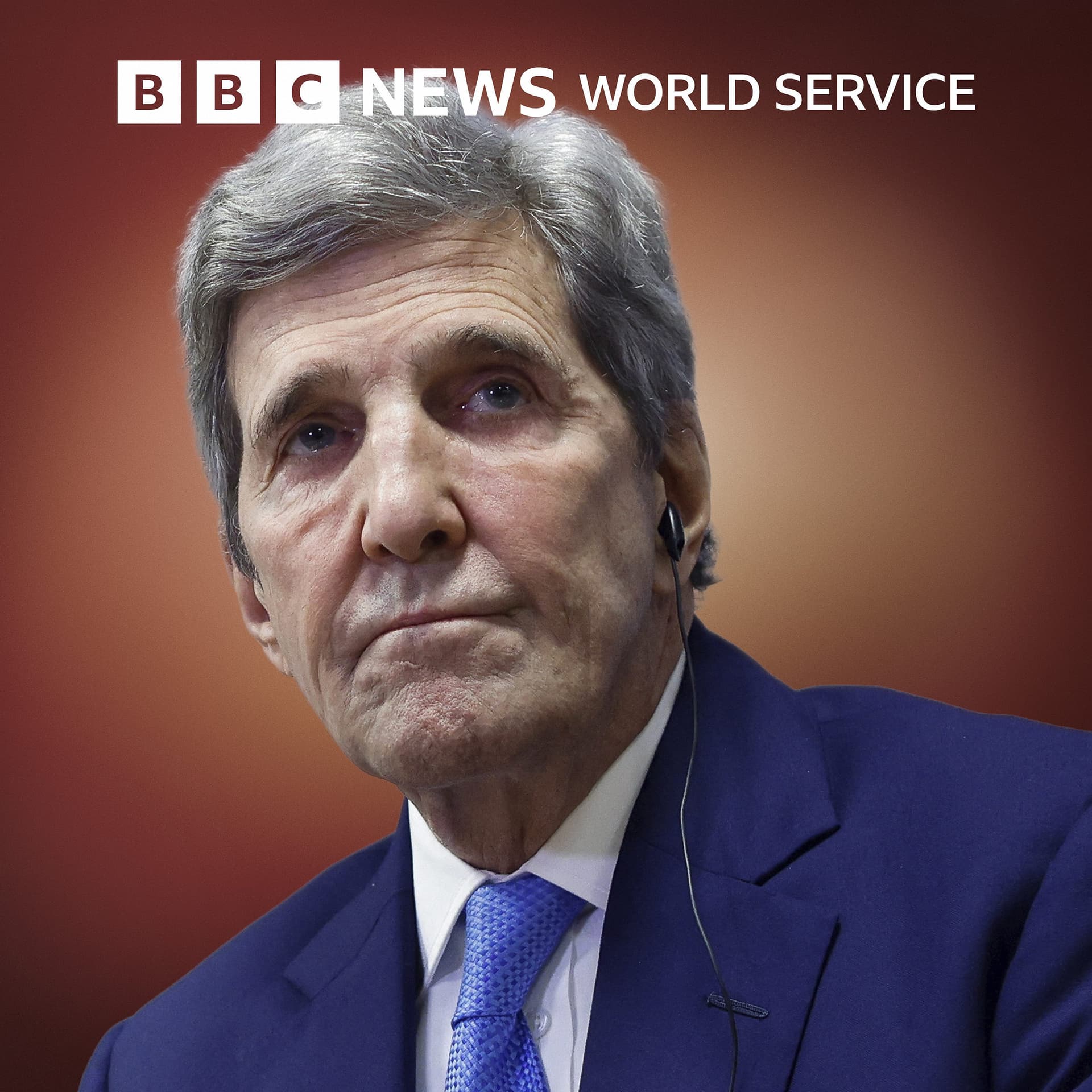
(Image: John Kerry. Credit: Reuters)