In short
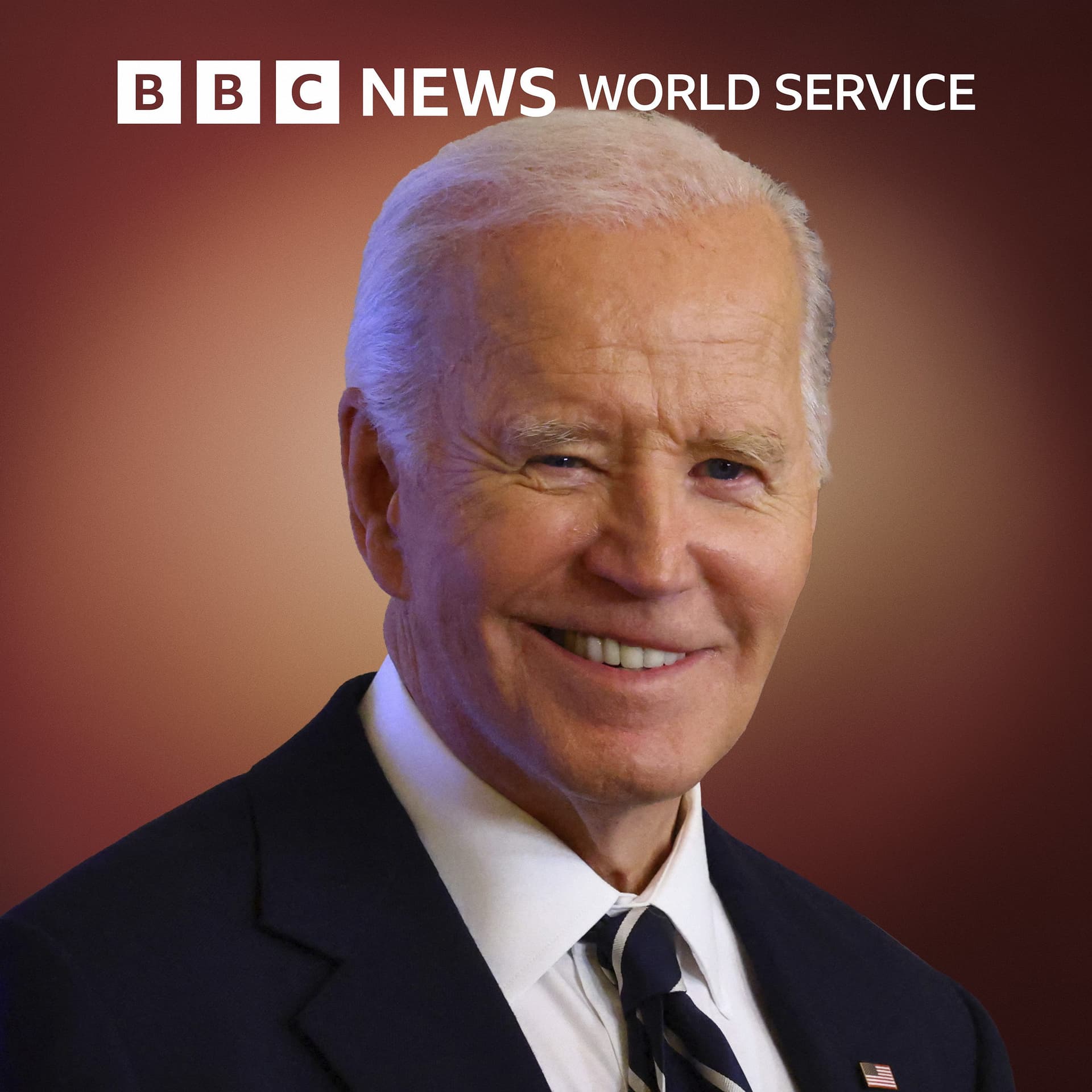
The Interview Podcast Notes: Joe Biden - Can the world still rely on America?
Podcast Overview Podcast Title: The Interview Host: Nick Robinson Guest: Joe Biden (Former US President) Air Date: [Insert Date] Duration: Approximately 20 minutes Description: A conversation exploring America's global influence, the current political climate, threats to democracy, and reflections on NATO and Ukraine.
---
Episode Summary In this episode, Nick Robinson interviews Joe Biden in his home state of Delaware, marking Biden's first interview since leaving the White House. The conversation is set against the backdrop of the 80th anniversary of VE Day and delves into critical global issues, including:
- Threats to Democracy
- The Future of NATO
- The United States' Role in Global Politics
- Reflections on Trump's Presidency
---
Key Discussion Points
- Democracy Under Threat
- Biden expresses concern about the current state of democracy, stating it faces greater threats now than at any time since World War II.
- He emphasizes that every generation must fight to maintain democracy, which is currently receding rather than expanding globally.
- America’s Global Role and NATO
- Biden highlights the importance of NATO, describing it as a security alliance established post-World War II that has been crucial to global stability.
- He voices apprehension about the weakening of this alliance and the potential consequences if America withdraws from its commitments, particularly in the face of rising influences from China and Russia.
- Concerns Regarding Trump's Presidency
- Biden discusses Trump's approach to global politics, hinting at his belief that Trump’s actions and rhetoric undermine alliances like NATO.
- He reflects on conversations with world leaders who express doubts about the reliability of the U.S. under Trump.
- Biden criticizes Trump's notion of "freeloading" among NATO allies, arguing that the mutual support within NATO has always been a two-way street, especially highlighted during events like 9/11.
- Russia and Ukraine
- Biden draws parallels between the situation in Ukraine and historical appeasement strategies, labeling any compromise that sacrifices Ukrainian territory as "modern-day appeasement" to a dictator.
- He warns that yielding to such pressures might embolden Russia and other authoritarian regimes.
- Reflections on Personal Political Journey
- The interview unveils Biden's personal reflections on his political legacy, his decision not to run for re-election, and his hopes for the next generation of leaders.
- He recounts poignant moments from his interactions with WWII veterans, emphasizing their sacrifices for democracy and freedom.
---
Key Quotes
- "Every generation has to fight to maintain democracy."
- "It would change the modern history of the world" if NATO were to weaken.
- "Appeasement is not a strategy, it is a mistake."
---
Concluding Thoughts The interview highlights Joe Biden's deep concerns about the current trajectory of American democracy and its standing on the global stage. His insights into NATO’s significance and the implications of international relationships underscore the urgency of maintaining alliances in the face of rising authoritarianism. The episode serves as a critical reflection on historical sacrifices made for democracy and the ongoing need for vigilance and commitment to global stability.
---
Additional Information
- Producers: Ben Cooper, Katie Solleveld
- Editor: Max Deveson
- Contact: TheInterview@bbc.co.uk
- Social Media Hashtag: #TheInterviewBBC
Related Listening
- Follow The Interview on the BBC World Service for more insights from global leaders and shapers of our world.
---
End of Notes
Written by AI. May contain mistakes. Listen to the episode to check what was said.
Transcript
Automatic transcript. May contain errors.0:00This BBC podcast is supported by ads outside the UK. If journalism is the first draft of history, what happens if that draft is flawed? In 1999, four Russian apartment buildings were bombed, hundreds killed. But even now, we still don't know for sure who did it. It's a mystery that sparked chilling theories. I'm Helena Merriman, and in a new BBC series, I'm talking to the reporters who first covered this story. What did they miss the first time? The History Bureau Putin and the apartment bombs Listen on bbc.com or wherever you get your podcasts From the Winter Olympic and Paralympic Games To the European Athletics Championships The 2026 sporting calendar is packed full of big events Keep up with all the action with More Than The Score The podcast that goes beyond the score sheet Join expert BBC sports journalists every Monday to Friday For interviews with sports stars, big talking points and the stories behind the headlines.
1:07More Than The Score from the BBC World Service. Listen now. Search for More Than The Score wherever you get your BBC podcasts.
1:30conversations coming out of the BBC. People shaping our world from all over the world. I will come back to Russia. I will participate in the elections. There's an increase in violence according to the coca crop. There is no place in the world where women are equal. I will give away the vast majority of my money. It's my full time focus for the rest of my life. For this interview, I met former US President Joe Biden in his home state of Delaware. In his first interview since leaving the White House, Biden talked about democracy under threat, Ukraine and the future of NATO, America's place in the world and how his successor, President Trump, is faring in the Oval Office.
2:14Indeed, it was Joe Biden who defeated President Trump's first bid for a second term when the pair faced off in the 2020 US presidential election. The results sparked the January 6th Capitol riots when Trump's supporters stormed Congress in a failed attempt to thwart the certification of Biden's victory amid false claims of electoral interference. Fast forward three years and the pair faced off again as the main candidates in the 2024 US presidential election, with both men seeking a second term in office. Biden's name, however, never made it to the ballot box as concerns over his health forced him to give way eventually to his vice president, Kamala Harris, to run on the Democrat ticket in his place.
3:02I've become so successful on our agenda, it was hard to say, now I'm going to stop now. I meant what I said when I started, that I think I'm prepared to hand this to the next generation, It was a transition government. But things moved so quickly that it made it difficult to walk away. And it was a hard decision. Welcome to the interview from the BBC World Service with me, Nick Robinson. I met Joe Biden as part of events commemorating the 80th anniversary of VE, or Victory in Europe Day. I began the interview by asking whether the message of sacrifice that VE Day embodies is being forgotten in America right now.
3:51I do fear a little bit. I don't think it's been forgotten by the people. I think it's been forgotten by the leadership a little bit. Excuse my cough. The fact is that my father and mother's generation knew what was at stake. They knew that democracy was literally hanging in the balance. Adolf Hitler, had he won? Had there been no United Europe and united with the United States? You know, the United States has never been able to avoid a war in Europe. And so one of the smartest things we did after World War II was we formed NATO because alliances provide security. And imagine had we not done that.
4:36so and the other thing i i'd been uh i'd been to a landing on d-day a reenactment of that event uh not the on the 80th earlier and uh coming in on one of those boats those landing craft and the thousands of ships were out there and the tens of thousands of men and women mostly men who stormed the beaches, and then how they scale those cliffs. You know, there's 6 ,000 grave sites there. 6 ,000. That's what's in your mind on this week. And, you know, anyway, I just... The world has gotten smaller. And so imagine if we didn't have NATO now what will be happening in the Mediterranean, what will be happening with regard to activity by Russia and China in the region.
5:40There are some people who fear that this Atlantic alliance born in the Second World War is now dying before our very eyes. Is that your concern? It's a grave concern. I think it would change the modern history of the world if that occurs. look we are not the essential nation but we're the only nation in position to have the capacity to bring people together to lead the world and otherwise you're going to have China and the former Soviet Union and Russia stepping up and when I say inflection point there's so much change taking place so rapidly that there needs to be an ability to respond rapidly.
6:31And I just think to myself, what would have happened in the Middle East, as bad as things are now, were there no NATO? Do you think Russia and China would have stayed out militarily? I don't know what happened. At the center of NATO is this promise, isn't it? You called it in a speech I saw in Warsaw a few years ago, a sacred obligation, which is you defend each other. Do you think Donald... Attack on one is an attack on all. Do you believe that obligation is still respected by Donald Trump? Well, he doesn't say it is. And I think the rest of the world, I know one of the only advantages of being the old guy is that I've known every major world leader in the last 30 years, and I've known them personally.
7:24And I know all the major world leaders today. And I can tell you, the last meeting of the G7, meaning the NATO 7, anyway, or the G20, which is a larger group. As we left the meeting, almost every world leader would pull me aside and say, we've got to keep NATO. My meeting there, my democracy is at stake. Every generation, every generation has to fight to maintain democracy. Everyone, everyone's going to be challenged. And we've done it well for the last 80 years. And I'm worried that there's a loss of understanding of the consequence of that. You've talked about a great threat to democracy. Do you really believe that there is a greater threat now to democracy than at any time since the Second World War?
8:20Yes, I do. Because, I mean, look at the number of European leaders and European countries that are wondering, well, what do I do now? I mean, what's the best route for me to take? Can I rely on the United States? Are they going to be there? Not alone in the United States. Will this stay together? And, you know, instead of democracy expanding around the world, they're receding. And democracy is... Every generation has to fight for it. And yet you know what they're saying in this administration. The US Defence Secretary talks about European freeloading. The Vice President talks about your country, the United States, bailing out Europe.
9:06There's an anger there. Have they not got a point? No, they don't have a point. Look, you have of all the NATO nations, almost all of our 2 % right now. But what they've done is, you know, when we were attacked, what happened on 9-11? They all responded, supported us. Look, imagine there being no NATO. Do you think... Putin would have stopped Ukraine? Do we think Putin would have stopped?
9:47I don't understand how they fail to understand that there's strength in alliances. There's benefits. The cost, it saves us money overall. Let's turn to Ukraine, can we? Because you compared the war in Ukraine with the Second World War. President Trump is now saying, look, if you want peace, Ukraine is going to have to give up some territory. Some people think that is common sense to say that. Do you think it's not common sense? It's perhaps modern day appeasement? It is modern day appeasement. Look, listen to what Putin said when he talked about going from Kiev into Ukraine. And why? He believed it was part of Mother Russia.
10:40He believes it was historical rights to Ukraine. He talks about Eastern Europe. What this man wants to do is reestablish the Warsaw Pact. He can't stand the fact that the Russian dictatorship that he runs, that the Soviet Union has collapsed. And anybody thinks he's going to stop is just foolish. And look, we have a trillion dollar economies with economic exchanges with Europe. I just don't understand how people think that if we allow a dictator, a thug, to decide he's going to take significant portions of land that aren't his and that's going to satisfy him, I don't quite understand. So you call it appeasement.
11:36What might happen if the Trump administration says, look, that's the deal, you've got to give this territory up, at least temporarily? What is your fear of the consequence of that? My fear of the consequence is that some of the NATO countries are going to decide that maybe, especially those along, the border with Russia. They just said, we've got to make an accommodation. We've got to make an accommodation. We've got to give Russia more space. We've got to go on. We have to yield to the pressures, whether they're economic, political, or military. What did you make of those scenes in the Oval Office, President Trump and President Zelensky?
12:17I found it
12:22sort of beneath America, the way that took place. And the way we talk about now that, well, it's the Gulf of America. Maybe we're going to have to take back Panama. Maybe we need to acquire Greenland. Maybe Canada should be... What the hell's going on here? What president ever talks like that? That's not who we are. We're about freedom, democracy, opportunity, not about confiscation. But you will know what they sometimes say of you, sir. They sometimes say, look, President Biden warned us about this invasion of Ukraine. He did. He led the West in standing up to Putin. He did that. But they sometimes say that you didn't have the courage to go all the way to let Ukraine win.
13:16Well, a few people do say that, but the idea that they could win without engaging NATO in a war, NATO having engaged the Soviet Union, former Soviet Union, Russia, is not likely. We gave them everything they needed to provide for their independence, and we were prepared to respond more aggressively if, in fact, Putin moved again. But we needed to... This is a tricky thing. You know, we had Poland now. Poland's, you know, a NATO country. You know, Poland used to be in a situation where it was part of the Warsaw Pact.
14:11there's just a lot of change taking place and the idea that we're ready to go to world war three through nuclear powers could be avoided and we did avoid it but we also maintain that was the threat though that was the worry in your mind it's a frightening time now i can tell how angry you are i think with some of the things that your successor with donald trump has been saying and doing. You say it's not who we are. It's not America. The other day you said at a speech, nobody is king. Do you think he's behaving more like a monarch than a president? Oh, I'd rather not comment. I'm not sure how he's been.
14:52He's not behaving like a Republican president. You've been diplomatic, sir. What do you say about his hundred days? Now he says, look at all these things I've achieved. I've closed the border. I've started to bring jobs back to the United States. I'm cutting government waste. He says he's delivering what people voted for. Let me tell you, when I left office, we had created more jobs than any president in the United States in one term. Our economy was roaring. We're moving in a direction where the stock market was way up. We're in a situation where we were expanding our influence around the world in a positive way, increasing trade.
15:35We were, we regained control of what we invented, the control, the future of computer chips, which control everything. We were in a situation where there was growth, opportunity, and we, for example, they told me we, you know, remember Trump had this plan, he was going to, you know, rebuild America, increase our infrastructure. We had infrastructure weak for four years and none of it was built. I was able to convince the Congress and the American people to accept$1.3 trillion in economic growth. So he says his 100 days is a triumph. What does President Biden say about Trump's first 100 days? I'll let history judge that.
16:19I don't see anything that was triumphant. And you see things to worry about. Do you, when you talk of a threat to democracy, worry about a threat to democracy here at home, here in the United States? And I'm less concerned about that than I was because I think the Republican Party is waking up to what Trump is about. You think they may fight back? I think the beginning, yes. You're listening to the interview from the BBC World Service. People shaping our world from all over the world. If journalism is the first draft of history, what happens if that draft is flawed? In 1999, four Russian apartment buildings were bombed, hundreds killed.
17:08But even now, we still don't know for sure who did it. It's a mystery that sparked chilling theories. I'm Helena Merriman, and in a new BBC series, I'm talking to the reporters who first covered this story. What did they miss the first time? The History Bureau, Putin and the apartment bombs. Listen on BBC.com or wherever you get your podcasts. From the Winter Olympic and Paralympic Games to the European Athletics Championships. The 2026 sporting calendar is packed full of big events. Keep up with all the action with More Than The Score, the podcast that goes beyond the score sheet. Join expert BBC sports journalists every Monday to Friday for interviews with sports stars, big talking points and the stories behind the headlines.
17:58More Than The Score from the BBC World Service. Listen now. Search for More Than The Score wherever you get your BBC podcasts.
18:11For this episode of The Interview, I'm speaking to former US President Joe Biden. It was hard to believe that the man I greeted in a Delaware hotel, where he'd launched his political career more than half a century ago, was the leader of the free world just a little over 100 days ago. Joe Biden was still surrounded by all the trappings of power, the black SUVs, the security guys with curly earpieces, the sniffer dogs sent ahead to sweep the room for explosives. And yet he spent the last three months watching much of what he believes in being carried away by the Trump tsunami. Biden, dressed in a dark blue suit, arrived smiling and relaxed Clearly much older than he'd been when he first ran for office, but he had the determined air of a man on a mission.
19:02OK, let's return to my conversation with former US President Joe Biden. Hope is a word that you've often liked to use. Hope instead of fear. And when you moved into the Oval Office, up on the wall there was Franklin Delano Roosevelt, who talked about the triumph of hope over fear. Do you fear that the America that we've seen ever since that time is ending? The Atlantic Alliance we've seen ever since that time? No, here's what I fear. I fear that our allies around the world are going to begin to doubt whether we're going to stay where we've always been the last 80 years. For example, when we had the first G7 meeting, that is the leaders of the European nations in England hosted by your government, we sat down the first meeting, I think it was in February of my first year.
20:07And I sat there and I looked and I said, America's back. And Manuel looked at me and said, for how long? For how long? we i take some responsibility and credit for rebuilding nato we added two significant powers to the nato for 10 days before dr kissinger died he called me he said not since napoleon has paris not looked over its shoulder at moscow with a feeling of dread till you came along nato was stronger they can't do that they know and so in the meantime I still remember what Emmanuel said. He said, for how long? Now, here we are, we did all that, and in four years, we've got a guy who wants to walk away from it all.
20:55I'm worried that Europe's going to lose confidence in the certainty of America and the leadership of America in the world to deal with not only NATO, but other matters that have a consequence. I can hear your passion. I can hear your anxiety that the world is changing the way it has. And for a long time, you believed. You said, I'm the man who can stop Donald Trump. And you did once. And in the end, you withdrew from that election campaign at the last minute. It's a question, you know, lots of people ask you, Mr. President. Did you leave it too late? Should you have withdrawn earlier, given someone else a bigger chance?
21:37I don't think it would have mattered. We left at a time when we had a good candidate. She was fully funded. And what happened was, I had become, what we had set out to do, no one thought we could do. And become so successful on our agenda, it was hard to say, now I'm going to stop now. I meant what I said when I started, that I think I'm prepared to hand this to the next generation. It's a transition government. But things moved so quickly that it made it difficult to walk away. And it was a hard decision. Regrets there? No, I think it was the right decision. I think that the... Well, it was just a difficult decision.
22:47But you shouldn't have taken it earlier? Well, I don't think so. I mean, I don't know how that would have made much difference. I want to thank you for giving us this interview on VE Day and give you a chance just to reflect finally a little bit about the people you've met over the years because you were telling me when I first met you about the veterans that you've met last year in Normandy when you went for the 80th anniversary of D-Day. They're an incredible generation and they're fading out. And I sat with them and they talked about how much it mattered to them, what they were proud that they had stopped this fascism, what they had done.
23:34You know, I was in the cemetery two years before when I went over to Normandy. And I was walking through the graveyards, the graveyard meticulously kept in the American cemetery and thousands of dead Americans. and I looked and I I knelt down and I thought I saw there was two crosses next one, a father and a son I thought, my God I was just not kneeling but squatted down and all of a sudden I heard behind me I turned around and there was a gentleman with a VFW hat on a veteran's hat on and he saluted me and I saluted him and I said, thank you thank you for what you did and he put his hand on his wife's shoulder and said, no, no.
24:26Thank her, she did it. And I looked at him and he said, she was part. She was part of the effort. She built the ships that got us here. She built that stepped up. The entire generation of women of our country stepped up. He said, I'm so proud of her. I'm so proud of her. The men and women I met knew when they got off of landing craft, when they came into those gliders, that they're as likely to die as live. And they did it. They did it anyway, because they felt it was worth dying for if need be. They had to stop this maniac, Hitler. They had to maintain democracy. And they're willing to give their lives to do it.
25:10An incredible, incredible, incredible generation. President Biden, thank you very much for your time. Thank you. Thank you for listening to the interview from the BBC World Service. If you enjoyed today's programme, you can listen to the interview wherever you get your BBC podcasts. Until the next time, bye for now.
25:48But even now, we still don't know for sure who did it. It's a mystery that sparked chilling theories. I'm Helena Merriman, and in a new BBC series, I'm talking to the reporters who first covered this story. What did they miss the first time? The History Bureau, Putin and the apartment bombs. Listen on BBC.com or wherever you get your podcasts. From the Winter Olympic and Paralympic Games to the European Athletics Championships, The 2026 sporting calendar is packed full of big events. Keep up with all the action with More Than The Score, the podcast that goes beyond the score sheet. Join expert BBC sports journalists every Monday to Friday for interviews with sports stars, big talking points and the stories behind the headlines.
26:38More Than The Score from the BBC World Service. Listen now, search for More Than The Score wherever you get your BBC podcast.
From the publisher
Nick Robinson, presenter of BBC Radio 4’s Today programme and the Political Thinking podcast, speaks to former US President, Joe Biden.
The pair met in Biden’s home state of Delaware, in a hotel where he had launched his political career more than half a century ago.
In his first interview since leaving the White House, Biden talks about democracy under threat, Ukraine and the future of NATO, and America’s place in the world - all at a time when we commemorate the 80th anniversary of VE, or Victory in Europe, Day. Biden himself was just a few years old at the end of the Second World War.
He’ll also give his opinion on how his successor, President Trump, is faring so far in his second term. The Interview brings you conversations with people shaping our world, from all over the world. The best interviews from the BBC. You can listen on the BBC World Service, Mondays and Wednesdays at 0700 GMT. Or you can listen to The Interview as a podcast, out twice a week on BBC Sounds, or wherever you get your podcasts.
Presenter: Nick Robinson Producers: Ben Cooper, Katie Solleveld Editor: Max Deveson
Get in touch with us on email TheInterview@bbc.co.uk and use the hashtag #TheInterviewBBC on social media.