
In short
Podcast Episode Summary: John Denton, Secretary-General of the ICC: Uncertainty is Harming Business
Podcast Overview Title: The Interview Description: Conversations with influential figures shaping our world, covering various domains including business, politics, finance, and culture. Each episode features insights and analysis on major global issues. Frequency: Twice a week on BBC Sounds and other platforms.
Episode Details Title: John Denton, Secretary-General of the ICC: Uncertainty is Harming Business Presenter: Suranjana Tewari Producers: Ben Cooper, Olivia Lace-Evans Editor: Nick Holland
Main Topics
- Impact of global tariffs on businesses
- Formation of new markets in Southeast Asia
- Ongoing functions of the World Trade Organization (WTO)
---
Key Concepts and Discussions
- Impact of Global Tariffs
- John Denton discusses the pervasive uncertainty caused by tariffs implemented by the Trump administration, emphasizing that businesses are hesitant to make decisions amid changing trade rules.
- The uncertainty leads to delayed business decisions, which hampers growth and planning.
- Emergence of New Markets
- Denton notes that Southeast Asia is transitioning from an export-driven economy to one focused on consumption.
- This shift presents opportunities for businesses to adapt to evolving market demands within the region.
- Functionality of Global Economic Architecture
- Despite the chaos from tariffs and trade tensions, institutions like the WTO continue to function effectively.
- Denton praises countries that have refrained from retaliatory tariffs, highlighting the importance of maintaining a stable trading environment.
- Global Trade Dynamics
- Denton explains how the United States’ trade policies significantly influence global trade relationships, but also notes that 87% of global trade continues under the Most Favored Nation (MFN) principles.
- Discusses the necessity for businesses to remain agile and aware of complex international trade dynamics.
- Responses from ASEAN and Smaller Economies
- Denton emphasizes the existential threat posed to ASEAN economies by the erosion of the global trade system.
- Countries in the region recognize the need for collective action to maintain economic viability.
- Navigating Relationships with China
- Denton addresses the complexities of engaging with China amid U.S. trade policies, stressing that countries do not have to choose sides but can engage constructively with both major economies.
- The importance of diplomacy and maintaining collaborative engagement is highlighted as a means to navigate the current geopolitical climate.
- Future Outlook and Focus
- The ICC is focused on revitalizing the global trading system to avoid collapse, emphasizing the role of the business community in pushing for necessary changes.
- Key themes for the future include:
- Revitalization of global trade frameworks.
- Energy transition and climate change initiatives.
- Digital economy and AI integration into business practices.
---
Conclusion John Denton sheds light on the complexities of global trade amid rising tariffs and shifting economic landscapes. His insights underline the importance of maintaining stability and clarity in international trade agreements to foster growth and innovation in business, particularly in emerging markets like Southeast Asia.
---
Additional Notes
- The episode aired as part of a series featuring influential leaders and thinkers, aiming to provide comprehensive insights into current global challenges and opportunities.
For more in-depth conversations and insights, listeners can access other episodes of "The Interview" on BBC Sounds and various podcast platforms.
Written by AI. May contain mistakes. Listen to the episode to check what was said.
Transcript
Automatic transcript. May contain errors.0:00This BBC podcast is supported by ads outside the UK. If journalism is the first draft of history, what happens if that draft is flawed? In 1999, four Russian apartment buildings were bombed, hundreds killed. But even now, we still don't know for sure who did it. It's a mystery that sparked chilling theories. I'm Helena Merriman, and in a new BBC series, I'm talking to the reporters who first covered this story. What did they miss the first time? The History Bureau Putin and the apartment bombs Listen on bbc.com or wherever you get your podcasts From the Winter Olympic and Paralympic Games To the European Athletics Championships The 2026 sporting calendar is packed full of big events Keep up with all the action with More Than The Score The podcast that goes beyond the score sheet Join expert BBC sports journalists every Monday to Friday For interviews with sports stars, big talking points and the stories behind the headlines.
1:07More Than The Score from the BBC World Service. Listen now, search for More Than The Score wherever you get your BBC podcasts.
1:19Hello, I'm Suran Janatawari, the BBC's Asia business correspondent. And this is the interview from the BBC World Service, the best conversations coming out of the BBC. People shaping our world from all over the world. There have been so many disagreements between me and my family. Putting on a show, that is what it means to be Lady Gaga. Only the things that you can't solve with government and private sector is where you bring philanthropy in. There's no place in the world where women are equal. Every generation, every generation has to fight to maintain democracy. For this interview, I met John Denton, Secretary General of the International Chamber of Commerce in Singapore.
2:06Based in Paris, the ICC represents 45 million businesses, large and small, from across 170 different countries. They've been amongst the first to feel the effects of Trump's tariffs, which have been implemented for various reasons by the US president. You're going to hear why this uncertainty is hurting businesses who worry about making a decision today only for the rules to be changed tomorrow. He also tells me how new markets are forming away from the US and its tariffs, with Southeast Asia transitioning from an export-based economy to one of consumption. And despite all the chaos, Denton points out that the World Trade Organization and other economic architecture has actually continued to function.
2:51He praises those who have not issued retaliatory tariffs. I think they made a sensible decision because constant tariffs and retaliatory tariffs are acts of self-harm. And I think most countries said they wouldn't retaliate. And the U.S. on its own cannot create a global trade war as it only accounts for 13 % in global trade.
3:16Welcome to The Interview from the BBC World Service with John Denton in a conversation I recorded last week. President Trump has been explicit for a number of years that he is going to raise the price of access to the US market through the tariff regimes. And that's exactly what he's doing. We can talk whether it's coherent from everyone's perspective or whether or not it will deliver what he wants. But that's what he said he would do, and that is what he is doing. The interesting thing from our perspective, just to give you the context of the ICC, I mean, we're in 170 countries, and 70 % is in the global south.
3:51So, you know, we're incredibly inclusive. So when I talk of business, business is not a monolith. Because as you can understand, there's different reactions in different regions, and there's different levels of engagement. But there is a constant which comes through all the work we're doing on a global basis, which is the concern at the continued uncertainty. You know, in a way, people would just rather know what the rules are. And the reason we worry a little bit about the arrangements is that they open to further refinement, further complexity, the aspects which need to be put in place, particularly for an economic relationship to do with issues like rules of origin, transshipment arrangement.
4:36A lot of that is just not clear. So the overriding, and I can say this on a global basis, attitude of the business community is one of concern at the level of continued uncertainty, because that's just helping them or forcing them to put off making decisions that they should be making. You mentioned arrangements. Can you just break down why these are not deals and what information we have regarding the arrangements? I mean, pick an example, if that makes it easier, you know, US-EU, US-Vietnam. Well, there's just a level of uncertainty around what has been documented. Even most recently with the EU, there's the statement that's been put out by von der Leyen.
5:26And then there's the public statements made by the president. And it's not that they're wildly contradictory. They're just not in sync completely. So there is difference in nuance, difference about what this means. And we've seen this very recently with Japan about how this fund will be managed, what percentage of the returns will be available to the US as a participant versus the Japanese. So there's just a level of confusion around what these deals mean. But the road of travel or the direction of travel is very clear. So don't get me wrong, I'm not actually criticising. I'm just saying what we've got to deal with now doesn't give rise to the kind of certainty require for us to actually have frameworks in place to allow the trading system to function effectively.
6:20It simply is a work now in progress. There's a lot of stuff that needs to be supported. And as you know, there's a lot of differences in nuance which is occurring as well. So you've got the Philippines, President Marcos goes to the White House. The net result of his visit to the White House is rather than 20%, it's 19%. At the same day, we have an announcement, or same day, I might be wrong on the exact chronology, where we'll have a tariff placed on Brazil to do with issues which are not related to the economic engagement with the US. So you're getting kind of odd, different flavors coming through here as well.
6:59So the lack of certainty, the lack of consistency does actually mean that the functioning of the system as we know it is halted, is actually suffering now. And this is one of the problems because people can't make decisions because they don't know. Will there be a further iteration of the arrangement that's been put in place? These are all important issues. But in a way, that's all about the price of engagement or the cost of engagement with the U.S. market. 87 % of the rest of the world is continuing to get on and trade under MFN, trade under the existing system we've got. And that's something that's very important to focus on as well.
7:3987 % of the rest of the world is able to function effectively. But the bandwidth has been completely sucked up in the bilateral relationships they all have, everyone has individually. We're actually thinking globally about this. It's where we have to be. And if you're thinking globally and you're in touch with your members, especially the smaller businesses that perhaps cannot take on so much volatility, I mean, is there opportunity? Are new alliances sort of emerging? Oh, well, I mean, I think the global trading world is very different to what it was in President Trump's first administration, the level of global south-south-south trade, which goes on.
8:20You look at the changes that even happened, which will shape the future. I mean, nothing is static. Everything is changing. If you look at this region, which we are right in the centre right now, if you look at the way the demographic of this region is changing, by 2030, 60 % of the middle class will be in Southeast Asia, in AIPAC. It's fascinating, really. And what you're seeing there is at the same time, you're seeing the economic model move from an export driven to a consumption driven model. There's going to be huge demand in the region to actually satisfy the emerging democracy as we know it.
8:55So there's a lot of stuff that can just go on. I mean, the US has legitimate grievances. And by the way, the US is not the only economy which has grievances with the way which the system functions. Australia has had grievances. New Zealand has had grievances. The European Union has had grievances. So this is not a new thing. And China has grievances as well. So there are a whole bunch of stacked up issues which have led, I think, to the erosion of confidence in the system and its effectiveness. So we're looking at de-escalation, stabilisation and revitalisation of the system. Because, as I said, 87 % of the rest of the world, and let's be very clear here, the US administration has a legitimately driven political point of view about how it wants to reshape its engagement with various institutions.
9:45But the business community does not necessarily share all those views, nor does it have to, because they actually operate on a global basis or in different jurisdictions. They don't want the jurisdictions in which they operate to actually experience an economic recession, because that's going to hurt them as well. So there's a lot of interest on a global basis in what we're doing here. But more broadly, I mean, essentially what you're saying is you're trying to find a way for everyone to work together and continue to be global. You're the head of a very globalized business. But what the Trump administration is doing is quite isolationist, isn't it?
10:23Well, it's not unusual. Frankly, if you look at economic history, you look at political history, this is not an unusual moment for the US in its engagement with the global world. This has happened before. The US is a fabulous participant when it's fully engaged. And a lot of these conventions and a lot of these multilateral and broader issues are better with the US there. But no one is talking about maintaining a system with the intention of excluding the US. We want the U.S. to feel that it can, at an administrative and political level, realign. That's why the revitalization of the system based on grievances, which are common, many of which are shared by the U.S., is a really important part of that.
11:05But in the meantime, I mean, there are countries in the region that have the resources to negotiate with the U.S., your Indonesias, your Philippines, as we saw, your Japans. What about your smaller economies, Cambodia, Laos, even Vietnam? How are they going to be able to weather this? One of the things that have surprised a lot of people has been the speed with which ASEAN recognized that the erosion of the system and what was happening poses an existential threat to the economic viability of not just one country in ASEAN, but of ASEAN as a totality. And the numbers are quite startling. They're arresting, which is if the system continues to erode, it'll actually lead to a negative 11 to 12 percent GDP drop.
11:57And I do think that Tazian will actually become quite critical for what we see as the revitalization of the global system. Because let's not forget, when you step back and look at how this whole region functions, It is through intertwined supply chains, which have all been based and cooperate because of common standards that have been delivered and developed over a period of time. That's fundamental to its success. And that's something they don't want to see unraveling, including countries like Vietnam, Laos, Cambodia and others. So given that, this region already deals with China a lot. But will all of this push partners to seek new arrangements with China, for example?
12:43And are there any risks to that? Yeah, I mean, dealing with China and engaging with China is something that requires particular and I think quite extraordinary ability. And I think what we're seeing now is not an unraveling of the relationship with China. It's actually engaging with China and actually trying to work out the best way forward. I mean, I think one of the dimensions is how do you balance that with the need to continue and a desire to continue to engage with the US? Does engaging with the US require you to break off all ties with China? And I think the leadership here is saying, no, that's not a red line that we're going to cross.
13:26We are not going to break off. We're not going to choose sides here. But we are going to constructively engage. we are going to work out what our real strategic interests are and actually seek to pursue those and use a diplomacy which is calm and clear-headed. Well, I think that's also what Australia is doing. I was just going to ask. Just see that with the visit of Prime Minister Albanese. Criticised by some because he wasn't seen as a China hawk, but what he's actually doing very clearly is representing the critical strategic issues in which there may well be alignment but also differences, but doing it in a calm and measured way.
14:06And it's kind of a realistic engagement process. It's a form of diplomacy. Presumably one of those critical elements is rare earths, are rare earths. Yeah, but I mean, yeah, definitely. But the reality also is that there's a common interest here, and you see this in the region as well, with China around climate, around the energy transformation, all these sorts of areas. around digital, there's actually common interests here about how to make this work for all. I mean, what you don't want is to have individual nations with individual frameworks, which actually create complexity. What's really interesting is that, from our experience, if you don't engage with developing and emerging economies in creating those frameworks, then the response is to reject that, which is delivered to them through the OECD or through the G7, because they are conscious that they have not been given the opportunity to create value for their nations and for their people.
15:09So they actually need to be involved in the process itself. So inclusiveness is important because I think anyone who thinks that the developing economies will simply accept frameworks established in advanced economies is actually living in the last century. That's not going to happen. So we want to make certain that what's developed is fair and inclusive on a global basis because in the end, we want the technologies to enable business to function effectively and be used.
15:41You're listening to the interview from the BBC World Service, people shaping our world from all over the world. If journalism is the first draft of history, what happens if that draft is flawed? In 1999, four Russian apartment buildings were bombed, hundreds killed. But even now, we still don't know for sure who did it. It's a mystery that sparked chilling theories. I'm Helena Merriman, and in a new BBC series, I'm talking to the reporters who first covered this story. What did they miss the first time? The History Bureau, Putin and the apartment bombs. Listen on BBC.com or wherever you get your podcasts.
16:23From the Winter Olympic and Paralympic Games to the European Athletics Championships. The 2026 sporting calendar is packed full of big events. Keep up with all the action with More Than The Score, the podcast that goes beyond the score sheet. Join expert BBC sports journalists every Monday to Friday for interviews with sports stars, big talking points and the stories behind the headlines. More Than The Score from the BBC World Service. Listen now. Search for More Than The Score wherever you get your BBC podcasts.
17:05For this episode of The Interview, I'm speaking to John Denton, Secretary General of the International Chamber of Commerce. John Denton is a very easygoing guy. He's easy to talk to. And that's all the more striking since he represents a very globalised organisation and businesses small, medium, large, all over the world. His expertise on international trade was very apparent during our conversation, with terms like MFN, or Most Favoured Nation, and OECD, or Organisation for Economic Cooperation and Development, popping up many times. He also spoke a lot about ASEAN, or the Association of Southeast Asian Nations, which is the regional intergovernmental organisation comprising Southeast Asian countries, including Indonesia, Malaysia, Thailand and Vietnam.
17:58I found him slightly supportive of Trump's policies, saying that it's forcing businesses around the world to sit up and listen to make sure they do the right things in order to keep growing their businesses and expanding and succeeding. OK, let's return to my conversation with John Denton. The US framework rolled back a lot of the regulation that was proposed with regards to AI. China wants to make everything open source. I mean, what is the ideal situation for the entire world to be on the same page when it comes to artificial intelligence? Well, I don't think we're going to get on the same page, but I think we will get to principles that will guide us.
18:41We won't completely get on the side because there's actually strategic competition between, clearly between the US and China for dominance on a competitive basis of AI in the 21st century. So in a way, we like the competition because it means there's a different methodologist being used. And if you look at the US administration's announced policy, it's actually shifting very much to almost try first, then regulate rather than regulate first before you try. and they've got some quite interesting dimensions, including funds to be established to enable more to happen. By the way, this is not bad because what this has the capacity to do is to lower the cost ultimately of access to AI.
19:21The bit that's missing, and this is the bit we're working on, is how do we ensure that smaller economies, businesses are able, irrespective of where they come from, to be able to benefit from and not just be subject to. and that's how do we create this sort of inclusive framework and set of principles that can guide us. Because without it, there will be resistance and there will be rejection. And yes, you can see one of the most important things that's come out of the arrangements I've seen between the US and countries has been something we've been arguing for a long time in the range between the US and Indonesia, which is if you're going to have artificial intelligence available and functioning and developing, You've got to look at issues to do with data flows, how they operate across borders.
20:09One of the challenges we saw, and one of the things was slowing down the WTO, was this pressure that was being put to stop the maintenance of the moratorium of putting tariffs effectively on data flows. So it was the moratorium. And I don't know if you saw this, but in the US-Indonesia arrangement, there is an explicit acknowledgement by Indonesia. And this could only be extracted by the US, creating this as a strategic issue with Indonesia in that arrangement that they will not only stop blocking the maintenance of the moratorium, they will support it becoming permanent. That's a step right in the right direction.
20:46And it's good news for developing emerging economies. We now have to get the same outcome with India and with Brazil and with South Africa, who've also been blocking this. That's the equality of AI. I mean, have you got any examples from perhaps from your members about how AI might impact growth and change the way that trade happens going forward? You're seeing it already about the application of AI on supply chains. I mean, it's just the way and the speed with which I think you can analyze competitive environments, the way in which AI, if it's able to scrape all the announcement and then reconstitute it, can advise you as to the pathway that you may need to follow.
21:30It's happening already. One of the challenges, of course, are people seeing AI as an add-on and only about efficiencies, or are they starting to see how you can integrate it into the business model itself? That requires a different way of thinking, but that seems to be the direction. So we've talked about a lot of things. The reshaping of global trade. I think I'm done here. I'm done. The reshaping of development economics as well. I mean, what are you looking for in the next six to 12 months? What's your outlook? And if I can, ask you about next year as well. Well, the whole focus of my organization's attention is around enabling the maintenance and the revitalization of the global trading system because its collapse is devastating, I think, for the business community.
22:23And we can avert that. We're not actually fatalistic. We're at a hinge point from our perspective. and the right level of pressure, the right level of focus through ASEAN, through other economies, what we're doing on stabilisation, what we're doing on revitalisation. I think that's our focus for the next six months. Don't forget there's what's called the MC14, which will take place in Cameroon, which is the next big meeting in terms of the sequencing of the WTO meetings. And that's an opportunity, I think, for the principles to be asserted for the revitalisation. So we've got a pretty neat timeframe there.
22:56We also have the need to continue the commitment that the business community has globally to the energy transition, and that's Bellum. So the path and roadway to Bellum, that's the other dimension that we're focused on very significantly. How do we create value from the resolution, finally, of the Article 6 debate about carbon markets? We now have potential access to the use of voluntary carbon markets. How do we make that functional? What are the inhibitors to that? So we're working on all those sorts of issues. And then, of course, the next piece, which is really relevant, really to this region as well, is around digitization, partly to do with AI, partly to do with tech.
23:32But just the amount of value that can be created for the business community and for citizens by ensuring the digital effectiveness of the digital economy, the effectiveness of the digital economy is huge. And we've got a lot of numbers that can support that as well. So they're the three key themes that we're focused on at the moment. And underpinning that, this piece that needs to go on is how do we shift the trajectory for development to private sector-led development? Because the opportunities there for durable economic opportunity to be created are so high that we need to shift the whole way of thinking around that.
24:09And we're dealing with a lot of inertia in the system, which is the UN system at the moment. But the UN is not the only part of the global multilateral system, but it's a very important part of it. So how do we actually look at revitalizing that system as well to ensure that it can support private sector development and deal with its key arms of peace and security, economic development, etc., the things and human rights that needs to be dealt with, getting back to basics, as the US administration would say? And are you hopeful? I mean, you've previously said that tariffs are a tax. Yeah. Well, I mean, call it what it is.
24:45I have no problems about that. Of course, I'm optimistic. you'd never be in business unless you're optimistic so I'm always optimistic because I actually do not surrender myself to fate and nor does I think functioning private sector players how do you create opportunity is always the approach we would take
25:07Thank you for listening to the interview from the BBC World Service You'll find more in-depth conversations on the interview wherever you get your BBC podcasts including episodes with Tom Fletcher, the UN's Chief of Humanitarian Affairs, the Ivorian opposition leader Tijani Tiam, and global megastar Lady Gaga. Until the next time, bye for now.
25:36If journalism is the first draft of history, what happens if that draft is flawed? In 1999, four Russian apartment buildings were bombed. Hundreds killed. But even now, we still don't know for sure who did it. It's a mystery that sparked chilling theories. I'm Helena Merriman, and in a new BBC series, I'm talking to the reporters who first covered this story. What did they miss the first time? The History Bureau, Putin and the apartment bombs. Listen on BBC.com or wherever you get your podcasts. From the Winter Olympic and Paralympic Games to the European Athletics Championships. The 2026 sporting calendar is packed full of big events.
26:21Keep up with all the action with More Than The Score, the podcast that goes beyond the score sheet. Join expert BBC sports journalists every Monday to Friday for interviews with sports stars, big talking points and the stories behind the headlines. More Than The Score from the BBC World Service. Listen now, search for More Than The Score wherever you get your BBC podcasts.
From the publisher
Suranjana Tewari speaks to John Denton, Secretary-General of the International Chamber of Commerce (ICC), about the impact of global tariffs. Based in Paris, the ICC represents 45 million businesses, large and small, from across 170 different countries. These businesses were amongst the first to feel the effects of Trump’s tariffs, which have been implemented for various reasons by the US President. Mr. Denton believes that the uncertainty is hurting businesses who worry about making a decision today, only for the rules to be changed tomorrow.
Mr. Denton also reveals how new markets are forming away from the US and its tariffs, with South East Asia transitioning from an export-based economy to one of consumption. And despite all the chaos, he points out the World Trade Organisation, and other economic architecture, has actually continued to function. He praises those who have not issued retaliatory tariffs.
The Interview brings you conversations with people shaping our world, from all over the world. The best interviews from the BBC. You can listen on the BBC World Service, Mondays and Wednesdays at 0700 GMT. Or you can listen to The Interview as a podcast, out twice a week on BBC Sounds or wherever you get your podcasts.
Presenter: Suranjana Tewari Producers: Ben Cooper and Olivia Lace-Evans Editor: Nick Holland
Get in touch with us on email TheInterview@bbc.co.uk and use the hashtag #TheInterviewBBC on social media.
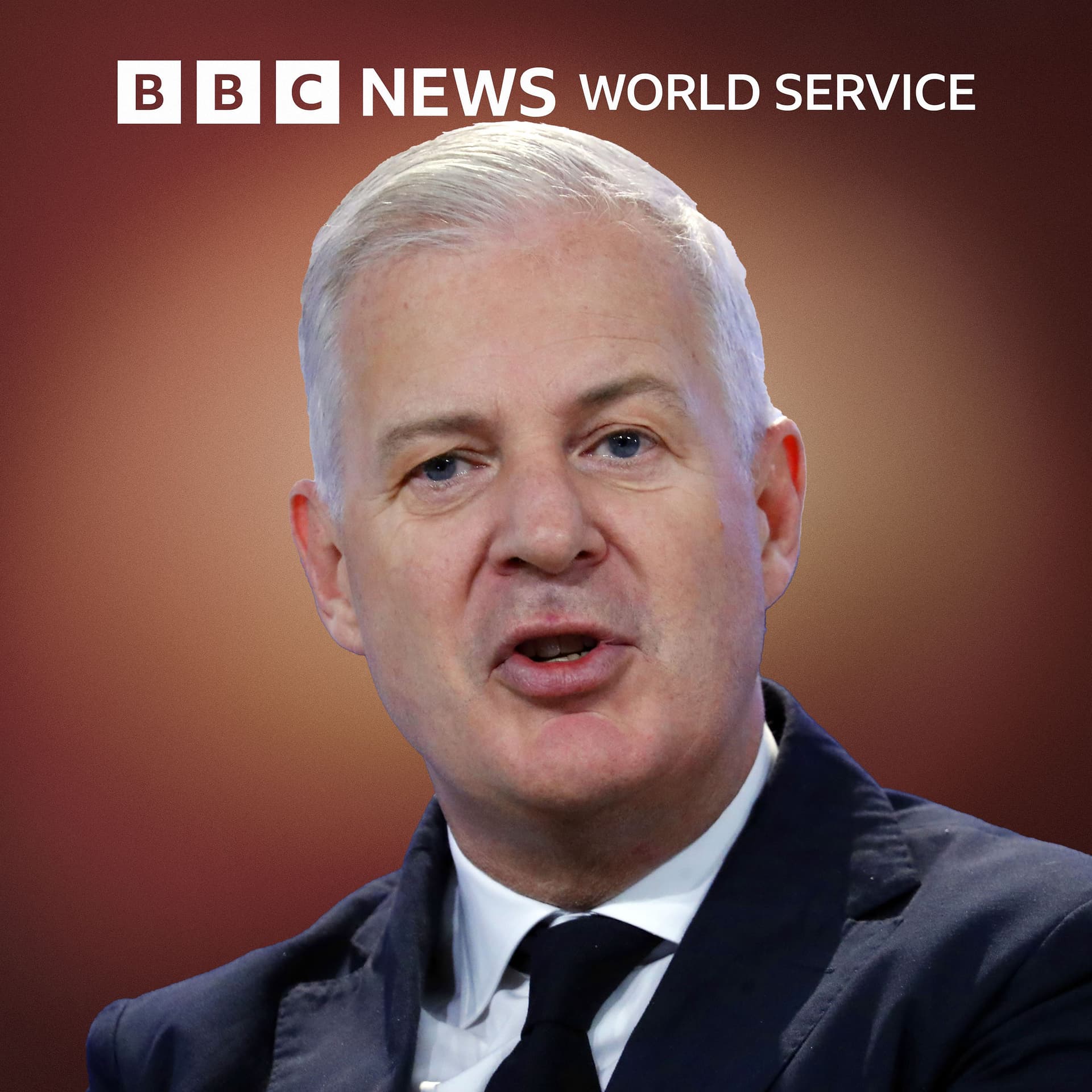
(Image: John Denton. Credit: John Lamparski/Getty Images North America)