In short
Podcast Notes: The Interview - Episode with Kurt Volker
Podcast Overview
- Title: The Interview
- Description: A BBC podcast featuring conversations with influential figures across various fields including business, politics, finance, sports, and culture. Each episode offers insights and analysis on pressing global issues.
Episode Details
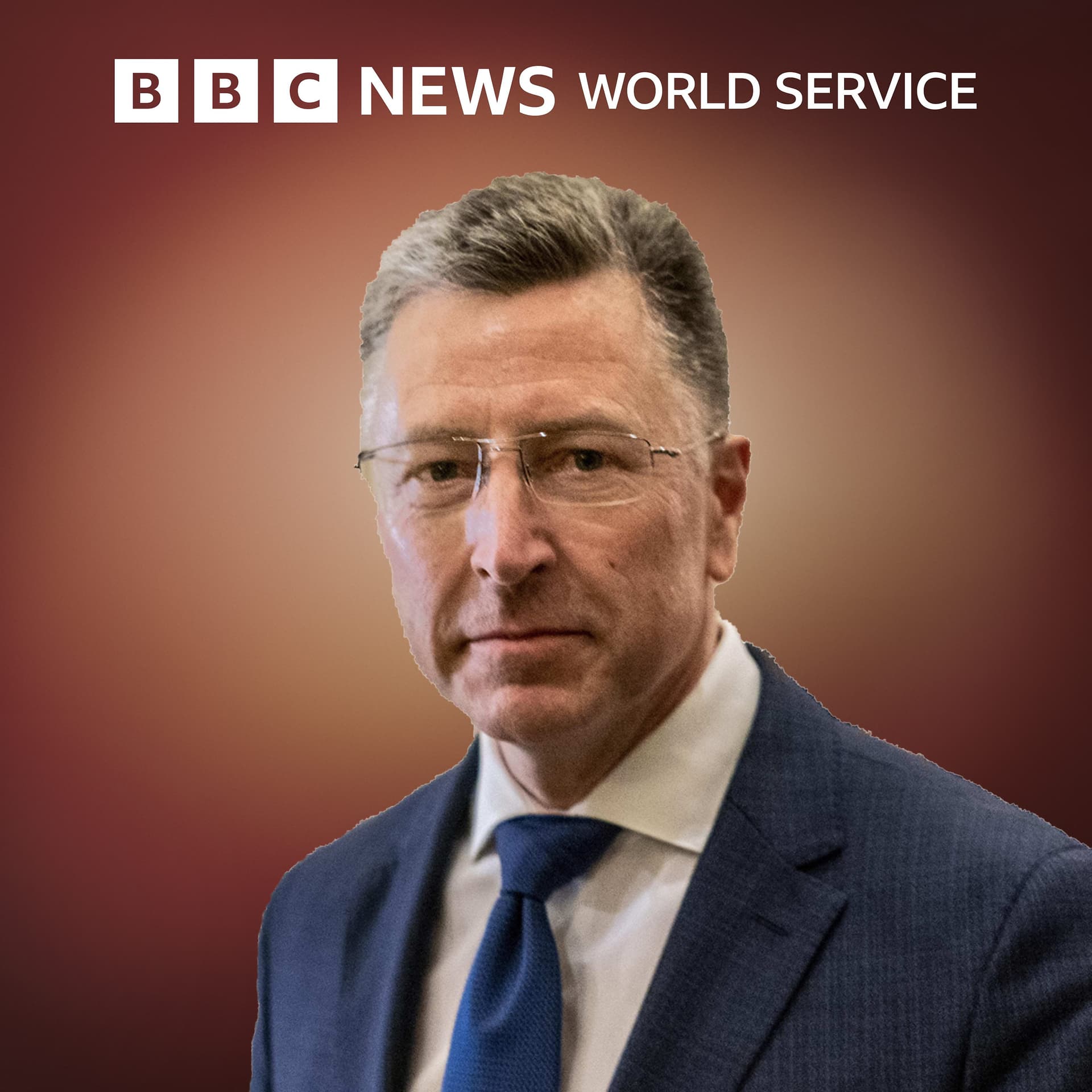
- Episode Title: Kurt Volker, former US diplomat: Decoding Trump, the second time around
- Producer: David Brown
- Description: Kurt Volker discusses the early days of President Trump’s second term, sharing insights from his time as the US ambassador to NATO and special envoy to Ukraine.
Key Discussion Points
- Pace of Trump’s Second Term
- Remarkable Speed: Volker notes the unprecedented speed of reforms and executive actions in Trump's second term compared to the first.
- Contrast with First Term: Trump’s initial term lacked a focused agenda. In contrast, he entered his second term with a determination to pursue his priorities aggressively, viewing opposition as a 'deep state' hurdle.
- Trump’s Communication Style
- Outspoken and Emotional: Volker highlights Trump’s tendency to communicate in a manner that prioritizes emotional appeal over factual accuracy, describing him as an entertainer.
- Ukraine Press Conference Incident
- Contentious Exchange: Volker details a significant press conference involving Trump and Ukrainian President Zelensky where tensions escalated, leading to a suspension of military aid to Ukraine.
- Perception of Aid: Trump’s impression that aid would prolong the conflict prompted him to leverage this support to urge for a ceasefire.
- Diplomatic Consequences
- Risks of Neglecting Norms: Volker expresses concern over Trump’s disregard for established diplomatic practices, which risks damaging the US's international reputation.
- UN Engagement: He discusses how Trump’s dismissive attitude toward the UN could have broader implications for US global standing.
- Middle East Strategy
- Aligning Interests: Volker describes Trump’s approach as fostering closer relations between Israel and Arab nations, particularly Saudi Arabia, in response to concerns about Iran.
- Domestic Policies and Popularity
- Cultural Issues: Discussion on Trump's stance on transgender rights in sports as a populist move that resonates with many constituents.
- Immigration Policies: Volker notes that Trump's focus on crime and illegal immigration has been well-received despite lower overall deportation numbers.
- Executive Power Dynamics
- Expansion of Authority: Volker warns that Trump’s extensive use of executive powers may lead to future legal challenges, setting the stage for ongoing political conflict.
- Future Outlook
- Whirlwind of Change: Volker summarizes the early days of Trump’s second term as a chaotic mix of issues and rapid changes, highlighting both the risks and successes of this approach.
- 2024 Presidential Race: Speculation about Trump’s future role in politics and his potential candidacy, although Volker believes a third term is unlikely due to constitutional constraints.
Concluding Thoughts
- Volker provides a candid insider perspective on Trump's administration, emphasizing the unorthodox and often controversial approaches to both domestic and international issues. His reflections underscore the profound implications of Trump's leadership style on US diplomacy and governance.
---
Contact Information
- Email: TheInterview@bbc.co.uk
- Social Media: Use the hashtag #TheInterviewBBC
Listen
- Availability: The Interview is available on the BBC World Service and as a podcast on BBC Sounds and other platforms.
Written by AI. May contain mistakes. Listen to the episode to check what was said.
Transcript
Automatic transcript. May contain errors.0:00This BBC podcast is supported by ads outside the UK. If journalism is the first draft of history, what happens if that draft is flawed? In 1999, four Russian apartment buildings were bombed, hundreds killed. But even now, we still don't know for sure who did it. It's a mystery that sparked chilling theories. I'm Helena Merriman, and in a new BBC series, I'm talking to the reporters who first covered this story. What did they miss the first time? The History Bureau Putin and the apartment bombs Listen on bbc.com or wherever you get your podcasts From the Winter Olympic and Paralympic Games To the European Athletics Championships The 2026 sporting calendar is packed full of big events Keep up with all the action with More Than The Score The podcast that goes beyond the score sheet Join expert BBC sports journalists every Monday to Friday For interviews with sports stars, big talking points and the stories behind the headlines.
1:07More Than The Score from the BBC World Service. Listen now. Search for More Than The Score wherever you get your BBC podcasts.
1:19Hello, I'm David Brown, producer of the BBC's Trump The First 100 Days. This is the interview from the BBC World Service, the best conversations coming out of the BBC, people shaping our world from all over the world. I will come back to Russia. I will participate in the elections. There's an increase in violence according to the coca crop. There is no place in the world where women are equal. I will give away the vast majority of my money. It's my full-time focus for the rest of my life. For this interview, I met Kurt Volker, former US ambassador to NATO and previously President Trump's special representative for Ukraine.
2:06You're going to hear about the frenetic first hundred days of Donald Trump's second term as American president and how his radical approach to leadership has shaken up both US and international politics. President Trump comes from a completely different way of doing things. He is outspoken, he's flippant, he's not bound by the facts, he's more about the emotions of what he's saying. He's an entertainer, very funny, very humorous, very, very, very different style. Ambassador Volcker tells us how President Trump plans to make America great again, and assesses the risks of doing away with diplomatic conventions.
2:47Plus, he decodes some of the president's headline-grabbing statements on US territorial expansion and plans for the Middle East. Welcome to the interview from the BBC World Service with Ambassador Kurt Volker. Remarkable. It was a remarkable pace. They had planned so many things. executive order after executive order, even planned on which days they're going to fall. So they had this rhythm of pushing things out the door. It was really remarkable. And it still feels that way. We're well into several weeks, multiple weeks of the Trump presidency, and you still feel that things are happening at a breakneck speed.
3:29Were you surprised by the speed? I was. I was. I expected reviews. And I think that would have been what any president would do, but especially Donald Trump, to say, look, take, for instance, USAID. We're going to pause all assistance for 90 days. We're going to review all the programs. We'll figure out what to keep, what to cut, and then we'll get on with things. But instead, to shutter USAID, to bring personnel back home, to fire people from the headquarters, to then eliminate 83 % of the programs, that is well beyond, I think, what anybody expected. How would you contrast the pace that was set this time with last time in 2017?
4:12It's night and day. So when President Trump was elected last time, I don't think he had the same kind of agenda that he understood what the problems are and he was going to go and attack them and do it as fast as possible. He just was not coming in with that mindset. I think he felt from his first term that he didn't get as much done as he wanted to or should have, and that the so-called deep state was thwarting him and blocking him along the way. So he came in with the intention to go after them, go after that deep state, uproot it, so that he is able as president to make sure his agenda gets through.
4:51Let's talk about the big bust-up on the 28th of February in the Oval Office. What was going through your mind? They have a very nice, very chummy 30 minutes talking, President and Zelensky and so forth. President Trump's happy. He's ready to wrap it up. And he says, OK, one more question. Instead of a journalist asking a question, the vice president speaks up. He had not said anything in the meeting to this point. So I think he wanted to be on camera and he wanted to have visibility. So he says, you know, something innocuous. President Trump's going to do what no one has ever done before. We're going to try diplomacy.
5:28President Zelensky then, instead of just, you know, smiling, saying great, meeting's over, leans in and says, well, J.D., let me ask you, what do you mean by diplomacy? And how can you negotiate with Putin? And we've had 25 violations of agreements with Putin in the past. You know, we never can't trust him. He's a terrorist. But, well, of course, then J.D. Vance is going to argue back and it devolves into an argument. And then, of course, President Trump jumps in and it's just painful, painful to watch, just as the dynamic is deteriorating by the second as they're having this argument. And then when you watch even more significantly, it's President Trump's stand-up presser as he is going to board Marine One, leaving the White House that afternoon.
6:15Because what he said there is really significant. He said he came away from that exchange with the understanding or the perception that if we provide aid to Ukraine, President Zelensky will use that to continue the war. And that's not what he wants. He wants Zelensky to want to end the war. So he suspended all our military aid and intelligence sharing after that in order to press Zelensky, say, I don't want you to keep fighting. I want you to have a ceasefire. and, you know, he waited 11 days, I guess, and President Zelensky finally came up with a long tweet in which he said he regretted the way the meeting went and he wants peace, he's ready for his ceasefire, etc.
6:59And so finally President Trump relented and, okay, it looks like we're good now. That was all unnecessary, all self-inflicted wound, all could have been avoided, should have been a very good day, and instead everything blew up. I think now it's better. I think we are back where we should have been. But it was a very painful month after that. In that room, I mean, as I say, you know both of those cancers very well. And I imagine some private meetings do get quite heated. I mean, I've no experience of that myself, obviously. He has very strong views that he already holds, and he is usually trying to project those views.
7:40He's on broadcast mode most of the time. I think President Zelensky feels very passionately about the issues. He's defending his country. His life is on the line and has been for three years. He's physically exhausted. And he believes that he is right. He is doing the right thing. He knows what needs to be done. So if people are not just praising him and louding him for the great job that he's doing, he feels the need to argue and convince them that this is what we have to do. It is not tactically the right thing to do in that situation. In that situation, we had had back and forth, back and forth with Ukraine over this Minerals deal, over other things.
8:21And now we're in alignment. Don't mess it up. Stay focused on the goal, getting the U.S. and Ukraine as partners, strategic partners, to go forward together. That's what Zelensky should have been focused on. But he got a little bit emotional himself, wanting to argue the case. It was just not the time for that and not in front of the cameras the way he did. So shortly after the meeting of a discussion about the minerals deal, we hear J.D. Vance, and he uses the phrase random countries in relation to… military support. You're a diplomat, and you've spent many years of your career trying to culture better diplomatic relations for the United States.
9:03What reaction did you have when you heard that? Well, my first reaction was, he is now contradicting President Trump, because President Trump has been pretty clear that he wants European countries to step up and do more, provide security assurances for Ukraine, even provide a reassurance force of some kind. So for the vice president to come out and say, oh, random countries is very disparaging, not least to say about the UK or France, which are very serious countries, but to say it at all is disparaging of what President Trump is trying to do. So I was a little bit surprised by that. But I also thought it means that he's not leading on this policy.
9:46Interesting. So we then shortly after that, I think, we see the US side at the UN with Russia and Belarus against several traditional European allies. That's a big moment, isn't it? That really is. And I think someone should have explained to President Trump, I know you don't think the UN matters. I know you don't think these words on a page matter. They're not going to change anything. But this will be seen in the rest of the world as a capitulation in favor of Russia and China. So you need to understand the way this is going to be seen. But as it is, I don't think anybody stood up and made that case.
10:27And instead, we did it, I would argue because President Trump would look at the UN and say, who cares? So why antagonize Russia when we're trying to get them to the negotiating table over something that doesn't mean anything? Is it troubling that he appears to be unaware of the diplomatic consequences of the things that he's doing? Well, I would say it's not necessarily that he's unaware of the consequences, it's that he doesn't think it matters, that he can do what he wants to do, achieve what he wants to achieve. People may like it or dislike it or not approve of it, but he'll get something done and he thinks it's worth it.
11:03So I think that's his approach. As we said about the UN, if someone had explained that actually it does matter, it is going to hurt the US reputation in lots of other places and lots of other ways that you're not thinking about. Or in the case of the way Europe has been disparaged in this administration, it's fine when you look at it in those terms only. Say, okay, they're freeloaders, They have to pay more. But then when you start wanting Europe to then say, we're going to deploy forces to Ukraine, or we want Europe to join us in freezing out Chinese technology, well, Europe might well say, don't want to do that.
11:42So I think there are costs to these things that are not being calculated in, even though I think he may recognize that he's getting that initial reaction, just devaluing how much it means. Do you react to things like that just on a sort of human level? I mean, what kind of do you just like think? Oh, God, you know, and is it what sort of basic do you have a kind of instinctive reaction to that? I mean, obviously, you deal with it professionally as a diplomat. You're there to smooth over the cracks. What is it like as a human being who spent his whole life trying to prove these relationships? President Trump comes from a completely different way of doing things.
12:15He is outspoken. He's flippant. He's not bound by the facts. He's more about the emotions of what he's saying than what he is about the facts of what he's saying. He's an entertainer. He's playing to the crowds a lot of the time and getting, you know, very funny, very humorous. Very, very, very different style. Let's move on a bit. Quite recently, we've had the story about the signal messages. What do you think about that? It seems to say lots of things about perhaps the competence of the people involved and perhaps their views of Europe too. But what do you make of it? You had had an in-person classified principles committee meeting and a decision was made about airstrikes against the Houthis.
12:57And the National Security Advisor, Mike Waltz, was trying to create just a tight circle of people to keep everyone broadly informed, okay, we are going forward or executing the decision. And then two things happened. A mistake was made where the editor of The Atlantic was added to this chat. They're still figuring out how this happened, but I think we can guess. and the defense secretary decided to use this chat as a vehicle for providing real-time operational sensitive update. It was totally inappropriate. It should never have been done. The text itself was interesting to read. It did show that the majority of people on the call understood.
13:41I'm just checking in to say, got it, I'm here. Not engaging. The vice president wanted to revisit the decision the president had made and was argued against that by Waltz and by Steve Miller. And all of this got published in The Atlantic. And so it was very embarrassing for everybody. I mean, here in the UK, one of the things that people really focused on was the pathetic freeloading, that kind of line in the text. What did you make of that? That is a very genuine insight into the thinking about traditional allies right inside the administration. Is that a reflection? Well, first off, that should not be a surprise to anybody because they use that language publicly all the time.
14:27And President Trump has referred to Europe as freeloaders. What was more striking to me was the tone in which this was brought up. because it was kind of a locker room style, you know, jostling, knocking elbows, saying, yeah, those terrible Europeans. It was showing that you're a cool part of the team if you say that. And that speaks to more of a group mentality in some parts of the administration rather than the content. The content is not shocking. It's this jockness about it that that's unusual in an administration. You're listening to the interview from the BBC World Service. People shaping our world from all over the world.
15:16If journalism is the first draft of history, what happens if that draft is flawed? In 1999, four Russian apartment buildings were bombed, hundreds killed. But even now, we still don't know for sure who did it. It's a mystery that sparked chilling theories. I'm Helena Merriman, and in a new BBC series, I'm talking to the reporters who first covered this story. What did they miss the first time? The History Bureau, Putin and the apartment bombs. Listen on BBC.com or wherever you get your podcasts. From the Winter Olympic and Paralympic Games to the European Athletics Championships. The 2026 sporting calendar is packed full of big events.
16:01Keep up with all the action with More Than The Score, the podcast that goes beyond the score sheet. Join expert BBC sports journalists every Monday to Friday for interviews with sports stars, big talking points and the stories behind the headlines. More Than The Score from the BBC World Service. Listen now. Search for More Than The Score wherever you get your BBC podcasts.
16:31For this episode of The Interview, I'm speaking to Kurt Volker, former US ambassador to NATO, for his take on 100 days of President Trump's second term. Ambassador Volker was the consummate diplomat, as you might expect when I met him on his recent trip to the UK. He was friendly and quite warm, but with a bitter formality too. What really struck me, though, were his insights into Donald Trump the man. He knows him, he's spoken to him, and he's been in the room with him for some really important discussions. OK, let's return to my conversation with Kurt Volker. How seriously do you think we should take Donald Trump's statements about U.S.
17:16territory, and in particular Greenland, Canada, Panama? He knows what else it might have in store for us. But there's a real strand there, isn't there? Yeah, there is a connection between these, which is the domestic political play, where he is making a case to the MAGA world that we're making America great again. We're going to make America bigger as well, too. With Panama, President Trump turns out to have been right by saying the Chinese are taking it over. And initially, everybody scoffed at that because China is not taking it over. But what he meant was that you have a company that is subject to pressure from the Chinese government that controls access on both sides of the canal.
17:59He then worked to get BlackRock to offer to take it over. And the Chinese government indeed objected. So Trump turns out to have been right. In terms of Canada, this is pure trolling initially aimed at Justin Trudeau and is now having a bit of a continuation. There's no seriousness to Canada being a 51st state. With Greenland, it is a recognition first that China and Russia have increased their presence and interest in the Arctic. China even made overtures about putting a port in Greenland. So he's aware of that, concerned about that, and maybe not fully aware that it is already part of Denmark.
18:40It is already considered to be protected under NATO. So the U.S. is the one who withdrew military assets from Greenland, not Denmark. And we can put them back. And the Danish government is even willing to underwrite some of the costs of this. It's easy to talk about, oh, we need to take ownership and control of Greenland. So they've said that. The reality is, I think they'll work out arrangements with Denmark that are pretty good, because all of the building blocks of that already exist. What do you make of what Elon Musk has done over the first period of the Trump administration? Well, it's very tough.
19:14I think it would have been expected and reasonable to review everything after a review, announce cuts to things, shape things politically the way the president wants them shaped. That would have been predicted. But to go in wholesale and rapidly just shut down whole functions of government and agencies, people getting fired, people getting called back from overseas, this is really shocking to see how much has been done and how quickly. So if he can actually balance the budget, I'm, again, a little bit more sympathetic. I just wish there had been more thoughtfulness about what we are doing, how we're doing it, better explanation as to what we're doing, and not some of the brutality that has gone with it.
20:00Middle East, how would you sum up the impact of what Donald Trump has done? Is it to give Israel essentially a free hand? I mean, what's the serious interpretation there? I think what Donald Trump is doing is fundamentally reshaping the Middle East to get Saudi Arabia and Israel aligned together and viewing Iran as a shared threat or concern, containing Iran, including its proxies, Hamas, Houthis, and Hezbollah, by building stronger relations between Israel, Saudi Arabia, and other Arab states, which can be fundamentally stabilizing in the Middle East. But I do think it is his view and the view of the administration that the worst thing that's happened to the Palestinian people is Hamas.
20:48They have basically taken them hostage, used them as human shields, and used Gazan territory as a base for terrorist operations. How popular do you think the culture wars policies are in America? I'm thinking of banning transgender women from women's sports, some of the things. And we've seen quite a lot of that kind of stuff. this is hugely popular. It was seen as having gone too far, where you had, for instance, women getting injuries from playing against biological males in women's sports or failing to win the medals because a biological male is swimming in women's swimming races and beating all the women.
21:36So this was seen as grossly unfair. And the reversal of this is seen as very popular. And President Trump has been very keen to use this as a way of maintaining his popularity, as he puts it, bringing back common sense. And in a similar vein, policies on immigration, the numbers seem quite modest, actually, of arrests and deportations compared to the previous administration. But I imagine that is similarly popular. It is very popular. First off, the number of illegal immigrants coming into the United States now has dropped off dramatically, talking 90 plus percent decrease in what was happening compared to the previous four years.
22:20That is very popular. With illegal immigrants, there is also this concern about fentanyl, and that is declining, and that is also very popular. And the people being deported, as President Trump said, he's sticking to this so far, were going after the criminals, going after those who committed violent crimes and are here in the country illegal anyway. We can just send them back. and they're doing that. And that is also quite popular. Take him as a whole. How would you characterize recent weeks, the period since January 20th overall, if you have to sum it up in a sentence, what would you say? I'd say it's a whirlwind.
23:02It is just amazing number of issues and speed that is being thrust on us all at once. And it just takes your breath away that we're going through all of this. I understand that President Trump is doing that deliberately. He feels that he probably has 18 months to two years to get everything done because you don't know what's going to happen in midterm elections. You can't have Elon Musk and Doge doing this for four years. You're going to have to stabilize things. He's doing all of this in a hurry. And a lot of it is popular. A lot of it is successful in terms of budget cutting, for example. A lot of it is probably going to create a backlash that we'll feel later, whether in public opinion or in services that the government can no longer deliver.
23:52Oh, and one other thing. This is a deliberate and vast extension of executive power, which is going to come back because it'll be challenged in the courts. It'll be challenged by Congress. It'll be challenged by outside interest groups. And we'll see that some of these things may not actually be within the executive's power and they can be challenged and perhaps reversed. A lot will go to the Supreme Court. So we're only seeing the first two months, three months, 100 days of this effort. It's going to play out for a much longer time. And the other thing I guess I should say, too, is I remember 2024 as we're looking at the presidential campaign and Joe Biden is the candidate.
24:33And it just felt like we're waiting, waiting, waiting, waiting. And now we are seeing action, action, action, action. And that's a very big change. Is it possible that he would stand for and be able to stand for a third term? No, I don't think so at all. That would require a constitutional amendment, which I think is impossible to achieve. What I think he is doing by saying this is diverting attention from other issues. And he is insisting that he not be treated as a lame duck, that people shouldn't write him off, start talking about his successor. He's saying, oh, I don't know, maybe I'll be here.
25:13Thank you for listening to the interview from the BBC World Service. If you enjoyed today's programme, you can listen to The Interview wherever you get your BBC podcasts. And watch out for Trump the first 100 days on BBC News. Until the next time, bye for now.
25:36If journalism is the first draft of history, what happens if that draft is flawed? In 1999, four Russian apartment buildings were bombed, hundreds killed. But even now, we still don't know for sure who did it. It's a mystery that sparked chilling theories. I'm Helena Merriman, and in a new BBC series, I'm talking to the reporters who first covered this story. What did they miss the first time? The History Bureau, Putin and the apartment bombs. Listen on BBC.com or wherever you get your podcasts. From the Winter Olympic and Paralympic Games to the European Athletics Championships. The 2026 sporting calendar is packed full of big events.
26:21Keep up with all the action with More Than The Score, the podcast that goes beyond the score sheet. Join expert BBC sports journalists every Monday to Friday for interviews with sports stars, big talking points and the stories behind the headlines. More Than The Score from the BBC World Service. Listen now. Search for More Than The Score wherever you get your BBC podcasts.
From the publisher
David Brown, producer of the BBC TV’s Trump - The First 100 Days, speaks to Kurt Volker, former US ambassador to NATO, about the whirlwind start to President Trump’s second term in office.
In this conversation, Ambassador Volker, who previously served as Trump’s special envoy to Ukraine, shares his assessment of the president’s programme of change - and the extraordinary pace of reform.
He gives the inside take on Trump - from that explosive White House press conference with Ukraine’s President, Volodomyr Zelensky, to his plans for the Middle East - and sets out how Mr Trump plans to make America great again.
Ambassador Volker decodes President Trump’s head-line grabbing statements on US territorial expansion and international relations - and explains the risks of doing away with diplomatic convention.
The Interview brings you conversations with people shaping our world, from all over the world. The best interviews from the BBC. You can listen on the BBC World Service, Mondays and Wednesdays at 0700 GMT. Or you can listen to The Interview as a podcast, out twice a week on BBC Sounds, or wherever you get your podcasts. Presenter: David Brown Producers: Clare Williamson, Lucy Sheppard Editor: Max Deveson
Get in touch with us on email TheInterview@bbc.co.uk and use the hashtag #TheInterviewBBC on social media.