
In short
Podcast Episode Notes: Lady Gaga, Music Legend and Film Star: Inside the Chaos
Podcast Overview
- Title: The Interview
- Description: A series featuring conversations with influential figures from various fields, including business, politics, finance, sports, and culture. Each episode is around 20 minutes, offering insights into significant contemporary issues.
Episode Details
- Episode Title: Lady Gaga, music legend and film star: Inside the chaos
- Host: Mark Savage, BBC Music Correspondent
- Produced by: Clare Williamson, Mantej Deol & Gabriel May
- Editor: Sam Bonham
- Release: Features Lady Gaga discussing her new album, her relationship with fame, personal growth, and her music.
Key Highlights
- Lady Gaga's Background
- Full Name: Stefani Joanne Angelina Germanotta
- Career Longevity: 18 years in the music industry
- Record Sales: Over 170 million records sold
- Recognition: Named one of Time magazine's 100 most influential people in 2019.
- Multiple Ventures: Not only a musician but also an actress and entrepreneur with a vegan cosmetics line.
- Themes of the New Album: *Mayhem*
- Focus on Joy and Connection: Lady Gaga expresses gratitude for connecting with a younger audience (Gen Z, Gen Alpha) through her music.
- Fame and Identity: Addresses the complexities of her public persona versus her private self, exploring how fame has impacted her mental health and identity.
- Artistic Intent: Aims to inspire and evoke happiness through her music, highlighting the importance of genuine emotional connection with fans.
- Discussion Points
- Artistic Evolution:
- Explores her journey of reclaiming her earlier inspirations and asserting ownership of her artistic identity.
- Discusses the challenges of being a female artist in a male-dominated industry and the significance of female mentorship.
- Personal Growth:
- Reflects on her journey from feeling like a "notorious being" to integrating her true self with her public persona.
- Talks about finding love and how it has influenced her songwriting, particularly in songs like "Die With A Smile" and "Blade of Grass."
- Reflection on Fame:
- Offers candid opinions on the duality of celebrity life, sharing how fame can strip away one's humanity and individuality.
- Uses the album to address the chaotic nature of fame, love, and the human experience.
- Personal Insights
- Influence of Elton John: Shares her admiration and experiences as a fan of Elton John, highlighting the relationship between fans and artists.
- Love and Relationships: Discusses her engagement and the personal experiences that influenced her music, emphasizing the joy and challenges of love.
- Closing Thoughts
- On Artistic Legacy: Gaga expresses her desire to be remembered for her love for the world and the happiness she brings through her music.
- Final Remarks: Encourages a holistic view of creativity, indicating that her roles as an artist, actress, and person are all interconnected.
Conclusion The interview captures Lady Gaga's multifaceted personality and her journey through the chaotic world of fame. The episode reveals her introspective side, showcasing her growth as an artist and individual amidst the pressures of public life. Through her reflections, listeners gain insight into the artistry behind her latest work and the personal experiences that continue to shape her music.
Additional Resources
- Listen to this episode: Available on the BBC World Service, BBC Sounds, or wherever you get your podcasts.
- Follow the conversation: Engage on social media using the hashtag #TheInterviewBBC.
---
These notes provide a structured overview of the interview, emphasizing key themes and discussions while offering a concise summary of Lady Gaga's insights and reflections.
Written by AI. May contain mistakes. Listen to the episode to check what was said.
Transcript
Automatic transcript. May contain errors.0:00This BBC podcast is supported by ads outside the UK. If journalism is the first draft of history, what happens if that draft is flawed? In 1999, four Russian apartment buildings were bombed, hundreds killed. But even now, we still don't know for sure who did it. It's a mystery that sparked chilling theories. I'm Helena Merriman, and in a new BBC series, I'm talking to the reporters who first covered this story. What did they miss the first time? The History Bureau, Putin and the Apartment Bombs. Listen on BBC.com or wherever you get your podcasts. I am Nina Khrushcheva, the great-granddaughter of Nikita Khrushchev, the leader of the Soviet Union in 1962.
0:47And I'm Max Kennedy, the nephew of US President John F. Kennedy. We explore what was a terrifying moment in history. The story of the Cuban Missile Crisis. How close the world came to nuclear war. And what they had to do to pull it back. From the Brink. The Bomb. Kennedy and Khrushchev. All episodes available now, wherever you get your BBC podcasts.
1:13Hello, I'm Mark Savage, the BBC's music correspondent, and this is the interview from the BBC World Service. The best conversations coming out of the BBC. People shaping our world from all over the world. I will come back to Russia. I will participate in the elections. There's an increase in violence according to the coca crop. There's no place in the world where women are equal. I will give away the vast majority of my money and it's my full-time focus for the rest of my life. For this interview, I met Lady Gaga as she launched her new album Mayhem in New York. You're going to hear about art and identity, being a superfan of Elton John and the lack of female role models in the music industry.
2:02Born Stephanie Joanne Germanotta in 1986, she's been in the music industry for almost two decades and sold over 170 million records. She's an actress as well as a musician and even has a vegan cosmetic brand. In 2019, Time magazine named her as one of the 100 most influential people in the world. She's constantly been in the media spotlight for her extravagant outfits, and her struggle with celebrity is something that she addresses in her new work. The most complicated thing that was happening was something I was going through with myself, which is that I had created this public persona that I was truly becoming in every way, and holding the duality of that and knowing where I begin and Lady Gaga ends was really a challenge, and I think that it kind of took me down.
2:58She's now finding audiences with new, younger fans. Welcome to the interview from the BBC World Service with Lady Gaga. Hi, Mark. Nice to meet you. Nice to meet you too. Over a cup of tea. You love a cup of tea with Slippery Elm, I believe. I used to, but this is English breakfast tea. Ah, the classic. Yes. But listen, we're talking to you at a moment when things are going incredibly well, like 123 million monthly listeners on Spotify, more than any female artist ever. Die With a Smile, a massive hit. Abracadabra, a massive hit. Bringing in new audiences as well. Gen Z, Gen Alpha. How does all of that feel?
3:37Was it expected? No, no, no. It's never expected. I feel really, really grateful and so excited. And it's an amazing feeling to reach so many people with your music. And, you know, when I'm writing in the studio and when I'm producing my records and putting it all together, the joy of it is hoping that you will make people feel happy. It's not just about them liking it, you know, like we'll give something to them in their lives. So when I see that with Die With The Smile and Abracadabra, like I just feel so happy that I'm making people feel good. And we knew that you had something special coming because in Paris last summer, you got out of your hotel room in a car, stuck your head up through the sunroof and played music off a laptop.
4:25Take me through the decision to do that. You know, I was so, so moved to see my fans outside. I mean, there was hundreds and hundreds of fans just waiting outside the hotel and hadn't seen them in so long. And I had all this music on my iPad. And I just, I don't know, I, I felt like, you know, this has been something I've done for like, almost 20 years where I played my fans, my music way before it came out. I used to, after my shows, like invite fans backstage and we would like hang out and play them demos and see what they thought of the music. And it's always been like this conversation. So, I mean, I'm sure you can imagine that after 20 years, you don't expect that people are still going to show up to hear your music and be excited to see you.
5:17So I just wanted to share it with them because I was excited they were there. Were you ever a fan like that? Did you ever wait for someone's autograph or stand outside their hotel room? Yeah, I mean, Elton John, Billy Joel. I was huge fans of them growing up. And they were playing at the garden and I waited as long as I could. But I got too nervous to go over and say hello. I actually don't even know if Elton knows that story for as long as we've known each other. I don't know if I've ever told him that. What would you have said if you had approached him age 13? I think I probably just would have said your music heals the world.
5:57I don't want to bother him because he had a show and I thought he might be focusing. Yes. But do you then understand the bravery that it takes for someone to come up to you? Absolutely. I think people get, I'm sure they feel nervous, but it always warms my heart to hear from fans. And yeah, I mean, but, you know, like Elton's a real person. I'm a real person. We love making people happy. You know, he's a legend. And, you know, I just I'm always trying to work in the spirit, though, of like I've always viewed him as like someone I really look up to because when I think of him, I don't just think of his music.
6:37I think of his heart. So I hope that I'm always also putting my heart into my music. I think you definitely do. That's what comes across. And we've heard, well, I've heard today the whole album, when this interview goes out, it will be the day the album comes out. So people will be hearing it for the first time. You said when you were putting it together, you were a little bit nervous about revisiting some of the sounds from the fame, the fame monster from Born This Way. Why did that make you nervous? I think, you know, like as a female artist, I'm usually the only woman in the room all the time.
7:10And that was always a huge challenge over like all the years that I've been making music. And I think I felt when I was younger that people tried to kind of take credit for my sound or my image or my art. And I really wanted to kind of revisit my earlier inspiration in my career and like sort of once and for all own it as my invention. like all of my references all of you know my um my like imagination of what pop music could be like came from me and i was hoping that if i could make a record like that i could maybe help also inspire um you know people that love art and like you know are making their own inventions to know that it came from them and that like you know you're you are the conductor of your of your own the symphony.
8:04And it's something that you can feel proud of, you know, no matter kind of what adversity comes your way. And you've spoken in the past, I heard you tell Oprah Winfrey once, that at that start of your career, you hadn't been able to find a female mentor who could advise you on how to navigate the industry. Is that something that you're now trying to give back to the younger artists? You know what, I don't know that they need that. I think that they're doing great. And And they're amazing. And if anything, I'm just so happy watching them all shine so much. I had the best time at the Grammys. I thought it was one of the best Grammys that have ever happened.
8:46But of course, if they ever wanted to talk to me about what they might be going through, I'd be so honored and happy to do that, of course. Like, absolutely. Because there's a song on the album, Perfect Celebrity, which talks about what you went through at the beginning of your career. And there's some lyrics. I wrote them down. You love to hate me. I'm the perfect celebrity. I became a notorious being. And that phrase really struck me because it's removing the humanity. You're not a person. You're a being. Is that how it felt, 2009, 2010? You know, I think that song, what you're talking about, is probably the most angry song about fame that I've ever written in my whole career.
9:27And I feel like it was inside of me and ready for me to write for this album. I think that it was a complicated time. I think that for everything that I could say about that time in my life, the most complicated thing that was happening was something I was going through with myself. which is that I had created this public persona that I was like truly becoming in every way. And holding the duality of that and knowing where, you know, I begin and Lady Gaga ends was really like a challenge. And I think that it kind of took me down. And in that song, I say I've become a notorious being, find my clone, she's asleep on the ceiling.
10:17It's like this idea that there was the real me and then the public facing me. But I think part of Mayhem and this whole album, the point of it was to like address these things. And my videos, I'm playing multiple versions of myself. I'm battling myself. I'm testing myself. I'm showing myself resilience. But it's not only about me. I think everybody, you know, in some way deals with their own sense of like a clone of themselves now in public, especially with social media nowadays. And, you know, everybody has a stage now. It's very different than it was when I started out. So I know that was a long answer.
10:57I'm so sorry, but it was a deep question. Yeah. And you're right. People do put on masks for different situations. At what point were you able to work out where the dividing line became, where the dividing line was between Stephanie and Lady Gaga? I think what I actually realized is that it was healthier to not have a dividing line and to like integrate those two things into one whole human being. And the healthiest thing for me was just like owning that I'm a female artist. and that living an artistic life was my choice, that I'm a lover of songwriting. I'm a lover of making music, playing instruments, rehearsing, choreography, stage production, costumes, lighting, putting on a show.
11:51That is what it means to be Lady Gaga. It's the artist behind it all. And so I think once I stepped away from it being like this, like the icon of it all and thinking of it more as the artist, that was what felt the most true to me. And I think that was also me growing up. You know, I kind of grew up in front of my fans. So that's where I've grown to a place of like artistry and also living a full life, like being there for my friends, being there for my family. like meeting my amazing fiance Michael like all of these things made me a whole person instead of the most important thing to me being only my stage persona.
12:36You're listening to The Interview from the BBC World Service. People shaping our world from all over the world. If journalism is the first draft of history what happens if that draft is flawed? In 1999, four Russian apartment buildings were bombed, hundreds killed. But even now, we still don't know for sure who did it. It's a mystery that sparked chilling theories. I'm Helena Merriman, and in a new BBC series, I'm talking to the reporters who first covered this story. What did they miss the first time? The History Bureau, Putin and the apartment bombs. Listen on BBC.com or wherever you get your podcasts.
13:20I am Nina Khrushcheva, the great-granddaughter of Nikita Khrushchev, the leader of the Soviet Union in 1962. And I'm Max Kennedy, the nephew of U.S. President John F. Kennedy. We explore what was a terrifying moment in history. The story of the Cuban Missile Crisis. How close the world came to nuclear war. And what they had to do to pull it back from the brink. The bomb, Kennedy and Khrushchev. All episodes available now, wherever you get your BBC podcasts.
14:15service arrived.
14:19That led to a five-minute discussion of her love of English breakfast tea.
14:33But she also said something about making music that's stuck with me ever since.
14:46What I've learned over the course of our conversations is that despite the outrageous outfits and the shocking videos, Lady Gaga is actually a very quiet, thoughtful person who discovered herself through the music of people like Elton John and John Lennon. She's a classically trained pianist who started playing at the age of four and at heart I think she's a bit of a music nerd. That's why her songs continue to make a global impact. OK, let's return to my conversation with Lady Gaga. So you just mentioned your fiancée. Is that the ring? Yes. Let me see. Whoa, that is a big diamond. Thank you. The musicians I know who've got married, there are always two questions.
15:28What's going to be the first song at the wedding? And will you sing at your own wedding? You know what? I couldn't possibly give anything away about that day because I want that to be just for me and Michael. But it means a lot to me that you would ask me that. And I will tell you that I can promise you it will be the most special day of my life. Absolutely. And that brings me to another thing. You won't remember this, but I interviewed you in 2009, just as Just Dance was about to hit number one in the UK. And you told me then that you didn't write many love songs because you'd never been in love.
16:03How has that changed with this album? Well, it definitely changed. I mean, I don't know that Die With A Smile would have happened and felt real for me. in this way without Michael in my life. And I also, I wrote a song on mayhem called Blade of Grass. He actually proposed to me also with these blades of grass. He asked me a long time ago, we were in the backyard and he said, if I ever propose to you, what, like, how do I do that? And I just said, just get a blade of grass from the backyard and wrap it around my finger and that will make me so happy. so I wrote a song called Blade of Grass about that moment and it was interesting because in my backyard one of my best friends got married but she passed away from cancer and she was in her early 40s there was like so much loss I had lost so many friends in a way my life had changed so much but this happy thing was happening for me this amazing thing that I was going to have a partner but it was interesting getting engaged at 38 i was like also thinking like what it took to get to this moment um so michael's very present on the record we wrote a lot of songs together for the album as well because we're with each other all the time and you know we we make a lot of things together so it was a special experience love is a big part of mayhem in a way it's the end of Mayhem 2.
17:34I wanted Mayhem to have an ending. Like I wanted the chaos to stop. So it ends with love. It does end with love, although it ends with love in the apocalypse. You know, I think that that's like, that's my way, isn't it? I always find the tension in the moment. But it's meant to be like a beautiful sentiment. I think sometimes it's reality that the world feels chaotic. It's reality that there are real challenges. And I'm a very, very blessed and lucky person. There are so many people that are facing so much right now in the world. And I just like wish for them to have love. Yes. And it is a theme on this album.
18:15But I think throughout your discography, where when you do talk about love, you embrace the whole of it. You talk about disease or about the apocalypse, the fact that you have to take the rough with the smooth that feels like that's your philosophy i think so and also that like love is what heals us you know like love kindness community having strong relationships is what helps us get through the chaos and i think we experience love when we're dancing too you know like to me uh there are moments of mayhem that are like about being out with your friends and just like completely going numb from it all.
18:55That's part of it too. But there's also some moments of reflection of reality. There's one lyric where I say, saw your face and mine in a picture by our bedside. It was cold in the summertime. We were happy just to be alive. And it's this like fun, happy dance song, but it has this sadness in it. I think that tension is real. I think that's part of the mayhem. I know that is real for me. I'm a soft person, but I make hard, intense art. You know, that tension, that feels like reality to me. Yes. We live in a world where you have good days, bad days, where there are things going on that are out of your control, but home is where everything comes together.
19:36That's right. I wanted to ask a question about the title Mayhem, because I'm not stalking you on Instagram. I find this post, this is from 11 years ago of you and your sister. But if you just read the caption, you call yourselves the mistresses of mayhem. Yes. Is that something that's been percolating in your mind for a long time? I think so. And on that post, you're talking about your favourite drive from Manchester to London. I think a lot of our fans would be surprised to hear. I love that drive. Yeah? I do. I love Manchester. I mean, I love the UK. I'm like, there's so much like art and love and celebration of like people that are different too, you know?
20:24And I really, I really, really love that. I think, you know, I was always like, I was always different growing up and that just kind of stayed with me my whole life. It never really changed. I think of that drive though. And I think of tailbacks and terrible service station mail. No, I only think of happy things. I only think of like seeing fans. What would be on the car stereo? What would be on the car stereo? I'd probably be listening to the UK radio, honestly, and just like enjoying whatever is like happening right now. Because UK radio is very different, isn't it? We don't stick to one genre.
21:02Yeah, and it's so cool just to like listen to it. I feel connected to people through the radio because it's like what everyone's listening to. I wanted to ask a little bit about films because we've seen you recently in Joker, in House of Gucci, in A Star is Born, of course. You mix that up with the music now. Which do you think of as your main career, your main job? You know, I think it's all my main job. I think that's kind of like what Mayhem was pushing against as well as an album is this idea that I was always asked, like, could you explain your style to me? Or could you explain to me, like, you know, what your music, sonically what you're going after or like your personal style?
21:47Or are you, you know, are you an actor or are you a singer? And the truth is, I'm all I'm all of these things. And I always have been. And I had to, like, navigate my way through people wanting to define me. So I'm just just just being a gal in the art world. Creative in every aspect. That's right. I like to be creative. It's a real blessing. It's a real honour. Right. We're running out of time. So can I ask you some quickfire questions? Just the first thing that comes to your head. Nothing controversial. Okay. Have you got a tattoo for the new album? Not yet. Will you? I don't know. Okay. Meditation or treadmill?
22:29Oh, meditation. What would it take for you to headline Glastonbury? Not much. Just a phone call? Maybe. me what's the highest note you can sing oh i don't know i mean i'd like to i'd like to think i can always sing higher if i practice so yeah i don't i've never actually i've never actually figured that out could you go full mini represent i don't know i mean i i could sometimes sing flute I think I have before hit like that high E-natural. I think it's an E-natural in Phantom of the Opera, Andrew Lloyd Webber. Whoa. And I have done that before. That's high. But I have to like be ready for it.
23:12It's like a kettle. It is certainly a kettle. You're named after the Queen song Radio Gaga, but what is the best Queen song? I mean, for me, it's Bohemian Rhapsody. For everybody it is, I think. What's your biggest fear? My biggest fear? I don't even know how to answer that. God. I think my biggest fear was doing this by myself. This album? Just, you know, just doing life on my own. And I think that the greatest gift has been meeting my partner, Michael, and being in the mayhem with him. That's beautiful. Thank you. Two more. What's the perfect length for a pop song? The perfect length for a pop song?
23:56Yeah. I think whatever length the artist wants is the perfect length. Correct answer. And what do you want to be remembered for? I would like to be remembered for how much I love the world and making people happy. Yeah. I think Born This Way in particular is a song that people still, after more than 10 years, clasp onto for meaning and for a sense of self. and that's something you've given. Thank you. I have Carl Bean to thank for inspiring that record. And, you know, for me, that is easily my favourite song I've ever put into the world. And it's like the most important thing I've ever done maybe in my whole life.
24:39And it always will be, I think. Thank you so much for your time. Thank you. I really enjoyed the album, by the way. Thank you. Thank you so much. Thank you for listening to the interview from the BBC World Service. If you enjoyed today's programme, you can listen to the interview wherever you get your BBC podcasts. And to watch my interview with Lady Gaga in full Technicolor, you can find it on the interview strand on BBC iPlayer. It's called Lady Gaga Inside the Chaos, and you'll also find interviews with Dua Lipa, Bruce Springsteen and Celine Dion there too. Until the next time, goodbye for now.
25:23If journalism is the first draft of history, what happens if that draft is flawed? In 1999, four Russian apartment buildings were bombed, hundreds killed. But even now, we still don't know for sure who did it. It's a mystery that sparked chilling theories. I'm Helena Merriman, and in a new BBC series, I'm talking to the reporters who first covered this story. What did they miss the first time? The History Bureau, Putin and the Apartment Bombs. Listen on BBC.com or wherever you get your podcasts. I am Nina Khrushcheva, the great-granddaughter of Nikita Khrushchev, the leader of the Soviet Union in 1962.
26:05And I'm Max Kennedy, the nephew of US President John F. Kennedy. We explore what was a terrifying moment in history. The story of the Cuban Missile Crisis. How close the world came to nuclear war. And what they had to do to pull it back. From the Brink. The Bomb, Kennedy and Khrushchev. All episodes available now, wherever you get your BBC podcasts.
From the publisher
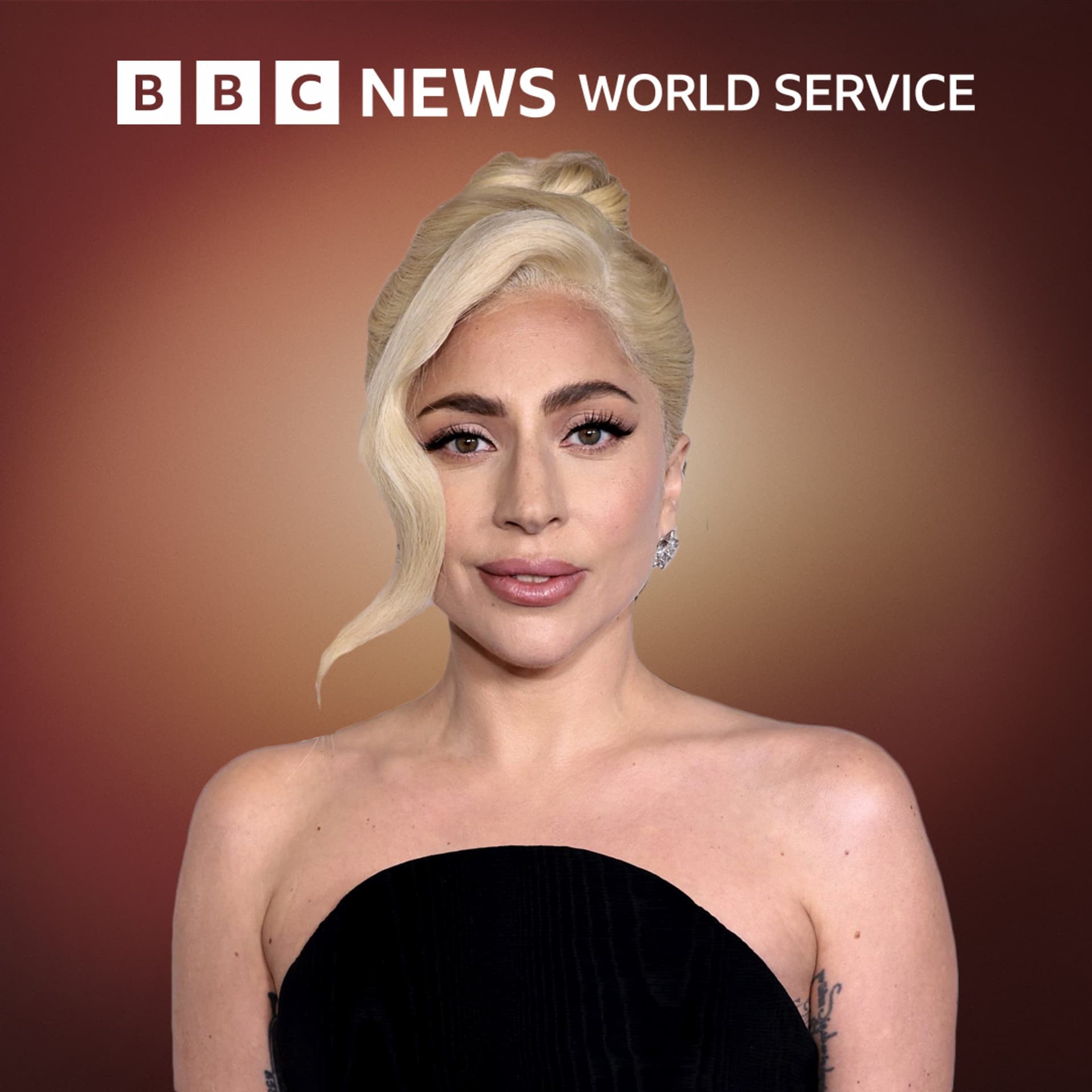
Mark Savage, the BBC’s music correspondent, speaks to Lady Gaga, American singer-songwriter and actress, as she reflects on the making of her new album, the joy of attracting a younger audience and finding happiness in love.
Born Stefani Joanne Angelina Germanotta in 1986, Lady Gaga has spent 18 years in the music industry and sold over 170 million records. She’s an actress as well as a musician and even has her own vegan cosmetic brand.
In 2019, Time magazine named her one of the 100 most influential people in the world.
Known for her flamboyant fashion and bold public image, Lady Gaga has often found herself in the glare of the media spotlight - and her latest work touches on the complex relationship she has with fame.
In this interview, you’ll hear her thoughts on art and identity, being a super-fan of Elton John, and the lack of female role models in the music industry, The Interview brings you conversations with people shaping our world, from all over the world. The best interviews from the BBC. You can listen on the BBC World Service, Mondays and Wednesdays at 0700 GMT. Or you can listen to The Interview as a podcast, out twice a week on BBC Sounds, or wherever you get your podcasts.
Presenter: Mark Savage Producers: Clare Williamson, Mantej Deol & Gabriel May Editor: Sam Bonham
Get in touch with us on email TheInterview@bbc.co.uk and use the hashtag #TheInterviewBBC on social media.