
In short
Podcast Episode Summary: The Interview with Majid Takht-Ravanchi
Podcast Information
- Title: The Interview
- Description: Conversations with influential global figures discussing significant issues shaping the world today.
- Host: Lyse Doucet
- Episode Title: Majid Takht-Ravanchi, Iran’s Deputy Foreign Minister: Regime change is a futile exercise
- Episode Overview: This episode features an interview with Majid Takht-Ravanchi, discussing Iran's nuclear program and the political landscape following military conflicts with Israel.
---
Key Topics Discussed
- Recent Conflict with Israel
- Background:
- A twelve-day military conflict occurred where both Israel and Iran launched missiles at each other, resulting in hundreds of casualties and significant damage to infrastructure.
- The conflict was sparked by Israel's claim that Iran was nearing the capability to build a nuclear weapon.
- Ceasefire:
- The conflict ended with US airstrikes on Iranian nuclear sites and a subsequent ceasefire.
- Takht-Ravanchi believes the ceasefire will hold but emphasizes the need for assurance from the US regarding future aggression.
- Nuclear Program Negotiations
- Ongoing Discussions:
- Prior to the conflict, negotiations regarding Iran’s nuclear program were expected to resume in Oman but were disrupted by Israel's military actions.
- The International Atomic Energy Agency (IAEA) reported Iran was breaching nuclear obligations, raising questions about uranium enrichment levels.
- Iran's Position:
- Takht-Ravanchi asserts Iran's commitment to diplomacy but demands assurance from the US against future acts of aggression.
- He indicates that past experiences have bred distrust, particularly regarding the sincerity of US intentions in negotiations.
- US-Iran Relations
- Diplomatic Engagement:
- Takht-Ravanchi describes the necessity for the US to provide guarantees to Iran to rebuild trust for future negotiations.
- He dismisses the notion that regime change in Iran is feasible, citing Iran’s history and unity in the face of external threats.
- Critique of International Responses:
- He criticizes the lack of international condemnation of Israel's actions and the alignment of some countries with Israel's stance.
- Takht-Ravanchi emphasizes the need for Iran to rely on its own capabilities for defense.
- Concerns Over Nuclear Developments
- Iran's Nuclear Strategy:
- The Deputy Foreign Minister discusses the potential for changes in Iran's nuclear policy, but maintains that any enrichment is for peaceful purposes.
- He addresses speculation regarding Iran's nuclear ambitions and the impact of military aggression on public opinion regarding nuclear weapon development.
- The Future of Diplomacy
- Prospects for Dialogue:
- Takht-Ravanchi mentions ongoing communications with the US but stresses that no specific agreements or dates for talks have been established.
- He points out the contradictions in US diplomacy, particularly statements from President Trump regarding military action versus peace.
- The Role of International Law
- Legal Framework:
- Takht-Ravanchi argues that US actions are in violation of international law, highlighting the importance of the UN Charter in preventing military aggression.
- He calls for accountability from countries that have supported US actions against Iran.
---
Key Takeaways
- Diplomatic Nuances: The complexity of US-Iran relations is underscored by historical betrayals and recent military actions, which have hampered trust.
- International Community: The perceived silence or complicity of European nations and others in the face of Israeli aggression raises questions about the efficacy and fairness of international law.
- Future Uncertainty: The episode concludes with uncertainty about the future of US-Iran negotiations, the potential for further conflict, and the implications for global security in the context of nuclear proliferation.
---
Conclusion This episode of The Interview provides a deep insight into the current geopolitical climate concerning Iran's nuclear ambitions and the ongoing tensions with Israel. Majid Takht-Ravanchi's perspectives highlight the complexities of diplomacy, the importance of trust, and the challenges of navigating international relations amidst aggression.
Written by AI. May contain mistakes. Listen to the episode to check what was said.
Transcript
Automatic transcript. May contain errors.0:00This BBC podcast is supported by ads outside the UK. If journalism is the first draft of history, what happens if that draft is flawed? In 1999, four Russian apartment buildings were bombed, hundreds killed. But even now, we still don't know for sure who did it. It's a mystery that sparked chilling theories. I'm Helena Merriman, and in a new BBC series, I'm talking to the reporters who first covered this story? What did they miss the first time? The History Bureau, Putin and the apartment bombs. Listen on bbc.com or wherever you get your podcasts. Hello, I'm Lise Doucette, the BBC's Chief International Correspondent, and this is the interview from the BBC World Service.
0:50The best conversations coming out of the BBC. People shaping our world from all over the world. There have been so many disagreements between me and my family. Putting on a show, that is what it means to be Lady Gaga. Only the things that you can't solve with government and private sector is where you bring philanthropy in. There's no place in the world where women are equal. Every generation, every generation has to fight to maintain democracy. For this interview, I met Maja Takravandji, Iran's Deputy Foreign Minister. He's agreed to meet me in the country's capital, Tehran, after its 12-day war with Israel.
1:33Both sides fired missiles into each other's territories, with hundreds killed as military sites were destroyed and civilian infrastructure badly damaged. Israel attacked Iran first on the 13th of June, claiming Iran was close to building a nuclear weapon. The conflict ended when the United States bombed three of Iran's nuclear sites, then brokered a ceasefire. It's worth highlighting that before these hostilities started, talks about the future of Iran's nuclear program were underway with the US. But they were overshadowed by a report from the International Atomic Energy Agency, the IAEA, which assessed that Iran was in breach of its nuclear obligations, and a question why it was enriching uranium to such high levels.
2:21For now, the ceasefire is still being observed by Iran and Israel. In this interview, you'll hear Majid Takt-Rabanchi speak about whether he thinks it will continue to hold and what it will take for negotiations with the U.S. to resume in good faith. They have to make us believe that they are serious. The last time they were not serious. They were not only not serious, but they betrayed us. They betrayed dialogue. They betrayed diplomacy. And they have to do a lot to assure us, not only Iran, they have to assure the international community that they will not engage in another act of aggression against Iran.
3:05Welcome to the interview from the BBC World Service with Majid Takdravanchi. in an interview I recorded with him at the end of June. Your Excellency, Deputy Foreign Minister of Iran, Majid Takhtar Avanchi, thank you very much for making time to speak with the BBC. My pleasure. Iran said that diplomacy would start when the attacks stopped. So is it time now to start talking to America again? You know, we have always been supportive of diplomacy. We have always been supporting of engagement in talks. But we should not forget the fact that we were about to start the sixth round of negotiations with America in Oman.
3:52But two days before, the Israelis attacked us. That was with the blessing of the United States. So they have a very big surprise for us by allowing Israelis to attack Iran, by working with Israelis to attack Iran. Therefore, you cannot be sure that these things will not happen again. We are at this stage now. We are hearing the Americans saying that they are ready for talks, but they have to respond to this question. What is the guarantee that they would not do the same thing that they did again? What kind of guarantee could they have to? They have to make us believe that they are serious. The last time they were not serious.
4:40They were not only not serious, but they betrayed us. They betrayed dialogue. They betrayed diplomacy. And they have to do a lot to assure us, not only Iran. they have to assure the international community that they will not engage in another act of aggression against Iran. But it was President Trump who arranged for the ceasefire. He told Israel and Iran to stop. That's not enough of an indication. He said repeatedly he wants now there to be peace. That's not enough? Cease fire is one thing, and the resumption of dialogue and talks is another thing. We have to be assured that in the middle of discussions, in the middle of talks, if we do not accept the things that the Americans will tell us, they will not resort to force anymore.
5:38This is what happened last time, and we need to be assured there will not be a repetition of what they did on June 13th. We hear President Trump in public saying he could bomb Iran again, or he could talk to Iran again. What are you hearing through the mediators, the back channels? First of all, the public statements by President Trump is against international law. He's the President of the United States. He can say his policy even if it changes? No, no. He can say whatever he wants. What I'm trying to say is that this is against international law. This is against the UN Charter. This is against the backbone of the United Nations.
6:23Why the United Nations was created? That was created in order to put the wars behind us. Now, some might think that they have every power, they have every right based on what they believe to do whatever they wish. So we have to admit that this is against international law. So you feel that other countries didn't condemn these attacks on your country. European countries, including Britain, spoke of Israel's right to defend itself. About a week ago, there was a meeting in Istanbul, an organization of Islamic cooperation. They unanimously adopted a very strong resolution in rejecting the U.S. aggression and the Israeli aggression against Iran.
7:07But you are right. There are a number of countries, including in Europe, who have sided with the aggressor. And it's a shame. But the last episode of war proved the fact that Iran should rely on its own capabilities, has to rely on its own, you know, whatever we have in order to defend ourselves. So some are saying even that the strikes on your nuclear facilities make it more likely that you are now going to try to acquire a nuclear bomb. Is that the discussion here? You just said you want to defend on... You know, there are many inclinations within the Iranian society. Is that part of the discussion now, that having seen your vulnerability to attack, that even though you said before you weren't pursuing a bomb...
7:56Our policy on NPT has not changed. Although you're threatening to withdraw from the nuclear non-proliferation treaty. You know, withdrawing from NPT is one thing. Going for a bomb is another thing. So let's take the first one. Your parliament has passed a law saying that Iran should withdraw from the Nuclear Non-Proliferation Treaty. No, that is not the case. The parliament has passed to suspend cooperation with IAEA. And the reason is quite clear. By the way, that is the law of the land and we should respect. So would you consider withdrawing from the Nuclear Non-Proliferation Treaty? As I said, there are many inclinations within the Iranian society.
8:32Is that an option on the table? As far as the government is concerned, you are talking about the society or you are talking about the government? The government has not changed its position on going for the nuclear. But there is a strong tendency on the part of some people in Iran who believe that we should go the other way. So let's be clear. We do know that messages are being passed between Iran and the United States through many mediators. What message are you getting now from Washington about the next steps? We are hearing from Washington telling us that they want to talk. By the way, no date has been set.
9:10President Trump talked about this week. I'm telling you. I'm telling you that we have not agreed to any date. We have not agreed to the modality. Right now, we are seeking an answer to this question. Are we going to see a repetition of an act of aggression while we are engaging in dialogue? And the Americans have to be quite clear on this very important question. Do you have a sense of what President Trump wants? Because he has also said he doesn't care about an agreement anymore because he believes he's done enough damage to your nuclear program. Is it time to rethink your nuclear program? There are reports that perhaps a deal could involve sanctions relief, investment in Iran in exchange for Iran agreeing not to enrich uranium itself.
10:09Would that be possible? Why should we agree to such a proposal? Because you paid, Iranians on this visit have told us that Iran has paid too high a price for enriching uranium, causing suspicions even among your European partners about why you were enriching to 60%. It wasn't necessary. First of all, 60 % is something which is being used for peaceful purposes. But it did create this situation of suspicion. Is it time to rethink, to say, is it so important to enrich uranium that Iranians are paying such a heavy price? No, first of all, if you're talking about suspicion, we have to be the ones who are asking from Europeans and from others to be transparent in their position.
10:55So leveling accusations against one side is not going to solve the problem. But on the issue of enrichment, we have paid a lot on the question of enrichment. Because first, this is a right that we believe have to be observed as an NPT member. Second, we have been denied access to nuclear material, which is needed for our research program, for our power plants. So we need to rely on ourselves. That is why we insist on having an enrichment program for Iran. The level of that can be discussed. The capacity can be discussed. But to say that you should not have enrichment, you should have zero enrichment, and if you do not agree we will bomb you, that is the law of the jungle.
11:53What is the state of the nuclear program now? The foreign minister has said that there was, in his words, excessive and serious damage. Can you give us more details? No, I'm not in a position to give you an exact assessment of the damage. and I know that probably in a short period of time everything will be clear. Rafael Grossi, the Director General of the IAEA has now said that Iran could start enriching within a few months. Their monitors are on the ground. So is that also your assessment? I really don't know. You have to ask the specialists in our atomic energy organization as to when they are ready for enrichment.
12:37I don't think that Rafael Grossi is quite right when he has said that in a few months, Iran will be in this position or that position. So it takes time for everything to be quite clear. President Trump said he wiped out the program. He said that American bombers obliterated the program. That is his assessment. So we will leave it at that. Is it not your assessment? He became very angry when the Supreme Leader, Ayatollah Khamenei, in his speech, criticized the United States, criticized President Trump directly. He said he had been considering sanctions relief, looking at new programs, and then he said he stopped them because of the way Iran talked about him.
13:21It's interesting that we are mixing the position of victim and the aggressor. In fact, we are the victim in this act of aggression against us. We have every reason to complain about the way that we have been treated. The way that Americans, two days before the next round of talks, they engage in an act of aggression against us. That by itself shows the lack of sincerity on the part of America. Now they are complaining that they have been mistreated by Iran? Come on. If Iran's defiance is getting in the way of your diplomacy... What does defiance mean? If you're going to make statements saying that President Trump exaggerated it and giving him insults, President Trump said it was an angry insult, and then he stops, considerations which could be beneficial for the people of Iran.
14:17No, we do not buy this argument that he was about to leave sanctions and all of a sudden he changed his position. It is very, you know, to look at it in a simple manner, to say that I was trying to leave, to lift these sanctions. Now that you have treated me as such, I will not, you know, lift sanctions. That is not the way that sanctions lifting is going to be taking place. But anyway, the way that he has, you know, insulted our leader, who is not only a political leader, he's a religious leader with millions of followers. And those followers have been, you know, in fact, insulted. You're listening to the interview from the BBC World Service.
15:11People shaping our world from all over the world. If journalism is the first draft of history, what happens if that draft is flawed? In 1999, four Russian apartment buildings were bombed, hundreds killed. But even now, we still don't know for sure who did it. It's a mystery that sparked chilling theories. I'm Helena Merriman, and in a new BBC series, I'm talking to the reporters who first covered this story. What did they miss the first time? The History Bureau, Putin and the Apartment Bombs. Listen on BBC.com or wherever you get your podcasts.
15:54For this episode, I'm speaking with Majid Takravanchi, Iran's Deputy Foreign Minister. I first met him a decade ago during the talks which led to the 2015 nuclear deal President Trump pulled out of. Our last meeting had been in Oslo, just two days before Israel attacked Iran. there had been no sense that a military operation was imminent. When we sat down in Tehran in the graceful foreign ministry, one of Iran's most experienced diplomats, thinner since his recovery from cancer, had a lot to say about diplomacy, including with the IAEA. Iran's parliament recently voted to suspend cooperation with the world's nuclear watchdog, accusing it of siding with Israel and the US, a symbolic motion yet to be adopted by the government.
16:43The BBC was only allowed to report from Iran on condition that none of our reports were broadcast by the BBC's Persian service. The same rule applies to other international media agencies operating in Iran. Let's return now to my interview with Majid Takht-Ravanshi. Prime Minister Netanyahu Israel made it clear that he would like there to be a change of leadership here. President Trump gives different views. What messages are being sent to you? Would the United States want to bring about regime change in Iran? do something to the Supreme Leader? First of all, this is a wish list for Netanyahu and for anybody in the world who thinks that regime change can take place in Iran.
17:26As I said, people are supportive of the way that this matter is being handled, although they might have criticism of some actions by the government. But when it comes to foreign aggression, The Iranians are famous to back each other, to be united in order to confront the aggression. And that is why I believe that regime change is not going to take place in Iran because Iran has several thousand years of civilization, several thousand years of history. But what are you hearing from the United States? Is that their policy or not? What have they told you? We are hearing public statements from the Americans.
18:05What are you hearing in private? Almost the same, that they do not want to engage in regime change. But my point is that regime change is tantamount to futile exercise. And it is not going to happen again. I mean, it's not going to happen in Iran. It must have been shocking for Iran to see so many of your most senior commanders, your leading nuclear scientists, targeted and killed. within a few hours of the Israeli operations, underlining how much the Israeli intelligence agency Mossad has infiltrated your society. How much of a danger is that? After the terrorist attacks against our generals, who were sleeping at their homes.
18:54Exactly, that Israel could find them and kill them in their bed. Who were sleeping with their loved ones next to them. And it's a crime. It's a crime even to kill a military man when he is not in the front. So he's at home. But just look at what happened next. The next day, substitutes were announced. And some of them were killed. And one of them was killed, but another one was substituted. So this is not the way to look at the situation in Iran. Maybe in one country, that might be the case, that you eliminate the military leadership, and then the whole country will be in chaos. In the case of Iran, it is to the contrary.
19:43We were not only facing chaotic situation in Iran, but people got united to the dismay of Americans and Israelis. So Iran is different. They have to understand that Iran is different. But Iranians are expressing concern because of this worry about the infiltration by Israel's intelligence agency, that security forces are cracking down. People are being arrested. People are being executed. And this will have an impact on Iranians, on their own lives. We are at war. At now? No, no, no, not now. But the atmosphere of war has not diminished, although we have a ceasefire. But the security forces have to be alert.
20:27And I do not... But some fear they're going too far. What do you mean they have gone too far? Opposition figures and dissidents. No, no, that's not the case. That is not correct. You know, when they face some suspicious activities, they try to find out what's going on. And then some people might get arrested. If they have not done any wrongdoing, they will be released. But we have arrested Mossad agents. we have arrested those who have been doing certain things against the security of the country. So that is the reason why the security forces are more visible these days. They are doing whatever necessary to protect the lives of Iranians.
21:10We do not want to allow Israeli agents, the American agents, to have free hand in Iran. And I suppose that is the case in every country, while the country is being under attack. Do you think the ceasefire is going to last? To be honest, it is not quite clear. As far as Iran is concerned, as long as there is no military attack against us, we will continue to observe the ceasefire. But if by any chance the Israelis or the Americans feel that they might be successful, they should try to contain themselves, not try their luck. And because this time we know how to act and we will do whatever necessary to protect our people.
21:57Almost everyone we've met here has said to us, the ceasefire is not going to last. They worry about another war. You're sitting in the foreign ministry. How worried are you? No, we have to be prepared. We have to do whatever's necessary to be alert, not to be surprised again. And that is why we are very cautious. We are taking one step at a time to see that we are not going to face the same betrayal again. And well, finally, that you say you've been betrayed, but Israel, the Europeans, America say they don't trust Iran. They feel that is the root of the problem. But we haven't. They feel that's the problem.
22:41They may not trust Iran, but we have not made an act of aggression against them. I think they would disagree about that. But the Americans, the Israelis have committed an act of aggression against Iran, and some European leaders have endorsed that. That is ridiculous. That is a travesty of justice. Those who claim to are, you know, promoting international law, they are in no good position to try to be a U.S. apologist. But they would say Iran has to do more to reassure the world that its nuclear program, its ballistic missile program. Madam, we were discussing with Americans. We were in the middle of talks.
23:26All of a sudden, we face a clear act of aggression. and those who are criticizing us, they should criticize the way that we have been treated. They should criticize the Americans. They should criticize the Israelis. And if they do not have the guts to criticize America, they should keep silent, not try to justify the aggression.
24:00including conversations with Mohamed Yunus, the interim leader of Bangladesh, Mike Huckabee, the US ambassador to Israel, and tennis great Martina Navratilova. Until the next time, goodbye for now.
24:20If journalism is the first draft of history, what happens if that draft is flawed? In 1999, four Russian apartment buildings were bombed, hundreds killed. But even now, we still don't know for sure who did it. It's a mystery that sparked chilling theories. I'm Helena Merriman, and in a new BBC series, I'm talking to the reporters who first covered this story. What did they miss the first time? The History Bureau, Putin and the apartment bombs. Listen on BBC.com or wherever you get your podcasts. you
From the publisher
Lyse Doucet speaks to Majid Takht-Ravanchi, Iran’s Deputy Foreign Minister, about the future of Iran’s nuclear programme and its government. The interview took place in the country’s capital Tehran after Iran’s twelve-day war with Israel.
Both sides fired missiles into each other’s territories, with hundreds killed as military sites were destroyed and civilian infrastructure badly damaged.
Israel first attacked Iran on 13 June, claiming Iran was close to building a nuclear weapon. The conflict ended when the United States bombed three of Iran’s nuclear sites.
It is worth remembering, before any of the aggression started, talks about the future of Iran’s nuclear programme were ongoing with the US. But they were overshadowed by a report from the International Atomic Energy Agency declaring Iran was in breach of its nuclear obligations and questioned why Iran was enriching uranium to such high levels.
For now, there’s a ceasefire between Israel and Iran. Majid Takht-Ravanchi explains why he thinks it will hold and what it will take for diplomacy with the United States to resume in good faith. The Interview brings you conversations with people shaping our world, from all over the world. The best interviews from the BBC. You can listen on the BBC World Service, Mondays and Wednesdays at 0700 GMT. Or you can listen to The Interview as a podcast, out twice a week on BBC Sounds, or wherever you get your podcasts.
Presenter: Lyse Doucet Producers: Charlotte Scarr and Ben Cooper Sound: Dave O’Neill Editor: Nick Holland
Get in touch with us on email TheInterview@bbc.co.uk and use the hashtag #TheInterviewBBC on social media.
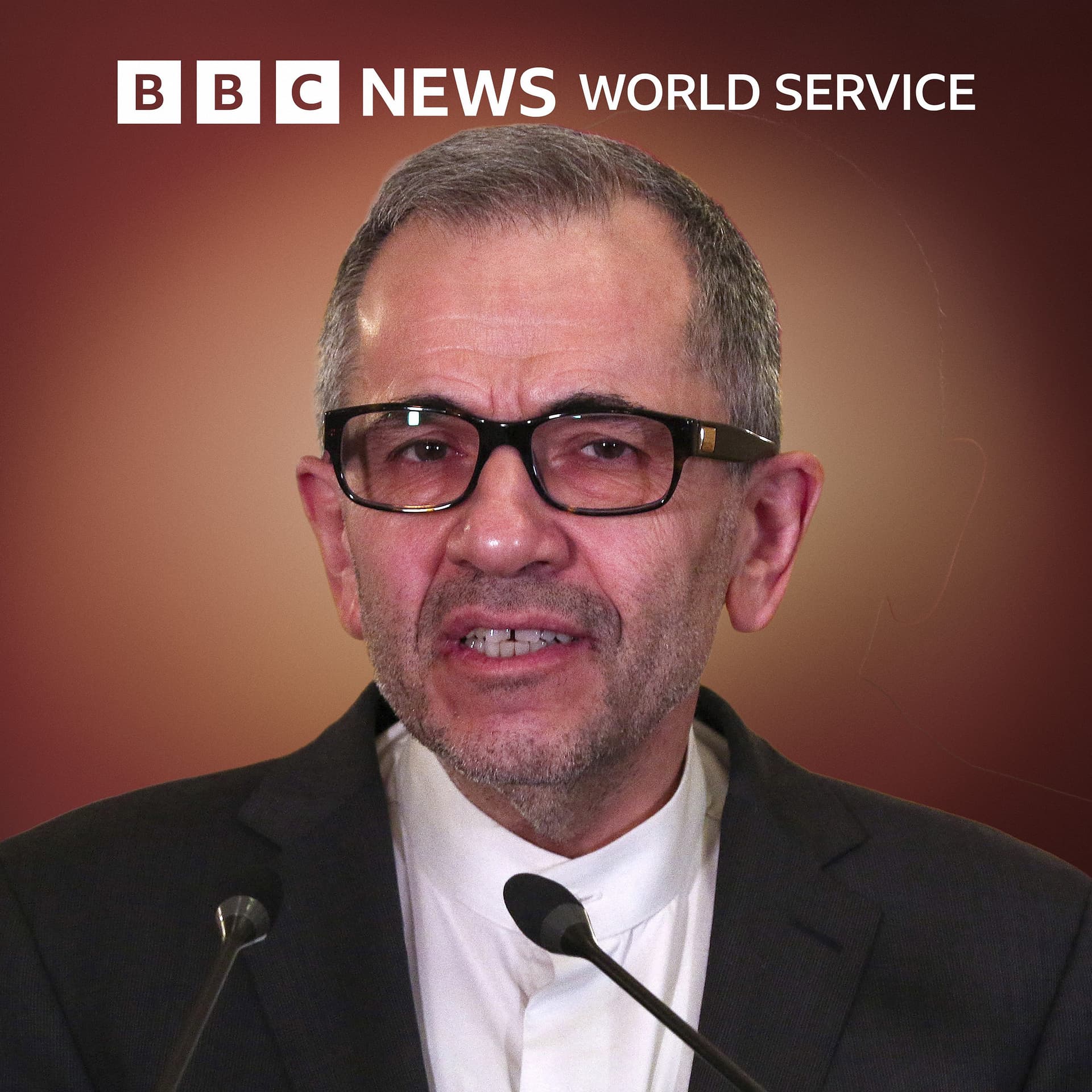
(Image: Majid Takht-Ravanchi. Credit: Safin Hamid/AFP via Getty Images)