
In short
Podcast Episode Notes: Martina Navratilova - 'Women are still judged by a different metric than men'
Podcast Overview Title: The Interview Host: Amol Rajan Producer(s): Ben Cooper, Joel Mapp Sound Engineer: Dave O’Neill Editor: Nick Holland Description: Conversations with influential figures shaping our world, focusing on business, politics, finance, sports, and culture.
Episode Summary In this episode, Amol Rajan interviews Martina Navratilova, a legendary tennis player, about her extraordinary life, career, and experiences. Born in Czechoslovakia in 1956, Navratilova's rise to tennis stardom is intertwined with her personal battles, including her sexuality, political asylum, and health struggles.
Key Points Discussed
Early Life
- Born Behind the Iron Curtain: Navratilova reflects on her childhood in Czechoslovakia during Soviet control, witnessing political turmoil firsthand.
- First Tennis Tournament: Began playing tennis at age 8, quickly gaining prominence.
- Defection to the US: In 1975, after governmental control over her career, she defected to the United States, seeking political asylum.
Tennis Career
- Dominance in Tennis: Navratilova's career includes 59 major singles and doubles titles, establishing her as one of the greatest tennis players in history.
- Coming Out: She publicly came out as gay in 1981, becoming a notable figure in the gay rights movement, facing both support and backlash.
Health Struggles
- Battle with Cancer: Navratilova has battled cancer twice; she shares insights on her experiences during treatment and recovery, including a newfound appreciation for life.
Societal Issues
- Gender Disparities: Navratilova discusses the persistent double standards women face in sports and society, stating, "Women are still judged by a different metric than men."
- Transgender Athletes: She expresses strong opinions on the inclusion of transgender women in women’s sports, advocating for fairness based on biological sex.
Personal Reflections
- Parenthood: Martina shares her recent experience of adopting two boys, reflecting on the challenges and joys of parenthood later in life.
- Political Views: She critiques the current political climate in America, expressing fears about a shift toward authoritarianism.
Notable Quotes
- "Cancer taught me to really appreciate every day."
- "I think it's wrong to allow biological males to compete in women's sports."
- "Totalitarian? Well, yeah. When they are checking all your social posts to decide whether you can stay in the country..."
Key Takeaways
- Navratilova's journey from a communist regime to becoming a celebrated American citizen embodies resilience and determination.
- She emphasizes the need for equality and fairness in sports, addressing both gender disparities and the complexities surrounding transgender athlete participation.
- Her advocacy for gay rights and personal battles with health issues illustrate her commitment to authenticity and social justice.
Conclusion The episode concludes with Rajan and Navratilova discussing the importance of staying true to oneself amidst societal pressures. Navratilova’s journey serves as a powerful testament to overcoming adversity and advocating for change within and beyond the sports world.
Listening Information
- Available on: BBC World Service, BBC Sounds, and various podcast platforms.
- Listen on: Mondays and Wednesdays at 0700 GMT.
Contact Information
- Email: TheInterview@bbc.co.uk
- Social Media Hashtag: #TheInterviewBBC
---
This structured summary captures the essence of the episode, highlighting critical discussions and insights presented by Martina Navratilova while maintaining clarity and accessibility for readers.
Written by AI. May contain mistakes. Listen to the episode to check what was said.
Transcript
Automatic transcript. May contain errors.0:00This BBC podcast is supported by ads outside the UK. If journalism is the first draft of history, what happens if that draft is flawed? In 1999, four Russian apartment buildings were bombed, hundreds killed. But even now, we still don't know for sure who did it. It's a mystery that sparked chilling theories. I'm Helena Merriman, and in a new BBC series, I'm talking to the reporters who first covered this story. What did they miss the first time? The History Bureau Putin and the apartment bombs Listen on bbc.com or wherever you get your podcasts From the Winter Olympic and Paralympic Games To the European Athletics Championships The 2026 sporting calendar is packed full of big events Keep up with all the action with More Than The Score The podcast that goes beyond the score sheet Join expert BBC sports journalists every Monday to Friday For interviews with sports stars, big talking points and the stories behind the headlines.
1:07More Than The Score from the BBC World Service. Listen now, search for More Than The Score wherever you get your BBC podcasts.
1:30shaping our world from all over the world. There have been so many disagreements between me and my family. Putting on a show, that is what it means to be Lady Gaga. Only the things that you can't solve with government and private sector is where you bring philanthropy in. There's no place in the world where women are equal. Every generation, every generation has to fight to maintain democracy. For this interview, I met Martina Navratilova, one of the greatest tennis players in history. The story of her rise to the top of the game is as remarkable as the number of tournaments she managed to win.
2:08Born behind the Iron Curtain in Czechoslovakia in 1956, she was 11 years old when she watched Soviet tanks roll into the country as Moscow sought to reassert control and quash political reform. Navratilova, who played in her first tennis tournament when she was eight, rose to both national and international prominence in the years that followed. But in 1975, following the Czech government's efforts to control her tennis career, she defected. Aged 18, Navratilova sought asylum in the United States, where she later became an American citizen. During the late 1970s and 1980s, she dominated the international tennis circuit, and by the time she retired, she'd won 59 major singles and doubles titles.
2:51But throughout her life, Navratilova has generated headlines on the front pages of newspapers as well as the back. She came out as being gay in 1981, a rare thing for high-profile athletes to do at the time, and quickly became a prominent figure in the gay rights movement. More recently, however, she's found herself at odds with some groups due to her views on transgender athletes. She's also battled cancer on two separate occasions. Cancer taught me to really appreciate every day, which I was doing pretty much anyway. But most of all, do not sweat the small stuff. It's fixable. Welcome to the interview from the BBC World Service with Martina Navratilova.
3:33You know, you look, if I may say, incredibly well, and we're going to talk about the extraordinary life you've had in which you have been a survivor in many, many different ways. Not so long ago, you had cancer. How's your health right now? It's all good. All clear and no side effects at all. Other than red wine still doesn't taste good. That would be the key, man. I've gone sideways towards tequila and vodka. But not during the daytime. Not during the daytime, definitely not. Yeah, so I'm lucky. The cure was hell, but the aftermath has been great. And I was lucky on that front because people can have lifelong issues.
4:12no salivary glands the voice box can be affected swallowing you know so I need to chew my food a little bit better but that's about it so I'm good. But this was the second time you had cancer you had cancer once I think it was breast cancer when you were 52 and then 13 years later it came back but it came back in a big way didn't it I mean just when just take us back to that moment when the oncologist said yes it's come back and you know what you got it in two places. The way I found out I'm like oh this lymph node is a little bit bigger and a couple weeks later it's still bigger so that's literally how you found out yeah this is too big and called my doctor and he says yeah and do a biopsy then we got the results and it's cancer and it could be anywhere and i'm like oh my god i'm gonna die so worst three days of my life and then monday morning the oncologist calls he says well it is hpv it's 95 curable it won't be pretty and it's for sure just in your throat But when they did the CT scan, my throat lit up where the tumor was, and then my right breast lit up as well.
5:14So I had two different cancers, completely unrelated, but they caught both early. It was hell. I lost 30 pounds in the seven weeks of treatment because I had proton and chemo at the same time, and it just knocks you on your ass. And what did that cancer teach you about mortality? As you know, I wore my emotions on the sleeve when I was playing. I showed everything. I don't have a filter, much of one. I've learned. I've gotten better with the filter. I didn't ever stress about anything, but now I really don't stress. I blow up, but then I let go. And I think champions have to do that because we compartmentalize very well.
5:47But that's how I am, always have been. I want to talk a little bit about your childhood because a lot of people who know the champion Martina might not realize that your life in many ways reflected the great ideological battle of the 20th century. You went from communism to capitalism. And other people like me read about communism. and they read about the Soviet Union, they read about life there. They've never experienced it. They've never felt it. What do you remember of growing up in the Soviet Union, Czechoslovakia, a country that no longer exists, part of an empire that no longer exists? What was life like day to day?
6:18Yeah, but my hometown is still the same. Still no traffic lights, still no stop signs. Even now? It's an idyllic childhood. I was just talking with my best friend that I've known since I was... We were three years old in kindergarten. What a great childhood we had. Did you not feel the oppression? Oh, yes, of course. But that's all we knew. So you kind of, you know, live with it because it is what it is. There is nothing you can change. We never thought communism would fall, that we would ever get away from the yoke of Soviet Union. Almost happened. But then, you know, the Soviet tanks came in, the Warsaw Pact in 68.
6:53I was almost 12 years old and remember it like yesterday. What was that like when the tanks rolled in? It's like, you know, your life will never be the same. just like when that second plane hit the tower in New York. I'm like, I thought the first one was in an accident. And when the second one, I'm like, we are cooked. This will change our lives forever. And that's what I felt back in August 21st, 1968, when the tanks rolled in. Our life will never be the same. You threw stones at the tanks. Yeah, we tried. What did you know of the outside world while you were living under communism? What did you know of America and capitalism and freedom?
7:28Well, you read, you watch movies, you see some movies. Bonanza was the big hit growing up on Saturday nights. And then I traveled. I went to West Germany when I was 13. Then I went to America when I was 16. So I kind of lived it. So I was lucky that I got out of the country to see the West. Most people don't. People who know you through the kind of glory days of your tennis career won't know about the extraordinary dilemma and decision that led to your going to America to pursue that career. And the night before you went, I just wonder if you could take us back to a walk that you went on with your dad.
8:00What was the subject of your conversation and what did it say to you? So you were 18? I was almost 19. This is August 75. I was 18 and 10 months. And the Federation wasn't going to let me go to the US Open. The Czechs, that is. Czech Federation. Because you had to get the permission from the Federation to leave the country. So you're at the hands of the government. And they said, no, no, they won't let me go to play in the US Open. and finally they relented and said okay just a week before and that's when I knew that I couldn't come back because you know if they change their mind I don't ever get out of the country again so it's a one-way ticket and so it was a one-way ticket I talked to my dad he says well if you decide to stay don't come back no matter what we say because they'll be maybe telling us to tell you to come back so don't believe us and don't tell your mom so so I didn't it's worth just take it a moment to realize you're 18 getting a one-way ticket to america away from communist czechoslovakia and your dad says don't tell your mom because she's going to really not like the fact that you're going that's a huge decision for an 18 year old and when you look back on that choice you make you must have mixed emotions pride and also kind of can't believe you did it no i'm more pissed off that i was forced to do it you know that's the regret that i was forced to do that.
9:20I'm never able to get that time back. I never knew when I would see my parents or if I would see them, if I would ever go back, etc. It was a one-way ticket. They couldn't come out and I couldn't go back because then they would put me in prison. But at 18, you think everything's going to work out. I think at 30, I couldn't have made that same decision. It's such a big news story in America. Well, yeah. The night before the Immigration Naturalization Service, that's where I went in Manhattan. That was the appointment. They said to my agent, Fred, come after hours. We don't want anybody to see Martina.
9:53I'm going to keep it under wraps. You know, don't say anything to anybody. So we get there like at six o 'clock. We leave like at 10. I had to convince him I was not a communist spy. I just wanted to play tennis. But immediately they said, OK, we approve you. You know, next day I had my green card. But they said, don't say anything to anybody. I'll leave there at 10 o 'clock at night. The next morning it's in the paper. It was in the Washington Post. There was a little blurb. The tennis star asks for political asylum. Who leaked it? Well, somebody from the INS, obviously, you know. So that's when I had to go to Forest Hills, to the press conference to make it official.
10:27But it was leaked because they were trying to keep me safe. But also you couldn't have an honest relationship with your parents, presumably, because if you called up, they were, you know, spoke to them in Czechoslovakia, they were very mindful that the authorities would be... No, we could hear the clicks on the phone when we were talking, but we spoke maybe every three, four weeks. Who were the cliques? Cliques. They were listening in, you know. But we weren't talking political stuff. It was just, you know, how are you playing? How is it feeling? It was just normal conversations, but we were cracking up.
10:57I'm like, can you hear me OK? You're listening to the interview from the BBC World Service, people shaping our world from all over the world. If journalism is the first draft of history, What happens if that draft is flawed? In 1999, four Russian apartment buildings were bombed, hundreds killed. But even now, we still don't know for sure who did it. It's a mystery that sparked chilling theories. I'm Helena Merriman, and in a new BBC series, I'm talking to the reporters who first covered this story. What did they miss the first time? The History Bureau, Putin and the apartment bombs. Listen on bbc.com or wherever you get your podcasts.
12:10headlines. More than the score from the BBC World Service. Listen now, search for more than the score wherever you get your BBC podcasts.
12:24For this episode of The Interview, I'm speaking to one of the greatest tennis players in history, Martina Navratilova. And in fact, I spoke to her in Paris during the French Open at Roland Garros. She was extremely excited about the prospects of coming to the UK for Queen's and also for Wimbledon where she'll be a commentating as usual and she was on terrific form very very happy to be able to say that she is now cancer free and very very opinionated you get the impression with Martina Navratilova that she's one of those people that's just reached an age and stage where she kind of doesn't really care what people think about her anymore and therefore she's prepared to unbutton and let rip on issues from Trump to trans athletes in female sport here we go let's return to my conversation with Martina Navratilova.
13:11You got known as the biotic woman, you went to the gym, you trained hard and you got a coach. But there was also, I looked at the headlines from that period and maybe you avoided them, but there was an undertone to the coverage about femininity, what it is to be a woman. Did you feel some of that was pretty nasty? You're smiling now, but I mean, some of it was pretty nasty. Look, it still is. Women are still judged by a different metric than men and certainly judged by a different metric when they do something wrong. even example very simple example oh you're so competitive saying to me i'm like what am i supposed to go on the court and try to lose or something what is wrong with that would they say the same way to rafa nadal and it happens on a daily basis you know it's just part of the deal i think men just don't realize how much women have to deal with on a daily basis anyway so i the femininity thing i was kind of jealous of women that looked more feminine but there's nothing i can do about what I look like, who I am, how I act.
14:07So if people were uncomfortable with it, I've always figured it's their problem, not mine. But it hurt. Yeah, it hurt. But you were perhaps the most famous female athlete in the world, or certainly one of them at this point. And you were also publicly harboring a secret which went to your very core, which was about your sexuality. What was it like living with that secret whilst being so famous? Well, I didn't think there was anything wrong with being gay, but there was something wrong with it in the eyes of the public, certainly the media. And I couldn't come out until after I got my citizenship to get your citizenship, the final interview.
14:41If they ask you, are you homosexual? And you have to, you're under oath. And so hopefully you say yes. And then if that person, usually a man, thinks it's a problem, then they can deny your citizenship based on that. So I couldn't come out before I got my citizenship. So that's why it was kind of a secret. But, you know, the tour, everybody knew who was gay, who was straight. Nobody cared. It came out around the same time, just three months after Billie Jean King. Just tell the story of how were you outed? Well, Billie Jean was outed by her ex-girlfriend and then became massive news. I had told the people at the WTA that I was going to come out once I got my citizenship.
15:18And they literally told me, don't come out now because the sponsors told us if there's another scandal like Billie Jean, we're going to pull out a sponsorship of the tour. Meantime, there had been a reporter that wanted to talk to me about my sexuality. I said, I can't talk about it until I get my citizenship. So I got my citizenship in July of 1981. And he calls me. I was in Monaco. He calls me and says, so are you ready to talk about it? I'm like, I can't because. And I told him why. He says, OK, I won't. And then two days later, it's in the paper. So literally saying that I didn't want to come out because it would hurt the tour.
15:53That was the story. So that was the story. And I was relieved because I didn't want to be lying or not have to talk about it. because I never felt ashamed or that I wanted to hide it. What did coming out cost you, not financially, but emotionally, in terms of support from the fans? I mean, this is a different world. This is a 1980s America. How did the fans react? Initially, they didn't care, and I got a big applause at the US Open when I lost to Tracy Austin. They kept applauding, and I was like, wow, they really are accepting me as me. So it felt great, but then when I started winning a lot, I think the gay thing was a minus.
16:28It was difficult to deal with. That must have been horrible. On the media, you know, I mean, in the UK with the tabloids, you know, they rented a house across the street from me so they could snap photos with me and whoever I was with. So, you know, the love den or love shack, whatever. No, it's my home. Anyhow. You mentioned the double standards that still are in place today. Is it easier now, do you think, for players to come out? Or are there players, maybe players that you even know, who still don't feel able to be themselves and true to their sexuality? There is still a bunch. There are some women that have not come out.
17:01It's still a minus for so many. And quite frankly, it's nobody's business. You don't have to announce it. These days, gay rights, I mean, people in, at least in the democracies around the world have equal rights. So there's really no reason to come out. But it can still be a shameful thing for some and a big minus in some countries. So it's just easier to not come out. But, you know, to each his own. What's the biggest challenge facing women in tennis today? It's still trying to get the corporate money because we still are lacking and lagging behind the guys in financials. You know, the guys get bigger contracts from whoever, the sponsor of the tour, the co-sponsors, the car companies, whatever, whatever.
17:45Whoever the sponsors are, male athletes still get more than female athletes for the most part. And certainly the tour, it's a lot easier for the guys to get the money. Their argument on fair pay, which you've heard a billion times, I'm sure, is that they should get some men who advocate this position, not all the men on tour advocate the position, but some per se they should get a bigger share of media rights money because they drive bigger audiences both on TV and in court. What do you say to that? Number one, the majors are big because both men and women play together. Also, some people say, oh, we don't play three out of five.
18:21Well, we volunteer to play three out of five, but they don't want us to do that. So you can use that as an argument versus equal price money in the majors. And also men's sports has been around for 150 years. Women's sports is very young. It's only 52 years ago that women athletes in America got the same rights as male athletes in college sports, which kind of started the whole sports revolution in America for women. It's just the right thing to do. I want to get your views on trans athletes in sports. You have been very outspoken. So just looking at your social media on Twitter and elsewhere, you said so.
18:56For instance, you said it's not for failed male athletes, whatever age. This is not right and it's not fair. This to you is a question of morality, isn't it? It's about justice. And as you cast it, it's about being fair to women who are participating. Absolutely. I mean, the girls that come out, they've been working just as hard as the boys. And, you know, they have a dream. and that there's a certain step ladder that you have to go through before you get to elite sports. And then you go into your local meet and there's a boy that now has a ponytail and nail polish and identifies as a girl. That's all fine and well, but the ponytail and nail polish does not a FEMA make.
19:39And now these girls are like, I can't compete against that. I have no chance. What do you think about where tennis has got to? because the WTA permits transgender women to participate if A, they provide a written and signed declaration that they are female or non-binary, B, their testosterone levels are below a certain limit for two years, and C, they sustain those levels. What do you think about that position that the WTA has got to? I think it's wrong. I think it's still wrong because, number one, you don't lose the five inches of built-in height. The average male is five inches taller than a female.
20:11Then you add arm length, you've got like seven inches. So I have to jump this much higher for an overhead as the guy, and if he finds it as a woman, to be on the same level. That's massive in sports. You cannot compete with that. Massive advantage. You can't take that away. The Lawn Tennis Association in the UK says it's going to manage or balance potentially conflicting responsibilities. On the one hand, the need to ensure competition is fair, but on the other, a responsibility to make sure tennis is welcoming and inclusive for everyone. Yeah. You know what it feels like. It still is. But you know what it feels like to be in a minority and to be ostracized.
20:48You've faced public persecution. Do you worry that the consequences of your being outspoken on this subject might lead other people who are trans, who are in a minority, to be ostracized or bullied? There should be no ostracization or bullying, but male bodies need to play in male sports. They can still compete. There is no ban on trans women in sports. They just need to compete in the proper category, which is the male category. It's that simple. And welcome them and everybody gets a chance. But by including male bodies in the women's tournament, now somebody is not getting into the tournament.
21:22A woman is not getting into the tournament because now a male has taken her place. Recently in the UK, the Supreme Court ruled that the legal definition of a woman is based on biological sex. Is your message to the world of tennis that they should follow the lead of the UK Supreme Court and be that clear and that definitive? 100 percent i think sports has always been on the front of social change and social progress and this way we can be on it again in affirming the right of women and girls to sex-based basis let me just push back for one moment because a lot of people would say that the if someone with your authority pedigree championship status is so outspoken they can understand why you might feel very strongly about this as a moral question but one consequence of your taking those views might be that people who are trans who've been through terrible experiences many times will face more public persecution and they're already terribly persecuted and that actually we should all including you spend a bit more time being sympathetic to what people who've gone through that process who've transitioned are experiencing very sympathetic but that still doesn't give them right into women's sex-based spaces.
22:34What about the women? What about the girls? And every athlete affects every girl on that pitch, on that playing field. The other subject on which you've been very outspoken of late is your adopted homeland of modern America. And I know that on your pinned tweet on the platform X, you say that you grew up in a totalitarian, authoritarian country, which we've spoken about, Czechoslovakia under the Soviet Union. And basically you say you refuse to be someone who lives in another one. Do you really fear America, your home, is turning into a totalitarian, authoritarian country? Don't you see that? I mean...
23:12Totalitarian? Well, yeah. When they are checking all your social posts to decide whether you can stay in the country, even though you already have legal visa and they want to send you back, when they're checking people out, because even though they're doing everything they possibly can to become citizens and they go for their immigration meeting with the officer, they have a schedule they need to show up so they can proceed with their green card, etc. They take them out of the country, people that have lived here legally for five, six, seven years, trying to do, we made it so difficult for people already to get legal status, immigration status in America, and then we complained about illegal immigrants because we make it almost impossible.
23:55And then the people that have done it by the book, they still get chucked out. What is not totalitarian about that? And people should know you were an asylum seeker to America. And I got it immediately because I came from a communist country, so it was automatic. So what would happen to a young Martina today, someone who dreamed of America? They wouldn't let me in, probably. I don't know what would happen to me. But if I was now still in that same position and I had to go live somewhere, it would not be America because it's not a democracy at the moment. It's the frog in the boiling water syndrome, and people are not paying attention.
24:27They think, oh, I'm all right, Jack. It's not going to affect me. And guess what? People that voted for Trump, their family members are getting chucked out. I want to ask you about parenthood, because when you went through cancer the second time, am I right in saying that you were about to embark on adoption, but you had to hold off because of the cancer? But now you have adopted two boys? How's it going? Well, it's not legal yet, so, yeah, it's going. It's been a challenge, but it's been amazing. They're fun. Do you like having young kids? Well, there's a lot of responsibility that comes with that.
24:58But again, they're not quite ours yet, but it's just a matter of paperwork now. But it's a challenge, but they're amazing. Don't you feel like you're doing life in reverse? Absolutely. I've never done anything by the book, so why start now? I know I'm too old for this. I should be a grandparent, not a parent, but that's how it worked out. And we're lucky for it. They're lucky they don't know it yet, but it's going to be fun.
25:26Thank you for listening to the interview from the BBC World Service. If you enjoyed today's programme, you can listen to the interview wherever you get your BBC podcasts. Until the next time, bye for now. If journalism is the first draft of history, what happens if that draft is flawed? In 1999, four Russian apartment buildings were bombed, Hundreds killed. But even now, we still don't know for sure who did it. It's a mystery that sparked chilling theories. I'm Helena Merriman, and in a new BBC series, I'm talking to the reporters who first covered this story. What did they miss the first time?
26:05The History Bureau, Putin and the apartment bombs. Listen on BBC.com or wherever you get your podcasts. From the Winter Olympic and Paralympic Games to the European Athletics Championships. The 2026 sporting calendar is packed full of big events. Keep up with all the action with More Than The Score, the podcast that goes beyond the score sheet. Join expert BBC sports journalists every Monday to Friday for interviews with sports stars, big talking points and the stories behind the headlines. More Than The Score from the BBC World Service. Listen now, search for More Than The Score wherever you get your BBC podcasts.
From the publisher
Amol Rajan speaks to Martina Navratilova, one of the greatest-ever tennis players, about her life and career. The story of her rise to the top of the game is as remarkable as the number of tournaments she managed to win.
Born behind the Iron Curtain in Czechoslovakia in 1956, she was 11-years-old when she watched Soviet tanks roll in to the country as Moscow sought to reassert control and quash political reform.
Navratilova, who played in her first tennis tournament when she was eight, rose to both national and international prominence in the years that followed.
But in 1975, following the Czech government’s efforts to control her tennis career, she defected. Aged 18, Navratilova sought asylum in the United States, where she later became an American citizen. During the late 1970s and 1980s she dominated the international tennis circuit, and by the time she retired, she had won 59 major singles and doubles titles.
But throughout her life, Navratilova has generated headlines on the front pages of newspapers, as well as the back. She came out as being gay in 1981, a rare thing for high-profile athletes to do at the time, and quickly became a prominent figure in the gay rights movement. More recently, however, she has found herself at odds with some groups due to her views on transgender athletes.
She has also battled cancer on two separate occasions.
Thank you to the Amol Rajan Interviews team for their help in making this programme. The Interview brings you conversations with people shaping our world, from all over the world. The best interviews from the BBC. You can listen on the BBC World Service, Mondays and Wednesdays at 0700 GMT. Or you can listen to The Interview as a podcast, out twice a week on BBC Sounds, or wherever you get your podcasts.
Presenter: Amol Rajan Producers: Ben Cooper, Joel Mapp Sound: Dave O’Neill Editor: Nick Holland
Get in touch with us on email TheInterview@bbc.co.uk and use the hashtag #TheInterviewBBC on social media.
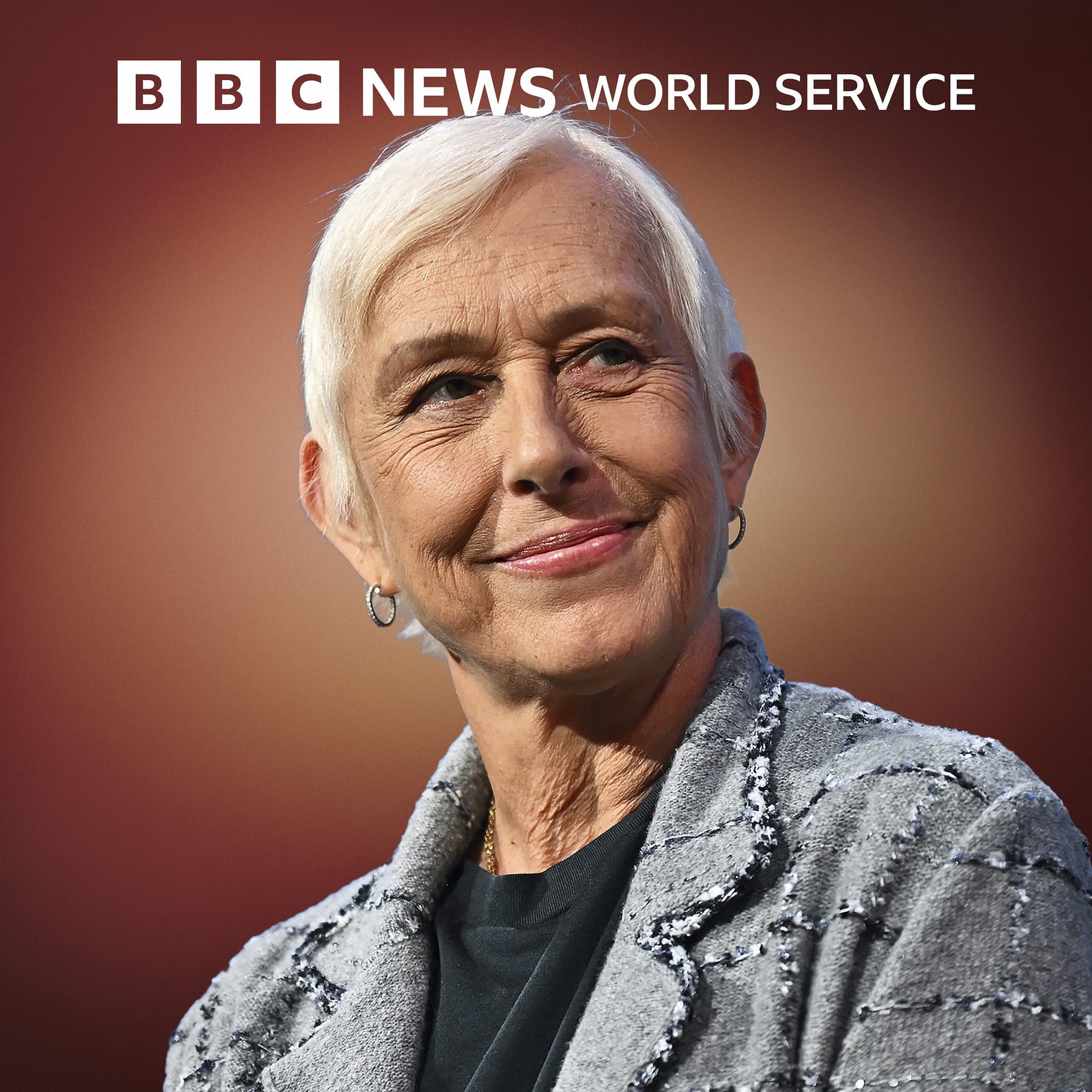
(Image: Martina Navratilova. Credit: Roy Rochlin/Getty Images)