In short
Podcast Summary: The Interview - Petr Pavel, Czech President: Russia Cannot Stand Economic Pressure
Podcast Overview
- Title: The Interview
- Description: Conversations with influential global figures, offering insights on pressing international issues.
- Format: 20-minute interviews featuring key players in business, politics, finance, sports, and culture.
Episode Highlights
- Title: Petr Pavel, Czech President: Russia Cannot Stand Economic Pressure
- Host: Maria Jevstafjeva
- Release Date: 2023
- Guest: Petr Pavel, elected Czech President in 2023, former Chairman of NATO's Military Committee.
Key Themes & Discussions
Background of Petr Pavel
- Military Career:
- Served in the military of Czechoslovakia during the Cold War.
- Transitioned to the newly established Czech army post-1989.
- Held various leadership roles, including Chief of General Staff and NATO Military Committee Chairman.
Current Context
War in Ukraine
- Duration of Conflict: The war has continued for over three years, with no end in sight.
- Negotiation Stance:
- Pavel believes in bringing President Putin to the negotiating table.
- Suggests that some parts of Ukraine may need to remain occupied temporarily during negotiations, without recognizing Russian claims.
Economic Pressure on Russia
- Strategy:
- Advocates for increased economic sanctions against Russia as a more effective tool than military action.
- Emphasizes that economic pressure can lead to negotiations without causing further casualties.
The Complexity of Peace Negotiations
- Challenges:
- Acknowledges distrust of Russian intentions based on historical context.
- Discusses the necessity of European involvement in negotiations, countering Russia's preference for direct talks with the U.S.
Compromises and Concessions
- Controversial Views:
- Pavel’s assertion that some Ukrainian territories may remain under Russian control temporarily is contentious, especially within Ukraine.
- He stresses the importance of Ukraine’s survival as a sovereign nation.
Czech Republic's Position
- Support for Ukraine:
- Czechia has provided military and logistical support to Ukraine.
- Pavel addresses concerns regarding the transparency and pace of aid delivery.
Addressing Russian Threats
- Hybrid Warfare:
- Highlights the Russian strategy of undermining democracies through disinformation, espionage, and cyber attacks.
- Czech Security Concerns:
- Discusses the need for vigilance against Russian operations within Czech territory.
Conclusion
- Future Outlook:
- While advocating for negotiations, Pavel emphasizes the need for a stable and independent Ukraine as a prerequisite for any dialogue.
- Recognizes the reality of Russia's military capabilities and the necessity for strategic multinational cooperation.
Key Takeaways
- Negotiation and economic pressure are critical in addressing the conflict in Ukraine.
- Temporary occupation of Ukrainian territories may be a harsh but necessary compromise for peace.
- Czechia remains committed to supporting Ukraine while balancing national security interests and managing domestic sentiments regarding Russia.
Contact Information
- Email: TheInterview@bbc.co.uk
- Social Media Hashtag: #TheInterviewBBC
Additional Resources
- Listen to The Interview on the BBC World Service and various podcast platforms for more engaging discussions on global issues.
Written by AI. May contain mistakes. Listen to the episode to check what was said.
Transcript
Automatic transcript. May contain errors.0:00This BBC podcast is supported by ads outside the UK. If journalism is the first draft of history, what happens if that draft is flawed? In 1999, four Russian apartment buildings were bombed, hundreds killed. But even now, we still don't know for sure who did it. It's a mystery that sparked chilling theories. I'm Helena Merriman, and in a new BBC series, I'm talking to the reporters who first covered this story. What did they miss the first time? The History Bureau Putin and the apartment bombs Listen on bbc.com or wherever you get your podcasts From the Winter Olympic and Paralympic Games To the European Athletics Championships The 2026 sporting calendar is packed full of big events Keep up with all the action with More Than The Score The podcast that goes beyond the score sheet Join expert BBC sports journalists every Monday to Friday For interviews with sports stars, big talking points and the stories behind the headlines.
1:07More Than The Score from the BBC World Service. Listen now, search for More Than The Score wherever you get your BBC podcasts.
1:19Hello, I'm Maria Yovstafiva, BBC journalist, and this is the interview from the BBC World Service. the best conversations coming out of the BBC, people shaping our world from all over the world. There have been so many disagreements between me and my family. Putting on a show, that is what it means to be Lady Gaga. Only the things that you can't solve with government and private sector is where you bring philanthropy in. There's no place in the world where women are equal. Every generation, every generation has to fight to maintain democracy. For this interview, you'll meet Petr Pavel, the president of Czechia and former chairman of NATO's military committee at Prague Castle.
2:05Born behind the Iron Curtain in Czechoslovakia during the Cold War, Pavel served in the Czechoslovak People's Army from the early 1980s up until the Velvet Revolution of 1989, when mass demonstrations resulted in the fall of the country's communist government. As the country transformed in the years that followed, splitting into the Czech Republic and Slovakia, Pavel joined the newly established Czech army. He gradually rose through the ranks, becoming chief of the general staff in 2012, and then just three years later, he was selected as chairman of the NATO Military Committee. As the first military officer from the former Eastern Bloc to hold the post, he oversaw the alliance's responses to a number of crises, including the fallout from Russia's 2014 annexation of the Crimean Peninsula in Ukraine.
3:03At the end of his tenure, he made the decision to retire from military service and move into politics. And in 2023, having run on a platform of closer ties with NATO and the EU, as well as greater support for Ukraine, he was elected as Czech US president. His selection came a year after the full-scale Russian invasion of Ukraine, but more than three years on, there is still no end to the conflict in sight. I still believe that right now Ukraine, with all Western support, is not in a position to liberate occupied territories in a short time frame. without a significant cost to lives. We want them to survive.
3:49We want them to survive as an independent sovereign country. And if the cost is to accept that part of the territory will be temporarily occupied, then let's be it. But we will never reorganize these occupied territories as legally Russian.
4:14Welcome to the interview from the BBC World Service with Petr Pavel. There's a speculation that the current Russian summer offensive might be the last big push of the war and that maybe after this push, Russia would finally set up for proper negotiations. Do you subscribe to that opinion? Personally, I don't trust it. I don't trust Russian arguments at all, because if they say they don't aim to defeat whole Ukraine, we can listen to some statements of leaders like President Putin or Sergey Lavrov, what they are actually up to. If they want Ukraine to subjugate to all the requirements from Russia, it's not a compromise on the battlefield.
5:05It's simply defeating Ukraine in full and having full control of their territory, establishing their own conditions and subordinating Ukraine to will from Moscow. Let's go slightly back to the diplomatic efforts. So far, there were no real breakthroughs, right? What would you do if you were at the table? And also, would you want to be at the table? Because so far, it looks like the only person who seems to matter to both parties, both Russia and Ukraine, seems to be Donald Trump. That's probably true, because President Putin clearly says that he sees American president as the only counterpart for negotiation.
5:50It's a deliberate effort to exclude European countries from the table. That's why from the very beginning... Sorry, on the Russian part. Yes. That's why from a European perspective, we were trying from the very beginning to be engaged as much as possible in negotiations with our American partners and allies about parameters for any negotiation, because it clearly affects the whole Europe's security. That's why Europe needs to be at the table. Right now, when we talk about prospect of future outcome of this war, we believe that on one hand it is still necessary to support Ukraine militarily, but this war cannot be won on battlefield.
6:37Much more powerful tool is now financial, economic and other measures that we can apply. together, United States and Europe. And I believe that it is clearly in the interest of both sides of the Atlantic to exert much greater economic pressure on Russia, because that's the set of measures that doesn't kill. But it's very powerful when it comes to convincing power. And I believe that with the state of Russian economy today, they cannot stand economic pressure for a long time. That's why sooner or later, if these measures are applied, Russia would have no other alternative than to sit to the table and negotiate what they were in fact rejecting up to now.
7:24You previously said, and this is a very unpopular view in Ukraine, that some of the territories that are currently occupied by Russia will have to remain under Russian control temporarily. What is temporary? we've seen Crimea being controlled by Russians for the past, well, over 10 years. My country has own experience with temporarily occupied territory. We were under such occupation for 22 years. If you look at some parts of territories around the world, they are under occupation even longer. We can look at the east part of Germany. But I'm not suggesting that it will be the case of occupied territories in Ukraine.
8:05It was just a mere recognition of facts. Do you still think that? I still believe that right now Ukraine, with all Western support, is not in a position to liberate occupied territories in a short time frame without a significant cost to lives. And of course it will be very unfair from the West to push Ukraine to liberate all occupied territories right now because we don't want to exterminate the Ukrainian nation. We want them to survive. We want them to survive as an independent sovereign country. And if there is a cost to renewing Ukraine as an independent autonomous state, if the cost is to accept that part of the territory will be temporarily occupied without recognizing it legally, then let's be it.
8:57But we will never recognize these occupied territories as legally Russian. Sure, but in reality, Crimea isn't really legally recognized as Russian, and yet Russians are still there, and they don't seem to leave anytime soon. So what are the steps that you could actually really take to prevent that? I would say the steps and measures that we can take together with Ukraine. If we manage together with Ukraine to restore their sovereignty over maximum part of their territory, if we manage to take them on board within the European Union, rebuild Ukraine after the war, gradually bringing them to a single European market, increasing living standards in Ukraine, then it will be a good signal to people living in these occupied territories and they would be much better off in Ukraine than in Russia.
10:02Because Russia, despite all the arguments they are saying, they don't care as much about these people as they do about their own population. I believe that occupied regions are kind of a burden to Russia that is mostly used as a political tool. Just look at Ossetia or Abkhazia and Georgia. These regions are much poorer than Russia, and Russians don't strive to significantly increase living standards there because these are second-level citizens for Russia. But do you think that even if the people in these occupied territories saw that people who live on the other side are doing better, do you think that Russia would let them go?
10:49Sooner or later. Who knows? Under what circumstances? You know, what kind of regime will be in Russia in 20, 30 years? Vladimir Putin will not there be forever. And even in Russia, people want to live decent lives, have good living standards, to travel, to study and have business with the rest of the world. I don't think that the majority of Russian population is happy to be isolated and under such a strict control. So you were saying that Mr. Putin's regime won't last forever, yet he's currently there. And you're offering, well, you're suggesting that Ukraine negotiates and loses, well, makes big concessions, right?
11:37But wouldn't accepting this kind of status quo or these concessions be seen as actually agreeing to Mr. Putin's terms? And, you know, are you happy to compromise with him? Well, obviously, if we look at it from the point of just a basic human justice or even international law, it's extremely difficult to accept. But we also live in reality. What alternatives do we have together with Ukraine? Are we going to fight with Russia indefinitely? Such an approach would definitely cause all of us many more lives and extreme damage to our economies. We will have to start somewhere. And we have to start by getting Russia to the table, negotiating ceasefire, and then negotiate peace settlement.
12:33After we achieve a peace settlement, then we can start rebuilding Ukraine and potentially, based on Russian approach, also bringing Russia back to the table when it comes to security arrangement in Europe or any cooperation or business with Russia that we used to have in the past. But basic precondition of all of it is the peace in Ukraine. I was wondering, you know, it's really interesting that you suggest that Ukraine compromises with Mr. Putin, but at the same time, here in Czechia, you're quite hawkish on Russia and Russians. For example, you know, this recent ban on Russians obtaining Czech citizenship, right?
13:15So where's the logic in being hawkish on Russia inside and yet telling Ukraine to compromise? I wouldn't say that it's just self-defense. We have seen so many interference attempts from Russia, some completed like in the ammunition depot. And there are so many attempts for sabotage organized by Russian intel services on our territory that we simply have to protect our own society, our own country. That's why we are adopting measures that will prevent Russia from freely sending their operatives to our territory. But at the same time, we realize what is the military power of Russia, and we realize that there is no available tool to push Russia from occupied Ukrainian territories without causing many casualties and damage.
14:17because obviously it is difficult to defeat a country with such a huge military potential and human potential as Russia, even under the condition when such a country is supported by another huge and economically powerful country like China.
14:40You're listening to the interview from the BBC World Service, people shaping our world from all over the world. If journalism is the first draft of history, what happens if that draft is flawed? In 1999, four Russian apartment buildings were bombed, hundreds killed. But even now, we still don't know for sure who did it. It's a mystery that sparked chilling theories. I'm Helena Merriman, and in a new BBC series, I'm talking to the reporters who first covered this story. What did they miss the first time? The History Bureau, Putin and the apartment bombs. Listen on BBC.com or wherever you get your podcasts.
15:24From the Winter Olympic and Paralympic Games to the European Athletics Championships. The 2026 sporting calendar is packed full of big events. Keep up with all the action with More Than The Score, the podcast that goes beyond the score sheet. Join expert BBC sports journalists every Monday to Friday for interviews with sports stars, big talking points and the stories behind the headlines. More Than The Score from the BBC World Service. Listen now, search for More Than The Score wherever you get your BBC podcasts.
16:04For this episode of The Interview, I'm speaking to Petr Pavel, the president of Czechia. I knew he had a reputation for being remarkably down-to-earth, known for going running with his staff and enjoying rock concerts, not from a VIP zone, but in the pit, shoulder-to-shoulder with the crowd. Still, I was surprised when he personally introduced himself and shook hands with everyone on our team. He answered my questions openly and directly, and when he didn't know something, he simply said so. Which was quite refreshing. Okay, let's return to my conversation with Petr Pavel. You were previously saying that it's very important to go back to Russia at some point and kind of start rebuilding the relationship.
16:55After the Peter deal is in place, so how do you think that's going to happen? And also, do you think that being hawkish on Russian citizens is going to help to rebuild that relationship? I wouldn't say the Czech Republic is particularly hawkish about Russia. I think Czechia is considered to be, apart from countries like Latvia and Estonia, which obviously have a historic reason to be aware of Russia, I think that Czechia is considered to be up there. There's quite a big part of population that would prefer a good relationship with Russia. Not necessarily submitting our own interests to Russia, but simply these people believe that negotiation is always better than fighting.
17:40And this is what we all believe. I personally also believe in power of negotiation. But for negotiation, you need at least two. At this point, Russia doesn't want to negotiate. They want to impose conditions that are unacceptable for counterparts, and they only want to benefit from the process. They do not recognize the word compromise. They simply want to win. But I believe that sooner or later, if we manage to sit with Russia to the table, we can open other issues that are quite burning for European citizens as well as for Russians. And that is European security architecture. It's a renewal of confidence-building measures.
18:26It's a potential renewal of treaties that expired over time. And if Russia is so interested in peace in Europe, let's prove it. Let's sit to the table and let's negotiate. I believe that European leaders are not against negotiation with Russia, But they are against negotiating when there is ongoing war against a sovereign state, when Russia on one hand breaks all international norms and rules, and on the other they would like to negotiate. So let's finish first this first condition. Let's have a peace in Ukraine. Let's stabilize Ukraine as an independent sovereign country. And then we can continue with other issues of common interest.
19:13Czechia, your country has obviously greatly supported Ukraine over the past three years with military aid, but also with the ammunition initiative. There's been some criticism over the transparency and the slowness of the delivery. What do you think of those concerns? I would say that these are just efforts to undermine the initiative. The initiative was motivated from the very beginning to provide sufficient flow of ammunition so badly needed by Ukrainian defenders. Two years ago, they were in such an unfavorable position that their ratio of fires was 1 to 10 compared to Russian. Right now, it's about 1 to 2.
20:03That means that with a steady flow of ammunition, Ukrainian planners now can afford the luxury of planning because they know what they are going to receive in the months to come. Last year we were able to deliver about 1.5 million of large caliber ammunition. This year it will be 1.8 million, out of which about 800 ,000 are caliber 155. and that provides Ukraine with certainty of receiving monthly average 80 ,000 rounds, which is a significant amount for successful defense. When it comes to transparency, we work with a number of NATO allies as well as a number of third countries. We allow all of them to be part of the process.
20:57Western supporters, mainly through financial contributions, were offered to send their auditors to our Ministry of Defence to have full visibility into the process. And of course, in such a complicated process, there will always be some problems with the deliveries, times, cost, but I would strongly reject any lack of transparency or even abuse because there is enough oversight to have full control. Okay, very briefly, so there's parliamentary elections coming up in October. But can you guarantee that Czechos military support for Ukraine will prevail, whatever happens at the election? I can't do that because I obviously don't know the result of the elections.
21:41We will have parliamentary elections that will probably result in a change of government. And I don't know what will be the priorities of a new government. But all my efforts are now focused on maintaining a common approach to security and defense, including our approach to Ukraine, because I believe that our support to Ukraine is a vital component of our own security. That's why I lead debates with all leaders of parliamentary political parties who will in some composition be part of the next government. And I discuss with all of them to maintain the same principles of our security and foreign policy even in the future after the elections.
22:31But of course at this point I cannot guarantee it because it will be the result of elections. Sure. Russian is for your nation, Czechia. Can you describe what kind of Russian activities you're most concerned about? Is it cyber, is it disinformation, is it physical sabotage? I would say in general, when the Soviet Union realized they could not win the arm race with the West at the end of the Cold War, they started thinking how they can prevail in this competition with democracies. And the Russian approach later on was, if you can't be stronger than your opponent, let's try to make him weaker. This is what they do through espionage, through sabotage, through subversion, through cyber attacks, through psychological or information operations or disinformation campaigns.
23:28This is what they do in a very coordinated way. We generally call it hybrid warfare and Russia is quite efficient in these hybrid activities in Europe. And they are very active in all European countries, including Czech Republic. They invest into media sources, they invest into social media. We could see it in the elections in Romania, in a number of other countries. It's a presentation of articles, it's an influence over some politicians, it's support to some political parties. They are abusing the openness of democracies, of the democratic system. They are abusing the access to the media, they are abusing new technologies, AI, and creating virtual reality on social media that almost looks as genuine human beings.
24:29But actually, these are false accounts run by AI. How many Russian operatives do you believe are active in Czechia? I would say many, but it's quite well known that if Russia or Soviet Union were very good in something, it was intelligence, spionage and foreign services. So I think they definitely didn't diminish their activities in these areas, just the opposite, they increased their activities.
25:07Thank you for listening to the interview from the BBC World Service. You'll find more in-depth conversations on the interview wherever you get your BBC podcasts, including episodes with the Colombian artist Doris Salcedo, Belarusian opposition activist Sergei Tikhanovsky, and Joshua Bengio, one of the godfathers of AI. Until the next time, bye for now.
25:37If journalism is the first draft of history, what happens if that draft is flawed? In 1999, four Russian apartment buildings were bombed, hundreds killed. But even now, we still don't know for sure who did it. It's a mystery that sparked chilling theories. I'm Helena Merriman, and in a new BBC series, I'm talking to the reporters who first covered this story. What did they miss the first time? The History Bureau Putin and the apartment bombs Listen on bbc.com or wherever you get your podcasts
26:34Big talking points and the stories behind the headlines. More Than The Score from the BBC World Service. Listen now. Search for More Than The Score wherever you get your BBC podcasts.
From the publisher
Maria Jevstafjeva speaks to Czech President, Petr Pavel about ending the war between Ukraine and Russia. Mr. Pavel was elected to the role in 2023, having retired from a military career that began with serving in the military of communist Czechoslovakia during the Cold War in the 1980s and ended three decades later after chairing Nato’s Military Committee.
The first military officer from the former Eastern Bloc to hold the post, he oversaw the Alliance's responses to a number of crises - including the fallout from Russia’s 2014 annexation of the Crimean peninsula in Ukraine.
As Russia’s war on Ukraine continues into its third year, Western leaders are renewing efforts to bring an end to the bloodshed and implement a ceasefire. Mr. Pavel, who was elected on a platform of closer ties with the EU and Nato, believes the only way to do this is by getting Putin to the negotiating table - even if that means allowing Russia to occupy parts of Ukraine, but without recognising Moscow’s claim to them.
The Interview brings you conversations with people shaping our world, from all over the world. The best interviews from the BBC. You can listen on the BBC World Service, Mondays and Wednesdays at 0700 GMT. Or you can listen to The Interview as a podcast, out twice a week on BBC Sounds, or wherever you get your podcasts.
Presenter: Maria Jevstafjeva Producers: Ben Cooper and Tatiana Preobrazhenskaya Editor: Nick Holland
Get in touch with us on email TheInterview@bbc.co.uk and use the hashtag #TheInterviewBBC on social media.
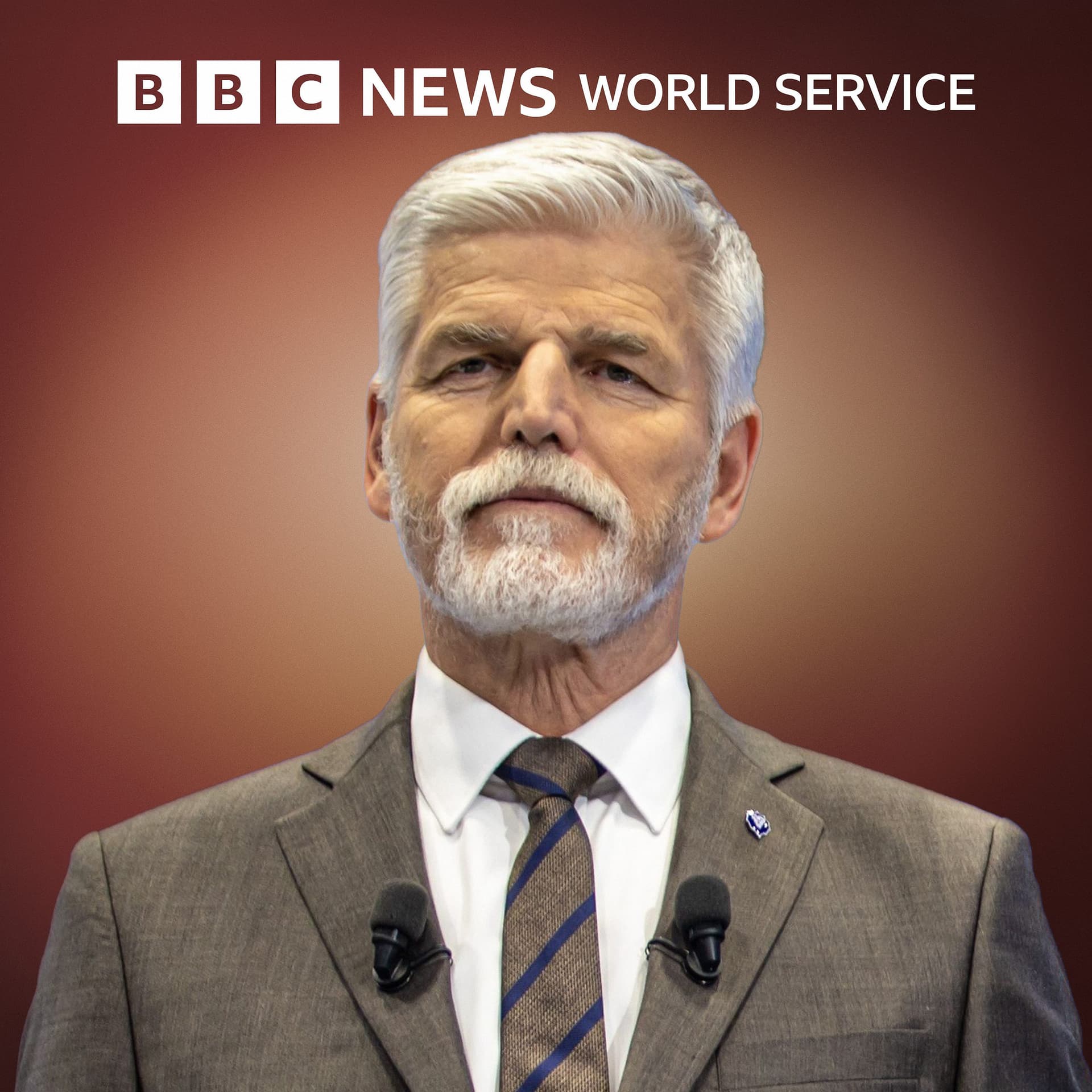
(Image: Petr Pavel. Credit: Martin Divíšek/EPA-EFE/REX/Shutterstock)