In short
Podcast Summary: The Interview with Philippe Kehren, CEO of Solvay
Podcast Overview
- Title: The Interview
- Description: A podcast featuring conversations with influential figures in business, politics, finance, sports, and culture, providing insights and analysis on significant global issues.
Episode Details
- Episode Title: Philippe Kehren, CEO of multinational Solvay: Reducing reliance on China’s rare earth metals
- Presented by: Jonathan Josephs
- Producer: Lucy Sheppard
- Editor: Nick Holland
- Release Frequency: Twice a week on BBC Sounds and other platforms.
Key Discussion Points
Introduction to Rare Earth Metals
- Definition & Importance:
- Rare earth metals are crucial for modern technologies such as mobile phones, medical equipment, electric vehicles, and renewable energy.
- Current Supply Landscape:
- China dominates the market, mining 70% and refining 90% of global rare earth metals.
Solvay's Role
- Company Overview:
- Solvay is a multinational chemical company focusing on diversifying the supply of rare earth metals in Europe.
- Production Capacity:
- Solvay aims to fulfill a significant portion of Europe's rare earth needs by increasing capacity and utilizing recycled materials.
Challenges and Opportunities
- Dependence on China:
- The EU relies heavily on China for rare earths, raising concerns about supply security.
- EU's Critical Raw Material Act:
- This legislation aims to limit dependence on single non-EU sources and necessitates regulatory frameworks to support local sourcing.
Economic Incentives
- Call for EU Support:
- Kehren stresses the need for the EU to provide financial incentives to encourage businesses to source from European suppliers instead of cheaper Chinese alternatives.
- Specific Incentive Examples:
- Proposals include tax breaks and CO2 quota incentives for companies buying materials from Europe.
Recycling and Sustainable Practices
- Recycling Potential:
- Kehren notes that Solvay could potentially meet 30% of Europe's needs through recycled materials, reducing environmental impact.
- Importance of Local Sourcing:
- Emphasizes the need for Europe to develop local mining operations alongside recycling initiatives to establish a resilient supply chain.
Future Prospects
- Market Trends:
- The demand for rare earth metals is expected to grow significantly, driven by the transition to electric vehicles and green technologies.
- International Competition:
- Concerns about China's competitive pricing and the need for Europe to establish a self-sufficient supply chain are highlighted.
Conclusion
- Key Takeaway:
- Achieving a sustainable and independent supply chain for rare earth metals in Europe is crucial, requiring concerted efforts from both the industry and government to support local mining and recycling initiatives.
Additional Notes
- Environmental Concerns:
- The conversation touches on the environmental implications of rare earth mining and the importance of responsible production practices.
- Global Dynamics:
- The discussion reflects broader geopolitical issues regarding supply chains, particularly in light of recent global events impacting trade dynamics.
Contact Information
- Email: TheInterview@bbc.co.uk
- Social Media Hashtag: #TheInterviewBBC
Listen to The Interview on the BBC World Service or your preferred podcast platform for further insights into pivotal global conversations.
Written by AI. May contain mistakes. Listen to the episode to check what was said.
Transcript
Automatic transcript. May contain errors.0:00This BBC podcast is supported by ads outside the UK. This advertisement feature is paid and presented by Poland's Ministry of Foreign Affairs. Looking for the perfect place to grow your business? For over 30 years, Poland has been a launchpad for innovation at the heart of Europe, powered by world-class research and ambitious young talent. From bold startups to established powerhouses, Poland offers the momentum, resources and reliability you need to take your business further. Poland, where businesses don't just grow, they're built to last. Find out more at polandyourplacetogrow.com.
0:59What did they miss the first time? The History Bureau, Putin and the apartment bombs. Listen on BBC.com or wherever you get your podcasts. Hello, I'm Jonathan Josephs, BBC business reporter, and this is the interview from the BBC World Service, the best conversations coming out of the BBC. People shaping our world from all over the world. There have been so many disagreements between me and my family. Putting on a show, that is what it means to be Lady Gaga. Only the things that you can't solve with government and private sector is where you bring philanthropy in. There's no place in the world where women are equal.
1:42Every generation, every generation has to fight to maintain democracy. For this interview, I met Philippe Queren, the chief executive of multinational chemical firm Solvay at its rare earth metals processing plant in La Rochelle, Western France. You're going to hear about Solvay's role in attempts to wean Europe off its dependence on China to provide rare earths, essential for so much modern technology, including smartphones, electric cars and renewable energy. But to make this happen, Mr Karen wants the European Union to support its bid to diversify supplies of rare earths. The European Union has voted what we call the Critical Raw Material Act.
2:24It states that you should not source more than 65 % of a critical raw material from one single non-EU source. So, of course, this is the case today for this type of material. So the question is, how will this act translate into regulations? Are there going to be incentives, for example, for the different players in this value chain to source rare earth elements from Europe? He tells me Solvay can meet around a third of Europe's rare earth needs from recycled material instead of mining. And it can be processed with much less environmental damage than Chinese production. Welcome to the interview from the BBC World Service with Philippe Keren.
3:13We've been producing rare earth for more than 75 years, right? So far, we've been producing rare earth elements for autocatalysis, for conventional cars, for electronics, and also for medical applications. Like an MRI? Like an MRI, absolutely. And what we're doing now, starting from now, is to produce also rare earth elements to produce permanent magnets. That's new. That's something that we have not done in the past. This is a value chain that mainly exists today in China. So once you have the permanent magnet, what do you do with them? You produce electric motors, so for electric vehicles. So this is very important because electric vehicles are growing.
4:01You also produce wind turbines to produce wind-powered electricity. So that's for renewable energy. You can also use, those are really the two main applications. And then you can also use permanent magnets for electronics application and also for defense. Just to explain a little bit more about smartphones, for instance, pretty much everyone listening to this will have a smartphone. Where do rare earths come into them? Well, today we are producing already some type of rare earth oxides that are used in the manufacturing process of microchips, for example. And that's to clean, you know, in the process of producing the microchips.
4:47So already today, when you buy a mobile phone, some rare earth material produced here have been used. What would happen if those rare earths weren't available? Well, the beauty of this plant here in La Rochelle, France, is that we can use any type of source. So, of course, there are a lot of mines in China, but there are also mines today in Australia, in Brazil, in Canada. There are a lot of projects. And on top of all those mines, you can also use recycled material. And this is very important because we think that we can probably produce 30 % at least of the rare earth needed by Europe just by recycling the end-of-life motors, the end-of-life equipments.
5:40This is what we are doing here. We can use any type of sourcing and produce any type of rare earth. And that's a unique setup in the world outside of China. And Philippe, without rare earth elements, would we be able to have things like smartphones and refrigerators and electric vehicles as we know them today? Absolutely not. Those are essential elements that are absolutely needed for, you know, our day to day life. You're mentioning electric vehicles, but everything that has a motor, basically, you need an electric motor. You need rare earth material. Right. So you're right. You can find those elements everywhere.
6:24This plant has been going since 1948. Right. Why is it that you're expanding it now? Well, I think, you know, we've looked at what we can do. Of course, we've produced all sorts of materials over the years. Today, our main market is for, you know, conventional engine cars. In the long run, this will, you know, fade away if we replace the conventional cars by electric vehicles. So we're constantly thinking of how can we use in the best possible way the capacities that we have here and also the knowledge. Because what is the most important is the knowledge that our people have. It's very, very complex to be able to separate and to purify all those 17, you know, rare earth elements in order to produce those different material.
7:17So how can we best use this? Obviously, permanent magnets are developing fast because we are electrifying everything. That's part of the energy transition that we are doing everywhere in the world. And if you look at the value chains today, I mean, almost all of those materials, they come from China. And so in Europe, for example, there is now the Critical Role Material Act, which sets a certain number of targets in order to diversify those value chains. And so we said, well, we're able to do that here. So why not proposing this? So we're just starting very small volumes, but we're ready to move further if the value chain is there.
8:02So as a business proposition, this is about supply and demand. You anticipate the way the global economy is changing, the way technology is changing. There will be greater demand for what you're able to do here. I think there is, as you say, greater demand. This is a market that is growing fast. And also there is a greater demand for shorter supply chains. You know, we've been through the pandemic, through a certain number of crises and recently wars in Ukraine. And so people, they want to have to secure a little bit their supply chains. And obviously, when you have a material that is coming almost 100 % from one specific location, if you are dependent on this, you want to diversify your sourcing.
8:48So this is what we can offer. Beyond Rare Earth, I would say Solvay is a global company. We are producing and selling everywhere in the world. And our vision, our strategy is to be as close as possible to the market, as close as possible to the customers. You've spoken about China. Why is it that China so dominates the field of rare earths and their production? Well, because China is supplying competitive material. And, you know, they open the mines. And I think it's somehow comfortable to buy a material from somewhere else. And that allows you not to, you know, have to open mines and develop an industry in your backyard.
9:32But one day you realize that it's not a good idea because, again, you want to secure your sourcing. You want to have a sourcing that is not too far from you. China dominates the production. It also has a big share of the mining of the raw materials that you need for rare earths. But is another reason that the production is so concentrated there because of the pollution aspect, that this is a dirty business and it's difficult to manage that pollution. And in the West, it's not something governments have wanted to play host to. Well, there are solutions, you know, to do it in a very responsible way without polluting.
10:15It costs a bit of money. So you need to be ready to pay a little bit more. It's true that if you want to be at the highest level of standard, and this is what we all want, right, you have to pay a little bit more. That's why, you know, what is coming from China is competitive, but not necessarily always, always at the same standard. Of course, they are also putting new standards and they are also investing to improve their environmental footprint as well. Everyone needs to do it. So traditionally, China has been able to undercut Western companies on price, but there have been compromises in that.
10:51I would say they've probably developed their industry and they were able to provide competitive product to everywhere. And that did not give enough incentive, you know, to the other regions to develop their own value chain. But I think this is changing now. What financial incentives, what subsidies are you getting from both the European Union and the French government to be able to have this expansion here? So today we received the confirmation from the French government that they will support us in terms of investment. So they will contribute in order to make this investment more affordable. We don't have yet any feedback from the European Commission, so we continue to work with them.
11:39What is also important, I would say, beyond the incentives that you can get on the investment is to make sure that the value chain is there. because that means that you've got customers to buy the material. Absolutely. Absolutely. If we invest, we need also to be secured in terms of a commitment of offtake by the customers. They need to tell us and to commit to say, OK, I will take some volumes at a certain price in order to make the investment profitable. Right. So beyond the incentives on the CapEx, on the investment, We also need to have some commitments from our customers and the customers of our customers and so on.
12:21And so the French government is helping secure that commitment? I think this is really something that needs to come from the European Union. The European Union has voted what we call the Critical Raw Material Act. This is a law that defines a certain number of ambitions. In particular, it states that you should not source more than 65 % of critical raw material from one single non-EU source. So, of course, this is the case today for this type of material. So the question is, how will this Critical Raw Material Act translate into regulations? Are there going to be incentives, for example, for the different players in this value chain to source rare earth elements from Europe?
13:16And if there are incentives, then this can create also this value chain. How important is it that you get that financial help from the French government and possibly from the European Union? How important is that to making this plant viable? Let me put it that way. Today, almost all these materials come from China. China has enough capacity and is competitive. So why would we invest if there is no incentive for our customers or potential future customers to buy from us? Because they can get today competitive material from China. The only point is that it's 100 % that they are buying there, right?
13:58And so that's not in line with the Critical Role Material Act that the European Union voted recently. So that's why we need those incentives. And again, it's not only incentive on the investment. It's also how can we have the players downstream, you know, buying from Europe instead of buying from other regions. That's the point.
14:24You're listening to The Interview from the BBC World Service. people shaping our world from all over the world.
14:57Find out more at polandyourplacetogrow.com.
15:27What did they miss the first time? The History Bureau, Putin and the apartment bombs. Listen on BBC.com or wherever you get your podcasts. For this episode of The Interview, I'm speaking to Philippe Queren, Chief Executive of Chemical Multinational Solvay. The Belgian company invited me to visit its rare earth processing facility at La Rochelle on France's Atlantic coast. It's a sprawling 40-hectare site with metal pipes, bursts of steam, and cylindrical storage tanks running between a collection of industrial buildings. Inside, I saw secretive processes turning raw materials into the rare earth powders that go into vital everyday products, such as electric vehicle batteries.
16:14Outside, the synthetic smell of chemicals dominated the air, similar to a freshly cleaned hospital ward, whilst overhead, seagulls pierced the humming noise of the machinery. OK, let's return to my conversation with Philippe Carren. We hear all these targets coming from Brussels about what they want. As somebody on the front line, do you think they're realistic to put these numbers with years, saying we want this much by 2030? Do you think this is realistic to have these targets? I think it is. It is. Again, I mean, here we can produce by 2030, the equivalent of 30 % of the European demand for rare earth oxides for permanent magnets.
16:58So it is possible, but we need to have the regulations to do so. We need to have the right incentives to do so. And I prefer incentives compared to taxes because this will create more value. What do those incentives look like? Today, they don't exist. But if you were drawing them up, what would those incentives be? I would probably put, you know, incentives if permanent magnet manufacturer or car manufacturer buys material coming from Europe. You can say, OK, I give you like a CO2 quota, you know, it gives you money on top of what you already have in order to incentivize you to buy from Europe.
17:44So it could be in the form of tax breaks or something, some other financial breaks, things like that. I'm not, of course, we are working on it, so we will find the best possible way. But that's typically an example that could work, I think, yes. In terms of Europe becoming self-sufficient, how important is it that the raw materials themselves come from Europe? There are big deposits that have been announced in Norway and Sweden, for example. Do those need to come here? Is that important? I think it's important indeed to also be independent in the upstream segment. Keep in mind that we can use recycled material.
18:24So, of course, today it's still the beginning because you don't have a lot of end-of-life electric motors and so on. But this will develop. And by 2030, 35, you will have more and more material. And this can represent a big part of the sourcing. Then I think, again, what we want to develop here is a process that is able to take any type of sources. So we can take sources. Today, there is no source coming from Europe, but we have from Brazil, from Canada, from Australia, and in the future, maybe Europe. So it's important as well to develop this part. But how important is it to develop that part, what you call the upstream?
19:06But what we mean by that is those raw materials are dug out of the ground here in Europe. We need to have this option. I think it's absolutely necessary to have our own mines, not necessarily a lot of them, because, again, we can have a mix, you know, but it's important to have our own sourcing. What are the risks if that doesn't happen? We will manage. You know, this is not under our control. I mean, we cannot say we want sourcing from Europe. if there is no mine in Europe. So we will manage. And I think the best way to manage it is to use as much as possible recycled material because those are already in Europe.
19:46And instead of sending back those material to China or to other regions, just let's keep them and recycle the material. And is the infrastructure there to facilitate this recycling? Not yet fully. I mean, we need to continue to work on this. You know, in Europe, it's sometimes difficult to recycle materials that are considered as a waste. But I think the regulation will evolve and will make that possible. At least we will push for that. And in terms of volume, is there enough in circulation in Europe? Or do we still need more materials to come into the supply chain? We will still need more material coming from the mining.
20:32I think the recycling can probably represent 30 % or maybe even a bit more, but never 100%, right? So we will always need to complement it, at least at the beginning, by virgin material. And the raw materials that you have coming into this plant at the moment, where are they coming from? Which countries? Today, this material, they come mainly from China and Australia, because this is where the mines are located today. When you hear China responding to Donald Trump's tariffs by saying, amongst other things, it's going to restrict the export of rare earths, what do you think of that? Well, first of all, again, we are a global company.
21:19And by the way, we have a plant in China that is producing rare earths for the Chinese market. So we are able to manage those type of restrictions. Of course, we will look at how the situation will evolve in the coming days and weeks. I understand there are some restrictions on heavy rare earth material for permanent magnets, which we currently don't produce here, but we will continue to monitor on that, of course. And this, I think, reinforces somehow the need to have different supply chains. Do you have any concern about the fluidity of the supply chain if China puts restrictions, given how dominant it is?
22:02We will find solutions, again, because we have a plant that is able to use any type of sourcing. So we are able to find those solutions. But of course, this highlights the fact that this is a complex industry and that today it's very concentrated. What do those restrictions from China mean for you as a business? Does it mean that there are more customers for what you're doing outside of China? Does it mean that it's more difficult to get hold of raw materials? How does it play out? Today, there is no real consequence on our business, again, because we are not on this specific segment, but we continue to monitor our costs.
22:42But do you perhaps see more demand from companies in America because they can't get hold of things from elsewhere? Frankly speaking, today we are not producing big quantities of rare earth material for the permanent oxide, so we don't feel that. But in the future, maybe it will be the case. And I think what is important for us is that this strengthens the need to have different supply chains. That's really important. Politicians are constantly talking about rare earth these days, focusing on supply chains and where those materials are coming from. and where they're going to, but do they need to spend a bit more time thinking about the skills involved in it?
23:25Yes, it's very, very important to develop this know-how and to make sure that we, before developing it, preserve this know-how where it is today, like in this place. Yeah, this is absolutely key. And if that know-how disappears, what does that mean? You are dependent. You rely on someone else. And in this case, that would be China? That would be mostly China. As things stand at the moment, China dominates the supply chain. It dominates the mining. How much of a concern is that for the rest of the world when it comes to rare earths? I think rare earths and like any other type of strategic raw material, people want to have a secured, reliable access to those materials.
24:19And this is why normally people are not very comfortable when they have only one option. So they want to develop several options and also to have shorter supply chains to be able to face any type of future potential disruptions. We've seen that during the pandemic, for example, some supply chains have been disrupted. and you realise that some of your strategic material are coming from, you know, far away, that's not always very comfortable. Thank you for listening to the interview from the BBC World Service. You can find more episodes of The Interview wherever you get your BBC podcasts, including conversations with Joe Biden, Lady Gaga and Karsten Brewer, the German Chief of Defence.
25:09Until the next time, bye for now.
25:18This advertisement feature is paid and presented by Poland's Ministry of Foreign Affairs. Looking for the perfect place to grow your business? For over 30 years, Poland has been a launchpad for innovation at the heart of Europe, powered by world-class research and ambitious young talent. From bold startups to established powerhouses, Poland offers the momentum, resources and reliability you need to take your business further. Poland, where businesses don't just grow, they're built to last. Find out more at polandyourplacetogrow.com If journalism is the first draft of history, what happens if that draft is flawed?
25:53In 1999, four Russian apartment buildings were bombed, hundreds killed. But even now, we still don't know for sure who did it. It's a mystery that sparked chilling theories. I'm Helena Merriman, and in a new BBC series, I'm talking to the reporters who first covered this story. What did they miss the first time? The History Bureau, Putin and the apartment bombs. Listen on bbc.com or wherever you get your podcasts.
From the publisher
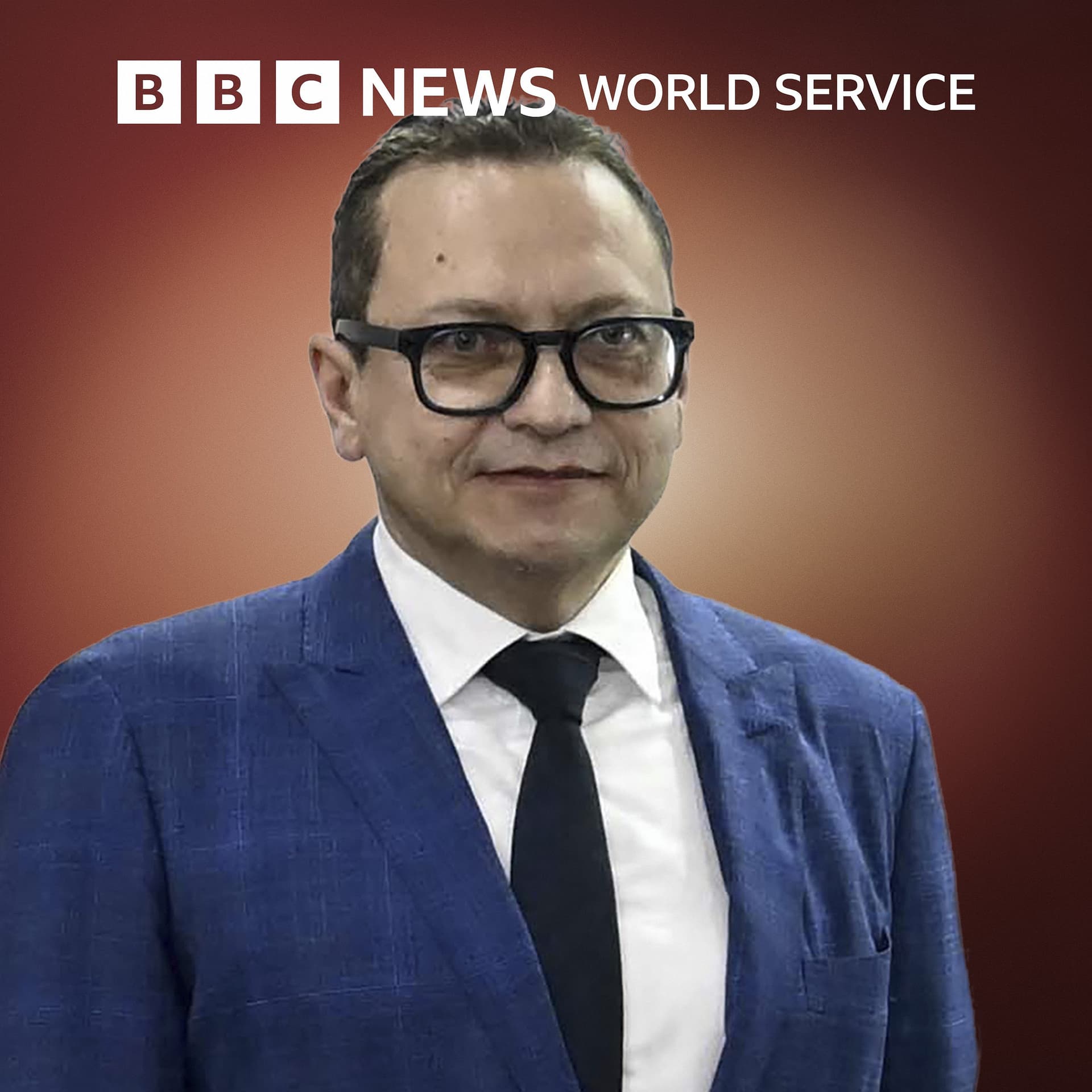
Jonathan Josephs speaks to Philippe Kehren, CEO of chemical multinational company Solvay. His firm sits at the forefront of Europe’s efforts to diversify its supply of rare earth metals. These elements are essential to much of modern technology, from mobile phones to medical equipment, car batteries and renewable energy.
Currently their supply is heavily dependent on China, which mines around 70% of all rare earth metals, and refines around 90%. Solvay aims to play a significant role in reducing this dependence, by increasing European capacity to mine and refine these materials.
However, Mr Kehren says the European Union needs to play its part by introducing incentives for customers to buy from European suppliers rather than their cheaper Chinese competitors. The Interview brings you conversations with people shaping our world, from all over the world. The best interviews from the BBC. You can listen on the BBC World Service, Mondays and Wednesdays at 0700 GMT. Or you can listen to The Interview as a podcast, out twice a week on BBC Sounds, or wherever you get your podcasts.
Presenter: Jonathan Josephs Producer: Lucy Sheppard Editor: Nick Holland
Get in touch with us on email TheInterview@bbc.co.uk and use the hashtag #TheInterviewBBC on social media.
(Image: Philippe Kehren. Credit: Dirk Waem/Belga Mag/AFP via Getty Images)