In short
Podcast Notes: The Interview - President Trump: I’m disappointed with Putin
Podcast Overview Title: The Interview Description: Conversations with influential figures across various sectors including business, politics, finance, sport, and culture. The podcast features insights from global leaders and decision-makers, aiming to provide the best conversations from the BBC.
Episode Summary Episode Title: President Trump: I’m disappointed with Putin Episode Description: Gary O’Donoghue, the BBC’s Chief North America Correspondent, interviews US President Donald Trump shortly after he announced plans to send weapons to Ukraine and warned of severe tariffs on Russia if a ceasefire is not reached within 50 days. The conversation touches on Trump's recent political experiences, the ongoing war in Ukraine, his approach to immigration, and his hopes for his presidential legacy.
Key Themes and Discussions
- Trump's Relationship with Putin
- Disappointment in Putin: Trump expresses disappointment with Vladimir Putin, stating, “I’m not done with him, but I’m disappointed in him.”
- Failed Negotiations: Trump reflects on four attempts to finalize a deal with Putin, indicating the challenges of negotiating peace amidst ongoing violence in Ukraine.
- Current Political Climate
- Military Support for Ukraine: The episode highlights Trump’s announcement to send weapons to Ukraine as a response to Russian aggression.
- Tariffs on Russia: Trump warns of severe tariffs if a ceasefire is not reached promptly.
- Personal Reflections
- Attempted Assassination: Trump recalls the attempt on his life during a campaign rally in Pennsylvania, emphasizing the rapidity of events and his sense of obligation to reassure his supporters.
- Impact of the Incident: He discusses how the experience shaped his outlook, emphasizing a desire not to dwell on the past.
- Domestic Policies and Legacy
- Immigration Policy: Trump discusses his administration’s stance on illegal immigration and the challenges posed by the judiciary.
- Legacy Vision: Trump articulates his vision of "saving America" and remarks on the significant achievements of his presidency, including tax cuts and military rebuilding.
- International Relations
- Britain and Brexit: Trump shares his views on Britain’s role post-Brexit and its importance to the US, highlighting a strong bilateral relationship.
- NATO Dynamics: The president reflects on NATO’s evolving role and expresses confidence in the UK as a reliable ally, despite his previous criticisms of the alliance.
Notable Quotes
- "I thought we had a deal done four times... and then he just attacked a nursing home in Kiev."
- "I think America is now a great country and it was a dead country one year ago."
Conclusion The episode delves into President Trump's perspectives on international relations, personal experiences, and domestic challenges, providing listeners with an understanding of his current priorities and reflections on leadership. The conversation underlines the complexities he faces as he navigates both international diplomacy and domestic policy challenges.
Producers and Contributors
- Presenter: Gary O’Donoghue
- Producers: Iona Hampson, Ben Cooper
- Sound Engineer: Dave O’Neill
- Editor: Nick Holland
Additional Information Tune in to *The Interview* on the BBC World Service and as a podcast on BBC Sounds or other podcast platforms for more insightful conversations with influential figures. You can connect via email at TheInterview@bbc.co.uk or use the hashtag #TheInterviewBBC on social media.
Written by AI. May contain mistakes. Listen to the episode to check what was said.
Transcript
Automatic transcript. May contain errors.0:00This BBC podcast is supported by ads outside the UK. If journalism is the first draft of history, what happens if that draft is flawed? In 1999, four Russian apartment buildings were bombed, hundreds killed. But even now, we still don't know for sure who did it. It's a mystery that sparked chilling theories. I'm Helena Merriman, and in a new BBC series, I'm talking to the reporters who first covered this story. What did they miss the first time? The History Bureau Putin and the apartment bombs Listen on bbc.com or wherever you get your podcasts From the Winter Olympic and Paralympic Games To the European Athletics Championships The 2026 sporting calendar is packed full of big events Keep up with all the action with More Than The Score The podcast that goes beyond the score sheet Join expert BBC sports journalists every Monday to Friday For interviews with sports stars, big talking points and the stories behind the headlines.
1:07More Than The Score from the BBC World Service. Listen now. Search for More Than The Score wherever you get your BBC podcasts.
1:30BBC, people shaping our world from all over the world. There have been so many disagreements between me and my family. Putting on a show, that is what it means to be Lady Gaga. Only the things that you can't solve with government and private sector is where you bring philanthropy in. There's no place in the world where women are equal. Every generation, every generation has to fight to maintain democracy. For this episode, I speak to US President Donald Trump in an exclusive telephone interview for the BBC. Mr Trump, who celebrated his 79th birthday last month, was inaugurated for a second term in the White House at the start of this year.
2:14It's safe to say that the 47th President of the United States has wasted little time in picking up where he left off four years earlier, upending the status quo both at home and abroad. In a wide-ranging discussion, he reflects on the failed attempt on his life at an election campaign rally last July in Butler, Pennsylvania, where I was reporting from at the same time. Take a look at what happened.
2:48The former president can be seen clutching at the right side of his head. After that, he hits the ground as the Secret Service pile on top of him.
3:01We're just waiting to see if things are cleared. And we're just, as you can see, we're on the ground behind our car, which is not ideal, but that's the shelter we have at the moment. Donald Trump was seen getting to his feet and raising a fist to his supporters. Signs of blood at his right ear. We noticed a guy crawling, you know, bear crawling up the roof of the building beside us, 50 feet away from us. So we're standing there, you know, we're pointing at the guy crawling up the roof. And he had a gun, right? He had a rifle. We could clearly see him with a rifle, absolutely. Despite what happened that day, the president can still clearly remember how events played out.
3:48My call with President Trump came just hours after he announced plans to send weapons to Ukraine and warned of severe tariffs on Russia if there was no ceasefire deal within 50 days. Speaking to me from the Oval Office, he also discusses current US immigration policy, being frustrated by the courts and what he hopes will be his legacy. Welcome to the interview from the BBC World Service with US President Donald Trump. I'm here with the president here you go Mr. President hi Gary how are you I'm very well sir thank you very much for sparing some time good you covered us very fairly appreciate it well I wanted to to ask you briefly about that to start with I know it's not a topic you like talking about very much but I wanted to ask you the moment you realized what had happened and then the moment you realised you survived, what was your immediate thought, sir?
4:47Well, it happened very quickly and it was, you know, beyond quick, actually. So I'm not sure I had any conscious thought other than to say that I had to let the people know because I knew they must have thought that it was a disaster. And I could tell by that it was like dead silence and everything. We had 55 ,000 people. and it was dead silence and so you know i assumed that they expected the worst and so i had to let them know i was okay which is what i did that's why i tried to get up as quick as possible and uh i didn't want to be taken out by a stretcher they had a stretcher ready to go i said no thank you i actually had a big argument with them right they wanted me on a stretcher and i said nope i'm not doing that so we had to let them know we were okay you know for the country it's my obligation right did it change you what happened well i like to think about it as little as possible to be honest i don't like to think about it who changed me you know because could have changed a lot of people and i just don't do you understand what i'm saying i don't want to think about it it's like i get it the power of positive thinking or the power of positive of non-thinking but so i don't i don't like dwelling on it because if i did it would be you know might be life-changing i i don't want it to have to be that it was um a crazy moment and it was uh something that has happened and ended and i you know i went on to win the presidency.
6:30I don't know if that had anything to do with it, to be honest, but I went on to win the presidency. We're having a great presidency. You've had an extraordinary year. Yeah. And you've been on a roll very much recently. One thing I was keen to ask you is these world leaders, they do treat you differently to the way they treated you first time around. Yeah. Why do you think that is well i think they think it's maybe not all luck you know it's like they think there's a lot of talent involved when you do it twice it's a big difference i also think that you know over the years they've gotten to know me this is not an easy crowd to break into you understand these are smart people heading up very very successful generally countries you know they're Germany and France, Spain and, you know, big countries.
7:24And, you know, I've gotten to know them over a period of years and I think they've come to respect me and my decision-making. How do you feel, though, when they're kind of obviously, sometimes they're very obvious in their flattery, sometimes over-obvious in their flattery? Yeah, well, I think they're just trying to be nice. You mentioned that Russia was one of the things that was still problematic. you've said you were four times close to a deal with Putin I thought I had a deal four times are you done with him? I mean I know that sounds a simplistic thing but I'm not done with him but I'm not done with him but I'm disappointed in him how do you get him to I thought we had a deal done four times and then you go home and you see he just attacked a nursing home or something in Kiev I said what the hell was that all about?
8:14Numerous times I'd get home, I'd say, First Lady, I had the most wonderful talk with Vladimir. I think we're finished. And then I'll turn on the television or she'll say to me one time, wow, that's strange because they just bombed a nursing home. They said, what?
8:34So we don't like that. How do you get him to stop the bloodshed? Because I know you've said repeatedly the bloodshed is the thing. We're working at Garriage. So far, I'm very disappointed. We'll have a great conversation. I'll say, that's good. I think we're close to getting it done. And then he'll knock down a building in Kiev. Do you trust him? I trust almost nobody, to be honest with you. So how do you deal with someone you can't trust? Well, it's not a question of that. It's like, I'm disappointed that this hasn't been done. And, you know, I'm really protecting Russian soldiers and Ukrainian soldiers.
9:15I'm protecting Russian and Ukrainian soldiers and a lot of people from Ukraine. The deal we made last week is amazing. The, you know, the 5%. Nobody heard that was possible. And it amounts to over a trillion dollars a year. So they'll be able to buy all the equipment they want. On that deal, which, again, you're right, no one expected that, the 5%. You once said that NATO was obsolete. I think NATO is now becoming the opposite of that. I do think it was passed, and it was very unfair, because the United States paid for almost 100 % of it. But now they're paying their own bills, and I think that's much better.
9:58And what about the collective defence thing? Do you believe in that still? I do. Yeah, I think collective defence is fine. You're against a large country, and they have a lot of smaller countries, but some of those countries are, in a sense, larger than Russia. You know, if you look at the numbers, the economies are much larger than Russia.
10:22You're listening to the interview from the BBC World Service, people shaping our world from all over the world. If journalism is the first draft of history, What happens if that draft is flawed? In 1999, four Russian apartment buildings were bombed, hundreds killed. But even now, we still don't know for sure who did it. It's a mystery that sparked chilling theories. I'm Helena Merriman, and in a new BBC series, I'm talking to the reporters who first covered this story. What did they miss the first time? The History Bureau, Putin and the apartment bombs. Listen on BBC.com or wherever you get your podcasts.
11:32headlines. More than the score from the BBC World Service. Listen now, search for more than the score wherever you get your BBC podcasts.
11:46For this episode of The Interview, I'm speaking to US President Donald Trump. Since returning to the Oval Office at the start of this year, following a four-year absence, he's faced multiple challenges on the international stage, including ongoing wars in Ukraine, Gaza, and rebalancing global trade through wide-ranging US tariffs. But despite this overflowing intray, he's also been implementing sweeping changes at home too. Among the high-profile and controversial initiatives, Mr Trump has been especially determined to crack down on illegal immigration into the US. This has already put him at odds with parts of the American judiciary on a number of occasions.
12:31Being able to have such a broad conversation, let alone one so frank with an incumbent world leader, is quite rare. Going about getting it, though, was much like any other interview. As a journalist, you do your best to work your sources, explore the best arguments to make your case and, most of all, be persistent. Having been at that infamous rally in Pennsylvania last year, at which Donald Trump nearly lost his life to an assassin's bullet, I wanted to speak to him a year on about how it had changed him, because it had certainly changed me. For a number of days, I was hopeful that a telephone interview would take place.
13:12At one point I was told he would call me shortly from Air Force One. But that call didn't come through. Something else had come up, as it tends to do if you're the President of the United States. To be honest, come Monday evening, I thought it wasn't going to happen. At home, having a nap, I was woken by a call and scrambled when I was told the President was on the line, ready to speak to me. I accidentally hung up in my hurry. But fortunately, the White House was good enough to ring me back. And so it happened. Okay, let's return to my conversation with US President Donald Trump. Can I ask you about Britain?
13:51Because you're going to this you're having the state visit in September. I know you're looking forward to that. I do. I do. I look forward to it. What is Britain's role for you in the world? Well, I think it's a great place. I have property there. You know, I own Turnberry. I was there with you the day after the Brexit vote when you're on the course there. I think that's right. Can you believe it? And people asked me whether or not Brexit was going to make it or not, and I called it right, do you remember? You did call it right, so you did, yes. I called it exactly right. I really do see a parallel between what's happening in the United States and what's happening here.
14:27People want to see borders. They don't necessarily want people pouring into their country that they don't know who they are and where they come from. They have no idea. And I think, you know, it not only did it win, but it won by a much bigger margin than people thought it would happen. And how would your administration approach the Brexit? And again, the question of Scottish independence. You just have to embrace it. It's the will of the people. You know, it's not a question of approaching it. It's the will of the people. It's always the will of the people. Ultimately, that wins out. People want to take their country back.
14:57They want to have independence, in a sense. And you see it with Europe, all over Europe. You're going to have more than just, in my opinion, more than just what happened last night. You're going to have, I think, many other cases where they want to take their borders back. They want to take their monetary back. They want to take a lot of things back. They want to be able to have a country again. Hey, let me ask you, if they took that vote again today, would it be a similar vote? Well, you know, it was pretty much a 50-50 vote in any case. Almost stayed there, right? Yeah, but it's one of those things that they're not going to revisit for a generation because you can't...
15:36No, well, that was the deal. They wouldn't redo it for 50 years or something like that. Do you think Britain's made the most of Brexit, though, that it could? No, I think it's been on the sloppy side, but I think it's getting straightened out. I really like the Prime Minister a lot, even though he's a liberal. I think he's, you know, he did a good trade deal with us, which a lot of companies, a lot of countries haven't been able to do. But he did a good trade deal. But I own a lot of great stuff. You know, I own the Aberdeen. I own in Ireland. I own Turnberry. The Ireland is a tremendous success.
16:14Doonbeck, big hotel right on the ocean. Golf resort. The hotel is one of the best hotels in Europe. And Turnberry is the best hotel. Rated the best hotel in Europe. One of the things that previous presidents have done on state visits is to make a speech to Parliament. Parliament isn't sitting in September. Would you like them to bring Parliament back? They can recall Parliament so you could make a speech to Parliament. No, I think let them go and have a good time. I don't want that to... That would be making a speech pretty negatively, Gary. What do you want to achieve when you go then? well uh we're gonna see when i go the first time because i'm going early yes and we're gonna meet we're gonna have a meeting with a state meeting with uh the prime minister and that's going to be up in aberdeen yes this is later this month yeah which is the oil capital of europe they should bring it back too they have so much oil there they should get rid of the windmills and bring back the oil because the windmills are really detrimental to the beauty of scotland and every other place they go up.
17:20So you're going to meet the Prime Minister when you go in July, but in September, what do you want to achieve with the state visit? I think just I want to have a good time and respect King Charles because he's a great gentleman. You know, I know him from early in the first term. Yes. And I know him fairly well, and he's a great gentleman. You know he went to open the Canadian Parliament, and a lot of people saw that as a sort of an endorsement of Canada's independence. This is my 20th visit to Canada, spread over the course of more than half a century, and my first as sovereign. As I've said before, every time I come to Canada, a little more of Canada seeps into my bloodstream and from there straight to my heart.
18:18I've always had the greatest admiration for Canada's unique identity, which is recognised across the world for bravery and sacrifice in defence of national values. How did you see that act by him? Well, I didn't view it as anything. Look, they're wrapped up with Canada, so what's he going to do? He has no choice. but you know we're we're negotiating with Canada right now and we'll see how that all works out I think it's going to work out very well actually but no he would have to basically he was very respectful I thought he was very good very respectful so you didn't mind him going up there no not at all and in terms of Britain's sort of role in in the world it sits between the US and Europe.
19:11Sometimes it tries to act that mediation role. Do you think it achieves that? Do you think there is this special relationship that British politicians often claim there is with American military? I do. I think, you know, one of the problems with NATO, now this could change. We changed NATO a lot in the last, a month ago. But one of the problems with NATO is I said, you know, we have to fight for them, but will they actually fight for us if we had a war? And I'm not sure I can say but i will say this i believe that uh the uk would fight with us there's something about it it's just been so many years and i really think the relationship is just a really great one i think that they would be with us i'm not sure that a lot of the other countries would be which is unfair because we pay far more than anybody else but uh no i i there's a special relationship we have well look that's why i've made a deal with them and i haven't made it i mean i've made some other deals but for the most part in terms of your competitors and in terms of the european union i haven't made a deal there's a special bond that i have with uh and i you have many different names you go by england if you want to cut off a couple of areas uh and you go uk and you have Britain and you have Great Britain.
20:34You've got more names than any other country in history, I think. But no, the UK is very special. And it's been there for a long time. Yeah, they have been a really true ally. Can I ask you a little bit about your domestic agenda? You were very clear about your priorities during the campaign. I followed you around. And there's no one who could argue you didn't tell people what you wanted to do. Are you sensing, are you feeling any frustration about being able to achieve your goals in terms of immigration? Clearly, you know, there are not people coming across the border. But in terms of deportations, the speed, the mechanisms, perhaps sweeping people up who you wouldn't want to see deported, is the mechanism working for you?
21:25No, I think we've done a great job. I mean, number one is the people pouring in. And as you know, last month it was zero now even i find it hard to believe it could be zero but the people that do these reports are liberal and they said it was zero zero people for the month which is pretty amazing but no i i think that um i've much more than fulfilled the promises that i've made i think i've fulfilled more promises than i've made actually i've done i've done actually more than the promises that met. How many deportations in this second term of yours would mark success for you? What number would mark success?
22:05Well, we have a lot of them. We have all of the countries that are stopped from going to war, maybe first and foremost. We have the big, beautiful bill, the one big, beautiful bill, which is the largest bill of its kind ever approved. We have the largest tax cuts in history, the largest regulation cuts in history. I've rebuilt the military. We've done a lot more than I said I was going to be doing. But in terms of deportations, deporting people who are in the country illegally, what would be a success number for you? Would it have to be in the millions to be a success? Well, I want to get the criminals out immediately.
22:45That's what we're doing. And we're winning a lot of court cases which allow us to do that in terms of the numbers you know over the four years would it have to be well i don't put a number on but i i want to get the criminals out quickly and we're doing that as you know we're bringing them to el salvador lots of other places but you've been frustrated by the courts haven't you well i i have but i won you know i mean we've won all these cases in appeal. We've had some judges that are radical left lunatics and every case has been overturned. And when people accuse you of defying the judiciary what do you say?
23:26I say no I have too much respect for it to defy it and great respect for the judiciary and you can see that that's why I'm winning on appeal. So may I ask you looking back what would be the key for your legacy for you? What do you think would define your legacy? Saving America. I think America is now a great country and it was a dead country one year ago. And that's been told to me by many leaders of the countries, you know. Thank you very much for your time, Mr. President. Thank you, Gary. It's a great honour.
24:03Thank you for listening to the interview from the BBC World Service. Coming soon on the interview, Sarah Rainsford, the BBC's Southern and Eastern Europe correspondent, speaks to Sergei Tikhanovsky, the Belarusian opposition activist and political prisoner who was recently released after five years in solitary confinement. I didn't recognise you when I saw you. Physically, you've changed hugely. Have you changed as a person as well?
24:32No, no, my character is the same. Yes, physically I'm half the size and half the weight. You can see how thin my face is, but my spirit is not broken. Maybe it's even stronger if that's possible. I'm the same person I was, in the mood to fight. Not even to fight, but for victory. If before I could imagine the crimes of this regime, now I know them for myself. And I know that we have to fight that, because they're crippling our nation, crippling it, and we have to stop that as soon as possible.
25:10In the meantime, you can also find other in-depth conversations on The Interview wherever you get your BBC podcasts, including episodes with British Prime Minister Sakhir Starmer, all-time tennis great Martina Navratilova, and Mohamed Younes, the interim leader of Bangladesh. Until the next time, bye for now.
25:37If journalism is the first draft of history, what happens if that draft is flawed? In 1999, four Russian apartment buildings were bombed, Hundreds killed. But even now, we still don't know for sure who did it. It's a mystery that sparked chilling theories. I'm Helena Merriman, and in a new BBC series, I'm talking to the reporters who first covered this story. What did they miss the first time? The History Bureau, Putin and the apartment bombs. Listen on BBC.com or wherever you get your podcasts. From the Winter Olympic and Paralympic Games to the European Athletics Championships. The 2026 sporting calendar is packed full of big events.
26:21Keep up with all the action with More Than The Score, the podcast that goes beyond the score sheet. Join expert BBC sports journalists every Monday to Friday for interviews with sports stars, big talking points and the stories behind the headlines. More Than The Score from the BBC World Service. Listen now, search for More Than The Score wherever you get your BBC podcasts.
From the publisher
“I'm just disappointed in him, but I'm not done with him”
The BBC’s Chief North America Correspondent, Gary O’Donoghue, speaks to US President Donald Trump in a wide-ranging telephone interview from the Oval Office. The call with the president came just hours after he announced plans to send weapons to Ukraine and warned of severe tariffs on Russia if there was no ceasefire deal within 50 days. Mr. Trump, who celebrated his 79th birthday last month, was inaugurated for a second term in the White House at the start of this year. It’s safe to say that the 47th president of the United States has wasted little time in picking up where he left off four years earlier, upending the status quo both at home and abroad.
In the conversation, he reflects on the failed attempt on his life at an election campaign rally last July in Butler, Pennsylvania. He also discusses the ongoing war in Ukraine, US immigration policy, and hopes for his legacy.
Thank you to Gary O’Donoghue and Iona Hampson for their help in making this programme. The Interview brings you conversations with people shaping our world, from all over the world. The best interviews from the BBC. You can listen on the BBC World Service, Mondays and Wednesdays at 0700 GMT. Or you can listen to The Interview as a podcast, out twice a week on BBC Sounds, or wherever you get your podcasts.
Presenter: Gary O’Donoghue Producers: Iona Hampson and Ben Cooper Sound: Dave O’Neill Editor: Nick Holland
Get in touch with us on email TheInterview@bbc.co.uk and use the hashtag #TheInterviewBBC on social media.
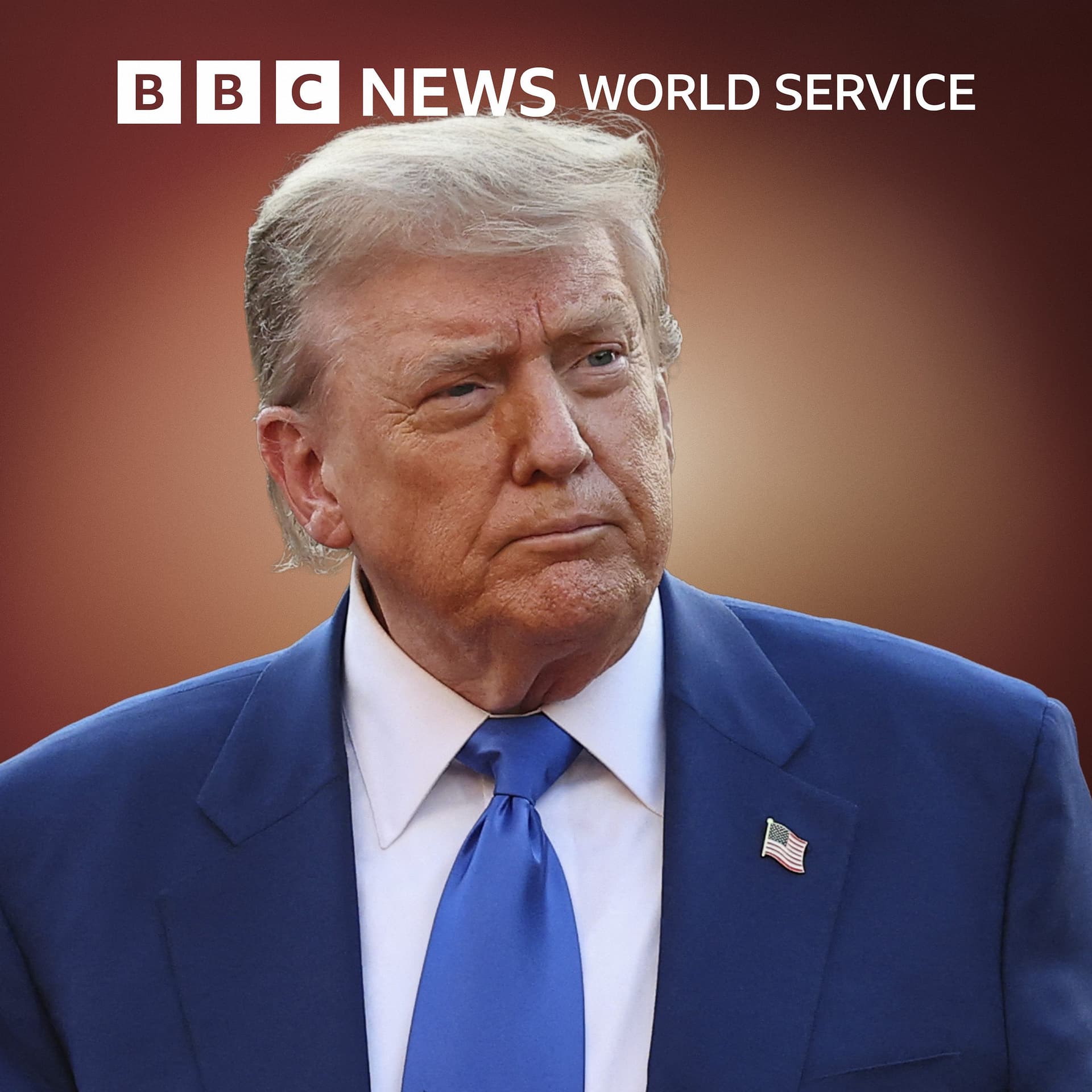
(Image: President Trump. Credit: Reuters)