In short
Podcast Summary: The Interview - Prince Harry: Is His Safety at Risk?
Podcast Overview Title: The Interview Description: Conversations with influential figures shaping our world, covering significant global issues. Each episode offers 20-minute interviews with leaders from various sectors, including business, politics, finance, sports, and culture. Available on BBC World Service and various podcast platforms.
Episode Details Title: Prince Harry: Is His Safety at Risk? Presenter: Nada Tawfik Producers: Lucy Sheppard, Madeleine Drury Editor: Max Deveson Release Schedule: Mondays and Wednesdays, 0700 GMT; available as a podcast twice a week.
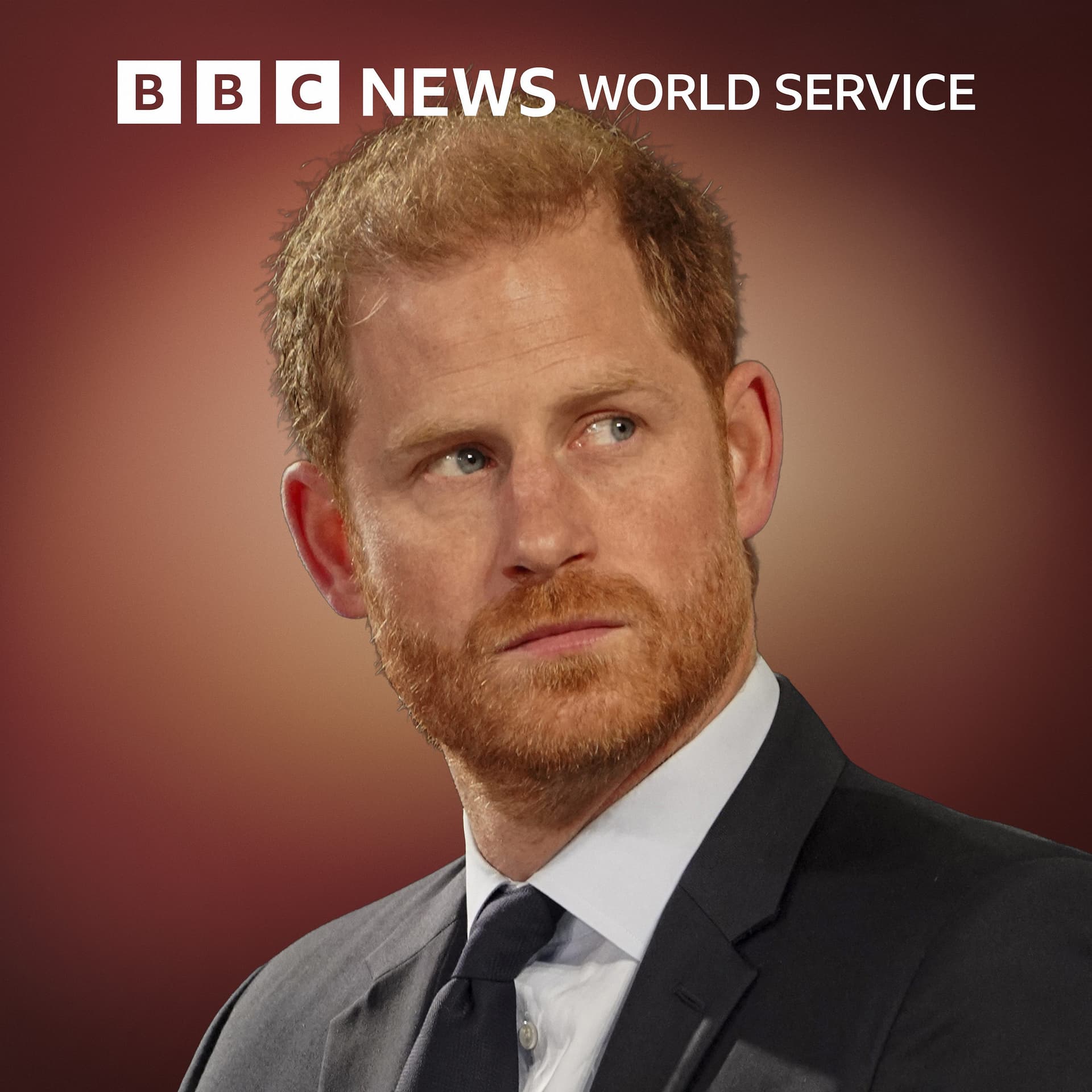
Episode Description In this episode, Nada Tawfik interviews Prince Harry regarding his recent court case concerning security arrangements in the UK. After stepping down from royal duties in 2020 and relocating to the US, Prince Harry discusses the implications of his downgraded security and how it affects his family’s safety, particularly the inability to visit the UK without adequate police protection.
---
Key Themes and Discussions
- Security Concerns
- Background: Prince Harry's security was downgraded after he stepped down as a working royal, leading him to feel unsafe bringing his family back to the UK.
- Court Case: He pursued legal action against the Royal and VIP Executive Committee (Ravec) for not properly reassessing the threats he faced, which resulted in a recent court ruling against him.
- Judgment Outcome: The court upheld that the decision to deny him security was justified, citing his non-working royal status.
- Family Dynamics
- Desire for Reconciliation: Prince Harry expresses a longing to reconcile with his family, indicating the personal toll that ongoing disputes have taken, especially considering his father's health issues.
- Emotional Impact: He reflects on the sadness of being unable to share his homeland with his children and the emotional strain of limited contact with his family.
- Media Influence
- Role of the Press: The Prince discusses how the media has incited negative perceptions of him and his family, complicating their relationship with the public and influencing decisions regarding his security.
- Public Perceptions: He challenges the exaggerated claims made by tabloids about the costs of his security, suggesting these have contributed to public sentiment against him.
- Legal and Institutional Critique
- Criticism of Ravec: Prince Harry questions the integrity of Ravec, which he believes should operate independently of royal influence. He argues that decisions affecting his safety should be made based on risk assessments, not influenced by royal family members.
- Call for Review: He urges current government officials to reconsider the oversight of Ravec and ensure that it functions as intended without bias.
- Personal Reflection
- Impact of Decisions: Harry conveys deep disappointment over the court’s decision and the implications it has for his family's safety, emphasizing the preciousness of life and the need for a more protective stance from both the government and his family.
- Hope for Change: Despite the setbacks, he expresses hope for resolution, indicating a willingness to forgive past grievances in pursuit of safety and familial bonds.
---
Key Takeaways
- Prince Harry's recent legal battle revolves around securing adequate safety for his family while visiting the UK, highlighting broader issues of royal privilege and public expectations.
- The episode sheds light on the emotional strain and familial rifts caused by ongoing security concerns, media scrutiny, and institutional dynamics.
- The conversation underscores the complexities faced by public figures in navigating personal safety, familial relationships, and public perceptions.
---
Conclusion This episode of The Interview presents a candid and insightful discussion with Prince Harry, revealing the personal implications of security decisions on his family and their relationship with the UK. As he seeks reconciliation with his family amidst ongoing challenges, the dialogue emphasizes the intersection of personal safety, media influence, and royal duties.
Written by AI. May contain mistakes. Listen to the episode to check what was said.
Transcript
Automatic transcript. May contain errors.0:00This BBC podcast is supported by ads outside the UK. If journalism is the first draft of history, what happens if that draft is flawed? In 1999, four Russian apartment buildings were bombed, hundreds killed. But even now, we still don't know for sure who did it. It's a mystery that sparked chilling theories. I'm Helena Merriman, and in a new BBC series, I'm talking to the reporters who first covered this story. What did they miss the first time? The History Bureau Putin and the apartment bombs Listen on bbc.com or wherever you get your podcasts From the Winter Olympic and Paralympic Games To the European Athletics Championships The 2026 sporting calendar is packed full of big events Keep up with all the action with More Than The Score The podcast that goes beyond the score sheet Join expert BBC sports journalists every Monday to Friday For interviews with sports stars, big talking points and the stories behind the headlines.
1:07More Than The Score from the BBC World Service. Listen now. Search for More Than The Score wherever you get your BBC podcasts.
1:30people shaping our world from all over the world. I will come back to Russia. I will participate in the elections. There's an increase in violence according to the Coca-Crop. There's no place in the world where women are equal. I will give away the vast majority of my money. It's my full-time focus for the rest of my life. For this interview, I meet Prince Harry, a member of the British royal family who sits down with me not in a grand palace, but a location near his adopted home in Santa Barbara, California. He speaks about a row which has become an emblem of Harry's sense of exclusion from the family.
2:09It's been five years since he stepped down from royal duties. In that time, he has moved to the U.S. and his security for his visits to his homeland have been downgraded. He told me this has been a factor in not bringing his wife, Meghan, and their family back to the U.K. So he took the government to court. Prince Harry's legal team argued that the Royal and VIP Executive Committee, known as Ravik, did not properly reassess the threats he faced when considering his situation in 2020. On Friday, three judges rejected this. Harry lost the battle. Buckingham Palace said, all of these issues have been examined repeatedly and meticulously by the courts, with the same conclusion reached on each occasion.
2:53This has been a complex court case, another piece in the royal drama of a divided family. I would love reconciliation with my family. There's no point in continuing to fight anymore. As I said, life is precious. I don't know how much longer my father has. He won't speak to me because of this security stuff, but it would be nice to reconcile. Born into one of the most famous families, he spent his adolescence in the limelight and the world watched as he grieved the death of his mother, Princess Diana. Welcome to the interview from the BBC World Service with Prince Harry. We thought it was going to go our way, but it certainly has proven that there was no way to win this through the courts.
3:37Wish someone had told me that beforehand. Yeah, the decision has been a surprise as well as not a surprise. So yeah, for the time being, it's impossible for me to take my family back to the UK safely. You're obviously very deeply affected by this. What memories, experiences had you hoped your children, Archie and Lilibet, would have had that you think they won't be able to now with this decision? Well, the only time that I've come back to the UK is sadly for funerals or court cases with the odd charitable function where I can in between that. I put myself at risk for that, but I will continue on with a life of public service.
4:24So I will always support the charities and the people that mean so much to me. I can't see a world in which I would be bringing my wife and children back to the UK at this point. And the things that they're going to miss is, well, everything. I love my country. I always have done, despite what some people in that country have done. So, you know, I miss the UK. I miss parts of the UK. Of course I do. And I think that it's really quite sad that I won't be able to show, you know, my children my homeland, you know. And as you say, you've gone back several times during this year's long battle. What about the security arrangements that were in place made you feel it would be unsafe for you and your family?
5:08There's only so much that I can say because of the redaction process and the national security matters at hand, but everything. Because in the beginning of 2020, I was scored the highest as far as risk was concerned. And then overnight, I was reduced to the lowest without actually going through the risk management board. So one does question how that is even possible and also the motive behind that at the time. and that was in 2020 and as hard as it is to appreciate or understand why the decision was made the way that it was in 2020 the hardest thing for me has been the fix of that decision for the last five years the fact that I still haven't had a risk management board assessment done for me over the last five years everybody else within this group of people get it at the minimum once a year.
6:11So again, I would not have taken this this far if I didn't have compelling evidence of facts that reveal why the decision was made. And I'm sitting here today talking to you where, you know, we've lost the appeal, but the other side have won in keeping me unsafe. So again, there's a lot of question marks that a lot of people will have. I have all of the truth. I have all of the knowledge now throughout the legal process. I've uncovered my worst fears. And to now know today, based on this judgment, that there was no legal framework that constrains the decisions of this body, Ravek, of which the royal household sit on.
7:04And I didn't know that until this legal process in 2021. One of the first things my lawyer said to me was, as disclosure started, or as this process started, she turned around and said, did you know that the royal household sat on Ravek? And my jaw hit the floor. Do you wish your father had intervened, despite how that may have looked?
7:29I've never asked him to intervene I've asked him to step out I step out of the way and let the experts do their job this Ravet committee is an expert committee full of professionals plus the Royal Household and the Royal Household don't have any role in that on the Ravet committee other than the helping influence the decisions based on members of the Royal Family and five years later, every single visit that I do back to the UK has to go through the Royal Household. My representative on the Rabbit Committee still to this day is the Royal Household. That is not a decision that I choose. I am forced to go through the Royal Household and accept that they are putting my best interests forward during these conversations and the deliberations.
8:24So no, I haven't asked my father to intervene. The whole point of a risk management board, which, as I said, everybody else gets, but I haven't never been given since back end of 2019 was the last one that I was given. The whole point of that is to have a board, a risk assessment, a separate board from Ravec that considers all of the facts and all the circumstances. It is a system and an assessment that is designed to be non-bias and to avoid interference. What I know throughout this legal process is the interference that was created came from the royal household. What the court decided today was that they were justified for four reasons to not have that review.
9:16And a major part of that is because you're no longer a working royal. a change in your status. Do you not accept that from the court? Well, my status status hasn't changed. It can't change. I am who I am. I am part of what I'm part of, and I can never escape that. My circumstances will always be the same. But with a specific answer to the question, there are comparisons that exist. And again, I have to be careful what I say, but I think it would be quite shocking for the British public and the public at large to understand or know that, in fact, many people do know this, that people who leave public office receive lifetime protection, regardless of whether there are threats or risks to them.
10:08So for me, with a whole list of risks and threats that were known about in 2020 and that have only increased over time, including the al-Qaeda threat that was published and talked about recently, completely disregarded, thrown away, ignored. Because for me, security was made conditional on having that official role. that role that everybody knows that myself and my wife wish to carry on, but was stopped from being able to do that back in 2020. What do you say to those who ask why the UK taxpayer should pay for police security? You have your own private security. Well, first off, private security can only do so much.
10:55Again, I can't go into the details of that, but I think most people will be able to work that out. One of the major things is they don't have jurisdiction in a foreign country or in any country. They don't have any jurisdiction. Police protection is effective protection, which is what my grandmother made very clear that we needed. With regard to the taxpayer part of it, I don't need to go into detail how much the royal family costs or how much protection costs. What I will say is that some of the British press, British tabloid press, did a very good job in campaigning to have our security removed by quoting figures such as£20 million.
11:32And through this disclosure process, I've seen constituents in the UK write to their MP saying, as a taxpayer, I don't want to pay for Meghan and Harry's security at this cost. They're literally quoting headlines from British newspapers. Those figures are obviously grossly exaggerated by about 18, 19 times. And further to that, how, if you know that other people are being protected, people that have made a choice for public office, then why wouldn't you be comfortable, happy with someone in my position who's given 35 years of service to his country, two tours of Afghanistan, and the threats and risks to my life?
12:20I was born into this position. I was born into those risks. And they've only increased over time, along with my marriage to Meghan and the frenzy across media, mainstream media and social media that that created. I guess on top of that as well, probably what people don't know, but that is mentioned in the judgment today, Ravek protect private citizens. You know, I was made a private citizen by the royal household, not by Ravek, by the royal household. I can't be a private citizen. I will never be seen as a private citizen. I will never be treated as a private citizen, not by the media, not by most people, and certainly not by anybody that wants to harm me or my wife or our kids.
13:03And just to be absolutely clear, what is the difference between the top level security you say you should have and the security you are given on this case by case basis? So the details of the security I can't talk about. All I will say is that the last RMB assessment I was given, I scored the highest. The only person within the family that scored anywhere near that was my grandmother. Overnight, I was reduced to the lowest. This case-by-case basis has been used by Ravec and also by large sections of the British press to say, well, what's the big problem? you're given something on a case-by-case basis.
13:48Unfortunately, that case-by-case basis is separated by the reason for my visit. It's not really a case-by-case basis. It's an either or. If you're invited to the UK by your family, then we will give you security. If you come for any other reason, then you will get a very low amount of security. I'm not going to confirm what that is, but it is completely insufficient. I've been treated very, very, very differently to everybody else that exists. All examples that exist, past, present, I have been singled out. Your father is ill with cancer. Will you continue to visit him alone without the family?
14:36where does this leave things moving forward the ability of your children to see their grandfather um you know life life is a precious thing and i'm acutely aware of the fragility of that um i i can i can only come to the uk safely if i'm invited um and you know there is a a lot of control and ability in my father's hands. Ultimately, this whole thing could be resolved through him, not necessarily by intervening, but by stepping aside, allowing the experts to do what is necessary and to carry out an RMB. That said, this all was initiated under a previous government. There is now a new government.
15:31I have had it described to me, once people knew about the facts, that this is a good old-fashioned establishment stitch-up, and that's what it feels like. So should Keir Starmer step in? Yes, I would ask the Prime Minister to step in. I would ask Yvette Cooper, the Home Secretary, to look at this very, very carefully, and I would ask her to review Ravek and its members, because if it is an expert body, then what is the royal household's role there if it isn't to influence and decide what they want for the members of their household? You're listening to the interview from the BBC World Service, people shaping our world from all over the world.
16:21If journalism is the first draft of history, what happens if that draft is flawed? In 1999, four Russian apartment buildings were bombed, hundreds killed. But even now, we still don't know for sure who did it. It's a mystery that sparked chilling theories. I'm Helena Merriman, and in a new BBC series, I'm talking to the reporters who first covered this story. What did they miss the first time? The History Bureau Putin and the Apartment Bombs Listen on bbc.com or wherever you get your podcasts
17:19big talking points and the stories behind the headlines more than the score from the bbc world service listen now search for more than the score wherever you get your bbc podcasts
17:36for this episode of the interview i'm speaking to prince harry after he loses a court of appeal challenge over his security arrangements in the uk i found prince harry warm and easy to chat with The strain of these last few years, clearly made worse by this legal defeat, was evident on his facial expressions before and during the interview. Speaking from a beautiful location near his California home, he was eager to share his perspective despite the inevitable scrutiny that follows him. Okay, let's return to my conversation with Prince Harry. Do you want the court battle to continue? Do you want to try to see this get to the Supreme Court?
18:16I don't want any battles to continue. There is way too much suffering and way too much conflict in the world. The heart of it is a family dispute. And it makes me really, really sad that we're sitting here today, five years later, where a decision that was made most likely, in fact, I know, to keep us under the roof. But once they realized that, you know, myself, my wife and our kids are happier outside of the institution, then please just look at the facts. Look at the risks. Look at the threat. Look at the impact that if anything was to happen to me, my wife, or my father's grandchildren, if anything was to happen to them, look where the responsibility lies.
19:01You know? So, you know, there's a duty of care that has been completely thrown out the window. And that doesn't feel great. You know, whether we agree or disagree, and there's a lot we agree on, There's a lot that we disagree on. But that aside, where is the duty of care? Because as I said, life is precious. And it is very clear that from 2020, because I was no longer allowed an official role and because I decided to remove myself eventually from the institution, that my life got devalued from the highest score to the lowest score overnight. And how does that make you feel, given you have expressed numerous times that you do not want history to repeat itself?
19:52I don't want history to repeat itself. I think there's a lot of other people out there, the majority, that also don't want history to repeat itself. Through the disclosure process, I've discovered that some people want history to repeat itself, which is pretty dark. That's quite a statement. Who do you think that is? I'm not going to share it at this point. I know all the names of the people that were involved in this process. And again, you have to question, why wasn't I put through the same risk management board that everybody else was put through, including members of my family? Do you think your relationship has changed with the UK?
20:29Do you feel let down by your country?
20:34That's a big question. At this point, I'm feeling very let down. it's the minority of people especially those that read the tabloids and the press themselves the press themselves have incited so much hatred towards myself, my wife and even our children that that's quite that's hard to forgive you know there are decisions that have been made there are things that have happened since 2016 especially throughout my whole life since 2016 there are things that have happened that I can now forgive. I have moved past that. I can forgive my family's involvement, my father, my brother, and my stepmother.
21:15I can forgive the press to a large extent as well for so many things that have happened. What I'm struggling to forgive and what I will probably always struggle to forgive is that a decision that was made in 2020 that affects my every single day and that is knowingly putting me and my family in harm's way. Everybody knew that they were putting us at risk in 2020, and they hoped that me knowing that risk would force us to come back. But then when you realize that that didn't work, do you not want to just keep us safe? Whether you're the government, whether you're the royal household, whether you're my dad, my family, despite all of our differences, do you not want to just ensure our safety?
22:05How are you feeling about this decision? Because clearly you have two children, Archie, Lilibet. They're not able to see their grandfather, their uncle, their cousins, in a way that you feel is safe for them. So what's your feelings kind of moving forward? Is there any way that this could be resolved? Firstly, I'm devastated. not so much as devastated with the loss that I am about the people behind the decision feeling as though this is okay. Is it a win for them? Is it a win that I don't get the protection that the threats and risks and impact say that I should? I would hope they wouldn't consider it a win.
22:58I'm sure there's some people out there, probably most likely the people that wish me harm, consider this a huge win. but you know I've this is
23:13there are there have been so many disagreements, differences between me and some of my family this current situation that has been now ongoing for five years with regard to human life and safety is the sticking point it is the only thing that's left. Of course, some members of my family will never forgive me for writing a book. Of course, they will never forgive me for lots of things. But, you know, there is, I would love reconciliation with my family. I've always, you know, there's no point in continuing to fight anymore. As I said, life is precious. I don't know how much longer my father has um you know he uh he he won't speak to me because of this security stuff um but it would be nice to it would be nice to be nice to reconcile that reconciliation can't come without truth well i've now found out the truth um i've shared some of it with you today a lot of it exists out there whether people choose to ignore it or not you know so it would be nice to have that reconciliation part now.
24:31If they don't want that, that's entirely up to them. And now that this court battle is over, do you feel you will be able to approach your father and speak about some of those issues? I mean, if... No, I don't think he would ever want to talk about it. I think he would just push it aside and the argument will continue to be this is a government decision. It may well be a government decision, but how did they reach that decision? You know, I've never, ever been allowed to make my own representations, not in 2020 and not for the last five years. For me and only me, there has to be a royal obligation in order to receive protection on UK soil.
25:17And I think that speaks volumes. Thank you for listening to the interview from the BBC World Service. If you enjoyed today's programme, you can listen to The Interview wherever you get your BBC podcasts. Until the next time, bye for now.
25:54A mystery that sparked chilling theories. I'm Helena Merriman, and in a new BBC series, I'm talking to the reporters who first covered this story. What did they miss the first time? The History Bureau, Putin and the apartment bombs. Listen on bbc.com or wherever you get your podcasts. From the Winter Olympic and Paralympic Games to the European Athletics Championships. The 2026 sporting calendar is packed full of big events. Keep up with all the action with More Than The Score, the podcast that goes beyond the score sheet. Join expert BBC sports journalists every Monday to Friday for interviews with sports stars, big talking points and the stories behind the headlines.
26:40More Than The Score from the BBC World Service. Listen now, search for More Than The Score wherever you get your BBC podcasts.
From the publisher
Nada Tawfik, North America correspondent, speaks to Prince Harry about reconciliation with the royal family after his loss in court over his security arrangements in the UK
The Prince stepped down from his duties as a working royal in 2020 and moved to the United States with his wife, Meghan. After his tax-payer funded protection was downgraded, he said it was too dangerous to bring his family back to the UK without adequate police protection and took the government to court.
The Interview brings you conversations with people shaping our world, from all over the world. The best interviews from the BBC. You can listen on the BBC World Service, Mondays and Wednesdays at 0700 GMT. Or you can listen to The Interview as a podcast, out twice a week on BBC Sounds, or wherever you get your podcasts.
Presenter: Nada Tawfik Producers: Lucy Sheppard, Madeleine Drury Editor: Max Deveson
Get in touch with us on email TheInterview@bbc.co.uk and use the hashtag #TheInterviewBBC on social media.