In short
The Interview Podcast Episode Summary
Episode Title
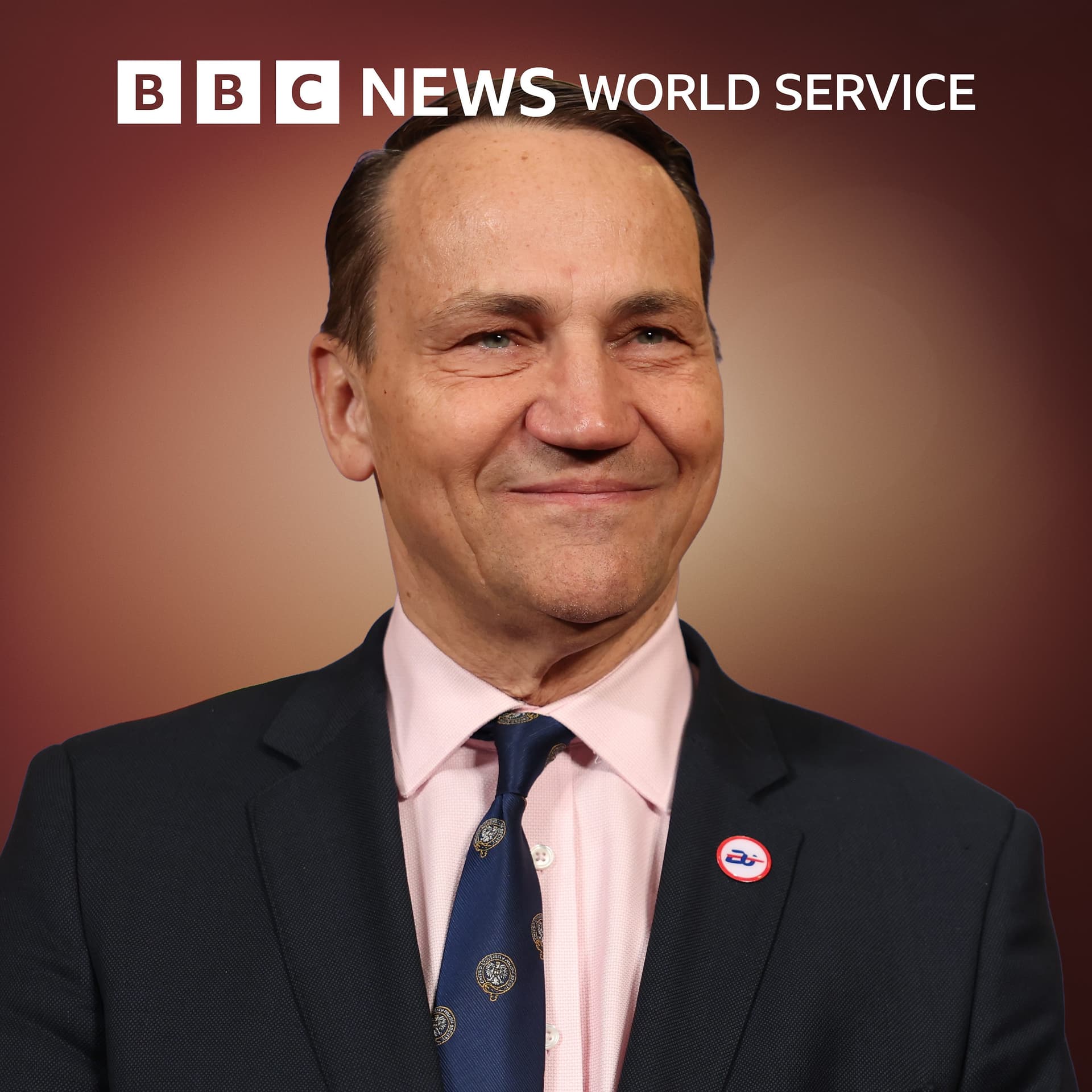
Radosław Sikorski, Foreign Minister of Poland: Dealing with the Growing Threat from Russia
Episode Overview In this episode, host Kasia Madera interviews Radosław Sikorski, the Foreign Minister of Poland. The discussion centers around Poland's response to the increasing threat from Russia, particularly in light of the invasion of Ukraine and recent events, including the closing of a Russian consulate in Krakow.
Key Themes and Discussions
Poland's Stance on Russia
- Closing of Russian Consulate: Poland's decision to shut down the Russian consulate in Krakow was a reaction to a fire in a shopping center in Warsaw, which Polish authorities attribute to Russian sabotage. Moscow has denied these allegations and labeled Poland's actions as hostile.
- Defense Spending: Poland is spending 4.7% of its GDP on defense, emphasizing the need for preparedness against potential threats from Russia. Sikorski highlighted that Poland maintains the largest land army in the EU.
Challenges in Ukraine
- Ceasefire Prospects: Sikorski discusses the possibility of a lasting ceasefire in Ukraine and emphasizes Ukraine's flexibility in negotiations. He mentions that a significant test for Russian President Vladimir Putin is to accept a ceasefire proposal backed by other nations, including China.
- US Involvement: The conversation touches on the role of the US, particularly under President Trump, in influencing the outcome of the conflict. Sikorski suggests that Trump could play a pivotal role in supporting a ceasefire.
NATO and International Relations
- NATO's Role: Sikorski affirms Poland’s commitment to NATO and discusses the alliance's collective defense principle (Article 5), expressing confidence in US support. However, he voices concerns regarding the effectiveness of NATO in deterring Russian aggression.
- European Unity: Sikorski points out the challenges democracies face in achieving unity compared to dictatorships, suggesting that it takes time for democratic nations to coordinate their responses.
Strategic Considerations
- Hybrid Warfare: The Foreign Minister warns of Russia's hybrid warfare tactics, which include cyber attacks and disinformation campaigns. He emphasizes the importance of countering these threats to maintain security in Poland and the broader EU.
- Potential Territorial Compromises: The episode raises the question of whether Ukraine might need to cede territory to reach a peace agreement. Sikorski stresses that such decisions should ultimately be made by Ukraine.
Conclusion Radosław Sikorski’s interview provides valuable insights into Poland's strategic approach to dealing with Russia, the importance of NATO and international solidarity, and the complexities surrounding the ongoing conflict in Ukraine. His perspective illustrates the urgency of a coordinated response to counteract Russian aggression in Europe.
Episode Details
- Presenter: Kasia Madera
- Producers: Lucy Sheppard, Ben Cooper
- Editor: Emma Rippon
- Listen: Available on BBC World Service and various podcast platforms.
Contact Information
- Email: TheInterview@bbc.co.uk
- Social Media: Use hashtag #TheInterviewBBC
This summary captures the essential discussions and positions from the episode, providing a comprehensive overview of the themes addressed by Radosław Sikorski concerning Poland and Russia's geopolitical dynamics.
Written by AI. May contain mistakes. Listen to the episode to check what was said.
Transcript
Automatic transcript. May contain errors.0:00This BBC podcast is supported by ads outside the UK. If journalism is the first draft of history, what happens if that draft is flawed? In 1999, four Russian apartment buildings were bombed, hundreds killed. But even now, we still don't know for sure who did it. It's a mystery that sparked chilling theories. I'm Helena Merriman, and in a new BBC series, I'm talking to the reporters who first covered this story? What did they miss the first time? The History Bureau, Putin and the apartment bombs. Listen on BBC.com or wherever you get your podcasts.
0:59Monday to Friday. For interviews with sports stars, big talking points and the stories behind the headlines. More Than The Score from the BBC World Service. Listen now, search for More Than The Score wherever you get your BBC podcasts.
1:19Hello, I'm Kasia Madeira, presenter on the BBC News Channel, and this is the interview from the BBC World Service. The best conversations coming out of the BBC, people shaping our world from all over the world. I will come back to Russia. I will participate in the elections. There's an increase in violence according to the coca crop. There is no place in the world where women are equal. I will give away the vast majority of my money. It's my full-time focus for the rest of my life. For this interview, I met Radoslaw Sikorsky, Poland's foreign minister. You're going to hear about Poland's decision to close a Russian consulate in the southern city of Krakow after claiming Russia was behind a huge fire in a Warsaw shopping centre last year.
2:09The allegation has been dismissed by Moscow as completely without foundation. It accuses Poland of hostility and describes relations between the countries as deplorable. As a key ally to Ukraine, Poland has played a pivotal role in supporting its neighbour following the full-scale invasion by Russia in 2022. Tensions between Poland and Russia have been high since then, with these latest events ratcheting them up even further. And Poland, he tells me, is all too aware of the danger posed by Russia. We are spending 4.7 % of our GDP on defence. We have the largest land army in the European Union.
2:47And within our defence budget, we have the largest proportion that is spent on new equipment. And we will continue to do that until we are sure we can deter Putin. We've learned over 500 years that when the Russians threaten us, you have to take it seriously. Mr. Sikorsky also gives me his take on the prospect of a lasting ceasefire in Ukraine, the involvement of the US President Donald Trump, and also on the future of NATO. Welcome to the interview from the BBC World Service with Radoslav Sikorsky. It's important to remember that Russia's hybrid war on the West is not just making a nuisance of herself on the Internet, that it's everything below the threshold of war.
3:31And now we have evidence that they commissioned people living in Poland, recruited them on Telegram and paid them to set fire to this huge shopping mall. and it was by miracle that nobody was hurt. But this is completely unacceptable. And therefore, I decided that Russian presence in Poland will be further curtailed. They'll have one more consulate left and we will take further decisions if they continue these hybrid attacks. You make the point that it was lucky that nobody lost their lives. It was a huge, huge fire of this shopping mall in central Warsaw. So why not just go the whole way? If you are accusing Russia of sabotage and arson, why not just close down all the consulates and the embassy?
4:23I hope it doesn't come to that. But, you know, we maintain diplomatic relations with other unfriendly countries. We have an embassy in North Korea, in Iran, in Venezuela. Diplomacy is about keeping channels of communications open, but the Vienna Convention applies. And this is something that I hope will make it more difficult for Russia to spy inside Europe and to carry out sabotage. Because remember, a significant proportion of Russian accredited diplomats are actually case officers running agents. And you're also actively calling for a 30-day ceasefire by Russia and Ukraine. We had Sakhir Starmer, we had Donald Torsk, Frederick Mertz of Germany, and also President Emmanuel Macron of France in Kyiv.
5:19And yet no ceasefire. But significantly, the People's Republic of China has also joined the call for a ceasefire. So this is a test for Vladimir Putin. He's been talking about peace. If you want peace, this is your chance to have a ceasefire and to explore in Istanbul whether a final peace deal can be achieved. Is that what you're advising Volodymyr Zelensky to do then, to go to Istanbul, to have those talks with whoever it is from the Russian delegation? Because we don't know yet whether Vladimir Putin is going to be there. I think Ukraine is showing flexibility, it's showing willingness to proceed.
6:01Remember, Ukraine already a month ago agreed to an unconditional ceasefire. It's Putin who's playing for time. Putin seems to believe that time is playing for him. But actually, the Russian economy is aching and he's not making any significant progress on the battlefield. Well, exactly. So he's playing for time. So this idea of not talking about a ceasefire, He's been very cunning, hasn't he? He wants talks. He wants to engage Zelensky. And now you've also got Donald Trump saying, yes, Zelensky needs to go and talk. It's important that he does. Zelensky is now saying that he will talk. Isn't Putin simply playing everybody?
6:39These dictators are usually cunning, as you say, tactically. They have one advantage over us. They have unity of command, whereas we need to collaborate. But if he misses his chance, there is a draft bill in the US Senate already signed by almost 80 senators. So a constitutional majority with which would put punitive sanctions on Russia and Russia's enablers. I think Vladimir Putin would be well advised to accept the ceasefire before this bill comes into force. What's your understanding of how many Russian soldiers have been killed? Because we know that hundreds of thousands of people are dying in this conflict.
7:26We don't know exact numbers, but they estimate, some estimate, very, very high. And yet that doesn't seem to stop Vladimir Putin. Is it really sanctions that will stop him? Because it feels like nothing is at the moment. Well, sanctions are important because we still are finding Western components in the drones and missiles that explode in Ukraine. But yes, you're right. This Russian regime is inoculated from public pressure even more than the late Soviet Union. I was a war reporter in Afghanistan in the 1980s. The Soviet Union lost its estimated 27 ,000 dead in that war. Russia today has lost from a smaller pool of population a much bigger, I mean, up to a million dead and wounded.
8:13And Poland has always been very vocal about it, whether it's your party, the civic platform, the civic coalition, law and justice also, your opposition, have always united in being vocal about the dangers of President Putin, the dangers of the Kremlin. And yet we seem to see Donald Trump, who is so willing to think about what President Putin wants. Why do you think that is? Well, that's a question to Marco Rubio, not to me. But yes, Poland is determined. We are spending 4.7 % of our GDP on defense. We have the largest land army in the European Union, 216 ,000 soldiers. And within our defense budget, we have the largest proportion that is spent on new equipment.
8:56And we will continue to do that until we are sure we can deter Putin. We've learned over 500 years that when the Russians threaten us, you have to take it seriously, because on that, they usually come through. Look, you're talking about the Polish army. You've got the third largest army in NATO. You are spending as a proportion of GDP more than the United States on defence. Is there even a point of NATO? Is NATO at a brink? I would put it differently. I think the US is seeing that Putin is not serious, that he is mocking the United States. President Trump, I feel, is perfectly capable of switching the policy 180 degrees and really letting Putin have it in terms of sanctions and support for Ukraine.
9:48What should happen to President Putin? What does he want? What's your understanding of what President Putin ultimately wants? Does he want Ukraine? Will he then march into Poland? You just need to hear him. You know, he told us very clearly since 2007 what he wants. He wants to reconstitute the Russian Empire. He wants to create a new pole of global power. And for that, he needs the resources, both industrial and territorial and human, of Ukraine. And he still imagines that he can capture Ukraine, even though three years into this war, he's still fighting in Donbass. When you're in charge in power for 20 years, people cease to tell you the truth.
10:33Politicians make their biggest mistakes when they start believing in their own propaganda. So do you think that as it stands right now, that Ukraine has to cede some territory? You mentioned the Donbass. Does it have to cede what is currently under Russian control and Crimea, of course? There is never a shortage of pocket chamberlains and we shouldn't be joining their ranks. The approach we've taken in the group of Baltic, Scandinavian and EU countries plus Britain is that we've given Ukraine a list of things that she can count on for next year and for the following year. actually irrespective of what the United States does, so that she can take this into its own calculations about whether to make a deal, when to make a deal, and what compromises she's ready to make.
11:30Those should be Ukrainian decisions. Ukrainian decisions, but you have a sphere of influence. The European Union is providing aid, support to Ukraine. Obviously, now with the US kind of taking that step back on a global political sphere, it's down to the European Union. Is that something realistically that the EU can afford? Well, we've contributed to Ukraine as the EU, roughly 160 billion euros so far. We are at 19 trillion euro economy. So we've contributed over three years, less than 1 % of annual GDP. we can afford it, deterring Putin at the NATO and EU border, if he conquered Ukraine, would be much more expensive.
12:20But you're not, that's my point, you're not, you're doing all of this. And yet you don't seem to be deterring him. He's still playing cat and mouse talking about, okay, you want to ceasefire? No, he's still, he's impoverishing his country, destroying his country's future with a pointless war in which he's making very little progress. Yes. Are you fearful that Russia potentially, under President Putin, could attack Poland? Well, they threaten us. So, of course, I mean, you know, that's what we have an army for. If we didn't think that they are capable of it, that would be a waste of money, wouldn't it?
12:57So you genuinely think there is a possibility that you would... Well, look, they are already at hybrid war with the West. They attack our computer systems. They attack our public institutions. They send assassins. They set fire. They are very active in disinformation, in interference in our election campaigns. They were very active during the Brexit referendum, as you know, supporting far right and far left in Europe, interfering in our presidential election, which is taking place right now. So these are all very unfriendly acts just below the level of kinetic action. And that's what we have NATO for, for common protection against a determined enemy.
13:44You know, as NATO, we are several times more powerful than Russia, but we need to husband to mobilize our resources specifically for defense production. I wonder when it comes to NATO, just how effective are they? Are you comfortable that should a breach on a NATO member state happen? Will Article 5, will it be invoked? And just to remind everybody, Article 5 is, of course, an attack on one, is an attack on all. Do you feel confident that the United States has your back? Yes, I do. I mean, we talked to Secretary Rubio, he came to the last NATO ministerial, he's coming again. This year, we're having a NATO summit, And the communication from the US on NATO is solid.
14:29We have 10 ,000 US troops in Poland. Putin would be irrational if he wanted to test a war with NATO. But, you know, he invaded Ukraine on hyper optimistic assumptions. So we have to look at his capabilities because we know that his intent is evil. Are those US troops, are they staying in Poland? Because there was talk earlier that potentially Donald Trump could pull them out. They're all based in the east of Poland. Are they staying? Well, there was some talk in Washington about reducing its footprint in Europe. In Poland, that's where the threat is. And what happened in Poland is that the logistical hub that has until recently been managed by U.S.
15:23forces has now been taken over by alliance forces. And the U.S. troops have remained in Poland, but at different locations. You're listening to the interview from the BBC World Service, people shaping our world from all over the world. If journalism is the first draft of history, what happens if that draft is flawed? In 1999, four Russian apartment buildings were bombed, hundreds killed. But even now, we still don't know for sure who did it. It's a mystery that sparked chilling theories. I'm Helena Merriman, And in a new BBC series, I'm talking to the reporters who first covered this story. What did they miss the first time?
16:11The History Bureau, Putin and the apartment bombs. Listen on BBC.com or wherever you get your podcasts. From the Winter Olympic and Paralympic Games to the European Athletics Championships. The 2026 sporting calendar is packed full of big events. Keep up with all the action with More Than The Score, the podcast that goes beyond the score sheet. Join expert BBC sports journalists every Monday to Friday for interviews with sports stars, big talking points and the stories behind the headlines. More Than The Score from the BBC World Service. Listen now, search for More Than The Score wherever you get your BBC podcasts.
16:59For this episode of The Interview, you, I'm speaking to Radoslaw Sikorsky, Poland's foreign minister. When I met him at the BBC's headquarters at Broadcasting House, he'd just come from a meeting with other European leaders over what to do about Ukraine. He was buoyed by the United Front the Coalition of the Willing was showing in supporting Zelensky, but he was also chilling in saying Putin's intent is evil. OK, let's return to my conversation with Radoslaw Sikorsky. What does it take for a ceasefire of some sort to be active, enacted within Ukraine? One telephone call from Mr. Putin to his defence minister.
17:41Why is that not happening then? Because Putin still dreams of conquering all of Ukraine. Would you send Polish troops as a peacekeeping effort, as and when a ceasefire happens, onto Ukrainian territory? It's something that the UK will do. It's something that France are committing to. Why not Poland? Between neighbours, there's always a lot of history. And remember that the main task for Poland is to guard the external border of the eastern flank of NATO. We have 650 kilometres of border with Russia and Belarus. And someone also has to protect the logistical hub of such an operation. So we see ourselves in the operation, but in a more support mode until something happens.
18:27Are the people of Poland behind you? Do they support this? You've got a presidential election coming up and we're seeing the push and pull between that. Do you think you have them on board? Well, they elected us to par not quite two years ago and our candidate in the presidential campaign is leading in the polls. He's slipping though. Hmm. Polish presidential elections are usually decided by one or two percent. The mayor of Warsaw is leading by five to six percent. So in our terms, a pretty commanding lead. But people feel that Ukraine is fighting not only for itself, obviously, but also is keeping Russian troops away from the Polish border and that there is a strategic logic for helping them.
19:12What do you say then to countries like Italy that are not matching your commitments to defence spending to NATO? Also, of course, Hungary as well. That is a country with direct links where you've got Viktor Orban commending President Putin. You've got also Slovakia as well, which has sympathies with President Putin. The European Union is disparate that you're not singing from the same message. So how do you then overcome somebody like Putin if within the EU you're disjointed? Well, I said it before, dictators have an advantage. They have unity of command. We are democracies and we are a confederation as the European Union, not a federation.
19:52So yes, unity is more challenging and takes time, which is why we appreciate it when Britain, having left, often does the right thing quickly. For example, sending anti-tank weapons to Ukraine and other pieces of kit. It encourages the rest of us in Europe to do the right thing. So you're pointing at Brexit, of course. And I just wonder, while we're on this subject, then we saw the tariffs that Donald Trump has imposed across the world. 20 % for the EU, just 10 % for the UK. Did they do better out of Brexit because of that? We shall see. these tariffs are now all over the place. So what the landing zone will be, we have no idea.
20:41And I'm really keen to just work out with you just when it comes to the population of Poland, the voters of Poland, you've got this election coming up for the presidency. Your candidate, Rafał Trzaskowski, yes, ahead in the polls, but his lead has dropped quite significantly. And then you've got a battle between the law and justice candidate and also a candidate who is on the far right. Are you worried about the direction that Poland is going to, seeing that such an outspoken far right candidate is making gains? Not really. I think the mayor of Warsaw will win. And between the two largest parties, we actually have consensus on strong defence and on strategic support for Ukraine.
21:27If he doesn't win, if one of the others wins, what happens to the Polish government? Because you're a bit of a stalemate while you have a president from a different party. You can't get anything done. Well, yes, it's true. We have an elected head of state. But remember that the president of Poland is not the head of government. The power of the Polish presidency, the real one, is just to veto legislation. So the president can slow down a government, but he doesn't rule in the government's place. We have a difficult cohabitation right now, and yet we're managing. He is the head of the Polish army, isn't he?
22:07The Polish president. Head, but not the commander in chief. So head of the armed forces, but it doesn't mean he gives orders. But he wasn't there meeting Zelensky. It was Donald Torsk. I wonder whether that was a decision that was quite politicized from your point of view to send the Prime Minister? No, President Duda has been good on Ukraine, was one of the first leaders of Europe to be in Kiev when Kiev was still under attack. No, credit where credit is due, please. So when it comes to your messaging for President Putin, when it comes to this potential meeting in Istanbul with Zelensky and whoever the Kremlin decides to send, what do you want to see out of it, what are you hopeful that Zelensky will get?
22:48We should all communicate to the Russians that this is a test. If you tell the truth that you want peace, this is the time to announce and to effect a ceasefire and to talk in earnest. And if they just say, OK, more talks or just ignore it? Then we have to ramp up the pressure, both on the battlefield and in the economic sphere. Elaborate on the battlefield. Well, there are still systems that Ukraine is begging for that various European countries can deliver, and they should be delivered. There are more planes, more missiles, more ammunition that Ukraine can do with. Ukraine also needs our investments in their defense sector.
23:35They have spare capacity, believe it or not. They just need money for components for drones. This is a drone war. Ukraine can make 5 million drones this year, but they need the money for the batteries, for the little electrical engines and so on. And this is invaluable for our militaries to study this war, first war of the drone era, so that we can prepare ourselves more cheaply and more effectively on the basis of this experience. And NATO actually created a whole institution called Joint Analysis and Training Center based in my home city of Bydgoszcz in Poland, where these lessons learned, these lessons should be learned as quickly as possible.
24:20Is Donald Trump learning the lessons that you have? What do you want to hear from him? I think he's at a tipping point. I think if Putin doesn't give him, Ukraine, Europe, a ceasefire, then I think things might change. There is this bill in the Senate supported by a large number of Republican senators. If President Trump threw his support behind such a bill, then Putin would regret missing this opportunity. And if he doesn't? Look, this is a colonial war. These colonial wars usually take a long time because it takes time for the metropolis to acknowledge the otherness of the former colony and to acknowledge that it was a mistake to invade and to acknowledge that the objectives of the invasion cannot be achieved at an acceptable cost.
25:16And Putin living in isolation in his own bubble has not learned that lesson yet. Thank you for listening to the interview from the BBC World Service. If you enjoyed today's programme, you can listen to the interview wherever you get your BBC podcasts. Until next time, bye-bye for now.
25:51it. It's a mystery that sparked chilling theories. I'm Helena Merriman, and in a new BBC series, I'm talking to the reporters who first covered this story. What did they miss the first time? The History Bureau, Putin and the apartment bombs. Listen on bbc.com or wherever you get your podcasts.
26:21Keep up with all the action with More Than The Score, the podcast that goes beyond the score sheet. Join expert BBC sports journalists every Monday to Friday for interviews with sports stars, big talking points and the stories behind the headlines. More Than The Score from the BBC World Service. Listen now, search for More Than The Score wherever you get your BBC podcasts.
From the publisher
Kasia Madera speaks to Radosław Sikorski, the Foreign Minister of Poland.
As a key, long-term ally to Ukraine, Poland has played a pivotal role in supporting its neighbour following the full-scale invasion by Russia in 2022.
Mr Sikorski talks about the growing threat Poland, as well as Europe, faces from Russia, and follows his country’s decision to close the Russian consulate in Krakow.
The move was made in response to a shopping centre fire in Warsaw last year, that Poland blames on Moscow. The Kremlin has dismissed the accusation as completely without foundation - it accuses Poland of hostility, and describes relations between the countries as deplorable.
Mr Sikorski also gives his take on the prospect of a lasting ceasefire in Ukraine, the involvement of the US President Donald Trump, and the future of NATO.
The Interview brings you conversations with people shaping our world, from all over the world. The best interviews from the BBC. You can listen on the BBC World Service, Mondays and Wednesdays at 0700 GMT. Or you can listen to The Interview as a podcast, out twice a week on BBC Sounds, or wherever you get your podcasts.
Presenter: Kasia Madera Producers: Lucy Sheppard, Ben Cooper Editor: Emma Rippon
Get in touch with us on email TheInterview@bbc.co.uk and use the hashtag #TheInterviewBBC on social media.