
In short
Podcast Notes: The Interview - Episode with Keith Siegel
Podcast Overview
- Title: The Interview
- Description: Conversations with influential figures from various sectors including business, politics, and culture. The podcast features interviews by BBC journalists with individuals shaping global events. Each episode is approximately 20 minutes long and offers insights into pressing issues.
Episode Details
- Title: Released Israeli hostage Keith Siegel: I Pray for Peace
- Host: Nick Beake
- Date of Release: [Insert Release Date]
- Key Themes: Hostage experience, conflict in Gaza, peace advocacy
Summary of Episode Content In this episode, Nick Beake interviews Keith Siegel, an American-Israeli who was taken hostage by Hamas during the October 2023 attacks, leading to the ongoing conflict in Gaza. Siegel shares his harrowing experiences during his captivity, which lasted for nearly 500 days, and discusses the broader implications of the ongoing conflict.
Key Points Discussed
Hostage Experience
- Capture: Siegel was captured in a Hamas attack that resulted in around 1,200 civilian deaths. He and his wife were among 251 hostages taken.
- Conditions of Captivity:
- Desperate living conditions with extreme violence.
- Physical injuries sustained during captivity, including broken ribs and severe pain.
- Lack of food, water, and medical attention.
- Frequent relocations and psychological trauma from witnessing violence against other hostages.
- Emotional Impact: Siegel's mother passed away during his captivity, adding personal grief to his ordeal.
Calls for Action
- Hostage Release: Siegel urges the release of the remaining 50 hostages, highlighting ongoing negotiations between Israel and Hamas for a ceasefire that includes hostage release.
- Public Safety vs. War Continuation: He advocates for a prioritization of hostage release over the push for complete military victory against Hamas, emphasizing the need for dialogue and peace.
Reflections on Peace
- Desire for Peace: Siegel expresses a strong desire for peace and understanding between conflicting parties, emphasizing that leaders have a responsibility to ensure the safety of their citizens.
- Humanitarian Concerns: While focused on the hostages, he acknowledges the suffering of civilians in Gaza, advocating for solutions that address this dual tragedy.
Emotional Depth
- Siegel recounts specific traumatic events during his captivity, including witnessing torture and violence against fellow hostages. His emotional responses highlight the psychological scars of such experiences.
Conclusion Keith Siegel's interview is a poignant reminder of the human cost of prolonged conflict. He emphasizes the importance of focusing on humanitarian issues and the dire need for peace. The conversation sheds light on personal and collective struggles within the context of the ongoing Israeli-Palestinian conflict.
Key Takeaways
- The experience of hostages in conflict zones is often marked by extreme violence and psychological trauma.
- Calls for peace must consider the voices of those affected by conflict, advocating for the return of hostages as a priority.
- Understanding the complexities of conflict is crucial for promoting dialogue and eventual peace.
Additional Information
- Producers: Ben Cooper, Kyla Herrmannsen, Katie Law, Lucy Sheppard
- Editor: Nick Holland
- Contact: Email - TheInterview@bbc.co.uk | Social Media - #TheInterviewBBC
---
This markdown file serves as a detailed summary and analysis of the podcast episode, encapsulating the core discussions and emotional weight of Keith Siegel’s experiences and insights.
Written by AI. May contain mistakes. Listen to the episode to check what was said.
Transcript
Automatic transcript. May contain errors.0:00This BBC podcast is supported by ads outside the UK. If journalism is the first draft of history, what happens if that draft is flawed? In 1999, four Russian apartment buildings were bombed, hundreds killed. But even now, we still don't know for sure who did it. It's a mystery that sparked chilling theories. I'm Helena Merriman, and in a new BBC series, I'm talking to the reporters who first covered this story? What did they miss the first time? The History Bureau, Putin and the apartment bombs. Listen on BBC.com or wherever you get your podcasts.
0:59Monday to Friday. For interviews with sports stars, big talking points and the stories behind the headlines. More Than The Score from the BBC World Service. Listen now, search for More Than The Score wherever you get your BBC podcasts.
1:20Hello, I'm BBC correspondent Nick Beak and this is the interview from the BBC World Service. The best conversations coming out of the BBC, People shaping our world from all over the world. There have been so many disagreements between me and my family. Putting on a show, that is what it means to be Lady Gaga. Only the things that you can't solve with government and private sector is where you bring philanthropy in. There's no place in the world where women are equal. Every generation, every generation has to fight to maintain democracy. For this interview, I meet Keith Siegel, an American-Israeli captured by Hamas in the October 2023 attack that marked the start of the conflict in Gaza.
2:07He was one of 251 hostages taken that day in an assault that killed around 1 ,200 other people who were mainly civilians. He was captured along with his wife, Aviva. She was held for 51 days before being freed during an earlier ceasefire. Mr. Siegel was released in February after nearly 500 days. His mother passed away while he was still in captivity. You're going to hear vivid accounts from him about his time as a hostage. Some listeners may find his descriptions of what happened disturbing. He tells me about desperate living conditions in Gaza, as well as extreme levels of violence to which he said he and other hostages were subjected.
2:53I was pushed to the ground and I broke my ribs. I was in severe pain for over a month. I was kicked on the other side in my ribs, so I had that for weeks, being in pain and in various locations. I was in tunnels where we were gasping for our breath and weren't sure we would make it out alive. We were left alone underground. It was horrendous with hardly any food or water. In this conversation, Keith Siegel calls for all 50 remaining hostages to be freed. Up to 20 of them are still believed to be alive. Talks on a ceasefire proposal that would include a hostage release deal are ongoing between Israel and Hamas.
3:36The Israeli military launched a campaign in Gaza in response to Hamas's October 7th attacks in 2023. More than 57 ,000 people have been killed in Gaza since then, according to the territory's Hamas-run health ministry. Welcome to the interview from the BBC World Service with Keith Siegel. You've spoken very vividly about your 484 days in captivity and how Hamas treated you. In the here and now, I'm sure a lot of people want to know, how are you faring? How are you getting on now? A lot of the time I'm very concerned and I'm worried and anxious about the hostages that are still there. I try to take care of myself.
4:22Together with that, my highest priority today is, well, first being with my family, but also equally as important to me to do whatever I can do to help bring all of the 50 hostages back. as soon as possible. So I call upon Prime Minister Netanyahu and President Trump and the mediating countries that have all been involved in negotiations in the past, negotiations that brought back many hostages, including my wife Aviva and I, the agreement that saved our lives and reunited us as a family. We're now at 640 days, and I urge all involved in the negotiations and in reaching an agreement to bring an end to the suffering for so many people.
5:13We know that some in Israel really want the war to continue, that Hamas should be destroyed completely. Others really concern that as long as the war goes on, the chances of getting back the remaining hostages really diminishes. What are your thoughts in the here and now on that, about weighing that up? The majority of Israeli citizens support a deal that will bring the hostages home and bring an end to the war. Obviously, I am one of them. Our government must listen to its people, and the majority. We live in a democracy, and being a Jewish state and And saving lives is of utmost importance, and it's considered holy in the Jewish religion to save lives and to bring deceased to a proper burial.
6:05They must all come home. Your personal story is one that people around the world will have heard. At the same time that all the hostages have been in captivity, it's said that more than 57 ,000 Gazans have been killed during the military operation that Israel started after the attacks of October the 7th. Your focus is on the hostages, but do you also think about this on a daily basis, the wider picture in Gaza and the great suffering there? I have always wanted peace. I pray for peace, and I am happy to talk to anybody in the world that wants peace to try to bring down barriers. And I think that the leaders on all sides have the responsibility of securing their citizens.
7:02I think Hamas is responsible for what has happened from the 7th of October on until this day. and it's important for me to stress the suffering that continues and talk about hostages. I was a hostage. I experienced it. My friends are still in captivity, hostages. You know, I can tell you my experience and I can tell you about others' experience. And I saw hostages that were beaten, women hostages that were beaten and threatened to be killed at gunpoint. I saw a woman, her hands were tied together, and her feet were tied together, and she was told she has to lie on the floor on her back, and they were beating her, and they were accusing her of being in the IDF in some position.
7:52It wasn't true. They had called me into the room, and they had told me that I must tell this woman that she needs to confess, otherwise they would keep torturing her, and they were literally torturing this woman. And I was there. I was, I don't know, I can't even reenact what my thoughts were, but feeling like I need to do what they tell me to do, and just praying for this to stop, thinking, how can I make this stop? And that situation haunts me to this day, and I just feel terrible. I feel like I could have done something, and I didn't do anything to make it stop. And after that, they told me to go out of the room, and then they brought the woman out of the room, and they put her down on her knees on the floor, and they put a pistol to her head, and this was right in front of me.
8:47I told her if she doesn't confess, they're going to kill her. I was kicked, and I was spat on, and they cursed me and screamed at me. violence that I heard about others experiencing. A young man that I was held in captivity with, Matan Angrist, who was brutally, violently forced out of the tank that he was in and lynched on the way into Gaza and suffered severe injuries. And he's still there and he hasn't received the medical care that he needs. Are you able just to tell us what it was like, the conditions for you in the time you were held there, those 484 days, what it was like? Well, going back to the day we were kidnapped, they shot at us.
9:33I was pushed to the ground and I broke my ribs. I was in severe pain for over a month. I was kicked on the other side in my ribs. So I had that for weeks, being in pain. And in various locations, I was in tunnels where we were gasping for our breath. And what they said was a 40 meter deep tunnel and weren't sure we would make it out alive. We were left alone underground. It was horrendous with hardly any food or water. My wife was really sick and exhausted and weak, dehydrated. I felt like I barely made it out of that tunnel physically. It was very, very difficult to get out. The climbing and the crawling in the dark and stairs that weren't uniform.
10:25We didn't have shoes. We had flip-flops, so very easily and falling off often until getting them back on and walking, walking for some of the walks were like an hour and a half flip-flops walking through the streets of Gaza. And I was held in a school on the stairs for two and a half weeks in the stairwell of a school full of local people that had come there to live. And I was only allowed to go to the toilet twice a day. We had to go down three flights of stairs to go outside to the toilet. And they said they're worried that somebody might recognize me or know that I'm a hostage. So they only let me go before sunrise and after sunset.
11:13Were you held with your wife initially or for a period of time? Yes. For the full 51 days? We were together, excepting the last location we were held together in. Right before we were moved to the next location, I was blindfolded. And well, they told us to get dressed. And you know, they had brought us local clothes so we would look like locals. They told us to get dressed, to come to the door. We stood at the door. He blindfolded me and he spun me around. And then he took me by myself down the stairs. And I didn't know if they were taking me. The thought crossed my mind that they might be taking me and that I would be separated.
11:59If I can ask, was there a moment at which you thought they would kill you? Or possibly that despite being a dad of four, grandfather of five, that you just hoped this suffering would end one way or another? There were many times that I thought they might kill me. They threatened to kill me several times, pointed a gun at me and said that they were going to kill me. And there were several situations that I thought that was possible. You know, six hostages were murdered by Hamas in a tunnel. I heard about that when I was in captivity. And I thought that might happen to me. You know, the hostages did nothing to provoke this.
12:41It wasn't like they attacked the terrorist or something, and the terrorist responded by killing them, murdering them. And I spent time with people, terrorists that were very unstable. Some of the time they could be calm and, well, not violent, not agitated, and then all of a sudden out of the blue, for no reason that I could be aware of, just became violent, agitated, and cruel. Very cruel. I was relocated 33 times throughout the 484 days in captivity. I spent extended periods of time with around 60 terrorists altogether. There were usually three or four in the location that I was held in. I was, and we were some of the time, locked up in rooms, very small, dark rooms with no windows.
13:32The door locked. We had to ask or plead to go to the toilet and sometimes they would let us out. Sometimes we would have to wait, you know, at night or not wanting to wake them up because thinking if we wake them up or if I wake them up, it might agitate them or, you know, trying to be as easy as possible and worrying about making them angry or agitating them. Yeah, I spent six months alone. That was very challenging And I think just even being completely disconnected from my family and being worried about how worried they are about me and how much they're suffering because I'm there and not being able to, them not being able to know what's happening with me.
14:20and I would try to convey messages to them. And I did that every day, many times a day, closing my eyes and picturing their face in my mind and talking to them and reassuring them that I'm okay and they shouldn't worry about me. And just hoping that they were okay as much as that was possible in the circumstances. And did your family feel that they received those messages? did you talk to them afterwards? Did they feel something at the time? Some of them did. Yeah, family and friends also. I would always start with my mother, who passed away two months before I was released. I would always start with her.
15:05I would picture her face in my mind and tell her that I'm okay, not to worry about me, and ask her, and to tell her that I hope she's doing okay. And I went on from my mother to my wife, Aviva, and my four kids, my five grandchildren, my siblings, my extended family, my friends, and I would just spend hours communicating with them and trying as hard as I could to convey that message and hoping that they would receive that message. So that's how I was able to be in contact with my family, but actually a lot of uncertainty, anxiety, and there was also a war in Israel, there were rockets, from Hezbollah.
15:52My family lives in the north. They were under rocket attacks. And I, you know, I had no way of knowing how they were doing.
16:03You're listening to The Interview from the BBC World Service. People shaping our world from all over the world. If journalism is the first draft of history, what happens if that draft is flawed? In 1999, four Russian apartment buildings were bombed, hundreds killed. But even now, we still don't know for sure who did it. It's a mystery that sparked chilling theories. I'm Helena Merriman, and in a new BBC series, I'm talking to the reporters who first covered this story. What did they miss the first time? The History Bureau, Putin and the apartment bombs. Listen on bbc.com or wherever you get your podcasts.
16:46From the Winter Olympic and Paralympic Games to the European Athletics Championships. The 2026 sporting calendar is packed full of big events. Keep up with all the action with More Than The Score, the podcast that goes beyond the score sheet. Join expert BBC sports journalists every Monday to Friday for interviews with sports stars, big talking points and the stories behind the headlines. More Than The Score from the BBC World Service. Listen now. Search for More Than The Score wherever you get your BBC podcasts.
17:44moment he was escorted onto a stage by members of Hamas in February before being released as part of a prisoner exchange. It was clearly distressing for him to recall his experience. He often paused and took a deep breath before describing memories. In a response to a recent Israeli report about justice for Israeli prisoners, Hamas denied its forces have mistreated female hostages and previously said it doesn't abuse anyone in captivity. Okay, let's return to my conversation with Keith Siegel. So this is the certificate or what they gave me before I was released. In Hebrew, this is Hebrew, this is Arabic, a decision to release the prisoner.
18:31This is my name, Keith Siegel. And this is what you were presented with on stage in one of those big... Before I went on stage. Before? Yeah. What did they say to you before they took you on stage? They told me that I would be taken up on stage and that I was told to wave to the audience and to say thank you. And then they would take me to the Red Cross vehicle. And were you prompted again during that so-called ceremony to do that, to wave and be thankful, or did that stick in your head that you were going to do that? Yeah, this was right before I was taken up on stage. when he told me, I'll be up on stage, wave and say thank you to the crowd.
19:12But I was taken up on stage with two armed terrorists and one on each side of me. Yeah, I knew what I was told to do. Hamas actually took two hostages in a car to observe, to watch the release of hostages. They brought them in the car to where the release was taking place. and they told these two hostages to look at the four hostages being released and they took the two back into the tunnel. And did you find that out subsequently or did you see that or did people tell you about that? No, I learned about that after I came back and they took a picture of the two hostages and just you can see on their two faces the torture.
19:59In terms of releases, you really want to talk about the plight of the hostages who haven't come home yet. Are there particular people in mind that you think about every day? Absolutely, because I spent months with them. This is Omri. He's 47 years old, married to Lishai. His daughter, Rani, who today is almost four years old. So she was around two years old on the 7th of October. and his daughter Alma, who was six months old. On the 7th of October, she's now around two. Omri was kidnapped at gunpoint, like right in front of them. I mean, they saw him being taken, kidnapped. I'm very worried about Omri.
20:46The last time I saw him was on the 4th of July, over a year ago. And they came and they took him, and we hugged. i don't think i'll ever forget that hug and we just wished each other good luck and that we would meet together soon back in israel at our homes um gali and ziv behrman 27 years old twin brothers from my community my small community of around 800 people i know them from the time they were born and I know their family very well. The last time I saw Ziv was almost a year ago, I guess. In Matan, Matan, Angrist. We spent 67 days together. Matan was seriously injured on October the 7th. Suffered severe burns and injuries and shots and did not receive the medical attention that he needed.
21:41Difficulty breathing. He was held in a tunnel for a long time and to save his life in order to have him alive so that they could get Palestinian prisoners released in a deal. They took him out of the tunnel just to keep him alive because he was so, you know, gasping for air and losing his breath. Who would have thought at the time that he would still be there after 640 days? In the here and now, would you support a ceasefire deal that brought the remaining hostages home, even if Hamas remained in power in some way in Gaza? It's of highest priority and urgency to get all of the 50 hostages back as soon as possible.
22:31That's my opinion. That's the highest of priority, I think. As long as they're there, we could lose them. And it's an opportunity that we cannot miss, I think. We cannot let Hamas continue to threaten people and to kill and murder people. And I think Hamas is responsible for death on both sides. So I agree to a ceasefire that will bring all of the hostages home. I also think the leaders of the world, it's their responsibility to ensure that people will live in security. And Hamas is a threat to people's security. You've been at the heart of this suffering in the Middle East, which as we know has gone on for years, decades.
23:16Do you think that we have now seen a point at which you have hope for the future? Or do you think, sadly, this is a region which is descending into further pain and suffering? I always have hope and I'm always optimistic. And throughout all of my 484 days in captivity, even in times of fear and anxiety, I always was able to come back to believing that I will come back alive and I will be reunited with my family. and I actually promised myself and made a commitment to myself that that will happen because I could not imagine that not happening and my family suffering from then on, not knowing what I experienced and what happened to me.
24:01So I am hopeful and I am optimistic. There have been peace agreements signed between enemies, Israel and Arab states, starting, I guess, with Egypt many years ago and Jordan and the last peace agreements that were signed with them, I guess, the Abraham agreements, it's called. And there's talk about more, I believe, that things will get better. And I think sometimes, maybe, for things to get better, things need to get really bad. Maybe the most terrible things create an urgency for things to get better. So I hope that in this terrible, horrendous situation that we have been in since October 7th, that that will create urgency for things to get better.
24:47And I believe the good will overcome the evil. The majority of the people are good, and we have to make sure that the majority overcomes the minority of evil people so that we can all enjoy and live peaceful and secure and good lives.
25:21with former US President Joe Biden, tennis great Martina Navratilova, and British Prime Minister Sakhir Starmer. Until the next time, bye for now.
25:38If journalism is the first draft of history, what happens if that draft is flawed? In 1999, four Russian apartment buildings were bombed, hundreds killed. But even now, we still don't know for sure who did it. It's a mystery that sparked chilling theories. I'm Helena Merriman, and in a new BBC series, I'm talking to the reporters who first covered this story. What did they miss the first time? The History Bureau, Putin and the apartment bombs. Listen on BBC.com or wherever you get your podcasts.
26:1826 sporting calendaries packed full of big events. Keep up with all the action with More Than The Score, the podcast that goes beyond the score sheet. Join expert BBC sports journalists every Monday to Friday for interviews with sports stars, big talking points and the stories behind the headlines. More Than The Score from the BBC World Service. Listen now, search for More Than The Score wherever you get your BBC podcasts. Thank you.
From the publisher
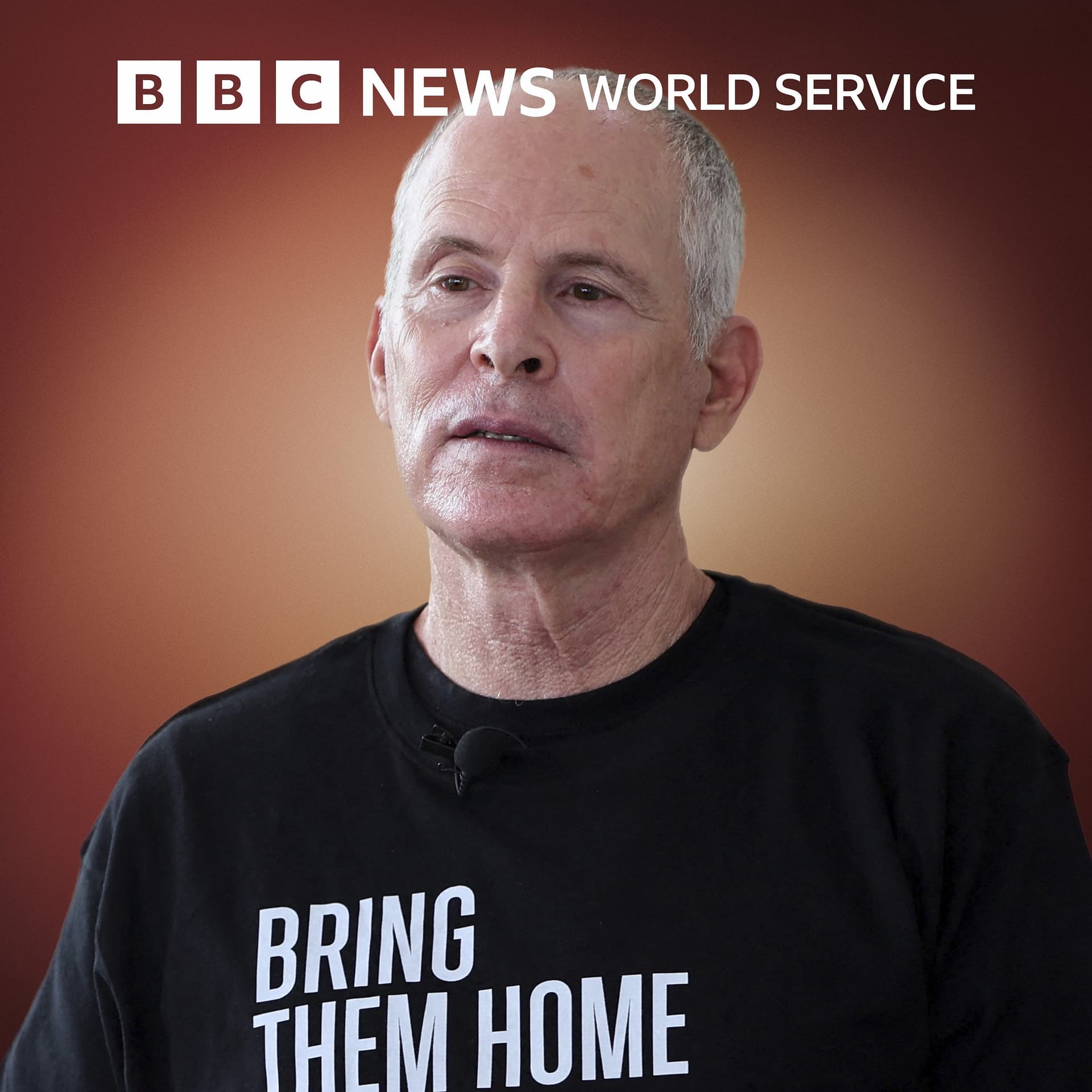
I pray for peace. Nick Beake speaks to released Israeli hostage Keith Siegel about his experience of captivity in Gaza, of the suffering he says he witnessed at the hands of Hamas and the moment he was released. Mr. Siegel, an American-Israeli, was captured by Hamas fighters in the October 2023 attack that marked the start of the conflict in Gaza. He was one of 251 hostages taken that day, in an assault that killed around 1,200 other people who were mainly civilians. Mr Siegel was released in February after nearly 500 days. His mother passed away while he was still in captivity. You’re going to hear his accounts about his time as a hostage. Some listeners may find his descriptions disturbing. He talks about desperate living conditions in Gaza, as well as extreme levels of violence to which he says he and other hostages were subjected. Hamas has said it doesn't abuse anyone in captivity. Mr. Siegel is calling for all 50 remaining hostages to be freed - up to 20 of them are still believed to be alive. Talks on a ceasefire proposal that would include a hostage release deal are ongoing between Israel and Hamas. The Israeli military launched a campaign in Gaza in response to Hamas's 7 October 2023 attacks. More than 57,000 people have been killed in Gaza since then, according to the territory's Hamas-run health ministry. The Interview brings you conversations with people shaping our world, from all over the world. The best interviews from the BBC. You can listen on the BBC World Service, Mondays and Wednesdays at 0700 GMT. Or you can listen to The Interview as a podcast, out twice a week on BBC Sounds, or wherever you get your podcasts. Presenter: Nick Beake Producers: Ben Cooper, Kyla Herrmannsen, Katie Law and Lucy Sheppard Editor: Nick Holland Get in touch with us on email TheInterview@bbc.co.ukand use the hashtag #TheInterviewBBC on social media.
(Image: Keith Siegel. Credit: Jack Guez/Getty)