In short
Podcast Episode Summary: Sergei Tikhanovsky: Belarus will be free
Podcast Information
- Title: The Interview
- Description: Conversations with influential figures shaping our world, including leaders in business, politics, finance, sport, and culture.
- Episode Air Date: [Insert Date]
Episode Overview
- Host: Sarah Rainsford
- Guest: Sergei Tikhanovsky, Belarusian opposition activist
- Context: Tikhanovsky shares his experiences of imprisonment and his views on the state of democracy in Belarus after being released from solitary confinement.
Key Themes and Discussions
Imprisonment and Conditions
- Solitary Confinement:
- Tikhanovsky spent over five years in isolation, with the last two and a half years in complete solitude.
- Describes severe conditions including lack of basic necessities (food, hygiene products) and confinement in small cells.
- Punishment cells had harsh conditions; he often performed physical exercises to cope with cold and confinement.
- Psychological Impact:
- Managed to keep his thoughts of family at bay to survive mentally.
- Upon release, he experienced overwhelming emotions reuniting with his family, especially his children who did not recognize him.
Political Landscape and Personal Politics
- 2020 Presidential Election:
- Tikhanovsky was detained before he could run against President Lukashenko in the 2020 elections.
- His wife, Svetlana Tikhanovskaya, took his place as an opposition leader and fled to Lithuania after the elections were disputed.
- Views on Leadership:
- Clarified that neither he nor his wife desired the presidency; his goal was to demonstrate the impossibility of fair elections in Belarus.
- Emphasizes the need for a democratic Belarus over personal political ambitions.
Release from Prison
- Circumstances of Release:
- His release was tied to a meeting between Lukashenko and a U.S. envoy, following discussions about the release of political prisoners.
- Tikhanovsky was pressured to sign forms to gain release, yet he refused to admit any guilt for the charges against him.
- International Relations:
- Discussed the implications of U.S. involvement and conditions in Belarus, suggesting that diplomatic relations may have influenced his release.
Future Aspirations
- Belarusian Democracy:
- Remains hopeful for a democratic future in Belarus, despite seeing the significant influence of Russia under Putin.
- Acknowledges the hardship faced by political prisoners and expresses commitment to advocating for their freedom.
- Role of Family:
- Focused on re-establishing his role as a father and integrating back into family life after years of separation.
Key Takeaways
- Human Rights Violations: The episode sheds light on the harsh realities faced by political prisoners in Belarus.
- Family and Resilience: Tikhanovsky's reunion with his family illustrates the personal toll of political activism.
- Hope for Change: Despite the grim political climate, there is a sense of hope for eventual democratic reform in Belarus.
Conclusion This episode of *The Interview* highlights the struggles and resilience of Sergei Tikhanovsky, a significant figure in Belarusian opposition politics, as well as the broader implications for democracy in Belarus. His story serves as a reminder of the ongoing fight for freedom and the personal sacrifices made by activists in authoritarian regimes.
Contact Information
- Email: TheInterview@bbc.co.uk
- Social Media Hashtag: #TheInterviewBBC
Written by AI. May contain mistakes. Listen to the episode to check what was said.
Transcript
Automatic transcript. May contain errors.0:00This BBC podcast is supported by ads outside the UK. If journalism is the first draft of history, what happens if that draft is flawed? In 1999, four Russian apartment buildings were bombed, hundreds killed. But even now, we still don't know for sure who did it. It's a mystery that sparked chilling theories. I'm Helena Merriman, and in a new BBC series, I'm talking to the reporters who first covered this story? What did they miss the first time? The History Bureau, Putin and the apartment bombs. Listen on bbc.com or wherever you get your podcasts.
0:59Monday to Friday. For interviews with sports stars, big talking points and the stories behind the headlines. More Than The Score from the BBC World Service. Listen now, search for More Than The Score wherever you get your BBC podcasts.
1:20Hello, I'm Sarah Rainsford, the BBC's Southern and Eastern Europe correspondent, and this is the interview from the BBC World Service. The best conversations coming out of the BBC. People shaping our world from all over the world. There have been so many disagreements between me and my family. Putting on a show, that is what it means to be Lady Gaga. Only the things that you can't solve with government and private sector is where you bring philanthropy in. There's no place in the world where women are equal. Every generation, every generation has to fight to maintain democracy. For this interview, I meet former Belarusian political prisoner and activist Sergei Tikhanovsky in exile in Lithuania.
2:10You're going to hear about his five years of solitary confinement in a high-security jail before his unexpected release that came after a meeting between the authoritarian leader of Belarus, Alexander Lukashenko, and a special envoy from America. Tichonovsky tells me about the time he spent in total isolation, describing the cold and cramped conditions. In 2020, he had planned to run against Lukashenko for president, but he was detained before the vote. He was then sentenced to serve 18 years in prison on charges of organising mass protests. His trial was condemned as a sham by international observers.
2:51Tichalovsky's wife Svetlana then stood in for Sergei in the 2020 elections. But after Lukashenko claimed a disputed victory, she fled to Lithuania with her children, fearing for her safety. A Belarusian court then convicted her of charges including high treason and conspiracy to seize power. Neither Svetlana nor I wanted to be president. I was using the chance to show that it's impossible to get elected, to win democratically in Belarus, to show that the elections are falsified. Remember, they didn't even let me register. They locked me up to stop me. It's a nightmare. I don't have any claims on Svetlana's role.
3:33I never planned to be president. Svetlana's work is diplomacy. That's her temperament. I am less suited to that kind of work. I am a leader people will follow, but that doesn't mean that they want to put me in the presidency. I don't need the post of president. I need democratic Belarus. I don't care who will be president and Svetlana is the same. Welcome to the interview from the BBC World Service with Sergei Tichonovsky.
4:08I hope in a couple of weeks I'll be myself again. I think there will probably still be tears when I see or remember things. But I'll get back into working rhythm. I think I'll get my energy back. Now I'm starting to walk a bit. When you're in a small cell, you don't move much. I mainly read books, so I was sitting down most of the time. Here, you don't really move far, but if you add it up, it's actually a lot of steps in the day. By evening, sometimes my head is spinning and I feel weak. My body is not used to walking so much. It seems like it's not much. I'm not running or doing complicated exercises, but even so, it turns out it puts big stress on the organism.
4:56Can you tell me just a bit more about the conditions in prison? So you were held for more than five years, and a lot of that time is in solitary confinement.
5:08All the time, apart from two weeks, I was alone in a cell. All the time. More than five years. For the last two and a half years, I was in a complete isolation. They even kept the cells next to me empty so no one could hear me. My cell was at the end of a prison corridor. Even if I would shout it, no one would have heard me from there. I didn't get a single letter in almost three years. They wouldn't let me make any calls for almost three years. They didn't let any lawyer in for almost three years. My complaints to prosecutors, to the court, none of it went through. I wasn't allowed to have tea, coffee, any basic necessities, no toothbrush, paste, soap, nothing.
5:49Every prisoner is allowed to spend a certain amount at the shop every month to buy some things, but I got nothing. It was the same for many other political prisoners, the ones they think most dangerous or want to destroy in those prisons. I don't know what it is that's driving them. What was it physically like in the cell? When they were punishing me, then the cell could be three square meters, including a toilet. It's probably hard for Europeans to understand, but it was a hole in the concrete floor. I would go from a terrible punishment cell like that to a more modern cell that was six square meters.
6:27That's also a punishment cell. the biggest one I was in was about 18 square meters where I could even walk around a little in theory it is for four people but they kept me there alone in the past years I spent more of the time in those more spacious cells 16 or 18 meters it seems like someone had already decided to look after my health in case I was released so conditions were more humane but even so they still kept putting in the small punishment cell for 15 days, 30 days at a time. A small cell where there is no mattress, no sheets, no pillow. You have to lie on wooden bunk. It's really cold.
7:07To keep warm you have to get up at night. It was May when I was last held in a cell like that and at night I would do 450 press-ups and 450 squats in different sets. Once your muscles warmed up you'd lie down and try to fall asleep. You'd sleep for an hour, then your legs and arms would be cold again, so you'd get up all drowsy and start doing the push-ups and squats all over again. That's how the whole night would pass. You're not allowed to lie down between 6 a.m. to 10 p.m. They fix the bunk to the wall and there is just a small chair in the middle of the cell that's cemented to the floor. They put you in punishment cell for any tiny things they see as a violation, even a tiny bit of dust in the cell, or even if there is no dust at all, and they extend your time in that punishment cell in the same way whenever they see some dust, a cobweb.
8:03They invent whatever they want. I try to keep to the rules, not violate anything, but they even extended my stay in the punishment cell for not doing the cleaning on time. You have to do the cleaning four times a day, at a certain time, twice for an hour and twice for half an hour. But in prison you have no clock. So how are you supposed to know the time? The boss of the prison and his deputy would look into my cell and I would say, I don't know when I am supposed to clean. And he would say, use the stars. But I couldn't see the stars. There was no window. He said, that's your problem. And then they would punish you because you don't clean on time.
8:43Can you imagine?
8:48Were they trying to break you? Yes, they told me they would keep extending my term all the time, increasing it. And they did. At first they gave me 18 years in prison and then I did 18 months for bed cleaning. They would say to me, you will die in prison. We're going to keep extending your time in constantly and you will die here. You will never get out. You explained how you coped physically with the conditions, but you spent five years on your own and two years in complete isolation. How did you cope mentally? How did you keep going? What did you cling to to survive? life.
9:38In prison, I never cried. Now, whether from joy or memories of what happened to me, I well up with emotions and I can't hold it back. There, I realized that I need to put all my personal thoughts about my family and children to one side. I knew they were abroad and we're all okay. So I had to put that to one side and just wait for the moment of my release and read books. It was like I was in a reading room, because if you start worrying about how your loved ones are doing every day, you just won't survive. That's why when I saw Svetlana and the children, it really hit me so hard. I had pushed it all out of my mind for so many years in order to cope that I was overwhelmed with emotions.
10:25What was it like, that moment of reunion?
10:30With Svetlana, as soon as we crossed into Lithuania, they brought me coffee and I called my wife. They had already told her, I think, but she was overwhelmed with emotions like me. I said, I'm free, I will see you soon and I want to hug you, I love you. She said something similar. We only saw each other two hours or so later. I think everyone has seen those images of us both hugging. As for my children, our son is older and Svetlana warned him that his dad was coming home. But she didn't tell our daughter. My daughter hadn't seen me since she was four years old. My daughter didn't see me since four years old.
11:23She didn't recognize me.
11:30She broke into tears, threw herself into my arms, and we spent a lot of time hugging each other. Now everything is okay. They're happy that mommy and daddy, the whole family, is back together. They have been telling me what's been going on in their lives. They are always asking me to play with them. I make their breakfast, take them to school. I want to get involved in their education to find out what they like. I don't even know what their interests are. We've been apart so long. But I think we'll find a common language and I'll be able to be a parent again and everything will be great. In summer we want to go to the seaside to breathe fresh air, swim and for all the family to be together.
12:21You're listening to The Interview from the BBC World Service. people shaping our world from all over the world. If journalism is the first draft of history, what happens if that draft is flawed? In 1999, four Russian apartment buildings were bombed, hundreds killed. But even now, we still don't know for sure who did it. It's a mystery that sparked chilling theories. I'm Helena Merriman, and in a new BBC series, I'm talking to the reporters who first covered this story? What did they miss the first time? The History Bureau, Putin and the apartment bombs. Listen on BBC.com or wherever you get your podcasts.
13:24Monday to Friday. For interviews with sports stars, big talking points and the stories behind the headlines. More Than The Score from the BBC World Service. Listen now, search for More Than The Score wherever you get your BBC podcasts.
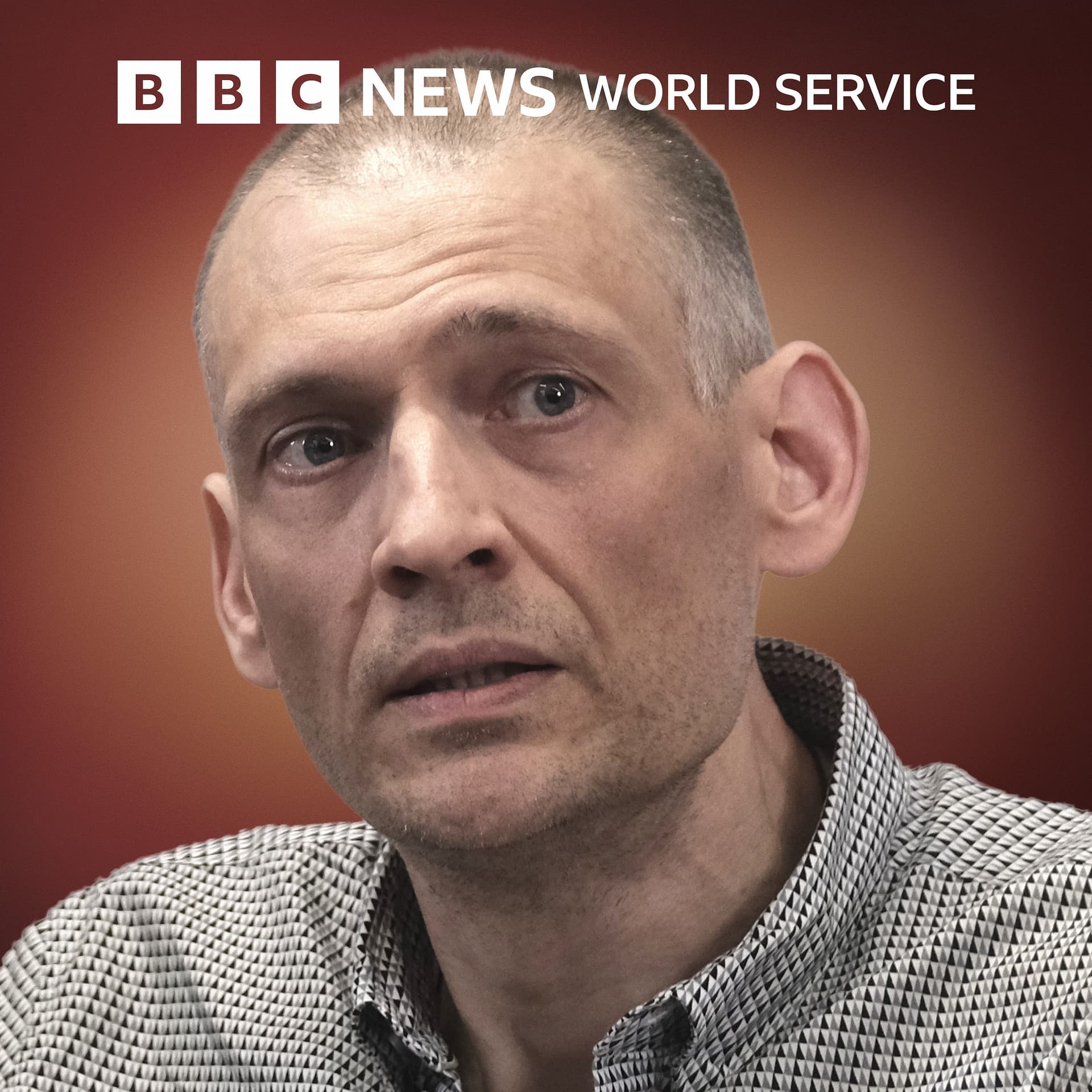
13:45For this episode of The Interview, I'm speaking to the Belarusian opposition activist Sergei Tikhanovsky after his release from solitary confinement. He is one of many political prisoners I've spoken to who've also been held in dire conditions in Belarus. I met Sergei in Lithuania because he's now in enforced exile. I didn't recognise him at first. His cheeks are hollow and his bones are really prominent, but his character and his energy are all still intact. And after five years of total isolation, he can't stop talking now. The words come tumbling out, like he's making up for all those long months of silence.
14:26It was interesting to see him together with his wife too, of course, because Svetlana's now the main politician in the family, stepping in as opposition leader when Sergei was arrested. They seem fine with that though, just delighted to be reunited. Okay, let's return to my conversation with Sergei Tikhanovsky. Can you tell me a bit about how you came to be released? Did you know it was coming? You were on your own in the cell. How did you find out that you were about to be released after five years?
14:56About a year ago, an aide to the deputy prosecutor started going round all the prisons and proposing, even recommending insistently to all political prisoners that they write to the dictator and request his pardon. He had a whole list of names. he talked 10 or 15 minutes with everyone else but with me it was three hours he said they will let you out it's already decided just write the statement why are you sitting here he tried to convince me it was last august he came to me on august 20th he said he was going around all the prisons which means the process of freeing the political prisoners began under biden lukashenko began releasing Belarusian political prisoners in August, 30 or 40 at a time.
15:46Supposedly, these were people who had accepted their guilt. But you see what that looks like. They went round the prisons and they extracted that request for a pardon from people by persuading them. Did you consider signing up, requesting a pardon to get out? No, it was absolutely out of the question. If I had done the crimes, then I would have admitted that in court and got a short term, six years, not 18 years. Because if you recognise your guilt, you get a lesser sentence. But I didn't do these crimes. But they'd given you 18 years in prison. You were facing 18 years in prison. You still didn't consider signing.
16:30No, no, no. First of all, it would have been a betrayal. And as a Christian, I couldn't have done that. And my wife, if I admitted to being a criminal, I would have betrayed her. I'm no criminal. I would have betrayed those who were fighting for me. It was out of the question. There was no argument that would have made me do that. If they gave me 18 years, then fine, 18 years. If they would give me 30 years, then I would have served the 30. But I couldn't say that I'd committed crimes if I didn't do them. That was out of the question. Then in January on 14th, I had been taken out of the punishment cell and they sent me to the showers.
17:13But it wasn't the normal day. You only get a shower on Wednesdays once a week for 10 minutes. But they said, get ready, you're going to the showers. So I realized it was part of the release process because they had washed me, I had been shaved and changed. Then they took me out of the cell, underground, to another room with two chairs, and in comes Roman Protashevich, the same one who was arrested from the Ryanair flight that was forced to land in Minsk. He said, write and request a pardon. I explained why I couldn't do that. He said, okay, then write a letter saying you don't object to being sent abroad.
17:51I said I wouldn't write anything. They took me back to my cell and five minutes later the doors opened and the guards burst in. Get out! And they took me back through the basement and I thought I was going to get beaten. Nothing like this had happened before. They threw me into a room and there were two KGB men sitting there and they started yelling at me and swearing. We'll kill you, beat you, why won't you sign? They started to pressure me. I started to explain and they said at least write a statement that you don't mind being sent out of the country they said either you write that and you'll get out at some point or you don't write it and it's not the punishment cell you'll go back to we'll put you in with people who beat you up and the punishment cell will be nothing in comparison so I sat there thinking and I thought why not go abroad see my family again, improve my health.
18:44I saw no problem, so I said, okay, I'll write that, and I put the date, Jan 14th. They started telling me all sorts of propaganda about Svetlana, that she's a bad person who had committed all sorts of crimes, that her office were all bad people, all sorts of nasty things. So I said, I know. I convinced them that I believed their propaganda. They thought they would let me out of prison and I would introduce some kind of discord into the ranks and then they could use that situation for themselves.
19:21Why do you think they released you now, you personally? Why do you think, because you are the husband of Sotlana Tikhanovska, you are the person who tried to run for president against Lukashenko, you are one of his fiercest critics, why have they let you out now? Because Donald Trump named me and said I had to be in the first 14 people released. Why did Donald Trump name me? First of all, I am eternally grateful for that. I think Donald Trump doesn't know all the names of all our political prisoners. If he knows anyone, then I guess he knew Svetlana Tikhanovskaya and knew that her husband was in prison.
20:00So he said, okay, but Sergei Tikhanovsky had to be in the list. That's what I think happened. Why do you think Lukashenko agreed to this? What do you think he's getting from this? It's very simple. For about five years, there were no US diplomats in Belarus. And now they came. Yes, not the Secretary of State. It was a lower level, but they came all the same. So Lukashenko could show he was starting some kind of cooperation, a dialogue. And when they went, the Americans got to take some political prisoners with them, including me. That was the price, the start of contact with Lukashenko, because no one had been engaging with him.
20:44But you're talking about removing sanctions from Lukashenko in return for freeing political prisoners. Is that a price you think is worth paying? No, it's not right. Donald Trump is a businessman. He won't give more than is needed. He gave Lukashenko the chance to start talking, which means he gave nothing, and they freed me and some others. He told Belarus, maybe we'll start communicating with you. But Lukashenko actually got nothing in return, or we don't know of anything he got. Your wife is now the leader of the opposition. That was a role that you wanted. How do you cope with that? How do you feel about that?
21:26In fact, neither Svetlana nor I wanted to be president. I was using the chance to show that it's impossible to get elected, to win democratically in Belarus, to show that the elections are falsified. Remember, they didn't even let me register. They locked me up to stop me. It's a nightmare. I don't have any claims on Svetlana's role. I never planned to be president. Svetlana's work is diplomacy. That's her temperament. I am less suited to that kind of work. My character is totally different. I'm like an engine, a fire. People come up to hug me. I'm a leader people will follow, but that doesn't mean that they want to put me in the presidency.
22:08I don't need the post of president. I need a democratic Belarus. I don't care who will be president and Svetlana is the same. You went to prison because you wanted an independent, democratic Belarus. Do you think that is possible now? I was in isolation, and I need to understand what the situation is now. But I personally believe in a democratic Belarus and that we can't do it. I believe that. And there are many ways to achieve it, including some that don't depend on us. The USSR collapsed in a day, for example. Putin's empire might collapse the same way, and then Belarus will be free. The empire of Lukashenko could collapse with the same result.
22:55and that's not to mention what I want to do and what we will do. So I think we will achieve our aim one way or another and I will try to make that happen sooner. But I can say that Putin is our common enemy with Ukraine and unless we beat Putin's regime, he won't let us have free elections here. He doesn't even like Lukashenko but he's a puppet. He does everything Putin wants. A president who's been doing what's needed for 30 years. So until we defeat Putin's regime, I think it will be hard to change anything in Belarus, because Putin will send in the troops like he did in Ukraine. So we will try to bring change, and I have some ideas, but it's a serious issue.
23:39My first goal is to free the political prisoners, though, because I know myself what they're going through, and that's a nightmare.
23:50What was the worst thing for you?
23:57The hardest? The hardest for me, for some reason, was the restriction on free speech. When you can't speak or write, when you have no one to talk to, you're just trapped in that cell. I think that's the worst. Not the restriction on movement, but the restriction on free speech. That was the hardest, the thing that hurt the most. I didn't recognize you when I saw you. Physically you've changed hugely. Have you changed as a person as well? No, no, my character is the same. Yes, physically I'm half the size and half the weight. You can see how thin my face is, but my spirit is not broken. Maybe it's even stronger if that's possible.
24:40I'm the same person I was in the mood to fight, not even to fight, but for victory. If before I could imagine the crimes of this regime, now I know them for myself. And I know that we have to fight that because they're crippling our nation, crippling it. And we have to stop that as soon as possible.
Read the full transcript
25:06Thank you for listening to the interview from the BBC World Service. You'll find more in-depth conversations on The Interview wherever you get your BBC podcasts, including episodes with the multi-award-winning singer and songwriter Lady Gaga and Majid Takhsharanchi, Iran's deputy foreign minister. Until the next time, bye for now.
25:37If journalism is the first draft of history, what happens if that draft is flawed? In 1999, four Russian apartment buildings were bombed, hundreds killed. But even now, we still don't know for sure who did it. It's a mystery that sparked chilling theories. I'm Helena Merriman, and in a new BBC series, I'm talking to the reporters who first covered this story. What did they miss the first time? The History Bureau, Putin and the apartment bombs. Listen on BBC.com or wherever you get your podcasts. From the Winter Olympic and Paralympic Games to the European Athletics Championships. The 2026 sporting calendar is packed full of big events.
26:21Keep up with all the action with more than the score. the podcast that goes beyond the score sheet. Join expert BBC sports journalists every Monday to Friday for interviews with sports stars, big talking points and the stories behind the headlines. More Than The Score from the BBC World Service. Listen now, search for More Than The Score wherever you get your BBC podcasts.
From the publisher
Sarah Rainsford speaks to Belarussian opposition activist Sergei Tikhanovsky about his imprisonment after challenging the country’s authoritarian leader, President Lukashenko. He spent five years of solitary confinement in a high security prison in Belarus before being unexpectedly released this year, following a meeting between Lukashenko and an American special envoy.
Tikhanovsky had planned to run against the Belarussian leader in the 2020 presidential election, but was detained before the vote.
A year later, he was sentenced to serve 18 years in prison, convicted on charges of organising mass protests against President Lukashenko. His trial was condemned as a sham by international observers.
Tikhanovsky’s wife, Svetlana, stood in for him in the 2020 election. But the day after Lukashenko claimed a disputed victory, she fled to Lithuania with her children fearing for her safety. In her absence, she was convicted by a Belarussian court on charges including high-treason and conspiracy to seize power.
Tikhanovsky is now reunited with his family in Lithuania, where he is living in enforced exile following his release from prison.
Thank you to Sarah Rainsford, Davide Ghiglione and Franceso Tosto for their help in making this programme. The Interview brings you conversations with people shaping our world, from all over the world. The best interviews from the BBC. You can listen on the BBC World Service, Mondays and Wednesdays at 0700 GMT. Or you can listen to The Interview as a podcast, out twice a week on BBC Sounds, or wherever you get your podcasts.
Presenter: Sarah Rainsford Producers: Lucy Sheppard, Ben Cooper and Arsenii Sokolov Editor: Damon Rose
Get in touch with us on email TheInterview@bbc.co.uk and use the hashtag #TheInterviewBBC on social media.
(Image: Sergei Tikhanovsky. Credit: Valda Kalnina/EPA-EFE/Shutterstock)