In short
Podcast Summary: The Interview - Sir Jim Ratcliffe, Billionaire Businessman
Overview Podcast Title: The Interview Episode Title: Sir Jim Ratcliffe, billionaire businessman: Making Manchester United great, again Presenter: Dan Roan Producers: Clare Williamson, Mantej Deol & Gabriel May Editor: Sam Bonham
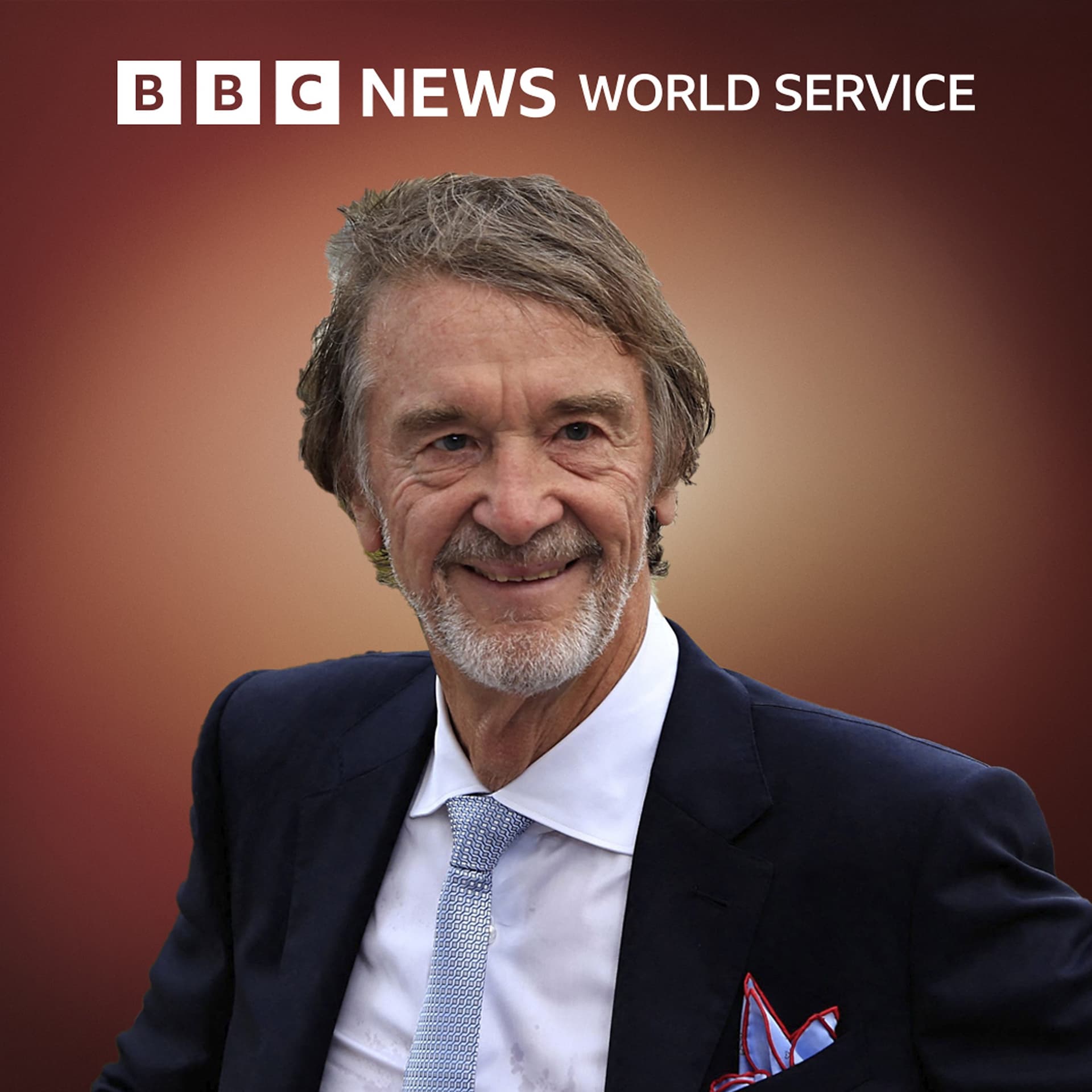
Episode Description: In this 20-minute episode, Dan Roan interviews Sir Jim Ratcliffe, billionaire businessman and co-owner of Manchester United Football Club. Ratcliffe discusses his plans to transform the club, addressing both on-pitch performance and financial issues.
Key Themes and Discussions
Background on Sir Jim Ratcliffe
- Personal History: Born into a modest family, lifelong Manchester United fan.
- Business Success: Founded INEOS in 1998, a chemicals business with investments in various sports including cycling and Formula One.
- Role at Manchester United: Became co-owner in 2022, investing over £1 billion for nearly a 30% stake.
Current State of Manchester United
- Challenges: The club faces significant obstacles, both in terms of performance and financial stability.
- Estimated debt around £1 billion.
- Job cuts and increased ticket prices have caused unrest among fans.
- Recent Performance: The club has not performed at expected levels since Sir Alex Ferguson's retirement in 2013.
Ratcliffe's Vision and Strategies
- Goal: To make Manchester United the most profitable football club in the world by 2028, coinciding with the club's 150th anniversary.
- “Mission 21”: Aiming for a 21st Premier League title by 2028.
- Ratcliffe cites other clubs’ successful rebuilds (e.g., Liverpool, Arsenal) as inspiration.
Financial Situation
- Debt Management: Ratcliffe acknowledges that the club's spending has outpaced earnings, leading to financial difficulties.
- Cost-Cutting Measures:
- Plans to streamline operations and reduce headcount to manage costs effectively.
- Acknowledges necessity for ticket price increases due to financial constraints.
Fan Reactions and Criticism
- Fan Anger: Ratcliffe expresses understanding of fans’ frustrations regarding job cuts and rising ticket prices.
- Communication with Fans: He acknowledges past mistakes but remains focused on long-term goals.
Future Steps and Improvements
- Management Changes: Establishing a new management team to steer the club back to success.
- Stadium Development: Discusses potential regeneration projects for Old Trafford to create a central hub for growth.
Broader Context
- Economic Challenges: Ratcliffe highlights the difficulties facing INEOS and related impacts on Manchester United. Current economic pressures include rising energy costs and significant debt in the business.
Conclusion
- Sir Jim Ratcliffe remains optimistic about the future of Manchester United, emphasizing a structured approach to resolve ongoing issues while revitalizing the club's legacy and profitability.
Contact Information
- Email: TheInterview@bbc.co.uk
- Social Media Hashtag: #TheInterviewBBC
---
Key Takeaways
- Transformation is Crucial: Ratcliffe is committed to instigating change despite facing backlash.
- Financial Restructuring: Acknowledgment of financial mismanagement in the past with a clear plan for recovery.
- Fan Engagement: Ratcliffe's understanding of fan sentiment is critical, yet he stands firm on decisions he deems necessary for the club's future.
- Long-Term Vision: A comprehensive strategy is in place, focusing on both financial health and competitive success on the field.
Written by AI. May contain mistakes. Listen to the episode to check what was said.
Transcript
Automatic transcript. May contain errors.0:00This BBC podcast is supported by ads outside the UK. If journalism is the first draft of history, what happens if that draft is flawed? In 1999, four Russian apartment buildings were bombed, hundreds killed. But even now, we still don't know for sure who did it. It's a mystery that sparked chilling theories. I'm Helena Merriman, and in a new BBC series, I'm talking to the reporters who first covered this story. What did they miss the first time? The History Bureau Putin and the apartment bombs Listen on bbc.com or wherever you get your podcasts From the Winter Olympic and Paralympic Games To the European Athletics Championships The 2026 sporting calendar is packed full of big events Keep up with all the action with More Than The Score The podcast that goes beyond the score sheet Join expert BBC sports journalists every Monday to Friday For interviews with sports stars, big talking points and the stories behind the headlines.
1:07More Than The Score from the BBC World Service. Listen now, search for More Than The Score wherever you get your BBC podcasts.
1:19Hello, I'm Dan Rowan, sports editor for BBC News, and this is the interview from the BBC World Service, the best conversations coming out of the BBC. people shaping our world from all over the world i will come back to russia i will participate in the elections there's an increase in violence according to the coca crop there is no place in the world where women are equal i will give away the vast majority of my money it's my full time focus for the rest of my life for this interview i meet sir jim ratcliffe the billionaire businessman and co-owner of Manchester United Football Club. He invested more than a billion dollars for almost a 30 % stake just over a year ago, with the club in a poor state according to many, both on and importantly off the pitch.
2:10The American Glazer family have owned it since 2005, but Sir Jim's INEOS group has now taken control of both the men's and women's football operations. The club's legendary former manager, Sir Alex Ferguson, who guided them to the Premier League title 13 times, stepped down in 2013 after 27 years in charge. Those glory days seem a long time ago. Initially, supporters welcomed the arrival of a boyhood fan, hoping Sir Jim's involvement would lead to the team returning to their winning ways. But the changes he's implemented haven't gone down well. Over the last year, he's cut hundreds of jobs and raised some ticket prices mid-season.
2:50I am prepared to be, and I can deal with being unpopular for a period of time. Manchester United has come off the rails. We need to get it back on the rails, and I believe what we're doing will put it back on the rails. He tells me his aim is simple. He's going to make United a successful and profitable football club. Sir Jim Ratcliffe's petrochemicals company, Ineos Group, is also involved in other sports. In recent years, it's invested in cycling, along with Formula One motor racing and sailing. He's a disciplined fitness enthusiast himself. He's made expeditions to the North and South Poles.
3:25He's run the extreme Sahara Marathon. Let's take a run through his mind and workings. Welcome to the interview from the BBC World Service with Sir Jim Ratcliffe.
3:39Sir Jim, good to see you. Thank you for your time. How would you describe your first year as co-owner of Manchester United? Well, I think we are sort of roughly where we thought we would be, but it's obviously been quite challenging because there's been a lot to do and quite a lot of issues in the club that we need to resolve. You said it's kind of where you expect it to be, but is the challenge facing you even greater than you anticipated? Yeah, I mean, the nature of the challenge is what we thought it would be, but the scale of it probably is slightly bigger. But we're sort of at the moment in the process of change, because since Sir Alex retired in 2013, the club's not performed at the level that's been expected of it, and there are reasons for that, clearly.
4:26And I think unless you want that to continue, there has to be a period of change, and we're in the middle of a period of change at the moment. And nobody likes change, it's uncomfortable, and we're in the midst of it. You've said that you're aiming for the Premier League title again within three years, by 2028. You've dubbed it Mission 21, a 21st title. When you look at the table, does it seem like Mission Impossible rather than Mission 21 right now? No, I don't think it's Mission... I think it's good to have goals and objectives, and it's quite good to put a time... rather than just a bland statement that at some stage we're going to win the Premier League again.
4:58So I think putting a timetable is fine. Obviously, it's the 150th anniversary of what I think is the world's greatest football club in 2028. So I think it's a very fine target. If I look at Liverpool, when Klopp arrived in 2015 with Michael Edwards and Ian Gray on the data side, they rebuilt the squad over 15, 16, 17 and 18. And then they won everything in 19, 20 and 21. And Michael Arteta has been there for four or five years now. And you can see Arsenal's in a very different place than where it was five years ago. So I think we're talking about three years. Maybe that's slightly ambitious, but I think it is the 150-year anniversary, so it's a good target for us.
5:36And we're here, you know, we have to measure ourselves, you know, whether we're doing the things that we said we would do, which is to get United back to where it should be. Have there been times over the past year, Jim, where you've regretted investing in United? Regretted the transaction? Yeah. No, not at all. No, no. I think I didn't expect it to be a walk in the park. it's quite it's quite tough sometimes reading the press obviously but in a way I'd rather had I'd rather the press had to get me than Ruben the coach you know and you know I suppose you know I've stood out there and I've said I think we can make Manchester United great again so you know people are entitled to their opinions and in my view I think we are on the trajectory that I thought we would be on we're in a process of change at the moment we we put a new management team in place we didn't get that all right at the beginning obviously but I think today we've got a very good management team in place we're dealing with the financial issues in the club because the club has got financial issues and we need to address those and then we need to move on to the squad and recruitment and data analysis and those types of things so we are on the path that we anticipated we would be on you mentioned criticism it's been criticism as well as from the media but from fans to you'll have seen the protests before the match against Arsenal.
6:56Do you understand those fans' anger? Yeah, and I sympathise with them because Manchester United is not where it's expected to be. We're expected to be winning the Premier League and challenging for the Champions League. We're not there at the moment, but I think we need to get the house back in order before we can get back to our winning ways. That's a process. It's not a light switch. Just to give you an example, if you look at the players that we're buying this summer that we didn't buy, we're buying Anthony, we're buying Casemiro, we're buying Inanna, we're buying Hoyland, we're buying Sancho.
7:34These are all things from the past, but we've inherited those things, so we have to sort that out. For Sancho, who now obviously plays for Chelsea, and we pay half his wages, we're paying£17 million to buy in the summer. So it takes time for us to move away from the past into a new place in the future. To what extent are you still dealing with the problems of the past or after a year though is this on you to some extent now? Do any of us have to share some of the responsibilities? No no I just think if you're in a period of change it is disruptive and excuse the pun but just take people's eye off the ball a bit but we have got a club which was in a level of financial difficulty.
8:15Manchester United would have run out of cash by the end of this year by the end of 2025 after me having put$300 million in, and if we buy no new players in the summer, if we hadn't implemented all the cost programs and restructuring that we have done over the last 12 months. So we have to deal with all those things. And there's only so many things you can deal with at once. So we've got a new management team, we have to deal with the financial restructuring, and then we have to move on to the squad, data analysis, and moving forward. But we're in the process of change, and it's an uncomfortable period and it's disruptive.
8:54I do feel sympathy with the fans, but I'm not actually surprised at where we are in the league because Ruben's only got a certain size of squad he can do. Quite a number of those players are either injured or they're not available to him. A year ago you were seen as a saviour for the club by many fans, but now a lot of them also see Ineos as part of the problem and they will look to some of the decisions that have been made and the cost of some of those decisions financially. So do you accept that you've contributed to the predicament that the club finds itself in? I think we're not perfect and we're on a journey.
9:32And there have been a couple of errors along the way. But I think in the main, all the things that we're doing are the right things for the club. And the club's going to finish up in a very, very different place in three years' time to where it's been in the past, in my view. I think it will become the most profitable club in the world. In three years' time, Manchester United will be. That would be my prediction for Manchester United. It will become the most profitable club in the world. I think we may well finish up with the most iconic football stadium in the world. And I think we will finish up winning Silverware again.
10:04Can you tell us about the stadium? There's obviously been a task force looking at what the course of action is to do, whether to rebuild or replace Old Trafford effectively. What is the latest on that? The government has announced three major growth projects for the UK, of which the regeneration of southern Manchester is what they describe as a shining example of their growth strategy for the future. And it would be the biggest regeneration project in Europe, assuming it goes ahead. If it goes ahead, then we, I think, would underpin that with a new stadium. because with regeneration program, you need a nucleus, you need a heart to a regeneration program, otherwise it's just a housing estate.
10:49But I think if we were to build the most iconic football stadium in the world, which I think we will do, then that will attract the billion fans we've got around the world. They'll all want to come to Manchester. You're listening to The Interview from the BBC World Service. people shaping our world from all over the world. For this episode of The Interview, I'm speaking to Sir Jim Ratcliffe, the co-owner of Manchester United Football Club, and also the boss of the chemicals group INEOS. I found him focused with a clear sense of purpose. He says he can and will deliver success both on and off the pitch.
11:30Okay, let's return to my conversation with Sir Jim Ratcliffe. Just going back to the financial situation that the club was facing. Just again, for those who need to understand this, explain how precarious it was and what is the prospect going forward right now? How close was the club going bust? It's a simple equation. You spend more than you earn and that's the road to ruin. So for the last seven seasons, if we include this season, the club will have lost money. Seven consecutive seasons. And I think it totals about £330 million. It's about a third of a billion of cash that's gone out of the club in the last four or five seasons.
12:08The costs of running the club in the last seven years have increased by a hundred million pounds. The cost of the player wage bill in the last seven years or so is 100 million pounds and the increase in the revenue during that period is 100 million pounds. So that sum doesn't work. If you're losing money every year and at the same time you're increasing your costs of running a club It doesn't work and it ends in trouble. And that's where this club would have finished up at the end of this year. One of the reasons the fans were protesting was over ticket price increases. Yeah. Explain again why you had to do that and how you feel about that.
12:50Well, I don't get involved in the detail of ticket pricing. That's for the management of the club, not for me, really. My general principle is on ticket pricing. It should be fair, it should be affordable for the people in Manchester. and you know we do need to look after the under 16s and and the older people who don't have as much money but at the same time ticket income is a part of the overall income of the club we you know the club receives income from ticketing from merchandising and from tv and they're all major components of how much money we have to spend on new players and and the squad we have you know 49 000 season tickets and most of them are reasonably priced so are they likely to be more increases for season tickets next season?
13:35That's really at the end of the day for the management. We have some financial issues in the club and ticketing income is part of our income. So they have to look at ticketing income as one of the major sources of income. So I think there will be some modest price increases and I think we will try to hold the under 16 tickets at the prices that they sold last season. We'll try to. But management have got to deal with that and They've got a couple of weeks before they'll announce their final conclusions. Some would say the money you're going to make from these increases is dwarfed by the debt repayments as a result of the debt that the club is saddled with.
14:11And they would argue that fans are paying the price for the decisions of the past. Would you have some sympathy for that? I understand the comment, but the issue really isn't the debt. The issue is that if you spend£100 million more than you're earning every year, then. But tens of millions of pounds go out of the club currently each season to service that debt. Yeah it was about 35. Indeed. But the 35 was only 20 four or five years ago because the club hadn't lost 330 million in the last five years. So if you lose 330 million in five years the debt goes up by 330 million. That's the biggest issue.
14:46I know the interest costs money but in the great scheme of things. Our salary bill for the players is£250 million a year. So interest is one of the costs, but it's not the biggest cost in this club. It's not just the ticket price increases, is it, Jim? It's also the cost cutting that you've instigated, and obviously there's been hundreds of redundancies last year and hundreds more to come. Again, why is there a need to do that? Because many would argue that, again, the money you're going to save is dwarfed by the amount that's been spent on interest repayments, on player salaries and signings, on decisions around managers and executives?
15:26I mean, the simple answer is the club runs out of money at Christmas if we don't do those things. But ultimately, if you look at running a club in the South of Manchester United with income of about£650 million, you spend a part of that£650 million on operating the club and a part of it on the squad. Where do you want to spend the money? Do you want to spend it on operating the club or do you want to spend it on the squad? because if you spend it on the squad, you get better results. And at the end of the day, what's Manchester United here for if it's not to win trophies and silverware? What we want to do is invest in the best players in the world, if we can, rather than spend it on, I'm afraid, free lunches.
16:02But when it comes to cost-cutting, whether it is free meals, whether it's doing away with ambassadorial roles for Sir Alex Ferguson, for example, or former players, or cutting the costs there, is there a danger that you cross the line between efficiency and ruthlessness well i know i don't enjoy reading the newspaper very much these days i have to say but i think i know i know it's unpopular and you know this period of change is uncomfortable for people and some of the decisions we have to make are unpleasant but they are necessary to put manchester united back onto a stable foot But if people want to see Manchester United winning trophies again, we have to do all this stuff.
16:46I mean, it's difficult stuff, it's unpopular. It'd be much nicer if we didn't have to do it. But if we don't do it, we'll just finish up where we've been for the last 12 years. And I don't want to see Manchester United where it's been for the last 12 years. I want to see Manchester United where Real Madrid is, or where Manchester City has been, or where Liverpool is. That's where I want to see Manchester United. My only interest here is returning Manchester United back to greatness again, where it should be. But again, some would say, well, if we hadn't kept Eric Ten Hag and backed him to the tune of£200 million in the summer and then sacked him a few weeks later, if we hadn't paid millions to secure Dan Ashworth and then let him go a few months after he started, I mean, this is tens of millions of pounds worth of compensation costs that we've racked up.
17:31Probably£20 million now. Yeah, maybe we wouldn't need to cut as many jobs, cut these perks, raise ticket prices. But also remember, I put$300 million into the club in January, and that's all gone. That's$300 million. So, yeah, I agree. You know, the Eric Ten Hag, the Dan Ashworth decisions were errors. I think there were some mitigating circumstances, but ultimately they were errors. I accept that, and I apologize for that. But, you know, at the end of the day, we have to get the fundamentals right in the club. It will finish up being an organisation of about 700 people rather than 1 ,100 people.
18:10It will be lean, it will be efficient, it will be an elite sports organisation and it will be, hopefully, primed to take Manchester United back to where it should be, which is winning trophies. I think Ruben's a great coach. I think he's doing a great... In the circumstances in which he arrives mid-season, he's got a squad which is obviously quite depleted. He's doing a great job. I think we've got a good new coach. We've got the attitude and the atmosphere in the club is much better than it was when we arrived. I think there are many things that have changed. You referenced last February to me just how the chopping and changing of managers hadn't achieved any success.
18:46It was now time to look at the recruitment, the decision-making. Has it got to a stage with Ruben where you just have to stick with him now, come what may? It's not have to stick with Ruben. I think Ruben is an outstanding young manager. I really do. I think he's an excellent manager and I think he'll be there for a long time. But it's his historically bad, decades of passes. I think if you look at the squad he's got at his disposal, with the injury list he's got at his disposal, and he comes in mid-season where he's had no time to train the players in his style of play, I think he's done really well.
19:19And I think Ruben's doing a super job. How much money will he have to spend in the summer to reinforce the squad and get the players he needs to play in the way he wants to? or does that depend on selling players as well? It's a combination. There will be a budget for him, and I'm not going to reveal that, but obviously that budget changes depending upon who we may choose to sell because that would supplement the budget. A lot of fans were upset to hear that Kobi Meynu, Garnaccio, could be for sale because of the state the club was in financially. I know you're a fan of these players. No, no, no.
19:48We won't be selling players because of the state we are financially. The way we're resolving the financial issue is to cut the... I mean the club had got bloated so we've reduced that and we'll finish it with a lean efficient organisation. That's how we'll address the costs. And the player decisions will be decisions that Omar, Ruben and Jason and a bit me will make in the summer. And that will all be focused on how we're going to improve performance. Ruben Amram said that this may be the worst team in United history. Do you commend the brutal honesty of that or were you quite surprised that he said that?
20:23Because that could affect confidence of players. No, I know. I think, I mean, you have to sympathise a little bit with Ruben. He's come in mid-season. English is not his natural language. He's come into the Premier League, which we know is the toughest league in the world. And he's come into a squad which, you know, has got a series of injuries and other issues. And, you know, he's a, which most great coaches are, he's an emotional character. And, you know, no one's perfect. I mean, we've made, I've made mistakes, as you've, you know, you've brought out in this interview. And Ruben's not perfect, but I'm a great supporter of Ruben.
21:00What did you make of the hardline stance he took with Marcus Rashford? Did that have your support? Yep. And why was that stance taken? Because he wants a dressing room that is full of people who are totally committed to winning football matches. and he won't tolerate people who don't have 100 % that attitude. So this was about culture, was it, do you think? That's Ruben, really. And the players have to be in the same box. When it comes to the women's team, it has been suggested you don't care as much about that team as the men's team. Your focus is very much on that. How would you describe the situation from your perspective?
21:52I think it's a bit unfair. I mean, what I said at the beginning was my main focus is on the men's team because at the end of the day is what moves the needle at Manchester United because the women's team is much smaller than the men's team is. So if I have 650 million of income, 640 million comes from the men's team and 10 million comes from the women's team. So I suppose with my business background, you tend to focus on the bigger issues before you focus on the smaller issues. But the women's team wear the Manchester United brand, the Manchester United logo. So in that sense, they're every bit as important as the Manchester team.
22:28INEOS's general fortunes right now, Jim, what is the situation? We read about a lot of debt right now for INEOS, around£10 billion, I think, several times more than annual earnings, downgrades by credit rating agencies. and then you look at the fact that you're withdrawing, it seems, from some sports investments in terms of sponsorship. What is the state of play with INEOS right now financially in terms of the market? And could any issues you have impact United? INEOS is in a good place today, but it's not as good a place as it was three or four years ago. And Europe has become a very difficult place to do business for industrial companies because energy prices now in Europe are five times America, which is where a lot of our competition is.
23:09And we have huge levels of carbon tax in Europe and in America they have no carbon tax So I mean the two biggest industries probably in Europe are the chemical industry and the automotive industry and both industries are really Tough industries to be in at the moment. INEOS is clearly in the middle of the chemicals We're probably the largest chemical manufacturer in Europe and we're the only chemical manufacturer in Europe that's building something So we're building this huge facility in Antwerp at a cost of four and a half billion but times are tough and when times are tough you have to cut your class and so we've reduced we've not changed any of our sports ownership because we own things in sport like part of the Formula 1 team, Nice, Lausanne America's Cup and what have you but we have reduced the sponsorship and I know again that's unpopular it's difficult, it's unpleasant at times but you know sometimes you do have to be unpopular when times get tough Thank you for listening to The Interview from the BBC World Service.
24:07If you enjoyed today's programme, you can listen to The Interview wherever you get your BBC podcasts. Until the next time, bye for now.
24:33even now, we still don't know for sure who did it. It's a mystery that sparked chilling theories. I'm Helena Merriman, and in a new BBC series, I'm talking to the reporters who first covered this story. What did they miss the first time? The History Bureau, Putin and the apartment bombs. Listen on bbc.com or wherever you get your podcasts.
25:03Sporting calendar is packed full of big events. Keep up with all the action with More Than The Score, the podcast that goes beyond the score sheet. Join expert BBC sports journalists every Monday to Friday for interviews with sports stars, big talking points and the stories behind the headlines. More Than The Score from the BBC World Service. Listen now, search for More Than The Score wherever you get your BBC podcasts. Thank you.
From the publisher
Dan Roan, the BBC’s sports editor, speaks to Sir Jim Ratcliffe, billionaire businessman and co-owner of Manchester United Football Club. In this conversation, Sir Jim discusses the changes he’s implementing both on and off the pitch, as well as his vision to transform the iconic club into one of the world’s most profitable businesses. Born into a modest family, he’s been a lifelong Manchester United supporter. After studying chemical engineering at university he set up his chemicals business, INEOS, in 1998. He is still the Chairman and Chief Executive. INEOS has invested in cycling, Formula One motor racing and sailing. He’s been running Manchester United for just over a year and he himself admits its been a challenging 12 months. In this interview, you’ll hear how he is applying his business skills to turn the club – currently struggling both on the pitch and financially – into a success. With a substantial debt estimated at around one billion pounds, the club has seen job cuts and ticket price increases. Sir Jim acknowledges that the anger directed at him is understandable but remains focused on his goal: to make Manchester United the most profitable club in the world. The Interview brings you conversations with people shaping our world, from all over the world. The best interviews from the BBC. You can listen on the BBC World Service, Mondays and Wednesdays at 0700 GMT. Or you can listen to The Interview as a podcast, out twice a week on BBC Sounds, or wherever you get your podcasts. Presenter: Dan Roan Producers: Clare Williamson, Mantej Deol & Gabriel May Editor: Sam Bonham Get in touch with us on email TheInterview@bbc.co.uk and use the hashtag #TheInterviewBBC on social media.