In short
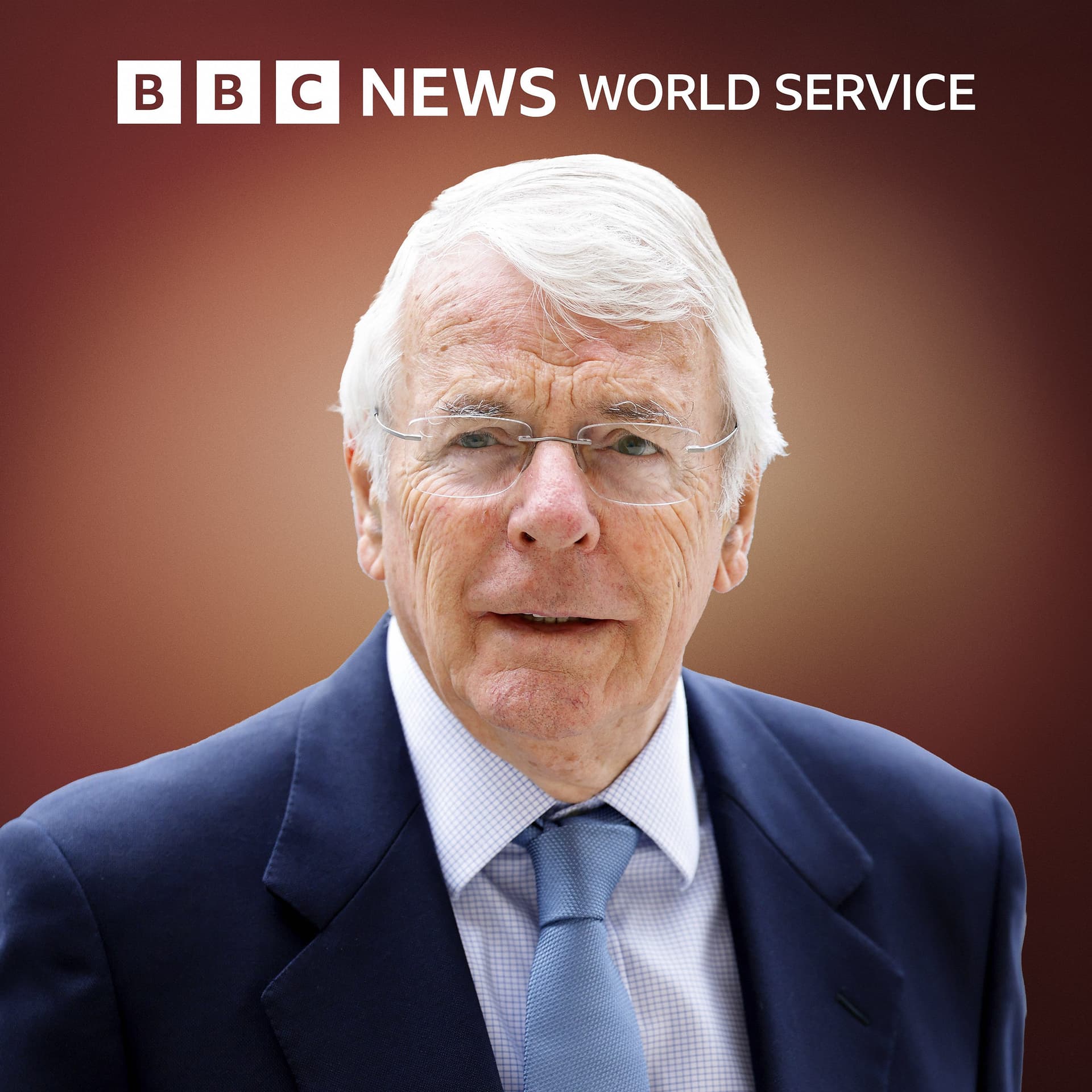
Podcast Episode Notes: The Interview - Sir John Major, former UK Prime Minister
Episode Overview Episode Title: Sir John Major, former UK Prime Minister - are the lessons of WW2 being forgotten? Presenter: Nick Robinson Producers: Ben Cooper, Lucy Sheppard Editor: Max Deveson Description: In this episode, Sir John Major reflects on the lessons of World War II, marking 80 years since VE Day, and discusses the current state of democracy and global politics.
---
Key Themes
- Reflection on World War II
- VE Day Significance: Sir John recalls the significance of VE Day and the joy it brought to the UK, contrasting it with the challenges that followed.
- Personal Memories: He shares vivid memories from the 50th anniversary, emphasizing the contributions of various groups during the war, including women, the Merchant Navy, and civilian defense forces.
- Democracy Under Threat
- Current State of Democracy: Major warns that democracy should not be taken for granted, highlighting a global retreat of democratic principles over the past 16-18 years.
- Examples of Tyranny: He discusses the situation in Ukraine as a vivid example of tyranny, underscoring the dangers of assuming democracy is secure.
- Lessons for Future Generations
- Importance of Historical Memory: Major expresses concern that future generations may forget the sacrifices made during WWII and the lessons learned.
- Need for Education: He stresses the need to educate younger people about the value of democracy and the realities of living under tyrannical regimes.
- Global Political Dynamics
- Ukraine and the Role of NATO: Major advocates for a strong NATO and support for Ukraine, framing it as a fight for freedom not just for Ukraine but for Europe as a whole.
- Preventing Appeasement: He warns against the dangers of appeasement, calling out suggestions from political figures for handing over territory as dangerous compromises.
- European Unity and Defense
- Strengthening European Defense: He discusses the importance of European countries working together for collective security, especially in light of uncertain American commitment to defense.
- Critique of Far-Right Nationalism: Major condemns the rise of nationalism and far-right politics in Europe, asserting the need for democracies to resist these trends.
---
Key Quotes
- "At the moment, people take democracy for granted. I don’t think it’s safe to do that."
- "If we hadn’t had NATO, who knows how much earlier this might have happened?"
- "We have to keep defending democracy, keep explaining to the next generation what it means not to be democratic."
---
Personal Anecdotes
- Veteran Encounter: Major recounts a poignant memory of a veteran who traveled to a VE Day commemoration only to be initially denied entry due to strict security protocols. The veteran was later recognized and honored, illustrating the importance of remembering those who served.
- D-Day Reflections: He shares a moving experience from the D-Day anniversary, highlighting the sheer number of veterans and their emotional connection to the event.
---
Conclusion Sir John Major emphasizes that the lessons of World War II are crucial for understanding and defending democracy today. He advocates for continued remembrance and education to ensure that future generations recognize the importance of democratic principles and the risks posed by tyranny.
---
Additional Information
- Listen to The Interview: Available on BBC World Service, twice a week.
- Engage with the Podcast: Email at TheInterview@bbc.co.uk or use the hashtag #TheInterviewBBC on social media.
Written by AI. May contain mistakes. Listen to the episode to check what was said.
Transcript
Automatic transcript. May contain errors.0:00This BBC podcast is supported by ads outside the UK. If journalism is the first draft of history, what happens if that draft is flawed? In 1999, four Russian apartment buildings were bombed, hundreds killed. But even now, we still don't know for sure who did it. It's a mystery that sparked chilling theories. I'm Helena Merriman, and in a new BBC series, I'm talking to the reporters who first covered this story. What did they miss the first time? The History Bureau Putin and the apartment bombs Listen on bbc.com or wherever you get your podcasts From the Winter Olympic and Paralympic Games To the European Athletics Championships The 2026 sporting calendar is packed full of big events Keep up with all the action with More Than The Score The podcast that goes beyond the score sheet Join expert BBC sports journalists every Monday to Friday For interviews with sports stars, big talking points and the stories behind the headlines.
1:07More Than The Score from the BBC World Service. Listen now. Search for More Than The Score wherever you get your BBC podcasts.
1:19Hello, I'm Nick Robinson, presenter of BBC Radio 4's Today programme and the Political Thinking podcast. This is the interview from the BBC World Service. The best conversations coming out of the BBC. People shaping our world from all over the world. I will come back to Russia. I will participate in the elections. There's an increase in violence according to the coca crop. There's no place in the world where women are equal. I will give away the vast majority of my money. It's my full-time focus for the rest of my life. For this interview, I met Sir John Major, former Prime Minister of the United Kingdom, who came to speak to us at the BBC's headquarters, Broadcasting House.
2:07You're going to hear Sir John's recollection of the end of the war, what it meant for him and his family, as well as the lessons he believes we should learn from the sacrifices that were made then, his concerns about the future of the NATO alliance, the future of Ukraine and the threat it poses to us all, if tyranny is, in his words, allowed to succeed. We actually have sight in Ukraine of what an anti-democracy led by a tyrannical leader is actually capable of doing. At the moment, people take democracy for granted. I don't think it's safe to do that. Democracy has been in retreat for the last 16, 17, 18 years in many parts of the world.
2:55And we have some people running countries at the moment who are far from democratic. They're tyrannical. Welcome to the interview from the BBC World Service with me, Nick Robinson. I, of course, was only two when the war ended and don't have any direct memories of it. But I do recall my parents talking about it later. And I recall one thing I think my mother said at the time, that VE Day must have been the most joyous day in the whole history of our country. And I think that is probably true. And what people perhaps didn't focus on then was what came after. The sheer change between before the war and after the war in the lives of so many families, the sheer difficulties that there were to face when you had a country that was all but bankrupt, if not actually bankrupt, where you had rationing on food still for another, Eight or nine years to come, people had no concept of how life would change.
3:55And it was a very tough few years following BE Day. Given what you say, which is inevitably there will be fewer and fewer people with direct memories, do you fear that we as a country may forget the lessons, may forget what that generation grew up knowing? I think there's a real risk of that. I mean, at the moment, people take democracy for granted. I don't think it's safe to do that. Democracy has been in retreat for the last 16, 17, 18 years in many parts of the world and we have some people running countries at the moment who are far from democratic. They're tyrannical and I think the people faced by Hitler realized they were facing tyranny and they fought together in order to ensure that tyranny was defeated but there is tyranny in different parts of the world.
4:45And we have to be as strong and as resolute about it now as they were then. How do you convince a younger generation who may, some, look at this and think this is just nostalgia? This is an older generation saying that everything was better before. This was the greatest generation. This was our finest hour. How do you convince them? Well, everything in our country wasn't better before, despite all the problems we've had since the wartime period. The lives of people today are, despite the difficulties we face, despite the lack of growth in recent years, despite the immediate problems, all of that is immeasurably better than the life in the 1940s and the 1950s.
5:29Once again, if I can quote my mother doing it twice in just a couple of minutes, she once looked back on those days and referred them to the days of lino, no hot running water and outside toilets. And that was the way most people lived. There were people who were very lucky and lived in a different style. But the vast majority who were alive in those days will remember that. Nothing like that would be remotely acceptable today. And as far as democracy is concerned, we actually have sight in Ukraine of what an anti-democracy led by a tyrannical leader is actually capable of doing. Without purpose, without reason, without justification, they invade another country, are continually bombarding both the civilian population and the military establishments.
6:19And also, unbelievably in this day, had people whose job it is to kidnap children from Ukraine and steal them away from their parents and into Russia. Now, if that isn't tyranny, I don't know what is. And if we hadn't had NATO, if we weren't built up as a military establishment, we are. Who knows how much earlier this might have happened? Who knows how much further Putin and his plans may have gone? How much further? In other words, for those who think that that's Ukraine, she borders Russia. It's a long way away. This won't affect us. So try and say that to all of Russia's neighbors and they'll tell you very differently.
7:00They are frightened of what may happen and they have reason to be frightened if Putin gets his way over Ukraine. And by get his way, I don't just mean takes over all Ukraine, which I don't think he's capable of doing. But actually a bad peace is made in which he's offered things he should not be offered and given advantages he should not be given. He has to be seen to lose or the danger of Putin continues. And if Putin gets away with it, what is to stop other countries thinking they can do the same? Why should President Xi not think, well, the West are very weak-kneed. I think I can deal with Taiwan now.
7:43Why should not other people in different parts of the world do exactly the same thing, open the doors to any success for tyranny and you are opening a very dangerous situation indeed. And we have to keep saying that. We have to keep defending democracy, keep explaining to the next generation what it is it means not to be democratic. Let me give you an example. Young people today often say very savage things about politicians and successive governments. They're perfectly entitled to win this country. Indeed, it's a national habit. It's something we have come to expect. If they said that in Russia about Putin, they would be falling out of a high window in Moscow or the Bayona Gulag somewhere in Siberia.
8:29That's the difference between living in a democracy, which we should cherish, and living in a country as Russia is with its ill-fated leader and his nefarious activities. You've warned just now very clearly of what you call a bad peace. There's a word that we used to have for that, isn't there? Appeasement. Yes, yes. And you used that word. I'm perfectly prepared to use that word. And the suggestion by Donald Trump that territory is handed over would be appeasement, would it? I don't think we should do that. I don't think that would be a proper thing to do. We're in a very curious situation because we're not entirely sure exactly what America's commitment to the war is.
9:06It seems to change with ad hoc remarks that appear on the internet and are suddenly said. Sometimes they're overturned, sometimes they're not. So we can't be sure. And uncertainty is a very risky proposition. But what it has done has made it clear to the Europeans that we have failed to devote as much of our resources to our own defence in the last 30 or 40 years. and must now do so so that we are ourselves in Europe sure of what defence we can offer for ourselves rather than necessarily being prepared to rely on the resources of the United States. We cannot be certain that that will be there.
9:50President Biden warned about the consequences of what you call uncertainty. He said that he feared that countries that border Russia would, to use his word, accommodate with the Kremlin. They would change so as not to offend Vladimir Putin. Well, early signs may not only be countries adjacent to Russia who are prepared to offer a defensive crouch when Putin demands something. And that is unattractive. Once you get into that position, you are going to lose the argument. There is a growing risk of tyranny. and that growing risk requires Europe to be as strong and self-defensive as she can possibly make herself and that means working together.
10:39When you talk of losing the argument do you understand that something that your generation of leaders have now lost the argument that it is not just Donald Trump there are people all over Europe as well saying let's put our own people first yeah Let's not spend money on worrying about someone else's borders. I know. Let's move on. I know. There's a great far-right nationalist surge in many countries, including our own. And you see it in Germany. You see it in France. You've seen it in Italy. You see it in the UK. You certainly see it in Hungary. We should be agitated about that. And if the Democrats don't fight back, if the Democrats just begin to appease this far-right thought, absorb it and pay off the dragon bit by bit by adopting a little bit of their policy because it may mean that they attack you last, then that is absolutely the wrong way.
11:34that we should have drawn a line in the sand, I think, some time ago. But I think it is very important now that the democracies begin to defend the democracy itself and speak out against the sort of extreme right-wingery we're seeing in many parts of Europe as well as other parts of the world. I feel very strongly about it. I'm coming to the end of my days. I don't have a few more years left, I've hoped. but there's no doubt that the longest days I have are way behind me. And I'm sorry perhaps we didn't draw the line a little firmer, a little sooner. We certainly ought to draw it now. When you say that others should draw the line clearly now?
12:16I'm talking about countries right across Europe. When you speak of Europe, but for an accidental geographical event a couple of billion years ago, we would actually be on the mainland of Europe. We're not. But to all intents and purposes in terms of our security and our interests, we still remain in the European sphere of influence and we need to work with them. I don't like the fiddling bureaucracy of Europe and never did. My support for Europe was always based on a very clear calculation. and it was this. Am I, my children and my grandchildren, safer and likely to be better off in a large power block like Europe or isolated and alone in a world that is going to be rough and tough in the future?
13:03And the answer is, yes, we are safer. And that is what has made me a supporter of the European Union, not the fiddling bureaucracies that so irritated us in the nooks and crannies of our life. So if the current prime minister can get us a little closer, if not back in. Well, I think, no, he can't get us back in now. I don't, I mean, I'd like to think we hadn't left, but we have left. And I do not think it is politically practicable to get back in immediately. But I do think we can get back in much closer and in particularly into the customs union or the single market, because that is where we need to build.
13:43But we need to build first on a defence relationship. We need to work together in their interests and our interests, because we also have to strengthen NATO. And our European neighbours are, of course, members of NATO themselves. You're listening to the interview from the BBC World Service, people shaping our world from all over the world. If journalism is the first draft of history, what happens if that draft is flawed? In 1999, four Russian apartment buildings were bombed, hundreds killed. But even now, we still don't know for sure who did it. It's a mystery that sparked chilling theories. I'm Helena Merriman, and in a new BBC series, I'm talking to the reporters who first covered this story.
14:36What did they miss the first time? The History Bureau, Putin and the apartment bombs. Listen on bbc.com or wherever you get your podcasts.
15:09big talking points and the stories behind the headlines. More Than The Score from the BBC World Service. Listen now. Search for More Than The Score wherever you get your BBC podcasts.
15:27For this episode of The Interview, I'm speaking to former Prime Minister of the United Kingdom, Sir John Major. Since leaving Downing Street in 1997 and stepping down from Parliament four years later, Sir John has remained active in public life. In addition to balancing work in the charitable sector with his love of cricket, he's also made interventions during significant political moments in the UK in recent years, speaking out passionately, both against independence for Scotland and the breakup of the United Kingdom, and against Brexit. When I met Sir John for this interview, he'd come prepared, with stories he remembered from the time that he was Prime Minister during another major anniversary, the 50th anniversary, half a century after the end of the Second World War.
16:18Let's return now to that conversation with Sir John Major. Now, you were Prime Minister during another major anniversary, the 50th anniversary. Do you still have vivid memories of the people you met, the stories you heard? I do. In fact, of three anniversaries, the D-Day anniversary in 1994, 50 years, and V-Day and V-J Day. I have memories of each of them. And they're very vivid. I mean, the first memories one has is of the people we met. And, I mean, we saw some of them earlier this week being interviewed on television, much older now. but in many cases quite remarkable, over 100 talking about what they remembered, what they'd done, what they felt, how they thought they were in a justifiable fight against evil intentions.
17:15And it was absolutely remarkable to hear them. And we honour them and we should do. But I think I'd make a further point if I may. It was the People's War in the sense that at home you had, apart from the armed forces themselves, you had at sea, you had the Merchant Navy, you had the Home Guard, you had the police service, the ambulance service, the fire service in particular, particularly in 1940 at the times of the Blitz. You had the Bevan boys who were digging out the precious coal we needed. You had the land girls who were digging out food. They were all part of our defense. We shouldn't forget their part in the war as well.
18:01It revolutionized the lives of women. A lot had been done for that after the First World War. But after the Second World War, the things they did and the responsibilities they took changed the face of this country forever. We could never go back. and it was needs must. And they rose to the challenge. And you saw the world change before our eyes in a very few years. Sometimes when we think of veterans, we think of proud men and women, we think of their uniforms and their medals. We sometimes don't think of the people who are not so visible. No. People who perhaps paid a price for what they went through.
18:41I think there was one man that you met all those years ago, a veteran. turned up at a commemoration. That was at Hyde Park, the VE Day commemoration in mid-year 1995. And that was presided over that particular event by the Queen Mother and Princess Margaret. And there was a very strong security perimeter and the elderly man, rather scruffily dressed as it happened, and curiously on a warm day wearing an old Macintosh, tried to get in through the external security barrier. And he was pushed back. And he didn't say much. He looked a bit taken aback, but he was pushed back. And he was turning to go when someone with sharp eyes noticed something underneath his old raincoat.
19:36And they looked at it, and it was the Victoria Cross. And he had come across half the world in order to be at that particular ceremony. As he put it to me very sweetly, very charmingly later, I came here to see my Queen. And I'd never forgotten that. Once we discovered who he was and where he had come from, he was moved from the perimeter and actually managed to get on the dais with some other Victoria Cross holders and had a wonderful day and met many of the people he'd met before. But my blood still runs cold at the thought a holder of the Victoria Cross could have been denied access after travelling halfway across the world.
20:24And that is something I think I would never forget. But not the only thing. I remember on D-Day, a very long day, we'd gone from England to France. I spent the morning looking at the cemetery in Bayeux. and then we went on to Aramanche and we were standing on a platform with the Queen and Prince Philip and other people for the march past of the veterans and we thought it would take a reasonable time and it did and they were very elderly people many of them bearing the scars of war and they came on and on and on and the event had started a bit late because one head of government was a touch late as I recall, not ours and the tide started coming in and people were getting worried about the tide coming in and still the march went on and on and on and on and an ending supply, infinitely more people from Britain and the Commonwealth than anyone had ever imagined would turn up and it was the most moving occasion because every one of those people had been involved in action in the war at some stage and it was quite extraordinary.
21:40And you wondered at the thoughts that were in their mind, the memories that were there, the things they had done and the things they had seen and the life they had lived thereafter and how they had got over those experiences. It was a very, very moving occasion. We are celebrating the end of the war in Europe, not the end of the Second World War, as of course many people beyond Europe will know. that anniversary, VJ Day, has yet to come. But again, you were in office. You were Prime Minister. I remember it very well. The 50th anniversary. Yes, I remember it very well. And the presiding, the predominant memory of that was sitting there waiting for the flypast up the Mall, over Buckingham Palace and far away, led, of course, by Lancaster, followed by a whole range of aircraft that I couldn't identify then and can't identify now and of course followed ultimately by the Red Arrows.
22:40But it was the Lancaster that sticks in my mind because there was a long argument in the committee organising all this upon which a member of my staff was involved about whether it would be a good idea for the Lancaster to drop poppies as it went down the Mall and for reasons that to me passed all understanding. The MOD were opposed to this. and my member of staff wasn't prepared to accept that. There was a fairly interesting argument and eventually it was resolved in Number 10's favour and it was decided that Lancaster would drop poppies and it did. It was a very iconic, iconic's a word used far too often these days but it was a genuinely iconic moment.
23:22There was one poppy dropped for every serviceman killed in the war and it was really the most moving occasion and I know that members of the royal family who were sitting on the dais with me at the time were as moved as I was by that. It was an unforgettable memory. In conclusion, do you hope that people of whatever age will remember the commitment, the sacrifice that so many made? well I hope we will continue for a long time to remember the anniversaries of what went on because it does remind younger generations of what their predecessors did and we will never see another war fought in the same way so it is a unique piece of history and I think if they remember what they did they're more likely to remember why they did it.
24:25And if they remember why they did it, then the way of life that offers freedom rather than restriction is enhanced. And the people who have a political philosophy that rely on restriction and thuggery rather than the aggregation of freedom that we all wish to see will be put to one side. So I very much hope we can continue to do that. and the way in which Ukraine is finally treated. The extent to which we realize that Ukraine is not just fighting for Ukraine. Ukraine is fighting for the whole of Europe, including the United Kingdom. And they're fighting for a form of freedom that we have been privileged to enjoy in our country for a long time and never wish to lose.
25:11And we have our role to play in that war to ensure that that remains in Ukraine. and in other countries as well. Thank you for listening to the interview from the BBC World Service. If you enjoyed today's programme, you can listen to the interview wherever you get your BBC podcasts. Until the next time, goodbye.
25:38If journalism is the first draft of history, what happens if that draft is flawed? In 1999, four Russian apartment buildings were bombed, hundreds killed. But even now, we still don't know for sure who did it. It's a mystery that sparked chilling theories. I'm Helena Merriman, and in a new BBC series, I'm talking to the reporters who first covered this story. What did they miss the first time? The History Bureau, Putin and the apartment bombs. Listen on bbc.com or wherever you get your podcasts. From the Winter Olympic and Paralympic Games to the European Athletics Championships. The 2026 sporting calendar is packed full of big events.
26:22Keep up with all the action with More Than The Score, the podcast that goes beyond the score sheet. Join expert BBC sports journalists every Monday to Friday for interviews with sports stars, big talking points and the stories behind the headlines. More Than The Score from the BBC World Service. Listen now. Search for More Than The Score wherever you get your BBC podcasts.
From the publisher
Nick Robinson speaks to Sir John Major, former Prime Minister of the United Kingdom.
It’s 80 years since VE day marked the end of WW2 in Europe - and Sir John reflects on the lessons that should be remembered from the conflict. He is the last British Prime Minister who was alive during the Second World War.
Sir John warns democracy should not be taken for granted, and is in retreat in some parts of the world - where tyranny is instead taking its place. He sets out his belief in fighting for the freedom of Ukraine, in a stronger Nato, and in a united Europe able to defend itself.
The former prime minister also looks back at previous Victory in Europe days, and the moving ceremonies, moments and people that have stayed with him.
The Interview brings you conversations with people shaping our world, from all over the world. The best interviews from the BBC. You can listen on the BBC World Service, Mondays and Wednesdays at 0700 GMT. Or you can listen to The Interview as a podcast, out twice a week on BBC Sounds, or wherever you get your podcasts.
Presenter: Nick Robinson Producers: Ben Cooper, Lucy Sheppard Editor: Max Deveson
Get in touch with us on email TheInterview@bbc.co.uk and use the hashtag #TheInterviewBBC on social media.