In short
Podcast Notes: The Interview - Sir Keir Starmer, UK Prime Minister
Overview
- Podcast Title: The Interview
- Episode Title: Sir Keir Starmer, UK Prime Minister: The UK Needs Strong International Relationships
- Presenter: Nick Robinson
- Context: This interview marks Sir Keir Starmer's first year in office, addressing both international relations and domestic challenges.
Key Themes and Discussions
Importance of International Relationships
- Sir Keir Starmer's Stance: As Prime Minister, Starmer emphasizes the necessity of strong international alliances, especially amidst global conflicts like the war in Ukraine and tensions in the Middle East.
- Criticism: Critics argue that Starmer has focused too much on foreign relations at the expense of domestic politics, highlighting several policy u-turns.
Domestic Issues
- Policy Changes: Starmer acknowledges changing positions on various issues, defending his pragmatism and adaptability in response to evolving circumstances.
- Challenges Faced: The Labour Party's approval ratings have decreased, prompting concerns about its trajectory and Starmer's leadership.
Personal Reflections
- Impact on Family: Starmer discusses the challenges of balancing his role as Prime Minister with family responsibilities, including the recent loss of his brother to cancer, which deeply affected him.
- Relaxation and Hobbies: He shares that he enjoys playing football as a way to unwind from the pressures of his role.
Key Achievements and Future Goals
- Accomplishments in Office: Starmer expresses pride in significant achievements during his first year, including:
- Reducing NHS waiting lists
- Improving education through initiatives like school meals and breakfast clubs
- Successfully negotiating three trade deals
- Vision for the Future: Despite facing criticism, Starmer remains optimistic about the Labour Party's ability to improve lives and continue progressing.
Controversial Statements and Regrets
- Immigration Comments: The Prime Minister faced backlash for previous remarks regarding immigration, which he later regretted due to unintended associations with controversial figures.
- Response to Criticism: Starmer aims to clarify that his intentions were to address public concerns over immigration and not to undermine societal cohesion.
Key Takeaways
- Strong international relationships are deemed essential for national security and economic stability by Starmer.
- The Prime Minister believes pragmatism is necessary in politics, leading to policy adjustments based on current realities.
- Starmer recognizes the significance of personal and family life, acknowledging the emotional toll of his political career.
- He expresses determination to address domestic challenges while maintaining a focus on international affairs, asserting that both are interconnected.
Conclusion This interview provides insights into Sir Keir Starmer's leadership approach, emphasizing the balance between international engagement and domestic governance. His reflections on personal experiences and policy decisions illustrate the complexities of leading in a turbulent political landscape.
---
Additional Information
- Listening Options: The Interview can be accessed via the BBC World Service and other podcast platforms.
- Contact: Feedback and discussions can be shared using the hashtag #TheInterviewBBC on social media or via email at TheInterview@bbc.co.uk.
Written by AI. May contain mistakes. Listen to the episode to check what was said.
Transcript
Automatic transcript. May contain errors.0:00This BBC podcast is supported by ads outside the UK. If journalism is the first draft of history, what happens if that draft is flawed? In 1999, four Russian apartment buildings were bombed, hundreds killed. But even now, we still don't know for sure who did it. It's a mystery that sparked chilling theories. I'm Helena Merriman, and in a new BBC series, I'm talking to the reporters who first covered this story. What did they miss the first time? The History Bureau Putin and the apartment bombs Listen on bbc.com or wherever you get your podcasts From the Winter Olympic and Paralympic Games To the European Athletics Championships The 2026 sporting calendar is packed full of big events Keep up with all the action with More Than The Score The podcast that goes beyond the score sheet Join expert BBC sports journalists every Monday to Friday For interviews with sports stars, big talking points and the stories behind the headlines.
1:07More Than The Score from the BBC World Service. Listen now, search for More Than The Score wherever you get your BBC podcasts.
1:20Hello, I'm Nick Robinson, BBC presenter, and this is the interview from the BBC World Service. The best conversations coming out of the BBC. people shaping our world from all over the world. There have been so many disagreements between me and my family. Putting on a show, that is what it means to be Lady Gaga. Only the things that you can't solve with government and private sector is where you bring philanthropy in. There's no place in the world where women are equal. Every generation, every generation has to fight to maintain democracy. For this interview, I met Zakir Starmer, the British Prime Minister, at his home in No.
2:0110 Downing Street. You're going to hear his reflections on his first year in office as he passes the anniversary of his election. It has been 12 months dominated by overseas conflict and international affairs, with the war in Ukraine still ongoing, violence raging across the Middle East, and President Trump back, having been re-elected to the White House. For Sakhir, his growing international stature has not been enough to keep his domestic critics at bay. They point to a series of errors of judgment, unfortunate language and significant policy U-turns at home. But he tells me he was right to prioritise matters abroad, in particular to build a strong personal relationship with President Trump.
2:45And while he concedes he may have chosen the wrong words to talk about people coming to Britain, both legally and illegally, he stands by his belief that immigration must be kept under control. Sakir defends his record in government so far. I can't tell you how proud we are as a party, as a parliamentary party, as a group of MPs together, of all that we've managed to do this year and the lives of people that we have changed and improved and will continue. And we're only just starting. This, in a sense, is the toughest year. So we're only just beginning. In this conversation, the British Prime Minister opens up about the impact on his family of being in power and how he still likes to unwind with a weekly football match against old friends.
3:32Welcome to the interview from the BBC World Service with Sir Keir Starmer. I obviously came into politics late in life, did other things beforehand, and I came in to change lives, having had nine long years in opposition, frustrated that we weren't in opposition able to change lives. I wouldn't swap a single day of the last year with opposition and we've done some fantastic things you know really driven down the waiting lists in the NHS really done loads of improvements in schools and the stuff that we can do for children whether it's rolling out school uniform projects whether it's school meals breakfast clubs you name it and got sort of a huge amount of investment into the country and of course we've been busy getting three trade deals, which I can remind people through you, these were trade deals that other governments weren't able to get.
4:25And so there's a lot that we can look back on. I won't do a long list, but I'm really proud of what we've achieved because we've changed the lives of people. And that's, in the end, that's why I came into politics and being in a position to do it. There are tough days and there are less tough days, of course, but having the opportunity to change the lives of people for the better. That's why I came into it. And I wouldn't swap that for going into opposition any day of the week. So it's clear you're going to allow yourself a little celebration, a raise a glass or something. But is it also a look in the mirror moment?
4:59Is it one of those moments where you've got to pause and say, maybe something has got to change now? Almost as soon as we got into power, people said you won't be able to change the country. We are and we will. People have said to me along the journey so many times, you're not going to be able to do this, you're not going to be able to do that. They said we couldn't really change the Labour Party and we did. They said you wouldn't win the election and we did. But the important thing for me is yes, a bit of self-reflection and being clear we'll come through this stronger. And in the lead up to this interview, you have been reflecting in public as well as in private.
5:35but you've said ending winter fuel payments was wrong. You've said rejecting a national grooming gang inquiry was wrong. You said things will get worse before they get better. It wasn't ideal. It was wrong. You warned that immigration was turning us into an island of strangers, and you said you'd regret saying that, and cutting benefit for the disabled was wrong. It's quite a long list of things that you're admitting to being a mistake. Well, I think you've characterised that as me admitting they're all wrong, which isn't quite true. I've reflected on some of them and at heart Nick I think I'm not one of these sort of ideological thinkers where ideology dictates what I do I'm a pragmatist obviously did many things before I came into politics in the world that isn't politics it is commonplace for people to look again at a situation and judge it by the circumstances they now are and make a decision accordingly.
6:32And that is common sense. It's pragmatic. And it's a reflection of who I am. One of the things we do, you and I, is we also talk about the human side of politics, the pressures that politicians face. You reflected a little bit the other day on the pressures you face from an extraordinarily dangerous world, a changing world, when you said, maybe I didn't focus enough, maybe I didn't kind of get to grips with this welfare thing, because I was busy worrying about NATO and the Middle East. How much of your time do you think is now taken up with foreign affairs? I would imagine a huge proportion of your time has been.
7:11Well, yes, and the reason for that is we live in a more volatile world than we've lived in for many years. I think everybody can see that of every type. And the impact of what happens internationally on what happens in our country and on the people of this country is much more direct. So to take the obvious example, in Ukraine, there's been a conflict going on now for just over three years, and that's had a huge impact on energy prices, and that's meant that it's gone straight into the homes of families across the country. As we saw with the Middle East, the moment it looked like there was going to be an escalation of the Middle East crisis, particularly around Iran, then oil prices started going up.
7:55So a direct impact into the lives of people in this country. And I do believe strongly that it is the first duty of the Prime Minister to keep the country safe. And I take that really seriously. Sometimes you know people say it to you. Alan Johnson, the former Home Secretary, said the other day, you know, maybe he's taking the eye off the ball a bit. Maybe he should spend more time. Do you, that idea that you spend, if you like, too much time with your friends Donald and Emmanuel and Vladimir and not enough time with Chris, Sarah and Alex who are Labour MPs and all the others. Does that frustrate you?
8:29Just think, oh, don't be ridiculous. No, but let me. Look at the world. It doesn't frustrate me. Let me rise to the challenge. It is important to have a good relationship with President Trump and it's in the national interest. But it also helped us when we were negotiating a trade deal, which was important. So when I. How did you do it? No, no, no. Just to interrupt you. I just want to know, how did you get that to work? Because people look, you're very different people, let alone different politics. We are different people. We've got different political backgrounds and leanings. But we do have a good relationship.
9:00And that comes from a number of places. I think I do understand what anchors the president, what he really cares about. But also, we have a good personal relationship. The first time I ever spoke to him was when I picked up the phone to him after he had been shot when he was at a rally before he became president. And that was a phone call really to ask him how it was. And in particular, I wanted to know how it impacted on his family. And so that was the beginning of our relationship. Was he surprised you'd called him? Was he touched? I think he was. And he took the call straight away. It was the day after.
9:35But then equally, you know, spin forward several months. I lost my brother on Boxing Day. And President Trump called me a few days later. And we talked about my brother and he was asking about my brother. And so, yes, quite a lot of our discussions are sort of important matters of state. Having a good relationship is in the national interest. You're saying there's a human being behind, if you forgive me being crude, behind the kind of orange tan and the funny hairdo and the baseball caps. You're saying there's a human being that you've made a connection with. I think for both of us, we really care about family.
10:11and there's a point of connection there in terms of how we care about our families. But I do want to come back to your first point, because in having a good relationship with President Trump, we were able to do a trade deal. And I'll tell you how in my mind I wasn't doing the trade deal, because this wasn't some abstract thing for me, not some international affair. The car manufacturing industry was likely to be hit with a hefty tariff if we didn't get a trade deal, 27.5%. I went to JLR, it's in Solihull, I've been a number of times, one of our great brands selling into the North American market.
10:48I went before the deal was done and I spoke to the workforce. And this is why I love being at, I'd much rather be in that environment with that workforce, listening to them, hearing from them. But I could see their faces. I could see the anxiety writ large on their faces because they knew that whether there was a trade deal impacted on them, their jobs, their families, their communities. and so I went before the deal and I went up after the deal and the relief was palpable so so just to be clear when we made a list of all your foreign trips America Germany France Germany France Ireland USA Italy I've only got to eight we got to 32 trips if people say stay at home pay attention don't say look I'm sorry I was a bit distracted so I couldn't focus on the row about benefits you're saying no that those trips they're for you as well they're in the national interest always and that's the only reason that i do them building those relationships with international leaders is hugely important getting to know people what their instincts are that is in the national interest i'm really pleased we got a deal because i phoned the ceo of jlr up after the u.s deal was finally signed off and he reminded me and thanked me on behalf of 44 ,000 peoples whose jobs depend on us getting that sort of deal.
12:12Or take the French president. We're an ally of France. There's a period now where Europe really needs to pull together, particularly on defence and security. And I have a good relationship with President Macron. And that means that amongst other things, As we, the last trip we did into Kiev together, we were coming out on the train. It's an overnight train. And there was the UK part of the train. There was the French. And as we came back, I went down to see Emmanuel Macron. And we talked about Kiev. But we also talked about the EU-UK reset over a glass of wine. And that then helped when we got to the reset.
12:52And what did that deliver for us? an SBS agreement, which means that the prices will come down in a supermarket near you. It's very interesting. It is really important linking this back because it is really important that I am totally focused on what's happening here in the United Kingdom, keeping people safe, but also improving their lives. So lower prices for food in the supermarket because we've got the deal with the EU. That is a good thing for millions of people across the country. Getting a trade deal with the US is a really good thing for everybody involved in car manufacturing, particularly JLR.
13:27You're listening to the interview from the BBC World Service. People shaping our world from all over the world. If journalism is the first draft of history, what happens if that draft is flawed? In 1999, four Russian apartment buildings were bombed, hundreds killed. But even now, we still don't know for sure who did it. It's a mystery that sparked chilling theories. I'm Helena Merriman, and in a new BBC series, I'm talking to the reporters who first covered this story. What did they miss the first time? The History Bureau, Putin and the apartment bombs. Listen on BBC.com or wherever you get your podcasts.
14:11From the Winter Olympic and Paralympic Games to the European Athletics Championships, The 2026 sporting calendar is packed full of big events. Keep up with all the action with More Than The Score, the podcast that goes beyond the score sheet. Join expert BBC sports journalists every Monday to Friday for interviews with sports stars, big talking points and the stories behind the headlines. More Than The Score from the BBC World Service. Listen now, search for More Than The Score wherever you get your BBC podcast.
14:51For this episode of The Interview, I'm speaking to the British Prime Minister, Sir Keir Starmer. What's striking about the Prime Minister when we speak is how unflustered he looks and sounds. After all, the government has just been forced by revolt in the Labour Party to abandon plans to cut Britain's ballooning benefit bill, leaving a£5 billion hole in the government's budget. Sir Keir Starmer is not short of self-belief. OK, let's return to my conversation with Sir Keir Starmer. When I ask you, where's the passion? Because people often say that to you. You told me, I think there's a different kind of passion, a sort of gritty determination to say, well, that's the problem, I understand it.
15:35You're a problem solver. But can I put to you, what people are telling you is we don't just want a national problem solver. We don't want a chief executive of UK PLC. We want a leader with a story to tell. Can you, for the country, tell them what that story is? What's it all for? Why is Keir Starmer here? What's it all about? It is about a passion, if that's the right word, but certainly a determination to change the lives of millions of working people. and in particular to tackle this question of fairness and ensuring that it's almost like a social contract, that people are getting back what they're putting in, that there is a fairer environment for them that supports them, respects them.
16:21These things matter to me hugely. But then let me raise another issue, if I may, because we're short of time now, which is that confuses people. And where people allege you made a U-turn, it's immigration. You know how important it is for some people. You made a speech which was advertised as, look, Keir Starmer really gets it. He gets how worried you are about immigration. You said, we risk becoming an island of strangers, not a nation that walks forward together. And then this week you said, well, I deeply regret saying that. Well, Nick, let's just pull apart what you just said. I'm not walking back on the content of what I said, the change that we need to bring about.
16:59It was the phrase that I said I regretted because, unbeknown to me, it had links with Enoch Powell. I would never have done that had I known. That's another phrase you had. Immigration had done incalculable damage to the country, you said, and you said you regretted saying that. Just hear me out. I was making an argument about why immigration matters and why it's a matter of trust with the British public, why we do need to get the numbers down, and there's been a real sense of loss of control under the last government, and we need to address it. That is a really important argument and it's not a new argument for me, Nick, because I think I told you about the work I did in 2015, 2016 when I was then Shadow Immigration Minister and I was going to various places, Dudley and others, to talk to people about immigration.
17:46I went to Oldham, I think I recall, recounted to you the woman who talked to me about immigration. He had this slogan about smashing the boats but they've not been smashed. It made no more sense than stopping the boats. It's not happening. Well, look, there's two different strands here, Nick. The first is in relation to ensuring that we have immigration under control, there are rules, and that we decide who comes here and on what basis. That is fundamentally important to working people in this country. And I've been saying that for a long time, so there's nothing new in that. In relation to the channel crossings, look, it is a really serious problem, and we've got to rise that with serious propositions.
18:25And this goes back to working with other international leaders. Because if we're going to track this, and we must, we need to cooperate with other countries in relation to law enforcement. And that means we need agreements in place. And so I raise this regularly with President Macron, with Chancellor Mertz, with the Prime Minister of Italy. And we've signed agreements and we're working much better together. We need to do more. But also we do need to, I think we need to give more powers to law enforcement and we will. But if we are to intervene more effectively, that is going by its nature to be something we have to do with other countries.
19:02That is more likely to happen. And we've moved this on because I've developed those relationships with other leaders. And that is why investing in ensuring I know, understand and have respect for and are respected by other leaders is in our national interest. You said that one of the reasons you gave that speech and you weren't quite happy with the phrasing, as you've explained, was because you were distracted. And you weren't just distracted by foreign affairs, but you were distracted by the tragedy that you've mentioned, the loss of your brother. And I just want to ask you to end this interview about these family pressures that you have under, because it was an extraordinary personal tragedy for you to live through.
19:46and to have to go, as I understand it, secretly to Leeds Hospital to visit your brother. I mean, to deal with that as well as everything else must have been incredibly traumatic. Look, it's really hard to lose your brother to cancer. He was a very vulnerable man. He had difficulties when he was growing up and never really had security in his life. That's why I do understand firsthand what it means to have respect and security. That's why it's hardwired into my politics. And he was then diagnosed with stage four lung cancer. I wasn't sure how he would cope with that. I made it my business to be there in the hospital when he was told so that I could begin to help look after him.
20:36I don't think he would have wanted or withstood any public knowledge of where he was at. And I wanted fiercely to protect him. And that's why, both before the election and after the election, I went secretly to see him at home, secretly to see him in hospital. He was in intensive care for a long time. Travelling what, in the porter's lift? Going up in the porter's lift into the back of the intensive care unit. And the staff there were absolutely brilliant, as they always are. But it was important for me to do that, to support him. and very important for me not to share that with the world because this was my brother that deeply cared about him and I wanted to and would always have protected him and his privacy.
21:29These things are hard to do because you're in front of the cameras doing a speech and then the next thing you know you're in a porter's lift in the back of a hospital talking to a brother who is very seriously ill. you've talked often about wanting to protect your family in general your wider family and i remember you saying you were most worried about your children yeah being here and your daughter joking that she didn't want to come she'd live somewhere else if that happened i mean once this interview's over is there some upside can you pop upstairs and say hi there is uh an upside because the flat is 22 seconds from my office.
22:09Oh, you've timed. I've timed it. And it means I can see the children. I can pop up when they're around. And I do, because it is really important. Because look, my family really means a huge amount to me. My wife, Vic, is an absolute rock by my side. And my kids are my pride and joy. And I want to make the most of that. And so of course, I make time for them and I protect them and it's really tough being now 14 and our son has just turned 17 that is a really sort of significant period in their life and I'm conscious if they were under 10 or probably over 20 it probably wouldn't impact but it impacts on them and I want them to be themselves live their lives and that's why if I were to pop up to see them I would go through the front door of our flat and um as i get to the door i stop being prime minister and when i get the other side of the door i'm dad and we don't have work events in the flat we don't have people up you know have friends and things but it's it's our home and it's really important we keep it that way one of the place i think you feel very comfortable and i've always talked about which is on the football pitch still playing when you can in that five-a-side team you played for many, many years.
23:27You're pretty ruthless on the pitch, aren't you? Yes, I want to win. You hate losing, you talk. I hate losing. I hate losing football. Do you hate the fact that people think you're losing now? Look, Nick, given what we've achieved in this last year. They think you're losing. They say you're the most unpopular prime minister in where since records began. We have done so much in the last year. And you and others challenged me a number of years ago that we were behind in the polls, we'd never catch up, we'd never win the 2024 election. I said, yes, we will. And now people challenge and say, you're never going to change the country.
24:03I say, yes, we will. And we already are. Every challenge that's been put in front of me, I've risen to, met it, and we're going to continue in the same vein. You know what they say about football managers. They say, he's lost the dressing room. Have you lost the Labour Party dressing room? Absolutely not, Nick. I mean, as soon as we go through the long list of things that we've achieved this year, the Labour dressing room, the PLP, is proud as hell of what we've done. And their frustration, my frustration, is that sometimes the other stuff, welfare to be an example, can obscure us being able to get that out there.
24:44But you'll be hearing a lot from me about that. But I can't tell you how proud we are as a party, as a parliamentary party, as a group of MPs together of all that we've managed to do this year and the lives of people that we have changed and improved and will continue. And we're only just starting. This, in a sense, is the toughest year. So we're only just beginning. Thank you for listening to the interview from the BBC World Service. you'll find more in-depth conversations on The Interview wherever you get your BBC podcasts, including episodes with former US President Joe Biden, Polish Foreign Minister Radek Sikorsky and tennis great Martina Navratilova.
25:28Until the next time, bye for now.
25:37If journalism is the first draft of history, what happens if that draft is flawed? In 1999, four Russian apartment buildings were bombed, hundreds killed. But even now, we still don't know for sure who did it. It's a mystery that sparked chilling theories. I'm Helena Merriman, and in a new BBC series, I'm talking to the reporters who first covered this story. What did they miss the first time? The History Bureau, Putin and the apartment bombs. Listen on BBC.com or wherever you get your podcasts. From the Winter Olympic and Paralympic Games to the European Athletics Championships. The 2026 sporting calendar is packed full of big events.
26:22Keep up with all the action with More Than The Score, the podcast that goes beyond the score sheet. Join expert BBC sports journalists every Monday to Friday for interviews with sports stars, big talking points and the stories behind the headlines. More Than The Score from the BBC World Service. Listen now. Search for More Than The Score wherever you get your BBC podcasts.
From the publisher
The UK needs strong international relationships
Nick Robinson, presenter of the BBC Today programme and Political Thinking podcast, speaks to Sir Keir Starmer, UK Prime Minister, about the importance of maintaining strong international relationships.
In an interview recorded to mark Sir Keir’s first year in office, he defends the time he’s spent developing alliances with other world leaders. His critics claim he’s neglected domestic politics, and point to a series of policy u-turns. But Sir Keir tells Nick Robinson that building these relationships is essential to protect the UK’s national interest, particularly in a time of global conflict and instability.
Challenged over his domestic performance, he concedes he has changed position on some policy decisions but describes himself as a pragmatist who takes a common sense view in the light of changing circumstances.
In this conversation, Sir Keir also reflects on the impact on his family of his role as prime minister, and how he likes to relax by playing football.
Sir Keir Starmer was elected in 2024 on a substantial majority, returning the Labour party to power after fourteen years. Twelve months on, his party’s approval rating has gone down in the polls as it has run into a series of political difficulties.
Thank you to the Political Thinking team for helping to produce this programme. The Interview brings you conversations with people shaping our world, from all over the world. The best interviews from the BBC. You can listen on the BBC World Service, Mondays and Wednesdays at 0700 GMT. Or you can listen to The Interview as a podcast, out twice a week on BBC Sounds, or wherever you get your podcasts.
Presenter: Nick Robinson Producers: Daniel Kraemer and Lucy Sheppard Editor: Nick Holland
Get in touch with us on email TheInterview@bbc.co.uk and use the hashtag #TheInterviewBBC on social media.
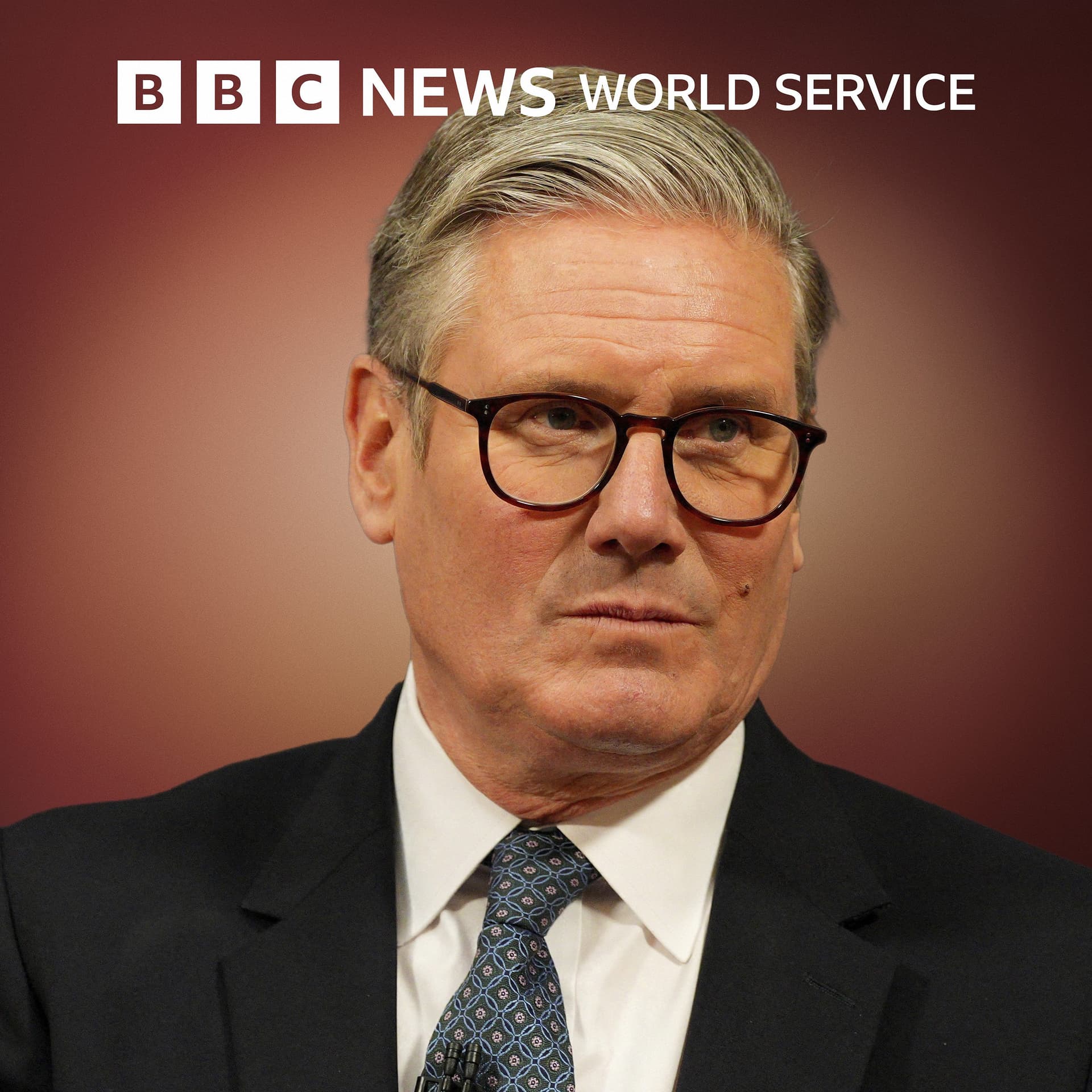
(Image: Keir Starmer. Credit: Reuters)