In short
Podcast Summary: The Interview - Tidjane Thiam, Ivory Coast Opposition Leader
Podcast Details
- Title: The Interview
- Description: A series of conversations featuring influential individuals shaping our world. Hosts discuss significant issues with leaders across various sectors including politics, business, and culture.
- Episode: Tidjane Thiam, Ivory Coast opposition leader - can he run for president?
Episode Overview
- Presenter: Catherine Byaruhanga
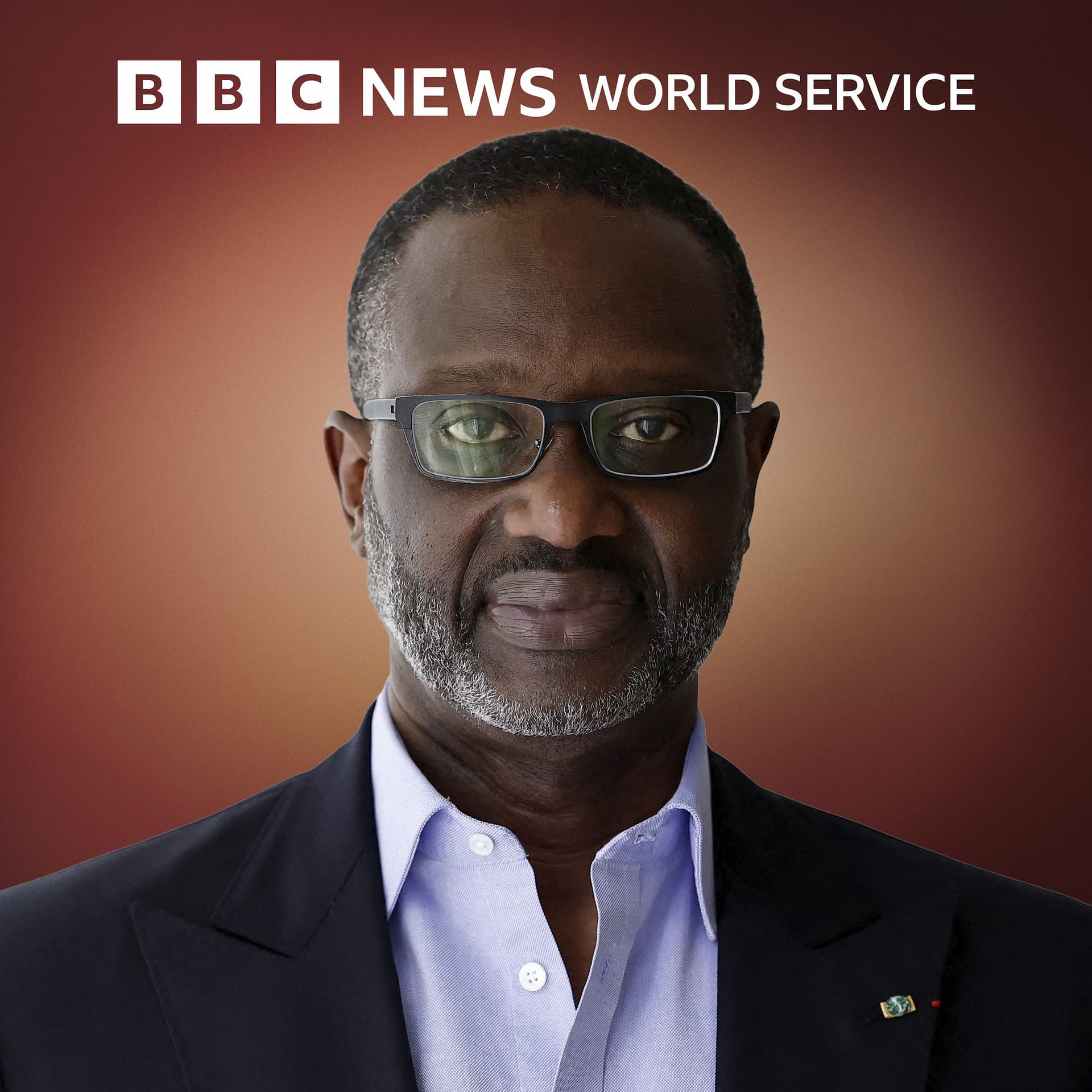
- Guest: Tidjane Thiam, former CEO of Credit Suisse and current leader of the main opposition party in the Ivory Coast.
Key Topics Discussed
- Presidential Candidacy Blocked
- Tidjane Thiam's attempt to run for the presidency has been halted by a court ruling due to questions regarding his Ivorian citizenship.
- Thiam claims that the decision is politically motivated, while the government denies this assertion.
- Economic Insights and Vision
- Despite past civil wars, Ivory Coast boasts a relatively high income compared to its neighbors, but Thiam believes there is potential for more investment and economic growth.
- He emphasizes attracting foreign investment through rule of law and stable governance, stating that fears of political instability can deter investors.
- Historical Context and Personal Journey
- Thiam shared his early life and motivation, crediting his family’s emphasis on education and ambition.
- He discussed his career trajectory, including significant roles in the corporate world and involvement in efforts to address COVID-19 in Africa.
- Challenges and Criticism
- Thiam addresses concerns about his popularity in Ivory Coast, asserting that polls indicate high recognition and favorability.
- He recognizes the challenge of being out of the country for an extended period but maintains he is well-known.
- Political Landscape and Governance
- Thiam critiques the current government, questioning whether they deserve continued leadership after 15 years.
- He argues for the importance of a transparent and accountable government that promotes economic stability and reduces corruption.
Key Quotes
- "If you cannot tell me that I can come to this country and sue a president's son or daughter and have a chance of winning, I won't come."
- This highlights the importance of the rule of law and investor confidence.
- "A country should not aspire to be an oasis in the desert because generally, it's the desert that wins."
- Emphasizes the need for regional cooperation and stability.
Conclusion Tidjane Thiam presents a compelling case for his candidacy and a vision for a prosperous Ivory Coast grounded in investment, technology, and political reform. His experiences in the corporate world shape his understanding of economic development, and he remains committed to advocating for his country despite the challenges he faces.
Listening Information
- Availability: The Interview can be listened to on BBC World Service, Mondays and Wednesdays at 0700 GMT, or as a podcast on BBC Sounds and other platforms.
Contact Information
- Email: TheInterview@bbc.co.uk
- Social Media Hashtag: #TheInterviewBBC
---
This summary captures the essence of the podcast episode, focusing on key insights, discussions, and the broader context of Ivory Coast's political landscape as articulated by Tidjane Thiam.
Written by AI. May contain mistakes. Listen to the episode to check what was said.
Transcript
Automatic transcript. May contain errors.0:00This BBC podcast is supported by ads outside the UK. If journalism is the first draft of history, what happens if that draft is flawed? In 1999, four Russian apartment buildings were bombed, hundreds killed. But even now, we still don't know for sure who did it. It's a mystery that sparked chilling theories. I'm Helena Merriman, and in a new BBC series, I'm talking to the reporters who first covered this story. What did they miss the first time? The History Bureau Putin and the apartment bombs Listen on bbc.com or wherever you get your podcasts From the Winter Olympic and Paralympic Games To the European Athletics Championships The 2026 sporting calendar is packed full of big events Keep up with all the action with More Than The Score The podcast that goes beyond the score sheet Join expert BBC sports journalists every Monday to Friday For interviews with sports stars, big talking points and the stories behind the headlines.
1:07More Than The Score from the BBC World Service. Listen now, search for More Than The Score wherever you get your BBC podcasts.
1:19Hello, I'm Catherine Biarahanga, presenter and correspondent for the BBC News Channel. And this is the interview from the BBC World Service. The best conversations coming out of the BBC. People shaping our world from all over the world. I will come back to Russia. I will participate in the elections. There's an increase in violence according to the coca crop. There is no place in the world where women are equal. I will give away the vast majority of my money. It's my full-time focus for the rest of my life. For this interview, I speak to Tijan Tiam, leader of Ivory Coast's main opposition party.
2:02You're going to hear about his bid for the country's presidency that has been blocked by an Ivorian court. Mr Tiam, a former chief executive of Credit Suisse, says the decision to bar him from the presidential ballot is politically motivated, a claim firmly denied by the Ivorian government. In this conversation, he defends himself against critics who say he is not well known in the country and also sets out his ideas to grow the Ivorian economy through investment and technology. Since the turn of the century, Ivory Coast has suffered two civil wars but has a high level of income compared to its West African neighbours.
2:44But Tijan Tiam says historical violence in the country has held back its development. And he also believes the current row over his candidacy is deeply damaging to its reputation and prospects. An investor told me this sentence, which really stayed with me. He said, look, if you cannot tell me that I can come to this country and sue a president's son or daughter and have a chance of winning, I won't come. So the rule of law, when I'm fighting here to say that it's not for the regime to choose who runs opposition parties. It's not for the regime to eliminate opposition leaders. That is not stability.
3:16That is exactly what will scare investors away. Welcome to the interview from the BBC World Service with Tijan Tiam. I love my country. I have represented it, I believe, proudly throughout my life and my career. And I'm a proud African. I think Africa is a wonderful continent. I left my country really in difficult circumstances in 93, 94. And when the coup happened in December 99, I was devastated. And I left very sad because I believed that my country was going to suffer from the eruption of violence on the political scene. I was very worried in 99 that this is exactly what violence, political violence would lead to.
4:07We had seen it in enough African countries to know that violence is not the way. And just explain your journey for us, because a lot of people around the world have followed your career, leading several big businesses. There are very few people like you, a black man, an African, to ascend to those heights in the corporate world. What do you think made it possible for you to be able to do that? Maybe a simple answer. It's mostly my parents, my upbringing. My father, the first time he came to France was in 1954. And from the airport, he asked to be driven to École Polytechnique, which is one of the top French schools.
4:48And he walked up to the school. I wasn't even born. And he told the cadets who were keeping him, I will have a child in this school someday. So that drive, the refusal to admit that we are anything less than anybody else, it's not a coincidence. My family, we are five brothers that produce four ministers under four different presidents. The last time a lot of people would have heard from you would have been when you were CEO of Credit Suisse. You resigned from the bank back in 2020. What have you been up to since then? President Ramaphosa from South Africa called me and this was just when COVID was starting and asked me if I would accept to be an African Union special envoy on COVID.
5:33We also worked a lot on the debt issue. So that was one thing I did. We acquired a solar company in California. And I'm working on bringing that capability to Africa because I think solar is a big part of the answer to a lot of the poverty challenges in Africa. You know, it's the ideal solution for a lot of remote areas in Africa where we cannot draw an electric line. Those solar panels, the cost of a solar panel has gone down by 300 times in the last 30 years. So it's become very competitive. It's clean energy and it's a solution to many, many problems. You return to Ivory Coast. You're not in Ivory Coast today, but you return to politics in the country.
6:14You were elected leader of your party, an opposition party, and declared your intention to stand for president. A court in the commercial capital, Abidjan, has now ruled that you are to be struck off from the electoral register, which means that you can't stand as president. You can't appeal this decision. This is pushing an impossible position now. Well, I think it can be described as a weakness in Africa's democracy and legal system. The way the system works is I'm on the electoral roll. Anybody can challenge that. And that decision to strike me has been made. and legally is final. But now we file the recourse.
6:57We think the decision is flawed. The abracuse law is very clear. Nationality matters can only be addressed by the general prosecutor. So that judge simply did not have the power to make the determination she has made. So you're challenging the process, but questions around your nationality remain. You've renounced your French citizenship. Where does this leave you in terms of which nationality you hold today? It was very unclear, and I was potentially stateless, which is why I've been stuck in Paris. But the Department of Justice announced that I'm Ivorian. They're saying that in 1987, when I was given French citizenship, I lost my Ivorian citizenship.
7:39So until 2025, so for 38 years, I was not Ivorian. And on March 19th, when I renounced my French citizenship, I became Ivorian again. This is a process that is not quite well understood, so we're trying to get a clarification on all that. But the bottom line is I was born an Ivorian. So what's happened is that they dug out a 1961 law that has never been applied to anybody. But in theory says that if you take another nationality, you lose your Ivory Coast citizenship. So I would be the first and only person to whom that would be applied. Most of the Ivory Coast football team is in the same case.
8:17So if we apply the law the way they just applied it to me, we have to give the cup back to Nigeria because half the team was not Ivorian. So it's a political incident. I think it's not good for our image. It's not good for our country. And I wish we could move beyond that stage and talk about what really matters for Ivorians, which is a question I always ask. This government has been in power for 15 years. Do they deserve five more? For me, that's what should be the focus of the presidential campaign, not my passport. And it's important to give the view of the ruling party, which says, of course, that the judiciary is independent and this is an independent process that is not influenced by politics.
9:00That is their rebuttal to any questions that this is being used as a weapon against you. So let's look at you as a candidate wishing to take on the presidency. There are questions as to how popular you are in Ivory Coast. When I speak to colleagues on the ground in Ivory Coast, looking at political analysis, a lot of people say that you're just not well known in Ivory Coast, especially to the average person. You've been away for too long. Well, I'm extremely well known in the Ivory Coast because I've always been a reference for Ivorians. I know that may not sound humble. We conduct very rigorous polling and the latest polls show that less than 1 % of Ivorians answer that they don't know me when we test my notoriety.
9:47And I tested above all the other politicians in terms of favourability and awareness. So I think this is a red herring. It's an easy thing to say, but fortunately for me it's not supported by the facts. And in the latest poll that we have, I was leading in the second round of the election, 57 % versus 43 % for the incumbent. So, you know, it's just not true. And the party is the oldest party in Côte d 'Ivoire that I chair. I was just recently elected, nominated a candidate. We had a 93 % participation rate for that convention. And it was held on a weekday and I got a 99.5 % vote from the 5 ,300 voters in the party who are authorized to vote.
10:29So, this thing is repeated, but it's certainly not true. So let's look at an example. The other week after the court had struck you off the electoral register, your party called for nationwide protests for people to turn out in support for you. In the end, according to some people on the ground, only a few hundred people turned out in the commercial capital, Abidjan. So it doesn't look like there is a groundswell of support for your people who share your outrage as being struck off the electoral and possibly not being able to stand as president. You need to understand the reality of the current Ivory Coast regime.
11:10You need to distinguish between the polished face that's presented to the outside world and the BBC and the reality on the ground. The polling is unambiguous, very strong. We will organise demonstrations across the country and you will see then the level of mobilisation. On the day, people were frankly surprised by the level of mobilisation of the police force and that stopped a lot of people from showing up and demonstrating. And in terms of the politics, the security situation in the region, Of course, you know, anybody who wants to be the next president of Ivory Coast is going to have to deal with some challenges, rising Islamist militancy in the region.
11:56We've seen protests in Ivory Coast over the role of France and French troops in the region. It has led to France handing over its only military base back to the Ivorian government. How would you, as a former French citizen now, how would you navigate that relationship with France that is really strained in the region today? My focus in all cases is always on Cote d 'Ivoire and Cote d 'Ivoire's interests. I was already a French citizen when I was a minister and was in high-level positions in government. I have a long track record of making tough decisions based on the Arab coast interests and I've never let any connection I may have had or have had in the past in France have been in France.
12:41It was the same thing with the Asito power plant. It was the biggest contract awarded in Cote d 'Ivoire at the time. I awarded it to ASEA, Brown Bovary, and as a result, we were able to lower the cost of electricity in Cote d 'Ivoire by 10%. So I think my track record there speaks for itself. As far as France is concerned, Africans want competent and honest governments. They don't like incompetence. They don't like corruption. There is no anti-French sentiment. That is not correct. I think what Africans are fed up with is governments that are corrupt and incompetent. So the question is for France to really support democracy in African countries, support transparent governments, and then you will see that French people will be welcome everywhere.
13:26So really, that's how I look at it. And finally, in terms of our platform, the first sentence says we want a Côte d 'Ivoire in peace inside its borders and in peace with its neighbors. The PDC was from its foundation a party focused on other African countries as well. C 'est Rassemblement Democratique Africain. And if you take the geography of Cote d 'Ivoire in the region, you have Liberia to the west. There are people on both sides of the border who are exactly the same ethnic group, same language. Same thing for Guinea, same thing for Mali, same thing for Burkina Faso, same thing for Ghana. So we are a melting pot of cultures.
14:01and the only development model that makes sense for Côte d 'Ivoire is by bringing in all those neighbors and finding opportunities for win-wins because the answer to our challenges is not to build a wall around the country. We say with Fouy de Boigny, a country should not aspire to be an oasis in the desert because generally it's the desert that wins. So we need to spread the little prosperity we have, share it with the neighbors. President Ufoy Bony many times paid the salaries of Burkinabe civil servants when they couldn't afford it because he believed that the stability of Cote d 'Ivoire was very dependent on the stability of its neighbours.
14:40And I completely share that philosophy.
14:45You're listening to the interview from the BBC World Service, people shaping our world from all over the world. If journalism is the first draft of history, what happens if that draft is flawed? In 1999, four Russian apartment buildings were bombed, hundreds killed. But even now, we still don't know for sure who did it. It's a mystery that sparked chilling theories. I'm Helena Merriman, and in a new BBC series, I'm talking to the reporters who first covered this story. What did they miss the first time? The History Bureau Putin and the apartment bombs Listen on bbc.com or wherever you get your podcasts From the Winter Olympic and Paralympic Games To the European Athletics Championships The 2026 sporting calendar is packed full of big events Keep up with all the action with More Than The Score The podcast that goes beyond the score sheet Join expert BBC sports journalists every Monday to Friday For interviews with sports stars, big talking points and the stories behind the headlines.
15:56More Than The Score from the BBC World Service. Listen now, search for More Than The Score wherever you get your BBC podcasts.
16:10For this episode of The Interview, I'm speaking to Tijan Tiam, leader of the main opposition party in the Ivory Coast. As we set up the interview, I had a chance to talk informally with Mr. Tiam, who was very open. He cracked a few jokes and even asked me questions, not what you might expect from a former CEO banker and senior politician. After our interview, a spokesperson for the Ivorian government told the BBC that Mr. Tiam knew he was wrong when registering on the electoral list as he was not an Ivorian citizen at the time. He added the same law had previously excluded a candidate in 2011, also saying the Ivorian justice system is independent and human rights are respected in the country.
17:01OK, let's return to my conversation with Tijan Tiam. Looking at policies, politics, how you navigate certain issues within Ivory Coast, just to get a sense of what you think about what's happening on the global stage. You've met Donald Trump before. You've talked about having dinner with him, about still maintaining relationships with people around him. How would you assess the impact of his tariffs and did you expect them to go as far as they did? I think like every player in the world economy, of course, I was surprised. The markets were surprised by the extent of the tariffs. But it's still an evolving situation.
17:43It's very early days. I think most tariffs move around. So I think we need to wait a little bit before we have a definitive opinion about that. But the things I know about the world economy, companies are important. The backbone of an economy is really small and medium-sized enterprises. and that as African countries, we need to focus on having thriving SMEs. Because often countries say that they want large companies, but large companies are just SMEs that were successful. So if you want to have a thriving economy, you need to really cherish your small companies, create a positive environment for them, fight corruption.
18:25I'm a great believer in the use of digital technology. I contributed to putting in mobiles in Côte d 'Ivoire in 1995-1996. And today, if you look at the Ivory Coast economy, a lot can be done with digital technology to cut out corruption, empower entrepreneurs. And I have said that I want billionaire entrepreneurs, not billionaire civil servants. And unfortunately, too many times in Africa, we have the latter, not the former. And I said that when civil servants are wealthy, Generally, the citizen is poor and I want to create a class of very successful African entrepreneurs who build successful companies and can, why not, be global players and be companies that have a footprint way beyond their own country, way beyond Africa.
19:15And the challenge that we have in Côte d 'Ivoire is really health and education, which are in an appalling state. Average life expectancy in sub-Saharan Africa is 62. We're at 59 in Cote d 'Ivoire. So when we are one of the wealthier countries, and if you compare us to Senegal, we are 50 % wealthier, GDP per capita, and we have nine years of life expectancy above us. So to have a really successful economy, you need people who are well-trained and in good health. And if you were elected, how would you navigate the relationship, Ivercoast relationship with the Trump administration? because it's not only tariffs in terms of US policies that Africa is facing.
19:56There's also the cutting of aid, the dismantling of USAID. How would you navigate your relationship with the Trump administration? My experience of the world economy is that you need to articulate clear plans. There is no shortage of capital in the world. There is a shortage of trust. And often when you say that you cannot fund yourself, what you are truly saying is that the world doesn't trust you. Because there's a huge quantities of capital, but capital flows where it's welcome. And for instance, having a democracy, allowing people to run for election. An investor who told me this sentence, which really stayed with me, said, look, I only invest in countries where I can sue for president's son and win.
20:42If you cannot tell me that I can come to this country and sue a president's son or daughter and have a chance of winning, I won't come. So the rule of law, when I'm fighting here to say that it's not for the regime to choose who runs opposition parties, it's not for the regime to eliminate opposition leaders, that is not stability. That is exactly what will scare investors away. Investors need to know that whoever is in power, their investment is safe. So, you know, we need to create the environment. It's too easy to us. Blame the outside world, blame the outside world. We need to create the environment so that the outside world is confident, trusts us, and is willing to invest in our economies and create jobs for our daughters and our sons so that we have political stability, we have a middle class, we have a democracy, we have a rule of law.
21:34It's a well-trodden path. We know what needs to be done. A number of countries have done it, and we in Africa need to do it. You still, of course, have a lot of international relationships, of course, from your time in business. How are you leveraging those relationships in terms of your politics and possibly the kind of policies you might want to implement in Ivory Coast? I really believe in markets. You know, I'm very clear I'm for a market economy and I want a thriving private sector in Cote d 'Ivoire. If you poll people, the first concern of Ivorians is youth unemployment. Youth unemployment.
22:14The fact that our economy doesn't create jobs for young people. And at the core of my platform, there is SME promotion and really organizing better, funding better the informal sector, which is 90 % of the Ivory Coast economy. And there are today technological solutions to make that sector part of a formal economy. and make those companies viable. A lot of that through digital personal connections in Mexico or in Brazil. There are two countries who've done that with great success, which has reduced both corruption and also allowed those companies to access funding because the massive job creation that we need can only happen through small and medium-sized enterprises.
23:02It's also a way to fight gender discrimination because a lot of those small entrepreneurs are women and empowering them and giving them the means to grow through technology is certainly a big opportunity. The other big thing that needs to be done is really being able to tax the domestic economy because that will reduce the opportunities for corruption in both the customs and the tax administration and provide the state with stable resources that can then be invested in health and education. You also need to put in place a pension system, which is a sector I know reasonably well, having led Prudential in the UK, which is a large pension company, and the population is young today because this is how you can fund long-term investments.
23:52When I funded the toll bridge in and we closed the financing in 1999, a key player was the army pension fund. And if you look at the U.S. economy, we talked about the U.S. earlier, most of the money and the capital in the economy is from pension funds. And that is a key piece missing in Africa's economic model. And that's why so many countries resort to debt. And that's why we keep going from debt crisis to debt crisis. The Industrial Revolution in the U.K. was funded by pension funds. And having run Prudential, I could see the central role that pension funds play in funding the economy with equity and not debt.
24:31And that's a real change of economic model, which I advocate. Africa needs to really go in that same direction. And I think the results will follow. And should politics fail, would you go back to the corporate sector then? Well, it's not going to fail. I'm very confident in my people, not in myself, in my people. the thing that has been the most rewarding for me is that I came back after 20 years but the warmth with which I've been received and when I look at the popularity when I look at the polls I've been paid back 100 times by my people for the choices I've made and that's my real reward and I love them and they pay me back Thank you for listening to the interview from the BBC World Service.
25:20If you enjoyed today's programme, you can listen to the interview wherever you get your BBC podcasts. Until the next time, bye for now.
25:37If journalism is the first draft of history, what happens if that draft is flawed? In 1999, four Russian apartment buildings were bombed, hundreds killed but even now we still don't know for sure who did it it's a mystery that sparked chilling theories i'm helena merriman and in a new bbc series i'm talking to the reporters who first covered this story what did they miss the first time the history bureau putin and the apartment bombs listen on bbc.com or wherever you get your podcasts from the winter olympic in Paralympic Games to the European Athletics Championships. The 2026 sporting calendar is packed full of big events.
26:21Keep up with all the action with More Than The Score, the podcast that goes beyond the score sheet. Join expert BBC sports journalists every Monday to Friday for interviews with sports stars, big talking points and the stories behind the headlines. More Than The Score from the BBC World Service. Listen now, search for More Than The Score wherever you get your BBC podcasts.
From the publisher
Catherine Byaruhanga, presenter and correspondent for the BBC News Channel, speaks to Tidjane Thiam, the main opposition leader in the Ivory Coast.
Mr Thiam is a former CEO of Credit Suisse, with a lengthy and successful career in the financial sector abroad. Now, he wishes to stand for the Ivory Coast presidency - but his candidacy has been blocked by an Ivorian court. It has ruled he cannot run as he was not an Ivorian citizen when he registered on the electoral roll. Tidjane Thiam says the decision is politically motivated, a claim firmly rejected by the government of the Ivory Coast. But he is defending his right to run.
Despite years of civil war since the turn of the century, Ivory Coast has a high level of income compared to its neighbours. But Mr Thiam believes more can be done to attract investment and to boost business - and that he has the financial expertise and contacts to make it happen.
The Interview brings you conversations with people shaping our world, from all over the world. The best interviews from the BBC. You can listen on the BBC World Service, Mondays and Wednesdays at 0700 GMT. Or you can listen to The Interview as a podcast, out twice a week on BBC Sounds, or wherever you get your podcasts.
Presenter: Catherine Byaruhanga Producers: Lucy Sheppard, Madeleine Drury Editor: Max Deveson
Get in touch with us on email TheInterview@bbc.co.uk and use the hashtag #TheInterviewBBC on social media.