
In short
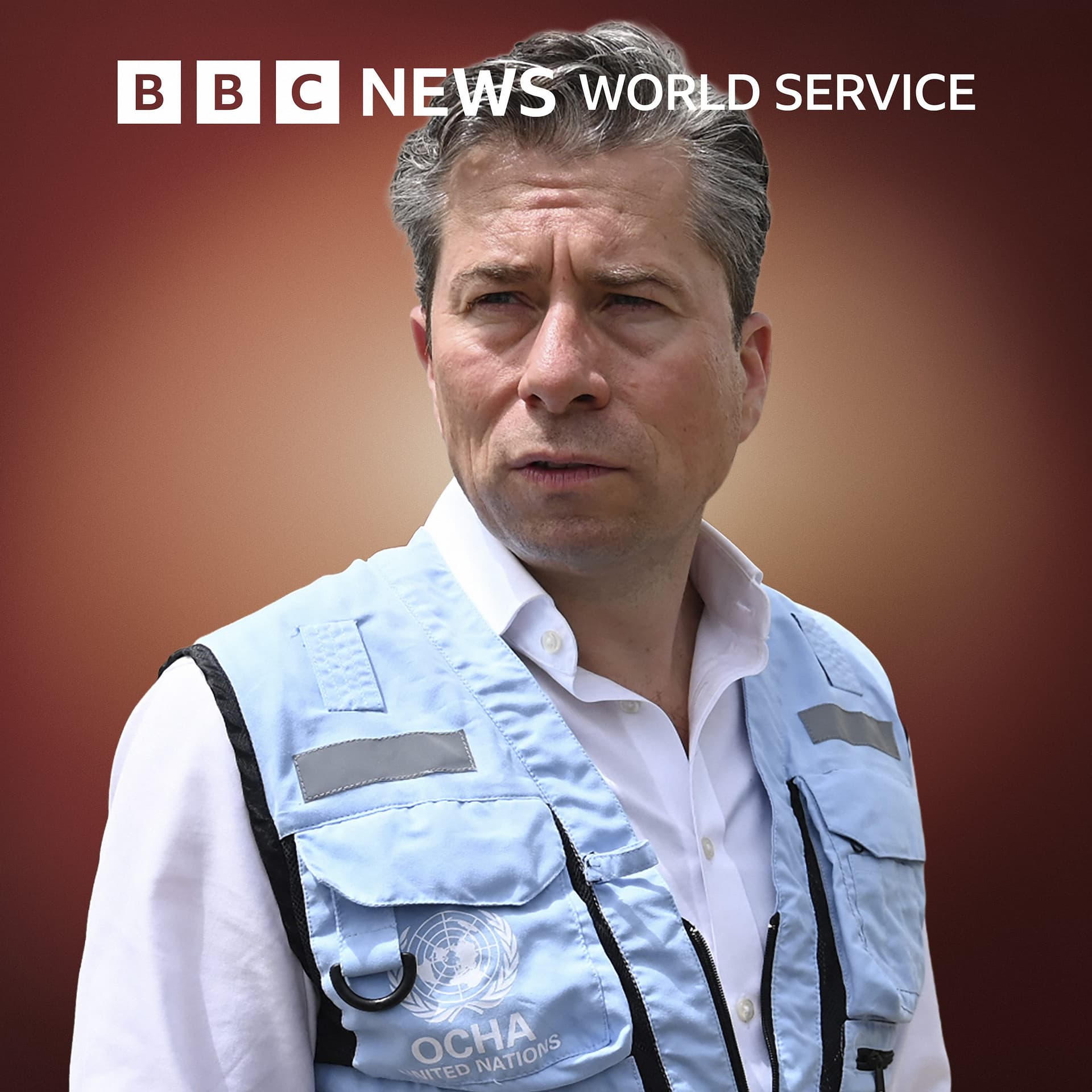
Podcast Episode Summary: Tom Fletcher, UN Humanitarian Chief on Aid in Gaza
Podcast Title
The Interview Podcast Description *The Interview* is a BBC podcast showcasing conversations with influential figures in business, politics, finance, sports, and culture, providing insights into major global issues. Each episode lasts approximately 20 minutes.
---
Episode Title
Is the World Doing Enough to Get Aid into Gaza? Episode Description Tom Fletcher, UN Chief of Humanitarian Affairs, discusses the severe humanitarian crisis in Gaza with Fergal Keane, highlighting Israel's blockade and the resulting starvation risks faced by the population. The episode delves into the complexities of aid delivery and the implications of the Israeli military campaign that began following a Hamas attack.
---
Key Themes and Discussions
Humanitarian Crisis in Gaza
- Aid Blockade:
- Gaza experienced nearly three months of blockade, severely limiting the flow of food, medicine, and fuel.
- Limited aid has recently started to be allowed into Gaza, but the situation remains dire.
- Starvation and Trauma:
- Fletcher argues that Israel's actions amount to enforced starvation.
- Over 54,000 deaths reported in Gaza since the conflict escalated in October 2023.
- Recorded instances of forced displacement, torture, and significant trauma among the population.
Israel's Response and Criticism
- Allegations Against Hamas:
- Israel claims Hamas is stealing food aid, complicating aid distribution efforts.
- Fletcher disputes the extent of aid theft, emphasizing the need for humanitarian aid to reach civilians directly.
- International Community's Role:
- Fletcher emphasizes the judiciary and historical accountability regarding the humanitarian crisis and aid distribution.
- He calls for sustained international pressure for aid access and intervention to prevent further escalation of the crisis.
Controversial Statements and Regrets
- Clarifications and Criticism:
- Fletcher faced backlash for earlier remarks about thousands of babies dying due to the blockade, which he later clarified as an unfortunate misstatement.
- He asserts the importance of precise language while advocating for humanitarian needs.
The Role of Humanitarian Organizations
- Challenges Faced:
- Humanitarian workers are increasingly endangered, with 300 colleagues killed in Gaza alone.
- The international humanitarian community faces resource shortages and bureaucratic obstacles in delivering aid.
Ethical Considerations
- Humanization of the Crisis:
- Fletcher stresses the need to view both Palestinian and Israeli lives as equally valuable amidst the conflict.
- Reflects on the dehumanization rhetoric coming from both sides of the conflict.
Historical Judgment
- Reflection on Actions:
- Fletcher poses a critical question regarding how history will assess the international response to the humanitarian crisis in Gaza.
- He emphasizes the need for the international community to act decisively to avoid accusations of negligence.
---
Key Takeaways
- Immediate Humanitarian Needs: There is a critical need for comprehensive aid access to civilians in Gaza, as starvation and trauma continue to escalate.
- Complex Political Climate: The interplay of military strategy and humanitarian needs raises ethical and legal questions about accountability and intervention.
- Urgency for Action: The international community must respond swiftly and effectively to prevent further humanitarian degradation and to uphold international law.
---
Episode Production Team
- Presenter: Fergal Keane
- Producers: Lucy Sheppard and Vivien Jones
- Editor: Nick Holland
---
Conclusion The episode encapsulates the urgent humanitarian concerns in Gaza through the insights of Tom Fletcher, highlighting the interplay between politics, ethics, and the dire necessity for humanitarian aid amidst ongoing conflict. The discussions call for an urgent international response to alleviate suffering and uphold human dignity.
Written by AI. May contain mistakes. Listen to the episode to check what was said.
Transcript
Automatic transcript. May contain errors.0:00This BBC podcast is supported by ads outside the UK. If journalism is the first draft of history, what happens if that draft is flawed? In 1999, four Russian apartment buildings were bombed, hundreds killed. But even now, we still don't know for sure who did it. It's a mystery that sparked chilling theories. I'm Helena Merriman, and in a new BBC series, I'm talking to the reporters who first covered this story. What did they miss the first time? The History Bureau Putin and the apartment bombs Listen on bbc.com or wherever you get your podcasts From the Winter Olympic and Paralympic Games To the European Athletics Championships The 2026 sporting calendar is packed full of big events Keep up with all the action with More Than The Score The podcast that goes beyond the score sheet Join expert BBC sports journalists every Monday to Friday For interviews with sports stars, big talking points and the stories behind the headlines.
1:07More Than The Score from the BBC World Service. Listen now, search for More Than The Score wherever you get your BBC podcasts.
1:20Hello, I'm Fergal Keane, the BBC's special correspondent. And this is the interview from the BBC World Service. The best conversations coming out of the BBC. People shaping our world from all over the world. I will come back to Russia. I will participate in the elections. There's an increase in violence according to the Coca-Crop. There's no place in the world where women are equal. I will give away the vast majority of my money. It's my full-time focus for the rest of my life. For this interview, I meet Tom Fletcher, Chief of Humanitarian Affairs for the United Nations. You're going to hear his belief that people in Gaza are being forced into starvation by Israel's withholding of aid.
2:07It's important for us to say what we see. And our teams are there. We have hundreds of people on the ground reporting to us. And what they're reporting is forced displacement. They're reporting starvation. They're reporting torture. And they're reporting deaths on a massive scale. Israel has begun to allow limited supplies into Gaza after a blockade lasting nearly three months halted the delivery of food, medicine, fuel and shelter. Since then, there have been chaotic scenes as crowds overwhelm distribution centres. Israel denies Mr Fletcher's allegations and argues Hamas is stealing food aid.
2:43In our conversation, Mr Fletcher also tells me he regrets the wording of certain claims he made about the impact of the blockade, which drew criticism as inaccurate before being retracted by the UN. And he warns the international community that history will be tough in the judgment of its response to the crisis in Gaza. More than 54 ,000 people have been killed in Gaza since the launch of Israel's military campaign, according to the Territory's Health Ministry. The offensive began in response to the attack by Hamas on 7 October 2023, which left about 1 ,200 people dead and 251 others taken hostage.
3:24Welcome to the interview from the BBC World Service with Tom Fletcher. I've been to some pretty terrible places in the last six months. You know, Darfur through Damascus just after the fall of the Assad regime. I was in Mandalay just after the earthquake. I was in Afghanistan a couple of weeks ago. Gaza is by far the worse. And I'd entered from the north. I'd been in Nehruz Kibbutz meeting survivors of that Hamas terrorist attack on October the 7th. and then you cross in and there's just desolation for miles and the person with me the colleague with me I said where were you living and she said I don't know I'd need GPS to find my home because there are no landmarks to navigate by everyone who is working there right now is corroded as I feel by the sights and the smell you know you've been in war zones you know how that feels.
4:23It has a particular feel that never leaves you. And for me, that experience of driving through Gaza, staying overnight there in a safe house that was later bombed by the Israelis, a UN house, you know, that experience will never leave me. Your reaction to the latest events, we've seen people storming a warehouse, shots being fired, people are dying. When you look at those images, what do you think? We're dealing with a desperate, starving population. You know, this has gone on for over a year and a half now. Massive levels of trauma. Everyone I met in Gaza, including our own people, are traumatized.
5:06And, you know, now they've gone 80 days of the blockade without that food getting in until, any food at all, until 10 days ago. So the kitchens, our community kitchens had run dry, they'd closed down, the bakeries had stopped serving. And so those levels of famine and starvation are all around them. And it's no surprise, actually, that they are so desperate to get to the little food. And it really is only a trickle of food that we're being allowed to get in. Well, the Israelis say they have to do it their way because Hamas are stealing the aid. There's very, very little stealing of aid by Hamas.
5:42What we're seeing is some armed groups that operate in, there's a no man's land, as you know, as you come through Kerem Shalom. And those have been operating with impunity in that space, hitting our trucks, particularly during the ceasefire. But most of our aid is getting through. Now, is some of that aid then getting to market and being stolen by Hamas from market or bought in market? Now, there's always a risk of that. In such a complex, contested, militarized environment, we can't minimize that risk completely. But I saw, you know, just recently the previous US coordinator speaking out and saying himself that a tiny amount was being stolen by Hamas.
6:19Now, a tiny amount is still too much. I don't want to see any of that aid getting to Hamas. That matters to us because these are our principles, neutral, impartiality, independent. So it's in our interest to stop that aid getting to Hamas and ensure it gets to civilians. Is there any sign that the Israelis will relent and allow you to distribute aid? We work every day. We're in those meetings. We sit with the Israelis every day, convoy by convoy, truck by truck, sack of wheat by sack of wheat, and we'll keep on working to get as much in as possible. You know, we have that aid on the border to feed everyone in Gaza for all the civilians for months.
6:58We could get that in and we're desperate to do so, But we've got to have that full blockade lifted. We've got to have the impediments removed. We'll keep hoping and we'll keep trying. Why don't they let you distribute aid? There are lots of bureaucratic impediments. There are lots of security checks. We go through several checks on everything that goes through the border. It's a question you have to ask them. I mean, I listen to you. What do you think? Well, they were telling us that during those 80 days, we wouldn't be able to bring that aid in because they needed to increase the pressure on Hamas in particular.
7:30So what do you describe that as? Look, I want to get those hostages out as much as anyone else. And we were making progress during the ceasefire. It's vitally important that they get home. Mediation, negotiation gets them out. Forced starvation of a whole population, which is what ministers in Israel are saying publicly, doesn't matter what I say, it's what they're saying out loud, they're doing to increase that pressure on Hamas. I don't think that's going to work. I think it's mediation and negotiations that has worked and will work. To be clear, what we are seeing is the forced starvation of the population.
8:06We're seeing food sat on the borders and not being allowed in when there is a population on the other side of the border that is starving. And we're hearing Israeli ministers say that is to put pressure on the population of Gaza. Now, we just want to work. We have a plan to deliver. We just want to get in. That's a war crime, isn't it? If you use food as a weapon. Yeah, it is classified as a war crime. Obviously, these are issues for the courts to take the judgment on and ultimately for history to take a judgment on. As a humanitarian, my interest is just in getting as much of that aid in as possible, as quickly as possible, and saving as many lives as we're allowed to do in the time we have.
8:42I understand that, the humanitarian perspective. But you've been in there. You're the one who's watching exactly what's happening every day. You're the one who went to the Security Council and called on them to prevent genocide. and I need you to be frank with me here. Do you believe that what we are witnessing is war crimes? So we have these two mandates. One to get as much aid in as possible and save as many lives and the other is to report what we see, to speak truth to power. And we feel that particularly strongly because you can't get in. The international media aren't there. We are your eyes and ears.
9:21We're the eyes and ears of the international community and it's important for us, therefore, to say what we see. And our teams are there. We have hundreds of people on the ground reporting to us. Of course, we've had over 300 colleagues killed in Gaza ourselves. And what they're reporting is forced displacement. They're reporting starvation. They're reporting torture. And they're reporting deaths on a massive scale. Now, when I went to the Security Council, I chose my words very, very carefully. And I'm choosing them again carefully now. I wanted to issue a warning to the Security Council. all, that in previous cases, Rwanda, Sabrenica, Sri Lanka, the world had told us afterwards that we didn't act in time, that we didn't sound the warning and ask that the world respond to prevent genocide.
10:06And that's my call to the Security Council on the world right now. Will you act to prevent genocide? Do you see any sound that they will? We did see an upsurge in pressure in the last few weeks, I think in response to that sense of the forced starvation that we've been seeing. I think in response to what Israeli ministers have been saying publicly. So there has been that switch in international opinion. I saw it in the Security Council. So immediately after I spoke, 14 members came in very strongly behind me with solidarity and support for the message that I'd shared. I hope the world is listening.
10:47There is a key conference in Paris at the end of the month, which will be one demonstration of whether they've heard that message and how they're responding. And look, everyone from President Trump to the Pope, to the elders, to world leaders is saying, let us work. Let us get the aid in that we have to get in. And that's what we're asking for here. Why do you think they want? You have to ask them. I mean, what some is really... And they say they want to defeat Hamas. They also said on the 22nd of May, Kogat, the group that you deal with, the Israeli military group that looks after aid, said on the 22nd of May there was no food shortage in Gaza.
11:28There are massive food shortages in Gaza. I mean, we've got in a bit of aid in the last 10 days, but it's a fraction of what we were even getting during the ceasefire, when we were getting 600, 700 trucks a day. We know how to do this. This is our day job. We deliver aid in tough conditions and we want to do it there. And what's getting in now is a tiny fraction of what's needed. And the entire population of Gaza, 2 million people, is at risk of starvation right now. We've got to get the aid in. Israel's Minister of Finance, Mr Smotrich, said of the people of Gaza, they will be totally despairing, understanding that there's no hope and nothing to look for in Gaza and will be looking for relocation to begin a new life in other places.
12:09How would you characterize that language? I mean, so out loud, Israeli ministers have been saying that they want the population of Gaza to be relocated. Is that ethnic cleansing? It's the forced removal of a population. Ethnic cleansing. And in this case, by withholding of aid. Now, again, the courts will judge what to call that. And I have to pick my words very, very carefully. I'm a humanitarian. I'm not a lawyer. I'm not a politician. I studied history, but in this case, I'm not a historian. My job is to get that aid in and to think really carefully about what I say in order to maximise our chances of doing that.
12:44Should Mr Netanyahu be disavowing such statements by his ministers? Absolutely. We would expect governments all over the world to stand for international humanitarian law. The international community is very, very clear on that. It's been outspoken throughout the international community that those principles must be upheld. And so that's a clear call to the Prime Minister of Israel to ensure that this language and ultimately this policy of displacement, of forced displacement, isn't enacted. On the other hand, you have former Israeli Prime Minister Ehud Olmert saying, and a member, as he was, of Mr Netanyahu's Liquid Party, what we are doing in Gaza now is a war of devastation, indiscriminate, limitless, cruel and criminal killing of civilians.
13:30is there anything there you disagree with? So it's not my choice of words but they are chilling words and I've worked with Prime Minister Omed in the past you know when I was working for prime ministers and so I know that he wouldn't have said those words lightly. I think you know what I'm hearing from people in Israel, friends in Israel, colleagues I work with, people I'm in touch with every day, including those in those kibbutzim, is that desire to get the hostages out, to get the aid in, get the ceasefire and end this conflict. I think there is that rising pressure inside Israel. And look, it's not for me to get involved in Israeli politics.
14:10You know, there are many bear traps there. But, you know, I hope to hear those voices louder and louder calling for restraint, calling for respect for international law and calling ultimately for the killing to stop. You're listening to The Interview from the BBC World Service. People shaping our world from all over the world. If journalism is the first draft of history, what happens if that draft is flawed? In 1999, four Russian apartment buildings were bombed, hundreds killed. But even now, we still don't know for sure who did it. It's a mystery that sparked chilling theories. I'm Helena Merriman, and in a new BBC series, I'm talking to the reporters who first covered this story.
14:58What did they miss the first time? The History Bureau, Putin and the apartment bombs. Listen on BBC.com or wherever you get your podcasts. From the Winter Olympic and Paralympic Games to the European Athletics Championships. The 2026 sporting calendar is packed full of big events. Keep up with all the action with more than the score. the podcast that goes beyond the score sheet. Join expert BBC sports journalists every Monday to Friday for interviews with sports stars, big talking points and the stories behind the headlines. More Than The Score from the BBC World Service. Listen now, search for More Than The Score wherever you get your BBC podcasts.
15:49For this episode of The Interview, I'm speaking to Tom Fletcher, the United Nations humanitarian chief. When he walked into the hotel room where we carried out the interview, Tom Fletcher appeared confident, relaxed, every inch the seasoned diplomat. This was in The Hague, a calm, orderly city, headquarters of international justice, where the hum of the air conditioning in the room seemed so far from the anguished cries of starving people in Gaza. OK, let's return to my conversation with Tom Fletcher. Didn't you damage your own case when you talked about 14 ,000 babies dying within 48 hours? Pretty big gaffe.
16:32I think we've got to be very, very careful with our numbers. We've got to be precise. And that's a lesson that I've learned in the last couple of weeks. Are you sorry for that? I really, I regret that I used 48 hours because in reality, you know, those deaths will take place over a longer time. but they are at risk and at the point when I made those comments we were desperately trying to get that aid in we were being told we couldn't get it in and we knew that we'd probably have a couple of days a window to get as much aid in as possible and that was being denied and we were desperate to get that in and so yeah we've got to be utterly precise with our language and we've clarified that I would encourage everyone to read the reports where it's spelt out in black and white the number of people at risk of starvation and the numbers of people who have been killed already and make a judgment for themselves as to what we should do.
17:20Because when people take that and along with the statement about thousands of trucks lined up on the border not being able to get in, the risk is looking like a hype merchant. There is that risk and there is a risk, you know, when we're out there using these big numbers and they are overwhelming numbers. You know, we've got provisions to fill 10 ,000 trucks and get them in. That can feed everyone in Gaza, are all the civilians for several months. And that's the real point here. You know, arguing over where those trucks are, which borders they're on, we want all those border crossings to open and we can get that aid in at massive, massive scale.
17:54We know how to do it. So yes, we have to be really careful and really precise in our language. And that is especially me, particularly me. But I'm not going to stop speaking up for the need to save these lives in Gaza, to save as many survivors as possible. That's my job. And I've got to do it better. And I will do it. When you see how the people that you are trying to help in Gaza are treated, do you believe that the Israeli generals and politicians responsible for policy in Gaza regard them as human beings? What I really worry about at the moment is a dehumanization. And we see the humans. We're interacting with them every day.
18:40and we have to retain that sense that a Palestinian life matters as much as an Israeli life. An Israeli life matters as much as a Palestinian life. Do you think Israeli politicians who are running this war believe that? Well, I listened to some of the statements that are made by some of the ministers, and they're clearly using language which is dehumanizing, that isn't seeing Palestinian lives as important as Israeli lives. Let's be clear, of course, on the other side, Hamas used that dehumanizing language as well, And we've got to keep on calling out Hamas's war crimes, including hostage taking.
19:13But somewhere in the midst of all this, we have to be able to see each other's common humanity. This applies to all of the crises that we're dealing with. We're living in this moment of impunity and indifference to each other. And we have to rediscover that sense of human solidarity, human empathy, human kindness, even in this more transactional moment. I know there are things that you're, as a kind of UN diplomat, restricted from saying because you need to keep lines and avenues open. Do you think Mr Netanyahu wants this war to end? I'm certain he wants to get the hostages home. Of course he does.
19:53And he's every right to want to get them home. We all want to see those hostages freed and back with their families. I don't know now what the aim of this war is anymore. I think it has clearly gone beyond just the hostage releases. There's a lot of talk about finishing off Hamas. And clearly, as many people have said, there can't be a part for Hamas in the new equation, the new governance of Gaza and the Palestinian territories. But what is the end game here? I mean, that's the question the world is asking. Where does this end? When does this stop? and how can we get back to a scenario where we have some chance of getting security justice opportunity for Israelis and Palestinians now for me look I'm I don't know if I'm a seasoned diplomat but I've been dealing with these issues now for 30 years working on what we used to call the Middle East peace process and I don't believe that that central idea is the wrong one two states coexisting side by side with security justice opportunity for Palestinians and Israelis.
21:00I've never heard a better idea than that, but maybe Prime Minister Netanyahu has got one. Well, 22 new settlements in the West Bank. What does that tell you? I drove around the West Bank as part of my visit to the region in January. And even since the last time I visited, to see those facts on the ground changing, to see that forced displacement, the levels of settler violence. If it wasn't for what's happening in Gaza, this would be a major news story right now. But it's happening around us. The changes to land ownership, you know, there's a real effort underway now to move Palestinians away from homes that they've lived in for decades.
21:39And that really undermines the prospects of that two-state solution. And I would say that's very dangerous for the whole region. You do raise the point of multiple crises around the globe at the moment. And an international order that I put to you is broken. The Security Council has never been more divided, never been more incapable through either will or ability to deal with the situation we're in. It's a profoundly dangerous moment. Profoundly dangerous. And we really need to drive this home to people. Welcome to a driverless world. The Security Council is polarized, divided. That means it makes it much harder for us to end conflicts.
22:21The conflicts we're dealing with are more ferocious, there's more impunity, and they're lasting longer. It's getting harder and harder to end wars. And we humanitarians, then we deal with the consequences. Because we effectively drive the ambulance or the fire engine on behalf of the world that goes back towards these conflict zones to save as many survivors as possible. but we are overstretched, under-resourced, literally under attack. Last year was the toughest year, deadliest year ever to be a humanitarian worker. So we're driving that fire engine, and sorry if this is a convoluted metaphor now, with not enough water in the tank, not enough fuel to drive with, and being literally fired at as we do it.
22:59So our work is getting harder and harder and harder. And I just, I'm in awe of our humanitarians who are out there in the field, who I meet in Ukraine, in Sudan, in Gaza, in Afghanistan, in Yemen. I gathered together all of our humanitarian coordinators last week in Istanbul. And these are fearless people, but their work is getting harder and harder. How will history judge how the international community has responded to Gaza? That's the question I wanted to put to the Security Council. all. And you've 19 months now to make an assessment. How will history judge how we have acted over the last 19 months?
23:40History will judge us. I think that history will be tough in the way it judges us. And it must be. I think that a lot of what we've been seeing has been telegraphed. It's been announced in advance. We can't say we didn't know what was happening. we can't say that when the international media were denied the ability to cover it that that shouldn't have sounded an alarm we can't say and the world can't say that we weren't reporting this you know we'll take the criticism we'll take the attacks for doing that but we've been there on the ground from the beginning as we're instructed mandated to do by the world telling you what we're seeing.
24:23So I think history's judgment will be tough. And I think all of us, as I said to the Security Council, have to run that test every day over what we're doing. I'm trying to do that with our operation. I'm trying to make sure that everything we do is laser focused on saving as many lives as we can with the time we have and the conditions that we're given. And we'll carry on doing that. You know, in Gaza, I went to Al-Auda Hospital. And most of it's destroyed. I met some of the surviving medics. Most have been killed. And on the wall of that hospital, one of the doctors who's subsequently been killed had written, tell them we did what we could.
25:06And all I'm asking is for the international community to be able to say, tell them we did what we could. That's what we're trying to do. And nothing we get thrown at us will stop us doing that. Thank you for listening to the interview from the BBC World Service. If you enjoyed today's programme, you can listen to the interview wherever you get your BBC podcasts. Until the next time, bye for now.
25:37If journalism is the first draft of history, what happens if that draft is flawed? In 1999, four Russian apartment buildings were bombed, hundreds killed. But even now, we still don't know for sure who did it. It's a mystery that sparked chilling theories. I'm Helena Merriman, and in a new BBC series, I'm talking to the reporters who first covered this story. What did they miss the first time? The History Bureau, Putin and the apartment bombs. Listen on BBC.com or wherever you get your podcasts. From the Winter Olympic and Paralympic Games to the European Athletics Championships. The 2026 sporting calendar is packed full of big events.
26:21Keep up with all the action with more than the score. the podcast that goes beyond the score sheet. Join expert BBC sports journalists every Monday to Friday for interviews with sports stars, big talking points and the stories behind the headlines. More Than The Score from the BBC World Service. Listen now, search for More Than The Score wherever you get your BBC podcasts.
From the publisher
Tom Fletcher, Chief of Humanitarian Affairs for the United Nations, tells Fergal Keane, the BBC’s special correspondent, that Israel is subjecting Gaza to enforced starvation. Gaza faced an aid blockade of nearly three months - now, limited supplies of food, medicine and fuel are being allowed into the territory. But Israel argues Hamas is stealing food aid.
Mr Fletcher has drawn criticism himself for some of the claims he has made about the impact of the blockade, which were retracted by the UN. Now, he says he regrets his choice of words. Israel’s military campaign began in October 2023 following a cross-border attack by Hamas which killed around 1,200 people, and saw 251 taken hostage. More than 54,000 people have been killed in Gaza since the war began, according to the Hamas-run health ministry
The Interview brings you conversations with people shaping our world, from all over the world. The best interviews from the BBC. You can listen on the BBC World Service, Mondays and Wednesdays at 0700 GMT. Or you can listen to The Interview as a podcast, out twice a week on BBC Sounds, or wherever you get your podcasts.
Presenter: Fergal Keane Producer: Lucy Sheppard and Vivien Jones Editor: Nick Holland
Get in touch with us on email TheInterview@bbc.co.uk and use the hashtag #TheInterviewBBC on social media.